Quote of the moment: William Pitt, on the crime of being young

July 22, 2008

One of the philosophers of Rising Sun (CRS – LA Jonas Foundation) observed that it is impossible to be both young and brave, and old and wise. Age of our leaders often equates to experience. Age becomes an issue in election campaigns — Ronald Reagan, the previous record holder of the oldest person ever to run for a first term as president of the United States before John McCain, headed off arguments that he was “too old” with a zinger in a debate with Walter Mondale in Reagan’s campaign for reelection in 1984.

It was the second debate in 1984, from Kansas City’s Municipal Auditorium (To confuse our foreign readers, we should note that this is in Kansas City, Missouri; Kansas City, Kansas, is on the western side of the river, and is a city of less consequence than Kansas City, Missouri, in population, and in most discussions. We confuse our foreign readers in revenge for English politics, which pertains to the Quote of the Moment, but cannot be explained by or to a person who is not intoxicated). The debate focused on foreign policy and the future of the world. Among the panel of journalists doing the questioning in this deformed type of debate, was the late Henry Trewhitt, then diplomatic correspondent for The Baltimore Sun, one of America’s historically great newspapers, and still great.

About 20 minutes into the debate, Trewhitt asked this question:

REPORTER: Mr. President, I want to raise an issue that I think has been lurking out there for two or three weeks, and cast it specifically in national security terms. You already are the oldest President in history, and some of your staff say you were tired after your most recent encounter with Mr. Mondale. I recall, yes, that President Kennedy, who had to go for days on end with very little sleep during the Cuba missile crisis. Is there any doubt in your mind that you would be able to function in such circumstances?

Reagan sealed his reputation for wit, and probably sealed the election, with this previously-scripted (we know now) zinger:

REAGAN: Not at all, Mr. Trewhitt and I want you to know that also I will not make age an issue of this campaign. I am not going to exploit for political purposes my opponent’s youth and inexperience. If I still have time, I might add, Mr. Trewhitt, I might add that it was Seneca or it was Cicero, I don’t know which, that said if it was not for the elders correcting the mistakes of the young, there would be no state.

Former Vice President Walter Mondale, a great statesman in his own right, and no youth at the time, had a solid response, but not an election-winning response: It won no laughter. (It’s interesting, in 2008, to remember that Mondale was criticizing Reagan for his failure to act to prevent a terrorist attack on U.S. forces in Lebanon, that killed more than 200 Marines.):

REPORTER [Henry Trewhitt]: Mr. Mondale, I’m going to hang in there. Should the President’s age and stamina be an issue in the political campaign?

MONDALE: No. And I have not made it an issue nor should it be. What’s at issue here is the President’s application of his authority to understand what a President must know to lead this nation, secure our defense and make the decisions and judgments that are necessary. A minute ago, the President quoted Cicero, I believe. I want to quote somebody a little closer home, Harry Truman. He said the buck stops here. We just heard the President’s answer for the problems at the barracks in Lebanon where 241 Marines were killed. What happened? First, the Joint Chiefs of Staff, with the President, said don’t put those troops there. They did it. And then five days before the troops were killed, they went back to the President, through the Secretary of Defense, and said please, Mr. President, take those troops out of there because we can’t defend them. They didn’t do it. And we know what’s – what happened. After that, once again our embassy was exploded. This is the fourth time this has happened – an identical attack in the same region, despite warnings even public warnings from the terrorists. Who’s in charge? Who’s handling this matter. That’s my main point.

Which brings us to William Pitt’s remarks.

William Pitt, later Earl of Chatham, was 32 years old, and already a powerful member of the Whig opposition to England’s de facto first, and longest-serving Prime Minister, Robert Walpole, (who also was a Whig — see what I mean about English politics?). Though leading the opposition to Walpole, Pitt and a few of his colleagues were known as the Patriot Boys (Kansas City residing mostly in Missouri pales in comparison to these complexities of British politics).

Walpole, 32 years older than Pitt, leader of the House of Commons, complained at some point about Pitt’s youth. Walpole played dirty against Pitt, getting Pitt’s commission in the military cancelled. The two would dispute for a few years yet — finally, Pitt’s side prevailed, and Walpole lost a vote of confidence.

But on March 6, 1741, Pitt rose in the House of Commons and responded to Walpole’s charges:

“The atrocious crime of being a young man, which the honorable gentleman [Walpole] has with such spirit and decency charged upon me, I shall neither attempt to palliate nor deny; but content myself with wishing that I may be one of those whose follies may cease with their youth, and not of that number who are ignorant in spite of experience.”*

Walpole, Massachusetts, founded in 1724, is named after Robert Walpole. Pittsburgh, Pennsylvania, is named after William Pitt (the elder), as are Pittsfield County, Virginia, Chatham County, North Carolina (remember, Pitt was later Earl of Chatham), Pittsburg, New Hampshire, Chatham, New Jersey, and Chatham University, in Pittsburgh, Pennsylvania.
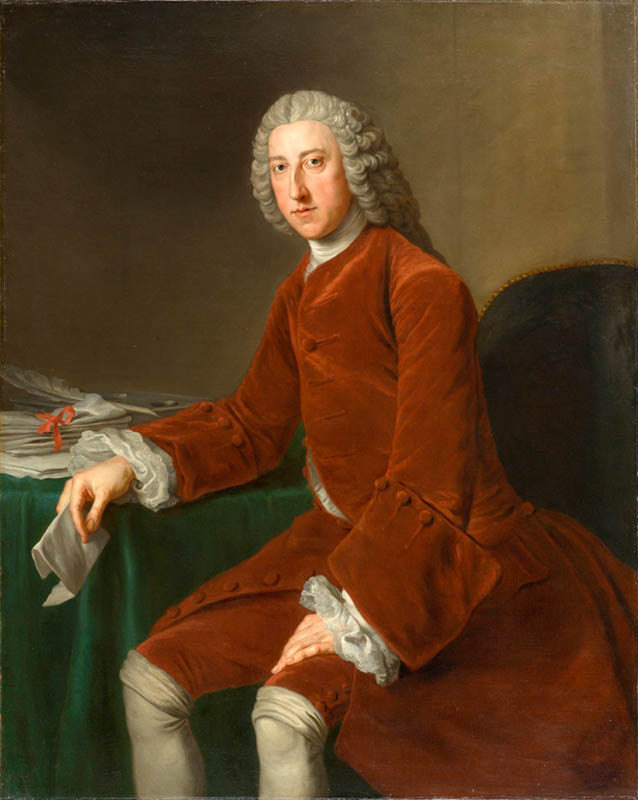
William Pitt, later Earl of Chatham

William Pitt, later Earl of Chatham

* Did Pitt ever actually utter these words? There was no official reporting service for debates in the House of Commons in 1741. Some speeches were written out before hand, some were carefully noted. This speech, alas, comes to us reported by the essayist and literature critic Samuel Johnson, who was famous for writing great speeches for members of the House of Commons, after the fact. Of this particular speech, Bartlett’s Familiar Quotations, 17th ed. carries this footnote: “This was the composition of Johnson, founded on some note or statement of the actual speech. Johnson said, ‘That speech I wrote in a garret, in Exeter Street'” – Boswell, Life of Johnson [1791]. If only Walter Mondale had Samuel Johnson whispering in his ear. Barack Obama may need the whisperings of Johnson in the current campaign.


Not for children, not for sleeping: Goodnight Bush

July 21, 2008

Goodnight Moon by Margaret Wise Brown and Clement Hurd is one of my favorite books of all time. I first read it when I was in college, but it was a toddler favorite of both of our sons, and it rapidly became one of mine, too. Reading it to them at bedtime helped calm them down and put them to sleep. There is from the book a feeling of safety, of warmth, coziness, and love. I may have liked reading it to them more than they liked being read to.

With our youngest off to college this fall, I wish there were some book to give them that would reproduce those good feelings of nearly 20 years ago.

::sigh::

Here’s what we have instead. Goodnight Bush.

This image is scary enough (see the bugging microphone? the burning ballot box? the tilted scales of justice? the polluting smokestacks?).

Cover of Goodnight Bush

Cover of Goodnight Bush

This is the one that makes the more serious statement:

Goodnight human rights, everywhere

Goodnight human rights, everywhere

A story on this book at NPR was the “most e-mailed” last week.

Images by Gan Golen and Erich Origen, Goodnight Bush, copyright © 2008, Little, Brown and Co.


Campaign underwater? (and classroom DVD offer)

June 19, 2008

Who are these guys?

Who are these guys in the pool? Can you identify them?

Can they swim?

(Answers below the fold.)

Read the rest of this entry »


Lawmakers in the dark

June 17, 2008

Just how much will YouTube affect this year’s campaigns?

The Sierra Club offers this spot on the politics of fixing global warming on YouTube. Would they even bother to produce it, if YouTube didn’t exist?


Double standard

May 28, 2008

George W. Bush was famously untravelled as a candidate for the U.S. Presidency.  He had spent more time hanging out in bars just over the border in Juarez than hanging with diplomats anywhere.  In 2000, conservatives found this lack of care about foreign nations, U.S. interventions, and foreign people to be “charming,” sort of a poke-in-the-eye to the Rhodes scholar-rich Democratic Party who worried about things like peace in Palestine and getting the North Koreans to agree to stop building nuclear devices (who could be afraid of a bad-hair guy like Kim Jong-Il anyway?).

That was then.  Now they desperately have to find something about Barack Obama to complain about.  Never mind that Obama has spent more time overseas and in Iraq than George W. Bush, still.  While John McCain can get his information in a one-day, flack-jacketed, armored personnel-carrier tour of Iraq, Obama’s two days isn’t enough to please Glenn Reynolds at Instapundit nor Jim Geraghty at National Review Online.

Observation:  Conservatives are really, really desperate to find mud on a nice guy; Reynolds and others really are losing badly on issues, to make so much of so little.  Also, William F. Buckley has been dead for just over three months, and NR has already gone to hell, deteriorating to a barking-dog cutout of its former intellectual heft.


Any McCain defenders out there?

May 19, 2008

Stumbled into this post, “McCain’s YouTube Problem Just Became a Nightmare.”

To now, I’ve just had policy differences with McCain, and much admiration for his having gone through his prison experiences while maintaining a high degree of balance. The video is damning. Is it accurate?

Any McCain defenders out there who can make the case against what the video seems to say?


Dick Hussein Cheney. John Hussein McCain.

March 30, 2008

The Dallas Morning News bloggers reported from the Senate District 16 Democratic Convention (held yesterday):

Funniest thing I’ve seen all day:  Obama supporters wearing name tags co-opting Barack Obama’s middle name.

Things like:
“Bob Hussein Smith.”
“Janet Hussein Finklestein.”

Good Times.

Karen Brooks, at Moody Coliseum at Southern Methodist University, the site of the convention.

As blog reports go, the newspaper’s reporters got some snark, but the blog reports are remarkably bare of information.  The stories this morning are a bit better, but missing much.

My reports in a bit — if I can figure out how to download the Pentax photos to this computer.

Clinton’s challenges at our district (Royce West’s Senate District 23) picked up 22 delegates for Clinton.  That’s about 1% of those still standing after 9 hours of credentials wrangling.

Not worth it in District 23.  The Obama people spent the day converting a few Clinton delegates, but mostly making hard plans to dominate the state convention.  It became an 8-hour planning session for Democrats to win Texas, sure, but mainly for Obama to beat Clinton.   This was not from the Obama campaign, mind you, but spontaneous work by mostly first-time delegates.

My recollection is that four years ago we had about 600 people at this convention, and 400 two years ago.  More than 5,000 this year.  An increase of roughly 10 times in participation.

Is John Cornyn scared yet?


Pat Hardy turns back creationist challenge in Texas

March 5, 2008

Attention focused on one usually-obscure race for a seat on the Texas State Board of Education helped Republican Pat Hardy turn back a malicious challenge. Hardy won her primary against secretive Barney Maddox, a urologist who spent a lot of money on specifically-targeted mailings, but who also refused to speak with reporters or anyone else asking questions.

Showing just how odd and treacherous is the situation in Texas, Hardy got assists from science bloggers across the nation, though her position on science is far from what science advocates would like. Hardy’s genial “don’t gut the textbooks” stand was preferred to Maddox’s mad-dog, teach-creationism-in-science position.

Maddox refused to comment on the election, of course.

Hardy’s district includes parts of Ft. Worth and surrounding counties. According to the Ft. Worth Star-Telegram:

State Board of Education

Social conservatives failed in their attempt to take control of the State Board of Education on Tuesday when incumbent Pat Hardy of Fort Worth retained her seat against a challenge from Cleburne’s Barney Maddox.

Hardy, a career educator, has been a moderate voice on the board. The 15-member body still shows a close ideological split, but Hardy has helped keep it on a straight path.

The board’s powers come from its ability to influence the public school curriculum and the selection of textbooks. District 11covers about three-fourths of Tarrant County, plus all of Ellis, Johnson and Parker counties. There is no Democratic nominee for this seat in the November election.

Maddox’s entry in the race had set the stage for debate over the scientific theory of evolution, which he has described as “fairy tales.” Hardy took a better course: Teach kids about all theories, she said, from creation to evolution, and give them enough information to make up their own minds about what to believe.

Spoken like a teacher — and a person who should hold a seat on the State Board of Education

Tip of the old scrub brush to reader Ediacaran. Thanks, Bret.

Update:  News specific to this race from the Fort Worth paper.


Long night in Texas?

March 4, 2008

Our precinct caucus is almost always a sedate affair.  While our precinct votes heavily Democratic, few of the voters are interested in working much more for the party machinery, especially if it involves giving up a couple of weekends to attend conventions.

So in the past decade we’ve been in this precinct, caucuses have been tiny.  Five people was the high water mark.  A couple of times we’ve had one other person.  In years I was not the precinct chair, the precinct chair didn’t bother to show.  More often I’ve been the only person there, and had to work hard to recruit 23 delegates and 23 alternates to our senatorial district convention.  We don’t have that many relatives in Texas, let alone in this precinct.

Two presidential campaigns work hard:  This year should be different, we’re told.

The New Republic’s website features an article that plumbs some of the problems that may develop. Oy!

Will Texas be a disaster?  I doubt it — the disaster would occur at the senatorial district convention, I think.

I need the time tonight to work on lesson plans, though.  Against my small-d democratic better sense, I almost hope everyone else votes and goes home, leaving me to try to recruit 23 delegates and 23 alternates . . .

Wish me luck!


Obama shadow: Republican incumbents threatened

March 1, 2008

I tried to vote in Texas’s early voting process Friday. I opted out when, at 6:00 p.m., the line to vote in our usually-sleepy end of Dallas County was up to three hours long (the last voters made it inside the building at 9:08 p.m. — with another 90 minutes of standing in line).

The Obama earthquake is particularly heavy in our precinct. We may have been the most enthusiastic precinct in Texas for Gore and Kerry, and two years ago our voting pushed Dallas County into the Democratic column for judges, sweeping dozens of Republican incumbents out of office. This year, voting by and for Democrats is more than double the early voting totals then.  Our precinct is one of many in 2008.

However the Clinton/Obama drama plays out in Texas and Ohio, this demonstration of democratic muscle — in favor of the Democrats — should worry Republicans. If the numbers are repeated in nearby precincts, which have similar demographics, and in similar suburban districts around Houston, San Antonio, Fort Worth and Austin, Republican incumbents in the U.S. House and U.S. Senate will be in trouble. No amount of advertising could avert a change in Texas’s party alignment at the national level.

Obama mania, and ennui from Republican control, combine to make a voting tsunami.

At this moment, from where I sit, it appears Democrats will win Texas’s U.S. Senate seat held by Republican John Cornyn. U.S. Representatives such as Kenny Marchant, who unseated Democratic Whip Martin Frost four years ago, should consider new employment beginning January 2009.

Republicans in Texas were talking about voting in the Democratic primary this year, to vote for Hillary Clinton, in the hopes that waving that particular flag would anger conservative Christians enough to motivate them to vote against her.

That’s a thin hook on which to hang hopes of election wins. There are not enough conservative, religious voters in America to overcome the wave of discontent with the present, and hope for the future, this election race has created. If Texas voters realize the power they wield, and they use it in November, the political world will reel and rock.

Alas for Republicans, that’s not a big “if.”

Will the ground move on Tuesday night?

Yes.

obama-in-duncanville-by-james-darrell-0227081757.jpg

4,000 screaming fans welcome Barack Obama to Republican stronghold Duncanville, Texas, in the Sandra Meadows Arena, February 27, 2008. Cellphone photo copyright © 2008 by first-time voter James Darrell; used with permission.


Top science organizations join call for candidates to debate science policy

February 5, 2008

P.Z.’s not the only one. I get e-mail, too, and some of it’s not junk or spam.

Texas friends, see especially that little note at the bottom about resolutions to present at caucus, and remember that our Texas caucuses are the evening of the primary election, back at the polling place:

Forward this newsletter to a friend

Dear Ed,

On Friday PBS NewsHour ran this story on us.

Then today, the National Academy of Sciences , the National Academy of Engineering , and the Institute of Medicine joined AAAS and the Council on Competitiveness as official cosponsors of Science Debate 2008. Together we now comprise a large portion of the American science and technology community. 64 leading universities and big-name organizations have also officially signed on.

We now have an exceptionally attractive location and date and we hope to be inviting the candidates late this week.

We need your help to make that invitation as compelling as possible:

  • Please recruit every prominent leader you know to join this important initiative in the next two days.
  • Please recruit every institution, corporation or organization you can get to join this important initiative in the next two days. Have them mention it is an organizational endorsement.
  • Keep track of our growing list of signers here and here.

This is it, folks. We need you. Thanks for being a part of this historic and important initiative. Finally, please consider making an online donation here.

The team at ScienceDebate2008.com

PS: if you live in a state that caucuses this Tuesday, please consider presenting this nonpartisan resolution calling for the debate.

thedatabank, inc.

Stephen Colbert, now at the National Portrait Gallery

February 3, 2008

Stephen Colbert portrait

His presidential candidacy was cut short. But, for a while, you can still view his portrait at the National Portrait Gallery in Washington, D.C.

At least someone in that town still has a sense of humor.

Read the rest of this entry »


Quote mystery

January 3, 2008

Who said “There’s nothing so powerful as truth,” and was that what he really meant?


Let the candidates debate science!

December 12, 2007

Oh, yeah, good debates are hard to come by.

Still, wouldn’t you like to see the final presidential candidates debate science issues seriously?

Science Debate 2008 logo

Lawrence Krauss got through the muddle at the generally science-averse Wall Street Journal to make the case.

The day before the most recent Democratic presidential debate, the media reported a new study demonstrating that U.S. middle-school students, even in poorly performing states, do better on math and science tests than many of their peers in Europe. The bad news is that students in Asian countries, who are likely to be our chief economic competitors in the 21st century, significantly outperform all U.S. students, even those in the highest-achieving states.

While these figures were not raised in recent Democratic or Republican debates, they reflect a major challenge for the next president: the need to guide both the public and Congress to address the problems that have produced this “science gap,” as well as the serious consequences that may result from it.

♦ ♦ ♦ ♦ ♦

Almost all of the major challenges we will face as a nation in this new century, from the environment, national security and economic competitiveness to energy strategies, have a scientific or technological basis. Can a president who is not comfortable thinking about science hope to lead instead of follow? Earlier Republican debates underscored this problem. In May, when candidates were asked if they believed in the theory of evolution, three candidates said no. In the next debate Mike Huckabee explained that he was running for president of the U.S., not writing the curriculum for an eighth-grade science book, and therefore the issue was unimportant.

Apparently many Americans agreed with him, according to polls taken shortly after the debate. But lack of interest in the scientific literacy of our next president does not mean that the issue is irrelevant. Popular ambivalence may rather reflect the fact that most Americans are scientifically illiterate. A 2006 National Science Foundation survey found that 25% of Americans did not know the earth goes around the sun.

Our president will thus have to act in part as an “educator in chief” as well as commander in chief. Someone who is not scientifically literate will find it difficult to fill this role.

Chris Mooney makes the case in Seed Magazine.

Science is too important, too big a player in too many issues, to not have a major focus of its own in the final debates. Failing to have such a discussion is tantamount to failing to ask whether the candidates are capitalist or communist in economic policy (as if such a question could be unanswered by a wealth of other campaign material).

Science Debate 2008 argues for a science debate, lists supporters of the idea (it’s an impressive list, really), and offers advice on how you can help the campaign for science discussion at the presidential level. You can track the issue at the Intersection, or at Bora’s place, A Blog Around the Clock.

If nothing else, a science debate might make it clear to the candidates that we need to revive the Office of Technology Assessment, in addition to making the candidates aware that the president needs to have a strong, independent science advisor to whom the president actually pays attention.

Science literacy is to important to leave it up to chance, or partisans alone — in the case of our kids in school, and in the case of the person we elect president.


Roundup of Utah-based comments on Utah voucher defeat

November 8, 2007

LaVarr Webb’s UtahPolicy.com features a roundup of comments from blogs on the Utah election, and the referendum defeat of vouchers:

Blog Watch

Lots of reaction to the voucher referendum outcome: See BoardBuzz, Steve Urquhart, SLCSpin, The Utah Amicus, Dynamic Range, The Senate Site, Paul Rolly, Out of Context, Reach Upward, COL Takashi, Jeremy’s Jeremiad, Davis County Watch, Salt Blog, and Millard Fillmore’s Bathtub.

Utah is a small state, blessed with television, radio and newspaper outlets that perform way beyond what the population should expect.  Webb’s site tends to summarize most of the important political stuff every day.

It is exactly that type of information that led to the defeat of the voucher plan, I think.  More later, maybe.  Go take a look at Webb’s link to a CATO Institute commentary; voucher advocates are not giving up in any way.
