July 3: Fly your flag for Idaho statehood

July 3, 2016

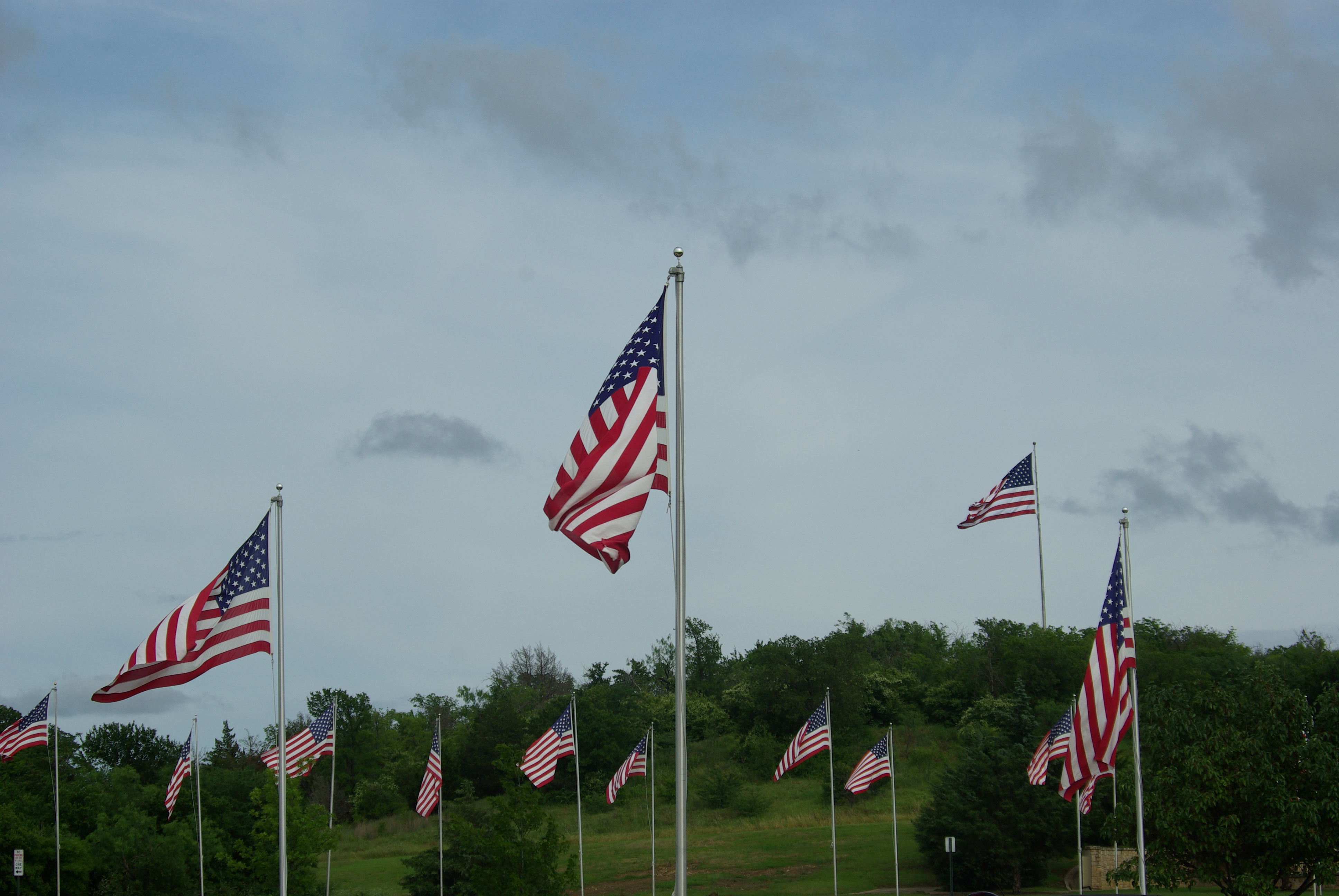
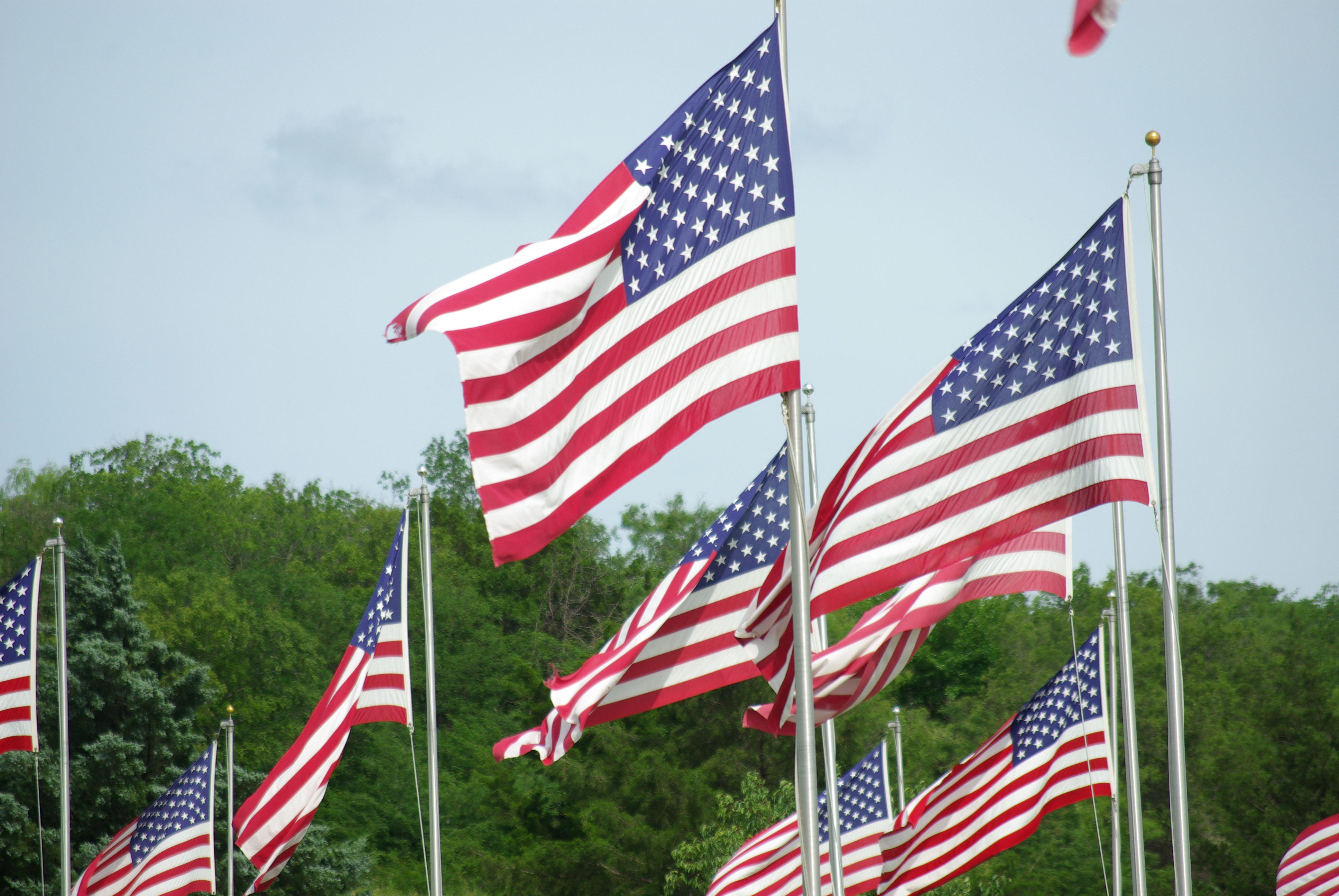
Especially if you have a 43-star flag, fly it today for Idaho statehood.

Idaho joined the union on July 3, 1890, the 43rd state. It was a time of a flurry of new states, however, and very few 43-star flags were made. Is there one in Idaho?

Regardless the number of stars, Idahoans fly their U.S. flags today in honor of Idaho statehood, July 3, 1890.

I found this history of 43-star flags at a site selling antiques and memorabilia — an interesting history which I crib completely here from Jeff R. Bridgman American Antiques.

Alas, this flag has sold.

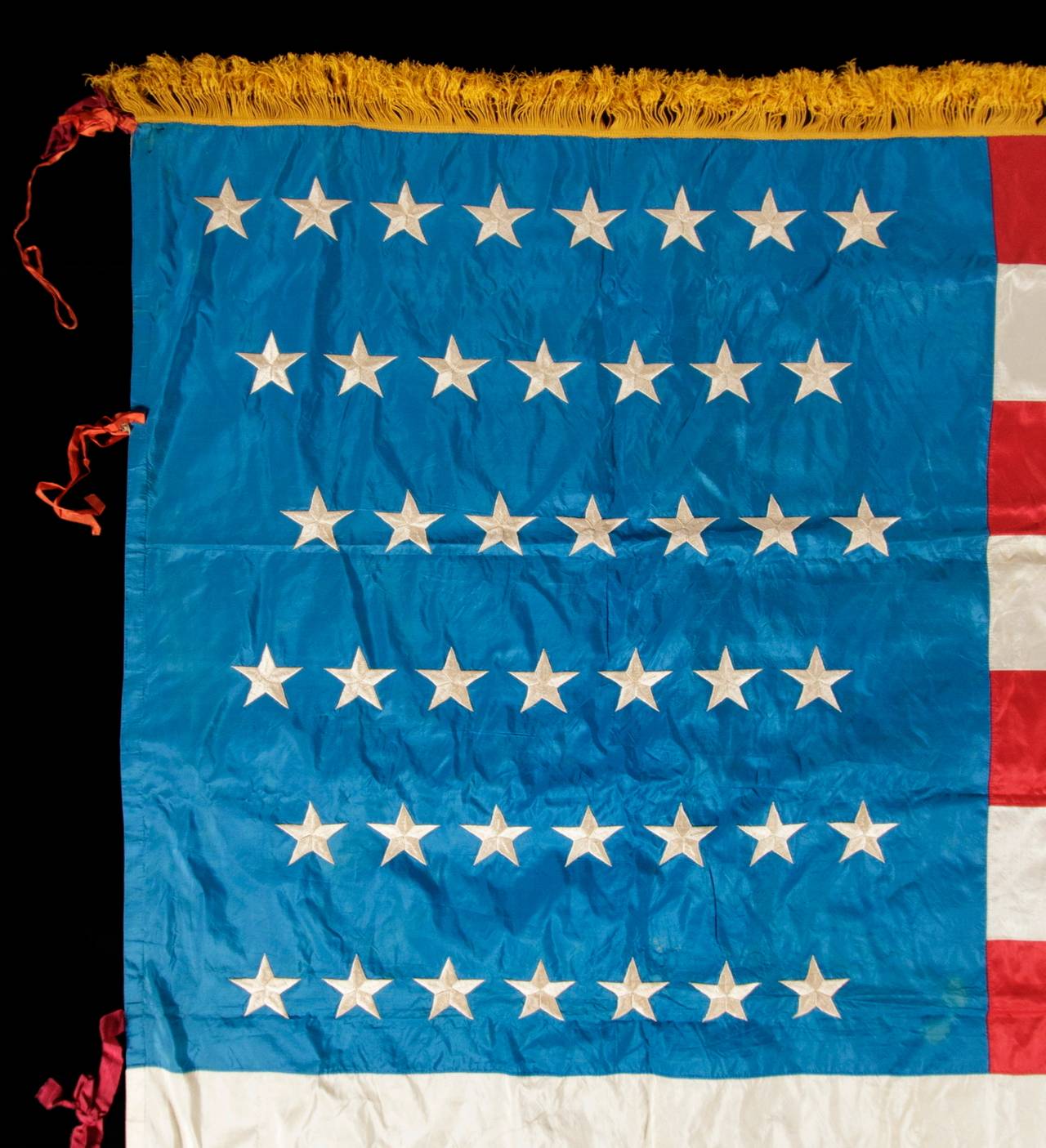
43 Star, Idaho Statehood, American Flag

43 stars, Idaho statehood, one of the rarest star counts among surviving American flags of the 19th century; an exceptionally rare U.S. infantry battle flag, entirely hand-sewn, made for an African-American unit of civil war origin, circa 1889:

Numerous flags were produced with unofficial star counts during the second half of the 19th century, made by flag-maker’s anticipating the addition of more states. Interestingly enough, some flags were officially adopted by the United States Congress, but for all practical purposes never produced. Among these is the 43 star flag, which reflects the addition of Idaho. A tiny handful of flags with this star count are known, but they are among the most rare of all examples throughout American history. To understand why, one may turn back the clock to the 1876 and examine flag production from that year until the addition of the 44th state.

After the Flag Act of 1818, the official “flag year” began every July 4th. So on Independence Day, all states having been added to the Union over the previous year were officially given a star. Makers of flags, however, did not wait for July 4th and official star counts. Flag-making was a competitive industry and many manufacturers added stars before new states were actually added, wishing to create a reason for consumers to buy new flags and one-up each other in sales.

In 1876 the 37 star flag was official, but on August 1st we received our 38th state. Many flag-makers abandoned the 37 star flag when production began for the Centennial International Exposition, a six-month long World’s Fair held in Philadelphia as the first of its kind in America, which served as the nucleus for celebrations of our 100-year anniversary of independence from Britain. In that year 38 stars was a common choice, but other flag-makers actually skipped past 38 all-together, choosing to instead produce 39 star flags, anticipating the addition of the Dakota Territory as one state.

Seeing that Dakota wasn’t coming, production after 1876 seems to have reverted to the 38 star count. Then in 1889, thirteen years later, 39 star flags were once again manufactured with the anticipation of Dakota’s statehood. On November 2nd of that year, a surprise was lay in store for the makers of 39 star flags, when the Dakotas arrived as two different states, which forever rendered 39 star flags both inaccurate and unofficial. Just a few days later, on November 8th, Montana entered the Union as the 41st state, followed by Washington State as number 42 just three days hence on November 11th.

40 star flags were made in limited quantity, reflecting the Dakotas entry. This count is extremely scarce, but not exceptionally rare. Perhaps this is because some flag-makers anticipated the number correctly, and so some of the 40’s are anticipatory flags.

41 star flags, by contrast, are among the rarest that exist in 19th century America. This was a three-day flag and an increase ending in a count of 41 seems to not have been guessed.

In stark contrast, 42 star flags are common. These reflect the four new states that arrived in that week-and-a-half period between November 2nd and the 11th. For the next seven-eight months flag-makers seem to have favored this star count, producing many of them, probably with great enthusiasm for a reason to make new flags.

Just one day before the 42 star flag would have become official, on July 3rd, 1990, Idaho snuck in as the 43rd state, which rendered all of the 42 star flags forever unofficial. The 43 star flag became official on July 4th, but flag-makers basically skipped over the 43 star count entirely. This is because on July 10th, just seven days after Idaho gained statehood, Wyoming was admitted. Practically all flag-makers seem to have predicted this and 43 star flags, while official for one year, were overlooked in favor of those with a count of 44 to add Wyoming as well. For all practical purposes, 43 star flags were not made. Only a tiny handful survive, perhaps ten or so at the most. Of these, three are printed parade flags (a.k.a., “hand-wavers”), while the remainder are larger, pieced-and-sewn examples. I have been privileged to own approximately half of these. Among them, this is the most unusual.

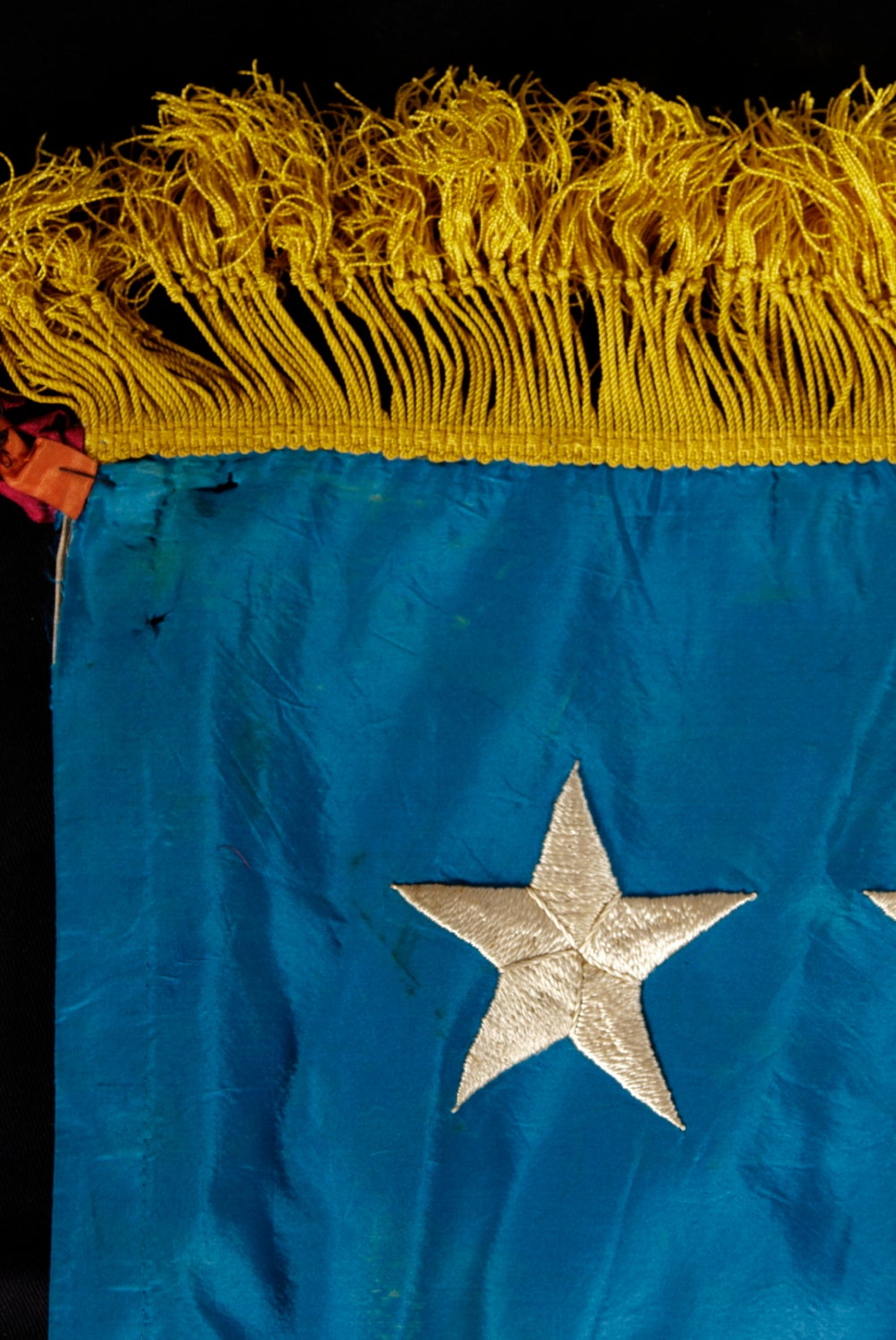
In terms of form and function, this example is constructed as a U.S. Infantry battle flag. It is pieced and seamed entirely with hand-stitching, which is very unusual for the period. The sewing is especially fine and indicative of the very highest quality, as are the materials. The canton and stripes are made of silk. The hoist end was rolled over and bound and there are six silk ties sewn along the leading edge (more were formerly present). There is a knotted silk fringe, gold in color, along three sides, which is typical of infantry battle flags. The stars are embroidered in white silk floss, either by hand or machine, having been executed so well that the method is difficult to ascertain. Embroidered along the 5th red stripe, in the same white floss, are the words “Forest City Light Infantry.” followed by the date “1872”.

A company of African American soldiers by this name, with Civil War roots, existed in Savannah, Georgia. The earliest date I can presently reference for their existence is 1873 (one year before the date on the flag), when an officer of a black G.A.R. unit by this name deposited funds in Freeman’s Bank, which was established in 1866 to assist freed slaves in the unhealthy circumstances of the financially depressed South. Probably the men of this regiment were freed by Union Forces as Sherman’s March (Nov. – Dec. 1864) pressed through the state. Part of the general’s orders read: ” VII. Negroes who are able-bodied and can be of service to the several columns may be taken along, but each army commander will bear in mind that the question of supplies is a very important one and that his first duty is to see to them who bear arms….” Records concerning African American soldiers in this sort of circumstance are very hard to acquire, as few were kept. Names seldom appear on muster rolls. Whatever the case may be, however, Civil War-related material that concerns black soldiers is rare and interesting and flags are seldom ever encountered in the marketplace, whether war-period or post-war, like this example.

In summary, this is one of the rarest star counts that there is among antique American flags, on a rare and stunning U.S. infantry battle flag, with great colors and exquisite construction, accompanied by its original tassels, and with rare African American association.

Mounting: The flag has not yet been mounted. We employ professional staff with masters degrees in textile conservation and can attend to all of your mounting and framing needs.

Flag size (H x L): 78″ x 81.25″ (incl. fringe).


July 2016 dates to fly Old Glory

June 28, 2016

Cover of Time Magazine, July 6, 1942,

Cover of Time Magazine, July 6, 1942, “Land of the Free,” painting by Boris Artzybasheff. Time sells these covers, framed if you prefer.

July 4. Surely everyone knows to fly the flag on Independence Day, the anniversary of the Declaration of Independence.*

In the month of the grand patriotic celebration, what other dates do we fly the U.S. flag? July 4 is the only date designated in the Flag Code for all Americans to fly the flag, in July.  Three states joined the union in July, days on which citizens of those states should show the colors: New York, Idaho and Wyoming.

Plus, there is one date many veterans think we should still fly the flag, Korean War Veterans Armistice Day on July 27.  Oddly, the law designating that date urges flying the flag only until 2003, the 50th anniversary of the still-standing truce in that war.  But the law still exists.  What’s a patriot to do?

Patriots may watch to see whether the president issues a proclamation for the date.

Generally we don’t note state holidays or state-designated flag-flying events, such as Utah’s Pioneer Day, July 24, which marks the day in 1847 that the Mormon pioneers in the party of Brigham Young exited what is now Emigration Canyon into the Salt Lake Valley. But it’s a big day in Utah, where I spent a number of years and still have family. And I still have memories, not all pleasant, of that five-mile march for the “Days of ’47 Parade” in Salt Lake City, in that wool, long-sleeved band uniform and hat, carrying a Sousaphone. Pardon my partisan exception. Utahns will fly their flags on July 24 in honor of the founding of Deseret, the name they gave the place 49 years before the U.S. admitted Utah to statehood.

  • Idaho statehood, July 3 (1890, 43rd state)
  • Independence Day, July 4
  • Wyoming statehood, July 10 (1890, 44th state)
  • New York statehood, July 26 (1788, 11th state)
  • National Korean War Veterans Armistice Day, Wednesday, July 27 (flags fly at half-staff, if you are continuing the commemoration which was designated in law only until 2003)

More:

U.S. flag and fireworks. Photographer and original publisher stripped at source. Can you offer credits?

U.S. flag and fireworks. Photographer and original publisher stripped at source. Can you offer credits?

_____________

* July 4? But didn’t John Adams say it should be July 2?  And, yes, the staff at Millard Fillmore’s Bathtub sadly noted that, at the Georgetown, Texas, July 4 parade in 2011 pictured at top, it appears no one saluted the U.S. flag as it passed, as the Flag Code recommends. MFB’s been fighting flag etiquette ignorance since 2006. It’s taking much, much longer than we wished.

Yes, this is mostly an encore post. Fighting ignorance requires patience.

Yes, this is mostly an encore post. Fighting ignorance requires patience.


Flying the flag for West Virginia Statehood, and remembering Muhammad Ali

June 20, 2016

On June 20, 1863, West Virginia joined the fractured union as the 35th state.

Yes, that was during the Civil War.  Yes, West Virginia had been the northwestern counties of Virginia.  No, I’m not sure of the history of how Congress decided Virginia had consented to be divided.

In any case, per the guidelines in the U.S. Flag Code, West Virginians should fly the U.S. flag today in honor of their statehood, 153 years ago.  West Virginia no doubt has lots of celebrations, reenactments, and general festive events planned.

West Virginia's State Capitol in Charleston, West Virginia, on December 11, 2011

West Virginia’s State Capitol in Charleston, West Virginia, on December 11, 2011 — built in 1931. From O Palsson’s Flickr collection: “As I was traveling through Charleston, the capital of West Virgina, during blue hour (my favorite time of day) a couple of days after Thanksgiving, I happened upon this beautiful sight of the State Capitol Building reflected in the Kanawha River flowing by in total stillness, so I just had to stop and capture the scene. I didn’t have a tripod handy, so this is not a long-exposure nightshot, just a regular hand-held shot accomplished by bumping up the ISO as much as I dared to get correct exposure at acceptable shutter speed (ended up being 1/40 sec) and doing my best to keep the camera steady.”

Kathryn and I have a few fond memories of Charleston.  Then-West Virginia Attorney General Charlie Brown was one of the few with enough wisdom to offer me a job, when I graduated from the National Law Center at George Washington University as an older student.  Brown promised to clean up West Virginia politics, and he had a lively, very young crew of attorneys fighting coal companies, oil companies, loggers, shady real estate people, and corrupt city, county and state officials.  One fellow in the office complained that he’d “had to argue eight cases” at the State Supreme Court that year, in his first year out of law school.

But the corrupt officials knew what they were doing.  Brown could only offer $25,000 a year, and in Charleston it was unlikely we’d be able to find any work for Kathryn.  Tough to attract crime fighters at less-than crime-fighting rates. It would have been a more than 75% cut in income.  We made a trip there to mull it over, baby on the way (pre-digital photographs buried in the archives).  Brown got a special dispensation to offer me $5,000 more.

Great tour of the Capitol, great interviews with the office lawyers.  Kathryn and I sat for a long while in the deserted West Virginia Supreme Court (sort of tucked into an attic of the Capitol) discussing how in the world we could afford to move the Charleston and take on the work.  We drove around the city, looking at houses for sale and rent; we gazed at the Kanawha River and discussed the future for the city.

We went to dinner in a tiny restaurant touted as Charleston’s finest, which was a long way from good eateries in D.C.  We discussed with our host the cultural pickings in Charleston.  We could give up the symphony but get back to fishing and practice fly fishing . . .

A few tables over, the maitre ‘d brought in a few extra chairs, and then seated Muhammad Ali and his party.  Our waiter asked that we not make a scene.

I don’t remember for what charitable purpose Ali was in Charleston, but the event was over and his hosts took him out to the good restaurant in Charleston, too.

Ali was a slower, sedate and gentle version of the fiery fighter he’d been.  Parkinson’s disease already had him in its grip.  His voice, soft as it could be at times, was still strong enough to carry across a table.  There was a young boy with the group, under five years old.  Ali had lost steps, but not spirit.  He produced a couple of balls from a pocket and proceeded to dazzle the kid with sleight-of-hand magic tricks.  He picked one of the balls from behind the kid’s ear, and the kid giggled wonderfully.  Balls appeared here, disappeared there — I remember thinking how much easier those tricks could be with hands that big; but Ali also had difficulty dealing with a knife and fork.  Working magic tricks pulled years away from Ali, and he seemed much younger, much more deft than he really was.  The little boy laughed and giggled through the meal.  It was a happy affair.

Our dinners finished about the same time.  As we got up, Ali looked over at us and said, “You wonder why I spend so much time with children?  They are the future.”

I turned down the offer from West Virginia.  A job I’d hoped for at American Airlines fell through, but a position opened up at the Office of Educational Research and Improvement (OERI) at Bill Bennett’s Department of Education.  A year or so later I saw small item in the Washington Post that Charlie Brown had been indicted on some charge.  Coal companies still have a lot of clout in West Virginia.

This is an anniversary day for Ali, too:  June 20, 1967, Muhammed Ali was convicted in Houston, Texas, of evading the draft.  That conviction was overturned by the U.S. Supreme Court.

Fly those flags in West Virginia.

More:

Save


Remember to fly your flag on Father’s Day 2016!

June 19, 2016

In the video, the U.S. flag flying at Circle 10 Council’s Camp Wisdom, in Dallas County, Texas.

Perhaps when you were a child, you watched your father as he posted Old Glory near your front door, on holidays and other special occasions. Your father set an example that you follow today.

Remember to honor your father by posting the flag today, Fathers Day. Fathers Day is one of those dates set in the U.S. Flag Code for citizens to fly the U.S. flag.

“Litchfield, Minnesota veterans Roger Tipka, Don Nordlie and Stan Mortenson, pictured from left, raise the U.S. flag prior to the start of the third annual Tournament of Duty in 2015. The three men all served in the Battle of Iwo Jima during World War II.” Litchfield Independent Observer photograph.


Arkansas Statehood Day 2016 – fly your flags, Arkansas

June 15, 2016

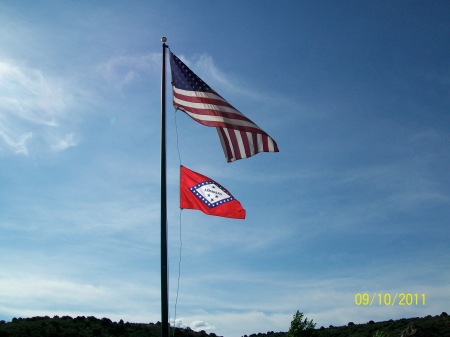
Arkansas statehood day is June 15 — Arkansas became the 25th state in 1836. Arkansas residents fly their U.S. flags today in commemoration of the event, the 180th anniversary.

U.S. and Arkansas flags flying from the same pole. Photo from Mountain Meadows Massacre Descendants.

U.S. and Arkansas flags flying from the same pole. Photo from Mountain Meadows Massacre Descendants.

Arkansas is the 25th state, admitted to the union on June 15, 1836.

Under current law, Arkansas’s celebration of statehood will almost always fall in the week designated as National Flag Week in other law, a week all Americans are asked to fly their U.S. flags. 2016 is one of those years. National Flag Week is the week including Flag Day, June 14. Only in those years June 15 falls on a Sunday will Arkansas get its statehood day to itself.

Arkansans may salute their flags twice, I suppose.

Happy birthday, Arkansas!

Arkansas prides itself on being a state with great natural beauty. In many places, the skies are dark enough one can see the Milky Way. This photo shows a meteoroid during Perseids meteor shower in late 2015 with Milky Way overhead, from a rural site in Northwest Arkansas. Photo by Michael McD

Arkansas prides itself on being a state with great natural beauty. In many places, the skies are dark enough one can see the Milky Way. This photo shows a meteoroid during Perseids meteor shower in late 2015 with Milky Way overhead, from a rural site in Northwest Arkansas. Photo by Michael McD.

More:


On what dates should we fly the flag in June?

June 14, 2016

Oswego, New York. Air cadets marching in front of the boy scouts carrying United Nations flags on Flag Day 1943 during United Nations week. Photo by Marjory Collins, Library of Congress image

Oswego, New York. Air cadets marching in front of the boy scouts carrying United Nations flags on Flag Day 1943 (June 14) during United Nations week. Photo by Marjory Collins, Library of Congress image

June holds only two days designated for flying the U.S. flag out of the specific days mentioned in the U.S. Flag Code, and six statehood days, when residents of those states should fly their flags.  Plus, there is National Flag Week.

Two Flag Code-designated days:

  • Flag Day, June 14
  • Fathers Day, third Sunday in June (June 21)

Several states celebrate statehood. New Hampshire, Virginia, Arkansas, Kentucky, Tennessee and West Virginia celebrate statehood; Kentucky and Tennessee share the same date.

  • Kentucky, June 1 (1792, 15th state)
  • Tennessee, June 1 (1796, 16th state)
  • Arkansas, June 15 (1836, 25th state)
  • West Virginia, June 20 (1863, 35th state)
  • New Hampshire, June 21 (1788, 9th state), and
  • Virginia, June 25 (1788, 10th state)

Additionally, Congress passed a resolution designating the week in which June 14th falls as National Flag Week, and urging that citizens fly the flag each day of that week.  In 2016 that would the week of June 12, which falls on Sunday, through June 18.

Flag-flying days for June, listed chronologically:

  1. Kentucky and Tennessee statehood, June 1
  2. Flag Day, June 14; National Flag week, June 12 to 18
  3. Arkansas statehood, June 15 (duplicating National Flag Week)
  4. Fathers Day, June 19
  5. West Virginia statehood, June 20
  6. New Hampshire statehood, June 21
  7. Virginia statehood, June 25

Tip of the old scrub brush to Mike’s Blog Rounds at Crooks and Liars — thanks for the plug!


Flag Day 2016 – Fly your flag June 14! Oh, and sing!

June 14, 2016

Our traditional Flag Day post.

Of course, you’re ready to fly your Stars and Stripes on Tuesday, June 14, right?

Flag Day 2014 celebrates the U.S. flag, now over 200 years since the night (in September) the British invaded Baltimore — the Battle of Baltimore, and the Battle of Baltimore Harbor, during the War of 1812.  On that night, Georgetown, D.C., lawyer Francis Scott Key negotiated the release of a physician the British captured during their raid on Washington, D.C.  But British officers didn’t want Key to be able to reveal what he might have learned about their next target, Baltimore.  So they put Key on a boat to watch as they invaded Baltimore, trying to capture the fort that guarded the harbor, Fort McHenry.

Yes, THAT battle.  Key saw the flag at the fort flying, under extreme bombardment, at sunset.  The bombardment continued through night.  At dawn, on September 14, 1814, Key saw that the massive flag at Fort McHenry still flew, meaning the British invasion failed.

He was inspired to write poem, “The Defense of Fort McHenry.”  You know the opening line:

“O! Say can you see by the dawn’s early light, what so proudly we hailed at the twilight’s last gleaming?”

History by Zim has a more detailed account — and this photo, noted as probably the first photograph of that same flag.

From History by Zim:

From History by Zim: “This is the first known photograph of the American flag taken on June 21, 1873 by George Henry Preble. The flag was flown over Fort McHenry in Baltimore, Maryland during an infamous battle between the British and the United States during the War of 1812. Photo Credit: National Star-Spangled Banner Centennial, Baltimore, Maryland, September 6 to 13, 1914.”

Flag Day, June 14th, marks the anniversary of the resolution passed by the Second Continental Congress in 1777, adopting the Stars and Stripes as the national flag.

Fly your flag today. This is one of the score of dates upon which Congress suggests we fly our U.S. flags.

Flag Day 1916, parade in Washington, D.C. - employees of National Geographic Society march - photo by Gilbert Grosvenor

Flag Day 1916, parade in Washington, D.C. – employees of National Geographic Society march – photo by Gilbert Grosvenor

The photo above drips with history, 100 years ago today. Here’s the description from the National Geographic Society site:

One hundred and fifty National Geographic Society employees march in the Preparedness Parade on Flag Day, June 14, in 1916. With WWI underway in Europe and increasing tensions along the Mexican border, President Woodrow Wilson marched alongside 60,000 participants in the parade, just one event of many around the country intended to rededicate the American people to the ideals of the nation.

Not only the anniversary of the day the flag was adopted by Congress, Flag Day is also the anniversary of President Dwight Eisenhower’s controversial addition of the words “under God” to the Pledge of Allegiance in 1954.

(Text adapted from “:Culture: Allegiance to the Pledge?” June 2006, National Geographic magazine)

The first presidential declaration of Flag Day was 1916, by President Woodrow Wilson. Wilson won re-election the following November with his pledge to keep America out of World War I, but by April of 1917 he would ask for a declaration of war after Germany resumed torpedoing of U.S. ships. The photo shows an America dedicated to peace but closer to war than anyone imagined. Because the suffragettes supported Wilson so strongly, he returned the favor, supporting an amendment to the Constitution to grant women a Constitutional right to vote. The amendment passed Congress with Wilson’s support and was ratified by the states.

The flags of 1916 should have carried 48 stars. New Mexico and Arizona were the 47th and 48th states, Arizona joining the union in 1913. No new states would be added until Alaska and Hawaii in 1959. That 46-year period marked the longest time the U.S. had gone without adding states, until today. No new states have been added since Hawaii, more than 57 years ago. (U.S. history students: Have ever heard of an essay, “Manifest destiny fulfilled?”)

150 employees of the National Geographic Society marched in that parade in 1916, and as the proud CEO of any organization, Society founder Gilbert H. Grosvenor wanted a photo of his organization’s contribution to the parade. Notice that Grosvenor himself is the photographer.

I wonder if Woodrow Wilson took any photos that day, and where they might be hidden.

History of Flag Day from a larger perspective, from the Library of Congress:

Since 1916, when President Woodrow Wilson issued a presidential proclamation establishing a national Flag Day on June 14, Americans have commemorated the adoption of the Stars and Stripes by celebrating June 14 as Flag Day. Prior to 1916, many localities and a few states had been celebrating the day for years. Congressional legislation designating that date as the national Flag Day was signed into law by President Harry Truman in 1949; the legislation also called upon the president to issue a flag day proclamation every year.

According to legend, in 1776, George Washington commissioned Philadelphia seamstress Betsy Ross to create a flag for the new nation. Scholars debate this legend, but agree that Mrs. Ross most likely knew Washington and sewed flags. To date, there have been twenty-seven official versions of the flag, but the arrangement of the stars varied according to the flag-makers’ preferences until 1912 when President Taft standardized the then-new flag’s forty-eight stars into six rows of eight. The forty-nine-star flag (1959-60), as well as the fifty-star flag, also have standardized star patterns. The current version of the flag dates to July 4, 1960, after Hawaii became the fiftieth state on August 21, 1959.

Fly your flag with pride today.

Elmhurst Flag Day 1939, DuPage County Centennial - Posters From the WPA

Elmhurst flag day, June 18, 1939, Du Page County centennial / Beauparlant.
Chicago, Ill.: WPA Federal Art Project, 1939.
By the People, For the People: Posters from the WPA, 1936-1943

This is an encore post, from June 14, 2009, and other previous Flag Days.

More, and Other Voices:


June 1, 2016: Fly your flags today in Kentucky and Tennessee for Statehood Day

June 1, 2016

Our laws on respecting and flying Old Glory encourage citizens to fly U.S. flags on specific dates, and on the date of statehood of the state in which a citizen lives.

Kentucky joined the union on June 1, 1792, the 15th state.  Tennessee joined four years later, on June 1, 1796, becoming the 16th state.

Fly your flags today in Kentucky and Tennessee — or wherever Kentuckians or Tennesseeans may be — in honor of statehood.

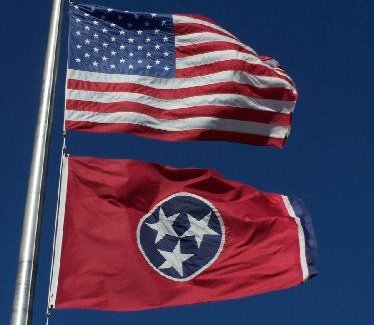
U.S. and Tennessee flags flying together on one staff. Photo by J. Stephen Conn

U.S. and Tennessee flags flying together on one staff. Photo by J. Stephen Conn

Kentucky's state flag, by Gage Skidmore

Kentucky’s state flag features a Native American and European colonist standing together, and the state motto, “United We Stand, Divided We Fall.” Photo by Gage Skidmore

Kentucky’s admission to the union pushed the U.S. flag to 15 stars and 15 stripes.   President George Washington signed the law that authorized the U.S. flag be expanded to 15 stripes in early 1794.  I’ve not pinned down the history of what happened next.  So far as I know there was no law expanding the flag to 16 stripes, and in 1818, Congress said the flag would be 13 stripes, with stars equal to the number of states (the law specified no specific pattern for the stars).

A 15-striped Star-spangled Banner that flew over Fort McHenry in Baltimore Harbor in 1814 and inspired Francis Scott Key to write the poem that is now the lyric to our national anthem.  President James Monroe signed the 13-stripe law four years later, in 1818.

What happened in between?  I suspect there are a lot of 15-stripe flags, but it wouldn’t surprise me to find a 16-stripe flag somewhere.  A variety of stars-and-stripes flags cropped up, which the 1818 law was intended to squelch.

Residents of the Bluegrass State and the Volunteer State should fly their flags today, in honor of their state’s having joined the union on June 1.

More:

https://twitter.com/gordonbelt/status/738001021708992512


http://twitter.com/hoyosplacido3/status/604008354571259904


Yes, this is mostly an encore post. Fighting ignorance requires patience.

Yes, this is mostly an encore post. Fighting ignorance requires patience. And repetition.


Memorial Day 2016 – Fly your flag today

May 30, 2016

U.S. flags flying at the Dallas-Fort Worth National Cemetery, for Memorial Day 2015. Photo by Ed Darrell. Please use.

U.S. flags flying at the Dallas-Fort Worth National Cemetery, for Memorial Day 2015. Photo by Ed Darrell. Please use.

Fly your flag today for Memorial Day.

On Memorial Day, flags should be flown at half-staff until noon, then raised to full staff (and retired at sunset).

Just a reminder: When posting a flag to half-staff, it should be raised with gusto to full staff, then slowly lowered to the half-staff position.  On Memorial Day, when changing the flag’s position at noon, simply raise the flag briskly to full staff.  At retirement, the flag should be lowered in a stately fashion.

U.S. flags flying at the Dallas Fort Worth National Cemetery, for Memorial Day 2015. You may use this photo.

U.S. flags flying at the Dallas Fort Worth National Cemetery, for Memorial Day 2015. You may use this photo.


May 2016, flag-flying dates

May 4, 2016

Childe Hassam,

Childe Hassam, “Victory Day, May 1919,” 1919, oil on canvas, 36 x 21 3/4 inches (91.4 x 55.2 cm), American Academy of Arts and Letters, NY. There were at least twenty-three paintings in Hassam’s series of flag paintings. This Victory Day celebration no longer occurs, though there are several other May days to fly the colors.

May has three days designated for flying the U.S. flag out of the specific days mentioned in the U.S. Flag Code, three days designated in other federal laws,  and three statehood days, when residents of those states should fly their flags.

Interestingly, the three designated days all float, from year to year:

  • Mother’s Day, second Sunday in May (May 8, in 2016)
  • Armed Forces Day, third Saturday in May (May 21)
  • Memorial Day, the last Monday in May (May 30)

Residents of these states celebrate statehood; South Carolina and Wisconsin share May 23:

  • Minnesota, May 11 (1858, the 32nd state)
  • South Carolina, May 23 (1788, the 8th state)
  • Wisconsin, May 23 (1848, the 30th state)
  • Rhode Island, May 29 (1790, the last of the 13 original colonies to ratify the Constitution)

This year President Obama issued a proclamation calling on citizens to fly the flag on May 1, Law Day (I missed that one). It’s also Loyalty Day, which got a proclamation from President Obama calling for flag flying in 2016 (missed that one, too).

May 8 marks the 70th anniversary of Victory in Europe Day, the day the Axis Powers in Europe surrendered at the end of World War II.  Some years that day is marked by a proclamation calling for flag flying.  (You may fly your flag then even if Congress and the President do nothing.)

In recent years President Obama has proclaimed May 15 as Peace Officers Memorial Day, with flags to fly at half-staff. We might expect another such declaration in 2016.

May 22 is National Maritime Day, under a Joint Resolution from Congress from 1933. President Obama may be expected to proclaim that day as a day to fly the flag, too.

Gee, twelve events on fourteen days to fly the U.S. flag.  May could be quite busy for flag fliers.

  1. Law Day, May 1, AND
  2. Loyalty Day, May 1
  3. Victory in Europe Day, May 8, AND
  4. Mothers Day, May 8
  5. Minnesota Statehood, May 11
  6. Peace Officers Memorial Day, May 15 (half-staff flags; the law for Police Week calls for flags to be half-staff the entire week in which May 15 occurs, May 15-20 in 2016)
  7. Armed Forces Day, May 21
  8. National Maritime Day, May 22
  9. South Carolina Statehood, May 23, AND
  10. Wisconsin Statehood, May 23
  11. Memorial Day, May 30
  12. Rhode Island Statehood, May 29
Yes, this is mostly an encore post. Fighting ignorance requires patience.

Yes, this is mostly an encore post. Fighting ignorance requires patience, and repetition.

Save


Presidents’ Day 2016: Fly your flag today

February 15, 2016

It’s Presidents’ Day on most calendars, though the official U.S. holiday is “Washington’s Birthday.”

Presidents’ Day, or Washington’s Birthday, is celebrated on the third Monday in February. In 2016 this will overlap the period of mourning for Supreme Court Associate Justice Antonin Scalia.  President Barack Obama ordered flags to be flown half staff to honor Justice Scalia; if your flag pole allows, you should fly your flag at half staff, even on Washington’s Birthday.

You’re already flying your flag today, right?  Let’s recapitulate from last year.

Dr. Bumsted reminds us we need to emphasize that the federal holiday is Washington’s Birthday, not a day to honor presidents generically.  See the explanation from the U.S. National Archives.

Presidents Day is February 15, 2016 — fly your U.S. flag today.

National Park Service photo, Lincoln Memorial through flags at Washington Monument

The Lincoln Memorial, seen through flags posted at the Washington Monument, Washington, D.C.; National Park Service Photo via About.com

Oddly enough, some controversy arises from time to time over how to honor President Washington and President Lincoln, and other presidents.  Sometimes the controversy simmers over how to honor great Americans — if Lincoln deserves a day, why not FDR?  Why not Jefferson? — and sometimes the controversy covers more mundane ground — should the federal government give workers a day off?  Should it be on a Monday or Friday to create a three-day weekend to boost tourism?  About.com explains the history of the controversy:

Presidents’ Day is intended (for some) to honor all the American presidents, but most significantly George Washington and Abraham Lincoln. According to the Gregorian or “New Style” calendar that is most commonly used today, George Washington was born on February 22, 1732. But according to the Julian or “Old Style” calendar that was used in England until 1752, his birth date was February 11th. Back in the 1790s, Americans were split – some celebrated his birthday on February 11th and some on February 22nd.

When Abraham Lincoln became president and helped reshape our country, it was believed he, too, should have a special day of recognition. Tricky thing was that Lincoln’s birthday fell on February 12th. Prior to 1968, having two presidential birthdays so close together didn’t seem to bother anyone. February 22nd was observed as a federal public holiday to honor the birthday of George Washington and February 12th was observed as a public holiday to honor Abraham Lincoln’s birthday.

In 1968, things changed when the 90th Congress was determined to create a uniform system of federal Monday holidays. They voted to shift three existing holidays (including Washington’s Birthday) to Mondays. The law took effect in 1971, and as a result, Washington’s Birthday holiday was changed to the third Monday in February. But not all Americans were happy with the new law. There was some concern that Washington’s identity would be lost since the third Monday in February would never fall on his actual birthday. There was also an attempt to rename the public holiday “Presidents’ Day”, but the idea didn’t go anywhere since some believed not all presidents deserved a special recognition. [Take THAT you Franklin Pierce and Millard Fillmore fans!]

Even though Congress had created a uniform federal holiday law, there was not a uniform holiday title agreement among the individual states. Some states, like California, Idaho, Tennessee and Texas chose not to retain the federal holiday title and renamed their state holiday “President’s Day.” From that point forward, the term “Presidents’ Day” became a marketing phenomenon, as advertisers sought to capitalize on the opportunity for three-day or week-long sales.

In 1999, bills were introduced in both the U.S. House (HR-1363) and Senate (S-978) to specify that the legal public holiday once referred to as Washington’s Birthday be “officially” called by that name once again. Both bills died in committees.

Today, President’s Day is well accepted and celebrated. Some communities still observe the original holidays of Washington and Lincoln, and many parks actually stage reenactments and pageants in their honor. The National Park Service also features a number of historic sites and memorials to honor the lives of these two presidents, as well as other important leaders.

Fly your flag, read some history, enjoy the day.

More, Resources, and Related Articles:

English: Air Force One, the typical air transp...

President’s airplane, Air Force 1, flying over Mount Rushmore National Monument, in South Dakota – Image via Wikipedia; notice, contrary to Tea Party fears, the bust of Obama is not yet up on Rushmore (and also note there remains no room for another bust).

Yes, this is mostly an encore post.  This event occurs every year.


Flags at half-staff to honor Justice Antonin Scalia

February 15, 2016

U.S. Flag flew at half staff outside the Supreme Court on Sunday, February 14, 2016, in honor of Associate Justice Antonin Scalia, who died February 13.

U.S. Flag flew at half staff outside the Supreme Court on Sunday, February 14, 2016, in honor of Associate Justice Antonin Scalia, who died February 13. VOA image.

President Barack Obama ordered flags to be flown half-staff to honor Justice Antonin Scalia, who died February 13.  The half staff honor continues through the end of the day on which Justice Scalia is interred.

The order from the White House:

Presidential Proclamation: Death of Antonin Scalia

As a mark of respect for Antonin Scalia, Associate Justice of the United States, I hereby order, by the authority vested in me by the Constitution and laws of the United States of America, including section 7 of title 4, United States Code, that the flag of the United States shall be flown at half-staff at the White House and on all public buildings and grounds, at all military posts and naval stations, and on all naval vessels of the Federal Government in the District of Columbia and throughout the United States and its Territories and possessions until sunset, on the day of interment.  I also direct that the flag shall be flown at half-staff for the same period at all United States embassies, legations, consular offices, and other facilities abroad, including all military facilities and naval vessels and stations.

IN WITNESS WHEREOF, I have hereunto set my hand this thirteenth day of February, in the year of our Lord two thousand sixteen, and of the Independence of the United States of America the two hundred and fortieth.

BARACK OBAMA

# # #

The mourning period in which flags are to be flown half staff probably will include Presidents Day, February 15. Flags flown in honor of Presidents Day 2016 should be flown half staff. Where flags cannot be lowered, fly the flag as it is normally displayed.


February 12, Lincoln’s birthday: Fly your flag!

February 12, 2016

President’s Day is next week.  The U.S. Flag Code urges Americans to fly Old Glory on Lincoln’s birthday, on February 12, anyway.

That’s today!

Is your flag waving?

A flag used in 1860 during Lincoln's first campaign for the presidency. Under the modern flag code, such use of a flag is considered disrespectful -- and therefore not the flag to fly today. Granger Collection, New York City, via Britannica

A flag used in 1860 during Lincoln’s first campaign for the presidency. Under the modern flag code, such use of a flag is considered disrespectful — and therefore not the flag to fly today. Granger Collection, New York City, via Britannica

More:

Yes, this is mostly an encore post. Fighting ignorance requires patience.

Yes, this is mostly an encore post. Fighting ignorance requires patience.


February 6, Massachusetts Statehood Day

February 6, 2016

Flag etiquette guides and the U.S. Flag Code urge residents of Massachusetts to fly U.S. flags today, to honor Massachusetts’s joining the Union.

U.S. flag flies at Quincy Market in Boston (a 4th of July celebration is pictured) - WHDH Channel 7 image

U.S. flag flies at Quincy Market in Boston (a 4th of July celebration is pictured) – WHDH Channel 7 image

Massachusetts’s statehood is figured as the date the colony ratified the U.S. Constitution. A convention ratified the document on February 6, 1788. Massachusetts was the 6th colony to ratify.

The next flag-flying date is February 12, in honor of Lincoln’s birthday.


February 2016 Dates to fly the U.S. flag

February 2, 2016

Photo #: 80-G-K-21225 (color)

Caption from the U.S. Navy, via Wikipedia: Photo #: 80-G-K-21225 (color) “First Recognition of the American Flag by a Foreign Government,” 14 February 1778. Painting in oils by Edward Moran, 1898. It depicts the Continental Navy Ship Ranger, commanded by Captain John Paul Jones, receiving the salute of the French fleet at Quiberon Bay, France, 14 February 1778. Earlier in the month, after receipt of news of the victory at Saratoga, France recognized the independence of the American colonies and signed a treaty of alliance with them. The original painting is in the U.S. Naval Academy Museum, Annapolis, Maryland. Official U.S. Navy Photograph, now in the collections of the National Archives. [A larger version is available for download at Wikipedia.]

You want to mark your calendar so you remember to put your U.S. flag up on those dates designated by law and tradition, right?

Which dates in February?

  • Massachusetts statehood, February 6 (6th state, 1788)
  • Lincoln’s birthday, February 12 (yes, it’s still designated in law as a date to fly the flag)
  • Oregon statehood, February 14 (33rd state, 1859)
  • Arizona statehood, February 14 (48th state, 1913)
  • Washington’s birthday, now designated President’s Day, the third Monday in February, February 16 in 2015

You may fly your flag on state holidays, too — which of those dates do we see in February?  Is there a good list?

Though we don’t mark it usually, February 14 is the anniversary of the first recognition of the Stars and Stripes by a foreign government, in 1778.  The French fleet recognized the ensign carried by Capt. John Paul Jones, at Quiberon Bay — painting of the event is at the top of this post.

February 23 is the anniversary of the raising of the U.S. flag on Iwo Jima, in 1945 — 71 years ago.  We should probably watch for proclamations to fly the flag on that date, an anniversary made more important simply because so few survivors of from among the veterans of that war and that fight can be expected to live to see the 80th anniversary. Regardless any official, formal proclamation to fly the flag for the Iwo Jima events, you may always fly your flag.

Please visit earlier posts at Millard Fillmore’s Bathtub, on the death of Joe Rosenthal, the photographer who took the widely-released iconic photo; on the death of Charles Lindberg, pictured in the first flag-raising on Mt. Suribachi; on the death of Raymond Jacobs, the last-surviving veteran from the flag raisings; and on my visit to the Sunset Parade at the Iwo Jima-themed U.S. Marine Memorial overlooking Washington, D.C.

A Youtube poster edited a part of the Army’s documentary, “To the Shores of Iwo Jima,” showing the flag raising on film, and added in some other images for a less-than-three-minute look.

Yes, this is mostly an encore post. Fighting ignorance requires patience.

Yes, this is mostly an encore post. Fighting ignorance requires patience.