News blackout on Gonzales?

May 18, 2007

Gonzalez gone? Who noticed?

U.S. Attorney General Alberto Gonzalez, the subject of the lead editorial in the New York Times Thursday morning and on the front pages of newspapers nationwide, was the keynote speaker at a luncheon honoring civil rights leader Whitney Young, for the Boy Scouts, in Dallas, Wednesday, May 17.

But who knew? News media did not cover the speech – were they barred? – nor did anyone involved make any fuss. There was no press release from the Justice Department, no press release from the Circle 10 Council, B.S.A., no speech text . . .

One would think it would be news simply that the nation’s attorney general was speaking at an event honoring Whitney Young. One would think that any speech by Alberto Gonzales would get coverage by at least the major local news outlets. Heck, the luncheon was MCed by a local television weather guy – his own station didn’t bother to cover it?

If an embattled attorney general speaks up for civil rights and youth development, but no one is there to listen, does it matter?

Did I miss the coverage of the speech? Why the news blackout, and who asked for it?

New information, May 19:  One of the purposes of Gonzales’ trip to Texas was the annual meeting with U.S. attorneys, in San Antonio.  That meeting was off-the-record, private, etc., etc.  See this report at Think Progress.


War on science: Spinning DDT, slandering the dead

May 17, 2007

What rational person would have thought irrationality could be in such surplus?

My post on the silly opposition to naming a post office after Rachel Carson produced a minor response. Reader Electratig took me to task at his blog.

Criticism is based on interesting claims that millions have died unnecessarily because the entire planet was driven to ban DDT, which is really not toxic to humans, and which really is the panacea that would rid the world of malaria. I’m surprised that DDT isn’t implicated as a cure for the designated hitter rule, too. The criticisms don’t hold so much water as the critics claim, I find. Read the rest of this entry »


Carnival still in town? We didn’t miss it?

May 13, 2007

History Carnival 52 was up on May 1 at Clioweb. What sort of a fog have I been in? Check out especially this post at Food History, demonstrating several uses of critical thinking tools as they might analyze the bizarre idea that most meat in Middle Ages Europe was rancid, thereby leading to a rise in the use of spices. Spices don’t make up for stomach cramps, for example. There must be some sort of critical thinking exercise in there for a world history class.

Carnival of the Liberals 38 came online earlier this week, at This Is So Queer. With fires raging in the hills around Burbank — documented with eerily beautiful photography — a fire of war in Iraq, and a fire around the Second Amendment, posts collected at the carnival offer fuel for intellectual fires on big issues.

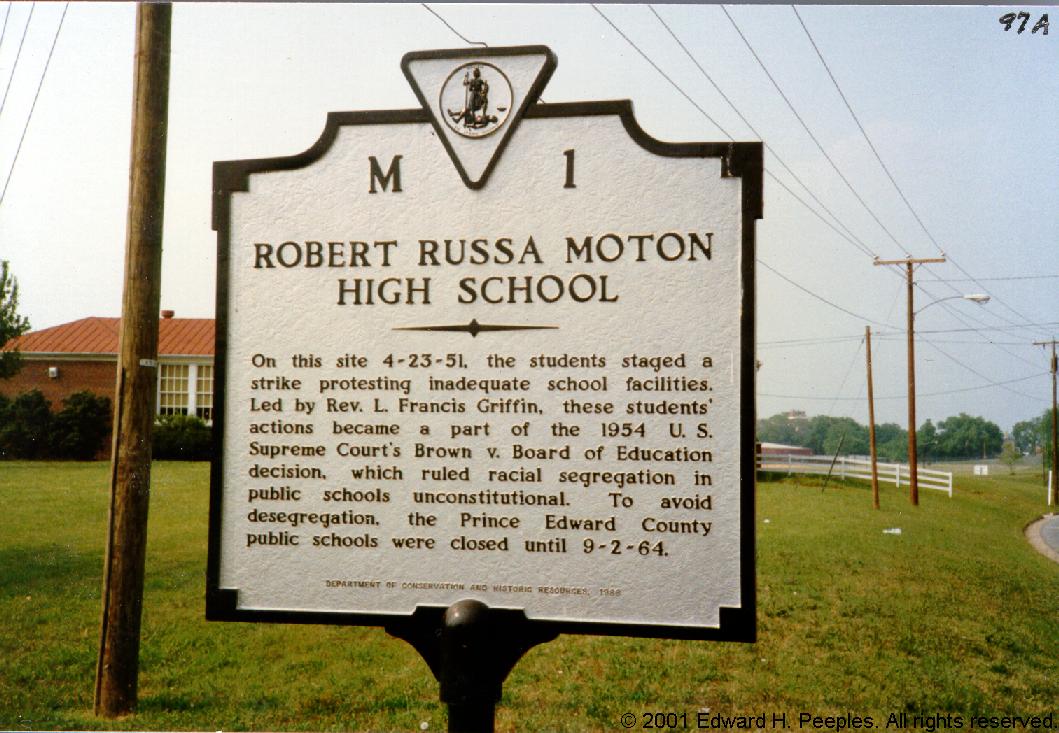
Moton HS historical markerAnd, the venerable Carnival of Education, issue 118, was up earlier at NYC Educator, with good posts on laptops in school, parenting, administering, enduring, and everything else related to education. (Click on the photo for a larger image — it’s the historical marker at the former Robert R. Moton High School, in Prince Edward County, Virginia — where one of the most poignant of the cases against school segregation began, Davis vs. Prince Edwards County Schools — part of the Brown vs. Topeka Board of Education case decided in 1954. Photo from Virginia Commonwealth University.)

Carnival of Homeschooling 71 lolls, at On The Company Porch.

And, of course, if you wish to nominate a post for the next Fiesta de Tejas!, scheduled for June 2, just use this button:


Blog Carnival submission form - fiesta de tejas!

Have a good Mother’s Day — call all the mothers you know. Why be picky?


Speak we now of famous trees, and Ray Charles

May 12, 2007

You want a memorial to Ray Charles, in your yard?  Ray Charles

American Forests will sell you a live oak tree propagated from the live oak Charles knew as a youth at his school, in St. Augustine, Florida.  It’s part of their “Famous Trees” program.

We looked at a lot of famous trees, including Austin, Texas’s Treaty Oak, and the Wye Oak in Maryland, for our son’s Eagle Scout project at the Dallas-Fort Worth National Cemetery, but utlimately found nothing exactly fitting.  A school could have quite a forest of trees from Thomas Jefferson, George Washington, Dwight Eisenhower, Theodore Roosevelt, and now, Ray Charles.

Most trees are about $40.00.  Will your PTA finance your planting a grove of historic trees at your school?

Wye Oak, when it was alive, prior to 2002  The Wye Oak, in its glory (prior to June 2002).  Photo from Jeff Krueger’s Historic Trees Project, accessed May 12, 2007.


Quote of the moment: Lincoln on Labor

May 12, 2007

Abraham Lincoln, president-elect, on Feb. 23, 1861 - History Place

Labor is prior to, and independent of,capital.  Capital is only the fruit of labor, and could not have existed if labor had not first existed.  Labor is the superior of capital, and deserves much the higher consideration.

Lincoln in the Annual Message to Congress, December 3, 1861

The photograph shows Lincoln as president-elect; it is one of a series taken on February 23, 1861; from The History Place.


Fighting history hoaxes

May 11, 2007

Daily Kos I don’t get to daily. But here’s a post I did see that all history teachers ought to read, if only to raise their consciousness about the frauds that plague us every day: Help Fight Fake History that Powers the American Right.

Fight fake historyChris Rodda needs help supporting her research against all the old dogs of history revisionism, and the post from Troutfishing goes through most of the dishonor roll: D. James Kennedy, David Barton, Catherine Millard, and Chuck Norris

Rodda’s blog series can be found at Talk2Action.

My interest in getting history done right was kindled when high school teachers mentioned early versions of David Barton’s work — stuff that showed up on tests, though anyone who had read our texts and had a passing knowledge of real history would have known was in error. As a staffer in the U.S. Senate I had to got to read letters from people who bought the Barton tales lock, stock, and monkey barrel, and who consequently felt that everyone else on Earth was lying to them.

I wish Rodda luck.


News on trial: Newseum makes grand plans

May 11, 2007

Newshounds, newsmakers and news writers ought to salivate at the idea of a grand museum to the First Amendment on Pennsylvania Avenue, N.W., in Washington, D.C.  Organizers of the Newseum plan exactly that, with a grand opening in October 2007.

It promises serious analysis, not just cheerleading, for news media, according to the New York Times:

The Newseum’s goal is to present the “first rough draft of history” in all its glory and some of its shame, impressing upon visitors the importance of the First Amendment’s protections of a free press. In the glory department are Edward R. Murrow’s rooftop broadcasts from London during the Blitz; he is among the heroes of a short movie to be shown in the Newseum’s 4-D theater, where the seats will literally shake as German planes roar overhead.

The shame is evident in exhibits examining, among other things, Jayson Blair’s manufactured articles in The New York Times and Jack Kelley’s fabrications in USA Today. Videos address the use of anonymous sources and how bias can find its way into news accounts.

One of the museum’s major challenges will be to attract visitors at a time when surveys show that public respect for the news media has been ebbing. Charles L. Overby, chief executive of the Freedom Forum, the nonprofit organization that underwrites the Newseum, discussed the problem in an interview in his temporary office adjacent to the construction site.

“Our annual survey shows that 40 percent of the American public believes the press has too much freedom,” he said, adding that the museum’s job is to educate — in an engaging way.

The Newseum, he emphasized, is not meant to be a monument to the press, but to its freedom.

Because of the building’s location, one could do a tour of the FBI building, and close out the day with a tour of the Newseum, probably from the same bus stop.


Radio history, historic radio

May 7, 2007

Internet connections can really boost history with sound and film presentations. History is really still in infancy stages, but some sites flash through with brilliant views of what can be done.

Old Time Radio posts a wealth of sound clips from throughout radio history, coupled with essays detailing much of the history that isn’t in the soundclips. The site seems to have almost all the episodes from Captain Midnight, for example. You can also hear Terry and the Pirates, or Fred Allen or Jack Benny.

The real gems, to me, are the newscasts and the stories of the newscasters. The 1937 broadcast of the Hindenberg Disaster is available, but so are some of the later and more important, and more rare, broadcasts of World War II: the Austrian Crisis, Neville Chamberlain with Britain’s declaration of war, news bulletins of the Pearl Harbor attack, on-the-scene accounts of the D-Day invasion of Normandy (with more accounts here), the battle for Iwo Jima now famous from two Clint Eastwood films, and V-J Day (“Victory-Japan”).

Later clips make this a standout site, and tantalize us with possibilities.  Ernest Hemingway’s suicide report, the 6-Day War between Israel and Egypt and Syria in 1967, and a report on the funeral of Robert F. Kennedy in 1968 flesh out events that the high school history texts tend to stroll quickly over, and offer possibilities of classroom enrichment beyond the texts.

Surely more radio broadcasts exist that could be used in history classrooms.  Radio and broadcast history sites like The Broadcast Archive have the history of broadcast, but few actual broadcasts.   Other sites carry a few important broadcasts, but like this one, come weighted with polemics (the politics and religion on this site make it questionable for school use, though students may not think to look at the home site from the broadcast links — where did this guy get these broadcasts, and does he have the rights correctly listed?).

Some research suggests that students learn history partially through repetition, as with any other topic.  The old “repeat it four times” rule gets boring in class, but can be kept alive by repetition in other media.  Teachers who use the actual broadcasts of news of what are now historic events can make history speak to students.  Can.

More radio broadcast history:

BBC News historic broadcast archives  (This site has broadcasts through current times, including, for example, broadcasts of Nelson Mandela’s rise to the presidency of South Africa, a much-ignored era in too many classrooms.)

Earthstation 1 CDs and DVDs for purchase

Timeline of radio, from the California Historical Radio Society

Radio broadcasts 1939-1943 from the University of San Diego’s history server

Ken Burns’ “Empire of the Air” companion site

First commercial broadcast in the U.S., KDKA-AM, Pittsburgh, Pennsylvania, with results of the Cox-Harding presidential election, November 2, 1920


Moment in history: May 6, 1937, the Hindenberg crash

May 6, 2007

May 6, 2007, is the 70th anniversary of the Hindenberg tragedy. Docking at its station in New Jersey, after crossing the Atlantic, a spark ignited the aluminum-based paint on the airship, and the entire craft exploded into flame.

35 people died on the airship, and one on the ground — did you know a few survived? The Associated Press interviewed a man who was 8-years old that day, and a passenger on the airship.

Werner Doehner, an 8-year-old passenger aboard the Hindenburg, saw chairs fall across the dining room door his father had walked through moments before the disaster. He would never see his father alive again.

“Just instantly, the whole place was on fire,” said Doehner, of Parachute, Colo., who is the last surviving passenger. “My mother threw me out the window. She threw my brother out. Then she threw me, but I hit something and bounced back. She caught me and threw me the second time out. My sister was just too heavy for her. My mother jumped out and fractured her pelvis. Regardless of that, she managed to walk.”

Hindenberg on fire

Hindenberg on fire, May 6, 1937.

The disaster erroneously condemned hydrogen in the public’s mind. Despite widespread use of hydrogen gas for cooking and some transportation during World War II (including in the U.S.), use of hydrogen as a fuel beyond that has always faced the hurdle of the “Hindenberg Syndrome,” the fear that the gas would explode. Fact is that gasoline is much more volatile, more explosive, and generally more dangerous, than hydrogen.


Digging deeper into history of the South and civil rights movement

May 2, 2007

Hurry over the New York Times site before the article goes into the “gotta-pay-to-see” bin, and read the story by Patricia Cohen about other stories beyond the classic race confrontations, from the South, during the Civil Rights Movement:  “Interpreting Some Overlooked Stories from the South.”

A new generation of historians is exploring some of the untold stories of the civil rights movement and its legacies: the experiences not of heroes or murderous villains, but of ordinary Southern whites. And their research is challenging some long-held beliefs about the nation’s political realignment and the origins of modern conservatism.

“You want to pry below these great narratives of good and evil and black and white,” said Jason Sokol, 29, who wrote “There Goes My Everything: White Southerners in the Age of Civil Rights, 1945-1975” (Alfred A. Knopf). “For those of us who didn’t live through it, there’s more of an effort to not simply celebrate the civil rights movement and how extraordinary it was, but to place it within the broader arc of the 20th century.”

Much history of the era remains to be written, especially local histories that students in high schools could get from local newspaper archives, from interviews, and other local sources.

This new wave of historians, many of them young, believe that one cannot understand today’s housing, schooling, economic development or political patterns without understanding the mostly apolitical white Southerners of that era. None of these scholars play down the inbred racism of the region, but they argue that the focus on race can obscure broader economic and demographic changes, like the dizzying corporate growth, the migration of white Northerners to the South and the shifting emphasis on class interests after legal segregation ended.


Global warming effects: More nasty bugs

May 1, 2007

This news can fit into curricula in several ways, in several courses: Insects have already evolved in response to climate shifts due to global warming.

The Boston Globe has a series on global warming, and a recent article detailed how mosquitoes on the Maine frontier have already changed their breeding seasons in response to warming weather.

A mosquito that can barely fly is one of only five known species that scientists say have already evolved because of global warming. The unobtrusive mosquito’s story illustrates a sobering consequence of climate change: The species best suited to adapting may not be the ones people want to survive.

Such news enhances biology studies of genetics and insects, geography studies of climate, animal dispersal patterns and disease and pest ranges (a subject more technically known as biogeography), and the articles lend urgency to studies of how governments react to natural crises, a topic suitable for government classes, economics, and U.S. and world history.

Global Warming illustration Click on the thumbnail to see four examples of genetic change credited to global warming. (Graphic by David Butler of the Boston Globe staff.) Read the rest of this entry »


Carnival catch up, again

May 1, 2007

Founders Hall, Girard College, Philadelphia Founders Hall, Girard College, Philadelphia. This is the school for Philadelphia’s underprivileged children, established by the will of Stephen Girard, the man who bore the cost of the War of 1812 personally, when the U.S. Treasury was exhausted.

The Carnival of Education, coming regularly on Wednesdays, reminds us to pay attention to others. Notably, the Carnival of the Liberals, which comes monthly, is also available for our edification.

Compilations you should visit:

Soon enough, a new Fiesta de Tejas!


Typewriter of the moment: Ernie Pyle

May 1, 2007

This typewriter, a Corona (before the merger made Smith-Corona), belonged to Ernie Pyle, the columnist famous for traveling with the the foot soldiers of all services in World War II. Pyle won a Pulitzer Prize in 1944 for his columns in 1943, published collectively in the books Here is Your War and Brave Men. Pyle was killed covering the end of World War II in the Pacific, on an island named Ie Shima, on April 18, 1945.

The typewriter rests in the Albuquerque Museum. It comes with a story.

Ernie Pyle's typewriter, rescued from a foxhole in Italy in 1944; Albuquerque Museum From the Albuquerque Museum’s exhibit, “America’s Most Loved Reporter”:

[Quote] Ernie Pyle interviewed Sergeant Don Bell, a rodeo rider, in June or July 1944 outside of St. Lo, France. Bell recalled that the foxhole they shared caved in during German shelling. Pyle said, “I have my notes, but my little portable typewriter is buried in that hole.” They hurriedly abandoned the foxhole, leaving the typewriter behind.

Sgt. Bell later salvaged it, kept it through the war, and donated it to the Museum in 1990. A photograph of Pyle in Normandy, typing on an Underwood, may have been taken after this event.

Bell recalled the interview as comforting. He wrote, “…Ernie had taken my ma’s wisdom and turned it into a soldier’s lesson: to find strength in battle you take hold of strength you’ve known at home…and of the faith that underlies it.” [End quote]


Marfa lights — seriously, does anyone know what they are?

April 30, 2007

Another of the great quirks that makes Texas, Texas, is the Marfa lights. Marfa is in far west Texas — alone, a tiny city in a very arid area. It’s desolate enough that Hollywood thought it would be a great place to film much of the movie “Giant,” which needed to use part of Godforsaken* County to make a point about how desolate Texas can be.

And way out there, there is a hill where one can stop after sundown, and watch the mysterious dancing of lights coming from the not-too-distant hills. So far as I can tell, no good explanation exists for what the lights might be. Physicists have ruled out mirages, and the lights were there long before auto headlights anyway.

Marfa hosts the “Mystery Lights Festival” over Labor Day Weekend (as the story cited above notes, the same weekend as Alpine, Texas, hosts its balloon festival — two West Texas happenings in one trip, perhaps).

Marfa lights, 2004 photo by Julie McConnell

Do you know of a good explanation? Anybody got one?

  • * No, there is not really a Godforsaken County among Texas’s 254 counties. Teachers wishing to use this in the classroom may want to be aware that there is a very short video of the Marfa lights mystery on “Texas Country Reporter’s” DVD collection commemorating 25 years of stories. Texas Country Reporter also has a DVD collection of visits to Texas State Parks, which is a good source of information about Texas geography. I suspect other DVDs from this company would offer other good geography and history supplements (Texas Country Reporter is broadcast on Channel 8 in the Dallas area, and on other television stations throughout the state).

Time! Last call for contributions to Fiesta de Tejas!

April 30, 2007

Set to publish May 2, today’s the last day to submit nominations for the next carnival of Texas history and Texana, Fiesta de Tejas!

Submissions can be e-mailed to me, but better, send them via the blog carnival submission form, found here.

Thanks for the nominations you’ve made already — we can use more!

Pequin pepper plant from Little Bend Nursery

Pequin pepper plant (Capsicum anuum), photo from Little Bend Nursery, between Lago Vista and Marble Falls, Texas – all rights reserved.