Kicking U.S. butt even when we’re trying to study their language

May 10, 2010

Who gets the most out of this exchange?

“This country doesn’t value teachers, and that upsets me,” she said. “Teachers don’t earn much, and this country worships making money. In China, teachers don’t earn a lot either, but it’s a very honorable career.”

Ms. Zheng said she spent time clearing up misconceptions about China.

“I want students to know that Chinese people are not crazy,” she said. For instance, one of her students, referring to China’s one-child-per-family population planning policy, asked whether the authorities would kill one of the babies if a Chinese couple were to have twins.

Some students were astonished to learn that Chinese people used cellphones, she said. Others thought Hong Kong was the capital.

Barry Beauchamp, the Lawton superintendent, said he was thrilled to have Ms. Zheng and two other Chinese instructors working in the district. But he said he believed that the guest teachers were learning the most from the cultural exchange.

“Guest Teaching Chinese and Learning America,”  Sam Dillon, New York Times, May 9, 2010, page A14.


The Communicator communicates

April 5, 2010

What can students do with the web?

Go take a look at The Communicator, the on-line newspaper of Community High School in Ann Arbor, Michigan.

What could those students do with a history classGeography? Literature? Mathematics?

Photo illustrating story at on-line version of the student publication Communicator, Ann Arbor, Michigan

Photo illustrating story at on-line version of the student publication Communicator, Ann Arbor, Michigan


Idle thinking, among the bookporn

March 28, 2010

Night out for the boys — well, for Kenny and me — while Kathryn had some of the girls over.

Kenny introduced me to a Dallas sushi venue, Asian Mint.  His appearing-to-be deep-fried Texas Roll was a pleasant, crunchy blend of oriental and Texas.  The mango sauce added a sweet smoothness.  My more standard tuna came with a little internal heat — the wasabi perfectly blended (Kenny is the one who doesn’t like horseradish heat, having somehow missed that gene from my grandfather).

Asian Mint is a Dallas hit (“Asian fusion”).  It’s not Salt Lake City’s Takashi, but for 1,000 miles from the Wasatch Front, it’s a good place for Saturday night.  We got there early.  Families were lined up waiting when we left.

We closed off the night at Half-Price Books, at the store on Northwest Highway fans and employees fondly deem “the mother ship.”  (Years ago, across the street to the east, the store was in an old, converted restaurant which had a pirate’s ship inside; the store kept the ship as a kids’ reading area.  Was that the origin of “mother ship?”)

Books?  Today?

I don’t read enough.  20 years ago I found a study that said if you read one book a month, 12 books a year, you’re in the 99th percentile of readers.

The coffee mug with Einstein on it says “Coffee makes me smart.”  Kenny, our family’s most-tech savvy early-adopter — a high commendation in a family where Mom and Dad have been in computers since mainframes were the way to go — agreed that it’s more likely books that make us smart.  We don’t read enough, but we stay in the 99th percentile.

What an easy, easy way to get ahead!  Get a book:  Read it.

Michael D. Green, the real estate impresario for Murray Hill who formerly headed the Louis August Jonas Foundation when I had so much fun there, used to say that he was not educated, but he read the book reviews.  Reading the book reviews would be better than not knowing.  At a Manhattan cocktail party he could hold his ground with just about anyone.  I’ve never found a topic on which he didn’t know something, usually cutting-edge.  His book recommendations are always epiphanies.

Bookstores are full of them, epiphanies.

So are libraries.  Idle Think’s “bookporn” series cheers me up enormously, most of the time.


What’s gone wrong in Washington?

February 22, 2010

Lincoln, image by Derek Bacon for The Economist (2010)

Image by Derek Bacon, copyright The Economist 2010

Barack Obama announced his candidacy for president in Springfield, Illinois, on ground often trod by Abraham Lincoln.  As did Teddy Roosevelt, Obama studies Lincoln’s life and career, and presidency.  We know he devoured Team of Rivals, Doris Kearn Goodwin’s detailed history of Lincoln’s high-powered cabinet, all of who came to respect his leadership, and most to call him friend.

The Economist scores with another astonishing graphic for the cover of the print edition covering the week of February 18 — Lincoln’s exasperation apparent (image at right).

Is that all?

Again I lament not having an AP government class at the moment.  What an opening for discussion we have in Washington follies of the moment.  The story accompanying the graphic, plus an editorial that takes the Milquetoast way out — ‘Obama needs to try harder’ — poses questions we do need to explore, and which would be great in an AP classroom.

ACCORDING to Paul Krugman, the winner of a Nobel prize for economics and a columnist for the New York Times, modern America is much like 18th-century Poland. On his telling, Poland was rendered largely ungovernable by the parliament’s requirement for unanimity, and disappeared as a country for more than a century. James Fallows, after several years in China as a writer for the Atlantic Monthly, wrote on his return that he found in America a vital and self-renewing culture that attracts the world’s talent and “a governing system that increasingly looks like a joke”. Tom Friedman, another columnist for the New York Times, reported from the annual World Economic Forum in Davos last month that he had never before heard people abroad talking about “political instability” in America. But these days he did.

The growing idea among influential pundits that America is “ungovernable” is being driven in large part by Barack Obama’s failure so far to pass some of the main laws he wants to. And it is, indeed, a puzzle. Here, after all, is a president who only just over a year ago won a handsome mandate: 53% of the popular vote and big majorities in both the House of Representatives and the Senate. He bounded into office with a mountainous agenda, including plans to overhaul America’s health-care system and cut its greenhouse emissions. He seemed until quite recently to be doing reasonably well. In a folksy December interview with Oprah Winfrey he awarded himself “a good, solid B-plus”.

Is America now ungovernable?  What are the limits of a federal system, and have the states capitulated too much power to Washington?  Is anything else feasible with our economy in the mess it’s in?

I can imagine a discussion of the limits of the Articles of Confederation to start, noting the requirement of unanimity from the states to do anything major — and how that hamstrung the growth of America until George Washington pushed Alexander Hamilton and James Madison to change things.  Washington’s goals were only partly noble, to see a new, unified nation.  That unified nation he saw as necessary to open settlement of the Ohio Valley, where Washington had several thousand acres of land he couldn’t sell until settlers moved in.

How does the current set of impasses affect business?  Consider any small business, or big business, which offers health care plans to its employees.  Health reform is stalled — a Blue Cross affiliate in California raised rates by nearly 40%.  Health care is the one section of the economy where growth — meaning costs — grew through the depths of our financial difficulties in 2008 and 2009.  The need should be clear, but there are blocks to getting anything done about fixing the system.

Or consider international affairs.  Pentagon analysts worry about governmental instability created by the effects of global warming — drought, weather disaster, shifting crop yields (up in a few places, dramatically down where a few billion people live).  Thieves stole e-mails from the scientists studying the issue, and subsequent propaganda based on the theft alone has stalled climate talks, worldwide, giving a huge economic advantage to China and India.

What should be the role of government regulation for clean air?  Is the Clean Air Act sufficient? (Texas initiated suit against the federal government last week, claiming that the science behind reducing air pollution is wrong, a suit given as a gift to Texas’s major industries, some of which depend on the ability to dump garbage in the air with impunity.)

Is the problem more organically rooted in our inability to defeat incumbents in Congress? 2010 is a Census year — we count Americans to see how many representatives there should be for each state in the House of Represtentatives.  The bitter redistricting fights will come in state legislatures next year.  Can we save the system when politicians design seats more to secure a safe majority for their own party, rather than to see that every American is adequately represented?

What about media?  Traditionally newspapers, aided by television, played the watchdog role on Washington politicians.  Americans aren’t reading newspapers much, anymore.  News holes shrink, and serious reporting on issues goes away.  Can an open democracy survive without healthy newspapers?  And if not, who can do what about it?

Go to The Economist and check out the stories (better if you’re a subscriber — the stories usually go away for non-paying browsers after a few days).  What can you do with them in the classroom?

What do you think?  What’s gone wrong in Washington?


What if we actually encouraged students to use technology?

February 12, 2010

This is the headline that roped me in, at The New York Times: “Wi-Fi Turns Rowdy Bus into Rolling Study Hall.”

And a short excerpt:

But on this chilly morning, as bus No. 92 rolls down a mountain highway just before dawn, high school students are quiet, typing on laptops.

Morning routines have been like this since the fall, when school officials mounted a mobile Internet router to bus No. 92’s sheet-metal frame, enabling students to surf the Web. The students call it the Internet Bus, and what began as a high-tech experiment has had an old-fashioned — and unexpected — result. Wi-Fi access has transformed what was often a boisterous bus ride into a rolling study hall, and behavioral problems have virtually disappeared.

What would your bus drivers say?

(File under “If you teach them, they will learn — and behavior problems will fade away.”)

Don’t miss the end of the article:

A ride through mountains on a drizzly afternoon can be unpredictable, even on the Internet Bus. Through the windows on the left, inky clouds suddenly parted above a ridge, revealing an arc of incandescent color.

“Dude, there’s a rainbow!” shouted Morghan Sonderer, a ninth grader.

A dozen students looked up from their laptops and cellphones, abandoning technology to stare in wonder at the eastern sky.

“It’s following us!” Morghan exclaimed.

“We’re being stalked by a rainbow!” Jerod said.

More:


5 things to teach – Life lessons your supervisor doesn’t want to see on your lesson plans

February 6, 2010

It’s too short to excerpt — so here’s the whole thing.

Over at The Elementary Educator, I found this list, “Five Things You Should Teach Your Students This Week (None of which are likely to be on your standards):

This week, teach your students:

1.  To understand themselves as learners (a.k.a. metacognition)

2.  That intelligence is not innate; effort matters

3.  Compassion

4.  The excitement of creating real things for real audiences

5.  The joy of exercise, play, and healthy living

Another reminder that not all things that count can be counted.

The Elementary Educator carries interesting stuff.  You may wish to check it out.


Calculus as fun

October 1, 2009

I used to love math tests.  And math homework. When I knew the stuff, I’d start hearing Bach in my head and get into a rhythm of solving the problems (though I didn’t know it was Bach until much later — “Aha!  That’s the math solving music!”).

But eventually my brain ossified, before I got calculus into it.  I believe (this is belief, not science) that at some point rather early in life our brains lose the ability to pick up new math ideas.  If you don’t have most of the stuff you need already in there, you won’t get it.  I frittered my math ability away in the library and traveling with the debate squad, not knowing that I’d never be able to get it back.  In my dual degree program, I ran into that wall where I had five years worth of credits, but was still a year away from the biology degree with a tiny handful of core courses for which calculus was a prerequisite.  Worse, I was close to completing a third major.

And I’d failed at calculus four times.

So I graduated instead, didn’t go to grad school in biology.

Earlier this last evening I sat with a couple of new teachers in math at a parents’ night function for seniors.  They commiserated over trying to make math relevant for students.  One said he couldn’t figure out how history teachers survive at all with no mass of problems to solve at the end of each chapter (that was refreshing).

It’s a constant problem.

Then I ran into this story by Jennifer Ouellette at Cocktail Party Physics:

Db081022

Students need to feel inspired, particularly when it comes to a difficult subject. While I was at the Kavli Institute for Theoretical Physics last year as journalist in residence, I got to know UC-Santa Barbara mathematician Bisi Agboola, who generously shared his own story with me. Bisi was educated in the UK and failed most of his math classes through their equivalent of high school. “I found it dull, confusing and difficult.” As a child, he was determined to find a career where he wouldn’t need any math, finally announcing to his skeptical parents that he would be a woodcutter. He was crushed when they pointed out that he would need to measure the wood.

But one summer he encountered a Time-Life book on mathematics –- Mathematics by David Bergamini -– that offered “an account of the history of some of the main ideas of mathematics, from the Babylonians up until the 1960s, and it captured my imagination and made the subject come alive to me for the very first time.” It changed his mind about this seemingly dry subject. He realized there was beauty in it. He wound up teaching himself calculus, and told me he is convinced most physicists also do this. Today he is a PhD mathematician specializing in number theory, and exotic multidimensional topologies. Ironically, he still doesn’t much like basic arithmetic: “I find it boring.”

Jennifer is writing a book on calculus, how it’s real-life stuff.  I hope it’s a great success.  I hope it works.  I hope some student is inspired to get calculus before her or his brain gets ossified.

More information:

Tip of the old scrub brush to Decrepit Old Fool.

Calculate how far you can send this message:

Add to FacebookAdd to NewsvineAdd to DiggAdd to Del.icio.usAdd to StumbleuponAdd to RedditAdd to BlinklistAdd to TwitterAdd to TechnoratiAdd to Furl


Boy Scouts of Harlem, Troop 759

September 20, 2009

First I’ve heard of this film:  “759:  Boy Scouts of Harlem,” a film by Jake Boritt and Justin Szlasa.

Have you seen it?

2010 is the 100th anniversary of Scouting in the U.S.  This film is not officially a part of that celebration — but expect to see more like it.  This film was produced independently, with approval from one Scout council, but entirely independent from Scouting otherwise.

Would this make a good recruiting device for your troop?  Why or why not?

Perhaps one of the Scouts in your troop, working on the cinematography merit badge, might be inspired to make a film like this about your troop.

Resources:


Hey, authors! Will you make your books available to the blind?

September 14, 2009

Boing-Boing carried a compelling post from Cory Doctorow, who wrote the “young adult” book Little Brother.

Back in August, I got a surprise in the mail: a long Braille computer printout and a letter. The letter was from Patti Smith, who teaches visually impaired middle-schoolers in Detroit’s public school system. She explained that almost all the Braille kids’ books she had access to were for really little kids — kindergartners, basically — and how discouraging this was for her kids.

The reason she was writing to me was to thank me for releasing my young adult novel Little Brother under a Creative Commons license, which meant that she could download the ebook version and run it through her school’s Braille embosser (US copyright law makes it legal to convert any book to Braille or audiobook for blind people, but it is technically challenging and expensive to do this without the electronic text).

I wrote about this on my personal blog, and it inspired my colleague, the sf/f writer Paula Johansen, to write to Patti to offer up her own YA titles as ebooks for Patti’s students.

Well, this got me thinking that there might be lots of YA writers who’d be glad to see their books get into the hands of visually impaired, literature-hungry students, so I worked with Patti to put together the pitch below. Please pass it along to all the YA writers you know. I would love to see Patti’s class start the school year with a magnificent library of hundreds and hundreds of fantastic YA books to choose from, so that they can start a lifelong love-affair with literature.

Thanks!

I am Patti Smith and I teach at OW Holmes, which is an elementary-middle school in Detroit Public Schools in Detroit, Michigan. My students are visually impaired, ranging in age from 2nd grade to 8th grade. Five of my students are Braille writers and two are learning Braille. I would love books for young adults in electronic format (Word or RTF) so that I can plug the file into my computer program and emboss the book in Braille so my kids can have something to read. I have found it very difficult to find books for young adults; most seem to be written for very young readers. My Braille readers are all age 11+ and it is a challenge to find relevant books for them to read. Thank you so much!!

Patti’s email is TeacherPattiS@gmail.com

Tip of the old scrub brush to Dr. Pamela Bumsted.

Pass this along so others can see, too:

Add to FacebookAdd to NewsvineAdd to DiggAdd to Del.icio.usAdd to StumbleuponAdd to RedditAdd to BlinklistAdd to TwitterAdd to TechnoratiAdd to Furl


Education and teaching blogs, new ones, good ones

September 12, 2009

Good teachers constantly search for good ideas and effective ways to make learning fun, efficient and thorough. So the search for new material and new ideas is constant.

Same on the web.  Where are the good blogs?  Where are the useful blogs?  (Many days readers here ask those questions repeatedly.)

You’re a teacher, parent,  or administrator?  Take a look at this open thread at Clay Burrell’s Beyond Teaching (“I hate schooliness.  I love learning.”) Clay asked for recommendations on favorite blogs about 21st century teaching.

Isn’t it astounding how many new, good teacher  blogs show up every year?  I found a dozen new sources in a few minutes.


A vision of students, today (thanks, Bug Girl!)

April 30, 2009

Bug Girl put this up, and you can watch it there and comment on it there in a lively and informative discussion, but it’s just too good not to show here:

Teachers, show it to your colleagues, and especially to your librarians and your administrators.

Students, show it to your teachers.

And, go thou and do likewise.

.

.

.

Oh, and note that Bug Girl’s post was a year ago.

Other stuff to see:


Cognitive Science Network, new at SSRN

April 14, 2009

Unedited press release follows:

We are pleased to announce the creation of the Cognitive Science Network (CSN). It will provide a worldwide, online community for research in all areas of cognitive science, following the model of other subject matter networks within SSRN.

We expect CSN to become a comprehensive online resource for research in cognitive science, providing scholars with access to current work in their field and facilitating research and scholarship.

CSN’s founding director is Mark Turner, Institute Professor, Case Western Reserve University – Department of Cognitive Science.

Initially, CSN will begin with the following 7 subject matter eJournals, and subscriptions will be free during the start-up phase until October 2009.

COGNITION & CULTURE: CULTURE, COMMUNICATION, DESIGN, ETHICS, MORALITY, RELIGION, RHETORIC, & SEMIOTICS

View Papers: http://www.ssrn.com/link/Cognition-Culture.html
Subscribe: http://hq.ssrn.com/jourInvite.cfm?link=Cognition-Culture

Editor: Todd Oakley, Associate Chair, Associate Professor of Cognitive Science, Case Western Reserve University – Department of Cognitive Science

Description: Cognition & Culture focuses on the cognitive study of cultures as creations of human minds in environments. Its scope includes research on cultural manifestations, their differences and incommensurabilities, and their expressive and semantic regularities and universals. This eJournal announces working papers, meetings, and events associated with interdisciplinary research projects and aims at encouraging collaboration across disciplines. It presents research in cognitive science having to do with such fields as design, ethics, history, jurisprudence, morality, philosophy, politics, religion, sociality, science, and technology.

COGNITION & THE ARTS

View Papers: http://www.ssrn.com/link/Cognition-Arts.html
Subscribe: http://hq.ssrn.com/jourInvite.cfm?link=Cognition-Arts

Editor: Mark Turner, Institute Professor, Case Western Reserve University – Department of Cognitive Science

Description: A publication dedicated to the artful mind and its relationship to the full range of higher-order human cognition. All scientific approaches are welcome, including developmental, evolutionary, linguistic, and comparative. Cognition & the Arts construes artistic behavior broadly, to include not only the various recognized genres of the arts but also design, style, and performance, throughout the lifecourse.

COGNITION IN MATHEMATICS, SCIENCE, & TECHNOLOGY

View Papers: http://www.ssrn.com/link/Cognition-Math-Science-Tech.html
Subscribe: http://hq.ssrn.com/jourInvite.cfm?link=Cognition-Math-Science-Tech

Editors: Gilles Fauconnier, Professor, Department of Cognitive Science, University of California, San Diego, and Mark Turner, Institute Professor, Case Western Reserve University – Department of Cognitive Science

Description: Mathematical insight, scientific discovery, and technological innovation are hallmarks of higher-order human cognition. Cognition in Mathematics, Science, and Technology is dedicated to the cognitive science of mathematics, science, and technology – in phylogenetic descent, ontogenetic transformation, and historical action.

COGNITION LINGUISTICS: COGNITION, LANGUAGE, GESTURE

View Papers: http://www.ssrn.com/link/Cognitive-Linguistics.html
Subscribe: http://hq.ssrn.com/jourInvite.cfm?link=Cognitive-Linguistics

Editor: Mark Turner, Institute Professor, Case Western Reserve University – Department of Cognitive Science

Description:Cognitive linguistics goes beyond the visible structure of language and investigates the considerably more complex backstage operations of cognition that create grammar, conceptualization, discourse, and thought itself. The theoretical insights of cognitive linguistics are based on extensive empirical observation in multiple contexts, and on experimental work in psychology and neuroscience. Results of cognitive linguistics, especially from metaphor theory and conceptual integration theory, have been applied to wide ranges of nonlinguistic phenomena.” – Gilles Fauconnier. 2006. “Cognitive Linguistics.” Encyclopedia of Cognitive Science. John Wiley & Sons.

COGNITIVE NEUROSCIENCE

View Papers: http://www.ssrn.com/link/Cognitive-Neuroscience.html
Subscribe: http://hq.ssrn.com/jourInvite.cfm?link=Cognitive-Neuroscience

Editor: Mark Turner, Institute Professor, Case Western Reserve University – Department of Cognitive Science

Description: Cognitive Neuroscience is dedicated to research on the neurobiological substrate of higher-order human cognition. All methodologies are welcome – philosophical to physiological, modeling to mapping, statistical to individual case study – in forging a research initiative that transcends the limitations of any one discipline or paradigm.

COGNITIVE SOCIAL SCIENCE

View Papers: http://www.ssrn.com/link/Cognitive-Social-Science.html
Subscribe: http://hq.ssrn.com/jourInvite.cfm?link=Cognitive-Social-Science

Editors: Mathew D. McCubbins, Professor of Political Science, Chancellor’s Associates Chair, University of California, San Diego – Political Science, Adjunct Professor & Co-Director of the USC-CalTech Center for the Study of Law and Politics, University of Southern CaliforniaGould School of Law, and Mark Turner, Institute Professor, Case Western Reserve University – Department of Cognitive Science

Description: Mental events, however distributed, provide the defining problems of the social sciences. What are our basic cognitive operations? How do we use them in judgment, decision, action, reason, choice, persuasion, expression? Do voters know what they need to know? How do people choose? What are the best incentives? When is judgment reliable? Can negotiation work? How do cognitive conceptual resources depend on social and cultural location? How do certain products of cognitive and conceptual systems come to be entrenched as publicly-shared knowledge and method? Economists, political scientists, sociologists, anthropologists, and all other social scientists refer as a matter of course to mental events and typically must assume some general outline of what those mental events can be and how they can arise. They explore networks of mental events in social systems and in social cognition. Given this convergence of cognitive science and the social sciences at their intellectual cores, and the increasing body of research activity at their intersection, the Cognitive Science Network provides an eJournal to track and distribute new and classic research in the emerging field of cognitive social science.

EMERGENCE OF COGNITION

View Papers: http://www.ssrn.com/link/Emergence-Cognition.html
Subscribe: http://hq.ssrn.com/jourInvite.cfm?link=Emergence-Cognition

Editor: Mark Turner, Institute Professor, Case Western Reserve University – Department of Cognitive Science

Description: Dedicated to the study of the emergence of cognition, especially human higher-order cognition, phylogenetically and ontogenetically, in evolution and development.

HOW TO SUBSCRIBE
You can subscribe to the eJournals by clicking on the “subscribe” links listed above. You can also subscribe to all of the eJournals at once by clicking here: http://hq.ssrn.com/jourInvite.cfm?link=CSN-all-inclusive-journal

Individual subscriptions to the CSN eJournals will be free during the start-up phase, ending October 2009. After that, individual subscriptions, for all CSN eJournals, will be $40 per year. Organizational Site Subscriptions will also be available.

You can modify your subscriptions by going to the SSRN User HeadQuarters: http://hq.ssrn.com. If you have questions, please email UserSupport@SSRN.com or call 877-SSRNHelp (toll free 877.777.6435). If you are calling from outside of the United States, please call 00+1+585+4428170.

SUBMITTING PAPERS TO SSRN
Authors are invited to submit papers to the eLibrary without charge through SSRN’s User Headquarters at http://hq.ssrn.com.

Additionally, departments, centers, and other institutions may host their own institutional Research Paper Series to showcase and distribute faculty research. For more information, email Cathy_Blocher@ssrn.com.

SSRN’s eLIBRARY
SSRN’s searchable electronic library contains abstracts, full bibliographic data, and author contact information for more than 228,300 papers, over 110,700 authors, and full text for more than 187,000 papers. The eLibrary can be accessed at http://ssrn.com/search.

SSRN supports open access by allowing authors to upload papers to the eLibrary for free through the SSRN User HeadQuarters at http://hq.ssrn.com, and by providing free downloading of those papers.

Downloads from the SSRN eLibrary in the past 12 months total approximately 7.2 million, with approximately 27.6 million downloads since inception. Downloads are currently running at a rate of 7 million per year.

SSRN’s PROFESSIONAL DIRECTORY
Searching on an individual’s name in the author field on our search page at http://ssrn.com/search provides the best single professional directory of scholars in the social sciences and humanities. Complete contact information for authors, including email, postal, telephone, and fax information, is available there.

SSRN’s MISSION
SSRN’s objective is to provide rapid, worldwide distribution of research to authors and their readers and to facilitate communication among them at the lowest possible cost. In pursuit of this objective, we allow authors to upload papers without charge. And, any paper an author uploads to SSRN is downloadable for free, worldwide.

Sincerely,

Mark Turner
Director
Cognitive Science Network


Synesthesia? In every school

February 28, 2009

Do the math:  930,000 U.S. kids with synesthesia, out of 60 million students.  (Okay, “synaesthesia” for the British search programs.)

You might have one. A pyschologist in Britain did the research.

For the first time, psychologists have documented the prevalence of a form of synaesthesia – the condition that leads to a mixing of the senses – in a large sample of children. Over a twelve month period, Julia Simner and colleagues tested 615 children aged six to seven years at 21 UK schools and conservatively estimated that 1.3 per cent of them had grapheme-colour synaesthesia, in which letters and numbers involuntarily trigger the sensation of different colours.

“[This] implicates over 170,000 children age 0–17 in the UK alone, and over 930,000 in the USA,” the researchers said, “and suggests that the average primary school in England and Scotland (n = 168 pupils) contains 2.2 grapheme-colour synaesthetes at any time, while the average-sized US primary school (n = 396 pupils) contains 5.1.” Inevitably, the prevalence for synaesthesia as a whole, considering all the sub-types, would be even higher.

A hall-mark of grapheme-colour synaesthesia is that the colour triggered by a given letter or number is always the same – a fact the researchers exploited to identify the condition in school children.

Indeed, when asked to associate letters with colours, the children identified as synaesthetes showed more consistency over a 12-month-period than the other children did over a ten second period!

Researchers calculated about 5 such students in the average U.S. school, assuming a student population of about 400.

400!  In Texas that’s a tiny high school that may have difficulty fielding a football team.

In Brain, a journal of neurology (abstract available, full text with subscription).

ResearchBlogging.orgJ. Simner, J. Harrold, H. Creed, L. Monro, L. Foulkes (2008). Early detection of markers for synaesthesia in childhood populations. Brain, 132 (1), 57-64 DOI: 10.1093/brain/awn292


Tip of the old scrub brush to Research Digest Blog.

Resources:


Robert Zajonc, and what he revealed to teachers, politicians, and propagandists

December 23, 2008

The Situationist brings the sad news:  Psychologist Robert Zajonc died on December 3. (It’s a repost of a story by Adam Gorlick from Stanford News Service.)

Zajonc wasn’t a household name (I didn’t even know it rhymes with “science”), but his research was.

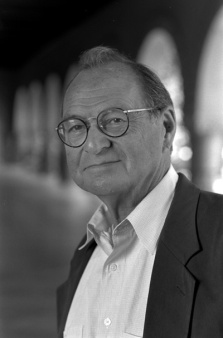
Psychologist Robert Zajonc, pioneer of social psychology

Psychologist Robert Zajonc, pioneer of social psychology

Plus, he led a stunning, dramatic and sometimes wonderful life, surviving horrors in the Holocaust and contributing great things to science.

Gorlick’ s memorial may be best read there, and I encourage you to click over there to read it.

Several of  Zajonc’s articles are listed as “Classics” at Science Magazine, including his 1981 defense of research spending, in the first year of the Reagan administration.

I also urge you to consider what teachers might do with some of Zajonc’s findings, things that propagandists and dastardly politicians (and a few nice politicians) have already used:

  • People like images they see over and over, the “mere exposure” effect  (It’s important what pictures you post in your classroom, yes?)
  • Parental contact with older children can raise their IQs — well, parental contact does raise the IQs of older children, but having less time for younger children tends to keep the younger kids’ IQs from developing as much.  (Did you read to your youngest kid last night?)
  • Challenging kids to tell why things work the way they claim makes them smarter. (This was the same research:  The younger kids’ challenging the older kids made the older kids smarter.  Heck, their challenging of the parents probably make the parents smarter, too.  Do we make students defend their views to other students?)
  • Facial expression affects emotions (“Emotions and Facial Expression,” Zajonc, Science 8 November 1985: 608-687; DOI: 10.1126/science.230.4726.608-b)
  • People who perform tasks well, perform them even better in front of an audience.
  • People who perform an unknown task before an audience tend to make more mistakes than they would if they practiced it in private.

Some of Professor Zajonc’s most influential work concerned “social facilitation” — the effect of the presence of others on a person’s performance of a specific task. Previous research on the subject appeared contradictory, suggesting that spectators helped performers in some cases but not in others. But in which cases?

What Professor Zajonc found was that when performers have mastered a skill at a high level, they are helped by the presence of an audience. (Think of professional musicians or athletes.) But he also found that when a performer has mastered a skill only imperfectly, the existence of onlookers is a hindrance. (Think of Sunday duffers in any arena.)

Elsewhere in his work, Professor Zajonc explored the nexus between psychology and physiology. In one widely reported study, he found that smiling or frowning can alter blood flow to the brain as facial muscles relax or contract. This in turn affects the parts of the brain that regulate feelings, helping induce happy or sad emotional states.

And do you ever wonder about why old couples tend to resemble each other so much?  Zajonc worked that out, too.

Why didn’t he get a Presidential Medal of Freedom?

Resources:


Immigrants learning English: Not so fast

October 22, 2008

Economics fans, pay attention:  Immigrants tend not to learn English when they move to America.  Moreover, they do well without it.

Greg Laden’s got a nice write up of a study on immigrants learning English.  I especially liked this story:

I once met … at a centenary celebration of some kind … the grandchild of a man who moved as a teenager from the old country to southern Wisconsin, ahead of his family, to learn the local customs, farming techniques, and language. After a few years in a small town in Wisconsin, his family arrived to start farming. The young man had indeed learned the local practices, the local farming techniques, and the local language. German. His family, arab speakers from Palestine, were well served by this young man because German was all they needed to get along in the US.

Not what the “English only” crowd wants to hear.

Here’s the citation on the study Greg Laden wrote about:

M. E. Wilkerson, J. Salmons (2008). “GOOD OLD IMMIGRANTS OF YESTERYEAR,” WHO DIDN’T LEARN ENGLISH: GERMANS IN WISCONSIN American Speech, 83 (3), 259-283 DOI: 10.1215/00031283-2008-020 [you’ll need a paid subscription for the full text]