Setting the record straight on Rachel Carson, malaria and DDT

June 19, 2007

The contemptible campaign of hoax and calumny against the work and memory of Rachel Carson continues. You should read more at the sites I cite near the end of this post.

The key false claim of the Carson critics is that, but for the ban on DDT, millions of lives would have been saved over the past 30 years. Chief problem with the claim is that national bans on DDT all preserve DDT use for essential mosquito eradication, especially if there are no other tools to fight the disease. But other problems with the claim include the fact that DDT had stopped being highly effective by the late 1960s; eradication was a pipe dream, and mosquitoes developed resistance to DDT.

That doesn’t stop the critics. So, Dear Reader, when you read criticisms of Rachel Carson and hear the pseudo-science whine that Carson alone has condemned millions to death by malaria, I want you to keep in mind this question: If DDT were such an effective tool against malaria, why didn’t the World Health Organization fight to keep it? Why didn’t the manufacturers fight to keep it? Why would more than 150 nations, tens of thousands of scientists, tens of thousands of health workers, and conservative “I-told-you-so” skeptics who hate environmentalists, all simultaneously fall asleep?

The answer is, Dear Reader, they didn’t all fall asleep. DDT stopped being effective, and malaria fighters realized there were other problems — the parasites that the mosquitoes spread also became resistant to anti-malaria drugs, a bigger problem than DDT resistance. People and organizations who fight malaria did ask that use of DDT be preserved for spraying to fight malaria; but they didn’t defend it against bans on other use because those bans help the malaria fighters.

Cover of  Saving Lives, Buying Time: Economics of Malaria Drugs in an Age of Resistance (2004), from the National Academies Press

Cover of Saving Lives, Buying Time: Economics of Malaria Drugs in an Age of Resistance (2004), from the National Academies Press

Below the fold, I offer two quotes from Saving Lives, Buying Time: Economics of Malaria Drugs in an Age of Resistance (2004) Board on Global Health (BGH) (available from the National Academy of Sciences). You can see that DDT is not the golden-egg-laying goose, and that consequently Rachel Carson is not the mindless ogre she is made out to be in recent invectives.

Check out these sites:

Read the rest of this entry »


How many WorldNet Daily hoaxes does it take to change a light bulb?

June 6, 2007

Earlier I pointed to a hoax article foisted by WorldNet Daily, claiming families would face exorbitant hazardous waste clean up costs if they broke a compact fluorescent lightbulb (CFLs).

Not only did WorldNet Daily never apologize to its readers, the paper is at it again, campaigning in favor of pollution and global warming, trying to scare people who switch to lights other-than-tungsten.

Hoaxmeister Joseph Farah uses an over-the-top, breathless tone: HEAT OF THE MOMENT
Light-bulb ban craze exceeds disposal plans
Facts about CFLs, heir to incandescents, downplayed in government-enviro push”

Could anyone take that seriously? As Dave Barry used to say, “I could not make this up,” the “danger” from CFLs shows up in serious discussion forums. This forum, inaptly titled “Straight Talk,” demonstrates that people really do believe such hoaxes, especially about things they know very little about, like mercury poisoning.

Folks, five will get you ten, if you told these people about massive mercury poisoning that really exists in the Hudson River, and warned them against eating fish caught there, they’d claim you were an alarmist tree-hugger and laugh it off — though the mercury levels and potential for health-damaging exposure are both significantly greater for fish caught in some rivers, like the Hudson, than they are for broken CFLs.

But just try to suggest a small way to work against global warming, and they’ll pull out that same mercury poisoning argument to justify doing nothing and letting pollution win.

A warning to these people to “use your head” goes completely unheeded, heads having been lost some time earlier.

Here’s an example of just how far Farah twists the facts in order to make his hoax case against CFLs. First, Farah all but calls CFLs a communist plot (he claims the move to use them started in Cuba, under Castro — a dubious claim at best, and funny any way you cut it). Then he points to a Swedish firm marketing the bulbs in the U.S. — them furriners can’t be trusted, Farah implies. The firm is IKEA — never mind they are fine examples of capitalism run rampant. Third, Farah cites an editorial in Waste News , but makes it appear the publication said something the opposite of what it said.

Here’s what Farah wrote:

Those who really care about this problem right now are those involved in the waste industry.

“Most agree more energy-efficient light bulbs can significantly curb air pollution, but fewer people are talking about how to deal with them at the end of their lives,” explained a page 1 story in the April 2 issue of Waste News. It goes on to explain “there is no plan to address air and water pollution concerns that could develop if consumers improperly dispose of the mercury-containing devices.”

Gee, that’s pretty dire. No plans at all for disposal? Are we getting a pig in a poke?

Waste News actually said the bulbs are a “significant” environmental improvement. They point out weaknesses in current recycling, but they stop way short of urging people not switch to CFLs — here, read for yourself, the conclusion Waste News draws is quite a bit at odds with Joseph Farah’s version.

Managing CFL endgame
Waste News, April 02, 2007

Compact fluorescent light bulbs are a hot environmental trend these days, and with good reason. They require substantially less energy than traditional incandescent bulbs and last several times longer. Used on a large scale they can dramatically reduce our energy needs and therefore the pollution we create. With their longer life they’re ultimately an economical choice as well.

But CFL bulbs aren’t perfect. They contain mercury, albeit a small amount compared with mercury thermometers, automotive switches and the standard 4-foot fluorescent lamp. Still, there’s no large-scale plan in place to manage the end-of-life handling of these bulbs, and having the mercury end up in the environment certainly is undesirable.

Strong warnings about the need for proper disposal could dissuade customers from buying CFLs, which most people believe are far better environmentally even with their mercury – an element essential to their energy efficiency. Consumers also could get confused about what types of bulbs to throw away and pitch ones with higher mercury. Broken bulbs also pose multiple health risks to waste haulers. Meanwhile, more governments are moving to ban mercury from disposal.

Pressure will be on manufacturers to take responsibility for this. Sylvania is one lighting company that has started to do so, offering take-back programs that involve a fee for consumers. And several lighting companies have agreed to voluntarily limit the mercury content of lower wattage CFL bulbs.

Lighting producers need to continue on this course, and do so sooner rather than later, even though the issue may be years away because sales are still small and the bulbs’ long life makes wide-scale disposal relatively distant. But a sound plan for the products’ end will remove a potentially big obstacle to a significant environmental improvement.

Hello? I thought there were no plans to do anything, according to Waste News — but when I read the article, it says Sylvania already has a program and others are ready to go. Is there no standard of ethics at WorldNet Daily?

Update June 10: More information at these sites:

Update May 10, 2008: The Ellsworth, Maine, newspaper’s environmental reporter tells what should have happened, on his blog.


Creation Museum: Sad, beleaguered

June 6, 2007

For those of us who worry at every eruption of intentional ignorance, such as Ken Ham’s Creation Museum, the comments of BBC’s correspondent Justin Webb produce a little salve:

There is nothing remotely convincing about the Creation Museum and frankly if it poses the threat to American science that some American critics claim it does, that seems to me to be as much a commentary on the failings of the scientific establishment as it is on the creationists.

And a bit later:

At the Creation Museum, goggle-eyed children watch depictions of the Great Flood in which children and their mums and dads are consumed, because God is cross.

In a nation of kindly moderate people I am not sure this is the future.

I put my faith – in America.

Mencken’s hoax about bathtubs in the White House was innocent enough, but impossible to kill (yet). Ham’s hoax about science, at $27 million (U.S. reports) or $30 million, doesn’t have the grace of its perpetrator confessing the hoax and urging correction (yet).

Faith in America is reassuring, until one remembers P. T. Barnum’s faith that Americans include a “sucker born every minute,” and Tom Sawyer’s assessment of small town politics: ‘Ain’t we got every fool in town on our side? And ain’t that a big enough majority in any town?’


Just for the Texas State Board of Education: Biology texts

June 1, 2007

This is a little test of reading comprehension for the Texas State Board of Education.

So if you’re not one of those people, you can click to the next post.  Of course, if you’re reading this, it’s unlikely that you are a board member, but a Texas parent can dream, can’t he?

Here’s the point:  When you review biology texts for adoption next time, someone will testify that the books you review have errors in them because they carry copies of Ernst Haeckel’s drawings of embryoes, and those drawings are “known to be fakes.”

But that’s not exactly accurate:  Not since 1923 has any book carried the Haeckel drawings, except to point out that they are fakes.

P. Z. Myers at Pharyngula has a post today that lays out the details, “Return of the Son of the Bride of Haeckel,” as he Fisks another Chicken-Little-sky-is-falling press release from the Discovery Institute.

So, in short:  When that first person testifies to you, saying the Haeckel drawings are in some book, ask that person if they’ve read Dr. Pat Frank’s account of searching for that book, and whether they can explain why they think the Texas State Board of Education would be so stupid as to buy that claim, since it hasn’t been accurate in 84 years, since 1923 (older than all of the members of the SBOE, at least).

Then politely thank the witness for their concern, go to the next witness, and don’t ever, ever, ever claim that you think the current textbook publishers need to “get their act together” or whatever language you want to use, to get rid of the Haeckel drawings.

The drawings are gone, long gone, and you know better.

Back to our regular programming:  Did you know that it’s not true that Millard Fillmore put the first bathtub in the White House?


Voting for cancer, against prevention

May 31, 2007

Yeah, it was a bit tacky of Merck to create a campaign to get government officials to require inoculations against human papilloma viruses that cause cancer — but, people!, we’re talking about preventing cancer here.

The Texas legislature voted for cancer, overturning Gov. Rick Perry’s ill-considered good idea to require vaccinations for school kids in Texas. In a state with top-notch anti-cancer research at M. D. Anderson Cancer Center in Houston and UT’s Southwest Medical Center in Dallas, it was an odd, odd thing to witness.

The debates are skewed by a general distrust and dislike of big pharmaceutical companies, and by the religious right’s view that it’s better that a young mother die of cancer than she should get even the faintest idea that might in only the most perverse mind promote pre-marital sex. Still, we shouldn’t fall victim to voodoo science claims against vaccines.

Are my views, tempered by years of work promoting public health and fighting disease, clear enough for you?

Owlhaven wins popularity contests among mothers who read blogs, and it often is tender and touching — hey, I read it from time to time. But recently Mary, Owlhaven’s author, fell victim to a propaganda campaign from Judicial Watch, a far-right-wing bunch that campaigns against the U.S. justice system and generally makes a conservative-gratuitous-poke-in-the-butt out of itself. Judicial Watch claims to have some secrets from having filed a Freedom of Information Act Request with FDA to get Merck’s reports to FDA of adverse events known about Gardasil, Merck’s proprietary anti-cancer vaccine.

I responded, of course — but my response didn’t show on Owlhaven’s comments. Blackballed? Spam filtered due to the number or length of links? I can’t tell. Mary said she emptied the spam filter without checking. So, I repost my response, below the fold, for your benefit. Read the rest of this entry »


Bogus science palace puts blot on Memorial Day remembrances

May 27, 2007

There’s not much to add, beyond the three-quarters of a hundred entries in the one time Ken Ham’s Creation Museum blog carnival, hosted at Pharyngula by P. Z. Myers.

Those we honor on Memorial Day fought, and died, to preserve Ken Ham’s right to believe any fool thing he wants to believe.  That’s part of the ironic beauty of our Constitution and those who fight to defend it.

Having a right to believe any fool thing, and promoting fool ideas with $27 million given by people who expected one to tell the truth, are probably separate, different things.


Creationist math, creationist accuracy

May 24, 2007

From today’s Christian Science Monitor, a story about Ken Ham’s Creation Museum in Petersburg, Kentucky:

The $27 million museum set on 50 acres opens on Memorial Day, and [Answers in Genesis] AiG hopes for 250,000 visitors a year. Mr. Ham, a former science teacher in Australia, is direct about the museum’s purpose: to restore the Bible to its “rightful authority” in society.

And, later in the article:

No one has a handle on the scope of creationism’s influence, says [Ronald] Numbers, author of “The Creationists.” “Intelligent design” (which disputes aspects of evolution but accepts that the universe is billions of years old) has been more in the news recently. But AiG, simply one group in the creationism fold, is clearly doing well. The museum has 8,500 charter members, [Mark] Looy says [AIG’s p.r. guy], and is all paid for – by donations averaging $100.

Now, I admit to having had difficulty with calculus in college. But even using a calculator to make sure my in-the-head numbers were right, 8,500 members multiplied by an average contribution of $100 equals $850,000. That’s considerably less than the $27 million advertised at the top of the article.

There’s a gap of more than $26 million in those figures. Where did the extra $26 million come from?

Is that where the money missing from Iraq went? Is Judge Crater in one of the displays? Is their claim of a 6,000-year-old Earth also off by a factor of at least 27?

Just askin’.


War on science: Spinning DDT, slandering the dead

May 17, 2007

What rational person would have thought irrationality could be in such surplus?

My post on the silly opposition to naming a post office after Rachel Carson produced a minor response. Reader Electratig took me to task at his blog.

Criticism is based on interesting claims that millions have died unnecessarily because the entire planet was driven to ban DDT, which is really not toxic to humans, and which really is the panacea that would rid the world of malaria. I’m surprised that DDT isn’t implicated as a cure for the designated hitter rule, too. The criticisms don’t hold so much water as the critics claim, I find. Read the rest of this entry »


GOP war on science victim: Rachel Carson

May 14, 2007

Some people do things that are so stupid that one wonders how they manage to shave or put make-up on the next morning, having to look at their own face.

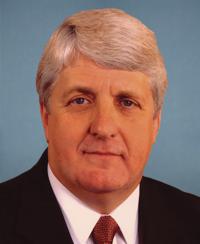
Mugshot of Utah Rep. Rob Bishop

Mugshot of Utah Rep. Rob Bishop

53 Republican representatives voted against naming the post office in Springdale, Pennsylvania, after Rachel Carson, the scientist who wrote Silent Spring, generally considered one of the most important or most influential scientists of the 20th century. No kidding. Springdale is Carson’s hometown.

2007 is the centennial of Carson’s birth — her birthday was May 27. (The bill, H.R. 1434, passed, 334-53.)

Why did the Wacky 53 vote against the honor for Carson, who got the Presidential Medal of Freedom in 1980? In an earnest ritual of voodoo science, they claim that bans on DDT kill millions, and that DDT is harmless. No, I’m not making this uphere’s the story from the Salt Lake Tribune, which covers territory represented by Rep. Rob Bishop and Rep. Chris Cannon, both R-Utah:

They contend that Carson’s actions – which led to a ban on the chemical DDT used to kill pests – actually has caused more deaths because of malaria and other diseases spread by insects. DDT, Carson wrote, was detrimental to the environment and to humans. Some scientists say DDT led to the California condor’s near-extinction.

Read the rest of this entry »


Getting evolution right

May 13, 2007

Odd thing happened the other day: The Philadelphia Inquirer carried an editorial that rather accurately described evolution theory. Just when I’m ready to lambaste my colleagues in print media, they come through.

The editorial’s point of departure was the Republican “debate” among presidential contenders, in which they were asked whether they support evolution or creationism. Three of the candidates confessed they don’t “believe” in evolution.

Why did these three, all of whom wish to be the leader of the most powerful country in history, say they did not believe in evolution? There might be thousands of reasons. Perhaps they misheard: “I’m just curious: Is there anyone on this stage who doesn’t believe in elocution?” But two reasons are more likely:

(1) They really don’t think evolution exists. As in, it’s not happening and never did. We got here some other way. There’s no evidence for it.

Uh, yeah, there is. Although technically a theory, Charles Darwin’s version of the evolution of species is a theory-with-the-status-of-fact, robust and vigorous, demonstrated in living color each and every day in field and laboratory everywhere. No jury is “out.” The verdict’s in and everybody’s gone home. Way home.

And,

(2) These men raised their hands because they knew it would get them votes from religious conservatives.

Tancredo, Huckabee and Brownback know they need the Christian conservative vote to win the Republican nomination. Christian conservatives don’t like Rudy Giuliani. They’re lukewarm on John McCain, perplexed by Mitt Romney.

But any candidate who would ignore science to attract conservative votes has made a lousy calculation.

The newspaper’s editorial board concluded:

So, while pundits are calling the evolution flap an embarrassment to the GOP, what it really is is a call to the Republican faithful: “We’re in trouble. If we don’t rally on the wedge issues now, by 2008, a Republican majority may seem as far away as the Planet of the Apes.”

Click here to find out more!


Fearful IDists can’t meet ethics challenge in Dallas

April 10, 2007

Advocates of intelligent design at the Discovery Institute have been rattled by the strong showing of scientists at Southern Methodist University who called their bluff, and questioned SMU for hosting an ID conference this week. SMU’s officials pointed out they were just renting out facilities, and not hosting the conference at all.

The ID conference, with special religious group activities preceding it, is scheduled for April 13 and 14 at SMU. It is a rerun of a similar revival held in Knoxville, Tennessee, last month. The conference features no new scientific research, no serious science sessions with scientists looking at new research, or new findings from old data.

In return, ID advocates “challenged” scientists to show up at a creationist-stacked function Friday evening. To the best of my knowledge, all working scientists declined the invitation, on the understanding that in science, there is no debate.

This morning’s Dallas Morning News features the expected desperation move by Discovery Institute officials Bruce Chapman and John West. They accuse the scientists of being “would-be censors.”

This is highly ironic coming from the group that spent tens of thousands of dollars trying to convince the Texas State Board of Education to censor and bowdlerize* Texas biology books in 2003.  (*  Thanks, Jim Dixon)

But go read the stuff for yourself. Some of us have real work to do today, and there is not time for the appropriate, godly Fisking this piece deserves right now. (Readers? Friends?)

My dander is up, however, and I offer a counter challenge:

Discovery Institute, what is it you’re afraid of? Let’s meet, and discuss the ethical challenges you’ve experienced in this discussion. Specifically, let’s discuss:

One, your misrepresentation of the science of Darwin, and your repeated attempts to mislead school officials — remember the claim in Ohio that federal law requires discussion of intelligent design? Was that a hoax that fell flat, or an honest misunderstanding? In any case, we still await your disowning of the falsehood, years later.

Two, your support of unethical screeds against science and scientists. I’ll mention one here: You need to disown the dishonest and unethical work of Jonathan Wells. Look at his book, Icons of Evolution, which is promoted at your website. I call your attention to his chapter of misinformation against the work of Bernard Kettlewell on peppered moths. Check out the citations in his chapter. If one believes his footnotes, there are many scientists who support his views on Kettlewell’s pioneering and still valid work. You need to acknowledge that the footnotes are ethically challenged; you need to acknowledge in print that each of the scientists involved, and others, have disowned Wells’ work and said that his claims misrepresent their work and the status of science. In polite, scientific terms, these people have called Wells a prevaricator. You still promote his screed as valid.

Three, your support of name-calling must stop. Especially, you need to pull your support from books, conferences, and editorial pieces that say evolution was a cause of the Holocaust. The attempts to connect Darwin to Hitler are scurrilous, inaccurate, unethical and unholy.

Chapman, West, the Methodist Church does not endorse your views on evolution, and if they understood your tactics I suspect they would disown your tactics as well. You are guests on a campus that does serious science work and also hosts people of faith. You need to bring your organizations ethical standards up to a higher level.

You want a debate? The science journals are open — the federal courts have repeatedly found that claims of bias against you are completely unfounded (untrue, that is . . . well, you understand what I’m trying to say politely, right?). The journals await your research reports.

All of science has been awaiting your research reports for years, for decades. (Here’s one famous case: “Three Years and Counting,” at Pharyngula (a science-related blog run by an evolutionary biologist).

You want to debate? Stop hurling epithets, and bring evidence.

As an attorney, parent, teacher, and reader of Texas biology textbooks, I’d be pleased to debate your need to change your ways. The debate needs to focus on your methods and ethics. Are you up to it?

Earlier posts of interest:


Duty to speak out against intelligent design

April 5, 2007

[Note to SMU Physics students:  Glad to have you here!  While you’re here, stick around for a moment.  Check the blog’s list of articles on “intelligent design” or “evolution,” and you’ll see that the issue has moved a good deal since the flap at SMU.  Feel free to leave comments, too.  E.D.]

When sanity strikes public figures and public institutions, sometimes all one can do is sit back in wonder at how the universe runs.

Intelligent design advocates might begin to think that God (or the gods, or the little green men, as the Discovery Institute allows) has stacked the universe against them, at least in Texas. First, in 2003, with the Texas State Board of Education pregnant with 8 creationists among the 15 members, scientists in Texas applied quiet, gentle pressure and got some of the creationists to vote against requiring creationism in biology texts. Last week Lee Cullum, doyon of conservative commentators in Dallas society, alumnus of the late Dallas Herald and occasional opinion writer for the Dallas Morning News wrote a piece questioning whether intelligent design advocates had not overstepped propriety in their use of Southern Methodist University’s good neighborly intentions — a reversal of position for Cullum, and perhaps a bellwether for others with influence in the state. Plus, several of the faculty at SMU protested the pending intelligent design conference scheduled for the campus, though without endorsement from the university.

Discovery Institute spokesmen gave their usual demurrers, claiming that intelligent design advocates have First Amendment rights and accusing critics of being unfair and unholy, but never defending intelligent design itself.

So, I can imagine there were a lot of coffee-burned laps in Seattle (and at least one in Fort Worth) this morning when the Dallas Morning News‘ opinion section unfurled a hard stand against intelligent design, signed by a score of well-respected scientists of various faiths, from the SMU faculty.

They minced no words:

The organization behind the event, the Discovery Institute, is clear in its agenda: It states that what the SMU science faculty believes to be so useful (science) is a danger to conservative Christianity and should be replaced by its mystical world view.

We do not argue against the basic right to believe, worship and express oneself as one desires. [More, including the full text, below the fold.] Read the rest of this entry »


Intelligent design: Cromulence achieved

March 29, 2007

Editorial writer Rod Dreher of The Dallas Morning News reacted to the news that scientists at Southern Methodist University are protesting a conference on intelligent design in biology, scheduled to be held at the university April 13-14, with an opinion piece that calls for a defense of free speech, and compares the adherence of intelligent design to the adherence of Marxism at SMU

In other words, Dreher defends intelligent design as having finally achieved a high degree of cromulence:

What snots these academics be.

One might be foolish to disagree. Intelligent design is cromulent. The conference will embiggen the intellectual life of the university, regardless the shadow it casts across the light of reason.

More:


Textbook wars: APA resolution against intelligent design as science

March 12, 2007

Psychology rests out on the end of the science spectrum, closer to “social sciences” than other branches of hard, research science, and sometimes affiliated with the pseudo-scientific, even while debunking false claims, such as the studies of parapsychology. Were there scientific merit in claims of evidence for supernatural design, psychology would be a natural home for most of the claims and much of the research. If any branch of science were to endorse intelligent design as science, psychology would be a likely first branch.

But not even psychology accepts intelligent design as science.

The American Psychology Association’s (APA) Council of Representatives adopted a resolution earlier this month which says intelligent design is not science, and that teaching it as science undermines the quality of science education and science literacy. The entire press release, and the resolution are below the fold.

This should be a serious blow to advocates of intelligent design who had hoped to make some recovery after the devastating loss in federal court in Pennsylvania in 2005, in the next round of textbook approvals in large states like California, Florida and Texas. There is no comment yet from the Discovery Institute, the leading organization in the assault on teaching evolution in public schools.

Read the rest of this entry »


Ghost of Austin Peay: Tennessee legislator tries to reanimate creationism

February 27, 2007

You just can’t write parody of creationists and creationism. A retired physician, Tennessee state senator is demanding the Tennessee State Department of Education provide the answers to questions left hanging by the trial of John T. Scopes in 1925. Read about it in the Nashville Post, in an article by Ken Whitehouse.

It appears as though the state senator, Raymond Finney, either failed Tennessee history, or just doesn’t pay attention to excellent advice and warnings from George Santayana.

Update, February 28, 2007:  Perhaps Sen. Finney should check out this comment at the blog Sola Fide.

Tip of the old scrub brush to P. Z. Myers at Pharyngula.