You can only get this shot on two days each year.
I was sad to discover most of my U.S. history students (juniors) didn’t know what an equinox is. So the autumnal equinox always offers a teaching moment that ticks off the teacher raters.
Summer 2015 ended at 4:15 a.m., September 23.
This is what an equinox looks like, from 2013 photos.

From Astronomy Picture of the Day: Earth at Equinox. From the Russian meteorological satellite Elektro-L
Explanation from NASA:
Equinox Earth
Image Credit: Roscosmos / NTSOMZ / zelenyikot.livejournal.com
Courtesy: Igor Tirsky, Vitaliy Egorov Explanation: From a geostationary orbit 36,000 kilometers above the equator, Russian meteorological satellite Elektro-L takes high-resolution images our fair planet every 30 minutes. But only twice a year, during an Equinox, can it capture an image like this one, showing an entire hemisphere bathed in sunlight. At an Equinox, the Earth’s axis of rotation is not tilted toward or away from the Sun, so the solar illumination can extend to both the planet’s poles. Of course, this Elektro-L picture was recorded on September 22nd [2013], at the northern hemisphere’s autumnal equinox. For a moment on that date, the Sun was behind the geostationary satellite and a telltale glint of reflected sunlight is seen crossing the equator, at the location on the planet with satellite and sun directly overhead (5MB animated gif).
Wait. Animated .gif? Cool!
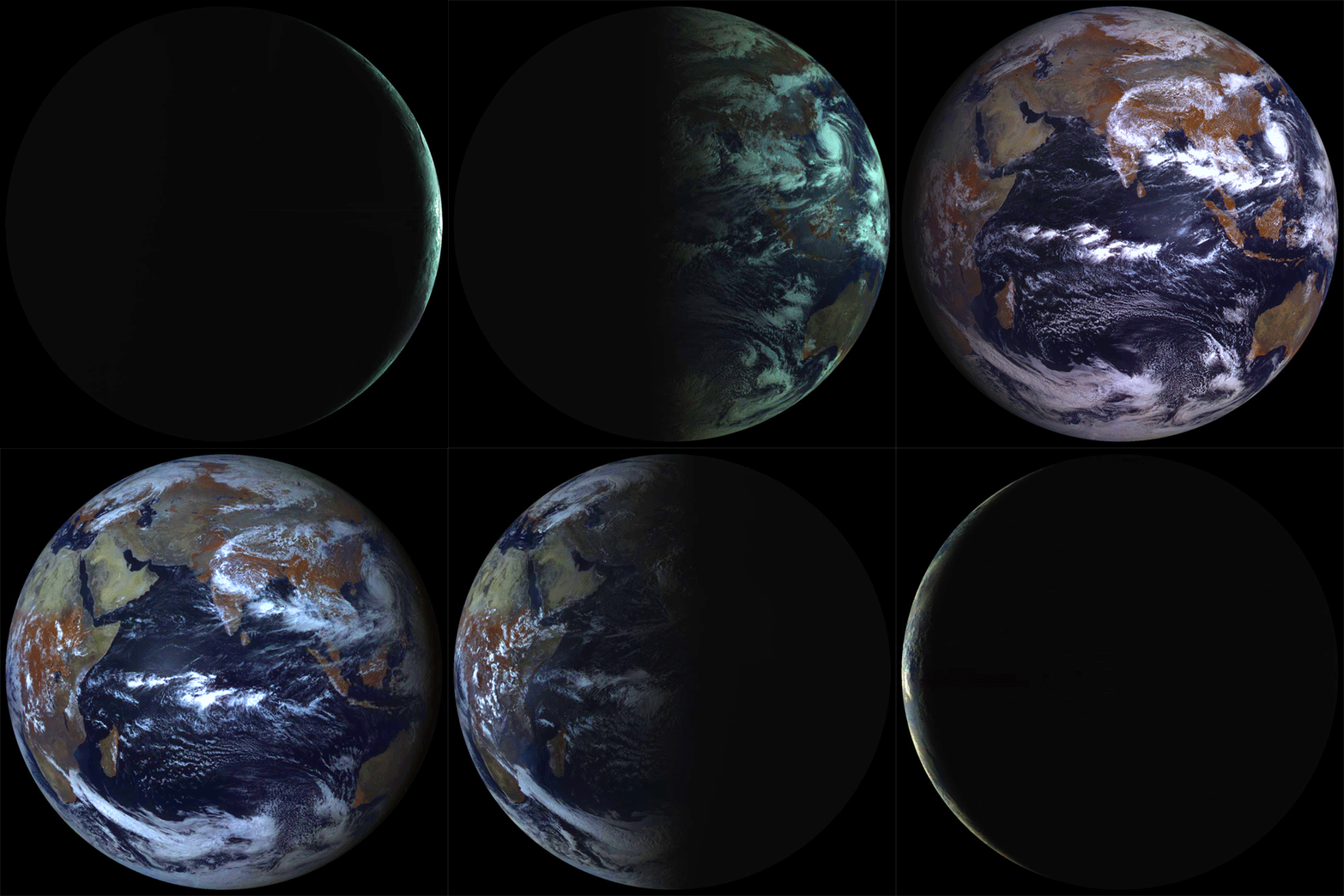
The Earth at equinox, 2013; from Russan space program, via NASA.
The autumnal equinox is at 8:22 GMT or 4:22 am EDT on Wednesday. The two satellite images below from the European Meteosat show the sun angle on Earth from June 22 near the summer solstice and then today at the same time. Notice the sun angle has changed dramatically, and the High Arctic is no longer seeing 24 hour daylight.

Below is today at the same time.

More:
- Electro-L’s Fully Lit View of Planet Earth at the Autumnal Equinox (universetoday.com)
- Everything you need to know: September equinox (earthsky.org)
- Equinox Explained: Why Earth’s Seasons Will Change on Sunday (space.com)
- Equinox Today Heralds Earth’s Changing Seasons: Watch It Online (space.com)
- Autumn equinox: 5 odd facts about fall (mnn.com)
- What defines the end of summer? It’s just how our planet is tilted (nbcnews.com)
- New Google Doodle Celebrates the Autumnal Equinox With an Adorable Squirrel, Time, September 22, 2015

Yes, this is partly an encore post. Fighting ignorance requires patience.


 Posted by Ed Darrell



 Millard Fillmore's Bathtub