Will you fly your U.S. flags in January 2016?

January 2, 2016

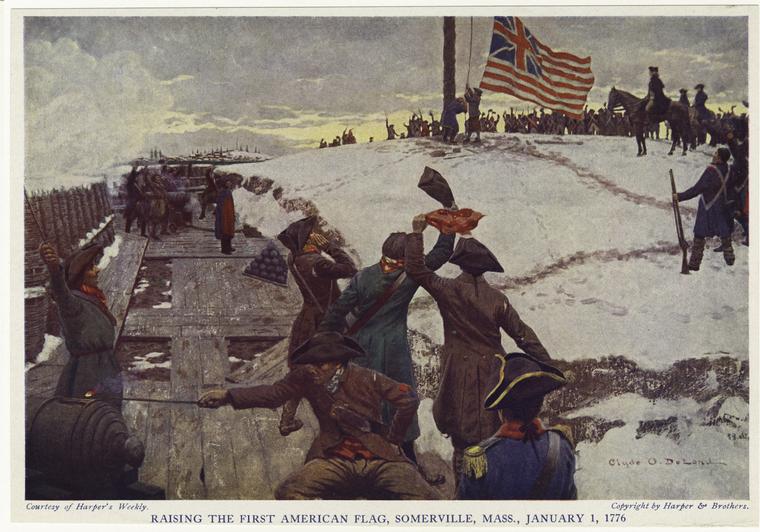
“Raising the first American flag, Somerville, Mass., January 1, 1776.” Harper’s Weekly painting by Clyde Osmer DeLand, 1897. From the digital collections of the New York Public Library

January is loaded with flag flying dates, when we add in statehood days, dates those states are invited to fly their U.S. flags.

In January 2016, the U.S. Flag Code urges citizens to fly flags on these dates, listed chronologically:

  • New Year’s Day, January 1, a federal holiday
  • January 2, Georgia Statehood Day
  • January 3, Alaska Statehood Day
  • January 4, Utah Statehood Day
  • January 6, New Mexico Statehood Day
  • January 9, Connecticut Statehood Day
  • Martin Luther King’s Birthday, a federal holiday on the third Monday of January; that date is January 18, in 2016; King’s actual birthday is January 15, and you may fly your flag then, too
  • Inauguration Day, January 20, the year after election years (next one in 2017)
  • January 26, Michigan Statehood Day
  • January 29, Kansas Statehood Day

You may fly your flag any other day you wish, too; flags should not be flown after sundown unless they are specially lighted, or at one of the few places designated by Congress or Presidential Proclamation for 24-hour flag flying.  According to Wikipedia’s listing, those sites include:

  • Fort McHenry, Baltimore, Maryland (Presidential Proclamation No. 2795, July 2, 1948).
  • Flag House Square, Albemarle and Pratt Streets, Baltimore, Maryland (Public Law 83-319, approved March 26, 1954).
  • Marine Corps War Memorial (Iwo Jima Memorial), Arlington, Virginia (Presidential Proclamation No. 3418, June 12, 1961).
  • Lexington Battle Green, Lexington, Massachusetts (Public Law 89-335, approved November 8, 1965).
  • White House, Washington, D.C. (Presidential Proclamation No. 4000, September 4, 1970).
  • Washington Monument, Washington, D.C. (Presidential Proclamation No. 4064, July 6, 1971, effective July 4, 1971).
  • Any port of entry to the United States which is continuously open (Presidential Proclamation No. 413 1, May 5, 1972).
  • Grounds of the National Memorial Arch in Valley Forge State Park, Valley Forge, Pennsylvania (Public Law 94-53, approved July 4, 1975).
Flag House in 1936, 844 East Pratt & Albemarle Streets (Baltimore, Independent City, Maryland) (cropped). Image courtesy of the federal HABS—Historic American Buildings Survey of Maryland.

Flag House in 1936, where Mary Pickersgill sewed the garrison-sized, 15-star flag that flew over Fort McHenry at the Battle of Baltimore in 1814; one of the sites where the U.S. flag may be flown 24 hours. The house is at 844 East Pratt & Albemarle Streets (Baltimore, Independent City, Maryland). Cropped image courtesy of the federal HABS—Historic American Buildings Survey of Maryland.


December 7, 2015: Fly your flags for Pearl Harbor Remembrance, for Delaware statehood — and at half staff

December 7, 2015

Flag flies at half-staff over the USS Utah, in Pearl Harbor (2004 photo – Pearl Harbor, Hawaii (May 31, 2004) – Sailors assigned to ships based at Pearl Harbor bring the flag to half-mast over the USS Utah Memorial on Ford Island in honor of Memorial Day May 31, 2004. U.S. Navy photo)

Flag flies at half-staff over the USS Utah, in Pearl Harbor (2004 photo – Pearl Harbor, Hawaii (May 31, 2004) – Sailors assigned to ships based at Pearl Harbor bring the flag to half-mast over the USS Utah Memorial on Ford Island in honor of Memorial Day May 31, 2004. U.S. Navy photo)

December 7 is a two-fer flag-flying day.

By public law, December 7 is Pearl Harbor Remembrance Day, and Americans fly the U.S. flag in memory of those who lost their lives at Pearl Harbor on December 7, 1941. U.S. flags should be flown at half-staff.

Under the U.S. Flag Code, residents of the relevant state should fly their U.S. flag on the date the state joined the union.

And in 2015, flags at all public buildings fly half-staff through December 7 in respect to the victims of the shootings at San Bernardino, California, on December 2. If you can fly your flag at half-staff, you should; if you cannot, fly the flag anyway.

In 1787 Delaware quickly and promptly elected delegates to the former colony’s convention to ratify the Constitution proposed at the Philadelphia convention just over three months earlier. The ratification of the Constitution won opposition from strong factions in almost every state. Pols anticipated tough fights in New York, Virginia, and other states with large populations. They also expected other states would wait to see what the bigger states did.

Delaware didn’t wait.  On December 7 Delaware became the first of the former British colonies to ratify the Constitution. Perhaps by doing so, it guaranteed other states would act more favorably on ratification.

Because Delaware was first, it is traditionally granted first position in certain ceremonies, such as the parades honoring newly-inaugurated presidents. Delaware’s nickname is “The First State.”

In Delaware and the rest of the nation, fly your flags on December 7, 2015.

The most famous portrayal of a U.S. flag flying in Delaware is in the painting by Emanuel Leutze (American, 1816–1868).

The most famous portrayal of a U.S. flag flying in Delaware is in the painting by Emanuel Leutze (American, 1816–1868). “Washington Crossing the Delaware,” 1851. The Metropolitan Museum of Art, New York, Gift of John Stewart Kennedy, 1897 (97.34) Among other problems with this portrayal: The flag depicted had not been designated on the date of the crossing, Christmas 1776.


December 2015, flag-flying days

November 28, 2015

Mural of Alexander Henson planting the American flag at North Pole, by Austin Mecklem, at the Recorder of Deeds building, built in 1943. 515 D St., NW, Washington, D.C. Library of Congress image

Mural of Alexander Henson planting the American flag at North Pole, by Austin Mecklem, at the Recorder of Deeds building, built in 1943. 515 D St., NW, Washington, D.C. Library of Congress image. Santa Claus may have been out of town when Henson was there.

November offers several flag flying days, especially in years when there is an election.

But December may be the month with the most flag-flying dates, when we include statehood days.

December 7 is Pearl Harbor Remembrance Day.  It’s not in the Flag Code, but public law (P.L. 103-308) urges that the president should issue a proclamation asking Americans to fly flags.

December 25 is Christmas Day, a federal holiday, and one of the score of dates designated in the Flag Code. If you watch your neighborhood closely, you’ll note even some of the most ardent flag wavers miss posting the colors on this day, as they do on Thanksgiving and New Years.

Other dates?

Nine states attained statehood in December, so people in those states should fly their flags (and you may join them).  Included in this group is Delaware, traditionally the “First State,” as it was the first colony to ratify the U.S. Constitution:

  • Illinois, December 3 (1818, 21st state)
  • Delaware, December 7 (1787, 1st state)
  • Mississippi, December 10 (1817, 20th state)
  • Indiana, December 11 (1816, 19th state)
  • Pennsylvania, December 12 (1787, 2nd state)
  • Alabama, December 14 (1819, 22nd state)
  • New Jersey, December 18 (1787, 3rd state)
  • Iowa, December 28 (1846, 29th state)
  • Texas, December 29 (1845, 28th state)

December 15 is Bill of Rights Day, marking the day in 1791 when the Bill of Rights was declared ratified; but though this event generally gets a presidential proclamation, there is no law or executive action that requires flags to fly on that date, for that occasion.

Eleven flag-flying dates in December.  Does any other month have as many flag flying opportunities?

Have I missed any December flag-flying dates?  11 events on 10 days (Delaware’s statehood falls on the anniversary of the Pearl Harbor attack).

Here’s a list of the days to fly the flag, under national law, in chronological order:

  1. Illinois, December 3 (1818, 21st state)
  2. Pearl Harbor Remembrance Day, December 7
  3. Delaware, December 7 (1787, 1st state) (shared with Pearl Harbor Remembrance Day)
  4. Mississippi, December 10 (1817, 20th state)
  5. Indiana, December 11 (1816, 19th state)
  6. Pennsylvania, December 12 (1787, 2nd state)
  7. Alabama, December 14 (1819, 22nd state)
  8. New Jersey, December 18 (1787, 3rd state)
  9. Christmas Day, December 25
  10. Iowa, December 28 (1846, 29th state)
  11. Texas, December 29 (1845, 28th state)

Fly your flag with respect to the flag, for the republic it represents, and for all those who sacrificed that it may wave on your residence.

Appropriate to a snowy December.

Appropriate to a snowy December. “The Barn on Grayson-New Hope Road. This barn with its old truck and ever-present American flag, is often the subject of photographs and paintings by the locals.” Photo and copyright by Melinda Anderson


Thanksgiving 2015 – Fly your flag today!

November 26, 2015

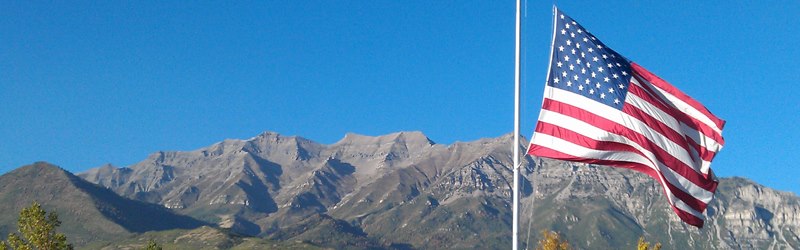
Mt. Timpanogos and the U.S. flag. Photo by Bob Walker of Orem, Utah; from Orem, circa September 2012. That's Mt. Baldy on the left. This site is about six miles from our old home in Pleasant Grove, Utah.

Mt. Timpanogos and the U.S. flag. Photo by Bob Walker of Orem, Utah; from Orem, circa September 2012. That’s Mt. Baldy on the left. This site is about six miles from our old home in Pleasant Grove, Utah, where we celebrated a few dozen Thanksgivings.

Fly  your flag on Thanksgiving — it’s one of those dates Congress designated specially to fly the flag, in the U.S. flag code.

Americans load up this particular holiday with significance, often for no particular reason.  As a holiday, it is really rather uniquely American.  There were feasts of thanksgiving from time to time throughout recorded history, but most often they were one-shot affairs, after a particular event. Some of the first thanksgivings in America, by Europeans, predated the New England celebrations by a century or more (nachos and margaritas at Palo Duro!).

In America, Americans eagerly seized on the idea of one day set aside “to give thanks,” both with the religious overtones some wanted to see, and with the commercial overtones others wanted, especially during the Great Depression.  In our 239th year since the Declaration of Independence, the 226th year since the Constitution was enacted, we come to Thanksgiving as a major period of travel to old family homesteads, to Thanksgiving as a period of genuine thanks to American troops fighting in foreign lands half a world away, and as a commercial celebration that sucks the sobriety and spirituality out of all but the most dedicated of profiteers, or bargain hunters.

Vintage Thanksgiving greeting card, from HubPages

In the early 20th century, some people sent greeting cards for Thanksgiving; this is a tradition overtaken by Christmas, Hanukkah and New Years cards, today. (Image from HubPages, unknown year — credit for cards, “Images courtesy VintageHolidayCrafts.com

Thanksgiving often stumbled into controversy.  George Washington issued proclamations calling for a day of thanks, but struck out all references to Christianity.  Some president’s issued similar proclamations up to the Civil War, When Abraham Lincoln used the holiday as a time to remind  Americans that they had a lot to be thankful for, partly as a means to keep Americans focused on the war to be won, and keep supporting troops in the field.  During the Great Depression, Franklin D. Roosevelt juggled dates for Thanksgiving, moving it earlier in November to create a longer Christmas shopping season, hoping to stimulate sales, and thereby push America further out of the Depression.

In 2001 George W. Bush urged Americans to go shopping so terrorists would know America was not defeated by the attack on the World Trade Center, knowing that a stimulus to the economy would help garner support for other policies.

Vintage thanksgiving card, Boy riding turkey with American flag, from HubPages, original date unknown

Children riding large turkeys, waving American flags, made popular images in several years of the early 20th century.

2012 saw controversy over Big Box stores and other major, national retailers pushing their post- Thanksgiving, Christmas sales, into Thanksgiving day itself.  Is this fair to employees?  Is this too much emphasis on purchasing, and too little emphasis on family and giving thanks?

In 2014, we had the same arguments about Big Box stores pushing “Black Friday” into the holiday, and even more arguments about Christmas creep reducing the importance of Thanksgiving to Americans. In 2015, REI announced their stores would be closed on Black Friday, and urged Americans to go outdoors for recreation. “Ditch the malls and head for the hills,” Time Magazine said.  REI is on to somehitng.

You can be sure of one thing:  It’s safe to fly your American flag on Thanksgiving, as Congress suggested.  It won’t make your turkey more moist  or your pumpkin pie taste any better.  It won’t boost your sales, if you’re a retailer, nor find you a bargain, if you’re a shopper.

If you have the flag, it costs nothing.  Flying the flag makes no particular religious statement, supports no particular political party, supports no one’s favorite football team.  Flying the flag earns you nothing, usually.

But as a free act of patriotism, support for our nation, and our troops, and a demonstration that even after a divisive election, we’re all one nation, it’s a pretty good deal.

Fly your flag today.

More:

Yes, this is mostly an encore post. Fighting ignorance requires patience.

Yes, this is mostly an encore post. Fighting ignorance requires patience.


Veterans Day 2015: Honor veterans, fly your flag

November 11, 2015

OKINAWA, Japan (Nov. 11, 2009) Sailors raise an American flag during Veterans Day morning colors aboard the amphibious dock landing ship USS Harpers Ferry (LSD 49). (U.S. Navy photo by Mass Communication Specialist 2nd Class Joshua J. Wahl/Released)

OKINAWA, Japan (Nov. 11, 2009) Sailors raise an American flag during Veterans Day morning colors aboard the amphibious dock landing ship USS Harpers Ferry (LSD 49). (U.S. Navy photo by Mass Communication Specialist 2nd Class Joshua J. Wahl/Released). Wikipedia photo and caption.

Fly your U.S. flags today in honor of America’s veterans, and the veterans of our allies.

More:

In the Classroom
Celebrate Veterans Day in your classroom with these lesson plans and activities! Resources include the Stories from Soldiers and Photography and Painting in War Art lesson plans as well as Thank-A-Vet postcards and patriotic poppy wreaths.

Poster for Veterans Day 2015

November 10, 2015

2015’s poster from the Veterans Administration, for Veterans Day — tomorrow!

2015 Veterans Day poster from the Veterans Administration. Veterans Day always falls on November 11, this year on a Wednesday.

2015 Veterans Day poster from the Veterans Administration. Veterans Day always falls on November 11, this year on a Wednesday.

Both high-res and low-res versions are available from the VA’s poster site.

Teachers, several good sites with a history of Veterans Day, and suggested ways of honoring veterans, have material for your classrooms and students. VA’s history of Veterans Day is below:

History of Veterans Day

World War I – known at the time as “The Great War” – officially ended when the Treaty of Versailles was signed on June 28, 1919, in the Palace of Versailles outside the town of Versailles, France. However, fighting ceased seven months earlier when an armistice, or temporary cessation of hostilities, between the Allied nations and Germany went into effect on the eleventh hour of the eleventh day of the eleventh month. For that reason, November 11, 1918, is generally regarded as the end of “the war to end all wars.”

Soldiers of the 353rd Infantry near a church at Stenay, Meuse in France.

Soldiers of the 353rd Infantry near a church at Stenay, Meuse in France, wait for the end of hostilities. This photo was taken at 10:58 a.m., on November 11, 1918, two minutes before the armistice ending World War I went into effect

In November 1919, President Wilson proclaimed November 11 as the first commemoration of Armistice Day with the following words: “To us in America, the reflections of Armistice Day will be filled with solemn pride in the heroism of those who died in the country’s service and with gratitude for the victory, both because of the thing from which it has freed us and because of the opportunity it has given America to show her sympathy with peace and justice in the councils of the nations…”

The original concept for the celebration was for a day observed with parades and public meetings and a brief suspension of business beginning at 11:00 a.m.

The United States Congress officially recognized the end of World War I when it passed a concurrent resolution on June 4, 1926, with these words:

Whereas the 11th of November 1918, marked the cessation of the most destructive, sanguinary, and far reaching war in human annals and the resumption by the people of the United States of peaceful relations with other nations, which we hope may never again be severed, and

Whereas it is fitting that the recurring anniversary of this date should be commemorated with thanksgiving and prayer and exercises designed to perpetuate peace through good will and mutual understanding between nations; and

Whereas the legislatures of twenty-seven of our States have already declared November 11 to be a legal holiday: Therefore be it Resolved by the Senate (the House of Representatives concurring), that the President of the United States is requested to issue a proclamation calling upon the officials to display the flag of the United States on all Government buildings on November 11 and inviting the people of the United States to observe the day in schools and churches, or other suitable places, with appropriate ceremonies of friendly relations with all other peoples.

An Act (52 Stat. 351; 5 U. S. Code, Sec. 87a) approved May 13, 1938, made the 11th of November in each year a legal holiday—a day to be dedicated to the cause of world peace and to be thereafter celebrated and known as “Armistice Day.” Armistice Day was primarily a day set aside to honor veterans of World War I, but in 1954, after World War II had required the greatest mobilization of soldiers, sailors, Marines and airmen in the Nation’s history; after American forces had fought aggression in Korea, the 83rd Congress, at the urging of the veterans service organizations, amended the Act of 1938 by striking out the word “Armistice” and inserting in its place the word “Veterans.” With the approval of this legislation (Public Law 380) on June 1, 1954, November 11th became a day to honor American veterans of all wars.

Later that same year, on October 8th, President Dwight D. Eisenhower issued the first “Veterans Day Proclamation” which stated: “In order to insure proper and widespread observance of this anniversary, all veterans, all veterans’ organizations, and the entire citizenry will wish to join hands in the common purpose. Toward this end, I am designating the Administrator of Veterans’ Affairs as Chairman of a Veterans Day National Committee, which shall include such other persons as the Chairman may select, and which will coordinate at the national level necessary planning for the observance. I am also requesting the heads of all departments and agencies of the Executive branch of the Government to assist the National Committee in every way possible.”

President Eisenhower signing HR7786, changing Armistice Day to Veterans Day.

President Eisenhower signing HR7786, changing Armistice Day to Veterans Day. From left: Alvin J. King, Wayne Richards, Arthur J. Connell, John T. Nation, Edward Rees, Richard L. Trombla, Howard W. Watts

On that same day, President Eisenhower sent a letter to the Honorable Harvey V. Higley, Administrator of Veterans’ Affairs (VA), designating him as Chairman of the Veterans Day National Committee.

In 1958, the White House advised VA’s General Counsel that the 1954 designation of the VA Administrator as Chairman of the Veterans Day National Committee applied to all subsequent VA Administrators. Since March 1989 when VA was elevated to a cabinet level department, the Secretary of Veterans Affairs has served as the committee’s chairman.

The Uniform Holiday Bill (Public Law 90-363 (82 Stat. 250)) was signed on June 28, 1968, and was intended to ensure three-day weekends for Federal employees by celebrating four national holidays on Mondays: Washington’s Birthday, Memorial Day, Veterans Day, and Columbus Day. It was thought that these extended weekends would encourage travel, recreational and cultural activities and stimulate greater industrial and commercial production. Many states did not agree with this decision and continued to celebrate the holidays on their original dates.

The first Veterans Day under the new law was observed with much confusion on October 25, 1971. It was quite apparent that the commemoration of this day was a matter of historic and patriotic significance to a great number of our citizens, and so on September 20th, 1975, President Gerald R. Ford signed Public Law 94-97 (89 Stat. 479), which returned the annual observance of Veterans Day to its original date of November 11, beginning in 1978. This action supported the desires of the overwhelming majority of state legislatures, all major veterans service organizations and the American people.

Veterans Day continues to be observed on November 11, regardless of what day of the week on which it falls. The restoration of the observance of Veterans Day to November 11 not only preserves the historical significance of the date, but helps focus attention on the important purpose of Veterans Day: A celebration to honor America’s veterans for their patriotism, love of country, and willingness to serve and sacrifice for the common good.

Remember to fly your U.S. flag tomorrow, to honor veterans.

Dakotans fly your flags today, celebrate 126 years of statehood

November 2, 2015

56 flags from all U.S. states and territories fly at Mount Rushmore National Monument, South Dakota. This photo of Mount Rushmore National Memorial is courtesy of TripAdvisor.

56 flags from all U.S. states and territories fly at Mount Rushmore National Monument, South Dakota. This photo of Mount Rushmore National Memorial is courtesy of TripAdvisor.

Residents of North Dakota and South Dakota should fly their U.S. flags today in honor of your state’s being admitted to the union, on November 2, 1889.

Most sites note simply that both states were admitted on the same day; some sites, especially those that lean toward North Dakota, claim that state is Number 39, because President Harrison signed their papers first, after shuffling to avoid playing favorites.

Does anyone really care?

More:


8 events on 6 days to fly the U.S. flag in November 2015

November 1, 2015

Voice of America caption from November 16, 2012:

The U.S. flag is popular the world over, especially when the president visits a foreign nation, as President Barack Obama visited Burma (Myanmar) in November 2012. Voice of America caption from November 16, 2012: “A shopkeeper waves an American flag at a roadside shop in Rangoon, Burma. U.S. President Barack Obama will visit Burma on Monday, becoming the first U.S. president to visit the country. (AP)”

Eight events spread over six different days come with urgings to fly the U.S. flag in November:  Six states celebrate statehood, Veterans Day falls as always on November 11, and Thanksgiving Day on November 26.

Two states, North Dakota and South Dakota, celebrate their statehood on the same date. Washington’s statehood day falls on Veterans Day, November 11 — so there are only six days covering eight events.

In calendar order for 2015, these are the seven days:

  • North Dakota statehood day, November 2 (1889, 39th or 40th state)
  • South Dakota statehood day, November 2 (1889, 39th or 40th state) (shared with North Dakota)
  • Montana statehood day, November 8 (1889, 41st state)
  • Veterans Day, November 11
  • Washington statehood day, November 11 (1889, 42nd state) (shared with Veterans Day)
  • Oklahoma statehood day, November 16 (1907, 46th state)
  • North Carolina statehood day, November 21 (1789, 12th state)
  • Thanksgiving Day, fourth Thursday in November (November 26 in 2015)

Most Americans will concern themselves only with Veterans Day and Thanksgiving Day. Is flying the U.S. flag for statehood day a dying tradition?

More:


Honor the Navy October 27, fly the flag

October 27, 2015

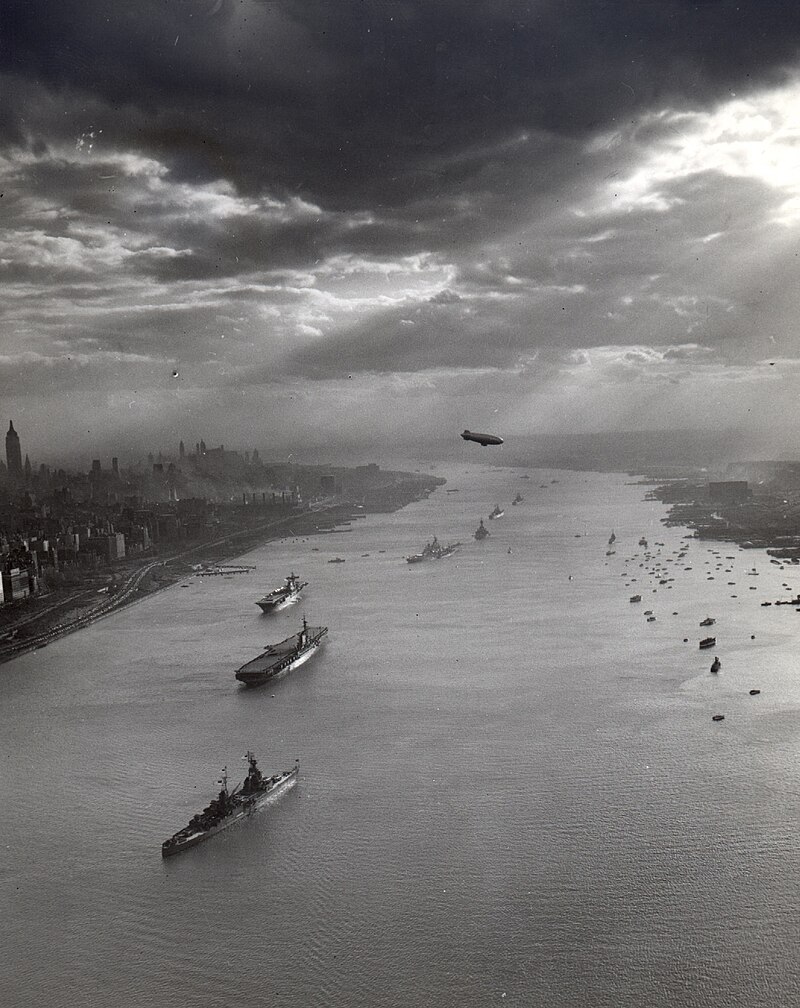
Tugboats and U.S. Navy warships pictured in the Hudson River with the New York City skyline in the background for the Navy Day celebrations on 27 October 1945. Visible in the foreground are the anchored warships USS Augusta (CA-31), USS Midway (CVB-41), USS Enterprise (CV-6), USS Missouri (BB-63), USS New York (BB-34), USS Helena (CA-75), and USS Macon (CA-132)

Ships anchored on the Hudson River for Navy Day 1945, perhaps the largest ever celebration. U.S. Navy photo via Wikipedia: “U.S. Navy – U.S. Navy National Museum of Naval Aviation photo No. 2001.256.009 [1] Tugboats and U.S. Navy warships pictured in the Hudson River with the New York City skyline in the background for the Navy Day celebrations on 27 October 1945. Visible in the foreground are the anchored warships USS Augusta (CA-31), USS Midway (CVB-41), USS Enterprise (CV-6), USS Missouri (BB-63), USS New York (BB-34), USS Helena (CA-75), and USS Macon (CA-132)”

October 27 is Navy Day, one of the score of dates listed in the U.S. Flag Code for flying the flag.

Fly the flag to honor the U.S. Navy Today.  Use #NavyDay as a hashtag on social media posts honoring the Navy.  Hey, take an Admiral to lunch. Take any Seaman to dinner.

Navy Day history has a few interesting turns. Why do we even celebrate it? See Wikipedia’s straightforward explanation:

In the United States, the Navy League of the United States organized the first Navy Day in 1922, holding it on October 27 because it was the birthday of President Theodore Roosevelt, who was a naval enthusiast. Although meeting with mixed reviews the first year, in 1923 over 50 major cities participated, and the United States Navy sent a number of its ships to various port cities for the occasion. The 1945 Navy Day was an especially large celebration, with President Harry S. Truman reviewing the fleet in New York Harbor.

In 1949, Louis A. Johnson, secretary of the newly created Department of Defense, directed that the U.S. Navy’s participation occur on Armed Forces Day in May, although as a civilian organization the Navy League was not affected by this directive, and continued to organize Navy Day celebrations as before. In the 1970s, the “birthday” of the Continental Navy was found to be October 13, 1775, and so CNO Admiral Elmo R. Zumwalt worked with the Navy League to define October 13 as the new date of Navy Day. However, Navy Day in the United States is still largely recognized as October 27.

A few other accounts say Navy Day was supposed to fade away with the establishment of Armed Forces Day. The Department of Defense history said Navy Day was last officially celebrated in 1949. Whoever put together the text in U.S. law for the U.S. Flag Code included Navy Day on October 27, and it’s stuck. With recent Congresses, there has been no hope of any change.

Break out your flag, hoist it up!

More:

Navy Day Poster from the 1940s, perhaps

Navy Day Poster from the 1940s, perhaps


Fly your flag today: Columbus Day, 2015

October 11, 2015

http://www.latinospost.com/articles/29636/20131014/columbus-day-parade-2013-new-york-city-chicago-live-streaming.htm

A color guard will lead off most Columbus Day parades, as this one in New York City, in 2013. Latinospost.com image

Feel free to put your political brickbats in comments.

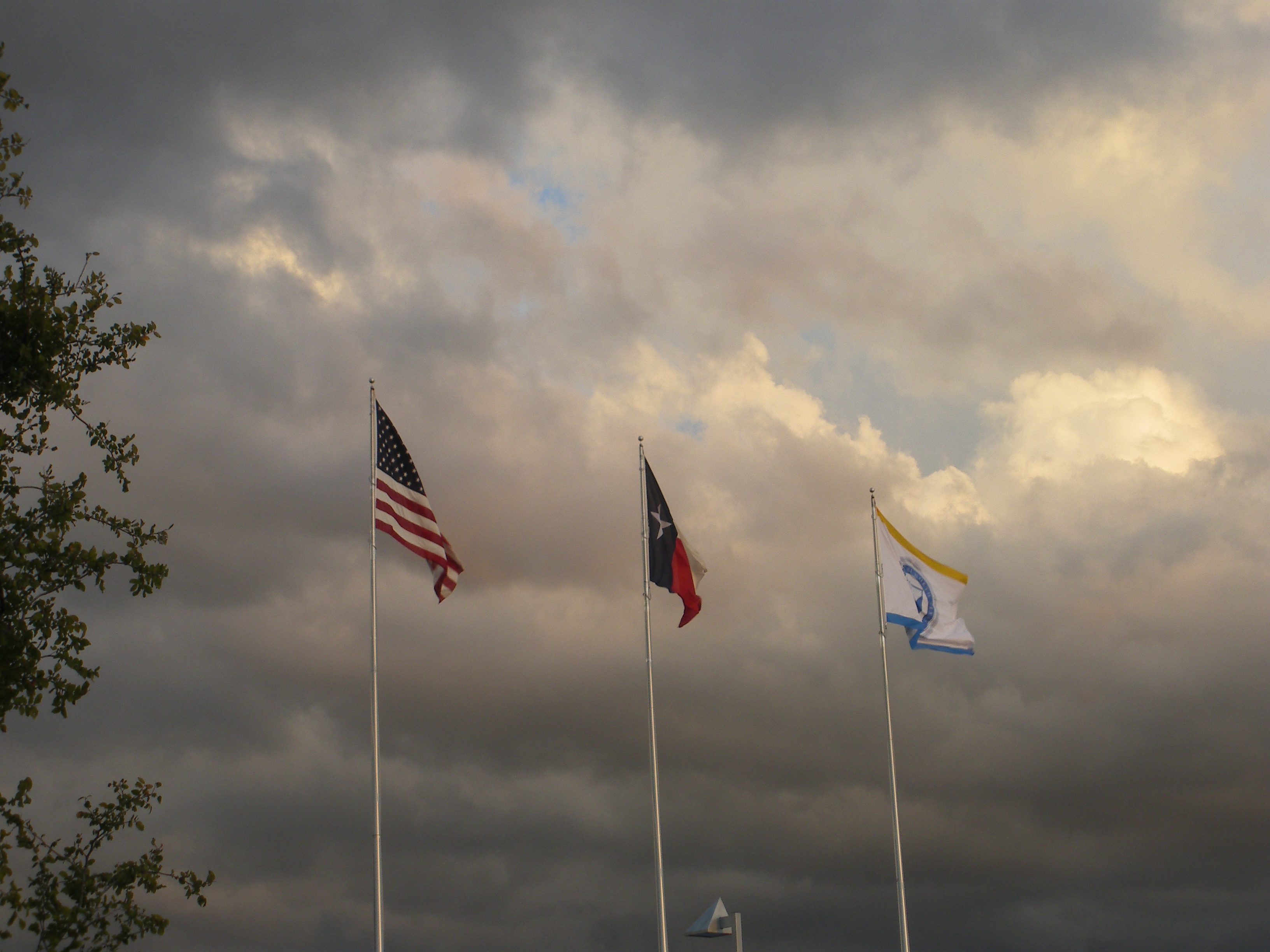
U.S., Texas and University of North Texas at Dallas flags flying on campus, with storm clouds to the South. Photo by Ed Darrell; use encouraged with attribution.

U.S., Texas and University of North Texas at Dallas flags flying on campus, with storm clouds to the South. Photo by Ed Darrell; use encouraged with attribution.

October 12 is the traditional, old calendar date upon which Columbus’s journals show he “discovered” land west of the Atlantic, after sailing from Spain. (Surely there is an explanation for why the date was not altered to conform with the new calendar, but I digress.)  In the finite wisdom of Congress, the holiday is designated on the “second Monday of October,” in order to promote three-day weekends and avoid holidays in the middle of the week.

Happily for traditionalists, the second Monday of October 2015 falls on October 12.

The U.S. Flag Code urges Americans to fly their U.S. flags in honor of certain days.  Columbus Day is a traditional (since the 19th century) holiday (especially for descendants of Italian immigrants), and one of the score of dates denoted in the Flag Code.

Fly your flag today.

At some parades on Columbus Day the Italian colors outnumber the U.S. colors. New York Daily News photo.

At some parades on Columbus Day the Italian colors outnumber the U.S. colors. New York Daily News photo.

More:

Or, if you’re in South Dakota, fly your flag for Native American Day.

http://twitter.com/The_AncientSage/status/521687617012645888


October’s dates to fly U.S. colors

October 1, 2015

Knights of Columbus of New Haven, Connecticut, present the U.S. flag at the start of New Haven's Columbus Day Parade, 2006. 28 flags demonstrated the history of the U.S. flag. KofC photo

Knights of Columbus of New Haven, Connecticut, present the U.S. flag at the start of New Haven’s Columbus Day Parade, 2006. 28 flags demonstrated the history of the U.S. flag. KofC photo

October is not a big month for dates to fly the U.S. flag.  Only one state joined the union in October, and only two other dates have merited Congress’s designation for flag-flying.

Here are October’s three flag-flying days, in chronological order:

  • Columbus Day, October 12 —  tradition puts Columbus Day on October 12, but in law it is designated as the second Monday in October (to make a three-day weekend for workers who get a holiday); in 2015, October 12 is the second Monday of the month.
  • Navy Day, October 27
  • Nevada Statehood Day, October 31; Nevada joined the union during the Civil War, in 1864, the 36th state.

Federal law also designates October 9 as Leif Erickson Day, a concession to Scandanavian-descended Americans who argue Erickson beat Columbus to the Americas by a few hundred years. Congress’s recognition does not include an urging to fly the flag, though the President may issue such a proclamation.

More:


Constitution Day 2015 – Fly your flag

September 17, 2015

Happy Constitution day!  (Remember to fly your flag today.)

Have you read the U.S. Constitution lately?

Contrary to what your local Tea Party claims, it hasn’t changed.  But most people need a refresher from time to time.

First page of the U.S. Constitution, National Archives and Records Administration photo

First page of the U.S. Constitution, National Archives and Records Administration photo

Okay, maybe that’s a little tough to read.  Check out the on-line display of the National Archives and Records Administration in the Charters of Freedom section:

The Constitution Center in Philadelphia plans a full day of celebration, much of it streamed online for classroom use:

Watch as we kick off the day with a rousing reading of the Preamble of the Constitution of the United States on the museum’s front lawn!
Supreme Court Justice Stephen Breyer meets with students for a town hall conversation about his work with the Constitution and the ins and outs of his job!
Join a virtual tour of the museum, including Signers’ Hall and The Story of We the People, followed by a conversation with Judge Marjorie O. Rendell of the U.S. Court of Appeals for the Third Circuit!
Justice Stephen Breyer returns to discuss his latest book, The Court and the World: American Law and the New Global Realities, as well as how American law applies in international contexts.
Catch the newest edition of our award-winning video series and join our staff for a live discussion about Constitution Day! The chat will be available until September 23, from 7 AM to 6 PM EDT.
Follow along with our festivities on social media and share your own celebration! Join the conversation with @ConstitutionCtr and #ConstitutionDay!

Justice Stephen Breyer’s interview alone should be worth the price of admission. He’s taking on the bizarre notion that U.S. judges should never look to see what foreign courts and legislatures do. That view has led to state laws recently that claim to ban local courts’ use of foreign law.

In the year of the 800th anniversary of the Magna Carta? Hello?

Odd fact for Constitution Day: There is no direct mention of a U.S. flag in the Constitution.

More:


Rotunda for the charters of Freedom at Nationa...

Rotunda for the charters of Freedom at National Archives (NARA) building in Washington, D.C. Here displayed are the Declaration of Independence, the Bill of Rights, and the U.S. Constitution. (Photo credit: Wikipedia)

#ConstitutionDay

This is an encore post.

This is an encore post.


Patriot Day, September 11, 2015: Fly your flag at half staff today

September 11, 2015

In Washington, D.C., three American flags fly at half-staff on Columbus Circle (outside of Union Station) on Patriot Day 2013.

Wikipedia image. In Washington, D.C., three American flags fly at half-staff on Columbus Circle (outside of Union Station) on Patriot Day 2013. The flags of several US states and territories can be seen also flying at half-staff in the background. “Union Station 2013-09-11 A” by T. H. Kelly. Licensed under CC BY-SA 3.0 via Commons – https://commons.wikimedia.org/wiki/File:Union_Station_2013-09-11_A.JPG#/media/File:Union_Station_2013-09-11_A.JPG

To honor those who died on September 11, 2001, flags in the U.S. fly at half-staff on September 11.  Known as Patriot Day, the date is not in the Flag Code, but is listed in a separate law.

In the United States, Patriot Day, observed as the National Day of Service and Remembrance, occurs on September 11 of each year in memory of the 2,977 killed in the 2001 September 11 attacks.

Fly your flag today, at half-staff. Remember when flying a flag at half-staff, it is first raised to full staff, then slowly lowered to the half-staff position. When the flag is retired at the end of the day, it should again be crisply raised to the full-staff position before being lowered.

A flag attached to a pole that does not allow a half-staff position should be posted as usual.

To further honor the dead, and survivors, many people participate in a day of service to others.

President Barack Obama issued a proclamation ordering all federal facilities to fly flags at half-staff:

Presidential Proclamation: Patriot Day and National Day of Service and Remembrance, 2015

PATRIOT DAY AND NATIONAL DAY OF SERVICE AND REMEMBRANCE, 2015

– – – – – – –

BY THE PRESIDENT OF THE UNITED STATES OF AMERICA

A PROCLAMATION

On September 11, 2001, America experienced the worst terrorist attack in her history when nearly 3,000 men, women, and children were taken from us, leaving their families and our Nation with a void that can never be filled.  But those who brought hate to our shores and smoke to our skies did not expect our country to emerge stronger, and our beacons of hope and freedom to shine brighter as a result.  In the years since, we have stood strong as one people ‑‑ determined to further embolden our country’s character with acts of endurance and strength; rebuilding and resilience; renewal and progress.  In remembrance of the innocent victims who lost their lives and in honor of the families they left behind, let us continue to answer these heinous acts by serving our communities, lifting the lives of our fellow citizens, and spreading the hope that others tried to dim that day.

The compassion that rose in the hearts and minds of the American people on September 11 still serves as the ultimate rebuke to the evil of those who attacked us.  First responders who risked and gave their lives to rescue others demonstrated the unwavering heroism that defines our great Nation.  Volunteers donated time, money, and blood to ensure wounds gave way to healing and recovery.  Young people, raised until then in a time of peace, stepped forward to serve and defend us, and meet the threats of our time.  And people from across our country and the world joined together in the days that followed to stand up and turn toward one another with open arms, making of a tragedy something the terrorists could never abide ‑‑ a tribute of hope over fear, and love over hate.

As we reflect on the lives we lost and pay tribute to the families who still live with extraordinary pain, let us resolve to continue embodying the American spirit that no act of terror can ever extinguish.  I call on all Americans to observe this National Day of Service and Remembrance with acts of selflessness and charity.  In doing so, we prove once again that the power of those who seek to harm and to destroy is never greater than our power to persevere and to build.  I encourage everyone to visit http://www.Serve.gov to learn of the many opportunities available to give back to others and to reaffirm the fundamental truth that we are our brothers’ and our sisters’ keepers, and that we can forge a brighter future together.

Today, we continue our unfaltering march forward, enduring in the perennial optimism that drives us and brightening the light that the darkness of evil can never overcome.  We remember and yearn for the presence of the beautiful lives lost, and we recommit to honoring their memories by shaping the days to come ‑‑ in as stark a contrast as possible to those who took them from us ‑‑ with courage, liberty, and love.

By a joint resolution approved December 18, 2001 (Public Law 107-89), the Congress has designated September 11 of each year as “Patriot Day,” and by Public Law 111-13, approved April 21, 2009, the Congress has requested the observance of September 11 as an annually recognized “National Day of Service and Remembrance.”

NOW, THEREFORE, I, BARACK OBAMA, President of the United States of America, do hereby proclaim September 11, 2015, as Patriot Day and National Day of Service and Remembrance.  I call upon all departments, agencies, and instrumentalities of the United States to display the flag of the United States at half-staff on Patriot Day and National Day of Service and Remembrance in honor of the individuals who lost their lives on September 11, 2001.  I invite the Governors of the United States and its Territories and interested organizations and individuals to join in this observance.  I call upon the people of the United States to participate in community service in honor of those our Nation lost, to observe this day with appropriate ceremonies and activities, including remembrance services, and to observe a moment of silence beginning at 8:46 a.m. Eastern Daylight Time to honor the innocent victims who perished as a result of the terrorist attacks of September 11, 2001.

IN WITNESS WHEREOF, I have hereunto set my hand this

tenth day of September, in the year of our Lord two thousand fifteen, and of the Independence of the United States of America the two hundred and fortieth.

BARACK OBAMA

Do you plan any special service today?

More:

  • Bryan on Scouting has an article on flying flags at half staff today; bookmark it

September 9, California Statehood Day 2015; Golden Staters, fly your flags!

September 9, 2015

California residents fly their U.S. flags today in honor of California’s entering the union this day in 1850.

U.S. Flag Code guidelines list specific days Americans should fly U.S. flags, and generically, urges people in states to fly flags on their state’s day of achieving statehood.

It’s fun to read through the list of statehood dates and ponder just how such a date is calculated (consider the first 13 colonies and their becoming states); but however it was calculated, September 9 is California’s day.

U.S. and California flags flying from the same flagpole.

U.S. and California flags flying from the same flagpole.

Fly your flags, California.

3-cent stamp honoring California's statehood centennial, in 1950. Image from Rockhounds.com

3-cent stamp honoring California’s statehood centennial, in 1950. Image from Rockhounds.com

California was the 31st state admitted; 31-star flags were in use until Minnesota’s statehood in 1858.  Here’s a unique design on the 31-star motif:

31-start flag with stars arranged in

31-star flag with stars arranged in “Great Star” constellation suggested by War of 1812 Navy hero Samuel Reid, a wearer of the Congressional Medal of Honor. Reid urged 13 stripes instead of 15, which Congress accepted; but he also urged the Great Star design, which was not accepted. Placement of stars in the field remained unencumbered by rules until the Eisenhower administration. Photo from Jeff R. Bridgman Antiques.

More:

Yes, this is mostly an encore post. Fighting ignorance requires patience.

Yes, this is mostly an encore post. Fighting ignorance requires patience, and in the case of history tied to specific dates, repetition.


Remember to fly your flag for Labor Day 2015, September 7

September 7, 2015

Still important in 2015: Fly your flag for American labor, Monday.

Free Labor Will Win, poster from 1942, (Library of Congress)

Poster from the Office of War Information, 1942

(Okay, you may fly your flag all weekend — especially if you’re a union member.  We get the whole weekend, but Labor Day itself is Monday.)

Labor Day 2015 in the United States is a federal holiday, and one of those days Americans are urged to fly the U.S. flag.

“Free Labor Will Win,” the poster said, encouraging a theme important during World War II, when unions were encouraged to avoid strikes or any action that might interrupt work to build the “arsenal of democracy” believed necessary to win the war.  Labor complied, the war was won, and organized labor was the stronger for it. In 2015, some have difficulty remembering when all Americans knew that our future rides on the backs of organized labor.

In war, America turned to organized labor to get the jobs done. Not only do we owe a debt to labor that deserves remembering, we have many jobs that need to be done now, for which organized labor is the best group to turn to.

The poster was issued by the Office of War Information in 1942, in full color. A black-and-white version at the Library of Congress provides a few details for the time:

Labor Day poster. Labor Day poster distributed to war plants and labor organizations. The original is twenty-eight and one-half inches by forty inches and is printed in full color. It was designed by the Office of War Information (OWI) from a photograph especially arranged by Anton Bruehl, well-known photographer. Copies may be obtained by writing the Distribution Section, Office of War Information [alas, you can’t get a copy from the Office of War Information in 2012]

Even down here in deepest, darkest-right-to-work Texas, patriots fly their flags to honor Labor today. It’s heartening.

Flags fly all around in 1882 at the first Labor Day Parade in New York City’s Union Square; lithograph from USC’s Dornsife History Center, via Wikipedia, artist unidentified

This is partly an encore post, a Labor Day tradition.

More, Other Resources:

This is an encore post.

This is an encore post, a Labor Day tradition.