Pixar’s 22 rules for a good story (how do they fit your organization?)

July 30, 2012

Pixar logo, with flourishes

From The Pixar Touch, a set of rules for writing a good story to translate to the screen.

Good rules to keep in mind for composition of stories in English, no?  Good rules of writing to keep in mind for any essay writing.

Where else do these rules apply?

Pixar story rules (one version)

Sunday, May 15, 2011 at 03:39PM

Pixar story artist Emma Coats has tweeted a series of “story basics” over the past month and a half — guidelines that she learned from her more senior colleagues on how to create appealing stories:

#1: You admire a character for trying more than for their successes.

#2: You gotta keep in mind what’s interesting to you as an audience, not what’s fun to do as a writer. They can be v. different.

#3: Trying for theme is important, but you won’t see what the story is actually about til you’re at the end of it. Now rewrite.

#4: Once upon a time there was ___. Every day, ___. One day ___. Because of that, ___. Because of that, ___. Until finally ___.

#5: Simplify. Focus. Combine characters. Hop over detours. You’ll feel like you’re losing valuable stuff but it sets you free.

#6: What is your character good at, comfortable with? Throw the polar opposite at them. Challenge them. How do they deal?

#7: Come up with your ending before you figure out your middle. Seriously. Endings are hard, get yours working up front.

#8: Finish your story, let go even if it’s not perfect. In an ideal world you have both, but move on. Do better next time.

#9: When you’re stuck, make a list of what WOULDN’T happen next. Lots of times the material to get you unstuck will show up.

#10: Pull apart the stories you like. What you like in them is a part of you; you’ve got to recognize it before you can use it.

#11: Putting it on paper lets you start fixing it. If it stays in your head, a perfect idea, you’ll never share it with anyone.

#12: Discount the 1st thing that comes to mind. And the 2nd, 3rd, 4th, 5th – get the obvious out of the way. Surprise yourself.

#13: Give your characters opinions. Passive/malleable might seem likable to you as you write, but it’s poison to the audience.

#14: Why must you tell THIS story? What’s the belief burning within you that your story feeds off of? That’s the heart of it.

#15: If you were your character, in this situation, how would you feel? Honesty lends credibility to unbelievable situations.

#16: What are the stakes? Give us reason to root for the character. What happens if they don’t succeed? Stack the odds against.

#17: No work is ever wasted. If it’s not working, let go and move on – it’ll come back around to be useful later.

#18: You have to know yourself: the difference between doing your best & fussing. Story is testing, not refining.

#19: Coincidences to get characters into trouble are great; coincidences to get them out of it are cheating.

#20: Exercise: take the building blocks of a movie you dislike. How d’you rearrange them into what you DO like?

#21: You gotta identify with your situation/characters, can’t just write ‘cool’. What would make YOU act that way?

#22: What’s the essence of your story? Most economical telling of it? If you know that, you can build out from there.

Presumably she’ll have more to come. Also, watch for her personal side project, a science-fiction short called Horizon, to come to a festival near you.

Tip of the old scrub brush to Farnam Street, who adds:

Still curious?Watch as Kurt Vonnegut explains the different shapes that stories can take.

Where else can you use this?

Consider the project you’ve got to lead, with one person from each department in your company.  What is your vision (the hackneyed but apt word) for how the project ends up?  Storyboard it — and keep in mind these 22 rules.  What’s the essence of your view of the project?  Can you tell it in a minute?  Get the story down to 30 seconds.  What are the stakes, if you get this project done well?  What are the stakes if you fail?   Everybody on the team knows the stakes?  Is your plan on paper?  Have you revised it?

More:


Scouting: In Baden-Powell’s footsteps

July 20, 2012


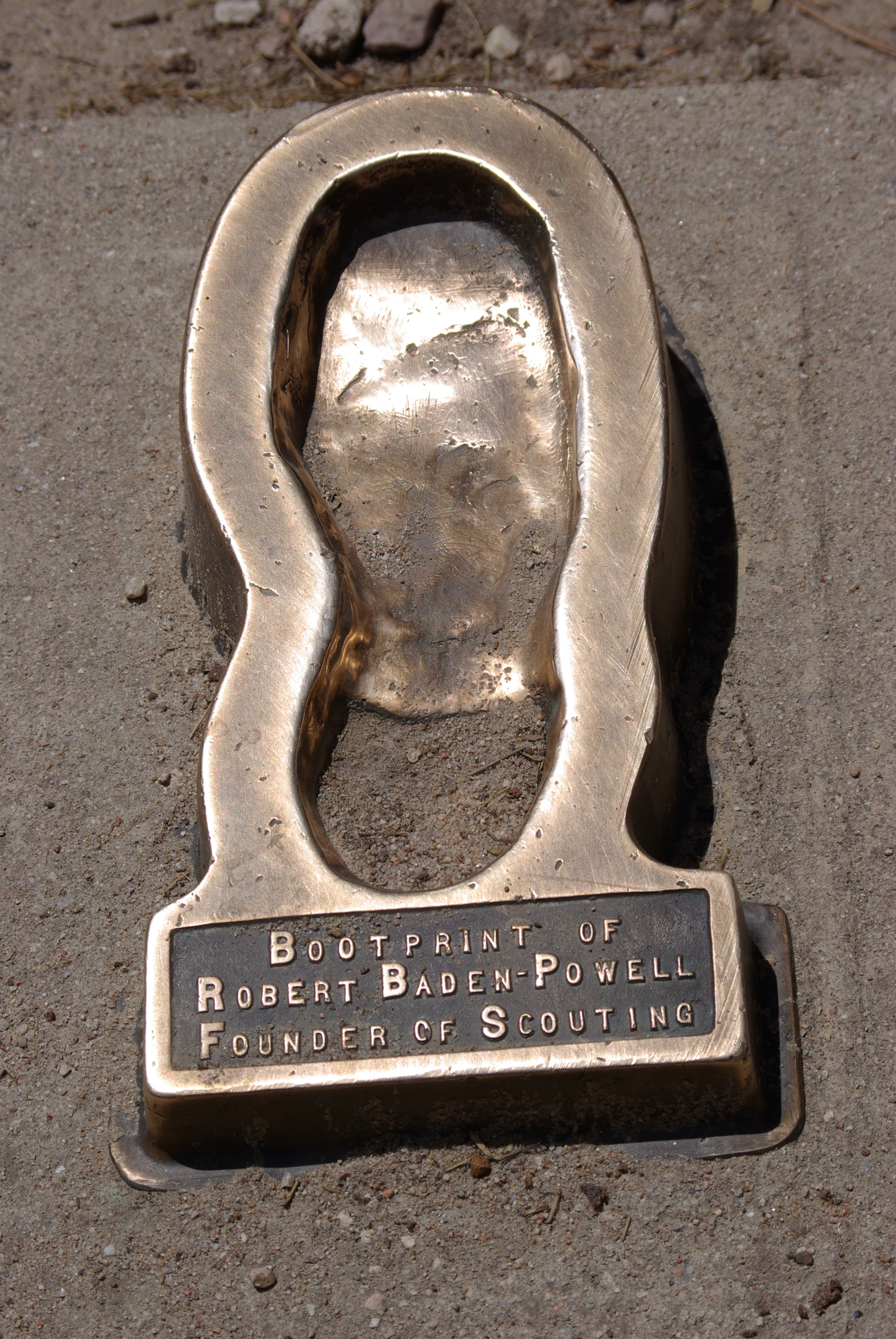
Cast of Baden-Powell's footprint, at Camp Chris Dobbins, Peaceful Valley Scout Ranch, Colorado

Cast of Baden-Powell’s footprint with the brass worn bright from Scouts seeing how they measure up, at Camp Chris Dobbins, Peaceful Valley Scout Ranch, Colorado

Another in a series of where and how people interact with sculpture.

At Peaceful Valley Scout Ranch in Colorado, at Camp Chris Dobbins, there is a cast of a footprint from Lord Robert Baden-Powell, the founder of the International Scouting Movement.

Of course, every Scout must check it out to see whether his or her foot measures up, you can tell from the bright brass color where the piece is touched by hundreds of boots.


Quote of the moment: What if D-Day had failed? IKE said, ‘blame me’

June 11, 2012

Eisenhower's unused statement on the failure of D-Day

Eisenhower’s contingency statement, in case D-Day failed – image from the National Archives

This quote actually isn’t a quote. It was never said by the man who wrote it down to say it. It carries a powerful lesson because of what it is.

The Bathtub recently posted Gen. Dwight Eisenhower’s “order of the day” to the troops about to conduct the Allied invasion of Normandy — D-Day — to establish the toehold in Europe the Allies needed to march to Berlin, and to end World War II in Europe. As a charge to the troops, it was okay — Eisenhower-style words, not Churchill-style, but effective enough. One measure of its effectiveness was the success of the invasion, which established the toe-hold from which the assaults on the Third Reich were made.

When Eisenhower wrote his words of encouragement to the troops, and especially after he visited with some of the troops, he worried about the success of the operation. It was a great gamble. Many of the things the Allies needed to go right — like weather — had gone wrong. Victory was not assured. Defeat strode the beaches of Normandy waiting to drive the Allies back into the water, to die. [Photo shows Eisenhower meeting with troops of the 101st Airborne Division, 502nd Parachute Infantry Regiment, on the eve of the invasion. It was these men whose courage he lauded. Update: Someone “took hostage” the photo I linked to — a thumbnail version is appended; I leave the original link in hopes it might be liberated] eisenhower-with-paratrooper-eve-of-d-day.jpg

Eisenhower wrote a second statement, a shorter one. This one was directed to the world. It assumed the assault had failed. In a few short sentences, Eisenhower commended the courage and commitment of the troops who, he wrote, had done all they could. The invasion was a chance, a good chance based on the best intelligence the Allies had, Eisenhower wrote. But it had failed.

The failure, Eisenhower wrote, was not the fault of the troops, but was entirely Eisenhower’s.

He didn’t blame the weather, though he could have. He didn’t blame fatigue of the troops, though they were tired, some simply from drilling, many from war. He didn’t blame the superior field position of the Germans, though the Germans clearly had the upper hand. He didn’t blame the almost-bizarre attempts to use technology that look almost clownish in retrospect — the gliders that carried troops behind the lines, sometimes too far, sometimes killing the pilots when the gliders’ cargo shifted on landing; the flotation devices that were supposed to float tanks to the beaches to provide cover for the troops (but which failed, drowning the tank crews and leaving the foot soldiers on their own); the bombing of the forts and pillboxes on the beaches, which failed because the bombers could not see their targets through the clouds.

There may have been a plan B, but in the event of failure, Eisenhower was prepared to establish who was accountable, whose head should roll if anyone’s should.

Eisenhower took full responsibility.

Our landings in the Cherbourg-Havre area have failed to gain a satisfactory foothold and I have withdrawn the troops. My decision to attack at this time and place was based upon the best information available. The troop, the air [force] and the navy did all that bravery and devotion to duty could do. If any blame or fault attaches to the attempt, it is mine alone.

Do you think anyone in the U.S. command would write such a thing today?  I have several candidates.  Who do you think is leader enough to shoulder the blame for such a massive, hypothetical debacle?

  • The message may also be viewed here. Yes, it’s incorrectly dated July 5 — should have been June 5.

This is an encore post.


Ike’s orders to the troops for D-Day, June 5, 1944

June 5, 2012

Eisenhower talks to troops of invasion force, June 5 -- before D-Day

Gen. Dwight D. Eisenhower talks with paratroopers of the U.S. 101st Airborne Division, June 5, 1944; photo credit unclear; from Ohio State University

Soldiers, Sailors, and Airmen of the Allied Expeditionary Force: You are about to embark upon the Great Crusade, toward which we have striven these many months. The eyes of the world are upon you.

– Order of the Day, 6 June, 1944 (some sources list this as issued 2 June)

(This is mostly an encore post.)


Facebook-fiends-and-Twitterists? “I’ve got them on the list.”

May 26, 2012

Believe it or not, this post is about education leadership, or its lack.

It is said that Gerald Ford once said of Richard Nixon’s “enemies list,”

“Anybody who can’t keep his enemies in his head has too many enemies.”

Richard Nixon, had he acknowledged the sentiment, probably could have devised a way to pare his list not exactly in keeping with Gerald Ford’s good-guy intentions.  More than one way to pare a list, if you know what I mean.

My mind wandered off to enemies lists when I discovered this week that one of our former administrators had actually kept lists of teachers — and probably other support people — and threatened more than one with “placement on the list.”

What school of school leadership taught that?  The Monty Python School of How KnNot to Do It?

English: 1919 D'Oyly Carte Opera Company publi...

1919 D’Oyly Carte Opera Company publicity poster for The Mikado, featuring the character of the Lord High Executioner. Illustration by J. Hassal.

The only appropriate response when learning of such a list is to ask, “Who appointed you Lord High Executioner?”

Do you disagree?  Lists of enemies do not denote the great leader.  They denote someone who either saw “The Mikado” and missed all the jokes, or didn’t bother to see the thing at all.  Who can follow someone who doesn’t know the jokes from “Mikado,” and consequently, falling victim to the trap warned of by Santayana’s Ghost, falls right into the trap?

It’s silly.  It’s lampooned well enough in Gilbert and Sullivan‘s masterpiece of bureaucracy farce that any leader, even a Modern Major General, would know better than to do it.

Notice I did NOT say, “know better than to let it be known that the list existed.”  I said “know better than to do it.

What’s that?   You are unfamiliar with the song of which I speak?  Here, watch Opera Australia show how it’s done (at least, how it’s done Down Under where there are, unbelievable as it may be, climate denialists and people who are obnoxious about Facebook and Twitter):

DVD Available Now: http://bit.ly/HCzeWc

Mitchell Butel of Avenue Q fame sings “I’ve Got a Little List” from Gilbert and Sullivan’s The Mikado. This excerpt is from the cinema/DVD recording of Opera Australia’s 2011 production at the Arts Centre, Melbourne.

Lyrics:
As someday it may happen that a victim must be found,
I’ve got a little list. I’ve got a little list
Of society offenders who might well be underground
And who never would be missed, who never would be missed.

There’s the idiot denouncing with enthusiastic tone
All football teams but his and every suburb but his own.
The man who sits beside you on the plane and wants to talk,
Whose jabbering inspires you to jab him with your fork.
Your aunty with the moustache who insists on being kissed.
They’d none of them be missed, they’d none of them be missed.

(He’s got them on the list! He’s got them on the list!
And they’d none of them be missed! They’d none of them be missed!)

Those whinging letter writers and those pundits in the press.
That opinion columnist, that bore would not be missed.
That trendy thing in opera if the plot seems like a mess,
That nice surtitlist!
(Surtitles: ‘This song is not on my list. Normal transmission will resume shortly’)
The politician prancing round in speedos tightly packed,
He thought it cool but really it just showed us what he lacked.
And Canberra’s leading red-head who’s afraid of stickybeaks,
Who’d like to keep her fumbles and mistakes off Wikileaks.
Australian Idol singers who pathetically persiiiiiiiiiist.
They’d none of them be missed. They’d none of them be missed.

(He’s got them on the list! He’s got them on the list!
And they’d none of them be missed! They’d none of them be missed!)

And the purists who insist piano music stops at Brahms,
I’ll put them on the list, and make them sit through Liszt.
On Saturday night the mob at Flinder’s Street all singing psalms,
I wish they would desist, and their happy claps resist.
That music theatre sequel that they promised would be good,
“Love never dies” they say, but I confess I wish it would.
That Frenchman and the other one who judge My Kitchen Rules,
Who give new definition to the label ‘Kitchen Tools’.
That morning television host who’s funny as a cyst,
Gold Logies he has kissed, but it’s time to kiss my fist.

(He’s got them on the list! He’s got them on the list!
And they’d none of them be missed! They’d none of them be missed!)

Then the merchant banker wankers and the bonuses they flout,
And the subprimortgagist, I’ve got him on the list!
The governments like lapdogs rushing in to bail them out,
To their mills it’s simply grist, so I’ve got them on the list.
Retirees who migrate to the country to make wine,
And Britney Spears for accidentally showing her ‘vagine’.
Those climate change deniers who don’t like the carbon tax,
Who haven’t read the science and don’t really know the facts.
The women on the tram who at Spring Carnaval got pi– really drunk!
Narelle! Where are my shoes?!
They’d none of them be missed. They’d none of them be missed.

(You may put them on the list. You may put them on the list.
And they’d none of them be missed! They’d none of them be missed!)

There’s the ticket holder next to you who cannot work their phone,
And cannot get the gist. I’ve got her on the list!
Who leaves it on or switches to that dreadful silent drone… Vrrrrrr Vrrrrr Vrrrrr
Facebook fiends and Twitterists are also on the list.
And people who inflict on us full cycles of the Ring,
I’d rather ride a valkyrie than hear Brunhilde sing.
And all commercial managements who want to cast a star,
They couldn’t get one this time, they got me, so there you are.
Or worst of all the actor who’s an extra lyricist,
I don’t think he’d be missed, so I’ve got him on the list.

(You may put them on the list! You may put them on the list!
And they’d none of them be missed! They’d none of them be missed!)

Your shock at Gilbert and Sullivan’s sounding so astonishingly contemporary comes through even the internet.  How could they know?

I’m not sure what the original script said, having never done that particular operetta.  Somewhere, the practice  arose to have someone spice up the lyric to this tune, to the times, to the city in which the operetta is performed, and to thezeitgeist of the audience.  Fans of G&S wait to see what and whom the “supplemental lyricist,” or “extra lyricist” poked at.

Even composers of silly operetta tunes understand that what is said, and what is done, needs to be molded to the local circumstances — and that in no case should a bureaucrat keep a list of enemies.

Compare Opera Australia’s version with that of the venerable G&S troupe, D’Oyly Carte Opera Company, about 20 years earlier, 1990 or 1992, on BBC2, in London:

Of course, you may think by my lampooning of list makers that I, myself, should be on some list.  Aye, there’s the rub.

Take a look and listen to Eric Idle’s version of the song from th 1987 English National Opera production, with which Opera Australia may wish to take some exception.

In the English speaking world, wherever the works of Gilbert and Sullivan exist in book, on the stage, in oratorio, on record, tape, CD, DVD or Blu-Ray, people know leaders become comic fops instead when they make “a little list” of the names of the people they wish to be rid of.

Educated people know that.  Education people should know that, too.

More (not necessarily endorsed by Millard Fillmore’s Bathtub):


Save


New Dallas superintendent Mike Miles warns the troops

May 25, 2012

Dallas ISD superintendent-designee Mike Miles held a press conference and sat down for an interview with the in-house television production group this week.

Miles starts the job in Dallas at the first of July, but he is working at Dallas ISD headquarters under a consulting contract until then.

Should the interview, below, be regarded as anything other than a warning to Dallas teachers and administrators?

Is this any way to rally the troops one depends on?

This interview with Dallas ISD Superintendent-designate Mike Miles occurred on May 22, 2012.

More, Related, and Tangential articles:


Oldest Scout in Las Vegas welcomes newest Scout

April 18, 2012

Yeah, this was last January, but it’s still a little Scout bon mot.  The oldest alumnus of Scouting in the Las Vegas Area Council welcomes the newest recruit in the Council — the montage of their repeating the oath is worth the viewing.  Nice shots of Vegas, too.

The ceremony occurred when Adventure Base 100 visited the area.

Thank you, Federal District Judge Lloyd George.

Good things boys learn in Scouting in Las Vegas don’t stay in Vegas — they spread across the globe, instead.


Oh, say, can Republicans see?

December 18, 2011

Old Jules was referring to something else, a serious enough issue on its own, and not necessarily the lack of vision among Republican presidential candidates.

But it fits from time to time:

Zero Visibility, a warning sign - photo by Old Jules, perhaps

Zero Visibility, a warning sign - photo by Old Jules, perhaps

Bill Cosby once asked if anyone else had the same chill of fear he gets when the lights start to go down at the theater:  Are the lights getting dim, or are you going blind?

Is there zero visibility, or are our eyes shut tightly?  Can the candidates see what it takes to get us out of this olio, this olla podrida of messes, or is there too much fog, or are they just not looking?  Worse, is it dark AND they are not looking?

What say you?


Encore quote of the moment: Robert Kennedy on what really matters

December 18, 2011

This is borrowed from Harry Clarke (with a few minor corrections in the text):

Robert F. Kennedy speech at the University of Kansas, Lawrence, March 18, 1968

Robert F. Kennedy speech at the University of Kansas, Lawrence, March 18, 1968 - Photo by George Silk, Time-Life Pictures/Getty Images

RFK said this in 1968. In a speech I heard today it was quoted and it stirred me.

Too much and for too long, we seem to have surrendered personal excellence and community value in the mere accumulation of material things. Our Gross National Product, now, is over eight hundred billion dollars a year, but that GNP — if we judge the United States of America by that — that GNP counts air pollution and cigarette advertising and ambulances to clear our highways of carnage. It counts special locks for our doors and the jails for the people who break them. It counts the destruction of the redwoods and the loss of our natural wonder in chaotic sprawl. It counts napalm and it counts nuclear warheads, and armored cars for the police to fight the riots in our cities. It counts Whitman’s rifle and Speck’s knife, and the television programs which glorify violence in order to sell toys to our children.

Yet the Gross National Product does not allow for the health of our children, the quality of their education, or the joy of their play. It does not include the beauty of our poetry or the strength of our marriages, the intelligence of our public debate or the integrity of our public officials. It measures neither our wit nor our courage, neither our wisdom nor our learning, neither our compassion nor our devotion to our country; it measures everything, in short, except that which makes life worthwhile. And it can tell us everything about America except why we are proud that we are Americans.

Kennedy delivered these words in an address at the University of Kansas, Lawrence, Kansas, on March 18, 1968.

Here’s a video production from the Glaser Progress Foundation which includes an audio recording of the speech:

More resources:

Most of this post appeared originally here in 2009.  We need the reminder.


Rhodes Scholars for 2012

November 21, 2011

On November 19, 2011, the Rhodes Trust announced the 32 winners of Rhodes Scholarships for the United States for 2012.

These young people are among the smartest and most accomplished people of their generation.  Under the will of Cecil Rhodes, the developer of African railroads and colonist, Rhodes Scholars must demonstrate leadership and service, and they must be well-rounded, which usually means they are accomplished athletes in one area in addition to their academic acumen.

One of this year’s winners will have to bail out on the second year of his Teach for America commitment — one hopes TFA will understand.  Joshua Carpenter, a 2010 graduate of the University of Alabama-Birmingham, taught writing, math and economics in Marion, Alabama.

Past American Rhodes Scholarship winners include former Sen. Bill Bradley of New Jersey, the late Sen. J. William Fulbright of Arkansas, musician and actor Kris Kristofferson, MSNBC host Rachel Maddow, former President Bill Clinton, late Secretary of State Dean Rusk, Sen. Richard Lugar of Indiana, physician and Pulitzer-winning author Siddhartha Mukherjee, U.S. Ambassador to the UN Susan Rice, and author Naomi Wolf.  Here’s the press release from the Trust:

WASHINGTON, DC/November 19, 2011 – Elliot F. Gerson, American Secretary of the Rhodes Trust, today announced the names of the thirty-two American men and women chosen as Rhodes Scholars representing the United States. Rhodes Scholarships provide all expenses for two or three years of study at the University of Oxford in England, and may allow funding in some instances for four years. Mr. Gerson called the Rhodes Scholarships,” the oldest and best known award for international study, and arguably the most famous academic award available to American college graduates.” They were created in 1902 by the Will of Cecil Rhodes, British philanthropist and African colonial pioneer. The first class of American Rhodes Scholars entered Oxford in 1904; those elected today will enter Oxford in October 2012.

Rhodes Scholars are chosen in a two-stage process. First, candidates must be endorsed by their college or university. This year over 2000 students sought their institution’s endorsement; 830 were endorsed by 299 different colleges and universities.

Committees of Selection in each of 16 U.S. districts then invite the strongest applicants to appear before them for interview. Gerson said, “applicants are chosen on the basis of the criteria set down in the Will of Cecil Rhodes. These criteria are high academic achievement, integrity of character, a spirit of unselfishness, respect for others, potential for leadership, and physical vigor. These basic characteristics are directed at fulfilling Mr. Rhodes’s hopes that the Rhodes Scholars would make an effective and positive contribution throughout the world. In Rhodes’ words, his Scholars should ‘esteem the performance of public duties as their highest aim.'”

Applicants in the United States may apply either through the state where they are legally resident or where they have attended college for at least two years. The district committees met separately, on Friday and Saturday, November 18 and 19, in cities across the country.  Each district committee made a final selection of two Rhodes Scholars from the candidates of the state or states within the district. Two-hundred ten applicants from 99 different colleges and universities reached the final stage of the competition, including 15 that had never before had a student win a Rhodes Scholarship. Gerson also reported, “in most years, we elect a winner from a college that had never before had a Rhodes Scholar, even after more than a century. This year we are pleased to announce first-time winners from Bard College and from California State University, Long Beach.”

The thirty-two Rhodes Scholars chosen from the United States will join an international group of Scholars chosen from fourteen other jurisdictions around the world. In addition to the thirty-two Americans, Scholars are also selected from Australia, Bermuda, Canada, the nations of the Commonwealth Caribbean, Germany, Hong Kong, India, Jamaica, Kenya, New Zealand, Pakistan, Southern Africa (South Africa, plus Botswana, Lesotho, Malawi, Namibia and Swaziland), Zambia, and Zimbabwe. Approximately 80 Scholars are selected worldwide each year, usually including several who have attended American colleges and universities but who ae not U.S. citizens and who have applied through their home country.

With the elections announced today, 3,260 Americans have won Rhodes Scholarships, representing 314 colleges and universities. Since 1976, women have been eligible to apply and 458 American women have now won the coveted scholarship. And for the fourth time since 1976, more women (17) than men (15) were elected. Men constituted 58% of the applicant pool and 60% of those who reached the final stage of the competition. More than 1,800 American Rhodes Scholars are living in all parts of the U.S. and abroad.

The value of the Rhodes Scholarship varies depending on the academic field and the degree (B.A., master’s, doctoral) chosen. The Rhodes Trust pays all college and university fees, provides a stipend to cover necessary expenses while in residence in Oxford as well as during vacations, and transportation to and from England. Mr. Gerson estimates that the total value of the Scholarship averages approximately US$50,000 per year, and up to as much as US$200,000 for Scholars who remain at Oxford for four years in certain departments.

The full list of the newly elected United States Rhodes Scholars, with the states from which they were chosen, their home addresses, and their American colleges or universities, follows. Brief profiles follow the list.

Selectees are listed here first by the state from which they competed, and then by the college they attended — note that the college may not be in the state from which the candidate competed.

American Rhodes Scholars-elect for 2012
(Subject to ratification by the Rhodes Trustees after acceptance by one of the colleges of Oxford University)

District 1

New Hampshire, Yale University
Ms. Helen E. Jack
Hanover, New Hampshire

Rhode Island Brown University
Ms. Emma F. LeBlanc
Manchester, New Hampshire

District 2

Massachusetts, Princeton University
Ms. Elizabeth W. Butterworth
Auburn, Massachusetts

Massachusetts, Brown University
Mr. David S. Poritz
Amherst, Massachusetts

District 3

New York, Princeton University
Ms. Miriam Rosenbaum
Bronx, New York

New York, Harvard College
Ms. Brett A. Rosenberg
Chappaqua, New York

District 4

Pennsylvania, Bryn Mawr College
Ms. Nina R.W. Cohen
Newton, Massachusetts

Pennsylvania, University of Pittsburgh
Mr. Cory J. Rodgers
Somerset, Pennsylvania

District 5 

Rhodes Scholar Brandon Turner, of Fontana, California, Wake Forest University

Rhodes Scholar Brandon Turner, of Fontana, California, Wake Forest University


Maryland/DC, Yale Law School and Bard College
Mr. Ronan S. Farrow
Washington, D.C.

North Carolina, Wake Forest University
Mr. Brandon E. Turner
Winston-Salem, North Carolina

District 6

Georgia, Stanford University
Mr. Ishan Nath
Atlanta, Georgia

Virginia, Brown University
Mr. Nabeel N. Gillani
Glen Allen, Virginia

District 7

Alabama, University of Alabama at Birmingham
Mr. Joshua D. Carpenter
Florence, Alabama

Tennessee, Sewanee: The University of the South
Ms. Carrie H. Ryan
Sewanee, Tennessee

District 8

Texas, Stanford University
Ms. Aysha N. Bagchi
Austin, Texas

Texas, Stanford University
Mr. Anand R. Habib
Houston, Texas

District 9

Indiana, Princeton University
Mr. Mohit Agrawal
West Lafayette, Indiana

Rhodes Scholar Victor Yang, of Lexington, Kentucky (Harvard University)

Victor Yang, from Lexington, Kentucky (Harvard University)

Kentucky, Harvard College
Mr. Victor Yang
Lexington, Kentucky

District 10

Rhodes Scholar Sarah Smierciak, Northwestern University - Chicago Tribune photo

Chicago Tribune photo - Northwestern University student and new Rhodes Scholar Sarah Smierciak speaks with the media on the Northwestern University campus in Evanston today. (StaceyWescott / Chicago Tribune / November 20, 2011)

Illinois, Northwestern University
Ms. Sarah N. Smierciak
Lemont, Illinois

Michigan, Harvard College
Mr. Spencer B.L. Lenfield
Paw Paw, Michigan

District 11

New Rhodes Scholar Alexis Brown, University of Wisconsin

New Rhodes Scholar Alexis Brown, University of Wisconsin

Wisconsin, University of Wisconsin-Madison
Ms. Alexis K. Brown
Madison, Wisconsin

Wisconsin, Princeton University
Ms. Astrid E. M. L. Stuth
Hubertus, Wisconsin

District 12

Kansas, University of Kansas
Ms. Kelsey R. Murrell
Kearney, Missouri

South Carolina, Stanford University
Ms. Katherine Niehaus
Columbia, South Carolina

District 13

Colorado, United States Air Force Academy
Mr. Zachary A. Crippen
Bala Cynwyd, Pennsylvania

USAFA Rhodes Scholar Zachary Crippen at Aspen Institute with Brent Scowcroft and others - USAFA photo

Aspen Institute Left to right; Cadet 1st Class Zachary Crippen (Rhodes Scholar), Cadet Squadron 12; retired Lt. Gen. Brent Scowcroft, co-chairman of the Aspen Strategy Group; Dr. Schuyler Foerster, the Academy’s Brent Scowcroft professor for national security studies; Cadet 1st Class Peter Lind, CS15; and Cadet 1st Class Nathan Betcher, CS25, pose for a photo at the Aspen Institute Saturday (date not designated) (U.S. Air Force Photo)

Colorado, Harvard College
Mr. Samuel M. Galler
Boulder, Colorado

District 14

Washington, University of Washington
Mr. Byron D. Gray
Post Falls, Idaho

Washington, University of Washington
Mr. Cameron W. Turtle
Pullman, Washington

District 15

California, Brown University
Ms. Brianna R. Doherty
Carmichael, California

California, Stanford University
Ms. Tenzin Seldon
Albany, California

District 16

California, California State University, Long Beach
Ms. Stephanie Bryson
San Diego, California

California, Massachusetts Institute of Technology
Ms. Stephanie Lin
Irvine, California

More details may be available at the Rhodes Trust website for the American group.

Profiles of Rhodes 2012 winners below the fold.

News coverage:

Why isn’t this a bigger deal in American news outlets?

Read the rest of this entry »


Republicans lose only two in Wisconsin

August 10, 2011

Opening paragraph in this morning’s Post-Crescent in Appleton, Wisconsin:

By Steve Contorno, Gannett Wisconsin Media

Sen. Rob Cowles blocked one of six attempts by Democrats on Tuesday to oust a sitting Republican lawmaker from office, putting his party in a position to maintain control of Madison and continue its unchecked, aggressive agenda.

That’s about as polite as it is possible to be.

Democrats faced an uphill battle, but took two out of three seats from Republicans.  It is not enough to flip the majority in the Senate.

Will it be enough of a scare to make Republicans talk sense?  You’d think that, after watching the damage done to the stock market, almost as bad as the attack on the World Trade Center, Wisconsin voters would have been more circumspect.

But these six Republicans were well-entrenched.  33% is better than nothing.  It means 33% of Wisconsinites appear to have awakened to the wolves at their doors.

How to wake up the rest?

Two Democrats face recall elections next week, revenge for the recall elections this week.

Will the assault on U.S. values, education and public institutions, continue?

_____________

This morning, according to AP, Wisconsin Democrats said they will push forward to recall Gov. Scott “Ahab” Walker, just as soon as he is eligible for recall.


Educators, especially principals and administrators: Follow these guys, will you?

July 9, 2011

In last eight years I’ve spent in frontline education, I cannot count the times I’ve had administrators bring up some management scheme misdescribed and misexecuted as a result, or rejected completely by businesses years ago.  Each time I wonder, don’t these organizational leaders read the management journals, the leadership gurus?

Well, no they don’t.

So, for the three or four principals and administrators who occasionally read this blog, will you do us all a favor?

Follow Tom Peters and Rosabeth Moss Kanter on their Twitter feeds, will you?  A few times a week you’ll get a gem of advice from each of them.  It’ll improve your life, and it will improve your organizations if you pay attention.

Agree or disagree with me — let us know in comments.

Who is Rosabeth Moss Kanter?  You should know her as the author of Teaching Elephants to Dance.  It’s a hoary old classic by now — and not present in any of the libraries of the administrators I see daily.

Who is Tom Peters?  He was co-author of In Search of Excellence, and has gone on to push excellence, quality and good change for the past quarter century plus.

If you, Ms. or Mr. Educator, do not know who these people are, you’re hopelessly behind the times.  If you are not familiar with their writings, your schools are suffering for your ignorance.

Go change something.


Quote of the moment: John Kennedy, “What do our opponents mean . . . ‘Liberal?'”

June 24, 2011

From the website of PBS’s American Experience:

Acceptance of the New York Liberal Party Nomination

John Fitzgerald Kennedy
September 14, 1960

What do our opponents mean when they apply to us the label “Liberal?” If by “Liberal” they mean, as they want people to believe, someone who is soft in his policies abroad, who is against local government, and who is unconcerned with the taxpayer’s dollar, then the record of this party and its members demonstrate that we are not that kind of “Liberal.” But if by a “Liberal” they mean someone who looks ahead and not behind, someone who welcomes new ideas without rigid reactions, someone who cares about the welfare of the people — their health, their housing, their schools, their jobs, their civil rights, and their civil liberties — someone who believes we can break through the stalemate and suspicions that grip us in our policies abroad, if that is what they mean by a “Liberal,” then I’m proud to say I’m a “Liberal.”

But first, I would like to say what I understand the word “Liberal” to mean and explain in the process why I consider myself to be a “Liberal,” and what it means in the presidential election of 1960.

John F. Kennedy during the 1960 campaign

John F. Kennedy during the 1960 campaign - Kennedy accepted the nomination of the New York Liberal Party on September 14, 1960; this photo may be from that event

In short, having set forth my view — I hope for all time — two nights ago in Houston, on the proper relationship between church and state, I want to take the opportunity to set forth my views on the proper relationship between the state and the citizen. This is my political credo:

I believe in human dignity as the source of national purpose, in human liberty as the source of national action, in the human heart as the source of national compassion, and in the human mind as the source of our invention and our ideas. It is, I believe, the faith in our fellow citizens as individuals and as people that lies at the heart of the liberal faith. For liberalism is not so much a party creed or set of fixed platform promises as it is an attitude of mind and heart, a faith in man’s ability through the experiences of his reason and judgment to increase for himself and his fellow men the amount of justice and freedom and brotherhood which all human life deserves.

I believe also in the United States of America, in the promise that it contains and has contained throughout our history of producing a society so abundant and creative and so free and responsible that it cannot only fulfill the aspirations of its citizens, but serve equally well as a beacon for all mankind. I do not believe in a superstate. I see no magic in tax dollars which are sent to Washington and then returned. I abhor the waste and incompetence of large-scale federal bureaucracies in this administration as well as in others. I do not favor state compulsion when voluntary individual effort can do the job and do it well. But I believe in a government which acts, which exercises its full powers and full responsibilities. Government is an art and a precious obligation; and when it has a job to do, I believe it should do it. And this requires not only great ends but that we propose concrete means of achieving them.

Our responsibility is not discharged by announcement of virtuous ends. Our responsibility is to achieve these objectives with social invention, with political skill, and executive vigor. I believe for these reasons that liberalism is our best and only hope in the world today. For the liberal society is a free society, and it is at the same time and for that reason a strong society. Its strength is drawn from the will of free people committed to great ends and peacefully striving to meet them. Only liberalism, in short, can repair our national power, restore our national purpose, and liberate our national energies. And the only basic issue in the 1960 campaign is whether our government will fall in a conservative rut and die there, or whether we will move ahead in the liberal spirit of daring, of breaking new ground, of doing in our generation what Woodrow Wilson and Franklin Roosevelt and Harry Truman and Adlai Stevenson did in their time of influence and responsibility.

Our liberalism has its roots in our diverse origins. Most of us are descended from that segment of the American population which was once called an immigrant minority. Today, along with our children and grandchildren, we do not feel minor. We feel proud of our origins and we are not second to any group in our sense of national purpose. For many years New York represented the new frontier to all those who came from the ends of the earth to find new opportunity and new freedom, generations of men and women who fled from the despotism of the czars, the horrors of the Nazis, the tyranny of hunger, who came here to the new frontier in the State of New York. These men and women, a living cross section of American history, indeed, a cross section of the entire world’s history of pain and hope, made of this city not only a new world of opportunity, but a new world of the spirit as well.

Tonight we salute Governor and Senator Herbert Lehman as a symbol of that spirit, and as a reminder that the fight for full constitutional rights for all Americans is a fight that must be carried on in 1961.

Many of these same immigrant families produced the pioneers and builders of the American labor movement. They are the men who sweated in our shops, who struggled to create a union, and who were driven by longing for education for their children and for the children’s development. They went to night schools; they built their own future, their union’s future, and their country’s future, brick by brick, block by block, neighborhood by neighborhood, and now in their children’s time, suburb by suburb.

Tonight we salute George Meany as a symbol of that struggle and as a reminder that the fight to eliminate poverty and human exploitation is a fight that goes on in our day. But in 1960 the cause of liberalism cannot content itself with carrying on the fight for human justice and economic liberalism here at home. For here and around the world the fear of war hangs over us every morning and every night. It lies, expressed or silent, in the minds of every American. We cannot banish it by repeating that we are economically first or that we are militarily first, for saying so doesn’t make it so. More will be needed than goodwill missions or talking back to Soviet politicians or increasing the tempo of the arms race. More will be needed than good intentions, for we know where that paving leads.

In Winston Churchill’s words, “We cannot escape our dangers by recoiling from them. We dare not pretend such dangers do not exist.”

And tonight we salute Adlai Stevenson as an eloquent spokesman for the effort to achieve an intelligent foreign policy. Our opponents would like the people to believe that in a time of danger it would be hazardous to change the administration that has brought us to this time of danger. I think it would be hazardous not to change. I think it would be hazardous to continue four more years of stagnation and indifference here at home and abroad, of starving the underpinnings of our national power, including not only our defense but our image abroad as a friend.

This is an important election — in many ways as important as any this century — and I think that the Democratic Party and the Liberal Party here in New York, and those who believe in progress all over the United States, should be associated with us in this great effort. The reason that Woodrow Wilson and Franklin Roosevelt and Harry Truman and Adlai Stevenson had influence abroad, and the United States in their time had it, was because they moved this country here at home, because they stood for something here in the United States, for expanding the benefits of our society to our own people, and the people around the world looked to us as a symbol of hope.

I think it is our task to re-create the same atmosphere in our own time. Our national elections have often proved to be the turning point in the course of our country. I am proposing that 1960 be another turning point in the history of the great Republic.

Some pundits are saying it’s 1928 all over again. I say it’s 1932 all over again. I say this is the great opportunity that we will have in our time to move our people and this country and the people of the free world beyond the new frontiers of the 1960s.


What did we learn from the first Republican debate?

June 18, 2011

I was traveling, learning about past presidents, and I missed did not see or hear the “debate” last week among Republican hopefuls for the presidency.

Old friend and commentator Pat Carrithers asked on Facebook:

What did we learn from the Republican debate last night?

We learned they all hate Obama.
We learned they have no new thoughts or ideas for economic recovery.
We learned that they still think “No” is a policy and a program.

So, I repeat, What did we learn from the Republican debate last night.

I look at the Republican field, and I worry.  I may have explained before that my experience is that we should hope for, and work to obtain, the best possible candidate from each party, because circumstances well may conspire to elect the lesser of those two candidates.  I cannot in good conscience hope for a clown like Bachmann or Palin to win the Republican nomination.

Pat Bagley's cartoon on the 2012 Presidential Debates - Salt Lake Tribune

The Salt Lake Tribunes great, sharp-penned Pat Bagley's view of the June 2011 Republican Presidential Debates. (When is Bagley going to win a Pulitzer?)

It seems odd to me that the two candidates who rate highest on my Qualified to Lead (QTL) criteria are both Mormons, both of whom have employed people I worked with.   (This contrasts sharply with Texas’s Rick Perry who is not in the campaign officially yet, but who, to my mind, has abandoned most standards of propriety in his false claims about his shepherding of Texas — remember he claimed we had a budget surplus a year ago, but this year announced deficits of nearly $30 billion, which led him to propose cutting essential functions of government; Perry would be at least a third clown in the Republican race, to me.)

Mick Jagger got it right:

Let’s think of the wavering millions
Who need leaders but get gamblers instead
.


Quote of the moment: Eisenhower’s D-Day leadership – “Blame . . . is mine alone”

June 6, 2011

Eisenhower's unused statement on the failure of D-Day

Eisenhower's contingency statement, in case D-Day failed - image from the National Archives

This quote actually isn’t a quote. It was never said by the man who wrote it down to say it. It carries a powerful lesson because of what it is.

Yesterday I posted Gen. Dwight Eisenhower’s “order of the day” to the troops about to conduct the Allied invasion of Normandy — D-Day — to establish the toehold in Europe the Allies needed to march to Berlin, and to end World War II in Europe. As a charge to the troops, it was okay — Eisenhower-style words, not Churchill-style, but effective enough. One measure of its effectiveness was the success of the invasion, which established the toe-hold from which the assaults on the Third Reich were made.

When Eisenhower wrote his words of encouragement to the troops, and especially after he visited with some of the troops, he worried about the success of the operation. It was a great gamble. Many of the things the Allies needed to go right — like weather — had gone wrong. Victory was not assured. Defeat strode the beaches of Normandy waiting to drive the Allies back into the water, to die. [Photo shows Eisenhower meeting with troops of the 101st Airborne Division, 502nd Parachute Infantry Regiment, on the eve of the invasion. It was these men whose courage he lauded. Update: Someone “took hostage” the photo I linked to — a thumbnail version is appended; I leave the original link in hopes it might be liberated] eisenhower-with-paratrooper-eve-of-d-day.jpg

Eisenhower wrote a second statement, a shorter one. This one was directed to the world. It assumed the assault had failed. In a few short sentences, Eisenhower commended the courage and commitment of the troops who, he wrote, had done all they could. The invasion was a chance, a good chance based on the best intelligence the Allies had, Eisenhower wrote. But it had failed.

The failure, Eisenhower wrote, was not the fault of the troops, but was entirely Eisenhower’s.

He didn’t blame the weather, though he could have. He didn’t blame fatigue of the troops, though they were tired, some simply from drilling, many from war. He didn’t blame the superior field position of the Germans, though the Germans clearly had the upper hand. He didn’t blame the almost-bizarre attempts to use technology that look almost clownish in retrospect — the gliders that carried troops behind the lines, sometimes too far, sometimes killing the pilots when the gliders’ cargo shifted on landing;  the flotation devices that were supposed to float tanks to the beaches to provide cover for the troops (but which failed, drowning the tank crews and leaving the foot soldiers on their own); the bombing of the forts and pillboxes on the beaches, which failed because the bombers could not see their targets through the clouds.

There may have been a plan B, but in the event of failure, Eisenhower was prepared to establish who was accountable, whose head should roll if anyone’s should.

Eisenhower took full responsibility.

Our landings in the Cherbourg-Havre area have failed to gain a satisfactory foothold and I have withdrawn the troops. My decision to attack at this time and place was based upon the best information available. The troop, the air [force] and the navy did all that bravery and devotion to duty could do. If any blame or fault attaches to the attempt, it is mine alone.

Who in the U.S. command would write such a thing today?

  • The message may also be viewed here. Yes, it’s incorrectly dated July 5 — should have been June 5.

This is an encore post.