Odd historical fact: Shortest term on the Supreme Court

August 4, 2007

Who served the shortest term as a justice on the U.S. Supreme Court?

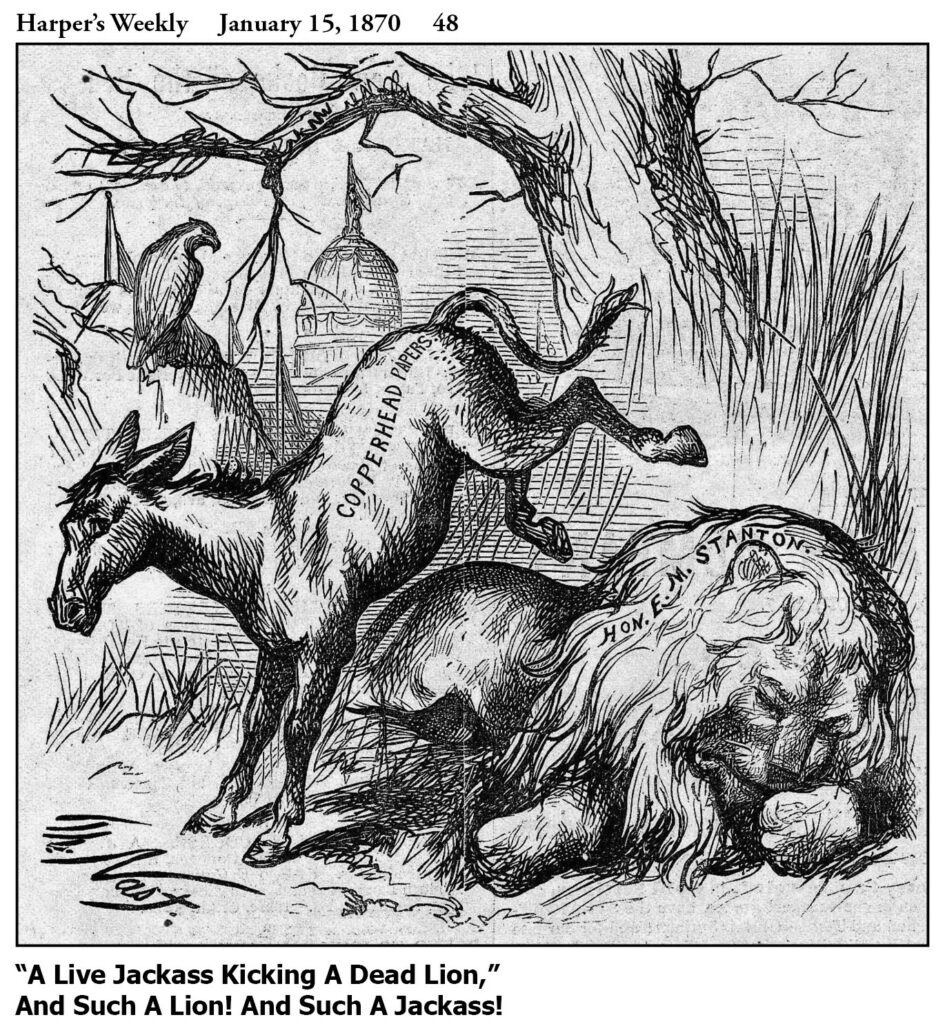
There is a clue in this famous cartoon by Thomas Nast (okay — the cartoon really gives it away, doesn’t it?):

Thomas Nast, Live Jackass kicking a Dead Lion,Harper's Bazaar, January 15, 1870

Cartoon depicting Democrats Thomas Nast, Live Jackass kicking a Dead Lion. Edwin Stanton was fired as Secretary of War by President Andrew Johnson, contrary to the Tenure of Office Act, and that action brought on the impeachment and trial of Johnson (who was acquitted by one vote). Later, President U. S. Grant appointed the financially and health ailing Stanton to the Supreme Court. Stanton was confirmed, but went home and died that night, December 24. Stanton’s opponents continued to try to smear him. Nast’s cartoon was the result. Harper’s Bazaar, January 15, 1870

Watch for the answer in a future post.

Image: Thomas Nast cartoon from Harper’s Weekly, January 15, 1870. Nast’s use in cartoons greatly popularized the use of a donkey as a symbol of the Democratic Party, whose official animal mascot is a rooster. Image in public domain, this one from the Thomas Nast Portfolio of The Ohio State University.

Also, note the explanation by Ray in comments, for historical accuracy.


Fisking “Junk Science” and “100 things you should know about DDT”: A new project

June 27, 2007

Looking at the odd campaign against the reputation of Rachel Carson, conducted largely by a group of corporate-paid, political scalawags, one will eventually come across a site named JunkScience.com, which has as a motto, “All the junk that’s fit to debunk.”

One might be forgiven if one assumes that the site debunks junk science claims. But that does not appear to be it’s aim at all. On this page, for example, “100 things you should know about DDT,” the site perpetrates or perpetuates dozens of junk science claims against Rachel Carson, against public health, against government and against reason. The site promotes junk science, rather than debunking it!

For example, I had just read a chunk of history reminding me that our first Environmental Protection Agency Administrator, William Ruckelshaus, had been ordered by a federal court to review the pesticide certification for DDT, and had acted against DDT only after two different review panels recommended it be phased out, and states had already started bans of their own. At the time, in 1972, Ruckelshaus faced a heap of criticism for moving so slowly on the issue.

EPA history caption: Rachel Carson's Silent Spring led to banning DDT and other pesticides. [EPA iimage]

EPA history caption: Rachel Carson’s Silent Spring led to banning DDT and other pesticides. [EPA iimage]

How is this action described at JunkScience.com?

You wouldn’t quite recognize the events — and I doubt you could verify other oddities the JunkScience.com site claims:

17. Extensive hearings on DDT before an EPA administrative law judge occurred during 1971-1972. The EPA hearing examiner, Judge Edmund Sweeney, concluded that “DDT is not a carcinogenic hazard to man… DDT is not a mutagenic or teratogenic hazard to man… The use of DDT under the regulations involved here do not have a deleterious effect on freshwater fish, estuarine organisms, wild birds or other wildlife.”

[Sweeney, EM. 1972. EPA Hearing Examiner’s recommendations and findings concerning DDT hearings, April 25, 1972 (40 CFR 164.32, 113 pages). Summarized in Barrons (May 1, 1972) and Oregonian (April 26, 1972)]

18. Overruling the EPA hearing examiner, EPA administrator Ruckelshaus banned DDT in 1972. Ruckelshaus never attended a single hour of the seven months of EPA hearings on DDT. Ruckelshaus’ aides reported he did not even read the transcript of the EPA hearings on DDT.

[Santa Ana Register, April 25, 1972]

19. After reversing the EPA hearing examiner’s decision, Ruckelshaus refused to release materials upon which his ban was based. Ruckelshaus rebuffed USDA efforts to obtain those materials through the Freedom of Information Act, claiming that they were just “internal memos.” Scientists were therefore prevented from refuting the false allegations in the Ruckelshaus’ “Opinion and Order on DDT.”

I propose to Fisk much of the list of 100 claims against Carson (which is really a list over 100 items now), in a serial, spasmodic fashion. I’ll post my findings here, making them generally available to internet searches for information on Rachel Carson and DDT. Below the fold, I’ll start, with these three specious claims listed above.

Read the rest of this entry »


GOP war on science victim: Rachel Carson

May 14, 2007

Some people do things that are so stupid that one wonders how they manage to shave or put make-up on the next morning, having to look at their own face.

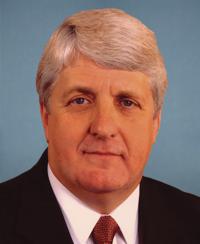
Mugshot of Utah Rep. Rob Bishop

Mugshot of Utah Rep. Rob Bishop

53 Republican representatives voted against naming the post office in Springdale, Pennsylvania, after Rachel Carson, the scientist who wrote Silent Spring, generally considered one of the most important or most influential scientists of the 20th century. No kidding. Springdale is Carson’s hometown.

2007 is the centennial of Carson’s birth — her birthday was May 27. (The bill, H.R. 1434, passed, 334-53.)

Why did the Wacky 53 vote against the honor for Carson, who got the Presidential Medal of Freedom in 1980? In an earnest ritual of voodoo science, they claim that bans on DDT kill millions, and that DDT is harmless. No, I’m not making this uphere’s the story from the Salt Lake Tribune, which covers territory represented by Rep. Rob Bishop and Rep. Chris Cannon, both R-Utah:

They contend that Carson’s actions – which led to a ban on the chemical DDT used to kill pests – actually has caused more deaths because of malaria and other diseases spread by insects. DDT, Carson wrote, was detrimental to the environment and to humans. Some scientists say DDT led to the California condor’s near-extinction.

Read the rest of this entry »


After the end, Hoover showed the way for Bush

December 28, 2006

Herbert Hoover, White House Portrait

Herbert Hoover, White House Portrait

Herbert Hoover is one of the great foils for U.S. history courses. The Great Depression is on national standards and state standards. Images from the dramatic poverty that resulted win the rapt attention of even the most calloused, talkative high school juniors. Most video treatments leave students wondering why President Hoover wasn’t tried for crimes against humanity instead of just turned out of office.

In most courses, Hoover is left there, and the study of Franklin Roosevelt‘s event-filled twelve years in office (with four elected terms) takes over the classroom. If Hoover is mentioned again at all in the course, it would likely be for his leading humanitarian work after World War II.

But there is, hiding out in California, the Hoover Institution. Hoover’s impact today? Well, consider some recent fellows of the Hoover Institution: Condaleeza Rice, Milton Friedman, George Shultz, E. D. Hirsch, Jr., Gary Becker, Diane Ravitch, Chester Finn. The Hoover Institution, “at Stanford University,” is the conservatives’ anchor in the intellectual and academic world.

Hoover’s legacy is being remade, constantly, through his post-Presidential establishment of an institution to promote principles of conservatism (and liberalism in its old, almost archaic education sense). The Hoover Institution has carried Hoover’s ideas and principles back into power.

Dallas has been wracked recently with the shenanigans and maneuvers around the work of Southern Methodist University to be named as the host for the George W. Bush Presidential Library. In a humorous headline last week the Dallas Morning News (DMN) said such a library could lead Dallas’s intellectual life in the future (the headline is different in the on-line version — whew!).

Humor aside, there is grist for good thought there. Read the rest of this entry »


National Humanities Medal to Bernard Lewis . . .

November 26, 2006

Generally there is just too much going on to follow all of it in the news, let alone understand it.

PanArmenian.net complains that historian Bernard Lewis’ being honored with the National Humanities Medal is a problem, labeling him a denier of the Armenian genocide. He was found to be so by a French court (does that increase his appeal to Bush?).

Lewis’ work is influential — here is a 2004 Washington Monthly piece by Newsweek correspondent Michael Hirsch, pointing out that Lewis is the guy who probably first coined the phrase “clash of civilizations” with regard to international relations with modern Islamic nations. Is he just one more Princeton University faculty member, like Ben Bernanke, who happens to have the ear of the President?

Teachers of history certainly should be familiar with the controversy over the Armenian genocide, its relation to post-World War I history, its salience in European politics today, and its effects on U.S. history (and especially U.S. literature — think William Saroyan, George Deukmejian, etc.). I admit I know very little about Lewis. I don’t know enough about him to make a judgment on whether the charges of the Armenian partisans are fair.

In my previous post I noted the rise of a superstar natural history prof, in England. Here in the U.S. the National Humanities Medal was awarded to nine people and one institution — one of the people is a Nobel Prize winner — and the news sank like a small, round stone in a small pond, without making much of a ripple.

If we can’t name some of the stars among historians and others in the humanities, are we doing our jobs? Are our newspapers and broadcasters doing their jobs if we don’t get this news?

Did President Bush honor a denier of the Armenian genocide? Our future relations with Islamic nations and peoples may depend on the answer. I don’t know. Do you?

Here is Lewis’ biography from the awards press release:

Bernard Lewis is considered by many to be the greatest living historian of the Muslim world. He has pursued his primary interest, the history of the Ottoman Empire, producing groundbreaking works including The Emergence of Modern Turkey, The Political Language of Islam, The Muslim Discovery of Europe, The Jews of Islam, and Islam and the West. His most recent publication is From Babel to Dragomans: Interpreting the Middle East. Other titles by Lewis: The Crisis of Islam: Holy War & Unholy Terror; What Went Wrong: The Clash Between Islam and Modernity in the Middle East; Western Impact and the Middle Eastern Response; A Middle East Mosaic: Fragments of Life, Letters and History; The Multiple Identities of the Middle East; and The Middle East: A Brief History of the Last 2,000 Years. Born in London, England, in 1916, Lewis became attracted to languages and history at an early age. Lewis’s interest in history was stirred thanks to his bar mitzvah ceremony, during which he received as a gift a book on Jewish history. He graduated in 1936 from the then School of Oriental Studies (SOAS, now School of Oriental and African Studies) at the University of London with a B.A. in history with special reference to the Near and Middle East, and obtaining his Ph.D. three years later, also from SOAS, specializing in the history of Islam. During the Second World War, Lewis served in the British Army in the Royal Armoured Corps and Intelligence Corps in 1940-41, and was then attached to a department of the Foreign Office. After the war he returned to SOAS, and in 1949 he was appointed to the new chair in Near and Middle Eastern history at the age of 33. In 1974 Lewis accepted a joint position at Princeton University and the Institute for Advanced Study, marking the beginning of the most prolific period in his research career. In addition, it was in the United States that Lewis became a public intellectual. After his retirement from Princeton in 1986 as the Cleveland E. Dodge Professor of Near Eastern Studies, Lewis held many visiting appointments. Lewis has been a naturalized citizen of the United States since 1982.


Texas Republicans urging Marxism be taught?

October 19, 2006

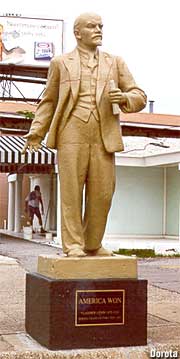
Lenin at Goff's Hamburgers, Dallas (2003)

Lenin does Dallas

No rational person would believe Texas Republicans would call for Marxist economics to be taught in Texas high schools, not even as a part of a “teach the controversy” movement.

The one-semester economics class does not lend itself to giving students backgrounds in economic models that compete with the consensus, free-market view, and even if it did, Marxism would be way down the list of what most Texans would think appropriate to teach. For illustration, consider that when the Soviet Union broke up, a Soviet-produced statute of Lenin was purchased by a Dallas hamburger magnate, placed outside one of his outlets with a plaque commemorating the Cold War, and noting: “America won.” (Alas, Goff’s is gone, as is the statue.)

So, either the Texas Republicans have gone non-rational, or they just were not thinking when they put in their party platform a requirement that alternative theories and their controversies be taught, in social studies.

Confused yet? Tony Whitson at Tony’s Curricublog explains:

But why is this provision regarding social studies tucked into the platform point on “Theories of Origins”? Apparently it reflects an agenda that includes teaching from a creationist standpoint not only in science, but in social studies and other subjects as well.

Someone who’s familiar with curriculum conflicts over recent years will recognize the entire education section of the platform as coming chapter and verse from Phyllis Schlafly’s Eagle Forum. The agenda they are pushing here is not something home-grown in Texas, but an agenda that we can expect to see being advanced all over the United States.

Well, Texas politics being what it is, the likelihood that a plank from any party’s platform could make it into law is a bit remote right now. And it seems clear that the intent was to go after science and evolution, not economics. Udall’s Law of Unintended Consequences says such efforts will produce unexpected and undesired results, and here we have a good case in point.

People are gearing up for fights on history and biology texts in Texas — economics, too? Ouch.


Ann Richards, you warned us

September 14, 2006


Former Texas Gov. Ann Richards, and a sample of a Texas barbecue rib. Photo by Elecro-Fish Media (Austin, Texas)

Ann Richards died yesterday. It’s sad for me to think what might have been, had she been able to hold off one more charge by the Texas Republicans, had she defeated George Bush in her second campaign for governor of Texas.

Gov. Richards was a gracious and graceful woman who was simply fun to know — while quietly and forcefully inspiring others to do good deeds. In a former time, a candidate who defeated someone like Richards would have the good sense to keep her in government in some capacity, just for her wisdom and experience. It will be a tribute to Richards when civility is returned to politics.

Ann Richards was a public school teacher, clearly of the highest caliber. We can only hope there are more like her teaching in Texas schools today.

Update, September 17, 2006: Molly Ivins, perhaps America’s best political columnist, was a close friend of Ann Richards. Her column well reflects the special qualities of Richards, why we will miss her so badly, and why we should worry that there are so few like her around today.