Louisiana Purchase Day: All over including the shouting

December 20, 2011

December 20 is the anniversary of the 1803 completion of the Louisiana Purchase, with the formal transfer of title at a ceremony in New Orleans.  Ceremony could have been in Paris, Washington, or New Orleans.

Did our forefathers know about how to party, or what?

The documents, from the Library of Congress:

Transfer of Louisiana title from France to the U.S., December 20, 1803

History of the Transfer, according to the 8th Congress - Image 1 (Click image for a larger view at the Library of Congress)


Transfer of Louisiana from France to the U.S., December 20, 1803 -- documents from Congress history

Documents of transfer of Louisiana, from France to the U.S., December 20, 1803 - Library of Congress images - Image 2

Louisiana transfer, December 20, 1803 -- official records - Library of Congress

Louisiana transfer, Image 3


Quote of the moment: Thomas Jefferson on public works

March 21, 2011

Map of "internal improvements" in Virginia - Library of Congress: "What is the transportation improvement between Fairfax Courthouse and Warrenton - the Alexandria-Warrenton turnpike, or the Orange and Alexandria Railroad? Can you spot the Columbia Pike connecting the Little River Turnpike to Washington DC, via Alexandria (now Arlington) County? Note how roads do not connect Dumfries to the Shenandoah Valley... Source: A map of the internal improvements of Virginia; prepared by C. Crozet, late principal engineer of Va. under a resolution of the General Assembly adopted March 15th, 1848, Library of Congress"

Map of “internal improvements” in Virginia – Library of Congress: “What is the transportation improvement between Fairfax Courthouse and Warrenton – the Alexandria-Warrenton turnpike, or the Orange and Alexandria Railroad? Can you spot the Columbia Pike connecting the Little River Turnpike to Washington DC, via Alexandria (now Arlington) County? Note how roads do not connect Dumfries to the Shenandoah Valley… Source: A map of the internal improvements of Virginia; prepared by C. Crozet, late principal engineer of Va. under a resolution of the General Assembly adopted March 15th, 1848, Library of Congress”

Back in the 18th and 19th centuries, they called public works, “internal improvements.”

The fondest wish of my heart ever was that the surplus portion of these taxes, destined for the payment of that debt, should, when that object was accomplished, be continued, by annual or biennial re-enactments, and applied, in time of peace, to the improvements of our country by canals, roads, and useful institutions, literary or others; and, in time of war, to the maintenance of the war.

♦  Thomas Jefferson, in letter to John Wayles Eppes, Poplar Forest, September 11, 1813; found in The Quotable Jefferson, collected and edited by John P. Kaminski, Princeton University Press, 2006


Quote of the moment: Thomas Jefferson’s admonishment to Rick Perry, Scott Walker, and the Tea Party, and their War on Education

February 18, 2011

Thomas Jefferson's view of education, from a mural at the Library of Congress

Thomas Jefferson’s view of Education illustrated in this mural by Ezra Winter — Thomas Jefferson’s view of Education is illustrated in this mural by Ezra Winter in the South Reading Room on the top floor of the Adams Building of the Library of Congress. Other murals dedicated to Jefferson decorate all of the reading room’s walls.

Above all things I hope the education of the common people will be attended to; convinced that on their good sense we may rely with the most security for the preservation of a due degree of liberty.

Thomas Jefferson, letter from Paris to James Madison, December 20,1787, stating Jefferson’s objections to the proposed U.S. Constitution

This quotation comes from a letter more popular among Tea Partiers and other troglodytes for Jefferson’s harsh words against “energetic government,” which he feared might result from the Constitution.  In the letter Jefferson said that he’d go with the will of the people if the document was ratified (it was).  In the end, Jefferson said, just be sure to educate “the common people,” and things would work out to protect liberty.

Wise words much ignored and abused in state capitals and the U.S. Capitol these days.

I’ll wager that among the millions who did not study this letter are Wisconsin Gov. Scott Walker, and Texas Gov. Rick Perry.  An uneducated populace is easier to cow, easier to control, and easier to enslave.

For a larger view of the mural, click on the thumbnail image.

Jefferson education views, mural at Libary of Congress, Adams Building


Don’t misquote Jefferson . . . a moving target

January 27, 2011

Monticello, from the former header of A Summary View

Monticello, from the former header of A Summary View

That wonderful blog, “A Summary View,” which so often worked on misquotes from Jefferson? Moribund at the old WordPress site.

But arisen anew, in a grander cover, and keeping up the spirit of learning about Thomas Jefferson, here: A Summary View, at Monticello’s site.

Great history, like:

Anna Berkes continues to enlighten and brighten the study of history.


Quote of the moment: Jefferson on public education (again), “Preach . . . a crusade against ignorance”

November 26, 2010

Thomas Jefferson Elementary School, Anaheim, California, circa 1940

Thomas Jefferson Elementary School, Anaheim, California, circa 1940; image from the Anaheim Public Library, via the California Digital Library, University of California

Preach, my dear Sir, a crusade against ignorance; establish & improve the law for educating the common people.  Let our countrymen know that the people alone can protect us against these evils, and that the tax which will be paid for this purpose is not more than the thousandth part of what will be paid to kings, priests, & nobles who will rise up among us if we leave the people in ignorance.

To George Wythe, from Paris, August 13, 1786

Excerpted here from The Quotable  Jefferson, collected and edited by John Kaminski, Princeton University Press, 2006, p. 84

Quote of the moment: Jefferson, public education as the protector of freedom

November 23, 2010

South Elevation of the Rotunda, University of Virginia -- Thomas Jefferson design for the university he founded and shepherded - UVA image

Thomas Jefferson. South Elevation of the Rotunda, begun 1818, completed March 29, 1819. Ink and pencil drawing. Courtesy of the Thomas Jefferson Architectural Drawings, University Archives, Special Collections Department, University of Virginia Library

By far the most important bill in our whole code is that for the diffusion of knowledge among the people.  No other sure foundation can be devised for the preservation of freedom, and happiness.

Jefferson in a letter to his mentor George Wythe, from Paris, August 13, 1786; referring to his Bill for the More General Diffusion of Knowledge, proposed in 1779

Excerpted from The Quotable Jefferson, collected and edited by John Kaminski, Princeton University Press, 2006


Quote of the moment: Thomas Jefferson, on government support of truth

November 21, 2010

Bas relief portrait of Thomas Jefferson, as one of the great lawgivers whose heritage of laws we draw from, portrayed in the chamber of the U.S. House of Representatives. Image from Architect of the Capitol, Wikimedia

It is error alone which needs the support of government.  Truth can stand by itself.

Thomas Jefferson, Notes on the State of Virginia, 1782

Excerpted here from The Quotable Jefferson, edited by John P. Kaminski, Princeton University Press, 2006, p. 226.

No, he didn’t specify, but I think he was talking about creationists who seek legislation to sneak creationism into science classes.


Religion-free zone in New York?

August 28, 2010

Thomas Jefferson’s copy of the Qur’an, published in 1764. (courtesy of the Library of Congress). Image via 15-Minute History at the University of Texas at Austin.

Thomas Jefferson’s copy of the Qur’an, published in 1764. (courtesy of the Library of Congress). Image via 15-Minute History at the University of Texas at Austin.

The Center for Inquiry (CFI) joined in the calls to end plans for any worship center for Islam near the site of the destroyed World Trade Center.  But they added a twist.

CFI called for the entire area to be free from religious institutions, since, they say, it was religiously-inspired violence that caused the trouble.  Greg Laden has pithy comments at his blog, as does DuWayne Brayton from the opposite tack (Laden agrees with CFI, sorta, while Brayton thinks they’ve jumped somebody’s shark).

How about it, Joe, how about it Morgan?  Doesn’t this plan meet yours and Sarah Palin’s objections to Cordoba House?

And Glenn Beck in ignorance leads us farther and further from the intentions of the “founders”:

Also at Millard Fillmore’s Bathtub:

Save


Something to think about as you get your flag ready to fly for July 4

July 2, 2010

This is mostly an encore post, from last year.

July 4th is the 234th anniversary of the announcement of the Declaration of Independence.  I hope you’re thinking about how you’ll fly the flag this weekend in honor of the Declaration of Independence.

The resolution proposed by Richard Henry Lee calling for independence of the 13 colonies passed the Continental Congress on July 2, 1776.  The Declaration would be Thomas Jefferson’s crowning achievement, outshining even his presidency and the Louisiana Purchase.   John Adams wrote to his wife, Abigail, that July 2 would forever be marked by patriotic displays.

But the Declaration itself, which gave teeth to the resolution, was adopted two days later on July 4 — and that has come to be the day we celebrate.

Detail, John Trumbull's Signing of the Declaration of Independence - Theodor Horydczak photo, Library of Congress

Detail, John Trumbull's Signing of the Declaration of Independence - The committee of five presents the Declaration of Independence to John Hancock, the President of the Second Continental Congress; from left, the committee is John Adams, Robert Livingston, Roger Sherman, Thomas Jefferson, and Ben Franklin. Theodor Horydczak photo, Library of Congress

Adams didn’t miss a beat.  Who quibbles about a couple of days when the celebrating is so good?

Adams and Jefferson were two of the five-member committee the Congress had tasked to write a declaration.  Adams and Ben Franklin quickly determined to leave it up to Jefferson, who had a grand flair with words, and who had just written a couple of stirring documents for Virginia.  Roger Sherman and Robert Livingston, the other two members, went along.  And so it was that the Declaration of  Independence is almost completely the work of Thomas Jefferson.

Adams and Jefferson became friends only later, when they both served the nation at war as ambassadors to France, and then for Adams, to England.  A widower, Jefferson was taken in by Abigail Adams who worried about him.  After the war, Jefferson was in England when Adams was to meet King George III in a grand ceremony in which the king would accept the credentials of all the ambassadors of foreign nations to England.  As the king strode down the line, each ambassador or delegation would bow, the king would acknowledge them, the papers would be passed, and the king would move on.  Adams and Jefferson bowed.  King George moved on, ignoring them completely.

In such a case of such a snub, the snubbed foreigners usually made a quick exit.  Adams and Jefferson did not.  They stood at attention as if the king had treated them like all the rest, reversing the snub.  From the beginning, Americans and the United States pushed for more practical, reasonable, and compassionate government and relations.

Back in America in peacetime, and both members of the administration of George Washington, Adams and Jefferson fell out.  Secretary of State Jefferson favored a more limited federal government; Vice President Adams favored a more powerful one.  By the end of Washington’s second term, party politics had been well developed.  Adams defeated Jefferson in the election of 1796.  As was the law then, Jefferson was vice president as the runner-up vote getter in the electoral college; but Adams kept Jefferson out of all government affairs.  Perhaps because he didn’t have Jefferson to help, Adams’s presidency did not go well.  In the rematch election in 1800, one of  the bitterest fights ever, Jefferson’s party defeated Adams.  The gleeful Democratic-Republican electors all voted one ballot for Jefferson, the presidential candidate, and one ballot for Aaron Burr, the party’s vice presidential candidate.

Alas, that produced a tie vote in the electoral college.  Adams’s party, the Federalists, still held the House of Representatives before the new Congress came in.  A tie vote goes to the House for decision.  They could not bring themselves to vote for Jefferson, and the deadlock continued for 37 ballots.  Finally Jefferson’s former friend but now arch enemy Alexander Hamilton intervened, explaining that Burr was clearly the greater scoundrel, and the House elected Jefferson.  Adams slunk out of town, avoiding the inauguration.

It wasn’t until after 1809 when Benjamin Rush hoodwinked Jefferson into writing to Adams, and Adams to Jefferson, that the two became friendly again.  For the next 17 years Jefferson and Adams carried on perhaps the greatest series of correspondence in history between two great minds.  Letters went out almost daily, from Monticello, Virginia,  to Braintree, Massachusetts, and from Braintree to Monticello.  They discussed the weather, their families, old times, farming — but especially the republic they had been most instrumental in creating, and how it might be preserved, and prosper.  Eventually the letters became harder to read, both because their eyesight was failing, and because their penmanship deteriorated, too.

The ideas, however, flowed like a great river of freedom.

Letter from Thomas Jefferson to John Adams, August 15th, 1820 - Library of Congress image

Letter from Thomas Jefferson to John Adams, August 15th, 1820. From The Thomas Jefferson Papers at the Library of Congress, Thomas Jefferson Papers Series 1. General Correspondence. 1651-1827. Library of Congress image

Both men took ill early in 1826.  This was a landmark year, 50 years since the Declaration of Independence.  In Massachusetts, a grand display of fireworks was to cap off a day of feasting and celebration.  Adams hoped he might attend.  In Virginia, a week before, it became clear Jefferson was too ill to venture even as close as Charlottesville for the celebration.  Jefferson slept through most of July 3, but awoke about 9:00 p.m., and asked, “This is the fourth?”  It was not.  These are the last significant, recorded words of Jefferson.  He awoke at about 4:00 a.m. on the Fourth of July, 1826, but could not make a rally.  He died at 12:50 in the afternoon.

Adams, too, was too ill to attend the celebrations.  In the late afternoon or early evening of the Fourth, he awoke, and heard the celebration in the town.  Almost as if he had worked just to live to see that particular day, he checked the date.  Realizing he was near the end, happy that he’d seen 50 years after the Declaration, and unaware of the events earlier that day in Virginia, Adams said, “Thomas Jefferson still survives.”  Adams, too, died on July 4, 1826.

Fly your flag July 4th. Remember John Adams and Thomas Jefferson.  Remember their great work in creating the nation that protects our freedoms today.  Remember their great friendship.  Write a letter to a good friend you’ve not written to lately.

It is Independence Day this Sunday.  Their spirit survives in us, as we celebrate, and if we remember why we celebrate.


Happy birthday, Mr. Jefferson

April 13, 2010

April 13 should be a holiday, don’t you think?  Religious Freedom Day, or Public Education Day, or Self-evident Truths Day — something to honor Thomas Jefferson.

Catherine Sherman wonderfully explains why we should celebrate Jefferson’s birthday.  Go see.


Education board shames Texas, part E: Nick Anderson again

April 10, 2010

Nick Anderson in Houston Chronicle, Texas education group kicks Jefferson out of curriculum

Nick Anderson in Houston Chronicle, April 2, 2010


Encore post, new coda: Worldview of Texas education policy makers

March 18, 2010

From a post many weeks ago, “Speaking of Texas education policy,” made more salient by events of the past month:

Moon landing and wrestling in America

from Funnyjunk

This is a troubling piece of humor. From Funnyjunk.

  • “America.  A country where people believe the moon landing is fake, but wrestling is real.”

And now we can add even more captions:

  • A country where state curriculum officials go to churches that warn against belief in ghosts, but who believe Thomas Aquinas and John Calvin came back from the grave to wrestle the quill from Jefferson and write the Declaration of Independence.
    [Heh.  Wouldn’t you love to see Aquinas and Calvin in the same room, trying to come to agreement on anything?]
  • A country with Barack Obama as president and where women’s basketball is a joy to watch during March Madness thanks to the the Civil Rights Act of 1964 Title IX, but Cynthia Dunbar believes the Civil Rights Act itself was a mistake.
  • A country where Barbara McClintock did the research that showed how evolution works and won her a Nobel, but where Texans deny that a woman should do such work, and deny evolution.
  • A capitalist nation where Jack Kilby invented the printed circuit and had a good life, but where the Texas SSOE thinks “capitalism” is a dirty word.
    (No, ma’am, I couldn’t make that up.  They did it.  They took out the word “capitalism” because they say those “liberal economists” like Milton Friedman can’t be trusted.  Seriously.  No, really.  Go look it up.)
  • Home of Thomas Jefferson, whose words in the Declaration of Independence so sting tyrants and dictators that today, in the most repressive nations, even oppressive systems must pretend to follow Jefferson — hence, the “Peoples Republic of Korea,” “the Democratic Republic of the Congo,” “Peoples Republic of China,” and the provisions of the old Soviet Union’s Constitution that “guaranteed” freedom of speech and freedom of religion; but where Thomas Jefferson is held in contempt, and John Calvin and Thomas Aquinas claimed as the authors of American freedom. [I wonder what the Society of the Cincinnati have to say about that?]
  • Where Mark Twain’s profound, greatest American novel Huckleberry Finn made clear the case against racism and oppression of former slaves, but where school kids don’t read it because their misguided parents think it’s racist.
  • A nation where Cynthia Dunbar thinks Thomas Jefferson gets too much credit, but Barack Obama is a foreign terrorist
  • A nation where conservatives complain that the Supreme Court should never look at foreign laws for advice, wisdom, or precedent, but believe that Thomas Aquinas, a Dominican friar from Italy, and John Calvin, a French dissident who fled to Switzerland, pulled a religious coup d’etat and is infamous for executing people who disagreed with his religious views, wrote the Declaration of Independence.

I’ll wager there are more, more annoying, more inaccurate statements from the Texas SSOE members in the Texas Education Follies, which will make much briefer complaints and better bumper stickers.

Other posts at the Bathtub you should read, mostly featuring Ms. Dunbar:

Also:


SSOE member Dunbar: Aquinas led American revolution, not Jefferson

March 17, 2010

It’s astounding in its error.

Cynthia Dunbar told Chris Matthews today that Thomas Aquinas played a more important role in the American Revolution than Thomas Jefferson.

Jefferson, Texas students learn in other places, wrote the great body of the Declaration of Independence, and the Virginia Statute for Religious Freedom, which is the direct forebear of religious freedom in U.S. Constitutional law.

If you hurry, you can see it tonight (at 6:00 p.m and 11:00 p.m Central, I’m told) on Chris Matthews’ “Hardball.”

Isn’t it astounding people who claim to be Christian will tell such bold lies to children?  It’s as if they think Jesus said “make the children suffer” instead of what Jesus did say.  Voodoo history at its most voodoo; history revisionism of the rankest sort.  Where’s Mermelstein?

You can see it online here, at Hardball’s website.

Dunbar and her fellow travellers are effing idiots.  Strong post to follow.

______________

SSOE?  State Soviet of Education.  Why do you ask?


The debt the U.S. owes to Haiti: The Louisiana Purchase

January 24, 2010

Every Texas school kid learns that the Louisiana Purchase in 1803 created one of the great turning points in American history.  Parts or all of 15 different states came out of the land acquired from Napoleon in that deal.  Lewis and Clark’s Corps of Discovery spent more than two years mapping the newly-acquired territory, and didn’t really scratch the surface of the riches to be found.

Why was Napoleon so willing to deal Louisiana, so cheaply?

What else happened in 1803?  Haiti’s slaves rose up and cast off French rule. Haiti had been the jewel of France’s overseas colonies.   Napoleon became convinced that holding and ruling North American territories could be more pain and trouble than it was worth

So, along came John Jay to secure navigation rights in the territory . . .

CBS Sunday Morning featured a good story on the event, and on Haiti, on January 17.  You can read the transcript here.


Frederick Douglass Book Award nominees (read ’em!)

August 16, 2009

What to read this year for U.S. history?

Kevin Levin at Civil War Memories notes three worthy candidates for outside reading, for student projects, and other good use (I’ve stolen his whole post — you’d do well to go visit his site and see what else he has):


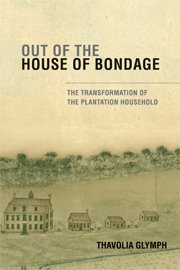
Out+of+the+House+of+BondageI‘m a little late in posting this, but wanted to point your attention to the three finalists for this year’s Frederick Douglass Book Award that is sponsored by Yale’s Gilder-Lehrman Center for the Study of Slavery, Resistance and Abolition.

The finalists are Thavolia Glymph for Out of the House of Bondage: The Transformation of the Plantation Household (Cambridge University Press); Annette Gordon-Reed, The Hemingses of Monticello: An American Family (W.W. Norton and Company); and Jacqueline Jones, “Saving Savannah: The City and the Civil War (Alfred A. Knopf Publishers).  The prize comes with a generous check of $25,000.  I’ve read both Annette Gordon-Reed’s book (a National Book Award winner) and Glymph’s study.  Although the publisher sent me a copy of Saving Savannah, I have not had a chance to look through it.   My money is on Glymph’s Out of the House of Bondage.