Another great shot from America’s public lands:
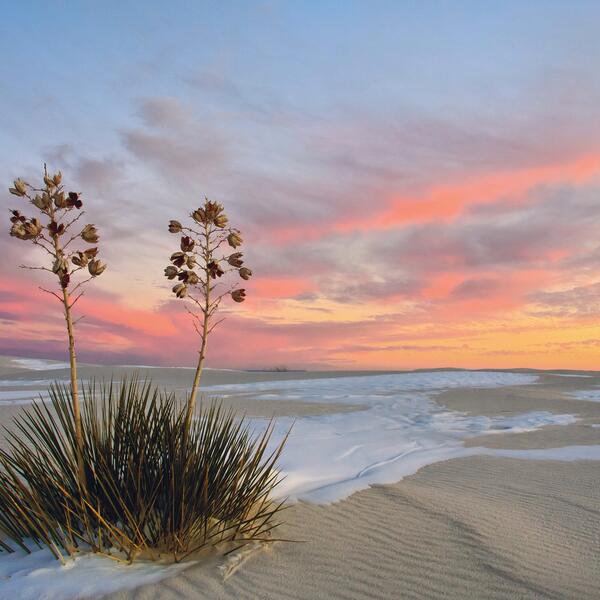
Department of Interior Great American Outdoors Tumblr caption: One of the world’a great natural wonders – the glistening white sands @WhiteSands_NPS. #NewMexico pic.twitter.com/dbzPpIfSRW
One of the problems of touring places like White Sands National Monument is that most tourists arrive mid-day; most spectacular views are probably close to sunrise or sunset, when the sky adds colors other than “bright” to the scene.
Like No Place Else on Earth
Rising from the heart of the Tularosa Basin is one of the world’s great natural wonders – the glistening white sands of New Mexico. Great wave-like dunes of gypsum sand have engulfed 275 square miles of desert, creating the world’s largest gypsum dunefield. White Sands National Monument preserves a major portion of this unique dunefield, along with the plants and animals that live here.
Yes, the same White Sands where the Trinity Project first triggered an atomic weapon, in 1945 — but the blast site is actually about 100 miles north of the National Monument on the military’s White Sands Missile Range. Historical reasons to visit, as well as nature and beauty reasons.
I assume that’s some sort of yucca in the photo; can you tell more specifically?
More, related:
- White Sands at Where’s Madison?
- Traveling and Photographing North America
- Playing in Gypsum, The Moon Rio Girls
- Druss Road Trip, at The Bologna Foot
- Citrus Salad, at Wanderlust and Food Stuff
- White Sands No. 2, New Mexico, Brent L. Erickson
- White Sands National Monument on Film, iNancy
- Sand sledding at White Sands, Another Walk in the Park
- Southern New Mexico, Then to Texas, On the Road with Riley
- What to do with sand dunes? The Sohl Family’s Big Adventure
- Perpetuate the Adventure


 Posted by Ed Darrell



 Millard Fillmore's Bathtub