Honoring Millard Fillmore (press release)

January 13, 2025

[This is a press release from the New York Air National Guard.]
NEWS | Jan. 8, 2025

New York Air Guard Wing Marks Ex-President Fillmore’s Birthday

By Capt. Jason Carr, 107th Attack Wing

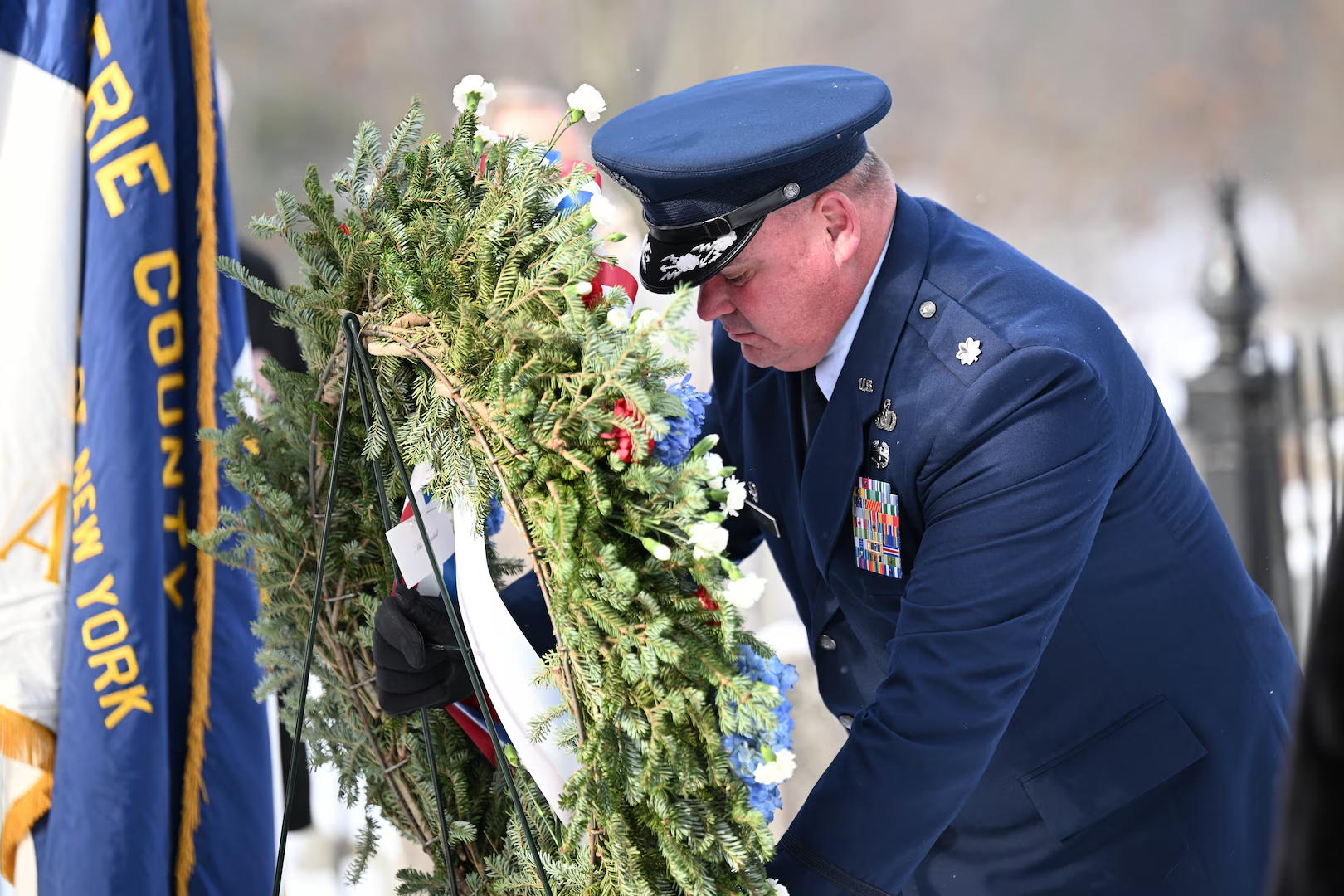
BUFFALO, N.Y.- The New York Air Guard’s 107th Attack Wing honored Millard Fillmore, the nation’s 13th president, as the wing’s mission support group commander laid a wreath at his grave Jan. 7.

Lt. Col. William Gourlay placed a wreath from President Joe Biden at Fillmore’s grave in Forest Lawn Cemetery.

Since 1967, when Lyndon B. Johnson was president, military officers have maintained the tradition of placing a wreath sent by the current occupant of the White House at the graves of former presidents on their birthdays.

“I love Buffalo history, and it was my honor to make the wreath presentation on behalf of the White House and our nation,” Gourlay said.

The 107th Attack Wing is based at Niagara Falls Air Reserve Station.

Descendants of Fillmore, who served from 1850 to 1853, members of the Buffalo Presidential Center, and local American Legion members looked on as Gourlay presented the wreath.

Fillmore had a profound, positive impact on the Buffalo community, and Forest Lawn continues to help commemorate his legacy, according to Julie Snyder, chief executive officer of Forest Lawn Cemetery.

“We are honored to receive the wreath every year and keep it here for the community to pay their respects and honor him this time every year,” Snyder said. “We’re very honored to be one of the 40 cemeteries across the country to have a home for a past president.”

New York National Guard officers also present wreaths at the graves of presidents Martin Van Buren, buried in the Hudson Valley village of Kinderhook, and Chester Arthur, buried in the Albany suburb of Menands.

Buffalo’s Forest Lawn Cemetery was established in 1849 and has over 175,000 burials.

Fillmore was born in Summerhill, New York, in 1800. He became a lawyer in 1823 and served as a member of Congress and then the comptroller of New York State. He was elected vice president in 1848 when Zachary Taylor ran for president. 

When Taylor died in 1850, Fillmore assumed the presidency. He was the last member of the Whig party to serve as president, and while many Whigs joined the new anti-slavery Republican Party, he refused to do so and ran for president in 1856 as the candidate of the Know Nothing Party.

As president, he backed the compromise of 1850 that admitted California to the union as a free state and banned the sale of enslaved people in the District of Columbia but also required federal officials to assist in catching runaway slaves.

The Fugitive Slave Act was deeply unpopular in the North and hurt Fillmore politically in his home state. He died of a stroke in 1874.


Happy 225th birthday, Millard Fillmore!

January 7, 2025

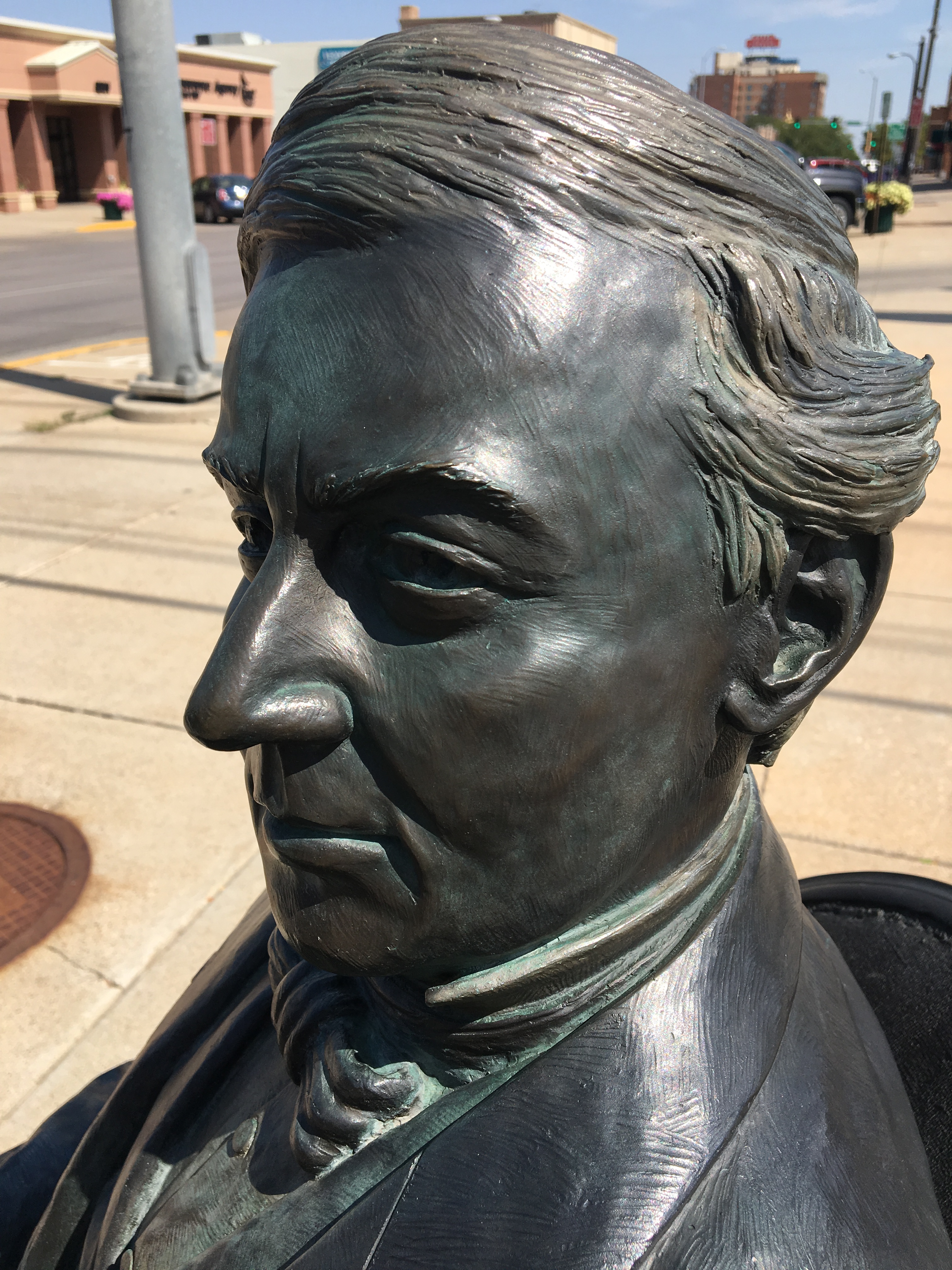
Millard Fillmore, bronzed, sitting at the corner of 9th and St. Joseph Streets in Rapid City, South Dakota. He still gets around. Photo by Ed Darrell. Please use.

Millard Fillmore, bronzed, sitting at the corner of 9th and St. Joseph Streets in Rapid City, South Dakota. He still gets around. Photo by Ed Darrell. Please use. Creative Commons copyright.

Millard Fillmore, our 13th President, was born on January 7, 1800.

That was 24 days after the death of our first President, George Washington.

Fillmore’s birthday isn’t such a big deal anymore, since fun organizers discontinued the bathtub races once word got out that the story of Millard Fillmore putting the first bathtub in the White House, is a hoax.

Historians from the University of Buffalo — an institution founded by Fillmore after his presidency — usually hold a graveside ceremony with speeches. In 2025, the celebration has been postponed to Sunday, January 12, due to weather.

It’s a shame, really. Fillmore is the victim of fake news, a hoax perpetrated by H. L. Mencken 108 years ago, in 1917. Mencken claimed, falsely, that Fillmore’s sole good, memorable deed was putting that fictitious bathtub in the White House. That story crowds out the real history, and any good Fillmore should be remembered for.

Fillmore did a few notable things as president.

  • Fillmore secured a steady supply of bird guano for the United States. Funny as that may be, the guano was essential for making gun powder, which in turn helped fuel the military might of the United States for years (including through the Civil War).
  • Millard Fillmore and his first wife, Abigail, read books all the time. Deprived of the opportunity of going to school much in his youth, Fillmore became an ardent reader, read for the law, became a lawyer, got into politics and was selected Vice President for President Zachary Taylor. When Taylor died (probably of typhoid) in 1850, Fillmore succeeded to the presidency. In the White House, the Fillmores found few books to read, and so established the White House Library. Say prayers that library survives the current president.
  • Fillmore thought globally, and he could see world trade as a huge opportunity for a young nation with a strong navy and army, and a lot of resources including intellectual capacity to manufacture things. Trade in the Pacific was problematic, and a large number of problems stemmed from Japan’s closing itself off from the world. Japan had coal, which could refuel steamships. Japan instead closed its ports. An occasional U.S. sailor would be executed if he washed up on Japanese shores. Fillmore sent a small fleet of “black ships” under Commodore Matthew Perry, to tell Japan it was time to open up to trade and assume its place among nations. Perry was successful, after a second visit and a small round of cannon fire. Japan became a strong economic power in the West Pacific, and in its march to glory decided to take over resources of several other Asian nations. We might say Fillmore started the slide to World War II in the Pacific.

History should be kept to accuracy. Mencken upset the ship of accuracy with his essay, and America has not recovered, nor has Millard Fillmore’s reputation. There’s a moral there: Don’t spread hoaxes; seek the truth, and glorify it. (Mencken apologized for the hoax, but too late.)

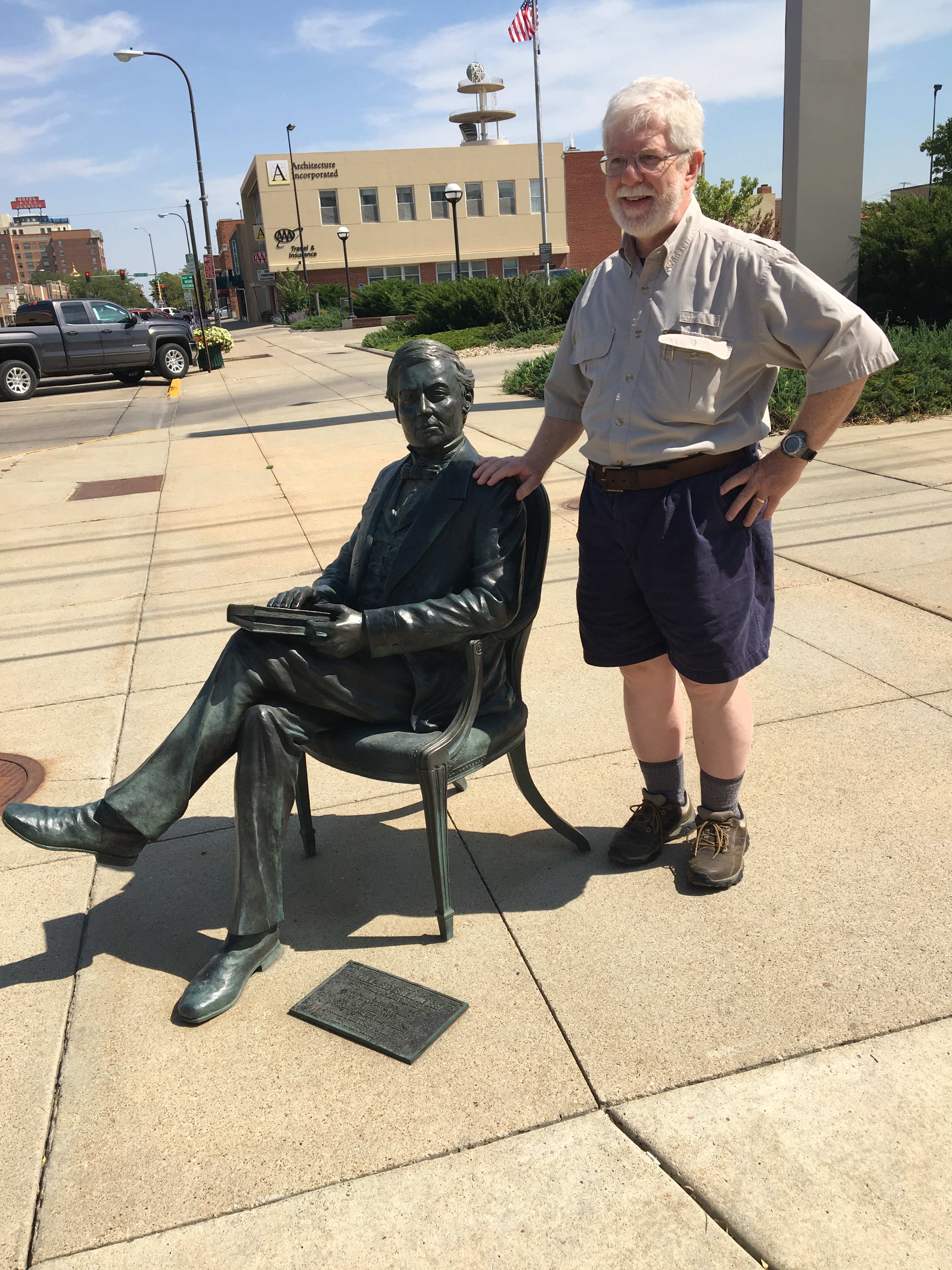
Rapid City, South Dakota, is a booming town. Mineral wealth and oil in the state combine with a nearby Air Force Base, great housing prices and good weather to benefit the town. One of its civic watchdogs got the idea of putting statues of all U.S. presidents on downtown corners. That is how Millard Fillmore comes to be seated with a book to read, at the corner of 9th Street and St. Joseph Street, where I met him in August 2017. Altogether a fun little history enterprise for Rapid City, very well executed, and worthy of a stop there if you’re passing by.

Perhaps someday Rapid City will take to decorating the statues on the birthdays of the men (so far!) represented. I hope they won’t be frozen out like Buffalo, New York, is, if they commemorate Millard Fillmore’s birthday.

We can reflect on happier times, when even our disrespected and forgotten presidents were good people who did great things.

Millard Fillmore and Ed Darrell meet, in Rapid City, South Dakota, August 2017

Millard Fillmore and Ed Darrell meet, in Rapid City, South Dakota, August 2017; photo by Kathryn Knowles

More:


Utah statehood day, January 4, 2025

January 3, 2025

President Grover Cleveland signed the proclamation making Utah the 45th state on January 4, 1896. Utah residents should fly the U.S. flag today in commemoration.

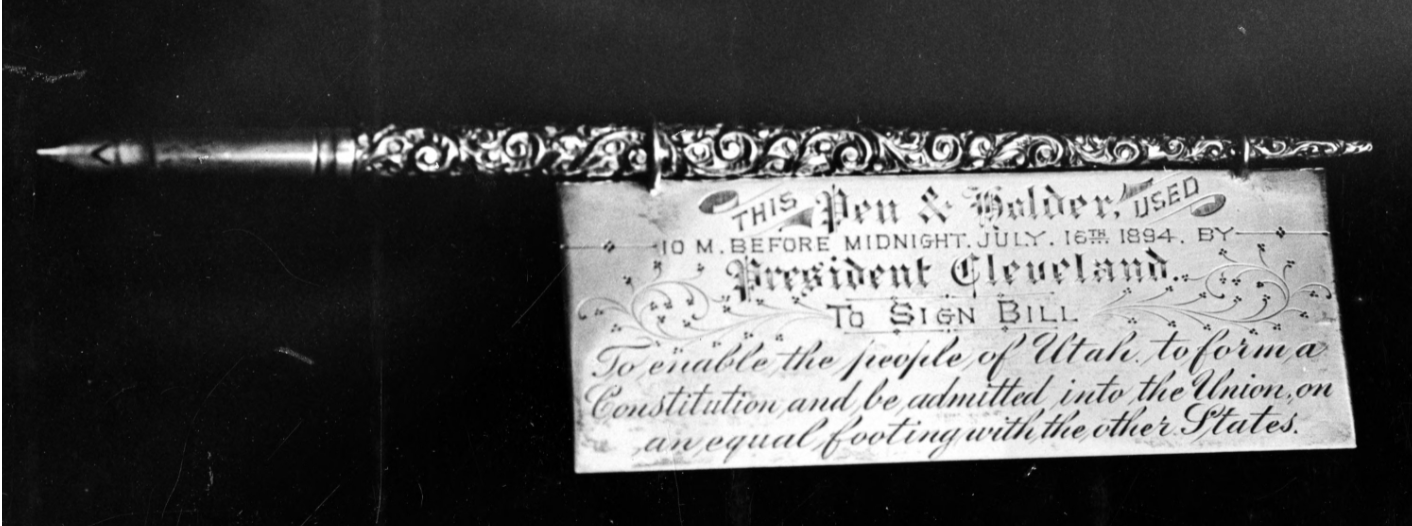
Pen used by President Grover Cleveland to sign the law enabling Utah to become a state.
The pen used by Grover Cleveland to enable the statehood process. The plaque reads: “This pen & holder used 10 m. before midnight July 16th, 1894, by President Cleveland to sign bill to enable the people of Utah to form a Constitution & be admitted into the Union, on an equal footing with the other States.” Sources of the photograph do not say who has the pen now, nor where it might be displayed.https://ilovehistory.utah.gov/1896-statehood/

Flying the U.S. flag is a big deal in Utah. Most families have at least one flag to fly on holidays. But in my decades in the state, I don’t think I saw anyone fly the flag for Utah Statehood day.

Utah’s public officials take their oaths of office on January 4, traditionally. In the past couple of decades, a ball for statehood, a Statehood Dance, is scheduled on a Saturday close to January 4, in the museum in Fillmore, Utah, which once was the territorial capitol building before the capital was moved to Salt Lake City.

Got a U.S. flag, Utahns? Fly ’em if you got ’em.

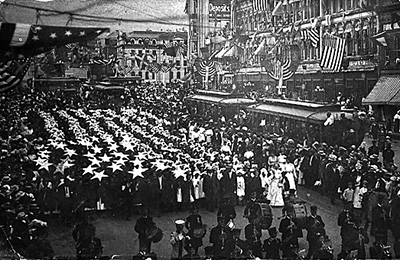
Marchers carrying stars and colored material to make stripes for a flag in a statehood parade in Salt Lake City, 1910. Photo from the University of Utah Marriott Library.
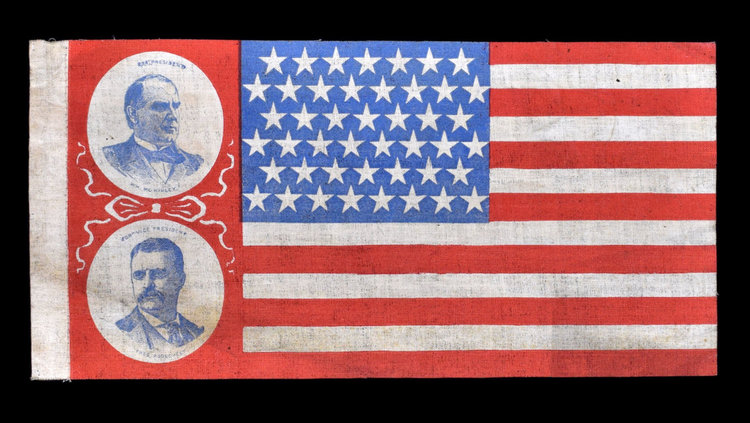
Rare 1900 campaign flag featuring portraits of President William McKinley and Vice President nominee Theodore Roosevelt. Such a display is contrary to the U.S. Flag Code today, but in 1900 there was no flag code, and not really much solid regulation on U.S. flags. Bonsell/Americana image.

More:

  • Utah, the 45th star and the largest flag ever made to that time, film from Colonial Flags

January 3, Alaska’s statehood day 2025

January 3, 2025

Late for me to remind you, if you didn’t, but January 3 is Alaska’s Statehood Day. Alaskans should have flown their U.S. flags today in commemoration.

Of course, some people would like to fly their state flags, too — makes more sense, some say. I don’t argue, but I note that very rarely do I come across some household that has a state flag. Most homes have a U.S. flag.

Alaska’s flag is a work of art, though, and many Alaskans have one. Did you fly it today, if you have one?

More:

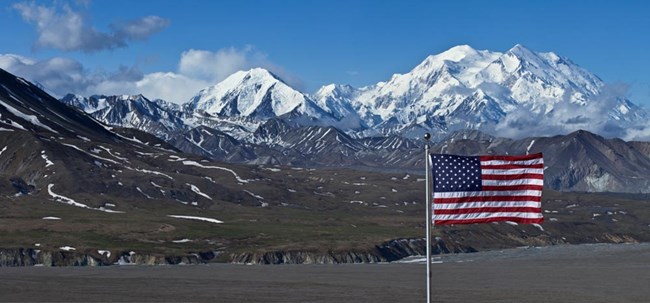
U.S. flag flying at the Eielson Visitor Center, Denali National Park, Alaska. National Park Service image

U.S. flag flying at the Eielson Visitor Center, Denali National Park, Alaska. National Park Service image, photo by Jacob W. Frank.

This is an encore post.

Yes, this is an encore post. Defeating ignorance takes patience and perseverance.


Flying U.S. flags in January 2025

January 3, 2025

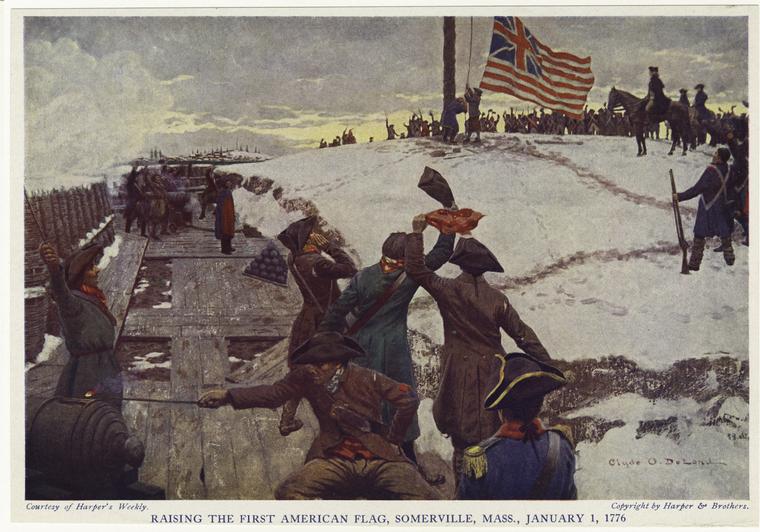
“Raising the first American flag, Somerville, Mass., January 1, 1776.” Harper’s Weekly painting by Clyde Osmer DeLand, 1897. From the digital collections of the New York Public Library; yes, MFB has used this painting before. I like it.

One problem with January’s flag flying dates is that if I snooze a little, you miss a lot. There are four flag-flying dates in the first five days of January: New Year’s Day and statehood days for Georgia, Alaska and Utah. You, Dear Reader, are alert and didn’t let any of those dates pass unmarked if you’re in those states, right?

There are more dates to go in January, including New Mexico’s statehood. We’re not halfway done, yet.

President Joe Biden declared flags should fly at half-staff in honor of the late President Jimmy Carter, for 30 days, until January 28. That covers all the dates in the usual flag-flying calendar. When flying flags at half staff, the flag should be hoisted quickly to full staff, then lowered soberly (slowly) to half staff.

In January 2025, the U.S. Flag Code urges citizens to fly flags on these dates, listed chronologically:

  • New Year’s Day, January 1, a federal holiday
  • January 2, Georgia Statehood Day
  • January 3, Alaska Statehood Day
  • January 4, Utah Statehood Day
  • January 6, New Mexico Statehood Day
  • January 9, Connecticut Statehood Day
  • Martin Luther King’s Birthday, a federal holiday on the third Monday of January; that date is January 19, in 2025; King’s actual birthday is January 15, and you may fly your flag then, too
  • Inauguration Day, January 20, the year after election years; 2025 will see an inauguration
  • January 26, Michigan Statehood Day
  • January 29, Kansas Statehood Day

You may fly your flag any other day you wish, too; flags should not be flown after sundown unless they are specially lighted, or at one of the few places designated by Congress or Presidential Proclamation for 24-hour flag flying.  According to Wikipedia’s listing, those sites include:

  • Fort McHenry, Baltimore, Maryland (Presidential Proclamation No. 2795, July 2, 1948).
  • Flag House Square, Albemarle and Pratt Streets, Baltimore, Maryland (Public Law 83-319, approved March 26, 1954).
  • Marine Corps War Memorial (Iwo Jima Memorial), Arlington, Virginia (Presidential Proclamation No. 3418, June 12, 1961).
  • Lexington Battle Green, Lexington, Massachusetts (Public Law 89-335, approved November 8, 1965).
  • White House, Washington, D.C. (Presidential Proclamation No. 4000, September 4, 1970).
  • Washington Monument, Washington, D.C. (Presidential Proclamation No. 4064, July 6, 1971, effective July 4, 1971).
  • Any port of entry to the United States which is continuously open (Presidential Proclamation No. 413 1, May 5, 1972).
  • Grounds of the National Memorial Arch in Valley Forge State Park, Valley Forge, Pennsylvania (Public Law 94-53, approved July 4, 1975).
Flag House in 1936, 844 East Pratt & Albemarle Streets (Baltimore, Independent City, Maryland) (cropped). Image courtesy of the federal HABS—Historic American Buildings Survey of Maryland.

Flag House in 1936, where Mary Pickersgill sewed the garrison-sized, 15-star flag that flew over Fort McHenry at the Battle of Baltimore in 1814; one of the sites where the U.S. flag may be flown 24 hours. The house is at 844 East Pratt & Albemarle Streets (Baltimore, Independent City, Maryland). Cropped image courtesy of the federal HABS—Historic American Buildings Survey of Maryland.

Save

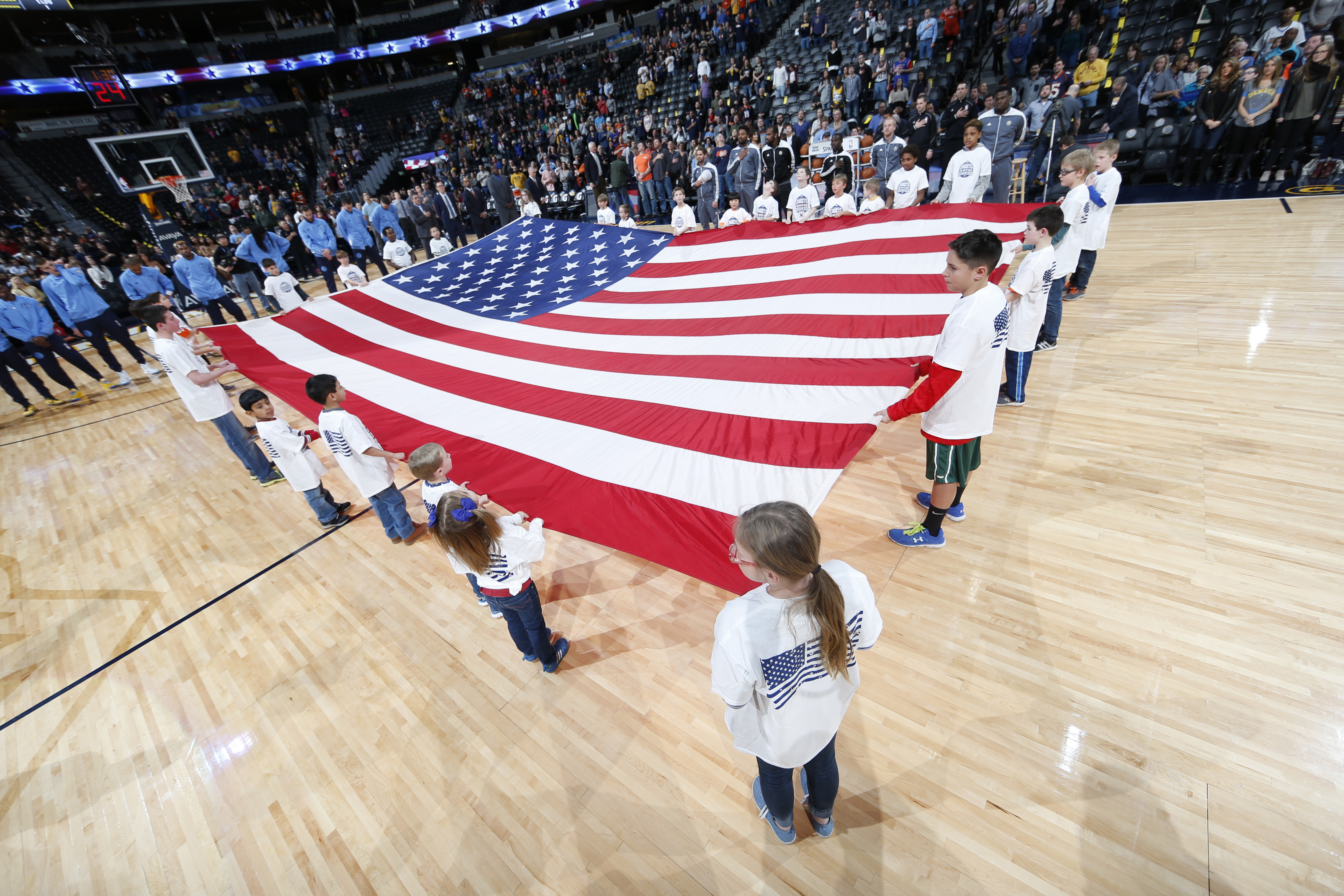
Children unfurl a large flag at a Denver Nuggets/Indiana Pacers NBA basketball game in Denver, January 2016. Colorado Public Radio image.
This is an encore post.
Yes, this is an encore post. Defeating ignorance takes patience and perseverance.