How many WorldNet Daily hoaxes does it take to change a light bulb?

June 6, 2007

Earlier I pointed to a hoax article foisted by WorldNet Daily, claiming families would face exorbitant hazardous waste clean up costs if they broke a compact fluorescent lightbulb (CFLs).

Not only did WorldNet Daily never apologize to its readers, the paper is at it again, campaigning in favor of pollution and global warming, trying to scare people who switch to lights other-than-tungsten.

Hoaxmeister Joseph Farah uses an over-the-top, breathless tone: HEAT OF THE MOMENT
Light-bulb ban craze exceeds disposal plans
Facts about CFLs, heir to incandescents, downplayed in government-enviro push”

Could anyone take that seriously? As Dave Barry used to say, “I could not make this up,” the “danger” from CFLs shows up in serious discussion forums. This forum, inaptly titled “Straight Talk,” demonstrates that people really do believe such hoaxes, especially about things they know very little about, like mercury poisoning.

Folks, five will get you ten, if you told these people about massive mercury poisoning that really exists in the Hudson River, and warned them against eating fish caught there, they’d claim you were an alarmist tree-hugger and laugh it off — though the mercury levels and potential for health-damaging exposure are both significantly greater for fish caught in some rivers, like the Hudson, than they are for broken CFLs.

But just try to suggest a small way to work against global warming, and they’ll pull out that same mercury poisoning argument to justify doing nothing and letting pollution win.

A warning to these people to “use your head” goes completely unheeded, heads having been lost some time earlier.

Here’s an example of just how far Farah twists the facts in order to make his hoax case against CFLs. First, Farah all but calls CFLs a communist plot (he claims the move to use them started in Cuba, under Castro — a dubious claim at best, and funny any way you cut it). Then he points to a Swedish firm marketing the bulbs in the U.S. — them furriners can’t be trusted, Farah implies. The firm is IKEA — never mind they are fine examples of capitalism run rampant. Third, Farah cites an editorial in Waste News , but makes it appear the publication said something the opposite of what it said.

Here’s what Farah wrote:

Those who really care about this problem right now are those involved in the waste industry.

“Most agree more energy-efficient light bulbs can significantly curb air pollution, but fewer people are talking about how to deal with them at the end of their lives,” explained a page 1 story in the April 2 issue of Waste News. It goes on to explain “there is no plan to address air and water pollution concerns that could develop if consumers improperly dispose of the mercury-containing devices.”

Gee, that’s pretty dire. No plans at all for disposal? Are we getting a pig in a poke?

Waste News actually said the bulbs are a “significant” environmental improvement. They point out weaknesses in current recycling, but they stop way short of urging people not switch to CFLs — here, read for yourself, the conclusion Waste News draws is quite a bit at odds with Joseph Farah’s version.

Managing CFL endgame
Waste News, April 02, 2007

Compact fluorescent light bulbs are a hot environmental trend these days, and with good reason. They require substantially less energy than traditional incandescent bulbs and last several times longer. Used on a large scale they can dramatically reduce our energy needs and therefore the pollution we create. With their longer life they’re ultimately an economical choice as well.

But CFL bulbs aren’t perfect. They contain mercury, albeit a small amount compared with mercury thermometers, automotive switches and the standard 4-foot fluorescent lamp. Still, there’s no large-scale plan in place to manage the end-of-life handling of these bulbs, and having the mercury end up in the environment certainly is undesirable.

Strong warnings about the need for proper disposal could dissuade customers from buying CFLs, which most people believe are far better environmentally even with their mercury – an element essential to their energy efficiency. Consumers also could get confused about what types of bulbs to throw away and pitch ones with higher mercury. Broken bulbs also pose multiple health risks to waste haulers. Meanwhile, more governments are moving to ban mercury from disposal.

Pressure will be on manufacturers to take responsibility for this. Sylvania is one lighting company that has started to do so, offering take-back programs that involve a fee for consumers. And several lighting companies have agreed to voluntarily limit the mercury content of lower wattage CFL bulbs.

Lighting producers need to continue on this course, and do so sooner rather than later, even though the issue may be years away because sales are still small and the bulbs’ long life makes wide-scale disposal relatively distant. But a sound plan for the products’ end will remove a potentially big obstacle to a significant environmental improvement.

Hello? I thought there were no plans to do anything, according to Waste News — but when I read the article, it says Sylvania already has a program and others are ready to go. Is there no standard of ethics at WorldNet Daily?

Update June 10: More information at these sites:

Update May 10, 2008: The Ellsworth, Maine, newspaper’s environmental reporter tells what should have happened, on his blog.


Creation Museum: Sad, beleaguered

June 6, 2007

For those of us who worry at every eruption of intentional ignorance, such as Ken Ham’s Creation Museum, the comments of BBC’s correspondent Justin Webb produce a little salve:

There is nothing remotely convincing about the Creation Museum and frankly if it poses the threat to American science that some American critics claim it does, that seems to me to be as much a commentary on the failings of the scientific establishment as it is on the creationists.

And a bit later:

At the Creation Museum, goggle-eyed children watch depictions of the Great Flood in which children and their mums and dads are consumed, because God is cross.

In a nation of kindly moderate people I am not sure this is the future.

I put my faith – in America.

Mencken’s hoax about bathtubs in the White House was innocent enough, but impossible to kill (yet). Ham’s hoax about science, at $27 million (U.S. reports) or $30 million, doesn’t have the grace of its perpetrator confessing the hoax and urging correction (yet).

Faith in America is reassuring, until one remembers P. T. Barnum’s faith that Americans include a “sucker born every minute,” and Tom Sawyer’s assessment of small town politics: ‘Ain’t we got every fool in town on our side? And ain’t that a big enough majority in any town?’


Just for the Texas State Board of Education: Biology texts

June 1, 2007

This is a little test of reading comprehension for the Texas State Board of Education.

So if you’re not one of those people, you can click to the next post.  Of course, if you’re reading this, it’s unlikely that you are a board member, but a Texas parent can dream, can’t he?

Here’s the point:  When you review biology texts for adoption next time, someone will testify that the books you review have errors in them because they carry copies of Ernst Haeckel’s drawings of embryoes, and those drawings are “known to be fakes.”

But that’s not exactly accurate:  Not since 1923 has any book carried the Haeckel drawings, except to point out that they are fakes.

P. Z. Myers at Pharyngula has a post today that lays out the details, “Return of the Son of the Bride of Haeckel,” as he Fisks another Chicken-Little-sky-is-falling press release from the Discovery Institute.

So, in short:  When that first person testifies to you, saying the Haeckel drawings are in some book, ask that person if they’ve read Dr. Pat Frank’s account of searching for that book, and whether they can explain why they think the Texas State Board of Education would be so stupid as to buy that claim, since it hasn’t been accurate in 84 years, since 1923 (older than all of the members of the SBOE, at least).

Then politely thank the witness for their concern, go to the next witness, and don’t ever, ever, ever claim that you think the current textbook publishers need to “get their act together” or whatever language you want to use, to get rid of the Haeckel drawings.

The drawings are gone, long gone, and you know better.

Back to our regular programming:  Did you know that it’s not true that Millard Fillmore put the first bathtub in the White House?


Bogus science palace puts blot on Memorial Day remembrances

May 27, 2007

There’s not much to add, beyond the three-quarters of a hundred entries in the one time Ken Ham’s Creation Museum blog carnival, hosted at Pharyngula by P. Z. Myers.

Those we honor on Memorial Day fought, and died, to preserve Ken Ham’s right to believe any fool thing he wants to believe.  That’s part of the ironic beauty of our Constitution and those who fight to defend it.

Having a right to believe any fool thing, and promoting fool ideas with $27 million given by people who expected one to tell the truth, are probably separate, different things.


Historical fiction: Churchill and Fleming, and antibiotics

May 26, 2007

Is this old dead duck still circulating?

The story is that a poor farm kid in England Scotland saves a rich kid from drowning, and the rich family offers to pay for college for the poor kid. The poor kid goes to college, and later makes a great discovery, and that discovery later saves the life of a member of the rich family, who goes on to save the world.

Churchill in Tunisia, 1943, visiting New Zealand’s 2nd Division, with Bernard Freyberg, known as Tiny

Churchill in Tunisia, 1943, visiting New Zealand’s 2nd Division, with Bernard Freyberg, known as Tiny

In various forms I’ve seen this story, that a member of the Churchill family, or Winston Churchill himself, was saved by a member of the Fleming family, or Sir Alexander Fleming himself (the discoverer of penicillin). Then, years later Churchill has a deadly infection, but his life is saved by Fleming’s discovery.

It’s a great story, actually, but it is fabrication from start to finish, laced with famous names, our natural ignorance of some parts of history, and our desire for such coincidences to be true. It’s such a great story that the wrong, hoax version still circulates even after it is so easy to learn that the story is wrong.

The Churchill Centre, in England, has a denial that should be embarrassing to Americans and Christians — they point out it was distributed in the 1950s by churches here.

The story apparently originated in Worship Programs for Juniors, by Alice A. Bays and Elizabeth Jones Oakberg, published ca. 1950 by an American religious house, in a chapter entitled “The Power of Kindness.”

Here are several ways to tell the story is false: Read the rest of this entry »


Lincoln quote sourced: Calf’s tail, not dog’s tail

May 23, 2007

It’s a delightful story I’ve heard dozens of times, and retold a few times myself: Abraham Lincoln faced with some thorny issue that could be settled by a twist of language, or a slight abuse of power, asks his questioner how many legs would a dog have, if we called the dog’s tail, a leg. “Five,” the questioner responds confident in his mathematical ability to do simple addition.

Lincoln Memorial statue, profile view

Sunrise at the Lincoln Memorial. National Park Service photo.

“No,” Lincoln says. “Calling a dog’s tail a leg, doesn’t make it a leg.”

But there is always the doubt: Is the story accurate? Is this just another of the dozens of quotes that are misattributed to Lincoln in order to lend credence to them?

I have a source for the quote: Reminiscences of Abraham Lincoln by distinguished men of his time / collected and edited by Allen Thorndike Rice (1853-1889). New York: Harper & Brothers Publishers, 1909. This story is found on page 242. Remarkably, the book is still available in an edition from the University of Michigan Press. More convenient for us, the University of Michigan has the entire text on-line, in the Collected Works of Abraham Lincoln, an on-line source whose whole text is searchable.

However, Lincoln does not tell the story about a dog — he uses a calf. Read the rest of this entry »


Green light bulbs, and World Net Daily trying to make a hoax

May 18, 2007

World Net Daily’s inaccuracies and blatant, fact-bending bias would be the source of much great humor, if so many gullible conservatives did not take the thing seriously.

Recently WND featured a story about the impossibility of changing light bulbs to save energy, alleging that doing so might turn one’s home into a toxic waste dump that costs $2,000 per bulb to clean up. Was anyone suckered in by the story?

According to Snopes.com, both Fox News and the Financial Post also got suckered, probably from the WND story.

Chiefly, that these news outlets got suckered is evidence they need better copy editors and fact checkers. Time for such news organizations to raise the pay of their “morgue” keepers and librarians, to get the facts straight. Read the rest of this entry »


Flags at half-staff yesterday, honoring policemen

May 16, 2007

From the Honolulu Advertiser:

Flags at half-staff today to mark ‘Peace Officers’ day
Advertiser Staff

Flags are flying at half-staff on state and county government buildings statewide because Gov. Linda Lingle has proclaimed today as “Peace Officers Memorial Day” in Hawai’i.

Lingle’s order is in conjunction with President Bush’s order that all U.S. flags be flown at half-staff today to honor the nation’s law enforcement officers. The governor also declared May 13-19 as “Police Week.”

Updated at 11:01 a.m., Tuesday, May 15, 2007

The rumor was that President Bush had ordered flags to half-staff for Jerry Falwell. Not so.

May 15 was Peace Officers Memorial Day, and President Bush ordered flags to be flown half-staff on that day. Police Week runs May 13-19.


GOP war on science victim: Rachel Carson

May 14, 2007

Some people do things that are so stupid that one wonders how they manage to shave or put make-up on the next morning, having to look at their own face.

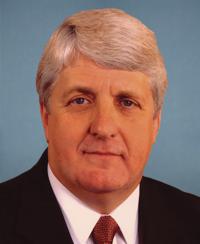
Mugshot of Utah Rep. Rob Bishop

Mugshot of Utah Rep. Rob Bishop

53 Republican representatives voted against naming the post office in Springdale, Pennsylvania, after Rachel Carson, the scientist who wrote Silent Spring, generally considered one of the most important or most influential scientists of the 20th century. No kidding. Springdale is Carson’s hometown.

2007 is the centennial of Carson’s birth — her birthday was May 27. (The bill, H.R. 1434, passed, 334-53.)

Why did the Wacky 53 vote against the honor for Carson, who got the Presidential Medal of Freedom in 1980? In an earnest ritual of voodoo science, they claim that bans on DDT kill millions, and that DDT is harmless. No, I’m not making this uphere’s the story from the Salt Lake Tribune, which covers territory represented by Rep. Rob Bishop and Rep. Chris Cannon, both R-Utah:

They contend that Carson’s actions – which led to a ban on the chemical DDT used to kill pests – actually has caused more deaths because of malaria and other diseases spread by insects. DDT, Carson wrote, was detrimental to the environment and to humans. Some scientists say DDT led to the California condor’s near-extinction.

Read the rest of this entry »


Getting evolution right

May 13, 2007

Odd thing happened the other day: The Philadelphia Inquirer carried an editorial that rather accurately described evolution theory. Just when I’m ready to lambaste my colleagues in print media, they come through.

The editorial’s point of departure was the Republican “debate” among presidential contenders, in which they were asked whether they support evolution or creationism. Three of the candidates confessed they don’t “believe” in evolution.

Why did these three, all of whom wish to be the leader of the most powerful country in history, say they did not believe in evolution? There might be thousands of reasons. Perhaps they misheard: “I’m just curious: Is there anyone on this stage who doesn’t believe in elocution?” But two reasons are more likely:

(1) They really don’t think evolution exists. As in, it’s not happening and never did. We got here some other way. There’s no evidence for it.

Uh, yeah, there is. Although technically a theory, Charles Darwin’s version of the evolution of species is a theory-with-the-status-of-fact, robust and vigorous, demonstrated in living color each and every day in field and laboratory everywhere. No jury is “out.” The verdict’s in and everybody’s gone home. Way home.

And,

(2) These men raised their hands because they knew it would get them votes from religious conservatives.

Tancredo, Huckabee and Brownback know they need the Christian conservative vote to win the Republican nomination. Christian conservatives don’t like Rudy Giuliani. They’re lukewarm on John McCain, perplexed by Mitt Romney.

But any candidate who would ignore science to attract conservative votes has made a lousy calculation.

The newspaper’s editorial board concluded:

So, while pundits are calling the evolution flap an embarrassment to the GOP, what it really is is a call to the Republican faithful: “We’re in trouble. If we don’t rally on the wedge issues now, by 2008, a Republican majority may seem as far away as the Planet of the Apes.”

Click here to find out more!


Fighting history hoaxes

May 11, 2007

Daily Kos I don’t get to daily. But here’s a post I did see that all history teachers ought to read, if only to raise their consciousness about the frauds that plague us every day: Help Fight Fake History that Powers the American Right.

Fight fake historyChris Rodda needs help supporting her research against all the old dogs of history revisionism, and the post from Troutfishing goes through most of the dishonor roll: D. James Kennedy, David Barton, Catherine Millard, and Chuck Norris

Rodda’s blog series can be found at Talk2Action.

My interest in getting history done right was kindled when high school teachers mentioned early versions of David Barton’s work — stuff that showed up on tests, though anyone who had read our texts and had a passing knowledge of real history would have known was in error. As a staffer in the U.S. Senate I had to got to read letters from people who bought the Barton tales lock, stock, and monkey barrel, and who consequently felt that everyone else on Earth was lying to them.

I wish Rodda luck.


News on trial: Newseum makes grand plans

May 11, 2007

Newshounds, newsmakers and news writers ought to salivate at the idea of a grand museum to the First Amendment on Pennsylvania Avenue, N.W., in Washington, D.C.  Organizers of the Newseum plan exactly that, with a grand opening in October 2007.

It promises serious analysis, not just cheerleading, for news media, according to the New York Times:

The Newseum’s goal is to present the “first rough draft of history” in all its glory and some of its shame, impressing upon visitors the importance of the First Amendment’s protections of a free press. In the glory department are Edward R. Murrow’s rooftop broadcasts from London during the Blitz; he is among the heroes of a short movie to be shown in the Newseum’s 4-D theater, where the seats will literally shake as German planes roar overhead.

The shame is evident in exhibits examining, among other things, Jayson Blair’s manufactured articles in The New York Times and Jack Kelley’s fabrications in USA Today. Videos address the use of anonymous sources and how bias can find its way into news accounts.

One of the museum’s major challenges will be to attract visitors at a time when surveys show that public respect for the news media has been ebbing. Charles L. Overby, chief executive of the Freedom Forum, the nonprofit organization that underwrites the Newseum, discussed the problem in an interview in his temporary office adjacent to the construction site.

“Our annual survey shows that 40 percent of the American public believes the press has too much freedom,” he said, adding that the museum’s job is to educate — in an engaging way.

The Newseum, he emphasized, is not meant to be a monument to the press, but to its freedom.

Because of the building’s location, one could do a tour of the FBI building, and close out the day with a tour of the Newseum, probably from the same bus stop.


Quote of the moment: James Madison

May 2, 2007

James Madison Building, Library of Congress -- the official Madison Memorial


A popular Government, without popular information, or the means of acquiring it, is but a Prologue to a Farce or a Tragedy; or perhaps both. Knowledge will forever govern ignorance.

— James Madison in a letter to W. T. Barry, August 4, 1822


Celebrating April 19: Paul Revere, “shot heard ’round the world”

April 20, 2007

April 19. Does the date have significance? Paul Revere's ride, from Paul Revere House

Among other things, it is the date of the firing of the “shot heard ’round the world,” the first shots in the American Revolution. On April 19, 1775, American Minutemen stood to protect arsenals they had created at Lexington and Concord, Massachusetts, against seizure by the British Army then occupying Boston.

April is National Poetry Month. What have we done to celebrate poetry?

What have we done to properly acknowledge the key events of April 18 and 19, 1775?  Happily, poetry helps us out in history studies, or can do.

In contrast to my childhood, when we as students had poems to memorize weekly throughout our curriculum, modern students too often come to my classes seemingly unaware that rhyming and rhythm are used for anything other than celebrating materialist, establishment values obtained sub rosa. Poetry, to them, is mostly rhythm; but certainly not for polite company, and never for learning.

Poems slipped from our national curriculum, dropped away from our national consciousness.

And that is one small part of the reason that Aprils in the past two decades turned instead to memorials to violence, and fear that violence will break out again. We have allowed darker ideas to dominate April, and especially the days around April 19.

You and I have failed to properly commemorate the good, I fear. We have a duty to pass along these cultural icons, as touchstones to understanding America.

So, reclaim the high ground. Reclaim the high cultural ground.

Read a poem today. Plan to be sure to have the commemorative reading of “Paul Revere’s Ride” in your classes next April 18 or 19, and “The Concord Hymn” on April 19.

We must work to be sure our heritage of freedom is remembered, lest we condemn our students, our children and grandchildren to having to relearn these lessons of history, as Santayana warned.

Texts of the poems are below the fold, though you may be much better off to use the links and see those sites, the Paul Revere House, and the Minuteman National Historical Park.

Read the rest of this entry »


Who keeps score on presidential corruption?

April 19, 2007

A fellow approached me in church about a month ago to ask who I support in the 2008 presidential election (haven’t made up my mind yet; there are very good people running on both sides, though it would take a major tsunami to get me to vote Republican for president over any of the Democrats). In the course of the conversation he mentioned the “dozens” of convictions of officials in the Clinton administration, and expressing hope we didn’t ‘return to a time when many government officials make such a mess of things.’

I felt the cold hand of Santayana’s ghost on my shoulder as Santayana reached past me to slap the man into reality.

So, later, I tried to find a comparison I had seen of corruption investigations in presidential administrations, one that listed who was charged with what, and the result of the investigation. I can’t find it.

Is anyone keeping score? Please point me to the place, if there is one, where such scores are accurately kept. Read the rest of this entry »