Parkland Hospital weathered the crises – November 27, 1963

November 27, 2012

Dallas County Judge Clay Jenkins* wrote a piece for the Dallas Morning News, published November 25, 2012, describing the qualities he hopes the search committee will find in a new leader for Dallas County’s massive medical care institution, Parkland Hospital“Parkland needs an inspiring servant leader.”

Parkland Hospital, Dallas - Dallas Business Journal image

Parkland Hospital, Dallas – Dallas Business Journal image

For more than a decade the hospital has been hammered by a massive load of charity cases, including tens of thousands of people forced to used the emergency room for primary care because they cannot get into the health care system in other ways.  Such crowds, such budget pressures, such pressures on staff, force mistakes.  Parkland has not been immune.

Parkland emergency room wait times for non-critical care are legendary.  I’ve had students miss most of a week waiting for care there.  At the same time, I’ve had students return to class in what I considered record time after being patched up from problematic baby deliveries, auto accidents, and gunshot wounds.

Problems in billing and record keeping for Medicaid and Medicare forced the resignation of a long-time hospital director.  Much of the past two years have been crisis mode for the hospital, laboring frantically not to lose its federal funding (Dallas County underfunds the hospital as a matter of tax-restraint policy).

Friends tell me morale is not great.

I stumbled into this letter at a great site for historical items, Letter of Note.  In times of crisis, those appointed or anointed to lead may do several things to rally workers to do their best, to carry an institution through the tough times.

I wager this letter, in 1963, did more to build Parkland Hospital as a quality institution than all the audits, investigations, and exhortations to abide by federal policy and stop losing money, in the past decade.  What do you think?

November 27, 1963, was less than a week after the assassination of President John F. Kennedy, who died in a Parkland operating room, the wounding of Texas Gov. John Connally, who was operated on in another operating room, and the shooting of presumed assassin Lee H. Oswald, who also got care at Parkland at his death.

We were not found wanting, thank you letter to employees of Parkland Hospital, Dallas, Nov. 27, 1963

We were not found wanting, thank you letter to employees of Parkland Hospital, Dallas, Nov. 27, 1963; (Source: Dallas Observer; Image via Wired.) (Click for larger image)

Transcript, from the Dallas Observer, via Wired, via Letters of Note:

Transcript [links added here]

DALLAS COUNTY HOSPITAL DISTRICT
Office Memorandum
November 27, 1963

To: All Employees

At 12:38 p.m., Friday, November 22, 1963, President John F. Kennedy and Texas’ Governor John Connally were brought to the Emergency Room of Parkland Memorial Hospital after being struck down by the bullets of an assassin.

At 1:07 p.m., Sunday, November 24, 1963, Lee. H. Oswald, accused assassin of the late president, died in an operating room of Parkland Memorial Hospital after being shot by a bystander in the basement of Dallas’ City Hall. In the intervening 48 hours and 31 minutes Parkland Memorial Hospital had:

1. Become the temporary seat of the government of the United States.

2. Become the temporary seat of the government of the State of Texas.

3. Become the site of the death of the 35th President.

4. Become the site of the ascendency of the 36th President.

5. Become site of the death of President Kennedy’s accused assassin.

6. Twice become the center of the attention of the world.

7. Continued to function at close to normal pace as a large charity hospital.

What is it that enables an institution to take in stride such a series of history jolting events? Spirit? Dedication? Preparedness? Certainly, all of these are important, but the underlying factor is people. People whose education and training is sound. People whose judgement is calm and perceptive. People whose actions are deliberate and definitive. Our pride is not that we were swept up by the whirlwind of tragic history, but that when we were, we were not found wanting.

(Signed)

C. J. Price
Administrator

The people of Parkland Hospital in 2012 will bring it through the current, slower series of jolting events, I predict.

When that happens, will the administrator think to thank them?

More:

_____________

* In Texas, the lead commissioner in the county commissions is called “judge.”  To distinguish between this executive branch judge and court judges, judges of courts are usually identified by the court in which they preside.  Clay Jenkins is the leader of the Dallas County Commission.


Dallas honors assassin’s second victim, policeman J. D. Tippit

November 21, 2012

Forty-nine years.

That’s how long it took people in Dallas to get around to erecting a memorial for police officer J. D. Tippit, killed in the line of duty on November 22, 1963.

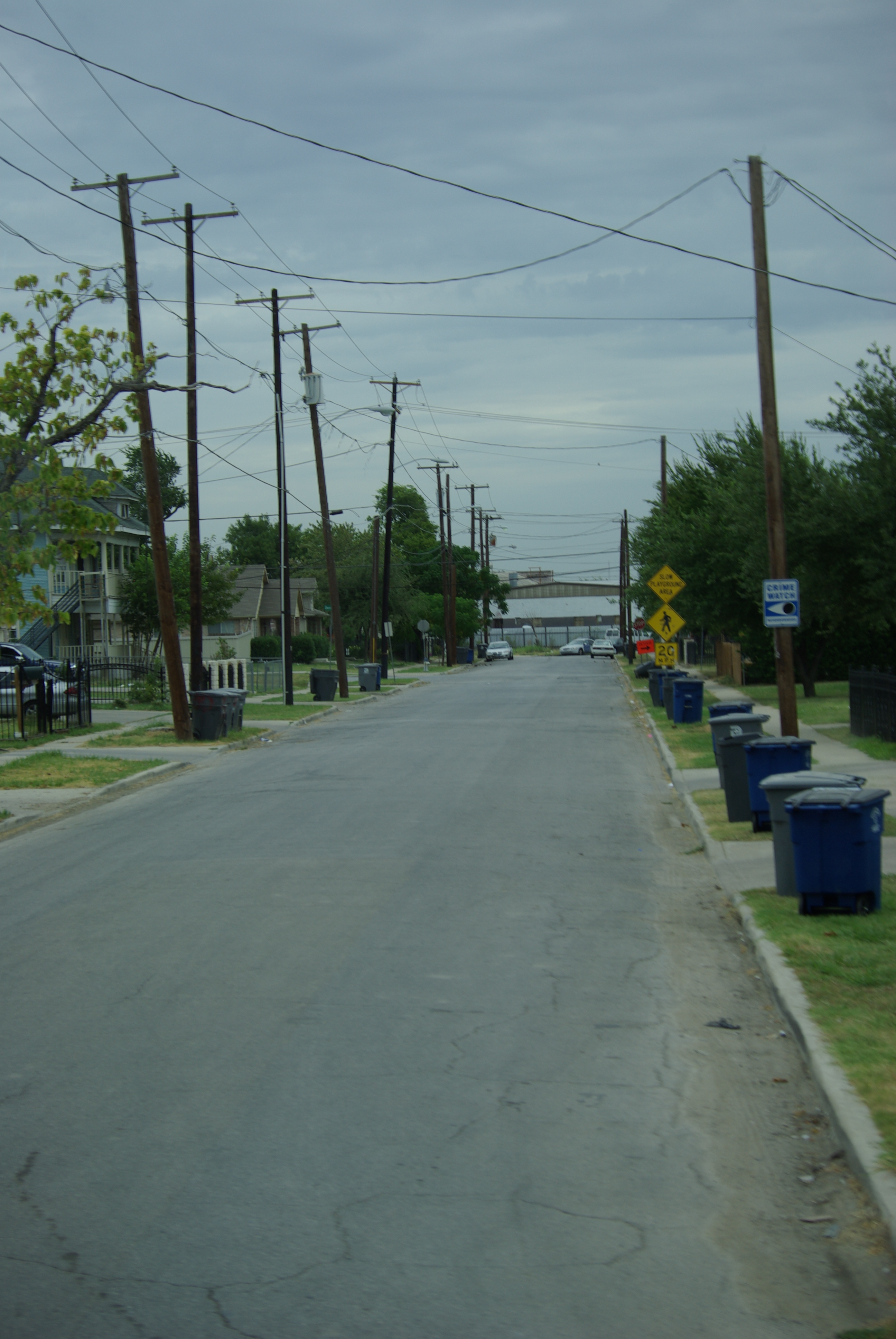
07-27-2011 Colo Bend to 6th Floor, Pentax K-10 158 - 10th & Patton in Oak Cliff, where J. D. Tippitt died

Residential street in Oak Cliff, a section of Dallas, Texas, where police officer J. D. Tippit died on November 22, 1963; photo from July 27, 2011.  Officer Tippit was discovered about the location of the Crime Watch sign.

For the first 20 years, most people probably thought the idea too raw, to mark the place where Officer Tippit died.  More recently people complained that there was no other memorial to Tippit, whose actions may well have smoked out the assassin of President John F. Kennedy that day.

With pressure from the Dallas Police Department, and assists from the Dallas Independent School District, the marker was installed on school property at the intersection, across the street from the spot where Tippit was shot.

Tippit died near the intersection of 10th Street and Patton Street, in Oak Cliff, a section of Dallas across the Trinity River from downtown.

Dallas Police Officer J. D. Tippit's patrol car, on E. 10th St, in Dallas, on November 22, 1963

Wikipedia caption to Warren Commission photo: Dallas Police Officer J. D. Tippit’s patrol car, on E. 10th St, in Dallas, on November 22, 1963 – now via Mary Farrell Foundation.

Dallas ISD’s Adamson High School is about two blocks away, to the northwest; the campus has been expanded to come within a block of the site.  The marker sits next to tennis courts recently installed by the district, in a small park cut out from the athletic complex.  Dallas ISD acquired many of the residences in the area.  Renovations in the past two years included closing part of 10th Street west of Patton.

A brighter though still-somber mood pervaded the marker’s dedication on November 20, 2012.  About 200 people gathered for the ceremony, including a lot of police officers and school officials.

Roy Appleton described it at a blog of the Dallas Morning News:

Brad Watson, a reporter for WFAA-TV, Channel 8, questioned the lack of recognition for Tippit in a broadcast two years ago. Michael Amonett, then president of the Old Oak Cliff Conservation League, took up the cause, with help from Farris Rookstool III, a Kennedy assassination historian.

The school district provided the land. And the Texas Historical Foundation donated $5,000 to the project.

The crowd of about 200 people Tuesday included Tippit’s widow Marie; his children, Allan, Brenda and Curtis Tippit; his sister Joyce DeBord; other family members; and police officers past and present.

Standing and sitting under a cloudless sky, they watched members of the Adamson ROTC present the colors, heard the Dallas police choir sing God Bless America and listened while speakers praised the slain officer and his family.

Watson covered the ceremony for his station.  The ceremony might be noted for its lack of higher dignitaries; it was a working cop’s ceremony, with Dallas Police Chief David Brown being the top rank present.

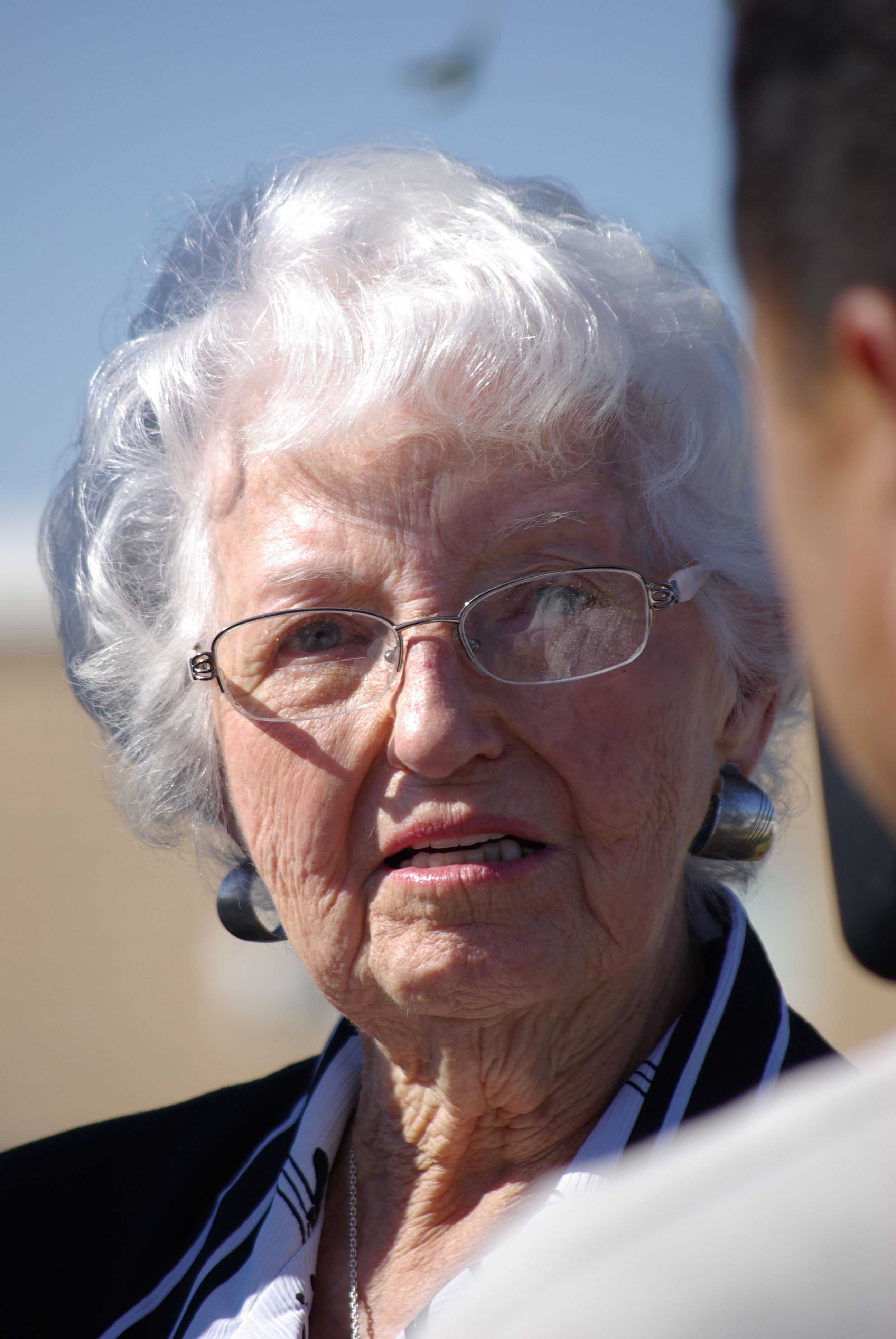
2012-11-20 Tippitt Memorial 013  Marie Tippit answers questions, dedication of marker to her late husband, J. D. Tippit - photo by Ed Darrell, use permitted with attribution

Marie Tippit, officer Tippit’s widow, answered questions from a reporter Tuesday at the dedication of the marker to her husband. Photos by Ed Darrell except where noted.

2013 is the 50th anniversary of the assassination of President John F. Kennedy, in Dallas.  Proponents wanted to get the tribute to Officer Tippit installed in time for the anniversary year.  Particularly with the aid of scholars at the 6th Floor Museum, tourists and historians have been retracing routes taken that day 50 years ago, the parade route of President Kennedy from Love Field, with the emergency reroute to Parkland, and the route Oswald is thought to have used to flee after the shooting, from the Texas School Book Depository, through the bus station, across the Trinity River to his boarding house in Oak Cliff, and from there to the Texas Theater where he was captured.

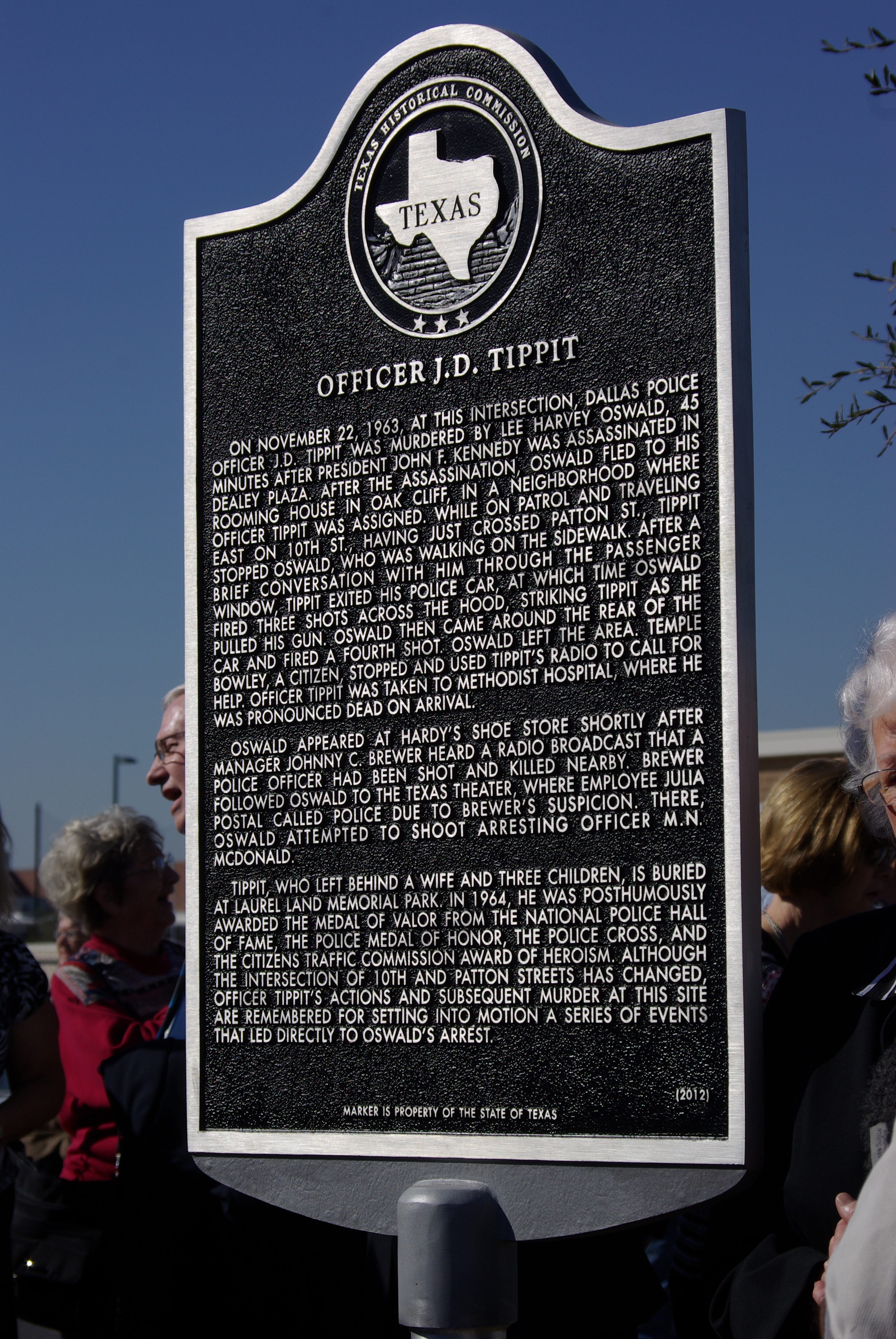
2012-11-20 Tippitt Memorial 017 plaque honoring J. D. Tippit, photo by Ed Darrell

Plaque from the Texas Historical Commission explaining the history of the spot in Oak Cliff where Officer Tippit confronted suspected assassin Lee Oswald.

Particular striking in this history is the role played by ordinary citizens — Officer Tippit on his rounds, witnesses in the surrounding homes and the people who used Tippit’s radio to notify Dallas Police of Tippit’s shooting (in an era before cell phones, and probably before most local phone lines even had Touch Tone™ dialing), the alert salesman at the now-defunct Hardy’s shoe store, and the ticket seller at the Texas Theater who phoned police after Oswald stiffed the theater on a ticket price.

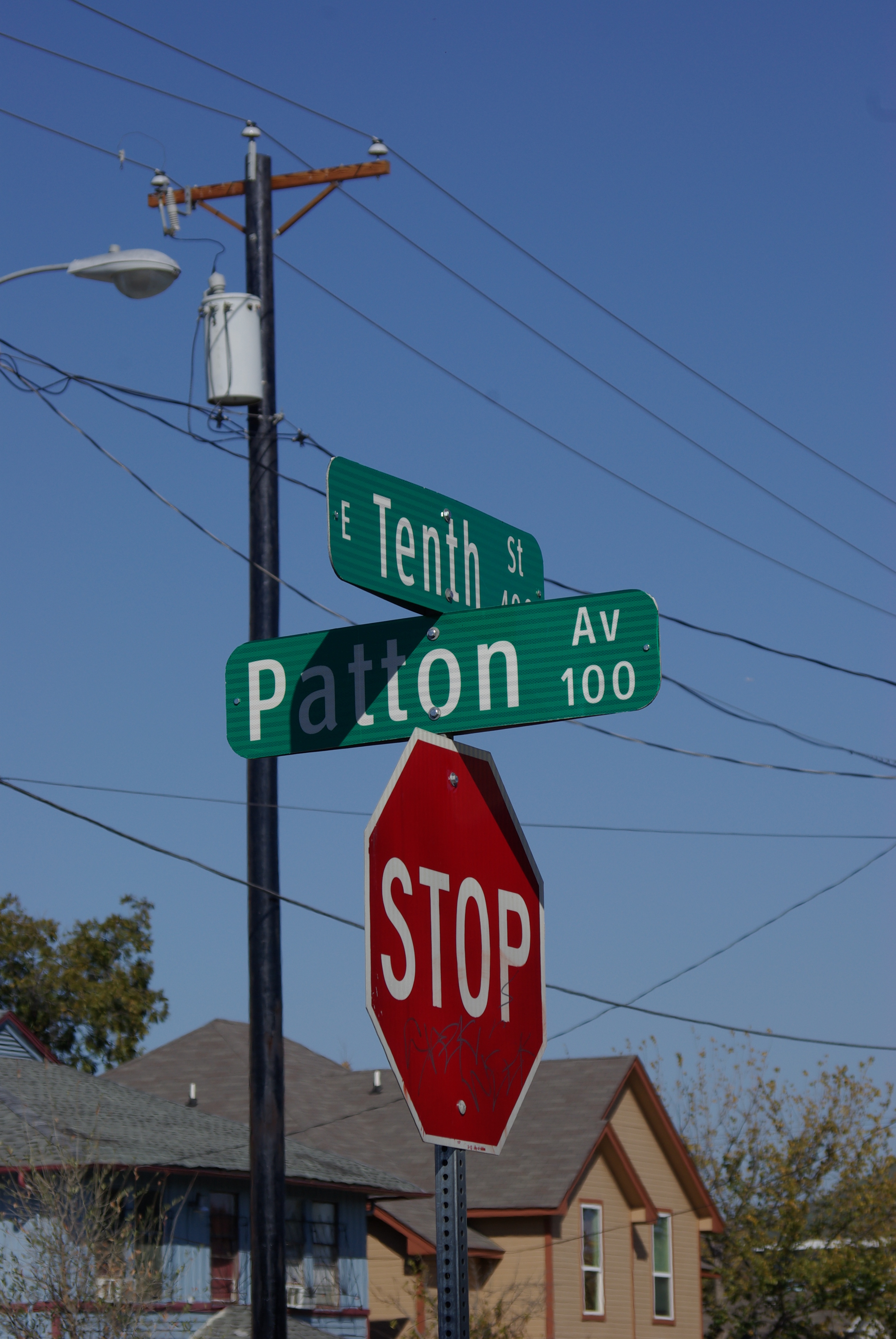
2012-11-20 Home and Tippitt Memorial 036 Street sign at 10th and Patton, site of confrontation between Lee Oswald and Officer Tippit - photo by Ed Darrell

Even the street signs and stop signs have been updated at 10th and Patton, the site of the new historical marker.

Hardy’s Shoe Store was a Quinceanera dress shop in 2011 and may have gone through other incarnations since 1963.   Assassination histories note that students playing hooky from W. H. Adamson or Sunset High Schools were in the Texas Theater when Oswald was arrested, though most of them ran out to avoid being questioned by police and outed for having skipped school.  Adamson’s campus is greatly expanded recently.

But for the intervention of ordinary citizens along the path, it is entirely conceivable that the assassin of the president of the United States might have gone undetected long enough to dispose of evidence that linked him to the crime, or escaped from the country.

My students over the past five years, all residents of Oak Cliff, knew very little about the Kennedy assassination, nor especially the links to Oak Cliff.  We need to do a better job as parents, teachers, newspapers, broadcast organizations, community associations and municipal government, in preserving and commemorating our local histories.

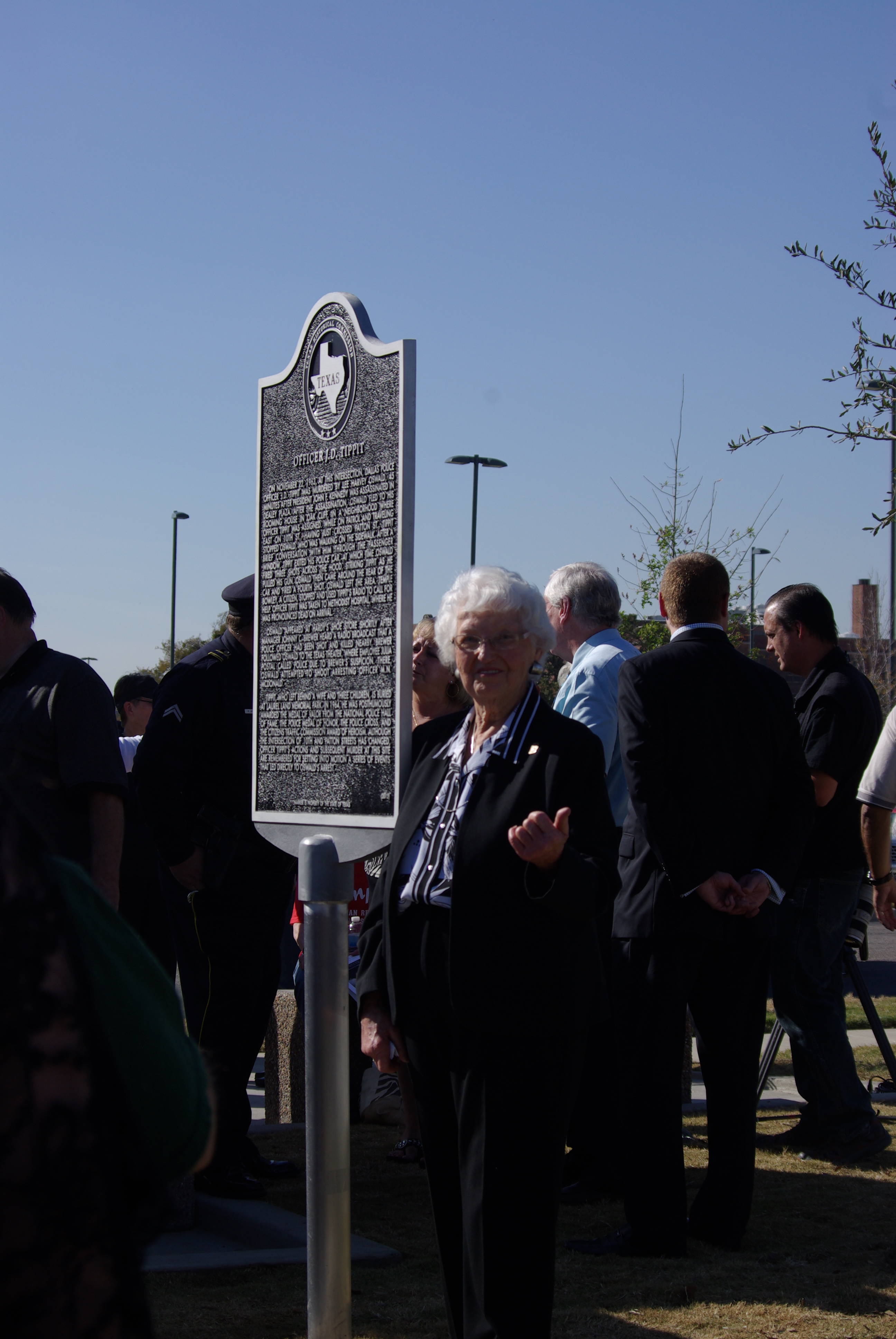
2012-11-20 Tippitt Memorial 019 Marie Tippit next to the memorial plaque to her husband, Officer J. D. Tippit

Marie Tippit standing next to the historical marker for her husband, J. D. Tippit, at the marker’s dedication, November 20, 2012.

2012-11-20 Tippitt Memorial 030 crowd devoid of dignitaries - Brad Watson at right

Other than the police chief and a couple of Dallas ISD board members, the crowd was pleasantly devoid of dignitaries; it’s a monument to a working man doing his job. WFAA Channel 8 reporter Brad Watson is the tallest man on the right; his reports several months ago spurred the action to carve out the memorial site from Dallas ISD-acquired land, greatly boosting the work to get a marker put up.

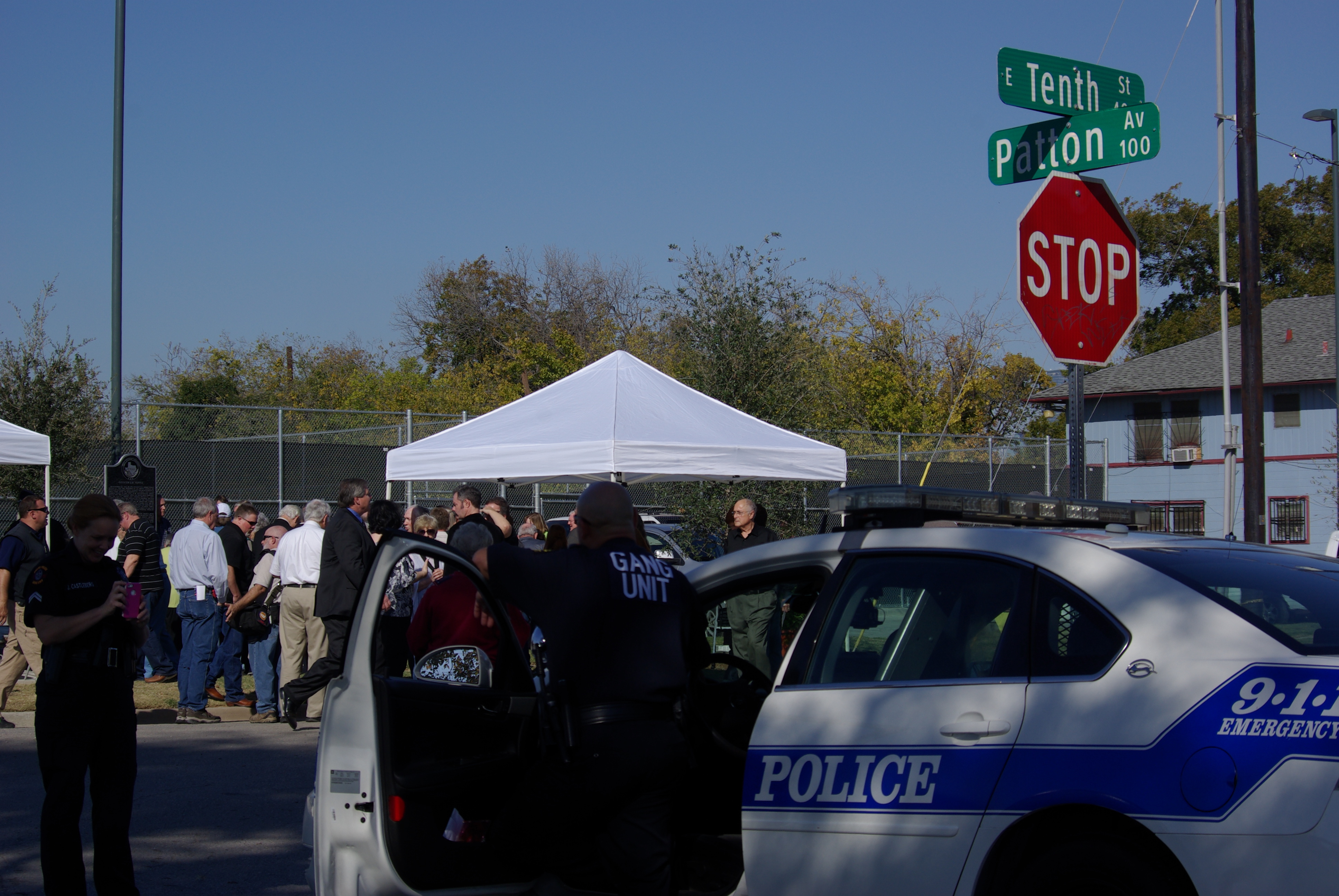
2012-11-20 Tippitt Memorial 037 Dallas Police cruiser 2012, at site of 1963 shooting - photo by Ed Darrell

History of technology: Compare this photograph of two Dallas police with the photo of Officer Tippit’s car earlier in this post. This squad car comes equipped with full-time dash-mounted cameras, instant radio and computer links; police also carry their own personal communication devices, such as the pink smartphone being used to photograph another officer. The car itself carries the phone number for emergency calls, and some carry the URL of the Dallas Police website. The traditional lights atop the car in Dallas have been updated to LEDs, which did not exist in 1963. How many other significant changes in technology can be found in these photos?

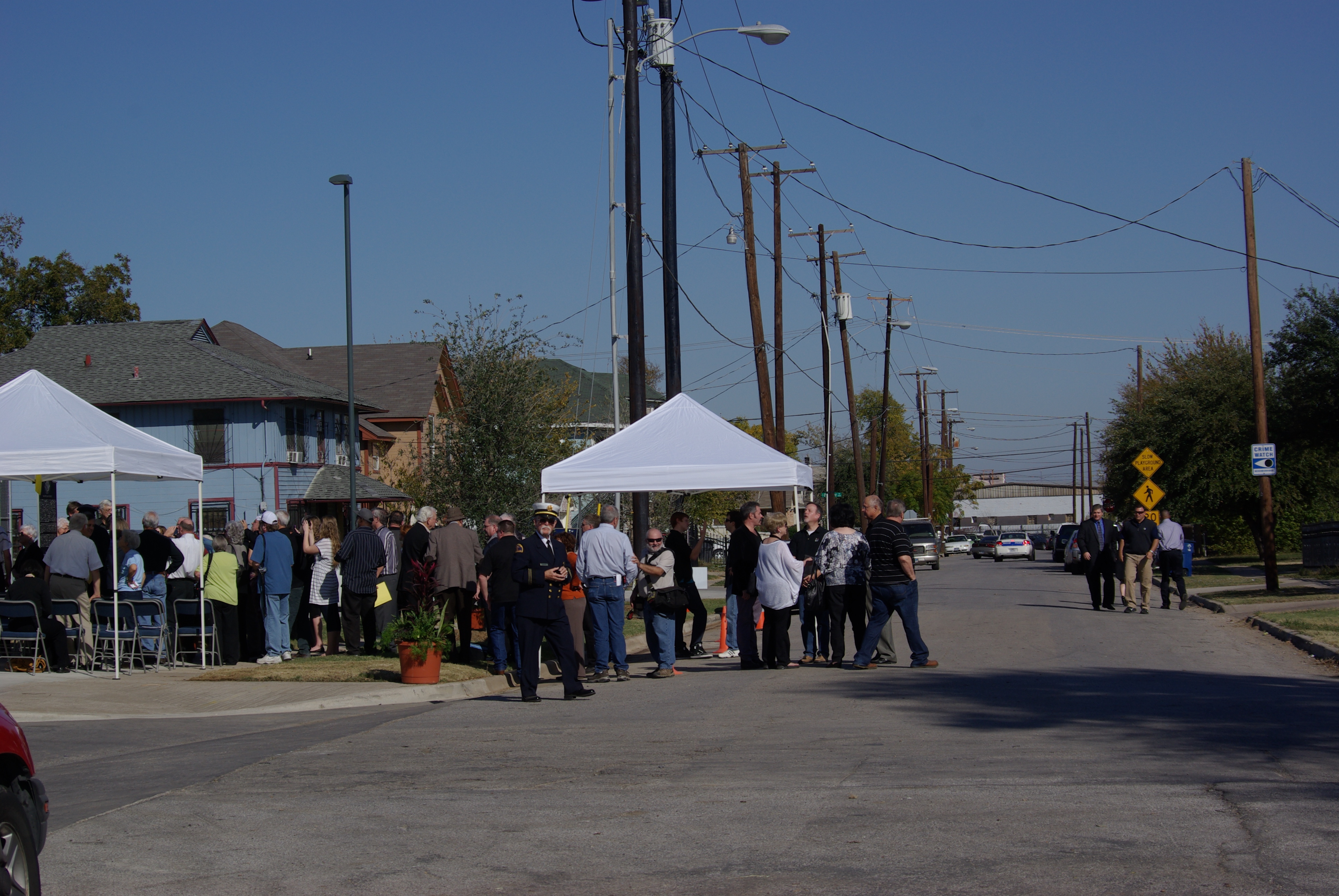
2012-11-20 Tippitt Memorial 039 10th St at Patton, Oak Cliff, Texas, at Tippit ceremony 11-20-2012 - photo by Ed Darrell

Dallas school district construction changed much of the neighborhood over the past five years; note the absence of trees shading the street that were present in 1963; they may have been elms struck down by blight decades ago.  Compare this photo with the first photo in this post, taken about 16 months earlier.

More:


How to get things done in Dallas schools

September 28, 2012

Interesting.  Troubling?  I think so.  Matthew Haag blogs at the Dallas Morning News site:

This time of the year, we often hear from parents and Dallas ISD teachers that their schools are stifling hot. The district has lots of older campuses, where air-conditioning units are on their last legs and the chillers don’t operate fully.

That was the case for a few hours yesterday at Harry Stone Montessori in East Oak Cliff. And a father of a Stone student took a different route to get the AC fixed. He messaged DISD Superintendent Mike Miles on Twitter, which he rebooted six weeks ago. (His Twitter account, I should add, is managed by his special assistant, Miguel Solis, who is rarely more than a few feet from Miles all day.)

@MMilesDISD Hard to study when the A/C is broken w 90 degree heat @harry Stone…you wants results and so do Let’s Fix it. @matthewhaag

Four hours later, Miles responded.

We are on it @ChrisSuprun: Hard to study when the A/C is broken w 90 degree heat @harry Stone…you want results and so do Let’s Fix it.

And about two hours later, the AC was fixed.

Feel like we should time it: “@MMilesDISD We are on it @ChrisSuprun: Hard to study when the A/C is broken w 90 degree heat @harry Stone.”

@RobertWilonsky@ChrisSuprun Crew is telling me we are fixed now Thx to facilities, HS Staff, and community involved with this

Obviously, the moral of this story is that if you need something fixed in your school, message Miles on Twitter.

It’s interesting that the new Superintendent, Mike Miles, responded quickly.  On one hand that suggests things may have already changed in Dallas.  On the other hand, people who study organizations understand that a calm surface can hide a lot of turmoil in the deep water.  It was a parent who Tweeted. What if it had been a teacher who got to Miles?  What happened to the teacher and principal at Harry Stone?  What happened to the HVAC guy nominally responsible?

What happened to the students?

My experience in Dallas ISD is that almost everyone in administration will claim they cannot control classroom temperatures.  My last classroom regularly hit 85°, and often enough climbed into the 90s.  Meanwhile, my colleague across the hall had to wear jackets.  Our thermometers regularly had the temperatures in her room in the 60s.  One week it dropped further.  I bought a laser-pointer thermometer to check the answers we got from the HVAC guys who would come into the classroom, usually in the middle of a presentation, point the thing around and tell us that the temperature was where it should be, or moving that way. (Then they’d disappear.)   We recorded several days of temperatures in her room below 60°, as low as 52°.  Eventually the solution was to cover the air vents coming into that classroom, and take out the thermostat.

I am not kidding.

I wonder what the HVAC people in Dallas ISD would say about the ultimate solution at Harry Stone Montessori?  From the Superintendent’s office, did he chalk this off to a great anomaly, or did he check deeper to see whether there might be a deeper problem?

Unnecessary cooling is a huge energy waster in schools.  Unnecessary heating wastes energy, too.   Dallas’s fraud and abuse hotline claimed not to have jurisdiction over these issues . . . when an organization is hemorrhaging money, as all Texas school districts are after the Lege took so many potshots at them over the past six years, good management could be lifesaver.

So, to get action, teachers only need to Tweet their problems to the Superintendent?  Want to bet how happy that makes principals?  Want to take bets on how this shakes out?


Conference for women skeptics, in Dallas, September 15

August 17, 2012

Stealing the news completely, including most of the formatting, from P. Z. Myers:

On 15 September, you could attend the Feminine Faces of Freethought Conference in Dallas for only $20. Check it out!

Women of Reason–Dallas presents Feminine Faces of Freethought, a conference featuring women speaking about topics that affect the freethought community as a whole.

Join us for a day of talks by

Panels include

  • Secular Parenting,
  • Diversity in the Freethought Movement,
  • and What Atheist Women Really Want.

We welcome people of all genders.

Childcare will be provided. Please reserve childcare while purchasing your tickets.

Less than a month away.


EPA photograph exhibit in Dallas: Progress in environmental protection?

August 8, 2012

Let’s see what history shows.  EPA started a photographic record of environmental conditions, in 1971.  Recently the project gained light again with help of the National Archives.  Parts of the record are touring the country, and the display is available in Dallas for a week (photos added):

National “Documerica” Environmental Photo Exhibit Comes to Dallas

(DALLAS – August 7, 2012) The Environmental Protection Agency will open “Documerica” exhibit of photographs depicting environmental conditions of the past and present beginning August 7, 2012. The display arrives in Dallas after a quick stop in Austin at the Texas Environmental Superconference as part of its national tour. The exhibit will be open on the 7th Floor at Fountain Place in downtown Dallas through August 14, 2012.

(From the Documerica-1 Exhibition. For Other I...

One of the photos in the Documerica archives, looking to me to be from Texas, along Texas’s Colorado River (I have no idea whether this is one of the photographs displayed) (From the Documerica-1 Exhibition. For Other Images in This Assignment, See Fiche Numbers 27, 28, 31, 32, 33.) (Photo credit: The U.S. National Archives)

From its development in 1971, “Documerica” became the United States’ first serious pictorial examination of the environment. The project collected more than 15,000 images, documenting the environmental and human conditions of this country when EPA was starting its mission. The idea was to visually record the difference in conditions in later years, providing the public with a measurement of progress made to accomplish goals set by Congress.

Forty years later the project was rediscovered with the help of National Archives. “State of the Environment” launched Earth Day 2011 as an opportunity for the public to participate and engage in a modern revitalization of Documerica. There are more than 1,900 new images that have been submitted to EPA through Flickr.

The EPA photo project will continue accepting submissions through the end of 2013. Public entries will be considered for a larger exhibit of both projects set for March-September 2013 at the U.S. National Archives’ Lawrence F. O’Brien Gallery in Washington, D.C.

-30-

To learn more and to follow the project, visit: www.epa.gov/stateoftheenvironment
To match images near you, a selection of the full record is available on the National Archives Flickr photostream

More about activities in EPA Region 6 is available at http://www.epa.gov/aboutepa/region6.html

Can I make time to go?

Fountain Place, in Dallas; image from Dallas Architecture

EPA’s art exhibit is on the 7th floor of Fountain Place, this building, usually listed at 1445 Ross Avenue. It’s between the Woodall Rodgers Freeway and Ross Avenue, between North Field Street and North Akard Street, Metered parking may be available; it should be a not-too-difficult walk from the West End, if done before the temperature rises above 95 degrees (as it is predicted to do each day in the next week).

The building that houses the exhibit is a landmark in Dallas, designed by I. M. Pei; fountains and trees grace the base of the building.  If you’re not a denizen of daytime downtown Dallas, it might be worth a trip to see.

Alas, the fleeting nature of the stay in Dallas means it will be long gone before any environmental science classes can be assigned to view it.

Fortunately the photographs are available on Flickr — teachers, will you let us know what devious assignments you make out of this collection of historic photographs?

Additional Resources: 


New Dallas superintendent Mike Miles warns the troops

May 25, 2012

Dallas ISD superintendent-designee Mike Miles held a press conference and sat down for an interview with the in-house television production group this week.

Miles starts the job in Dallas at the first of July, but he is working at Dallas ISD headquarters under a consulting contract until then.

Should the interview, below, be regarded as anything other than a warning to Dallas teachers and administrators?

Is this any way to rally the troops one depends on?

This interview with Dallas ISD Superintendent-designate Mike Miles occurred on May 22, 2012.

More, Related, and Tangential articles:


Right or wrong reasons, North Texas governments back into water conservation

April 4, 2012

It’s a win-win situation for North Texas politicians, like Dallas Mayor Mike Rawlings — they can take action that helps mitigate problems of global warming, but they don’t have to say they’re doing it for global warming.

Downtown Dallas in the background with the Tri...

Water supplies will limit future growth for cities like Dallas, if good water policies cannot be made to assure water to critical functions - Downtown Dallas in the background with the Trinity River in the foreground. Taken from the N Hampton Rd bridge. (Photo credit: Wikipedia)

Mayors of several cities announced they will push to keep watering restrictions on, to conserve water, even though their cities’ water supplies got big boosts from massive rainstorms over the past few weeks.

Bruce Tomaso, editor of The Scoop, a blog at The Dallas Morning News, wrote down all the details (comments at that site are worth visiting).

Thanks to last year’s brutal drought, most North Texans have gotten accustomed to watering lawns sparingly.

As lake levels dropped through the dry, hot summer and fall of 2011, emergency conservation measures were enacted throughout the region.

In some cities — Plano, for example — watering was restricted to twice a month. (That restriction was just eased to once a week.)

In others, including Dallas, a less stringent limit of twice a week has been in force.

On Wednesday, Dallas Mayor Mike Rawlings , joined by the mayors of Fort Worth, Arlington , and Irving , will recommend that a twice-a-week limit on watering be made permanent. The mayors plan a 9:30 a.m. news conference at the offices of the North Texas Council of Governments, 616 Six Flags Drive.

“Although recent rains have improved current water supply availability, a twice weekly watering schedule provides predictable expectations to customers for landscape planning and a way for the region to continue to use water resources wisely,” says a joint statement from the four cities.

Bill Hanna of the Fort Worth Star-Telegram writes that says the idea of making the emergency conservation measures permanent was raised a while ago by Fort Worth Mayor Betsy Price, who discussed “a coordinated regional approach” with Rawlings, Arlington Mayor Robert Cluck, and Irving Mayor Beth Van Duyne.

“I think water conservation is probably the most important issue we have in the next three decades,” he quotes Rawlings as saying. “We cannot continue to grow without water, and I want to continue to grow.”

In each of the four municipalities, the City Council would have to approve a measure to implement permanent limitations on lawn watering.

On a related note, the Texas agriculture commissioner unveiled a new water conservation coalition plan Monday in Mesquite.

It’s a good move, even if they do it for the wrong reasons.  Texas lives in a world of trouble with regard to water.  Too many people live in big cities with water supply systems planned and built a half-century ago, for fewer people.  Massive aquifers that offered backup to surface water supplies have been mined out.  In a short phrase, Texas doesn’t have enough water even in a good rain year, and needs to conserve and develop a state-wide policy on how to allocate water, and how to protect water supplies needed for farming, for industry, and for residential use. Global warming threatens each of those resources in disparate ways, all of them bad.

Conservation is a lot cheaper than building more dams and more pipelines, and more environmentally friendly.  Nice to see these guys endorse conservation.

Trinity River in flood and Dallas at night, 9-2010 IMGP5052 - photo by Ed Darrell, Creative Commons License

Texas should not rely on freak floods to mitigate long-term drought; growth of cities like Dallas require better water policy. Photo shows Dallas at night over the Trinity River flooding, September 2010. Photo by Ed Darrell, Creative Commons Copyright

Tip of the old scrub brush to Sara Ann Maxwell.


Possibly more ‘possum

March 19, 2012

More shots of our rather tame, wild neighbor.

Possum on the fence in Dallas IMGP8930 - Ed Darrell photo, creative commons

S/he may have been trying to reach the safety of the area under the heat pump -- but the dogs caught on, and "treed" it on the fence. I worried about rabies, but it seemed healthy.

I’m torn, really — are they cute, or really ugly?

Possum in Dallas IMGP8937 - Ed Darrell photo, creative commons

Walt Kelly would have been pleased at its familiarity with the idea of a mugwump, as it demonstrates, here.

A possum's tail IMGP8935 - Ed Darrell photo, creative commons

The hairless, "rat" tail is one of the least attractive features. How much cuter would it be with a furry tail?

Possum on the fence - IMGP8933 Ed Darrell photo, creative commons

He does have a very cute, pink nose, however. You could get used to dealing with these little guys.


Oranges beat the freeze

December 7, 2011

We get our first freeze of the season in Dallas tonight.  I’m thinking of the heat of the summer.

Kathryn gambled a bit, bought a Satsuma orange tree for the patio plant menagerie this summer.  To her joy and my utter surprise, it fruited.

Kathryn's Satsuma oranges in Dallas

Kathryn's Satsuma oranges in Dallas -- oranges take a long time to ripen; photos from late October 2011

Green fruit approached its final size in late June, then tortured us as it just sat there, green and unripe.  They turned orange slowly, through August and September.  An occasional individual would give up and hit the ground.  So we had samples — bitter at first, hints of sugar in September.

Two weeks ago Kathryn harvested a score of the little beauties.

Oranges on the patio in Dallas

Through the summer the oranges rested there, teasing us with their sloth . . .

First freeze tonight, but we enjoyed the last of the oranges this morning.

Horticulture teaches patience.  Horticulture is fun.

More, Resources: 


6th Floor Museum, Dallas — go see it

November 23, 2011

The 6th Floor Museum in Dallas presents in-depth studies of the assassination of President John F. Kennedy, on November 22, 1963.

There’s a lot more to such a study than you might think.  It’s a relatively quick tour — you can view the museum’s displays and films in about two hours, comfortably, stopping to read exhibit cards and really analyze objects on display.  A couple of the films present a great deal of history quickly and well (Walter Cronkite narrates one).

One cannot avoid a great deal of history of the Civil Rights Movement, the Cuban Missile Crisis and the Cold War, and the start of the Vietnam conflict.  Kennedy’s administration covered only three years, but a very active and important three years in the 20th century.

Increasingly the 6th Floor Museum is a stop for researchers and scholars.  The recent addition of a good reading room for scholars is a great asset.

Curator Gary Mack offers a quick introduction in this video:

1,276

Plan to spend three or four hours.  You’ll find the place very interesting.  After the museum, most likely you’ll want to spend some time exploring Dealey Plaza, the road where Kennedy’s car was when he was shot, and the famous grassy knoll.  It’s a part of downtown that is almost always filled with people in daylight in all but the absolute worst weather.  (Check out the EarthCam at Dealey Plaza.)

Old Red, the old Dallas County Courthouse, with its own museum, is just a half block away.


Documentary film worth seeing: “The Other ‘F’ Word” at the Texas Theatre

November 20, 2011

Here’s the trailer:

Kathryn and I caught it last night at the renovated, historic Texas Theatre on Jefferson Avenue in Oak Cliff (formerly an independent town, now a sprawling neighborhood of Dallas).  The audience enthusiasm didn’t overpower the movie — the audience was much smaller than the film deserves.

It’s showing again this afternoon and Wednesday night at the Texas.

Advantages of seeing this at the Texas:

  1. Parking is easy and free after 4:00 p.m. on Jefferson Avenue.
  2. The bar has Mothership beer on tap (and a variety of other good libations).
  3. Popcorn is cheaper than at most megaplexes, plus it doesn’t taste as if made from petroleum by-product (which is not to say it is healthy, but that it may be less unhealthy).
  4. History point 1:  This is a near-Art Deco theatre built originally by Howard Hughes.
  5. History point 2:  This is the theatre in which Lee Harvey Oswald was captured in his flight from the scene of the assassination of President John F. Kennedy.
  6. It’s a great film.
  7. It’s a great theatre to view great films in.

Punk never made a great impression on me.  But at length, years later, I think I understand part of the angst and noise of the punkers, thanks to this film.  The description at the YouTube trailer:

THE OTHER F WORD
directed by Andrea Blaugrund Nevins
produced by Cristan Reilly and Andrea Blaugrund Nevins

IN THEATERS NOVEMBER 2ND, 2011
http://www.theotherfwordmovie.com/

This revealing and touching film asks what happens when a generation’s ultimate anti-authoritarians — punk rockers — become society’s ultimate authorities — dads. With a large chorus of punk rock’s leading men – Blink-182’s Mark Hoppus, Red Hot Chili Peppers’ Flea, Rise Against’s Tim McIlrath – THE OTHER F WORD follows Jim Lindberg, a 20-year veteran of the skate punk band Pennywise, on his hysterical and moving journey from belting his band’s anthem “F–k Authority,” to embracing his ultimately authoritarian role in mid-life: fatherhood.

Other dads featured in the film include skater Tony Hawk, Art Alexakis (Everclear), Mark Mothersbaugh (Devo), Tony Adolescent (The Adolescents), Fat Mike (NOFX), Lars Frederiksen (Rancid), and many others.

These are Tea Partiers with a cause and a brain, and a sense of social responsibility.  Lindberg said, near the end of the movie:

That’s what I want to hold on to, is that feeling that we can make a change out there.  Maybe the way we change the world is by raising better kids.

Readers of this blog may note the great irony in one of the chief profiles of the film being of Ron Reyes, a member of early West Coast punk band Black Flag, who quit the band in the middle of a set to protest the violence that afflicted the Los Angeles punk scene, and moved to Vancouver, British Columbia, to raise his kids well.

Heck, it’s probably a great film to see even if you can’t see it at the Texas.

(You know, I’ve got some shots of our tour of the Texas Theatre in August . . . hmm . . . where are those pictures?  Other computer?)


Teach for America: Savior of Dallas schools?

November 15, 2011

Lead editorial in today’s Dallas Morning News (page 14A):

Retaining Teachers

DISD should redouble efforts to support Teach for America recruits

In 2009, the Dallas Independent School District welcomed 80 Teach for America teachers to its campuses. These newly minted teachers were part of a competitive program that sends top college graduates to work in urban and rural public schools.

Two years later, only 45 teachers from that inaugural class remain in the district.

Where did the others go? DISD can’t say for sure.

Teach for America teachers make a two-year commitment. So, after fulfilling that obligation, they’re free to pursue other teaching opportunities, graduate school or entirely different careers.

Losing 43 percent of the first TFA class is somewhat troubling — particularly because that’s higher than the program’s national attrition rate in high-poverty schools. But that fact alone doesn’t mean that DISD and Teach for America aren’t a good fit.

One number doesn’t tell the whole story, and DISD would benefit from additional data as subsequent TFA classes complete their two-year stints. It would be useful for the district and Teach for America to know more about why these teachers are leaving and whether they are seeking out teaching jobs in other districts.

Still, the attrition rate raises important questions about what more DISD can do to support these young teachers — and encourage them to stay.

TFA is supplying the Dallas school district with teachers who were high achievers and leaders on their college campuses. And while they’re new to teaching, many are distinguishing themselves quickly. In 2010, DISD reported that the district’s TFA teachers were outperforming their peers in educating students in reading and math.

Even Teach for America’s critics, who often complain that TFA corps members don’t stay long enough to make a difference, would agree that these teachers will become even more effective with additional years of experience.

With all this in mind, DISD should refocus its efforts to ensure that TFA teachers who spend two years at a Dallas public school consider extending their stay. While this is still a relatively new program in DISD, the early numbers suggest that the district has not been a particularly welcoming place.

DISD should bolster its mentoring efforts and consider what other strategies could be employed to help TFA teachers succeed — and feel motivated to continue teaching.

There’s no doubt that some TFA corps members enter the program planning to teach only two years before embarking on another career. But Teach for America’s hope is that some will be inspired to continue in education.

Other districts with similar challenges have had more success retaining TFA corps members.

DISD should seize this opportunity to mentor and develop a unique group of teachers — instead of simply watching them walk out the door.

I work alongside several Teach for America people — to a person, great colleagues.  Some of them faced the same barriers to entry I did — Dallas was unhappy with my recommendations, for example, and held out my hiring for a few weeks because they didn’t want to take the recommendation of the chairman of the U.S. Senate Committee which deals with education policy, for whom I worked for a decade, but instead insisted I get a teacher  or someone from a local education establishment to write the letter (I got a person who assigned substitutes in a local district to comment — we knew each other on the phone).  Why they wouldn’t take the word of someone who knows me over someone in education, I don’t know — but there is a moral in that morass, somewhere.

Dallas ISD is generally not a teacher-friendly place these days.  After two rounds of layoffs, we have all been informed clearly that we are all on the maybe-needs-firing line.  TFA teachers can stay above that only partly — the poisonous atmosphere infects all faculty meetings and department tete-a-tetes.

There is a big difference between TFA teachers and others:  TFA is tough (sometimes stupidly too tough), but they let every one of their people know that each one is valuable, and expected to do great things.

Dallas ISD tried to do that once.  We had a kid give a great motivational speech at the fall welcome-back-teachers ball.

Then the district announced it had goofed, and a few hundred teachers would have to go.  Then word got out that the mother of the kid who gave the speech — a teacher — was on the chopping block.  Then word got out that the whole program the kid was in, was on the chopping block. Yeah, we believe in you, kid — we just don’t believe in education any more.

Is TFA the answer to Dallas’s woes?  What’s your view?  I’m still thinking about an appropriate, and informative response.

Also see this at the Dallas Morning News site:

Sidebar:

What is Teach for America?

Teach for America is an organization that works to recruit high-achieving college graduates for two-year teaching stints in urban and rural public schools. The hope is that many will continue to work in the field of education or an area that impacts student achievement.

The selection process is competitive — only 11 percent of this year’s 48,000 applicants were accepted.

The chart shows the number of Teach for America teachers in DISD, broken down by the school year they arrived. Many of those who started in 2009-10, the inaugural year in DISD, left after serving their two-year commitment.

School year TFA members received In DISD as of Sept. 26
2009-10 80 45
2010-11 107 102
2011-12 45 45
Total 232 192

SOURCES: Dallas ISD; Dallas Morning News research