Mining the Internet Archive: Education reform

May 22, 2007

Do we use enough different media in our classrooms?

In my continuing search for sources of useful and inspiring video and audio stuff, I keep running into the Internet Archive. A few of Dorothy Fadiman’s thought-provoking films can be viewed there, including this one some of us may recall from past PBS broadcasts, which features nine schools that appear to work well: “Why Do These Kids Love School?” (1990)

Now I have two questions: First, since 1990, how have these schools fared? Second, since 1990, have we learned anything really significant about how students learn that would change our views of what goes on in these schools?


Creationism outbreak at national school boards group

May 19, 2007

Oops – this almost escaped my notice — according to the New York Times (in a May 19 story that will soon go behind the proprietary veil, so hurry if you want to read it):

The National Association of State Boards of Education [NASBE] will elect officers in July, and for one office, president-elect, there is only one candidate: a member of the Kansas school board who supported its efforts against the teaching of evolution.

Scientists who have been active in the nation’s evolution debate say they want to thwart his candidacy, but it is not clear that they can.

The candidate is Kenneth R. Willard, a Kansas Republican who voted with the conservative majority in 2005 when the school board changed the state’s science standards to allow inclusion of intelligent design, an ideological cousin of creationism. Voters later replaced that majority, but Mr. Willard, an insurance executive from Hutchinson, retained his seat. If he becomes president-elect of the national group, he will take office in January 2009.

I suppose a flat Earth advocate, a communist economist, or someone who is convinced the Moon landings were hoaxes, could head up such an education organization and not bother the rest of us with his particular brand of lunacy.

But is it likely?

Mr. Willard, who is in his fourth year on the 16-member national board, said in a telephone interview yesterday that issues like the teaching of evolution were best left to the states.

“We don’t set curriculum standards or anything like that,” Mr. Willard said of the national organization, adding that it handled issues like advising state boards on how to deal with governance concerns or influxes of immigrant students or ways to raise academic achievement among members of disadvantaged groups.

He said, though, that he personally thought students should be taught about challenges to the theory of evolution, like intelligent design. And while he said he had not heard of a possible challenge to his candidacy, Mr. Willard added that he was not surprised by it.

“Some people are mindless about their attacks on anyone questioning anything Darwin might have said,” Mr. Willard said.

There is no credible scientific challenge to the theory of evolution as an explanation for the complexity and diversity of life on earth. Courts have repeatedly ruled that creationism and intelligent design are religious doctrines, not scientific theories.

NASBE is the organization that offended the Texas State Board of Education by advocating that gay high school students should not be bullied. Is Willard’s nomination a sop to get Texas back in the fold?

Tip of the old scrub brush to Christian Leftist.

Almost immediate update: Pharyngula is already on the thing.

Another update: Panda’s Thumb is in the fray, too.


Where are your student blogs?

May 19, 2007

While you’re wondering about how to get your podcast going, have given much attention to getting your students blogging?  Student blogging is a great classroom tool, to generate interest, and to help gauge progress.  Here’s one from fifth graders, on science:  Steve Spangler.

Let me also mention this site, The Living Classroom, which shows how blogging can be integrated into a great program for very young students — kindergarten, first grade, etc.


Notes from the Sub Terrain: Drafting class

May 18, 2007

[Another in an occasional series of stories from a substitute teacher.]

In the days prior to the Civil Rights Act of 1964 (and for many years after, really), in our district every 7th grade male took wood shop, and every female took home economics.  The wood shop course included a half year of drafting.   Shop courses continued annually after that for anyone so inclined, and a lot of people were. 

In our not-yet-suburban community, the skills of using high power tools were highly prized.  Every male was expected to know how to bend metal, use a torch or electric welder.  Farm kids were expected to know how to castrate sheep, turn a calf that started down the birth canal the wrong way, put crude shoe on a horse in an emergency when the farrier was too far away. 

Houses came with as few as two bedrooms.  Every man was expected to be able to plan out the additions as the babies came, and build the things – laying out the plans, getting the permits, calculating the lumber required, laying the foundation, wiring and plumbing as necessary, putting up the lath and plaster, or later, dry wall, making the trim, laying carpet or tile, painting and finishing.

Kids in Texas can take a shop course or two in high school, but especially under the scheme of the No Child Left Behind Act, the skills of drawing up plans for a room or a chest of drawers, and executing the plans, are skills of little regard. 

Drafting was always fun, though.  The architect’s rule, protractor and S-curve were exotic tools, and we took great pride in mastering their use.  Shop instructors usually had  story or two about George Washington as a surveyor, and Thomas Jefferson as inventor. 

Drafting is still fun, but it’s a different course completely.  The course is all electronic.  The drafting room is cool to keep the computers cool, and the software is fantastic.  Drawings are printed out on 3-foot-wide sheets of paper by large ink-jet printers that make a graphic display-oriented teacher salivate.  When I lamented the lack of the tools we had used, the kids said that they had spent several weeks using them at the start of the year – and then they switched to computers.  They said it was the difference between horse and buggy and jet airplanes. 

About half-way through the first block, a student came in with a note from another class.  His teacher said he’d finished his work there, and he was free to do drafting.  He booted up a machine, spent about 20 minutes in furious action completing a blueprint for a building.  With about 15 minutes left in the class, he hollered to another student across the room that the student had pulled a dirty move.  Immediately five or six others commented on it – and it became clear they were deep into a group role play game.  Hard work, then hard play.

As with the basketball class, discipline was no problem.  The students, with savvy that  made it look easy, took care of the class details.  Their own discipline got them through work they claimed to be fun, and then they moved on to what would be distracting frivolity, had they not completed everything else first. 

A lesson in motivation is buried there, somewhere.


Another intelligent design advocate denied tenure

May 14, 2007

News out of Ames, Iowa, is that intelligent design advocate, physicist and astronomer Guillermo Gonzalez, was denied tenure at Iowa State University.

Advocates of intelligent design will argue this as evidence of a bias against counter ideas, part of a massive, monolithic conspiracy to hide the truth about intelligent design. Gonzalez will be more circumspect, at least until his appeal of the tenure denial is finished.

Another friend of intelligent design, Dr. Francis Beckwith, a philosopher, was originally denied tenure at Baylor last year. His appeal was successful, however, and he now has tenure at Baylor, though he is moving from the Institute for Church State Relations to the philosophy department. Beckwith also made a splash in conservative evangelical news recently when he made public his return to the Catholic church.

I can’t speak for Iowa State, but it has been my experience that professors who get tangled up in crank science projects get distracted from the work that will get them tenure. While faculty certainly have free speech rights to advocate causes, much of the backing for intelligent design is sub-standard academically, or even bogus.  Such advocacy does not help a case for tenure.

Advocates argue that Gonzalez has more than enough publications to meet the standards set by Iowa State, but the numbers do not account for how many of the publications may be in suspect journals that support intelligent design, nor do they account for the publicity an ardent ID advocate brings to a department which is often unwanted. Faculty at Iowa State collected 120 signatures on a petition disowning intelligent design, in what they billed was an attempt to convince the outside world that Iowa State is not “an intelligent design school.”

ID advocates frequently miss the point that science is not a game of racking up publication points, and that the quality and accuracy of the research also plays an important role in tenure decisions.

Wailing and gnashing, and perhaps rending of garments, from the ID group should begin any moment now.


Getting evolution right

May 13, 2007

Odd thing happened the other day: The Philadelphia Inquirer carried an editorial that rather accurately described evolution theory. Just when I’m ready to lambaste my colleagues in print media, they come through.

The editorial’s point of departure was the Republican “debate” among presidential contenders, in which they were asked whether they support evolution or creationism. Three of the candidates confessed they don’t “believe” in evolution.

Why did these three, all of whom wish to be the leader of the most powerful country in history, say they did not believe in evolution? There might be thousands of reasons. Perhaps they misheard: “I’m just curious: Is there anyone on this stage who doesn’t believe in elocution?” But two reasons are more likely:

(1) They really don’t think evolution exists. As in, it’s not happening and never did. We got here some other way. There’s no evidence for it.

Uh, yeah, there is. Although technically a theory, Charles Darwin’s version of the evolution of species is a theory-with-the-status-of-fact, robust and vigorous, demonstrated in living color each and every day in field and laboratory everywhere. No jury is “out.” The verdict’s in and everybody’s gone home. Way home.

And,

(2) These men raised their hands because they knew it would get them votes from religious conservatives.

Tancredo, Huckabee and Brownback know they need the Christian conservative vote to win the Republican nomination. Christian conservatives don’t like Rudy Giuliani. They’re lukewarm on John McCain, perplexed by Mitt Romney.

But any candidate who would ignore science to attract conservative votes has made a lousy calculation.

The newspaper’s editorial board concluded:

So, while pundits are calling the evolution flap an embarrassment to the GOP, what it really is is a call to the Republican faithful: “We’re in trouble. If we don’t rally on the wedge issues now, by 2008, a Republican majority may seem as far away as the Planet of the Apes.”

Click here to find out more!


Carnival still in town? We didn’t miss it?

May 13, 2007

History Carnival 52 was up on May 1 at Clioweb. What sort of a fog have I been in? Check out especially this post at Food History, demonstrating several uses of critical thinking tools as they might analyze the bizarre idea that most meat in Middle Ages Europe was rancid, thereby leading to a rise in the use of spices. Spices don’t make up for stomach cramps, for example. There must be some sort of critical thinking exercise in there for a world history class.

Carnival of the Liberals 38 came online earlier this week, at This Is So Queer. With fires raging in the hills around Burbank — documented with eerily beautiful photography — a fire of war in Iraq, and a fire around the Second Amendment, posts collected at the carnival offer fuel for intellectual fires on big issues.

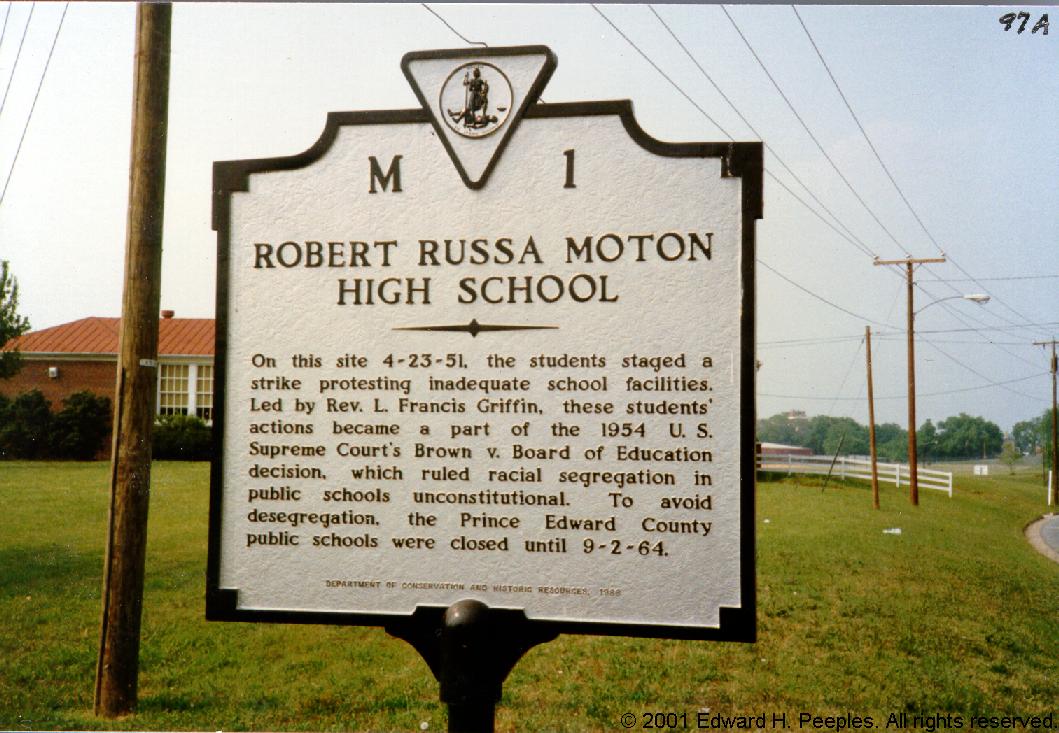
Moton HS historical markerAnd, the venerable Carnival of Education, issue 118, was up earlier at NYC Educator, with good posts on laptops in school, parenting, administering, enduring, and everything else related to education. (Click on the photo for a larger image — it’s the historical marker at the former Robert R. Moton High School, in Prince Edward County, Virginia — where one of the most poignant of the cases against school segregation began, Davis vs. Prince Edwards County Schools — part of the Brown vs. Topeka Board of Education case decided in 1954. Photo from Virginia Commonwealth University.)

Carnival of Homeschooling 71 lolls, at On The Company Porch.

And, of course, if you wish to nominate a post for the next Fiesta de Tejas!, scheduled for June 2, just use this button:


Blog Carnival submission form - fiesta de tejas!

Have a good Mother’s Day — call all the mothers you know. Why be picky?


Fighting history hoaxes

May 11, 2007

Daily Kos I don’t get to daily. But here’s a post I did see that all history teachers ought to read, if only to raise their consciousness about the frauds that plague us every day: Help Fight Fake History that Powers the American Right.

Fight fake historyChris Rodda needs help supporting her research against all the old dogs of history revisionism, and the post from Troutfishing goes through most of the dishonor roll: D. James Kennedy, David Barton, Catherine Millard, and Chuck Norris

Rodda’s blog series can be found at Talk2Action.

My interest in getting history done right was kindled when high school teachers mentioned early versions of David Barton’s work — stuff that showed up on tests, though anyone who had read our texts and had a passing knowledge of real history would have known was in error. As a staffer in the U.S. Senate I had to got to read letters from people who bought the Barton tales lock, stock, and monkey barrel, and who consequently felt that everyone else on Earth was lying to them.

I wish Rodda luck.


Inherent evils of public education

May 11, 2007

Public schools have serious problems.  Regular readers here should know me as a defender of public education, especially in the Thomas Jefferson/James Madison model of a foundation stone for a free people and essential tool for good government in a democratic republic.

Can you take another view?  Here’s one that should offer serious material for thought:  How the Public School System Crushes Souls.

Tip of the old scrub brush to Pick the Brain.


Fiesta de Tejas #2 – Cinco de Mayo edition

May 6, 2007

Welcome back! The Midway here at the Fiesta offers eclecticism beyond your wildest expectations, all about Texas. No sonnets, no haiku, no limericks. No faux movie themes. Nothing but Texas posts.

This is an unintentional Cinco de Mayo edition. I’m late, and I apologize to everyone who dropped by on May 2 and was disappointed.

Cinco de Mayo celebrates one of the greatest victories of the U.S. Civil War, a battle fought by neither Confederate nor Union soldiers, nor even on U.S. soil — and a battle generally omitted from Civil War accounts in U.S. history books. On May 5, 1862, the loyal Army of Mexico defeated an invading army of French and French Foreign Legionnaires, using smarter battle tactics and superb discipline. Union Gen. Phillip Sheridan rushed arms to the Mexicans to complete the expulsion of the French. Mexican patriots in this way frustrated Napoleon III’s plans to supply the Confederate States of America, giving vital time to the Union forces to muster a large army and manufacture the weapons and other machines used to defeat the South. Here is a biased account from a group in San Marcos, Texas.

Such a history is politically incorrect in an age when people think U.S. citizens should stay in the U.S., Mexican citizens should stay in Mexico, and that our fates are not intertwined in North America as they were in the 1860s. Perhaps that is why the events celebrated by Cinco de Mayo are ignored, officially.

But such disputes are what history writing and discussion is all about.

What else might we learn, politically incorrect or otherwise, from a carnival of Texas history and Texana? Let’s see, in no particular order.

Texas stuff

P. M. Summer offers a straight ahead view of a classic Texas Stetson hat, at Pop’s! Hat! History, Texas, heritage, nostalgia and a twinge of eccentricity, all rolled into one.
P. M. Summers' Stetson, from his father.

Politics and law: The Lege is still in session, and unfortunately Molly Ivins has not risen that we know of. Making sense of the Texas Legislature is an art generally beyond my ken. Others make a good stab, though. Capitol Annex explains the odd bill proposed to make it legal for kids to show their religion in public schools. It’s an odd bill because it grants no new rights, nothing in it is not already legal under state and federal laws, unless there is a hidden clause for proselytizing. Can you find such a clause? The bill has been delayed — stay tuned to see whether it passes, and in what form.

Here’s another view of the bill from South Texas Chisme.

Over at Kissmybigbluebutt, we get the modern lowdown on another Texas tradition, the unconcealed carry. Check the date — there is no such thing as “May Fool’s,” right?

Grits for Breakfast found a bright spot at the Texas Youth Commission, the bunch that runs the “camps” for youth offenders where allegations of abuse have mushroomed in the past year, and which has been forced to release many kids. This is about the only bright spot in this long, sad saga (see this post, and follow links, from DallasSouthBlog, for example).

Education: TexasEd is a site by a Texas home schooler, but which spends a lot of time looking at education policy in Texas, generally — a good site during a legislative session, as demonstrated by this short post on attempts by private schools to get the state to pay for athletic championship series by private schools.

Run, Rick! Run! — Pink Dome found this photo of Texas Gov. Rick Perry. In the red shirt.

Preventing abuse of the Texas flag: It’s nice to discover another group concerned about flag etiquette. I’m pleased to refer questions about Texas flag etiquette to another blog — The Daily Flag. (I also note some history posts from this site, below.)

Real story, real immigrant, real lawyer: Dallas is a wilderness? Perhaps to an immigrant, it may appear unfriendly. Wilderness in the City featured a short story about a lawyer getting a favorable result in an immigration case. Check your stereotypes at the courtroom door.

SMU professors stood up for science, but the “conference” on intelligent design proceeded anyway. Texas physician and blogger Dr. Zach attended and reported on the events. This will figure into the textbook adoption process in Texas, for biology text books, mark my words. At Goosing the Antithesis, Dr. Zack covered the event in a series of posts: Michael Behe, Lee Strobel, Jay Richards, Stephen Meyer, Q&A session, and Dr. Zach’s final thoughts.

Texas defined, perhaps ambiguously: Georgia O’Keefe meets the Beverly Hillbillies, at Chatoyance. (I’m assuming the photo was taken in Texas.)

Texas history

Kay Bell is at it again at Don’t Mess With Taxes. Her San Jacinto Day post on April 21, “Texas Triumphant,” lays out the story of the battle that won Texas independence from Mexico — the Texians lost the Battle of the Alamo, remember, and then surrendered and were slaughtered at Goliad. San Jacinto was the place Sam Houston got the drop on Santa Anna and the larger force, the great Army of Mexico. It was the place, Kay might say, where “Don’t Mess With Texas” first got meaning. In past years, Texas seriously celebrated the day, before Texas high school history standards downplayed the Texas Revolution.

The Daily Flag has a series on the Battle of San Jacinto, with several photos of this year’s re-enactment. Here is the last of the series, with links to the others.

Is it fair to point to a podcast? Let’s see if anyone complains. Over at The Texana Review, Ed Blackburn has a podcast interview with William Keller, the director of the Houston History Project. This couples two of my favorite causes, local history, and pushing technology. If you haven’t listened to podcasts, it’s time to start — do it here and now. Especially if you’re a high school teacher of history, economics, geography, government or some other topic, you need to be using podcasts. No, not just listening to them — using them. What do you think all those iPods are for?

While you’re at The Texana Review, you may want to check out Blackburn’s podcasts on the history of the Texas Rangers, focusing on Joaquin Jackson’s book, One Ranger: A Memoir. Even 7th grade students can get interested in the history of the Rangers.

Kicks on Route 66: One of my favorite blogs is Route 66 News, because it’s well done, tightly focused on Route 66, current and informative. Not every post interests me, but I always find something. Here Route 66 News talks about a photo shoot at the famous Cadillac Ranch in West Texas, to promote seatbelt use in Texas — a photo shoot sent awry by a hungry llama. This is Texas — no, no one could make this stuff up if it weren’t true.

There were complaints (well, at least one) that we didn’t cover Janis Joplin enough in the last carnival. Well, I didn’t find much new out in blogdom this time, either — so I may as well include my own post here, noting the creation of a self-guided Janis Joplin tour of Port Arthur, Texas, her home town. Texas music continues to be under-covered by blogs. I’m probably missing some good ones, but there could be a lot more, especially with an eye to what could be used in a Texas history classroom. (Hint: Send me notes on good posts you find!)

And this one just under the wire: Tom Michael lives near that far west Texas town of Marfa, city of lights, so to speak, and near the some-might-think-oddly-named Texas city of Alpine. He’s been guest blogging on a blog out of North Carolina called MisterSugar, and he has a post that captures the Texas spirit amazingly well, showing Texas pride bordering on hubris, love of religion beyond the point of rationality, willingness to change, and just old Texas orneriness: “Texas.”

That’ll wrap it up for this edition of the Fiesta de Tejas!, a blog carnival of Texas history and Texana. Please send nominations for posts for the next Fiesta to me, or better, to the Blog Carnival site set up for the purpose: Nominate a blog post to the Fiesta de Tejas! (that’s http://blogcarnival.com/bc/submit_1298.html)

We still need a logo.

I’d be happy to turn hosting opportunities over to anyone who’d like to take a stab.

The next edition is planned for June 2, 2007, with entries due at midnight your time on May 31, 2007. Remember you may nominate the posts of others — please do!


Blog Carnival submission form - fiesta de tejas!


Technorati tags:
, .


Digging deeper into history of the South and civil rights movement

May 2, 2007

Hurry over the New York Times site before the article goes into the “gotta-pay-to-see” bin, and read the story by Patricia Cohen about other stories beyond the classic race confrontations, from the South, during the Civil Rights Movement:  “Interpreting Some Overlooked Stories from the South.”

A new generation of historians is exploring some of the untold stories of the civil rights movement and its legacies: the experiences not of heroes or murderous villains, but of ordinary Southern whites. And their research is challenging some long-held beliefs about the nation’s political realignment and the origins of modern conservatism.

“You want to pry below these great narratives of good and evil and black and white,” said Jason Sokol, 29, who wrote “There Goes My Everything: White Southerners in the Age of Civil Rights, 1945-1975” (Alfred A. Knopf). “For those of us who didn’t live through it, there’s more of an effort to not simply celebrate the civil rights movement and how extraordinary it was, but to place it within the broader arc of the 20th century.”

Much history of the era remains to be written, especially local histories that students in high schools could get from local newspaper archives, from interviews, and other local sources.

This new wave of historians, many of them young, believe that one cannot understand today’s housing, schooling, economic development or political patterns without understanding the mostly apolitical white Southerners of that era. None of these scholars play down the inbred racism of the region, but they argue that the focus on race can obscure broader economic and demographic changes, like the dizzying corporate growth, the migration of white Northerners to the South and the shifting emphasis on class interests after legal segregation ended.


Quote of the moment: James Madison

May 2, 2007

James Madison Building, Library of Congress -- the official Madison Memorial


A popular Government, without popular information, or the means of acquiring it, is but a Prologue to a Farce or a Tragedy; or perhaps both. Knowledge will forever govern ignorance.

— James Madison in a letter to W. T. Barry, August 4, 1822


Global warming effects: More nasty bugs

May 1, 2007

This news can fit into curricula in several ways, in several courses: Insects have already evolved in response to climate shifts due to global warming.

The Boston Globe has a series on global warming, and a recent article detailed how mosquitoes on the Maine frontier have already changed their breeding seasons in response to warming weather.

A mosquito that can barely fly is one of only five known species that scientists say have already evolved because of global warming. The unobtrusive mosquito’s story illustrates a sobering consequence of climate change: The species best suited to adapting may not be the ones people want to survive.

Such news enhances biology studies of genetics and insects, geography studies of climate, animal dispersal patterns and disease and pest ranges (a subject more technically known as biogeography), and the articles lend urgency to studies of how governments react to natural crises, a topic suitable for government classes, economics, and U.S. and world history.

Global Warming illustration Click on the thumbnail to see four examples of genetic change credited to global warming. (Graphic by David Butler of the Boston Globe staff.) Read the rest of this entry »


Quote of the moment: Education beats incarceration

May 1, 2007

From an editorial in the Ogden, Utah, Standard-Examiner:

Inmates who receive a degree while in prison have very low recidivism rates. Utah State University’s prison-degree program for inmates underscores that success. In the past 20 years, 91 inmates have received degrees from USU. … not one of the graduates has re-offended.

The editorial urges the Utah Legislature to continue the program.  Without legislative action, the program ends in the autumn.

Tip of the old scrub brush to LaVarr Webb’s Utah Policy Daily, May 1, 2007.


Carnival catch up, again

May 1, 2007

Founders Hall, Girard College, Philadelphia Founders Hall, Girard College, Philadelphia. This is the school for Philadelphia’s underprivileged children, established by the will of Stephen Girard, the man who bore the cost of the War of 1812 personally, when the U.S. Treasury was exhausted.

The Carnival of Education, coming regularly on Wednesdays, reminds us to pay attention to others. Notably, the Carnival of the Liberals, which comes monthly, is also available for our edification.

Compilations you should visit:

Soon enough, a new Fiesta de Tejas!