July 24 – Arrival Day: Journey’s not over until you get there; we are not there yet

July 24, 2015

There’s a lot of encore material here — I think about this in the middle of the summer, and July 24 is a good day to commemorate arrivals: It’s Arrival Day. It’s Touchdown Day.

July 24 – almost the end of the month, but not quite.

  • July 24, 1847: A larger contingent of Mormons, refugees from a literal religious war in Illinois and Missouri, entered into the Salt Lake Valley under the leadership of Brigham Young, who famously said from his wagon sick-bed, “This is the place; drive on!”

In Utah, July 24 is a state holiday, to celebrate the date in 1847 that the Mormon refugees arrived in Salt Lake Valley and began to set up their agriculture and schools.  In Salt Lake City, bands from across the state and floats from many entities form the Days of ’47 Parade.  When I marched with the Pleasant Grove High School Viking Band, the route was  5 miles.  We had only one band uniform, for winter — I lost nearly 10 pounds carrying a Sousaphone.

When the Mormons got to Salt Lake, after a couple of months’ trekking across the plains (then known as “The Great American Desert,” the Great Basin and the Mojave being little known), and after being on the run for well over a year, they got right down to priorities.  Summer was nearly gone, and crops had to be planted quick.  Within a couple of weeks, the Mormons dammed local streams to create irrigation systems to grow what they could before fall (this is, popularly, the first major crop irrigation set up in America); they’d started to lay out plans for settlements, with straight streets based on Cartesian-plane grids:  The first serious community planning?  And they began construction of schools, knowing education to be one of the most important attributes in the foundation of free societies, a position Mormons have reneged on recently in Utah.  Water, communities, schools.

Heck, that’s a good campaign platform today. It’s with sadness I note few people run on such a platform, instead begging voters to be afraid of others who are different in some fashion. Fear quenches no thirst, makes no place for families, nor educates any curious child. Utah’s Mormon pioneers were on the right track. We’ve run out of the ruts, and we are not there yet.

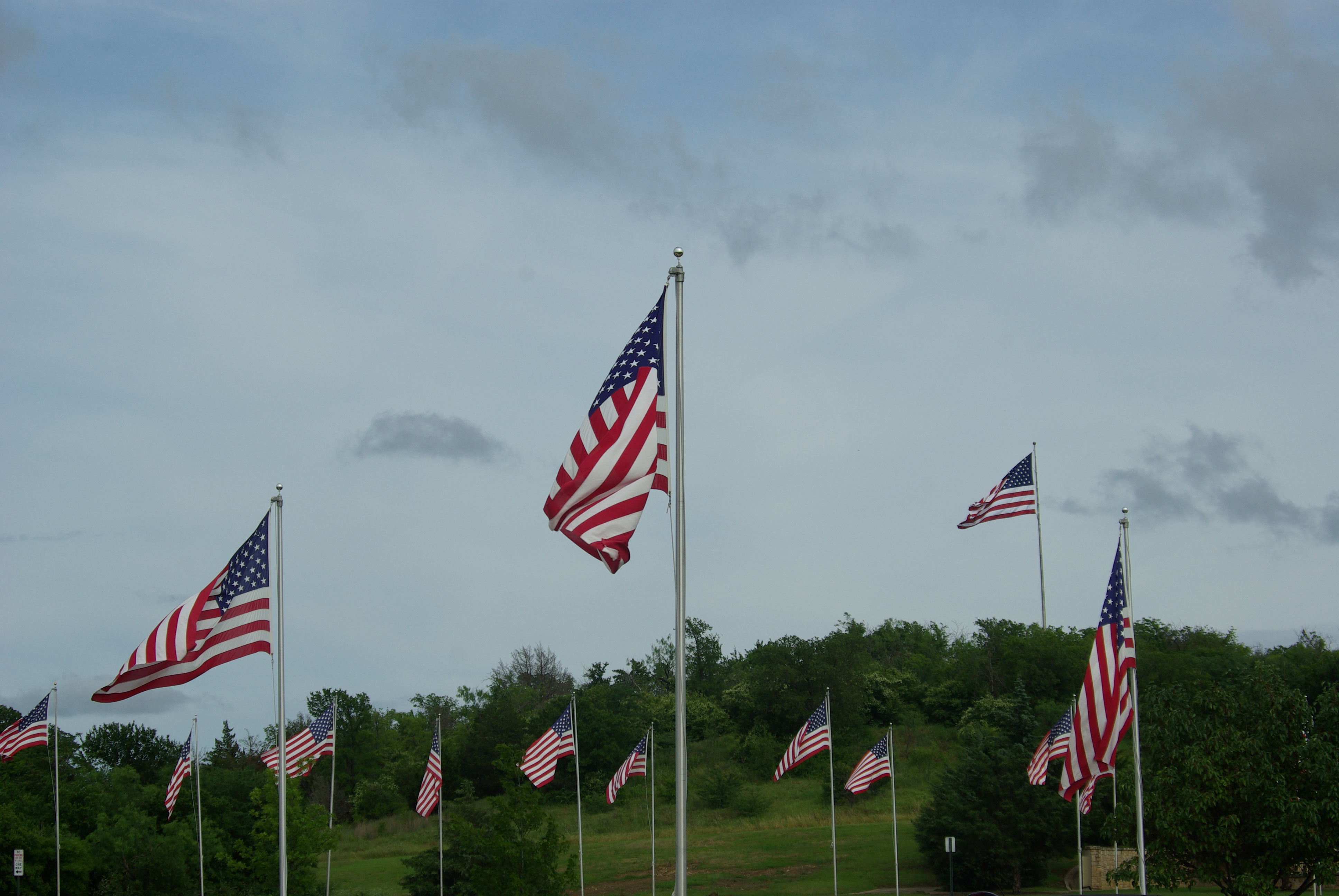
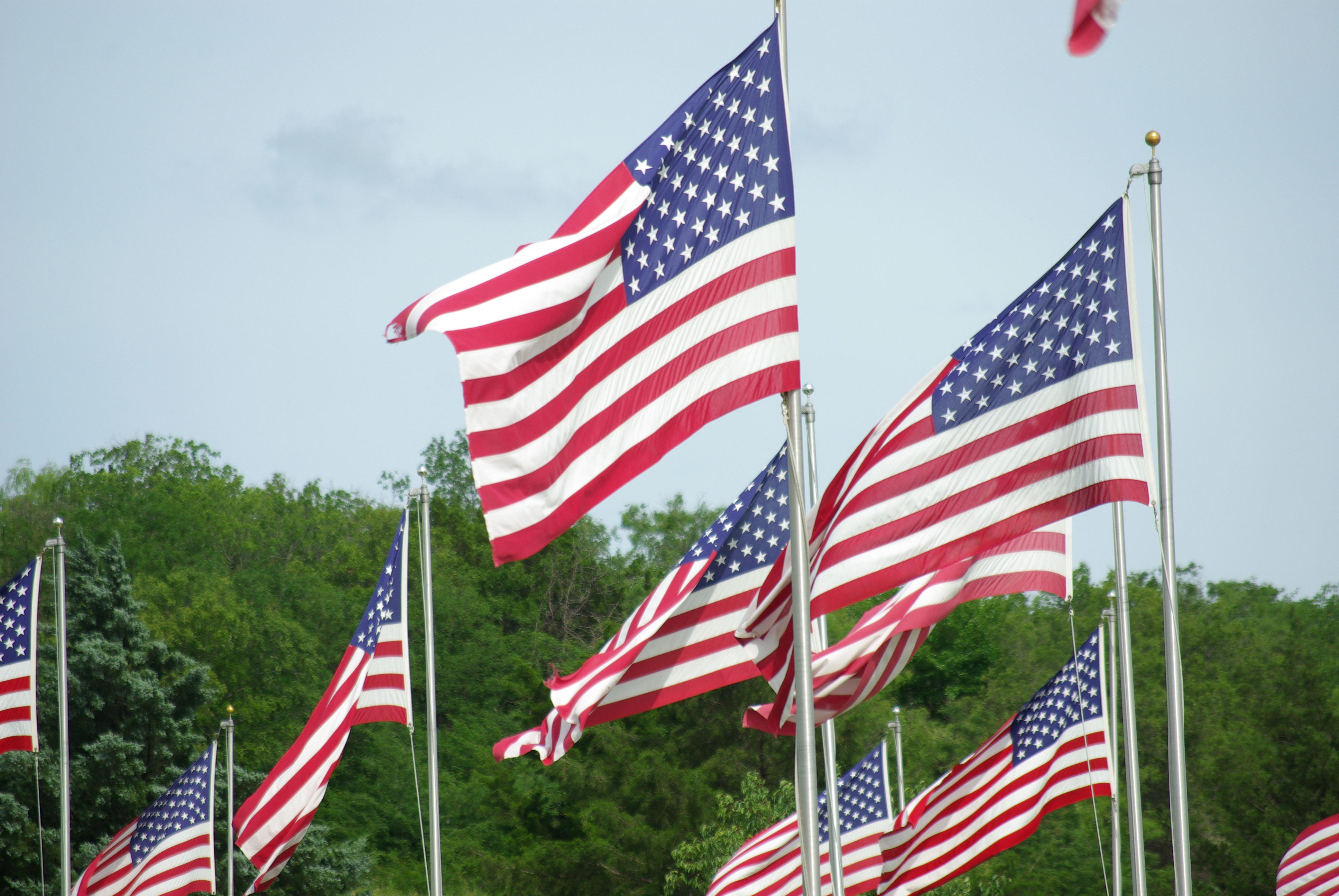
Utahns will be flying their U.S. flags today.  (Remember, President Obama proclaimed this a period of mourning, through July 25; flags should fly half-staff where possible.)

Maybe spending a few weeks struggling across a prairie and risking your life focuses you on the important stuff.  How would it improve America if we put more people on a bus to Omaha, put them out there, and said, “Hike to Salt Lake City from here.”

They’d focus.  Can we start with Paul Ryan, John Boehner and Mitch McConnell? Ted Cruz couldn’t make the journey. Donald Trump would die of sunburn. Wisconsin Gov. Ahab Walker would find no one to swindle, and talking down teachers and community builders wouldn’t be popular among fellow trekkers.

Ah, the good old days!

July 24 features a number 0f other arrivals, too.

From various “Today in History” features, AP, New York Times, and others, not in chronological order:

Buzz Aldrin walks on the moon, July 20, 1969

Buzz Aldrin walks on the moon, July 20, 1969 (Photo credit: Wikipedia)

  • July 24, 1969: Apollo 11 returned to the Earth, and splashed down in the Pacific Ocean, Michael Collins, Buzz Aldrin and Neil Armstrong — Aldrin and Armstrong having landed on the Moon.  In our celebrations of Apollo 11, and in our remembrances of President Kennedy, we may forget, though young kids rarely miss it, that Kennedy didn’t just say ‘Let’s put a guy on the Moon by 1970.’  Getting back safely was a key part of the challenge.

    First, I believe that this nation should commit itself to achieving the goal, before this decade is out, of landing a man on the moon and returning him safely to the earth. No single space project in this period will be more impressive to mankind, or more important for the long-range exploration of space; and none will be so difficult or expensive to accomplish.

    On July 24, 1969, the crew of Apollo 11 returned, safely.

Mormon Tabernacle Choir, and organ

Would there be a Mormon Tabernacle Choir, and organ, had the Mormons settled somewhere other than Utah? Wikipedia photo

  • July 24, 1866: Tennessee became the first of the Confederate States, the former “state in rebellion,” to be readmitted fully to the Union, following the end of the American Civil War. (Does Tennessee celebrate this anniversary in any way?)
  • July 24, 1911:  On July 24, 1911, American archeologist Hiram Bingham arrived at Machu Picchu in Peru.  We still don’t know all the reaons the Incas built that city on the top of very high mountains.  Cell service was not a factor.
  • July 24, 2005: Lance Armstrong won his seventh consecutive Tour de France bicycle race. Little did we know then, the journey wasn’t over. (Lance Armstrong is no relation to Neil Armstrong.  Did I need to point that out?)
English: Cropped image of Richard Nixon and Ni...

Nixon advance man William Safire claimed later than he’d set up the famous “debate” between Eisenhower’s Vice President Richard Nixon and Soviet Communist Party Premier Nikita Khrushchev, at the American National Exhibition in Moscow, 1959. Nixon argued that the technology on display made better the lives of average Americans, not just the wealthiest. (Photo credit: Wikipedia)

  • July 24, 1959: Visiting Moscow, USSR, to support an exhibit of U.S. technology and know-how, Vice President Richard Nixon engaged Soviet Communist Party Secretary and Premier Nikita Khrushchev in a volley of points about which nation was doing better, at a display of the “typical” American kitchen, featuring an electric stove, a refrigerator, and a dishwasher.  Khrushchev said the Soviet Union produced similar products; Nixon barbed  back that even Communist Party leaders didn’t have such things in their homes, typically, but such appliances were within the reach of every American family.  It was the “Kitchen Debate.”Try explaining this to high school U.S. history students.  The textbooks tend to avoid this story, because it stops the class.  That’s a sign it should be used more, I think.  Does the Common Core even touch it?Nixon’s arrival as a major political force in the Cold War grew clear from this event.  The pragmatic stakes of the Cold War were drawn in stark contrast, too.  It’s interesting to ponder that microwave ovens were not part of the exhibit.

Cover of Time Magazine, July 22, 1974, explaining the showdown between President Richard Nixon and the Special Prosecutor, playing out in the U.S. Supreme Court. Image copyright by Time Magazine.

  • July 24, 1974: In U.S. vs. Nixon, The U.S. Supreme Court ruled unanimously that President Richard Nixon had to turn over previously-secret recordings made of conversations in the White House between Nixon and his aides, to the special prosecutor appointed to investigate the Watergate affair and cover-up.  Nixon would resign the presidency within two weeks, the only president to leave office by resignation.
  • July 24, 1975: An Apollo spacecraft splashed down after a mission that included the first link-up of American and Soviet spacecraft.  (The Apollo mission was not officially numbered, but is sometimes called “Apollo 18″ — after Apollo 17, the last trip to the Moon.)

More:

Salt Lake City, Utah, L. Hollard, photographer, 1912. Taking the Long View: Panoramic Photographs, 1851-1991

Library of Congress image caption: Mormon Temple Grounds, Salt Lake City, Utah, L. Hollard, photographer, 1912. Taking the Long View: Panoramic Photographs, 1851-1991 [The building on the far right? That’s the old Hotel Utah, where Kathryn and I had a great wedding reception with plenty of champagne considering our many Mormon family and friends — some of whom may have sampled a little to see what they usually missed. It was such a great reception that the owners of the hotel, the LDS Church, stopped holding wedding receptions there and shortly closed it as a hotel; now it’s an office building with a fantastic lobby that makes any sensible person wistful for what used to be.]

Hoping not to arrive painfully on touchdown:
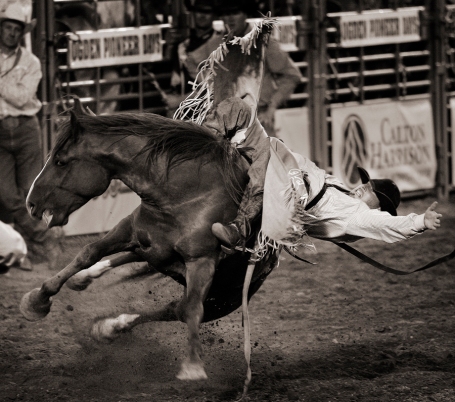
Ogden, Utah, Pioneer Days Rodeo Friday, July 19, 2013.  Photo by Brian Nicholson

Bareback rider Jerad Schlegel of Burns, Colorado, clings to his horse as it falls to the dirt during a re-ride at the Ogden Pioneer Days Rodeo Friday, July 19, 2013. Photo by Brian Nicholson (go see his blog)

Yes, this is mostly an encore post. Fighting ignorance requires patience.

Yes, this is mostly an encore post. Fighting ignorance requires patience.


Flags at half-staff to honor Chattanooga military dead, starting July 21

July 21, 2015

Flag at half-staff at the White House. (File photo, of an earlier occasion)

Flag at half-staff at the White House. (File photo, from 2004)

President Barack Obama called for Americans to fly the national flag at half-staff for five days, in honor of the victims of the shootings at military recruiting offices in Chattanooga, Tennessee:

The White House
Office of the Press Secretary

For Immediate Release                                                                         .July 21, 2015

Presidential Proclamation — Honoring the Victims of the Tragedy in Chattanooga, Tennessee

HONORING THE VICTIMS OF THE TRAGEDY IN CHATTANOOGA, TENNESSEE

– – – – – – –

BY THE PRESIDENT OF THE UNITED STATES OF AMERICA

A PROCLAMATION

Our thoughts and prayers as a Nation are with the service members killed last week in Chattanooga.  We honor their service.  We offer our gratitude to the police officers and first responders who stopped the rampage and saved lives.  We draw strength from yet another American community that has come together with an unmistakable message to those who would try and do us harm:  We do not give in to fear.  You cannot divide us. And you will not change our way of life.

We ask God to watch over the fallen, the families, and their communities.  As a mark of respect for the victims of the senseless acts of violence perpetrated on July 16, 2015, in Chattanooga, Tennessee, by the authority vested in me as President of the United States by the Constitution and the laws of the United States of America, I hereby order that the flag of the United States shall be flown at half-staff at the White House and upon all public buildings and grounds, at all military posts and naval stations, and on all naval vessels of the Federal Government in the District of Columbia and throughout the United States and its Territories and possessions until sunset, July 25, 2015.  I also direct that the flag shall be flown at half-staff for the same length of time at all United States embassies, legations, consular offices, and other facilities abroad, including all military facilities and naval vessels and stations.

IN WITNESS WHEREOF, I have hereunto set my hand this twenty-first day of July, in the year of our Lord two thousand fifteen, and of the Independence of the United States of America the two hundred and fortieth.

BARACK OBAMA

Michigan Gov. Rick Snyder’s e-mail notices call for the same for Michigan:

Governor Rick Snyder

Gov. Rick Snyder joins White House in honoring service members killed in Chattanooga

Michigan Office of the Governor sent this bulletin at 07/21/2015 04:02 PM EDT

Gov. Rick Snyder joins White House in honoring service members killed in Chattanooga

Tuesday, July 21, 2015

LANSING, Mich. – Gov. Rick Snyder joins President Obama in calling for all U. S. flags to be lowered to half-staff today, July 21 through Saturday, July 25, in recognition of the five service members killed in last week’s Chattanooga, TN shooting.

The flag should be returned to full-staff on Sunday, July 26.

“This senseless act of violence is a tragedy resulting in the loss of five courageous men dedicated to protecting the freedoms of our country,” Snyder said. “On behalf of all Michiganders, I thank them for their service. We join with their families and the entire military community in honoring their bravery and mourning their loss.”

The four U.S. Marines and U.S. Navy Sailor were shot in an attack at two military centers in Chattanooga on July 16.

When flown at half-staff or half-mast, the U. S. flag should be hoisted first to the peak for an instant and then lowered to the half-staff or half-mast position. The flag should again be raised to the peak before it is lowered for the day.

Update: Boy Scouts of America released news that Marine Staff Sergeant David Wyatt was also an Eagle Scout.


What dates do we fly the flag in July?

July 15, 2015

Austin (Texas) American Statesman blog, 2011: Left to right, Flo Gonzalez, 17, Sarah Lewis, 17, Tyler Soberanes, 15, and Jessica Knowles, 16, of the Georgetown High School ROTC Honor Guard, march down Main Street at the Fourth of July Parade. - See more at: http://photoblog.statesman.com/waving-the-flag-on-the-fourth-of-july#sthash.6a5xZKIo.dpuf

Austin (Texas) American-Statesman blog, 2011: Left to right, Flo Gonzalez, 17, Sarah Lewis, 17, Tyler Soberanes, 15, and Jessica Knowles, 16, of the Georgetown [Texas] High School ROTC Honor Guard, march down Main Street at the Fourth of July Parade. – See more at: http://photoblog.statesman.com/waving-the-flag-on-the-fourth-of-july#sthash.6a5xZKIo.dpuf – Photo surely is copyrighted by photographer Jay Janner and the American-Statesman

July 4. Surely everyone knows to fly the flag on Independence Day, the anniversary of the Declaration of Independence.*

In the month of the grand patriotic celebration, what other dates do we fly the U.S. flag? July 4 is the only date designated in the Flag Code for all Americans to fly the flag.  Three states joined the union in July, days on which citizens of those states should show the colors, New York, Idaho and Wyoming.

Plus, there is one date many veterans think we should still fly the flag, Korean War Veterans Armistice Day on July 27.  Oddly, the law designating that date urges flying the flag only until 2003, the 50th anniversary of the still-standing truce in that war.  But the law still exists.  What’s a patriot to do?

Patriots may watch to see whether the president issues a proclamation for the date.

Generally we don’t note state holidays or state-designated flag-flying events, such as Utah’s Pioneer Day, July 24, which marks the day in 1847 that the Mormon pioneers in the party of Brigham Young exited what is now Emigration Canyon into the Salt Lake Valley. But it’s a big day in Utah, where I spent a number of years and still have family. And I still have memories, not all pleasant, of that five-mile march for the Days of ’47 Parade, in that wool, long-sleeved uniform and hat, carrying the Sousaphone. Pardon my partisan exception. Utahns will fly their flags on July 24.

  • Idaho statehood, July 3 (1890, 43rd state)
  • Independence Day, July 4
  • Wyoming statehood, July 10 (1890, 44th state)
  • New York statehood, July 26 (1788, 11th state)
  • National Korean War Veterans Armistice Day, July 27 (flags fly at half-staff, if you are continuing the commemoration which was designated in law only until 2003)

More:

_____________

* July 4? But didn’t John Adams say it should be July 2?  And, yes, the staff at Millard Fillmore’s Bathtub sadly noted that, at the Georgetown, Texas, July 4 parade in 2011 pictured at top, it appears no one saluted the U.S. flag as it passed, as the Flag Code recommends. MFB’s been fighting flag etiquette ignorance since 2006. It’s taking much, much longer than we wished.


Fly your flag today, July 4, 2015

July 4, 2015

Follow the example of the young Gerald Ford.

1929: #President Gerald R Ford Jr holding flag with Eagle Scout Guard of Honor Mackinac Island State Park #Michigan. Tweet from America's Gallery

1929: #President Gerald R. Ford, Jr. holding flag with Eagle Scout Guard of Honor, Mackinac Island State Park, #Michigan. Tweet from America’s Gallery

Flags up in the morning, down at sunset.

Have a good, safe and joyful Fourth of July.


June 25: Virginians fly flags to commemorate statehood, and Col. Van T. Barfoot

June 24, 2015

June 25 is Virginia Statehood Day.  The U.S. Flag Code urges Americans to fly the U.S. flag on the statehood date of their states.

Virginia is counted as the 10th state, by virtue of the Virginia ratifying convention’s having voted to ratify the U.S. Constitution on June 25, 1788 — over the strong objections of Gov. Patrick Henry, and with the skilled legislative work of James Madison.

The Constitution became effective upon the ninth state’s ratification, but Virginia, being the largest state in the union at the time, was considered a make-or-break vote.

June 25 is the last U.S. flag flying date in June 2015.

So, Virginians: Fly your U.S. flags on June 25, as Col. Van T. Barfoot did every day until his death.

From the Washington Post: Retired Col. Van T. Barfoot, a Medal of Honor recipient, and his daughter Margaret Nicholls lower the flag outside Barfoot's home in the Sussex Square subdivision in Henrico County, Va., in 2009. Barfoot died March 2 [2012] at a hospital in Richmond. He was 92. (Photo by Eva Russo/AP)

From the Washington Post: “Retired Col. Van T. Barfoot, a Medal of Honor recipient, and his daughter Margaret Nicholls lower the flag outside Barfoot’s home in the Sussex Square subdivision in Henrico County, Va., in 2009. Barfoot died March 2 [2012] at a hospital in Richmond. He was 92. (Photo by Eva Russo/AP)”

You may remember the story of Col. Barfoot. As a veteran of World War II, Korea and Vietnam, he flew Old Glory every day. In 2009 his Henrico County, Virginia homeowners association complained, ordered him to stop flying the U.S. flag and take down his flag pole, erected in violation of HOA “curb appeal” rules.

Col. Barfoot refused.  Eventually the public outcry, including pressure from President Barack Obama, got the HOA to back down.  Obama said Barfoot was a good example, and had earned the right to fly Old Glory.

Barfoot had a particularly compelling case to fly the flag. Barfoot was awarded the Congressional Medal of Honor for his service in Italy, against German troops, in 1944.  The Washington Post explained: 

Early in the war, he participated in the Army’s invasion of Italy. As his unit moved inland, the soldiers took up defensive positions near Carano.

On May 23, 1944, Col. Barfoot was ordered to lead an assault on German positions. He went out alone and crawled to within feet of a German bunker.

According to his Medal of Honor citation, he tossed a grenade inside, killing two Germans and wounding three others. He then moved to another bunker nearby and killed two more German soldiers with his submachine gun while taking three others prisoner. A third machine gun crew, watching Col. Barfoot’s methodical assault, surrendered to him. In all, 17 Germans gave themselves up to Col. Barfoot.

In retaliation, the Germans organized a counterattack on Col. Barfoot’s position, sending three tanks toward him.

Col. Barfoot grabbed a bazooka grenade launcher and stood 75 yards in front of the leading tank. His first shot stopped it in its tracks. He then killed three of the German tank crew members who had attempted to escape.

The other two tanks, witnessing the destruction, abruptly changed directions, moving away from Col. Barfoot. Returning to his platoon, he helped carry two wounded U.S. soldiers almost a mile to safety.

Commending his “Herculean efforts,” Col. Barfoot’s citation praised his “magnificent valor and aggressive determination in the face of pointblank fire.”

Col. Barfoot served in the Korean War and later in Vietnam as a helicopter pilot. His other military decorations included the Silver Star; two awards of the Legion of Merit; the Bronze Star; three awards of the Purple Heart; and 11 awards of the Air Medal.

So, Virginians, would it inconvenience you much to fly your U.S. flags today — in honor of Col. Van T. Barfoot, as well as in honor of your state’s entry into the Union?

What do we do to deserve the loyalty and service of such men?


June 15: Should we fly the flag for Arkansas statehood?

June 15, 2015

Arkansas statehood day is June 15 — Arkansas became the 25th state in 1836. Arkansas residents fly their U.S. flags today in commemoration of the event, the 179th anniversary.

U.S. and Arkansas flags fly at the State Capitol; image from the Arkansas Secretary of State.

U.S. and Arkansas flags fly at the State Capitol; image from the Arkansas Secretary of State.

But I see in news reports stories about how the actual law passed a couple of days earlier, though news didn’t get to Arkansas until about July 4.  Is June 15 the real Arkansas statehood day?

What say you, Arkansas historians? Can you explain it?

We’re flying our flags anyway, for National Flag Week, which is celebrated the week in which Flag Day occurs, June 14.

More:


Flag Day 2015! Fly your flag all week

June 14, 2015

Of course you know to fly your flag on June 14 for Flag Day — but did you know that the week containing Flag Day is Flag Week, and we are encouraged to fly the flag every day?

Clifford Berryman's 1901 Flag Day cartoon, found at the National Archives:

Clifford Berryman’s 1901 Flag Day cartoon, found at the National Archives: “In this June 14, 1904, cartoon, Uncle Sam gives a lesson to schoolchildren on the meaning of Flag Day. Holding the American flag in one hand, Uncle Sam explains that the flag has great importance, unlike the Vice Presidency, which he ridicules in a kindly manner. (National Archives Identifier 6010464)”

Our National Archives has a blogged history of Flag Day pointing out it was a teacher who started Flag Day celebrations.

On June 14, 1885, Bernard J. Cigrand placed a 10-inch, 38-star flag in a bottle on his desk at the Stony Hill School in Ozaukee County, Wisconsin. The 19-year-old teacher then asked his students to write essays on the flag and its significance to them. This small observance marked the beginning of a long and devoted campaign by Cigrand to bring about national recognition for Flag Day.

And so we do, today, still.


June 1: Fly your flags today in Kentucky and Tennessee for Statehood Day

June 1, 2015

Our laws on flag flying encourage citizens to fly U.S. flags on specific dates, and on the date of statehood of the state in which a citizen lives.

Kentucky joined the union on June 1, 1792, the 15th state.  Tennessee joined four years later, on June 1, 1796, becoming the 16th state.

Fly your flags today in Kentucky and Tennessee — or wherever Kentuckians or Tennesseeans may be — in honor of statehood.

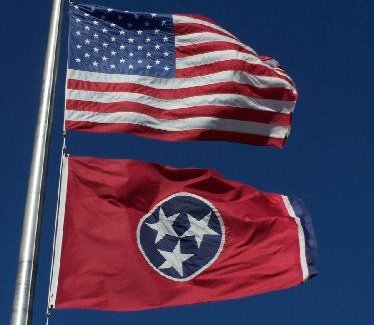
U.S. and Tennessee flags flying together on one staff.  Photo by J. Stephen Conn

U.S. and Tennessee flags flying together on one staff. Photo by J. Stephen Conn

Kentucky's state flag, by Gage Skidmore

Kentucky’s state flag features a Native American and European colonist standing together, and the state motto, “United We Stand, Divided We Fall.” Photo by Gage Skidmore

Kentucky’s admission to the union pushed the U.S. flag to 15 stars and 15 stripes.   President George Washington signed the law that authorized the U.S. flag be expanded to 15 stripes in early 1794.  I’ve not pinned down the history of what happened next.  So far as I know there was no law expanding the flag to 16 stripes, and in 1818, Congress said the flag would be 13 stripes, and stars equal to the number of states.

A 15-striped Star-spangled Banner that flew over Fort McHenry in Baltimore Harbor in 1814 and inspired Francis Scott Key to write the poem that is now the lyric to our national anthem.  President James Monroe signed the 13-stripe law in 1818.

What happened in between?  I suspect there are a lot of 15-stripe flags, but it wouldn’t surprise me to find a 16-stripe flag somewhere.  A variety of stars-and-stripes flags cropped up, which the 1818 law was intended to squelch.

Residents of the Bluegrass State and the Volunteer State should fly their flags today, in honor of their state’s having joined the union on June 1.

More:

http://twitter.com/hoyosplacido3/status/604008354571259904


Yes, this is mostly an encore post. Fighting ignorance requires patience.

Yes, this is mostly an encore post. Fighting ignorance requires patience. And repetition.


On what dates should we fly the flag in June?

May 31, 2015

Betsy Ross house in Philadelphia, by tradition the birthplace of Old Glory.

Betsy Ross house in Philadelphia, about 1900, by tradition the birthplace of Old Glory. “Happy Flag Day from Shorpy! Detroit Publishing Co. glass negative.” Image via Shorpy. Betsy Ross House is a traditional site for Philadelphia’s celebration of Flag Day.

June holds only two days designated for flying the U.S. flag out of the specific days mentioned in the U.S. Flag Code, and six statehood days, when residents of those states should fly their flags.  Plus, there is National Flag Week.

Two Flag Code-designated days:

  • Flag Day, June 14
  • Fathers Day, third Sunday in June (June 21)

Several states celebrate statehood. New Hampshire, Virginia, Arkansas, Kentucky, Tennessee and West Virginia celebrate statehood; Kentucky and Tennessee share the same date.

  • Kentucky, June 1 (1792, 15th state)
  • Tennessee, June 1 (1796, 16th state)
  • Arkansas, June 15 (1836, 25th state)
  • West Virginia, June 20 (1863, 35th state)
  • New Hampshire, June 21 (1788, 9th state), and
  • Virginia, June 25 (1788, 10th state)

Additionally, Congress passed a resolution designating the week in which June 14th falls as National Flag Week, and urging that citizens fly the flag each day of that week.  In 2015 that would the week of June 14, which falls on Sunday, through June 20.

Nine designations covering 10 separate days, listed chronologically:

  1. Kentucky and Tennessee statehood, June 1
  2. Flag Day, June 14; National Flag week, June 14 to 20
  3. Arkansas statehood, June 15 (duplicating National Flag Week)
  4. West Virginia statehood, June 20 (also duplicating National Flag Week)
  5. Fathers Day, June 21
  6. New Hampshire statehood, June 21 (duplicating Fathers Day)
  7. Virginia statehood, June 25

Tip of the old scrub brush to Mike’s Blog Rounds at Crooks and Liars — thanks for the plug!


May 29, Rhode Island Statehood Day; fly your flags in Providence

May 29, 2015

https://upload.wikimedia.org/wikipedia/commons/thumb/0/0d/Independent_Man_Providence_Capitol.JPG/800px-Independent_Man_Providence_Capitol.JPG

The Independent Man stands atop the Rhode Island State House in Providence. Photo by Lgalbi; Public Domain via Wikimedia Commons

May 29 is statehood day for Rhode Island, the 13th of the original colonies to join the union.

It’s interesting history to me. Rhode Island was rogue enough at the time — many called it “Rogues’ Island” — the colony sent no delegates to the convention in Philadelphia that wrote the Constitution.  One may wonder why the delegates even bothered to include the colony in the process. But, they did.

Not that it mattered to creation of the United States.  New Hampshire was the 9th state to ratify the document, on June 21, 1788, making it effective under the rules.  Rhode Island did not ratify the Constitution until May 29, 1790 — two years after the Constitution took effect, and about a year after the new government started operation and inaugurated George Washington the first president.  Rhode Island joined the nation already steaming along.

Rear of Rhode Island's Capitol, flying the Rhode Island state flag to the left, and the U.S. and POW flags on the right.  (Just try to find photos of the U.S. and Rhode Island flags together . . . please.)

Rhode Island State Capitol, north facade, by Garrett A. Wollman; bostonradio.org via Wikimedia. Rhode Island’s state flag flies to the left, and the U.S. and POW flags on the right. (Just try to find photos of the U.S. and Rhode Island flags together . . . please.)

Does Rhode Island celebrate Statehood Day? I don’t know. Historian Laureate Patrick T. Conley wrote a column for the Providence Journal revealing that Rhode Island was, like Texas, an independent republic for a time. This news won’t rest well with Texans. Other Rhode Island celebrations may occur, but they’re tough to learn about.

More:


Memorial Day 2015 – Fly your flag today

May 25, 2015

U.S. flags flying at the Dallas-Fort Worth National Cemetery, for Memorial Day 2015. Photo by Ed Darrell. Please use.

U.S. flags flying at the Dallas-Fort Worth National Cemetery, for Memorial Day 2015. Photo by Ed Darrell. Please use.

Fly your flag today for Memorial Day.

On Memorial Day, flags should be flown at half-staff until noon, then raised to full staff (and retired at sunset).

Just a reminder: When posting a flag to half-staff, it should be raised with gusto to full staff, then slowly lowered to the half-staff position.  On Memorial Day, when changing the flag’s position at noon, simply raise the flag briskly to full staff.  At retirement, the flag should be lowered in a stately fashion.

U.S. flags flying at the Dallas Fort Worth National Cemetery, for Memorial Day 2015.  You may use this photo.

U.S. flags flying at the Dallas Fort Worth National Cemetery, for Memorial Day 2015. You may use this photo.


Fly your flags May 23 for statehood in South Carolina and Wisconsin

May 23, 2015

Two states on the same day?

Not exactly.

South Carolina achieved statehood on May 23, 1788, according to the date the state’s people ratified the Constitution. South Carolina was number eight; the Constitution became effective on the ninth ratification.

Wisconsin joined the union in 1848 — but it did name its capital city after James Madison, the Father of the Constitution.

Same day, 60 years apart.

Residents of a state are urged to fly the U.S. flag on the state’s anniversary of entering the union.

U.S. and South Carolina flags. Fox News file photo

U.S. and South Carolina flags. Fox News file photo

Judging by what’s available in on-line news, it appears both South Carolina and Wisconsin don’t have plans to celebrate statehood much, in 2015.

Is this a litmus test?  Will only true patriots fly their flags in the two states?

Or after National Maritime Day on May 22, and with Memorial Day on May 25, are citizens suffering from flag-flying fatigue?

U.S. and Wisconsin flags fly at the Wisconsin Capitol Building in Madison. Wisconsin Legislature image.

U.S. and Wisconsin flags fly at the Wisconsin Capitol Building in Madison. Wisconsin Assembly image.

Here in Texas, Rotary Clubs offer a service to put flags up on flag-flying days, for an annual fee. Boy Scout groups and others service organizations take routes to deliver flags on poles; on weekends, flags go up on Friday, and come down at the end of the holiday, Monday night in this case.

Heck, that covers National Maritime Day, Wisconsin and South Carolina Statehood Days, and Memorial Day (without the half-staff exercise).

A patriot could get lost in all this flag flying.


Merchant mariners bring us the world; fly your flag for National Maritime Day, May 22

May 22, 2015

SS Savannah, first U.S. merchant steam ship to complete an Atlantic crossing, having set sail on May 22, 1819.  gCaptain image

SS Savannah, first U.S. merchant steam ship to complete an Atlantic crossing, having set sail on May 22, 1819. gCaptain image

You’ve got your flag up already? Good.

Most people don’t even know about National Maritime Day, May 22 — let alone President Obama issued a proclamation to fly the U.S. flag in honor of merchant marines.

USS Slater Color Guard member Art Dott of Colonie carries the American flag Sunday during the presentation of the colors at the start of a National Maritime Day ceremony on the boat in Albany. Dott, a culinary specialist chief, is a 350year member of the Navy Reserve. ( Philip Kamrass / Times Union)

From the Albany, New York, Times-Union, 2011: USS Slater Color Guard member Art Dott of Colonie carries the American flag Sunday during the presentation of the colors at the start of a National Maritime Day ceremony on the boat in Albany. Dott, a culinary specialist chief, is a 35-year member of the Navy Reserve. ( Philip Kamrass / Times Union)


National Maritime Day is a United States holiday created to recognize the maritime industry. It is observed on May 22, the date in 1819 that the American steamship Savannah set sail from Savannah, Georgia on the first ever transoceanic voyage under steam power. The holiday was created by the United States Congress on May 20, 1933.

President Obama’s proclamation:

Presidential Proclamation – National Maritime Day, 2015

NATIONAL MARITIME DAY, 2015

– – – – – – –

BY THE PRESIDENT OF THE UNITED STATES OF AMERICA

A PROCLAMATION

For over two centuries, proud mariners have set sail in defense of our people and in pursuit of opportunity.  Through periods of conflict and times of peace, our Nation has relied on the United States Merchant Marine to transport goods to and from our shores and deliver troops and supplies around the world.  On National Maritime Day, we honor the women and men who take to the seas to boost our economy and uphold the values we cherish.

Our Nation is forever indebted to the brave privateers who helped secure our independence, fearlessly supplying our Revolutionary forces with muskets and ammunition.  Throughout history, their legacy has been carried forward by courageous seafarers who have faithfully served our Nation as part of the United States Merchant Marine — bold individuals who emerged triumphant in the face of attacks from the British fleet in the War of 1812, and who empowered the Allied forces as they navigated perilous waters during World War II.  Today, patriots who share their spirit continue to stand ready to protect our seas and the livelihoods they support.

Ninety percent of the world’s commerce moves by sea, and businesses across our country rely on domestic and international trade every day.  Helping to protect our vital shipping routes, Merchant Mariners are critical to our effort to combat piracy and uphold the maritime security on which the global supply chain relies.  And in times of war or national emergency, they bolster our national security as a “fourth arm of defense.”  Whether transporting commercial goods or military equipment, battling tough weather or enemy fire, they strive and sacrifice to secure a brighter future for all Americans.  On this day, we reaffirm the importance of their contributions and salute all those who serve this noble cause.

The Congress, by a joint resolution approved May 20, 1933, has designated May 22 of each year as “National Maritime Day,” and has authorized and requested the President to issue annually a proclamation calling for its appropriate observance.

NOW, THEREFORE, I, BARACK OBAMA, President of the United States of America, do hereby proclaim May 22, 2015, as National Maritime Day.  I call upon the people of the United States to mark this observance and to display the flag of the United States at their homes and in their communities.  I also request that all ships sailing under the American flag dress ship on that day.

IN WITNESS WHEREOF, I have hereunto set my hand this twentieth day of May, in the year of our Lord two thousand fifteen, and of the Independence of the United States of America the two hundred and thirty-ninth.

BARACK OBAMA

More:


Armed Forces Day 2015, May 16 – Fly your flag

May 15, 2015

Armed Forces Day poster for 2015

Armed Forces Day poster for 2015. Click on image to download high-quality, poster-quality files to print

Armed Forces Day is the third Saturday in May. This year it falls on May 16.

The U.S. Flag Code designates Armed Forces Day as one day for all Americans to fly their flags, in honor of those men and women presently serving in any of the Armed Forces.

Activities to honor active duty and active reserve forces occur in hundreds of communities across the nation.  Check your local papers.

And remember to fly your flag.

A bit of history, as we’ve noted earlier:  After President Truman’s administration brought the management of the armed forces under the umbrella of one agency, the Department of Defense, Truman moved also to unite what had been a separate day of honor for each of the branches of the military, into one week capped by one day for all uniformed defense services.

On August 31, 1949, Secretary of Defense Louis Johnson announced the creation of an Armed Forces Day to replace separate Army, Navy and Air Force Days. The single-day celebration stemmed from the unification of the Armed Forces under one department — the Department of Defense. Each of the military leagues and orders was asked to drop sponsorship of its specific service day in order to celebrate the newly announced Armed Forces Day. The Army, Navy and Air Force leagues adopted the newly formed day. The Marine Corps League declined to drop support for Marine Corps Day but supports Armed Forces Day, too.

In a speech announcing the formation of the day, President Truman “praised the work of the military services at home and across the seas” and said, “it is vital to the security of the nation and to the establishment of a desirable peace.” In an excerpt from the Presidential Proclamation of Feb. 27, 1950, Mr. Truman stated:

Armed Forces Day, Saturday, May 20, 1950, marks the first combined demonstration by America’s defense team of its progress, under the National Security Act, towards the goal of readiness for any eventuality. It is the first parade of preparedness by the unified forces of our land, sea, and air defense.

Celebrations like Armed Forces Day offer good opportunities to promote history. I suspect that the day’s coming always in the middle of May suppresses some of the teaching moment value, as teachers make a final push for end of course tests, finals, and in high schools, for graduation — and as many colleges are already out for the summer. Good materials are available that can be sprinkled throughout a course.

Photograph of President Truman and other digni...

President Truman and other dignitaries on the reviewing stand during an Armed Forces Day parade, (left… – NARA – 200222 (Photo credit: Wikipedia) (Is that Eisenhower on the left?) (Update: Yep! From Wikimedia: Left to right, Gen. Dwight D. Eisenhower, Secretary of Defense Louis Johnson, President Truman, Adm. William Leahy.

For example, this list of world-wide events at the first Armed Forces Day, in 1950, gives a good picture of four years into the Cold War, and would make a good warm-up exercise or even an entire lesson, or offer opportunities for projects:

The first Armed Forces Day came at a time of increased world tensions, political volatility and communist aggression. Some notable events that marked America’s first Armed Forces Week were as follows:

  • Bolivian police broke up “alleged” revolutionary communist-led general strike in LaPaz.
  • Two U. S. government buildings in Canton, China were taken over by the Chinese Communist Government. The buildings were U. S. property acquired prior to the Communist takeover.
  • The Burmese Army recaptured the city of Prome, a strategic communist-rebel stronghold.
  • Nicaraguans elect General Anastasio Somoza to a regular six-year term as president.
  • French and West German governments expected to talk shortly on the merger of the coal and steel industries of the two countries.
  • Communist China lifted the ban on daylight shipping along the Yangtze River due to the decline of Nationalist air activity.
  • Norway receives first US military aid in the form of two Dakota planes.
  • U. N. Secretary General Trygive Lie seeks West’s acceptance of Red China in the U. N.
  • Iran announced close range news broadcasts to the Soviet Union with $56,000 worth of Voice of America equipment.
  • Cuba celebrated the 48th anniversary of the establishment of its republic.
  • The Red Cross celebrated its 69th birthday.
  • Britain ended rationing of all foods except meats, butter, margarine, and cooking fat.
  • The U. S. Congress voted to extend the draft. “A Bill to extend registration and classification for the Draft until June 24, 1952 passed the House 216-11.”
  • The Allied Command announced it would “ease” the burden of occupation on Austria and would name civilian high commissioners to replace present military high commissioners.
  • Soviet authorities in Berlin withdrew travel passes of the U.S. and British military missions stationed at Potsdam in the Soviet zone of occupation.
  • The Soviets returned 23 East German industrial plants to East German authorities. The plants had been producing exclusively for the benefit of reparations to the USSR.
  • Twenty-eight Soviet vessels, consisting of tugs, trawlers, and supply ships remained in the English Channel as the Western Alliance prepared for air and naval maneuvers. Observers noted that many of them carried rollers at their sterns for trawling nets although no nets were visible.
  • Pravda denounced Armed Forces Day, calling it the militarization of the United States. “The hysterical speeches of the warmongers again show the timeliness of the appeal of the Permanent Committee of Peace Partisans that atomic weapons be forbidden.”
  • Western Powers renewed their promise to help Mid-Eastern states resist communism. They also announced an agreement to sell arms to Israel as well as to the Arabs.

Veterans Day honors veterans of wars, and those who served in the past; Memorial Day honors people who died defending the nation; Armed Forces Day honors those men and women serving today.  Service with two wars, in an “all volunteer” military, is a rough go, especially in times of federal budget cuts.  Say a good word about active duty military on Saturday, will you?

Armed Forces Day 1952, DOD Archives photo

A photo from Defense archives, of Armed Forces Day 1952 — also on May 17; DOD caption: QUOTING BENJAMIN FRANKLIN – Servicemen and women comprise this poster, which features cautionary words of Benjamin Franklin. (AFD-1952) [Franklin quote:  Let us beware of being lulled into a dangerous security, and of being weakened by internal contentions and divisions . . . of neglect in military exercises and discipline, and in providing stores of arms and munitions of war, for . . . the expenses required to prevent war are much lighter than those that will, if not prevented, be necessary to maintain it.  Benjamin Franklin, 1784.  Franklin’s words were in a letter to Charles Thomson, the Secretary of the 2nd Continental Congress, on May 13, 1784, written from his station in Passy, France.]

More:

Yes, this is mostly an encore post. Fighting ignorance requires patience.

Yes, this is mostly an encore post. Fighting ignorance requires patience.


Flying the flag half-staff today, May 15, for Peace Officers Memorial Day

May 15, 2015

Flag at half-staff, in Provo, Utah.

Flag at half-staff, in Provo, Utah.

Today, May 15, is designated Peace Officers Memorial Day by a joint resolution of Congress and by Presidential Proclamation.

Fly flags today, at half-staff all day, if you can, to honor fallen peace officers.

Dry your flag tonight: tomorrow, May 16, is Armed Forces Day, another flag-flying date.

More: