Harsh judgment on Millard Fillmore

July 23, 2007

Missed this on Presidents’ Day:  The Forgettable Millard Fillmore (in The Los Angeles Times) .

Maybe more odd, or more damning, it’s written by George Pendle, who has written a book, The Remarkable Millard Fillmore.

Which is Fillmore, remarkable, or forgettable?

Read the rest of this entry »


Odessa Bible class case

July 20, 2007

In the continuing religious freedom/education drama in Texas, the school district in Odessa, Texas, approved a Bible study course using a curriculum indicted by the Texas Freedom Network’s expert-in-Bible-studies advisors as religious indoctrination rather than academically rigorous study. Citizens in Odessa sued the district to have that action declared unconstitutional.

The case is being readied for trial, with motions from plaintiffs and defendants flying back and forth. I should be watching it carefully, and I probably should be offering close coverage here for teachers, parents and administrators in Texas.

But I haven’t been able to dig into the stuff yet. In the interim, Ed Brayton at Dispatches from the Culture Wars has been following the case closely, and providing timely blog updates. He’s made connections with the legal teams on both sides and has access to the legal documents filed so far.

Don’t wait: Get on over to Dispatches from the Culture Wars and get updated on the case.

This would be a good topic for a civics class project, too, it seems to me. You may want to capture documents as they come out for DBQ exercises in the coming school year.


The story is the thing; tell the story in history

July 15, 2007

Son James and I spent July 4 in Taos, New Mexico, where we were working with Habitat for Humanity building homes (a project of the youth group at the church we attend, First Christian Church (Disciples of Christ) of Duncanville, Texas). We took that day off, saw Transformers, looked at the sights in Taos, and drove to Eagle Nest Lake to see fireworks.

Lincoln reading to son, Tad; LOC photo

At some point through the week I was discussing with others the stories that make history memorable, in my view, and we discovered that few others on the trip knew the story of the deaths of both John Adams and Thomas Jefferson on July 4, 1826, the 50th anniversary of the signing of the Declaration of Independence. It’s a story that is generally glossed over in U.S. history texts, but one that I make room for in U.S. history courses. My experience is that once kids get the story, that these two great men from such radically different backgrounds became great friends, then in presidential politics, great enemies, and then were reconciled, and then died on the exactly the same day which commemorated the event that both made them famous and that they made famous, kids don’t forget the story.

The story of their friendship is powerful and can be accompanied by readings from their letters in their later life (DBQ opportunity, teachers!). Generally, the story gets told in response to a question from a student. If I do it well, there will be sniffles from the class when we get to the part about Jefferson’s near-coma, awakening to ask whether it is the 4th of July, and then dying, and Adams’ death a few hours later, saying in error that “Jefferson still survives” (which is good that some students choke up, because it always gets me).

The story offers several mnemonic opportunities: 1826, the 50th year after the Declaration (1776); the presidencies of Adams and Jefferson, following one another; the fact that Adams and Jefferson were on the committee to write the Declaration, and that Adams nominated Jefferson as the better writer; the order of the terms of the presidency; the bitter politics at the end of Washington’s presidency (kids get interested in conflict, and the founding seems more vital to them when the controversies rear up); the reverence for law; Adams’ and Jefferson’s service as foreign ambassadors; and so on.

Once I’d told the story, others got the point. The story illustrates Mark Twain’s point about how much more difficult it is to write fiction. Fiction must stick with possibilities, Twain noted, while reality isn’t so constrained. If you wrote a screenplay with two heroes like Adams and Jefferson, and then had them die on the same day within a few hours of each other, hundreds of miles apart, you’d be criticized for being unrealistic. But it happened in history. It’s a true story, better than any lipsticked version Parson Weems could ever invent.

Study of history should never be a drudging trudge to memorize dates. The stories are what count, they are the things people remember. The stories tell people why history is important, and what mistakes to avoid, to satisfy Santayana’s ghost.

Such stories, especially about the founding of America, make history come alive and, often, grab students by the throat and make it memorable for them.  History is Elementary carries a nice story with the same message, though using Washington’s surprise attack on the Hessians from Trenton.  Teachers in need of such stories might do well to pick up a copy of David McCullough’s 1776, or Joseph Ellis’s Founding Brothers.

What other stories are there?  Well, the story about the scar on James Madison’s nose, and how it led to the cementing of the American Revolution (James Monroe, by the way, also died on July 4 — but in 1831).  The story of Lincoln’s trip to New Orleans; the story of Teddy Roosevelt’s capture of Mike Finnegan and two other outlaws, in the Dakotas; the story of Calvin Coolidge’s son’s death; the story of Robert Lincoln’s brushes with presidential assassinations; the story of the Civil War beginning in one man’s back-40 acres, and ending in his parlor; the story as Stephen Ambrose tells it of three men pinned down on a beach in Normandy on D-Day, and deciding the best course of action was to move forward to win the war; American history is rife with bizarre coincidences and seemingly minor events that go on to have great consequences.

I love to hear the story, especially told well.  Well told stories help students learn and retain history, and, I’ll wager, they boost the scores on standardized tests.


History Carnival catch up

July 11, 2007

How far behind am I on noting the Carnival of History?
History Carnival logo

Number 54 is at Historianess.

Number 53 is at American Presidents Blog.

History teachers, “off” for the summer, can use these assemblages for inspiration for lesson plans in world history, U.S. history, and state history courses, at a minimum. Serious readers will note deep themes suitable for summer consideration at the beach before we get back to the serious business of improving the world, in the fall, perhaps before Gen. Petraeus makes his report.

It’s summer. History is still serious.


Gold from rust: Tulsa shines, Plymouth doesn’t

June 16, 2007

The story could fuel jokes for years. Or it could cause tears, as indeed it did from the woman who organized the festivities around the unearthing of the 50-year-old Plymouth buried at Tulsa’s courthouse.

The headline in The Tulsa World shows pluck, determination and a good sense of humor: Tulsa celebrates anyway, but the Plymouth is a bucket of rust.

Tarnished gold,” is the headline.

Now we know what 50 years in a hole does to a Plymouth Belvedere.

The tires go flat. The paint fades. Hinges and latches stiffen, upholstery disintegrates, the engine becomes a very large paperweight.

But what the heck. None of us is what we used to be.

1957? Eisenhower sent U.S. Marshalls, and then the U.S. Army, into Little Rock, Arkansas, so 9 African-Americans could register to go to Central High School. That was so long ago that the Little Rock 9 graduated, became doctors, lawyers and businessmen, and even an undersecretary of Labor, and got very gray; Central High is now a National Historic Monument (though still a high school). Greg Morrell wipes grime from Plymouth bumper, Tulsa Convention Center, Tulsa World Photo by Michael Wyke


Bookporn and the historians craft

June 14, 2007

Did I mention I love libraries? Especially, I love those libraries with books and periodicals, in print. Studying and writing history can involve a lot of time in libraries.

Look at this site, by Rachel, a newly-minted Master of Philosophy in Historical Studies: A Historian’s Craft, “Bookporn #9”

Library at King's College, Cambridge


Fiesta de Tejas! call for blog posts

May 31, 2007

Carnaval au Texas, 1951 movie posterThe Juneteenth edition of Fiesta de Tejas! could use a few more posts about Texas history, Texas culture, Texas food, Texas travel, Texas dinosaurs, Texas wildflowers, Texas music (heck, we’re in the middle of the Kerrville Folk Festival, aren’t we?), and other things Texas.  Nominations are due today, for publication Saturday, June 2.  You may submit posts here.

And, truth be told, I’d like to see more nominations about the Texas Lege.  Oh, there are plenty out there; I’d like to see what you want to show off, or what you think others ought to see.  It was a banner year for Molly-Ivinsesque commentary on the legislature.  Sadly, Molly died last fall.  If you’ve seen someone channeling Molly Ivins’ ghost in commentary on the Texas Lege and the Crash of Craddick, point it out!

Blog Carnival submission form - fiesta de tejas!

You may also use the button above to nominate posts — how much easier can it get!  Fiesta de Tejas! the Texas history blog carnival, is comin’!


Who is reporting from National History Day?

May 30, 2007

Are you planning to be at the National History Day festivities in Maryland, June 10 through 14?

Did any of your kids put an entry into the National History Day Contest?

It may not be a national spelling bee, but I hope it gets some news coverage. If nothing else, go check out the collections of lesson plans and resources that come out of this competition.


Call for posts, for 3rd Fiesta de Tejas!

May 28, 2007

The 3rd Fiesta de Tejas! will arrive on June 2, five days from today.

If you blog about Texas, or if you read blogs about Texas, please submit the best posts you wrote or the best posts you read, to share with others.   The best way to submit is through the Blog Carnival entry form:  http://blogcarnival.com/bc/submit_1298.html.

The carnival still needs a logo, and we can use some great art (with permission to publish).  Mostly, we need your contributions.

Texas history, Texas music, Texas culture, Texas geography, Texas food — send it along.

(Please feel free to copy this post and put it on your blog.  The more the merrier.)


Blog Carnival submission form - fiesta de tejas!


Carnival still in town? We didn’t miss it?

May 13, 2007

History Carnival 52 was up on May 1 at Clioweb. What sort of a fog have I been in? Check out especially this post at Food History, demonstrating several uses of critical thinking tools as they might analyze the bizarre idea that most meat in Middle Ages Europe was rancid, thereby leading to a rise in the use of spices. Spices don’t make up for stomach cramps, for example. There must be some sort of critical thinking exercise in there for a world history class.

Carnival of the Liberals 38 came online earlier this week, at This Is So Queer. With fires raging in the hills around Burbank — documented with eerily beautiful photography — a fire of war in Iraq, and a fire around the Second Amendment, posts collected at the carnival offer fuel for intellectual fires on big issues.

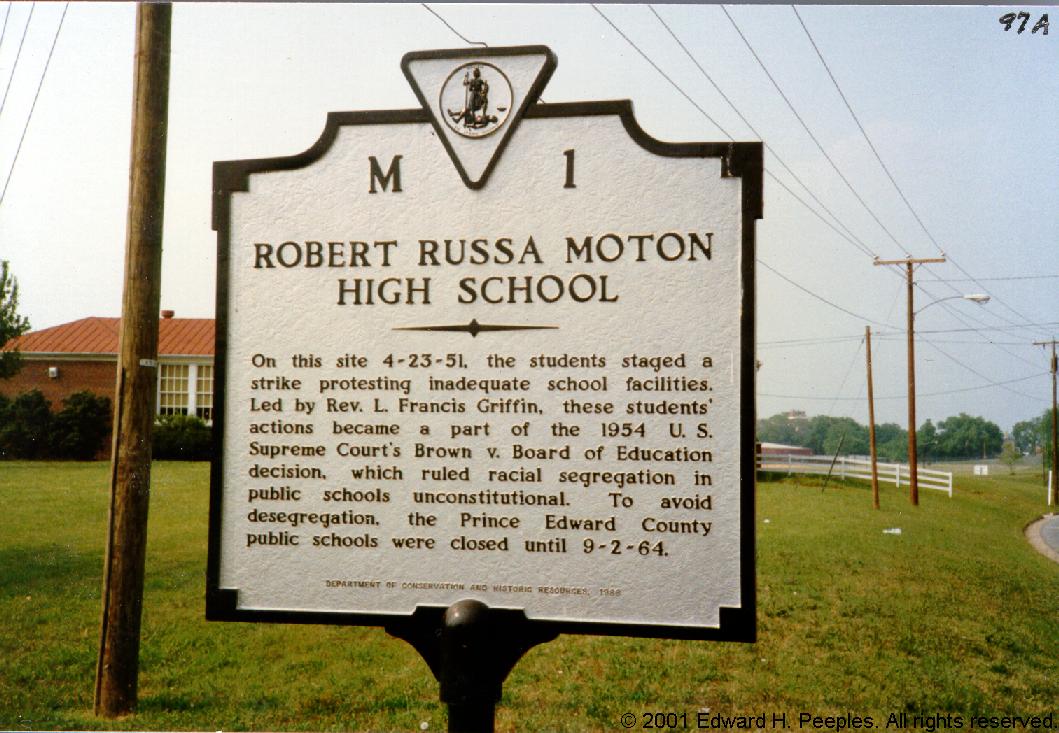
Moton HS historical markerAnd, the venerable Carnival of Education, issue 118, was up earlier at NYC Educator, with good posts on laptops in school, parenting, administering, enduring, and everything else related to education. (Click on the photo for a larger image — it’s the historical marker at the former Robert R. Moton High School, in Prince Edward County, Virginia — where one of the most poignant of the cases against school segregation began, Davis vs. Prince Edwards County Schools — part of the Brown vs. Topeka Board of Education case decided in 1954. Photo from Virginia Commonwealth University.)

Carnival of Homeschooling 71 lolls, at On The Company Porch.

And, of course, if you wish to nominate a post for the next Fiesta de Tejas!, scheduled for June 2, just use this button:


Blog Carnival submission form - fiesta de tejas!

Have a good Mother’s Day — call all the mothers you know. Why be picky?


Time! Last call for contributions to Fiesta de Tejas!

April 30, 2007

Set to publish May 2, today’s the last day to submit nominations for the next carnival of Texas history and Texana, Fiesta de Tejas!

Submissions can be e-mailed to me, but better, send them via the blog carnival submission form, found here.

Thanks for the nominations you’ve made already — we can use more!

Pequin pepper plant from Little Bend Nursery

Pequin pepper plant (Capsicum anuum), photo from Little Bend Nursery, between Lago Vista and Marble Falls, Texas – all rights reserved.


San Jacinto Day, April 21

April 21, 2007

Don’t Mess with Taxes already has up the post on San Jacinto Day that I should have had — so go there to read up.

Great candidate for the coming Fiesta de Tejas! blog carnival, don’t you think? If you find others, nominate them for the carnival, here.

Remember the Alamo! And learn the lessons of San Jacinto, including especially this one: Don’t get caught with your pants down. But of course, you need to know the story of the Yellow Rose of Texas to get that reference, yes?


Call for contributions: Fiesta de Tejas!

April 19, 2007

We have a couple of sterling contributions for the next Fiesta de Tejas!

More. We should have more submissions. Texas is a big state, with a lot of people, and a lot of entertaining history. We need more entries. Deadline for entries is end of day April 30, 2007 — I’m looking to publish on May 2.

You may e-mail entries to me at edarrellATsbcglobalDOTnet, or you can take advantage of the Blog Carnival entry form, which has the advantage that it makes copies to keep the thing going should I get hit by a speeding Indian Motorcycle on its way from Fort Worth to North Carolina. If you blog, too, please feel free to pass this call for submissions along to your readers.
Blog Carnival submission form - fiesta de tejas!

Last issue was the wildflower issue, but if you have photos of Texas wildflowers you would like to submit, please feel free to do that, too.

Pecan Tejas95a, from Texas A&M -- commercial since 1973 Pecan Tejas 95a, cultivar created at Texas A&M University in 1945, first fruited in 1949, released commercially in 1973.

Fiesta de Tejas! is a blog carnival celebrating Texas, Texas history and Texana. This blog focuses on education and social studies (though the focus wanders a bit sometimes). If you wonder whether a particular post might be useful to the Fiesta de Tejas!, simply ask whether you think more Texans ought to know about, especially Texas social studies teachers.

Whaddya know about Texas? Share it.


Carnival catch-up

April 16, 2007

Uh-oh. Running behind.

One of the reasons I list various carnivals is to make sure I have a note of the good ones somewhere easy to find. Busy-ness in the last week just kept me away from the keyboard.

Carnivals you ought to check out:

Oekologie 4.1: Over at Behavioral Ecology. Lots on climate change, of course, and some very nice bird photos.

Carnival of the Godless at Neural Gourmet has a good run down of the Blog Against Theocracy, and complaints about it, too.

Carnival of the Liberals #36 is up at Truth in Politics. Well, that’s an obvious pairing. Free speech, the president and the Constitution, tyranny in the Middle East, and quite a bit more.

Carnival of Education #114 is back at The Education Wonks.  State legislatures may be wrapping up their sessions, but education issues are heating up.

Skeptics’ Circle #58 finds a hangout at Geek Counterpoint, with several posts that get at how we know what is true — good stuff for historians and economists to ponder.

This is as good a time as any to remind you that that Fiesta de Tejas! #2 is coming up on May 2 — deadline for  post nominations April 30.  You may e-mail entries to me (edarrellATsbcglobalDOTnet), or submit them at the Blog Carnival portal to the Fiesta.


Kennesaw is lovely this time of year

April 7, 2007

Kevin Levin’s blog, Civil War Memory, carried this posting — I stole it wholesale — plugging a conference on the Civil War hosted at Kennesaw State University in Kennesaw, Georgia:

Civil War Conference at Kennesaw State University

The Third Annual Interpretations of the American Civil War Symposium will be held on May 4 and 5 at Kennesaw State University. The title of this conference is “The Struggle Within: The Confederate Home Front.” Speakers include the following:

  • Professor George Rable (Keynote Address): “Blended History: New Approaches to Studying the Confederate Home Front”
  • Professor Victoria Bynum: “Guerrilla Wars: Plain Folk Resistance to the Confederacy”
  • Professor Kenneth Noe: “The Origins of Guerrilla War in West Virginia”
  • Professor LeeAnn Whites: “‘Corresponding to the Enemy:’ The Home Front as a Relational Field of Battle”

All four of the speakers are top-notch scholars. This promises to be a very exciting and educational conference. For more information click here.

[End of stolen announcement.]

It’s a conference where it’s pretty well guaranteed that no one will bellyache from the podium about the No Child Left Behind Act.  Plus, this gives me a chance to plug Civil War Memory, and Another History Blog, both of which deserve your attention and can help you out.

For a transplanted Yankee, I’ve been struck with the oddity that Texas kids don’t know much about the Civil War.  Certainly they don’t know what the state wants them to know, and what the state wants is substantially less than any Southerner ought to know about the historic events that still push attitudes and actions in the 13 rebellious states and national politics.  Texas history teachers could use a few seminars on the Civil War.