Found this at Under the Lobsterscope — our incarceration rates form a testament to one of the greatest failures of the U.S. over the past two decades. Live links added here for your convenience.
Here are the facts… you make your own conclusion. Personally, I think making prisons a private industry sucks— I wonder when they’ll be exporting the prisoners to China.
This important case represented an immediate challenge to the Civil Rights Act of 1964, the landmark piece of civil rights legislation which represented the first comprehensive act by Congress on civil rights and race relations since the Civil Rights Act of 1875. For much of the 100 years preceding 1964, race relations in the United States had been dominated by segregation, a system of racial separation which, while in name providing for “separate but equal” treatment of both white and black Americans, in truth perpetuated inferior accommodation, services, and treatment for black Americans.
The Atlanta Time Machine, a great collection of photos in the history of Atlanta and Georgia, has more photos, and this description of the site:
The Heart of Atlanta motel, located at 255 Courtland Street NE, was owned by Atlanta attorney Moreton Rolleston Jr. Rolleston, a committed segregationist, refused to rent rooms at his hotel to black customers. Upon passage of the Civil Rights Act of 1964, Rolleston immediately filed suit in federal court to assert that the law was the result of an overly broad interpretation of the U.S. Constitution’s commerce clause. Rolleston represented himself in the case, HEART OF ATLANTA MOTEL, INC. v. UNITED STATES ET AL., which went all the way to the United States Supreme Court. Rolleston lost when the Supreme Court ruled that Congress was well within its powers to regulate interstate commerce in such a manner. The Hilton Hotel now stands on the former site of the Heart of Atlanta Motel.
Texts in law school rarely have illustrations. I know the motel mostly as a citation on pages of text, great grey oceans of somnambulent text. This case is important in civil rights, though it is mentioned almost never in history texts. What are these cases really about? These photos offer us insight.
The Heart of Atlanta Motel aspired to greatness in the late 1950s and 1960s — evidenced by this publicity flyer photo from the Atlanta Time Machine; notice the flag flying for the motel’s Seahorse Lounge (Atlanta is landlocked):
Heart of Atlanta Motel publicity photo - Atlanta Time Machine; not just a podunk "motor lodge," but a "resort motel." Click for larger image.
For the 1960s, this place offered great amenities, including two swimming pools and in-room breakfast service.
Flyer for the Heart of Atlanta Motel, circa 1960 - Atlanta Time Machine image
This photo is amusing — I can just imagine the difficulties of launching a motor boat of this size in one of the swimming pools, obviously for a publicity stunt. The photo is dated February 27, 1960, in the Pullen Library Collection.
Boat in the pool at the Heart of Atlanta Motel, 1960 - Atlanta Time Machine image
To compare how times have changed, you may want to look at this aerial photo of the area, including the Heart of Atlanta Hotel, and compare it with modern photos which show the Hilton Hotel that replaced the property.
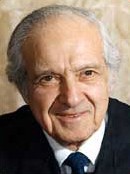
Rolleston appears to have had a big ego. As noted above, he represented himself in this case, and he argued it in the Supreme Court. Here’s a picture from about that time, from the University of Missouri-Kansas City Law School “Famous Trials” site:
Moreton Rolleston, Jr., owner of the Heart of Atlanta Motel and the attorney who argued the case at the Supreme Court - UMKC Law School image; photo: Wayne Wilson/Leviton-Atlanta
You may decide for yourself whether this fits the old legal aphorism that a lawyer who represents himself in a case has a fool for a client. The Oyez site at the University of Chicago provides access to the audio of the oral arguments. Did Rolleston argue ably? Rolleston argued against Archibald Cox, who went on to fame in the Watergate scandals. This appears to have been Rolleston’s only appearance before the Supreme Court; it was Cox’s ninth appearance (he argued 20 cases before the Court in his career, several well known and notable ones).
Heart of Atlanta vs. United States was argued on October 5, 1964. The opinion was issued on December 14, 1964, a 9-0 decision against Rolleston and segregation authored by Justice Tom C. Clark (one of Dallas’s earliest Eagle Scouts).
This was a fight Mr. Rolleston picked. He was not cited nor indicted for violation of the Civil Rights Act, but instead asked for an injunction to prevent the law’s enforcement; according to the published decision,
Appellant, the owner of a large motel in Atlanta, Georgia, which restricts its clientele to white persons, three-fourths of whom are transient interstate travelers, sued for declaratory relief and to enjoin enforcement of the Civil Rights Act of 1964, contending that the prohibition of racial discrimination in places of public accommodation affecting commerce exceeded Congress’ powers under the Commerce Clause and violated other parts of the Constitution. A three-judge District Court upheld the constitutionality of Title II, §§ 201(a), (b)(1) and (c)(1), the provisions attacked, and, on appellees’ counterclaim, permanently enjoined appellant from refusing to accommodate Negro guests for racial reasons.
Title II of the Civil Rights Act of 1964 forbade racial discrimination by places of public accommodation if their operations affected commerce. The Heart of Atlanta Motel in Atlanta, Georgia, refused to accept Black Americans and was charged with violating Title II.
Question
Did Congress, in passing Title II of the 1964 Civil Rights Act, exceed its Commerce Clause powers by depriving motels, such as the Heart of Atlanta, of the right to choose their own customers?
The decision turned on the commerce clause, and the reach of Congressional power to regulate interstate commerce.
Decision: 9 votes for U.S., 0 vote(s) against Legal provision: Civil Rights Act of 1964, Title II
The Court held that the Commerce Clause allowed Congress to regulate local incidents of commerce, and that the Civil Right Act of 1964 passed constitutional muster. The Court noted that the applicability of Title II was “carefully limited to enterprises having a direct and substantial relation to the interstate flow of goods and people. . .” The Court thus concluded that places of public accommodation had no “right” to select guests as they saw fit, free from governmental regulation.
Good decision.
Heart of Atlanta Motel is gone. The site is occupied by the Hilton Atlanta, today.
Spread the word; friends don't allow friends to repeat history.
Occasionally I stumble into a discussion of whether anywhere in the U.S. a government may have executed an innocent person. Generally I note the horrible Texas case in which Texas fought for years for the point that a convicted murderer whose three allowed appeals had been exhausted should not be allowed to reopen his case simply because new evidence of his innocence had emerged. In Herrera v. Collins(506 US 390, 1993), Texas won the right to not allow evidence of innocence to get a review of the case, and the man was executed.
Ladies and gentlemen I ask you: Why would a state fight for the right to execute an innocent man, to the Supreme Court, if it did not intend to use that right?
The question rises more frequently these days as Texas Gov. Rick Perry steams toward announcing he will run for the presidency.
I point out that Herrera came down nearly eight years before Perry stumbled into the governor’s chair, his having been standing outside the door as Lieutenant Governor when George W. Bush persuaded the Supreme Court — most of the same justices — to stop both the popular vote and change the electoral vote to give him the presidency. So we can’t blame that one on Perry.
But we can blame the execution of Todd Willingham on Rick Perry, even understanding that he was relying on what he assumed to be good evidence in his naturally uncurious waltz of destruction across Texas. Perry could claim he got bad advice. Though Texas’s governer really has little more than ceremonial power and some appointments, for someone like Perry it is a big job he can barely handle. People would cut him slack on letting an innocent man die, convicted of a capital crime that as the evidence showed at the time probably did not occur, if he’d just confess it.
Instead, Perry engaged in a four-year campaign to cover up the affair — a cover up that is so far successful.
Jonathan Chait blogging at New Republic cites Politico and The New Yorker on the way to painting all Texans as morally bankrupt for allowing the coverup to go on — justifiably, I think. While the newspapers cover the story, outrage does not rise from the drought-stricken populace. New Republic’s blog explained the cover-up, and Texas’s blase attitude:
Alexander Burns and Maggie Haberman have a story for Politico about Rick Perry’s limitations as a general election candidate. It’s a really excellent piece on its own terms, but at the same time, it’s a bit of a parody of a Politico story in that it takes a vital moral question, drains it of all its moral significance, and presents it in purely electoral terms. The thesis of the piece is that Perry appeals to very conservative white southerners, but not to anybody else, making him a questionable choice to head the Republican ticket. The piece bears out that thesis pretty well. In the middle it includes a glancing reference to one episode of Perry’s gubernatorial tenure:
Perry would also have to answer for parts of his record that have either never been fully scrutinized in Texas, or that might be far more problematic before a national audience.
Veterans of Sen. Kay Bailey Hutchison’s unsuccessful 2010 primary challenge to Perry recalled being stunned at the way attacks bounced off the governor in a strongly conservative state gripped by tea party fever. Multiple former Hutchison advisers recalled asking a focus group about the charge that Perry may have presided over the execution of an innocent man – Cameron Todd Willingham – and got this response from a primary voter: “It takes balls to execute an innocent man.”
The Willingham case is just one episode in Perry’s gubernatorial tenure that could be revived against him in the very different context of a national race, potentially compromising him in a general election.
If you’re not familiar with this episode, David Grann wrote about in for the New Yorker in 2009 in what may be the single greatest piece of journalism I have ever read in my life. (I am biased, as David is a friend and former colleague.) The upshot is that Perry is essentially an accessory to murder. He executed an innocent man, displaying zero interest in the man’s innocence. When a commission subsequently investigated the episode, Perry fired its members.
I’m a Texan, and I’m appalled. Dear Reader, what can a Texan do? Please advise.
Surely the rest of America would be concerned and shocked, no? We can excuse goofs in the histories of our presidential candidates. Especially since Nixon, we should be doubly wary of those who work hard to cover up their errors, rather than learn from them.
By the way, in the latest action, the office of the Texas Attorney General issued a report on the duties of the commission established to investigate Texas justice to make it more fair — the commission whose members Perry fired when they got close to the Willingham case. The report says that that Willingham case is water under the bridge, that the commission may not investigatet cases that predate the commission’s creation.
It’s a gross miscarriage of justice, and an attack on the democratic form of government which relies very much on continuous improvement of governmental processes, especially the due processes of criminal justice.
Spread the word; friends don't allow friends to repeat history.
This is a petition for review of an order of the Secretary of Agriculture,1 refusing to suspend the federal registration of the pesticide DDT or to commence the formal administrative procedures that could terminate that registration.
Born in Wisconsin, David L. Bazelon grew up in Chicago and practiced law there. In 1949, President Truman named him to the United States Court of Appeals for the District of Columbia Circuit, often described as the country's most influential court, next to the Supreme Court. At 40, he was the youngest judge ever appointed to that court. From 1962-1978 he served as chief judge, retiring in 1986 as a senior judge.
* * * * *
We conclude that the order was based on an incorrect interpretation of the controlling statute, and accordingly remand the case for further proceedings. In this case the Secretary has made a number of findings with respect to DDT. On the basis of the available scientific evidence he has concluded that (1) DDT in large doses has produced cancer in test animals and various injuries in man, but in small doses its effect on man is unknown; (2) DDT is toxic to certain birds, bees, and fish, but there is no evidence of harm to the vast majority of species of nontarget organisms; (3) DDT has important beneficial uses in connection with disease control and protection of various crops. These and other findings led the Secretary to conclude ‘that the use of DDT should continue to be reduced in an orderly, practicable manner which will not deprive mankind of uses which are essential to the public health and welfare. To this end there should be continuation of the comprehensive study of essentiality of particular uses and evaluations of potential substitutes.’38
There is no reason, however, for that study to be conducted outside the procedures provided by statute. The Secretary may, of course, conduct a reasonable preliminary investigation before taking action under the statute. Indeed, the statute expressly authorizes him to consult a scientific advisory committee, apart from the committee that may be appointed after the issuance of a cancellation notice.39 But when, as in this case, he reaches the conclusion that there is a substantial question about the safety of a registered item, he is obliged to initiate the statutory procedure that results in referring the matter first to a scientific advisory committee and then to a public hearing. We recognize, of course, that one important function of that procedure is to afford the registrant an opportunity to challenge the initial decision of the Secretary. But the hearing, in particular, serves other functions as well. Public hearings bring the public into the decision-making process, and create a record that facilitates judicial review.40 If hearings are held only after the Secretary is convinced beyond a doubt that cancellation is necessary, then they will be held too seldom and too late in the process to serve either of those functions effectively.
The Secretary’s statement in this case makes it plain that he found a substantial question concerning the safety of DDT, which in his view warranted further study. Since we have concluded that that is the standard for the issuance of cancellation notices under the FIFRA, the case must be remanded to the Secretary with instructions to issue notices with respect to the remaining uses of DDT, and thereby commence the administrative process.
* * * * *
We stand on the threshold of a new era in the history of the long and fruitful collaboration of administrative agencies and reviewing courts. For many years, courts have treated administrative policy decisions with great deference, confining judicial attention primarily to matters of procedure.48 On matters of substance, the courts regularly upheld agency action, with a nod in the direction of the ‘substantial evidence’ test,49 and a bow to the mysteries of administrative expertise.50 Courts occasionally asserted, but less often exercised, the power to set aside agency action on the ground that an impermissible factor had entered into the decision, or a crucial factor had not been considered. Gradually, however, that power has come into more frequent use, and with it, the requirement that administrators articulate the factors on which they base their decisions.51
Strict adherence to that requirement is especially important now that the character of administrative litigation is changing. As a result of expanding doctrines of standing and reviewability,52 and new statutory causes of action,53 courts are increasingly asked to review administrative action that touches on fundamental personal interests in life, health, and liberty. These interests have always had a special claim to judicial protection, in comparison with the economic interests at stake in a ratemaking or licensing proceeding.
To protect these interests from administrative arbitrariness, it is necessary, but not sufficient, to insist on strict judicial scrutiny of administrative action. For judicial review alone can correct only the most egregious abuses. Judicial review must operate to ensure that the administrative process itself will confine and control the exercise of discretion.54 Courts should require administrative officers to articulate the standards and principles that govern their discretionary decisions in as much detail as possible.55 Rules and regulations should be freely formulated by administrators, and revised when necessary.56 Discretionary decisions should more often be supported with findings of fact and reasoned opinions.57 When administrators provide a framework for principled decision-making, the result will be to diminish the importance of judicial review by enhancing the integrity of the administrative process, and to improve the quality of judicial review in those cases where judicial review is sought.
Remanded for further proceedings consistent with this opinion.
(President Nixon’s Secretary of Agriculture Clifford M. Hardin reviewed DDT regulations and decided no further action was required — since 1958, USDA had been reducing and eliminating DDT from use on USDA lands, as was the Department of the Interior. Environmental Defense Fund sued, arguing more action should have been required. In a complex decision, the U.S. Court of Appeals for the District of Columbia ordered more study of the issue. By the time of the decision, the Environmental Protection Agency (EPA) had been established, and EPA Director William D. Ruckelshaus took Hardin’s place as defendant, with EPA assuming USDA’s position as defendant agency. EPA’s review resulted in a ban on use of DDT on crops in the U.S.)
Some historians and many critics of EPA’s decision to ban DDT from agricultural use in the U.S. fail to acknowledge the importance of this ruling. Judge Bazelon said that great caution alone is not sufficient on the part of administrators, and he ordered that the evidence against DDT be placed on the public record for public scrutiny. “Public scrutiny” in this case would mean analysis by scientists, pesticide manufacturers, farming and farm support organizations, health workers, policy makers, and reporters.
On one hand, this decision tends to favor DDT advocates. Judge Bazelon said the administrator in charge of carrying out FIFRA, the Federal Insecticide, Fungicide and Rodenticide Act, must give advocates of DDT the basis for the ruling: “On the basis of the available scientific evidence he has concluded that (1) DDT in large doses has produced cancer in test animals and various injuries in man, but in small doses its effect on man is unknown; (2) DDT is toxic to certain birds, bees, and fish, but there is no evidence of harm to the vast majority of species of nontarget organisms; (3) DDT has important beneficial uses in connection with disease control and protection of various crops.”
On the other hand, Bazelon’s order means that the significant harms of DDT must be spelled out in public — so that the administrator’s ruling can be contested if it does not do what FIFRA requires. In other places in the decision, Judge Bazelon notes that Congress had required, through FIFRA, that a pesticide determined to be uncontrollably dangerous must be taken off the market, under the justification that it was “mislabeled.” Lower courts had already made that determination on DDT. Bazelon’s order set the stage to require the administrator to ban DDT as a matter of law — the administrator being the Secretary of Agriculture originally, or the Director of EPA under the reorganization of the government that created EPA .
Critics of William Ruckelshaus’s decision to ban DDT miss this point of the law. Under the findings of the nearly year-long hearing in EPA’s administrative law courts, DDT was found to be an uncontrollable poison in the wild. FIFRA required such a pesticide to have its registration cancelled, with very little wiggle room to make a case for any continued use of the stuff. Ruckelshaus’s action stopped the immediate shutdown of DDT manufacturing in the U.S. This proved to be a mixed benefit decision. While the U.S. benefited financially from export of DDT, that the U.S. exported a chemical banned for most uses inside the U.S. proved to be a sore point in foreign relations with other nations; also most of the manufacturing sites were highly contaminated, so much so that the manufacturers declared bankruptcy rather than stick around to clean them up under the rules of the Superfund which took effect in 1984. Taxpayer dollars now pay for massive cleanup operations of DDT manufacturing sites in California, Michigan, and Alabama, and other places.
Spread the word; friends don't allow friends to repeat history.
U.S. Department of Justice Office of Public Affairs
Massachusetts Man Sentenced to Federal Prison for Burning African-American Church
WASHINGTON—Benjamin Haskell was sentenced by U.S. District Judge Michael A. Ponsor in Springfield, Massachusetts to nine years in prison and three years of supervised release for his role in the 2008 burning of the Macedonia Church of God in Christ, a predominately African-American Church, on the morning after President Barack Obama was elected as the first African-American president of the United States. In addition, Haskell will pay more than $1.7 million in restitution, including $123,570.25 to the Macedonia Church.
On June 16, 2010, Haskell, 24, of Springfield, pled guilty to conspiring to injure, oppress, threaten, and intimidate the mostly African-American parishioners of the Macedonia Church in the free exercise of the right to hold and use their new church building, which was under construction, and to damaging the parishioners’ new church building through arson and obstructing their free exercise of religion because of their race, color, and ethnic characteristics.
At the earlier plea hearing, a prosecutor told the court that had the case proceeded to trial, the government’s evidence would have proven that in the early morning hours of Nov. 5, 2008, within hours of President Barack Obama being elected, Haskell and his co-conspirators agreed to burn down, and did burn down, the Macedonia Church’s newly constructed building where religious services were to be held. The building was 75 percent completed at the time of the fire, which destroyed nearly the entire structure, leaving only the metal superstructure and a small portion of the front corner intact. Investigators determined that the fire was caused by arsonists who poured and ignited gasoline on the interior and exterior of the building.
Haskell confessed to the crime and admitted that prior to the presidential election, he and his co-conspirators used racial slurs against African-Americans and expressed anger at the possible election of Barack Obama as the first African-American president. Haskell admitted that after Obama was declared the winner of the election, he and his co-conspirators walked through the woods behind the Macedonia Church to scout out burning it down. Then, in the early morning hours of Nov. 5, 2008, Haskell and his co-conspirators went back to the church, poured gasoline inside and outside of the church, and ignited the gasoline.
“The freedom to practice the religion that we choose without discrimination or hateful acts is among our nation’s most cherished rights,” said Thomas E. Perez, Assistant Attorney General in charge of the Justice Department’s Civil Rights Division. “As seen here today, the Department will prosecute anyone who violates that right to the fullest extent of the law.”
“The burning of the Macedonia Church because of racial hatred and intolerance was a vicious attack on one of our most cherished freedoms—to worship in the religion of our choice safely and without fear of discrimination,” said U.S. Attorney for the District of Massachusetts Carmen Ortiz. “The successful investigation, prosecution, and punishment of those who committed this hateful act is a clear statement that law enforcement will do all in its power to protect our citizens’ civil rights.”
“While the Bureau of Alcohol, Tobacco and Firearms (ATF) is charged with investigating some of the most violent crimes, I consider the arson to be one of the most serious and dangerous offenses. Not only was this case about the burning of a house of worship, it cut to the very heart of our most valued rights, that of religious freedom. I want to acknowledge all of our partners who assisted in bringing the individuals responsible for this fire to justice,” said ATF Special Agent in Charge Guy Thomas.
“Today’s sentencing represents just one more step toward closure and healing, not only for the victims of this hate crime, but for the Springfield community as a whole. The FBI, along with its federal, state, and local law enforcement partners, remains committed to protecting each and every citizen’s civil rights, and will aggressively investigate any violation of those rights, bringing the perpetrators to justice,” said Richard DesLauriers, Special Agent in Charge of the FBI.
The case was prosecuted by Assistant U.S. Attorneys Paul H. Smyth and Kevin O’Regan of the U.S. Attorney’s Springfield Office, and Nicole Lee Ndumele, Trial Attorney in the Department of Justice’s Civil Rights Division.
Spread the word; friends don't allow friends to repeat history.
It’s the sort of error you’d expect of a third-grade kid who hasn’t watched enough “Sesame Street.” Which of these fractions is larger? 1/5, or 1/6?
Is the judge really that dumb, or is this an elaborate, sarcastic hoax on the petitioner?
Math teachers, can you use this to show the importance of learning math well enough to do simple math functions mentally, without paper and calculator?
While you’re at Zeno’s place, Halfway There, look around. Zeno writes well, has good stories to tell, and you could learn a lot about a lot of things — you know, just by observing.
Spread the word; friends don't allow friends to repeat history.
Gardere’s Faulk And Gray Tapped To Represent Business, Industry In Climate Change Amicus Briefs
Gardere Wynne Sewell attorneys Richard O. Faulk and John S. Gray have been retained to write amicus curiae briefs to federal appellate courts and the U.S. Supreme Court in relation to public nuisance lawsuits regarding global climate change.
(I-Newswire) May 13, 2010 – HOUSTON – Richard O. Faulk and John S. Gray, co-chairs of Gardere Wynne Sewell LLP’s Climate Change Task Force, have been retained to write amicus curiae briefs to federal appellate courts and the U.S. Supreme Court in relation to public nuisance lawsuits regarding global climate change.
Mr. Faulk and Mr. Gray, partners in Gardere’s Houston office, will represent a group of organizations that include the American Chemistry Council, The National Petrochemical & Refiners Association, The American Coatings Association, and the Public Nuisance Fairness Coalition.
The first brief was filed in the 5th Circuit on Friday, May 7, in the case of Comer v. Murphy Oil. In that case, a group of property owners sued utility, mining, oil and chemical companies claiming their CO2 emissions ultimately caused the devastation of Hurricane Katrina. Comer had originally been dismissed at the trial level because the plaintiffs lacked standing to sue particular defendants for the effects of global warming, among other reasons.
A panel of the 5th Circuit reversed the dismissal, but on February 26 the court granted an en banc rehearing. The court is now weighing a number of procedural concerns caused by a number of judicial recusals, and has not set a final date for oral arguments.
“Despite the current procedural wrangling, the 5th circuit’s initial decision to reconsider the panel’s ruling remains a major blow to climate change and public nuisance litigation,” Faulk said. “Although the final decision, the panel’s original decision now has no value. Clearly, a significant number of the court’s judges believe the case deserves a closer look, and plaintiffs are surely not comforted by that development. Indeed, since no judge on the original panel dissented, the en banc court’s decision to reconsider suggests a serious interest in changing the result.”
Mr. Faulk and Mr. Gray also plan to file amicus briefs in Native Village of Kivalina, Alaska v. ExxonMobil Corp., et al., which is pending in the 9th Circuit, and Connecticut v. American Electric Power, a 2nd Circuit decision in which a petition for certiorari to the United States Supreme Court is expected to be filed. Both of those cases also involve the propriety of using public nuisance litigation to redress global climate change.
Mr. Faulk and Mr. Gray have authored many scholarly articles regarding public nuisance and climate change. One of their major papers, “Stormy Weather Ahead: The Legal Environment of Global Climate Change,” has been presented at conferences of the United States Chamber of Commerce, in media events at the Washington Legal Foundation, at various Professional Development seminars for lawyers, engineers, and businessmen. A complete collection of their articles is available at http://works.bepress.com/richard_faulk/subject_areas.html#Climate%20Change.
In addition, Mr. Faulk recently spoke on climate change lawsuits at the Judicial Symposium on The Expansion of Liability Under Public Nuisance on April 26 at the Searle Center on Law, Regulation, and Economic Growth, Northwestern University School of Law.
Gardere Wynne Sewell LLP, an AmLaw 200 firm founded in 1909 and one of the Southwest’s largest full-service law firms, has offices in Austin, Dallas, Houston and Mexico City. Gardere provides legal services to private and public companies and individuals in areas of energy, hospitality, litigation, corporate, tax, government affairs, environmental, labor and employment, intellectual property and financial services.
Familiar with any of those cases?
Were denialists to have the facts, some of those legal cases would be the places that the facts emerge in useful-to-stop-climate-change-legislation fashion.
Want to make bets on whether those who desperately want (and maybe need) climate change denialists to be right, actually use the climate denialists’ studies?
Watch those cases.
Spread the word; friends don't allow friends to repeat history.
Research that Cuccinelli has targeted to investigate includes work Mann did with the National Oceanographic and Atmospheric Administration (NOAA) and the National Science Foundation (NSF). Cuccinelli probably lacks jurisdiction for much of the stuff he wants, trumped by those federal agencies.
Mann is the guy who put together the chart of all the different threads of research that show warming climate, commonly known as the “hockey stick” after Al Gore’s years of presentations on the chart and the movie, “Inconvenient Truths.” Mann also is among those scientists in U.S. and England whose private e-mails were exposed in the breach of the e-mail servers at England’s Hadley Climate Research Unit.
Three different investigations have put Mann in the clear so far (Penn State’s .pdf of investigation results; response to Texas U.S. Rep. Joe Barton’s assault) — odd that stolen e-mails would produce doubts about the victims of the theft, but ethical standards in science research are indeed that high. Caesar’s wife couldn’t be considered for research grants.
Why do I think the statute of limitations may apply? Look at the law, linked above, the Fraud Against Taxpayers Act:
§ 8.01-216.9. Procedure; statute of limitations.
A subpoena requiring the attendance of a witness at a trial or hearing conducted under this article may be served at any place in the Commonwealth.
A civil action under § 8.01-216.4 or 8.01-216.5 may not be brought (i) more than six years after the date on which the violation is committed or (ii) more than three years after the date when facts material to the right of action are known or reasonably should have been known by the official of the Commonwealth charged with responsibility to act in the circumstances, but in that event no more than ten years after the date on which the violation is committed, whichever occurs last.
In any action brought under § 8.01-216.5, the Commonwealth shall be required to prove all essential elements of the cause of action, including damages, by a preponderance of the evidence.
Research at a major research institution like a big, public university involves many layers of regulation and bureaucratic checking. Generally the university’s research office will require adherence to the school’s ethical code and all state laws up front, and then the auditors check the money flow and research activities through the project. There is a final sign off at most schools, which would qualify as “the date when facts material to the right of action are known or reasonably should have been known by the official of the Commonwealth charged with responsibility to act in the circumstances.”
Cuccinelli is sending a clear signal to researchers that they are unwelcome in Virginia if their research doesn’t square with his politics — and his politics are weird. Watch to see what the response of the University is, especially if their delivery of documents doesn’t put this witch hunt to bed.
[Update notice: The text of the law noting the statute of limitations was updated on May 5, to show application to § 801-216.4 as well as § 801-216.5]
What about that impeachment trial, eh? Planning to watch it?
Your best bet might be C-SPAN, but I wouldn’t wager the mortgage were I you.
Impeachment trial of President Andrew Johnson in the U.S. Senate, 1868; from Harper's Weekly, April 11, 1868 - public domain
Federal Judge Thomas Porteous of New Orleans got four articles of impeachment approved against him by the U.S. House of Representatives on March 10. The first article got a nearly unanimous vote — who says the House is divided? — 412 to 0. Three other articles got similar margins, 410-0, 416-0, and 423-0.
Under its own special rules of impeachment, the Senate appointed a committee led by Sen. Claire McCaskill, D-Missouri, which will hold the actual trial and report results to the full Senate for action. Sen. McCaskill said she expects the trial to begin in early August, and that the report to the full Senate could come as soon as September.
While news media and bloggers chase ghosts and hoaxes, real work continues in Washington, D.C. You just don’t hear much about it.
You likely have not heard of Judge Proteous’s troubles, though they are long-standing, because the issue was a local, Louisiana and New Orleans affair. Heaven knows New Orleans has had its share of other stories to knock off the front pages the ethical lapses of a sitting federal judge who was once a promising attorney.
Should you have heard? How can we judge? Should we not be concerned when a relatively important story is not only bumped to the back pages of newspapers, but bumped completely out of them, and off the radar of people who need to be informed about how well our government works?
My alert to this story came through a back-door route. On the list-serv for AP Government, someone asked who presides at the impeachment trial of the Chief Justice — remember, the Constitution spells out that the Chief Justice is the presiding officer in the impeachment of the President or Vice President. My memory is that the Senate rules on impeachments, and there is a committee that effectively presides, and that the impeachment of a Vice President or President merits special attention because the Vice President is the official, Constitutionally-mentioned presiding officer. We can’t have the vice president presiding at the trial of himself or herself, nor of the president. Looking up impeachment procedures, I stumbled across the pending impeachment of Judge Porteous. I don’t think it has appeared in our local newspaper, The Dallas Morning News.
Other judges have been impeached. Here in Texas, within the past three years, we had a federal judge impeached, Samuel Kent. You’d think Texas media would be sensitive to such stories. (Kent resigned before the trial could begin.)
I perceive that media are ignoring several important areas of federal governing, not necessarily intentionally, but instead by being distracted by nonentity stories or stories that just don’t deserve the inflated coverage they get. Among undercovered areas are the environment, energy research, higher education, foreign aid, management of public lands and justice, including indictments, trials and convictions. A vast gray hole where should be the news of Judge Porteous’s pending impeachment is just one symptom.
Probably the best thing going for the plaintiffs is that OrlyTaitzonlyappearsbyname in a bizarre accounting of everything ever said on the issue (except for the lack of evidence and reasons this case will failwhich, oddly, isn’t included in the complaint; everything else is included).
I predict the case will be dismissed, but it may be dismissed with prejudice. That is, if it really does come to a hearing. Is that really possible?
Warn others so they don’t get trampled:
Spread the word; friends don't allow friends to repeat history.
More than just as tribute to the victims, more than just a disaster story, the Triangle Shirtwaist Co. fire, and the following events including the trial of the company owners, lay out issues students can see clearly. I think the event is extremely well documented and adapted for student projects. In general classroom use, however, the event lays a foundation for student understanding.
A couple of good websites crossed my browser recently, and I hope you know of them.
Cartoon about 1911 Triangle Shirtwaist Fire, New York Evening Journal, March 31, 1911
Events around the fire illuminate so much of American history, and of government (which Texas students take in their senior year):
Labor issues are obvious to us; the incident provides a dramatic backdrop for the explanation of what unions sought, why workers joined unions, and a sterling example of a company’s clumsy and destructive resistance to resolving the workers’ issues.
How many Progressive Era principles were advanced as a result of the aftermath of the fire, and the trial?
Effective municipal government, responsive to voters and public opinion, can be discerned in the actions of the City of New York in new fire codes, and action of other governments is clear in the changes to labor laws that resulted.
The case provides a dramatic introduction to the workings and, sometimes, misfirings of the justice system.
With the writings from the Cornell site, students can climb into the events and put themselves on the site, in the courtroom, and in the minds of the people involved.
Newspaper clippings from the period demonstrate the lurid nature of stories, used to sell newspapers — a working example of yellow journalism.
Newspapers also provide a glimpse into the workings of the Muckrakers, in the editorial calls for reform.
Overall, the stories, the photos, the cartoons, demonstrate the workings of the mass culture mechanisms of the time.
Use the sites in good education, and good health.
Spread the word; friends don't allow friends to repeat history.
Adults worry about peer pressure. Kids can goad other kids into doing stupid things, dangerous things, illegal things, and immoral things.
Pressure from adults on kids might be just as strong.
What about a 10-year-old kid who stands up to peer pressure, and stands for principle against adults who use all sorts of inducements to get him to do something he believes is wrong?
I offer a salute to Will Phillips of West Fork School District, in Washington County, Arkansas.
Will believes homosexuals in America are not beneficiaries of liberty and justice for all. Will now refuses to stand and say the Pledge of Allegiance for that reason.
It’s probably not what I’d advise the young man to do to protest, but he has every right. He’s thought it through, which may not be said for the substitute teacher and the school administrator who tried to pressure him into giving up on his principles.
In the Arkansas Times, David Koon writes the story:
For one thing, he’s smart. Scary smart. A student in the West Fork School District in Washington County, he skipped a grade this year, going directly from the third to the fifth. When his family goes for a drive, discussions are much more apt to be about Teddy Roosevelt and terraforming Mars than they are about Spongebob Squarepants and what’s playing on Radio Disney.
It was during one of those drives that the discussion turned to the pledge of allegiance and what it means. Laura Phillips is Will’s mother. “Yes, my son is 10,” she said. “But he’s probably more aware of the meaning of the pledge than a lot of adults. He’s not just doing it rote recitation. We raised him to be aware of what’s right, what’s wrong, and what’s fair.”
Will’s family has a number of gay friends. In recent years, Laura Phillips said, they’ve been trying to be a straight ally to the gay community, going to the pride parades and standing up for the rights of their gay and lesbian neighbors. They’ve been especially dismayed by the effort to take away the rights of homosexuals – the right to marry, and the right to adopt. Given that, Will immediately saw a problem with the pledge of allegiance.
“I’ve always tried to analyze things because I want to be lawyer,” Will said. “I really don’t feel that there’s currently liberty and justice for all.”
After asking his parents whether it was against the law not to stand for the pledge, Will decided to do something. On Monday, Oct. 5, when the other kids in his class stood up to recite the pledge of allegiance, he remained sitting down. The class had a substitute teacher that week, a retired educator from the district, who knew Will’s mother and grandmother. Though the substitute tried to make him stand up, he respectfully refused. He did it again the next day, and the next day. Each day, the substitute got a little more cross with him. On Thursday, it finally came to a head. The teacher, Will said, told him that she knew his mother and grandmother, and they would want him to stand and say the pledge.
“She got a lot more angry and raised her voice and brought my mom and my grandma up,” Will said. “I was fuming and was too furious to really pay attention to what she was saying. After a few minutes, I said, ‘With all due respect, ma’am, you can go jump off a bridge.’ ”
Will was sent to the office, where he was given an assignment to look up information about the flag and what it represents. Meanwhile, the principal called his mother.
“She said we have to talk about Will, because he told a sub to jump off a bridge,” Laura Phillips said. “My first response was: Why? He’s not just going to say this because he doesn’t want to do his math work.”
Eventually, Phillips said, the principal told her that the altercation was over Will’s refusal to stand for the pledge of allegiance, and admitted that it was Will’s right not to stand. Given that, Laura Phillips asked the principal when they could expect an apology from the teacher. “She said, ‘Well I don’t think that’s necessary at this point,’ ” Phillips said.
After Phillips put a post on the instant-blogging site twitter.com about the incident, several of her friends got angry and alerted the news media. Meanwhile, Will Phillips still refuses to stand during the pledge of allegiance. Though many of his friends at school have told him they support his decision, those who don’t have been unkind, and louder.
“They [the kids who don’t support him] are much more crazy, and out of control and vocal about it than supporters are.”
Given that his protest is over the rights of gays and lesbians, the taunts have taken a predictable bent. “In the lunchroom and in the hallway, they’ve been making comments and doing pranks, and calling me gay,” he said. “It’s always the same people, walking up and calling me a gaywad.”
Even so, Will said that he can’t foresee anything in the near future that will make him stand for the pledge. To help him deal with the peer pressure, his parents have printed off posts in his support on blogs and websites. “We’ve told him that people here might not support you, but we’ve shown him there are people all over that support you,” Phillips said. “It’s really frustrating to him that people are being so immature.”
At the end of our interview, I ask young Will a question that might be a civics test nightmare for your average 10-year-old. Will’s answer, though, is good enough — simple enough, true enough — to give me a little rush of goose pimples. What does being an American mean?
“Freedom of speech,” Will says, without even stopping to think. “The freedom to disagree. That’s what I think pretty much being an American represents.”
Somewhere, Thomas Jefferson smiles.
Spread the word; friends don't allow friends to repeat history.
On the one hand it’s nice to see cool heads and wisdom prevail.
On the other hand, the Orly Taitz, Stumbling and Bumbling Bros., Barnyard Bailout Circus provided belly laughs for everyone who watched it. How can such outstanding legal pratfall comedy possibly be replaced? “Boston Legal” can’t hold a candle to Orly Taitz.
CNN and other sources report that Judge Carter booted the suit late Thursday, noting that the question is one for Congress, and Congress’s earlier decision sticks.
The lawsuit represented the claim by the so-called “birthers” movement that Obama was not born in Hawaii – despite a birth certificate to the contrary – or that if he was, his citizenship was invalidated by living overseas as a child.
In a 30-page ruling, U.S. District Judge David O. Carter of California said his court lacked the jurisdiction to rule on a case intended to unseat a sitting president.
Carter’s ruling said the plaintiffs were trying to persuade him to “disregard the constitutional procedures in place for the removal of a sitting president.”
“The process for removal of a sitting president – removal for any reason – is within the province of Congress, not the courts,” the ruling said.
Carter’s ruling also noted that the plaintiffs “have attacked the judiciary, including every prior court that has dismissed their claim, as unpatriotic and even treasonous for refusing to grant their requests and for adhering to the terms of the Constitution.”
“Respecting the constitutional role and jurisdiction of this court is not unpatriotic,” the ruling said. “Quite the contrary, this court considers commitment to that constitutional role to be the ultimate reflection of patriotism.”
Will Orly Taitz go quietly? How can she replace the daily adrenaline rush of knowing she’s earned the official ire of judges from Chesapeake Bay to Long Beach Harbor?
It may be unrelated, but sketchy early reports say Orly Taitz has climbed aboard a mylar balloon shaped like a flying saucer . . .
If by some sad twist of fate you missed the earlier comedy, you can check out an almost-running comedy commentary at Dispatches from the Culture Wars here, here, here, here, here and here. Oh, heck, Ed Brayton has more — but you get the general idea. Taitz doesn’t.
Science-based Medicine carried this article yesterday, and several other blogs have joined in. Below is the article Simon Singh wrote for which he is being sued for libel by the professional association for British chiropractors. It’s a good cause, so I’ll stretch it another little while.
Last year Simon Singh wrote a piece for the Guardian that was critical of the modern practice of chiropractic. The core of his complaint was that chiropractors provide services and make claims that are not adequately backed by evidence – they are not evidence-based practitioners. In response to his criticism the British Chiropractic Association (BCA) sued Simon personally for libel. They refused offers to publish a rebuttal to his criticism, or to provide the evidence Simon said was lacking. After they were further criticized for this, the BCA eventually produced an anemic list of studies purported to support the questionable treatments, but really just demonstrating the truth of Simon’s criticism (as I discuss at length here).
In England suing for libel is an effective strategy for silencing critics. The burden of proof is on the one accused (guilty until proven innnocent) and the costs are ruinous. Simon has persisted, however, at great personal expense.
This is an issue of vital importance to science-based medicine. A very necessary feature of science is public debate and criticism – absolute transparency.This is also not an isolated incident. Some in the alternative medicine community are attempting to assert that criticism is unprofessional, and they have used accusations of both unprofessionalism and libel as a method of silencing criticism of their claims and practices. This has happened to David Colquhoun and Ben Goldacre, and others less prominent but who have communicated to me directly attempts at silencing their criticism.
This behavior is intolerable and is itself unprofessional, an assault on academic freedom and free speech, and anathema to science as science is dependent upon open and vigorous critical debate.
What those who will attempt to silence their critics through this type of bullying must understand is that such attempts will only result in the magnification of the criticism by several orders of magnitude. That is why we are reproducing Simon Singh’s original article (with a couple of minor alterations) on this site and many others. Enjoy.
Here it is:
Beware the spinal trap
Some practitioners claim it is a cure-all but research suggests chiropractic therapy can be lethal
Simon Singh
The Guardian, Original version published Saturday April 19 2008
Edited version published July 29, 2009
You might be surprised to know that the founder of chiropractic therapy, Daniel David Palmer, wrote that “99% of all diseases are caused by displaced vertebrae”. In the 1860s, Palmer began to develop his theory that the spine was involved in almost every illness because the spinal cord connects the brain to the rest of the body. Therefore any misalignment could cause a problem in distant parts of the body.
In fact, Palmer’s first chiropractic intervention supposedly cured a man who had been profoundly deaf for 17 years. His second treatment was equally strange, because he claimed that he treated a patient with heart trouble by correcting a displaced vertebra.
You might think that modern chiropractors restrict themselves to treating back problems, but in fact some still possess quite wacky ideas. The fundamentalists argue that they can cure anything, including helping treat children with colic, sleeping and feeding problems, frequent ear infections, asthma and prolonged crying – even though there is not a jot of evidence.
I can confidently label these assertions as utter nonsense because I have co-authored a book about alternative medicine with the world’s first professor of complementary medicine, Edzard Ernst. He learned chiropractic techniques himself and used them as a doctor. This is when he began to see the need for some critical evaluation. Among other projects, he examined the evidence from 70 trials exploring the benefits of chiropractic therapy in conditions unrelated to the back. He found no evidence to suggest that chiropractors could treat any such conditions.
But what about chiropractic in the context of treating back problems? Manipulating the spine can cure some problems, but results are mixed. To be fair, conventional approaches, such as physiotherapy, also struggle to treat back problems with any consistency. Nevertheless, conventional therapy is still preferable because of the serious dangers associated with chiropractic.
In 2001, a systematic review of five studies revealed that roughly half of all chiropractic patients experience temporary adverse effects, such as pain, numbness, stiffness, dizziness and headaches. These are relatively minor effects, but the frequency is very high, and this has to be weighed against the limited benefit offered by chiropractors.
More worryingly, the hallmark technique of the chiropractor, known as high-velocity, low-amplitude thrust, carries much more significant risks. This involves pushing joints beyond their natural range of motion by applying a short, sharp force. Although this is a safe procedure for most patients, others can suffer dislocations and fractures.
Worse still, manipulation of the neck can damage the vertebral arteries, which supply blood to the brain. So-called vertebral dissection can ultimately cut off the blood supply, which in turn can lead to a stroke and even death. Because there is usually a delay between the vertebral dissection and the blockage of blood to the brain, the link between chiropractic and strokes went unnoticed for many years. Recently, however, it has been possible to identify cases where spinal manipulation has certainly been the cause of vertebral dissection.
Laurie Mathiason was a 20-year-old Canadian waitress who visited a chiropractor 21 times between 1997 and 1998 to relieve her low-back pain. On her penultimate visit she complained of stiffness in her neck. That evening she began dropping plates at the restaurant, so she returned to the chiropractor. As the chiropractor manipulated her neck, Mathiason began to cry, her eyes started to roll, she foamed at the mouth and her body began to convulse. She was rushed to hospital, slipped into a coma and died three days later. At the inquest, the coroner declared: “Laurie died of a ruptured vertebral artery, which occurred in association with a chiropractic manipulation of the neck.”
This case is not unique. In Canada alone there have been several other women who have died after receiving chiropractic therapy, and Edzard Ernst has identified about 700 cases of serious complications among the medical literature. This should be a major concern for health officials, particularly as under-reporting will mean that the actual number of cases is much higher.
If spinal manipulation were a drug with such serious adverse effects and so little demonstrable benefit, then it would almost certainly have been taken off the market.
— Simon Singh is a science writer in London and the co-author, with Edzard Ernst, of Trick or Treatment? Alternative Medicine on Trial. This is an edited version of an article published in The Guardian for which Singh is being personally sued for libel by the British Chiropractic Association.
[Google Video version is not showing or playing for reasons I don’t know; fortunately the National Archives (NARA) has uploaded a version to YouTube]
“A Challenge to Democracy,” by the War Relocation Board. This film defends the relocation of 100,000 Japanese Americans during World War II.
Japanese-descended American citizens harvesting crops they grew during internment during World War II. Screen capture from “Challege to Democracy.”
“These people are not under suspicion,” the narrator says. “They are not prisoners, they are not internees. They are merely dislocated people, the unwounded casualties of war.”
Or, until that account is unsuspended by the forces supporting Donald Trump: Follow @FillmoreWhite, the account of the Millard Fillmore White House Library
We've been soaking in the Bathtub for several months, long enough that some of the links we've used have gone to the Great Internet in the Sky.
If you find a dead link, please leave a comment to that post, and tell us what link has expired.
Thanks!
Retired teacher of law, economics, history, AP government, psychology and science. Former speechwriter, press guy and legislative aide in U.S. Senate. Former Department of Education. Former airline real estate, telecom towers, Big 6 (that old!) consultant. Lab and field research in air pollution control.
My blog, Millard Fillmore's Bathtub, is a continuing experiment to test how to use blogs to improve and speed up learning processes for students, perhaps by making some of the courses actually interesting. It is a blog for teachers, to see if we can use blogs. It is for people interested in social studies and social studies education, to see if we can learn to get it right. It's a blog for science fans, to promote good science and good science policy. It's a blog for people interested in good government and how to achieve it.
BS in Mass Communication, University of Utah
Graduate study in Rhetoric and Speech Communication, University of Arizona
JD from the National Law Center, George Washington University


 Posted by Ed Darrell









 Millard Fillmore's Bathtub