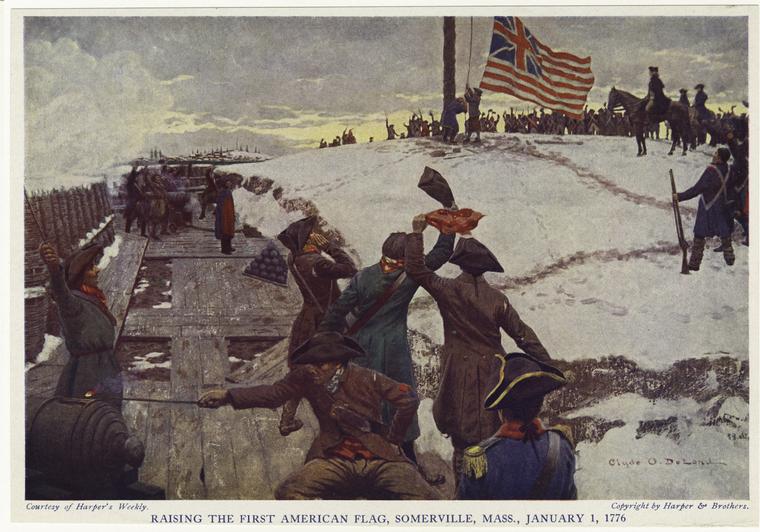
“Raising the first American flag, Somerville, Mass., January 1, 1776.” Harper’s Weekly painting by Clyde Osmer DeLand, 1897. From the digital collections of the New York Public Library; yes, MFB has used this painting before. I like it.
One problem with January’s flag flying dates is that if I snooze a little, you miss a lot. There are four flag-flying dates in the first five days of January: New Year’s Day and statehood days for Georgia, Alaska and Utah. You, Dear Reader, are alert and won’t let any of those dates pass unmarked if you’re in those states, right?
There are more dates to go in January, including New Mexico’s statehood. We’re not halfway done, yet.
President Joe Biden declared flags should fly at half-staff in honor of the late President Jimmy Carter, for 30 days, until January 28. That covers all the dates in the usual flag-flying calendar. When flying flags at half staff, the flag should be hoisted quickly to full staff, then lowered soberly (slowly) to half staff.
In January 2026, the U.S. Flag Code urges citizens to fly flags on these dates, listed chronologically:
New Year’s Day, January 1, a federal holiday
January 2, Georgia Statehood Day
January 3, Alaska Statehood Day
January 4, Utah Statehood Day
January 6, New Mexico Statehood Day
January 9, Connecticut Statehood Day
Martin Luther King’s Birthday, a federal holiday on the third Monday of January; that date is January 19, in 2026; King’s actual birthday is January 15, and you may fly your flag then, too
January 26, Michigan Statehood Day
January 29, Kansas Statehood Day
It will be interesting to some to see whether the White House issues a proclamation to fly the flag on Martin Luther King’s birthday.
You may fly your flag any other day you wish, too; flags should not be flown after sundown unless they are specially lighted, or at one of the few places designated by Congress or Presidential Proclamation for 24-hour flag flying. According to Wikipedia’s listing, those sites include:
Fort McHenry, Baltimore, Maryland (Presidential Proclamation No. 2795, July 2, 1948).
Flag House Square, Albemarle and Pratt Streets, Baltimore, Maryland (Public Law 83-319, approved March 26, 1954).
Lexington Battle Green, Lexington, Massachusetts (Public Law 89-335, approved November 8, 1965).
White House, Washington, D.C. (Presidential Proclamation No. 4000, September 4, 1970).
Washington Monument, Washington, D.C. (Presidential Proclamation No. 4064, July 6, 1971, effective July 4, 1971).
Any port of entry to the United States which is continuously open (Presidential Proclamation No. 413 1, May 5, 1972).
Grounds of the National Memorial Arch in Valley Forge State Park, Valley Forge, Pennsylvania (Public Law 94-53, approved July 4, 1975).
Flag House in 1936, where Mary Pickersgill sewed the garrison-sized, 15-star flag that flew over Fort McHenry at the Battle of Baltimore in 1814; one of the sites where the U.S. flag may be flown 24 hours. The house is at 844 East Pratt & Albemarle Streets (Baltimore, Independent City, Maryland). Cropped image courtesy of the federal HABS—Historic American Buildings Survey of Maryland.
Save
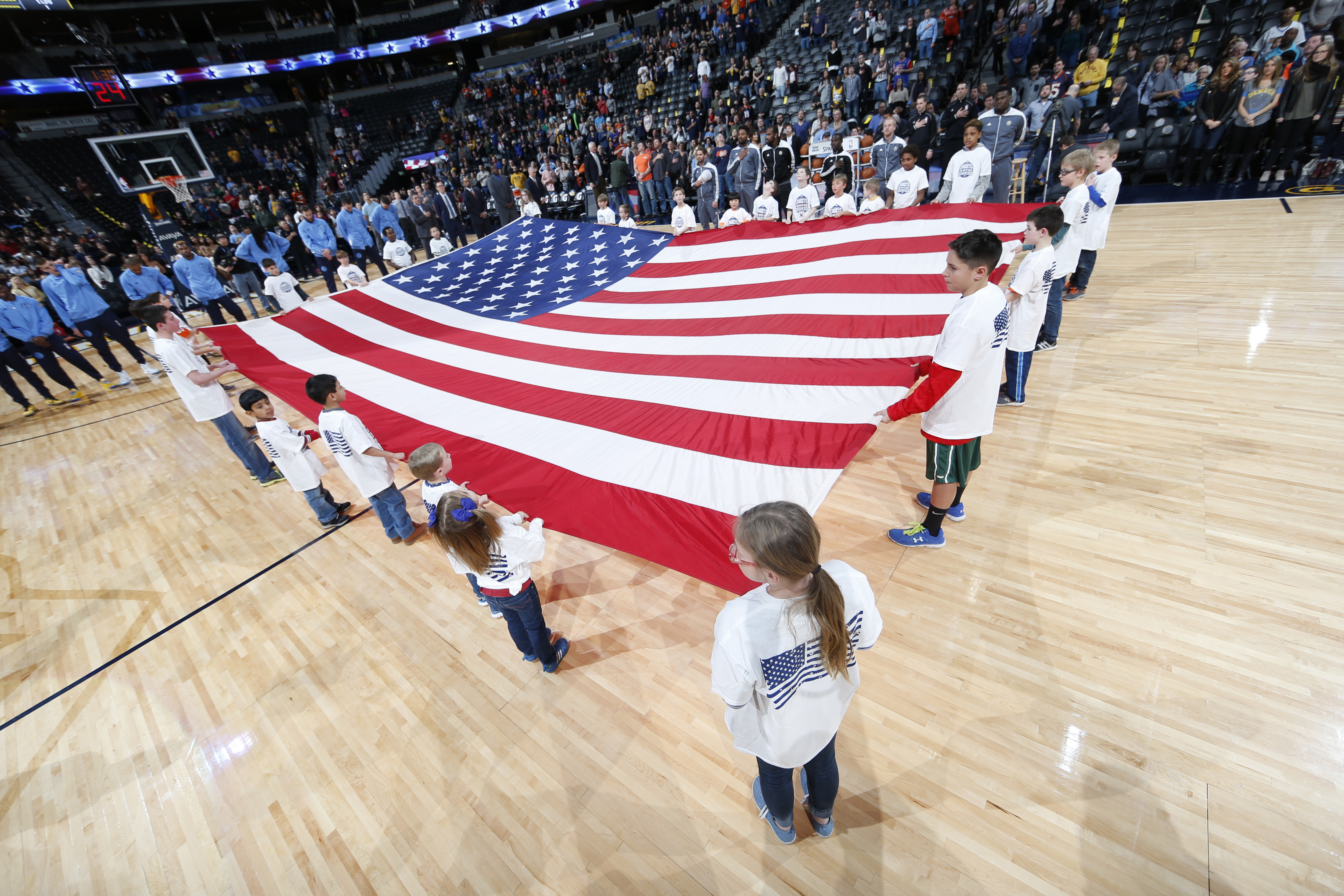
Children unfurl a large flag at a Denver Nuggets/Indiana Pacers NBA basketball game in Denver, January 2016. Colorado Public Radio image.Yes, this is an encore post. Defeating ignorance takes patience and perseverance.
Spread the word; friends don't allow friends to repeat history.
“Raising the first American flag, Somerville, Mass., January 1, 1776.” Harper’s Weekly painting by Clyde Osmer DeLand, 1897. From the digital collections of the New York Public Library; yes, MFB has used this painting before. I like it.
One problem with January’s flag flying dates is that if I snooze a little, you miss a lot. There are four flag-flying dates in the first five days of January: New Year’s Day and statehood days for Georgia, Alaska and Utah. You, Dear Reader, are alert and didn’t let any of those dates pass unmarked if you’re in those states, right?
There are more dates to go in January, including New Mexico’s statehood. We’re not halfway done, yet.
President Joe Biden declared flags should fly at half-staff in honor of the late President Jimmy Carter, for 30 days, until January 28. That covers all the dates in the usual flag-flying calendar. When flying flags at half staff, the flag should be hoisted quickly to full staff, then lowered soberly (slowly) to half staff.
In January 2025, the U.S. Flag Code urges citizens to fly flags on these dates, listed chronologically:
New Year’s Day, January 1, a federal holiday
January 2, Georgia Statehood Day
January 3, Alaska Statehood Day
January 4, Utah Statehood Day
January 6, New Mexico Statehood Day
January 9, Connecticut Statehood Day
Martin Luther King’s Birthday, a federal holiday on the third Monday of January; that date is January 19, in 2025; King’s actual birthday is January 15, and you may fly your flag then, too
Inauguration Day, January 20, the year after election years; 2025 will see an inauguration
January 26, Michigan Statehood Day
January 29, Kansas Statehood Day
You may fly your flag any other day you wish, too; flags should not be flown after sundown unless they are specially lighted, or at one of the few places designated by Congress or Presidential Proclamation for 24-hour flag flying. According to Wikipedia’s listing, those sites include:
Fort McHenry, Baltimore, Maryland (Presidential Proclamation No. 2795, July 2, 1948).
Flag House Square, Albemarle and Pratt Streets, Baltimore, Maryland (Public Law 83-319, approved March 26, 1954).
Lexington Battle Green, Lexington, Massachusetts (Public Law 89-335, approved November 8, 1965).
White House, Washington, D.C. (Presidential Proclamation No. 4000, September 4, 1970).
Washington Monument, Washington, D.C. (Presidential Proclamation No. 4064, July 6, 1971, effective July 4, 1971).
Any port of entry to the United States which is continuously open (Presidential Proclamation No. 413 1, May 5, 1972).
Grounds of the National Memorial Arch in Valley Forge State Park, Valley Forge, Pennsylvania (Public Law 94-53, approved July 4, 1975).
Flag House in 1936, where Mary Pickersgill sewed the garrison-sized, 15-star flag that flew over Fort McHenry at the Battle of Baltimore in 1814; one of the sites where the U.S. flag may be flown 24 hours. The house is at 844 East Pratt & Albemarle Streets (Baltimore, Independent City, Maryland). Cropped image courtesy of the federal HABS—Historic American Buildings Survey of Maryland.
Save
Children unfurl a large flag at a Denver Nuggets/Indiana Pacers NBA basketball game in Denver, January 2016. Colorado Public Radio image.Yes, this is an encore post. Defeating ignorance takes patience and perseverance.
Spread the word; friends don't allow friends to repeat history.
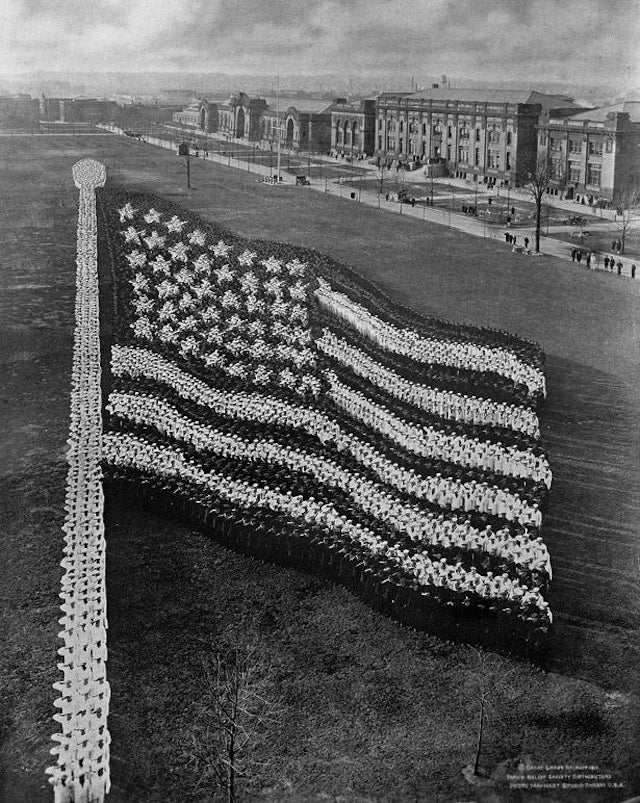
A “living flag” composed of 10,000 sailors, or “Blue Jackets at Salute,” by the Mayhart Studios, December 1917; image probably at the Great Lakes training facility of the Navy. Gawker media image
November offers several flag flying days, especially in years when there is an election.
But December may be the month with the most flag-flying dates, when we include statehood days.
December 25 is Christmas Day, a federal holiday, and one of the score of dates designated in the Flag Code. If you watch your neighborhood closely, you’ll note even some of the most ardent flag wavers miss posting the colors on this day, as they do on Thanksgiving and New Years and Easter.
Other dates?
Nine states attained statehood in December! People in those states should fly their flags (and you may join them). Included in this group is Delaware, traditionally the “First State,” called that because it was the first former England colony to ratify the U.S. Constitution:
Illinois, December 3 (1818, 21st state)
Delaware, December 7 (1787, 1st state)
Mississippi, December 10 (1817, 20th state)
Indiana, December 11 (1816, 19th state)
Pennsylvania, December 12 (1787, 2nd state)
Alabama, December 14 (1819, 22nd state)
New Jersey, December 18 (1787, 3rd state)
Iowa, December 28 (1846, 29th state)
Texas, December 29 (1845, 28th state)
December 15 is Bill of Rights Day, marking the day in 1791 when the Bill of Rights was declared ratified; but though this event generally gets a presidential proclamation, there is no law or executive action that requires flags to fly on that date, for that occasion.
Eleven flag-flying dates in December. Does any other month have as many flag flying opportunities?
Have I missed any December flag-flying dates? 11 events on 10 different days between December 3 and December 29 (Delaware’s statehood falls on the anniversary of the Pearl Harbor attack).
Here’s a list of the 10 days to fly the flag in December 2023, under national law, in chronological order:
Delaware, December 7 (1787, 1st state) (shared with Pearl Harbor Remembrance Day)
Mississippi, December 10 (1817, 20th state)
Indiana, December 11 (1816, 19th state)
Pennsylvania, December 12 (1787, 2nd state)
Alabama, December 14 (1819, 22nd state)
New Jersey, December 18 (1787, 3rd state)
Christmas Day, December 25
Iowa, December 28 (1846, 29th state)
Texas, December 29 (1845, 28th state)
Fly your flag with respect, for the flag, for the republic it represents, and for all those who sacrificed that it may wave on your residence.
Appropriate to a snowy December. “The Barn on Grayson-New Hope Road [Lawrenceville, Georgia]. This barn with its old truck and ever-present American flag, is often the subject of photographs and paintings by the locals.” Photo and copyright by Melinda Anderson
Save
Save
Yes, this is an encore post. Defeating ignorance takes patience and perseverance. Plus, I like these photos.
Spread the word; friends don't allow friends to repeat history.
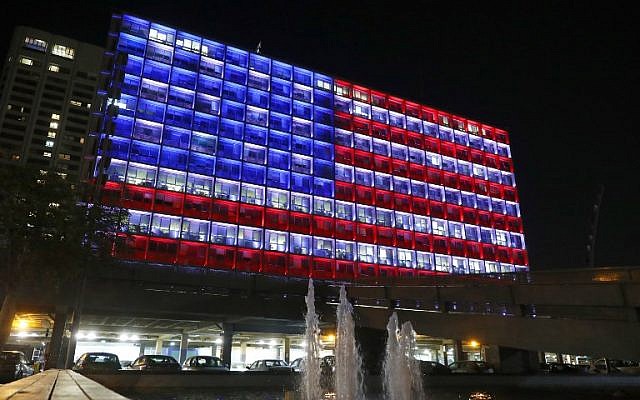
Especially poignant in 2023, after attacks in Israel — Solidarity with the United States: “Tel Aviv city hall, lit up in the colors of the American flag to honor the victims of the mass shooting in Las Vegas, on October 2, 2017. (AFP Photo/Jack Guez)” – From the Times of Israel
October is not a big month for dates to fly the U.S. flag. Only one state joined the union in October, and only two other dates received Congress’s designation for flag-flying.
Here are October’s flag-flying days, in chronological order:
Columbus Day, October 9 — tradition puts Columbus Day on October 12, but in law it is designated as the second Monday in October (to make a three-day weekend for workers who get a holiday); in 2023, October 9 is the second Monday of the month.
Nevada Statehood Day, October 31; Nevada joined the union during the Civil War, in 1864, the 36th state.
Federal law also designates October 9 as Leif Erickson Day, a concession to Scandanavian-descended Americans who argue Erickson beat Columbus to the Americas by a few hundred years. Congress’s recognition does not include an urging to fly the flag, though the President may issue such a proclamation.
Several states honor American indigenous groups on the same day as Columbus Day, with Indigenous Americans Day, or a similar title.
October 27 is also the birth date of Theodore Roosevelt (1858), the Secretary of the Navy who led the dramatic updating of the fleet that preceded the U.S. push to become a major international power. Navy Day was set on October 27 partly to honor Teddy’s work, and Teddy himself — the “birth” date of the U.S. Navy is considered to be October 7. Here’s a brief history of TR before his presidency, at the Miller Center, written by Sidney Milkis.
Fans of Roosevelt may get an little extra kick flying the flag on his birthday.
National Fallen Firefighters Memorial Weekend, originally held in October and a flag-flying event, has been moved to May in 2022 through 2024. The public law designating the weekend does not specify a date, leaving the foundation that governs the memorial free to move it as desired.
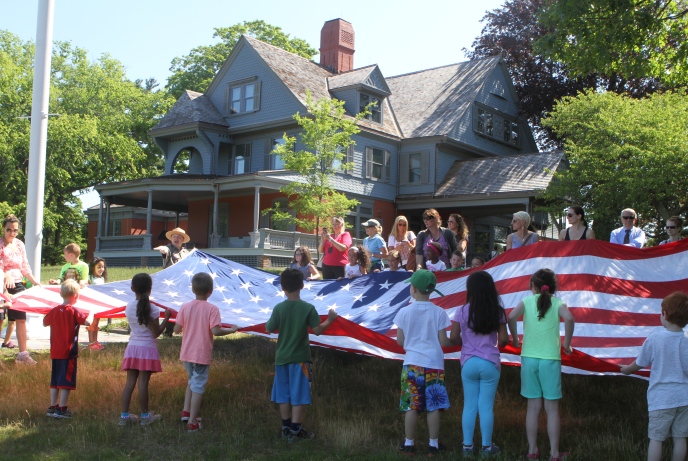
Fourth grade students practice U.S. flag etiquette with the help of National Park Service Rangers at Sagamore Hill National Historic Site in New York. Sagamore Hill, at Oyster Bay, was the home of Theodore Roosevelt and his family. National Park Service Photo
Yes, this is mostly an encore post. Defeating ignorance takes patience and perseverance.
At Four Mile Historic Park in Glendale, Colorado, Abraham Lincoln actor John Voehl pauses before delivering the Gettysburg Address at a 4th of July celebration (yes, Lincoln delivered the address on November 16; it’s a great statement of the meaning and history of the Declaration of Independence, and probably appropriate for July 4, remembering that the actual independence resolution passed on July 2, 1776 . . .) Denver Post file photo
It’s a day of tradition — oddly enough, since we are in reality a very new nation, and Lee’s resolution to declare independence from Britain came on July 2.
A soak in Millard Fillmore’s Bathtub is nothing if not a steeping in tradition. Fly your flag July 4, or the whole weekend, to celebrate the independence of the American colonies of Britain.
At the White House, traditionally, new citizens are sworn in — often people who joined our armed forces and fought for our nation, before even getting the privileges of citizenship. Fireworks on the Capital Mall will be grand. President Obama’s White House would host a few thousand military people and their families from some of the best views. Traditionally, five photographers, chosen by lottery, get to shoot photos of the fireworks from the windows of the Washington Monument; will that occur, with the Monument open again after repair from the earthquake?
There will be great fireworks also in Baltimore Harbor over Fort McHenry, the fort whose siege inspired Francis Scott Key to write the “Star-spangled Banner” from his boat in the harbor, in 1814. Fireworks will frighten the bluebirds nesting at Yorktown National Battlefield. I suspect there will be a grand display at Gettysburg, on the 154th anniversary of the end of that battle. July 4, 1863, also marked the end of the Siege of Vicksburg; tradition holds that Vicksburg did not celebrate the 4th of July for 83 years after that. I’ll wager there will be fireworks there tonight.
In Provo, Utah, the city poobahs will have done all they can to try to live up to their self-proclaimed reputation as having the biggest Independence Day celebration in the nation. Will the celebration in Prescott, Arizona, still be muted by the tragic deaths of 19 Hot Shot firefighters a few years ago; will drought halt the fireworks, too? There will be fireworks around the Golden Gate Bridge, in Anchorage, Alaska, reflecting on the waters of Pearl Harbor, and probably in Guam, American Samoa, and the Northern Marianas Islands.
One more way we know the Moon landings were real — the photo below shows the flag from the photo above, still on the Moon.
Lunar Reconnaissance Orbiter photo of the Apollo 17 landing site. NASA caption: Apollo 17 Lunar Module Challenger descent stage comes into focus from the new lower 50 km mapping orbit, image width 102 meters. Credit: NASA/GSFC/Arizona State University
This is mostly an encore post, but I so love that photo of the flag with the Earth in the distance.
Happy birthday, Kathryn!
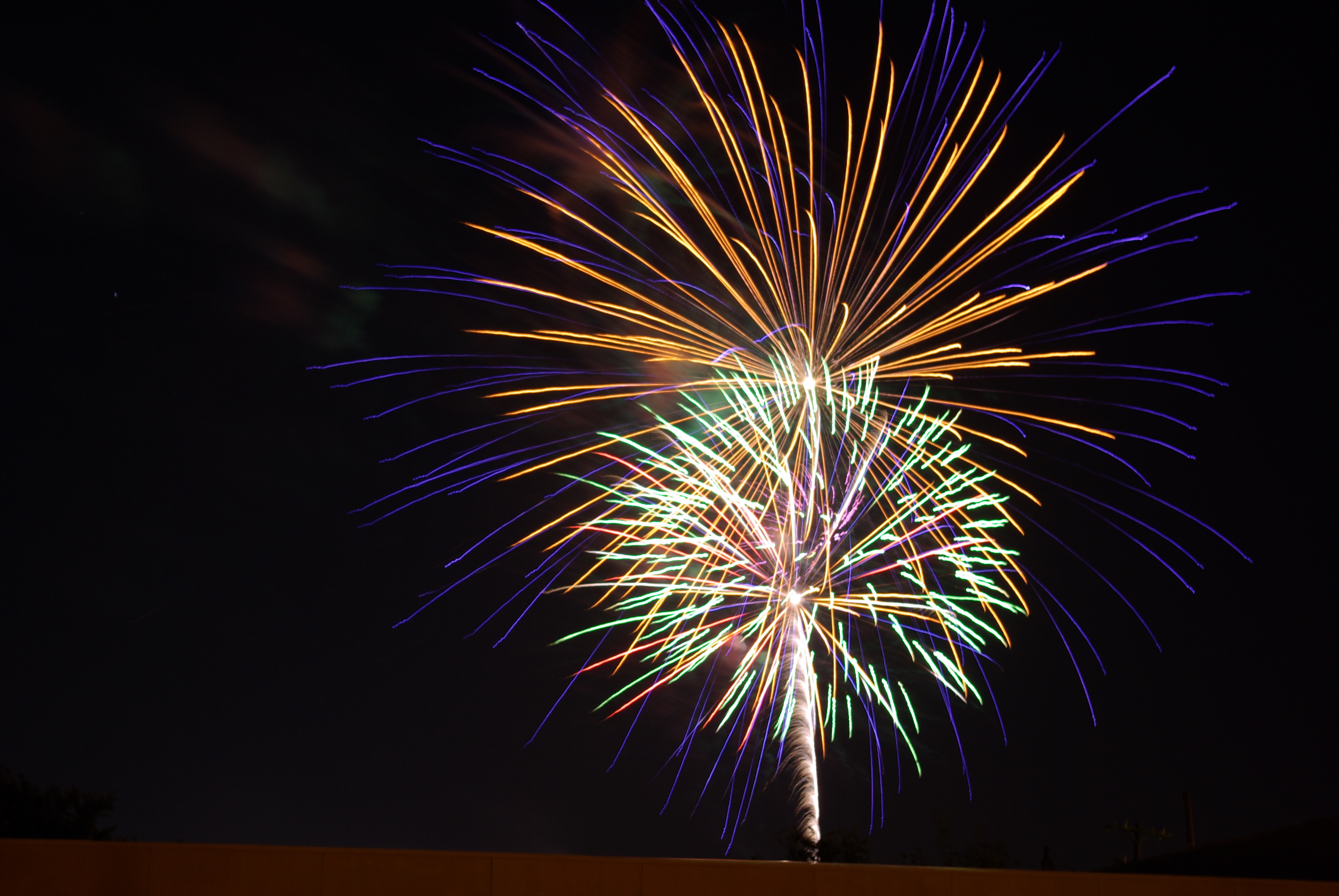
Fireworks in Duncanville, Texas, for July 4 — Kathryn Knowles’s birthday. We’re always happy the town chimes in with the celebratory spirit.
Tip of the old scrub brush to Thomas Jefferson, Richard Henry Lee, John Adams, Benjamin Franklin, Roger Sherman, Robert Livingston, and the cast of thousands of patriots including George Washington.
Save
Spread the word; friends don't allow friends to repeat history.
Of course you know to fly your flag on June 14 for Flag Day — but did you know that the week containing Flag Day is Flag Week, and we are encouraged to fly the flag every day?
Clifford Berryman’s 1901 Flag Day cartoon, found at the National Archives: “In this June 14, 1904, cartoon, Uncle Sam gives a lesson to schoolchildren on the meaning of Flag Day. Holding the American flag in one hand, Uncle Sam explains that the flag has great importance, unlike the Vice Presidency, which he ridicules in a kindly manner. (National Archives Identifier 6010464)”
On June 14, 1885, Bernard J. Cigrand placed a 10-inch, 38-star flag in a bottle on his desk at the Stony Hill School in Ozaukee County, Wisconsin. The 19-year-old teacher then asked his students to write essays on the flag and its significance to them. This small observance marked the beginning of a long and devoted campaign by Cigrand to bring about national recognition for Flag Day.
And so we do, today, still.
Yes, this is an encore post. Defeating ignorance takes patience and perseverance.
Spread the word; friends don't allow friends to repeat history.
Solidarity with the United States: “Tel Aviv city hall, lit up in the colors of the American flag to honor the victims of the mass shooting in Las Vegas, on October 2, 2017. (AFP Photo/Jack Guez)” – From the Times of Israel
October is not a big month for dates to fly the U.S. flag. Only one state joined the union in October, and only two other dates received Congress’s designation for flag-flying.
Here are October’s three flag-flying days, in chronological order:
Columbus Day, October 10 — tradition puts Columbus Day on October 12, but in law it is designated as the second Monday in October (to make a three-day weekend for workers who get a holiday); in 2022, October 10 is the second Monday of the month.
Nevada Statehood Day, October 31; Nevada joined the union during the Civil War, in 1864, the 36th state.
Federal law also designates October 9 as Leif Erickson Day, a concession to Scandanavian-descended Americans who argue Erickson beat Columbus to the Americas by a few hundred years. Congress’s recognition does not include an urging to fly the flag, though the President may issue such a proclamation.
October 27 is also the birth date of Theodore Roosevelt (1858), the Secretary of the Navy who led the dramatic updating of the fleet that preceded the U.S. push to become a major international power. Navy Day was set on October 27 partly to honor Teddy’s work, and Teddy himself — the “birth” date of the U.S. Navy is considered to be October 7. Here’s a brief history of TR before his presidency, at the Miller Center, written by Sidney Milkis.
Fans of Roosevelt may get an little extra kick flying the flag on his birthday.
Fourth grade students practice U.S. flag etiquette with the help of National Park Service Rangers at Sagamore Hill National Historic Site in New York. Sagamore Hill, at Oyster Bay, was the home of Theodore Roosevelt and his family. National Park Service Photo
Yes, this is an encore post. Defeating ignorance takes patience and perseverance.
A “living flag” composed of 10,000 sailors, or “Blue Jackets at Salute,” by the Mayhart Studios, December 1917; image probably at the Great Lakes training facility of the Navy. Gawker media image
November offers several flag flying days, especially in years when there is an election.
But December may be the month with the most flag-flying dates, when we include statehood days.
December 25 is Christmas Day, a federal holiday, and one of the score of dates designated in the Flag Code. If you watch your neighborhood closely, you’ll note even some of the most ardent flag wavers miss posting the colors on this day, as they do on Thanksgiving and New Years and Easter.
Other dates?
Nine states attained statehood in December! People in those states should fly their flags (and you may join them). Included in this group is Delaware, traditionally the “First State,” called that because it was the first former England colony to ratify the U.S. Constitution:
Illinois, December 3 (1818, 21st state)
Delaware, December 7 (1787, 1st state)
Mississippi, December 10 (1817, 20th state)
Indiana, December 11 (1816, 19th state)
Pennsylvania, December 12 (1787, 2nd state)
Alabama, December 14 (1819, 22nd state)
New Jersey, December 18 (1787, 3rd state)
Iowa, December 28 (1846, 29th state)
Texas, December 29 (1845, 28th state)
December 15 is Bill of Rights Day, marking the day in 1791 when the Bill of Rights was declared ratified; but though this event generally gets a presidential proclamation, there is no law or executive action that requires flags to fly on that date, for that occasion.
Eleven flag-flying dates in December. Does any other month have as many flag flying opportunities?
Have I missed any December flag-flying dates? 11 events on 10 days (Delaware’s statehood falls on the anniversary of the Pearl Harbor attack).
Here’s a list of the 10 days to fly the flag in December 2021, under national law, in chronological order:
Delaware, December 7 (1787, 1st state) (shared with Pearl Harbor Remembrance Day)
Mississippi, December 10 (1817, 20th state)
Indiana, December 11 (1816, 19th state)
Pennsylvania, December 12 (1787, 2nd state)
Alabama, December 14 (1819, 22nd state)
New Jersey, December 18 (1787, 3rd state)
Christmas Day, December 25
Iowa, December 28 (1846, 29th state)
Texas, December 29 (1845, 28th state)
Fly your flag with respect, for the flag, for the republic it represents, and for all those who sacrificed that it may wave on your residence.
Appropriate to a snowy December. “The Barn on Grayson-New Hope Road [Lawrenceville, Georgia]. This barn with its old truck and ever-present American flag, is often the subject of photographs and paintings by the locals.” Photo and copyright by Melinda Anderson
Save
Save
Yes, this is an encore post. Defeating ignorance takes patience and perseverance. Plus, I like these photos.
Spread the word; friends don't allow friends to repeat history.
Of course you know to fly your flag on June 14 for Flag Day — but did you know that the week containing Flag Day is Flag Week, and we are encouraged to fly the flag every day?
Clifford Berryman’s 1901 Flag Day cartoon, found at the National Archives: “In this June 14, 1904, cartoon, Uncle Sam gives a lesson to schoolchildren on the meaning of Flag Day. Holding the American flag in one hand, Uncle Sam explains that the flag has great importance, unlike the Vice Presidency, which he ridicules in a kindly manner. (National Archives Identifier 6010464)”
On June 14, 1885, Bernard J. Cigrand placed a 10-inch, 38-star flag in a bottle on his desk at the Stony Hill School in Ozaukee County, Wisconsin. The 19-year-old teacher then asked his students to write essays on the flag and its significance to them. This small observance marked the beginning of a long and devoted campaign by Cigrand to bring about national recognition for Flag Day.
And so we do, today, still.
Yes, this is an encore post. Defeating ignorance takes patience and perseverance.
Spread the word; friends don't allow friends to repeat history.
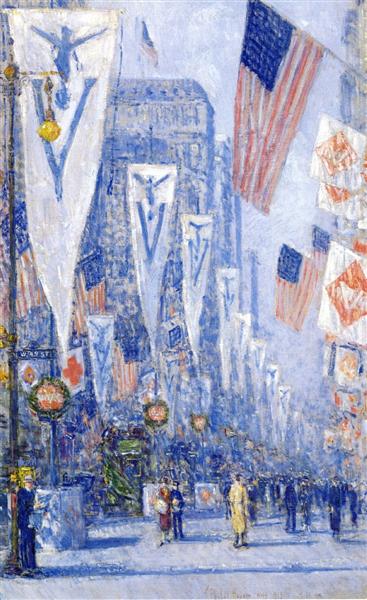
Childe Hassam, “Victory Day, May 1919,” 1919, oil on canvas, 36 x 21 3/4 inches (91.4 x 55.2 cm), American Academy of Arts and Letters, NY. There were at least twenty-three paintings in Hassam’s series of flag paintings. This Victory Day celebration no longer occurs, though there are several other May days to fly the colors.
Twelve events on fourteen days to fly the U.S. flag. May could be quite busy for flag fliers.
Law Day, May 1, AND
Loyalty Day, May 1
Victory in Europe Day, May 8
Mothers Day, May 9
Minnesota Statehood, May 11
Peace Officers Memorial Day, May 15 (half-staff flags; the law for Police Week calls for flags to be half-staff the entire week in which May 15 occurs, May 9-15 in 2021)
Armed Forces Day, May 17
National Maritime Day, May 22
South Carolina Statehood, May 23, AND
Wisconsin Statehood, May 23
Rhode Island Statehood, May 29
Memorial Day, May 31
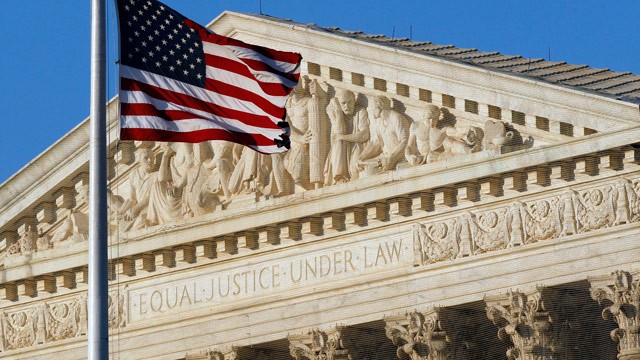
US flag flying at the U.S. Supreme Court’s west portico, suitable for Law Day, May 1. (But this photo was taken in June, 2012; Alex Brandon/AP)
Save
Save
Yes, this is mostly an encore post. Fighting ignorance requires patience.
Spread the word; friends don't allow friends to repeat history.
“Raising the first American flag, Somerville, Mass., January 1, 1776.” Harper’s Weekly painting by Clyde Osmer DeLand, 1897. From the digital collections of the New York Public Library; yes, MFB has used this painting before. I like it.
One problem with January’s flag flying dates is that if I snooze a little, you miss a lot. There are four flag-flying dates in the first five days of January: New Year’s Day and statehood days for Georgia, Alaska and Utah. You, Dear Reader, are alert and didn’t let any of those dates pass unmarked if you’re in those states, right?
There are six more dates to go in January 2021, including New Mexico’s statehood today. We’re not halfway done, yet.
In January 2020, the U.S. Flag Code urges citizens to fly flags on these dates, listed chronologically:
New Year’s Day, January 1, a federal holiday
January 2, Georgia Statehood Day
January 3, Alaska Statehood Day
January 4, Utah Statehood Day
January 6, New Mexico Statehood Day
January 9, Connecticut Statehood Day
Martin Luther King’s Birthday, a federal holiday on the third Monday of January; that date is January 18, in 2021; King’s actual birthday is January 15, and you may fly your flag then, too
Inauguration Day, January 20, the year after election years; 2021 will see the inauguration of President Joseph R. Biden (first President named Joe; what took so long?)
January 26, Michigan Statehood Day
January 29, Kansas Statehood Day
You may fly your flag any other day you wish, too; flags should not be flown after sundown unless they are specially lighted, or at one of the few places designated by Congress or Presidential Proclamation for 24-hour flag flying. According to Wikipedia’s listing, those sites include:
Fort McHenry, Baltimore, Maryland (Presidential Proclamation No. 2795, July 2, 1948).
Flag House Square, Albemarle and Pratt Streets, Baltimore, Maryland (Public Law 83-319, approved March 26, 1954).
Lexington Battle Green, Lexington, Massachusetts (Public Law 89-335, approved November 8, 1965).
White House, Washington, D.C. (Presidential Proclamation No. 4000, September 4, 1970).
Washington Monument, Washington, D.C. (Presidential Proclamation No. 4064, July 6, 1971, effective July 4, 1971).
Any port of entry to the United States which is continuously open (Presidential Proclamation No. 413 1, May 5, 1972).
Grounds of the National Memorial Arch in Valley Forge State Park, Valley Forge, Pennsylvania (Public Law 94-53, approved July 4, 1975).
Flag House in 1936, where Mary Pickersgill sewed the garrison-sized, 15-star flag that flew over Fort McHenry at the Battle of Baltimore in 1814; one of the sites where the U.S. flag may be flown 24 hours. The house is at 844 East Pratt & Albemarle Streets (Baltimore, Independent City, Maryland). Cropped image courtesy of the federal HABS—Historic American Buildings Survey of Maryland.
Save
Children unfurl a large flag at a Denver Nuggets/Indiana Pacers NBA basketball game in Denver, January 2016. Colorado Public Radio image.Yes, this is an encore post. Defeating ignorance takes patience and perseverance.
Spread the word; friends don't allow friends to repeat history.
A “living flag” composed of 10,000 sailors, or “Blue Jackets at Salute,” by the Mayhart Studios, December 1917; image probably at the Great Lakes training facility of the Navy. Gawker media image
November offers several flag flying days, especially in years when there is an election.
But December may be the month with the most flag-flying dates, when we include statehood days.
December 25 is Christmas Day, a federal holiday, and one of the score of dates designated in the Flag Code. If you watch your neighborhood closely, you’ll note even some of the most ardent flag wavers miss posting the colors on this day, as they do on Thanksgiving and New Years and Easter.
Other dates?
Nine states attained statehood in December, so people in those states should fly their flags (and you may join them). Included in this group is Delaware, traditionally the “First State,” called that because it was the first former England colony to ratify the U.S. Constitution:
Illinois, December 3 (1818, 21st state)
Delaware, December 7 (1787, 1st state)
Mississippi, December 10 (1817, 20th state)
Indiana, December 11 (1816, 19th state)
Pennsylvania, December 12 (1787, 2nd state)
Alabama, December 14 (1819, 22nd state)
New Jersey, December 18 (1787, 3rd state)
Iowa, December 28 (1846, 29th state)
Texas, December 29 (1845, 28th state)
December 15 is Bill of Rights Day, marking the day in 1791 when the Bill of Rights was declared ratified; but though this event generally gets a presidential proclamation, there is no law or executive action that requires flags to fly on that date, for that occasion. I predict there will be no proclamation from the White House in 2020.
Eleven flag-flying dates in December. Does any other month have as many flag flying opportunities?
Have I missed any December flag-flying dates? 11 events on 10 days (Delaware’s statehood falls on the anniversary of the Pearl Harbor attack).
Here’s a list of the 10 days to fly the flag in December 2020, under national law, in chronological order:
Delaware, December 7 (1787, 1st state) (shared with Pearl Harbor Remembrance Day)
Mississippi, December 10 (1817, 20th state)
Indiana, December 11 (1816, 19th state)
Pennsylvania, December 12 (1787, 2nd state)
Alabama, December 14 (1819, 22nd state)
New Jersey, December 18 (1787, 3rd state)
Christmas Day, December 25
Iowa, December 28 (1846, 29th state)
Texas, December 29 (1845, 28th state)
Fly your flag with respect, for the flag, for the republic it represents, and for all those who sacrificed that it may wave on your residence.
Appropriate to a snowy December. “The Barn on Grayson-New Hope Road. This barn with its old truck and ever-present American flag, is often the subject of photographs and paintings by the locals.” Photo and copyright by Melinda Anderson
Save
Save
Yes, this is an encore post. Defeating ignorance takes patience and perseverance. Plus, I like these photos.
Spread the word; friends don't allow friends to repeat history.
“Raising the first American flag, Somerville, Mass., January 1, 1776.” Harper’s Weekly painting by Clyde Osmer DeLand, 1897. From the digital collections of the New York Public Library
January is loaded with flag flying dates, when we add in statehood days, dates those states are invited to fly their U.S. flags.
In January 2020, the U.S. Flag Code urges citizens to fly flags on these dates, listed chronologically:
New Year’s Day, January 1, a federal holiday
January 2, Georgia Statehood Day
January 3, Alaska Statehood Day
January 4, Utah Statehood Day
January 6, New Mexico Statehood Day
January 9, Connecticut Statehood Day
Martin Luther King’s Birthday, a federal holiday on the third Monday of January; that date is January 20, in 2020; King’s actual birthday is January 15, and you may fly your flag then, too
Inauguration Day, January 20, the year after election years; 2020 is not an inauguration year; 2021 will be
January 26, Michigan Statehood Day
January 29, Kansas Statehood Day
You may fly your flag any other day you wish, too; flags should not be flown after sundown unless they are specially lighted, or at one of the few places designated by Congress or Presidential Proclamation for 24-hour flag flying. According to Wikipedia’s listing, those sites include:
Fort McHenry, Baltimore, Maryland (Presidential Proclamation No. 2795, July 2, 1948).
Flag House Square, Albemarle and Pratt Streets, Baltimore, Maryland (Public Law 83-319, approved March 26, 1954).
Lexington Battle Green, Lexington, Massachusetts (Public Law 89-335, approved November 8, 1965).
White House, Washington, D.C. (Presidential Proclamation No. 4000, September 4, 1970).
Washington Monument, Washington, D.C. (Presidential Proclamation No. 4064, July 6, 1971, effective July 4, 1971).
Any port of entry to the United States which is continuously open (Presidential Proclamation No. 413 1, May 5, 1972).
Grounds of the National Memorial Arch in Valley Forge State Park, Valley Forge, Pennsylvania (Public Law 94-53, approved July 4, 1975).
Flag House in 1936, where Mary Pickersgill sewed the garrison-sized, 15-star flag that flew over Fort McHenry at the Battle of Baltimore in 1814; one of the sites where the U.S. flag may be flown 24 hours. The house is at 844 East Pratt & Albemarle Streets (Baltimore, Independent City, Maryland). Cropped image courtesy of the federal HABS—Historic American Buildings Survey of Maryland.
Save
Children unfurl a large flag at a Denver Nuggets/Indiana Pacers NBA basketball game in Denver, January 2016. Colorado Public Radio image.Yes, this is an encore post. Defeating ignorance takes patience and perseverance.
Spread the word; friends don't allow friends to repeat history.
Or, until that account is unsuspended by the forces supporting Donald Trump: Follow @FillmoreWhite, the account of the Millard Fillmore White House Library
We've been soaking in the Bathtub for several months, long enough that some of the links we've used have gone to the Great Internet in the Sky.
If you find a dead link, please leave a comment to that post, and tell us what link has expired.
Thanks!
Retired teacher of law, economics, history, AP government, psychology and science. Former speechwriter, press guy and legislative aide in U.S. Senate. Former Department of Education. Former airline real estate, telecom towers, Big 6 (that old!) consultant. Lab and field research in air pollution control.
My blog, Millard Fillmore's Bathtub, is a continuing experiment to test how to use blogs to improve and speed up learning processes for students, perhaps by making some of the courses actually interesting. It is a blog for teachers, to see if we can use blogs. It is for people interested in social studies and social studies education, to see if we can learn to get it right. It's a blog for science fans, to promote good science and good science policy. It's a blog for people interested in good government and how to achieve it.
BS in Mass Communication, University of Utah
Graduate study in Rhetoric and Speech Communication, University of Arizona
JD from the National Law Center, George Washington University




 Posted by Ed Darrell











 Millard Fillmore's Bathtub