How to convince people DDT doesn’t cause polio?

December 11, 2023

Polioviruses in an electron micrograph. These little things cause the disease we call polio. CDC image via Wikipedia.

Fascinated with the drive by tech companies to sell the advantages of artificial intelligence (AI) machines to us.

Microsoft and Bing offer to answer any questions with their AI bot.

Why not give it a try?

I’ve been sorely disappointed at the festering swelling of people on social media in the past year who claim counter to history, science and common sense that DDT causes polio. As you might imagine, I’ve posted dozens of responses to these mislead goats.

U.S. President’s Malaria Initiative (PMI) Africa Indoor Residual Spraying (AIRS) Project found this warehouse with 119 tons of leftover, surplus and expired DDT in Ethiopia. In total, PMI AIRS Progect found 930 tons of unused DDT in Ethiopia, in 1,600 tons of expired pesticides total. Other nations have other surplus DDT stocks. Africa never suffered a shortage of DDT.

The claim that DDT (dichloro-diphenyl-trichloroethane), a pesticide, causes polio is a hoax. I asked Bing Chat with GPT-4, “How would I disprove the hoax claim that DDT causes polio?” Here is the response, which is really very good:

  1. Polio is caused by the poliovirus, not DDT: Polio is an infectious disease caused by the poliovirus1. It can be spread person to person through contaminated water and sometimes through respiratory droplets2.
  2. Polio predates DDT: Polio has existed since prehistoric times, while DDT was first synthesized in 18743.
  3. DDT was used to combat polio, but failed: Some communities used DDT to try to combat polio in the 1940s, but these efforts failed3.
  4. Polio was eradicated by vaccines, not the discontinuation of DDT: The polio vaccine, introduced in 1955, is credited with eliminating the disease in the United States23. The number of U.S. cases dropped to fewer than 10 in the 1970s, and polio was declared eliminated in the U.S. in 19792.
  5. DDT is not linked to polio or paralysis: According to a Centers for Disease Control and Prevention fact sheet, DDT is not linked to polio, let alone paralysis4.

These points, backed by scientific evidence and expert opinion, clearly disprove the claim that DDT causes polio. The eradication of polio is attributed to the widespread administration of the polio vaccine23.

Of course, I’ve tried all of those responses, and the true-brown “DDT causes polio crowd” won’t accept those arguments no matter who gives them.

Will more rational people accept it?


Annals of DDT: When they sprayed DDT from airplanes to stop polio

August 10, 2018

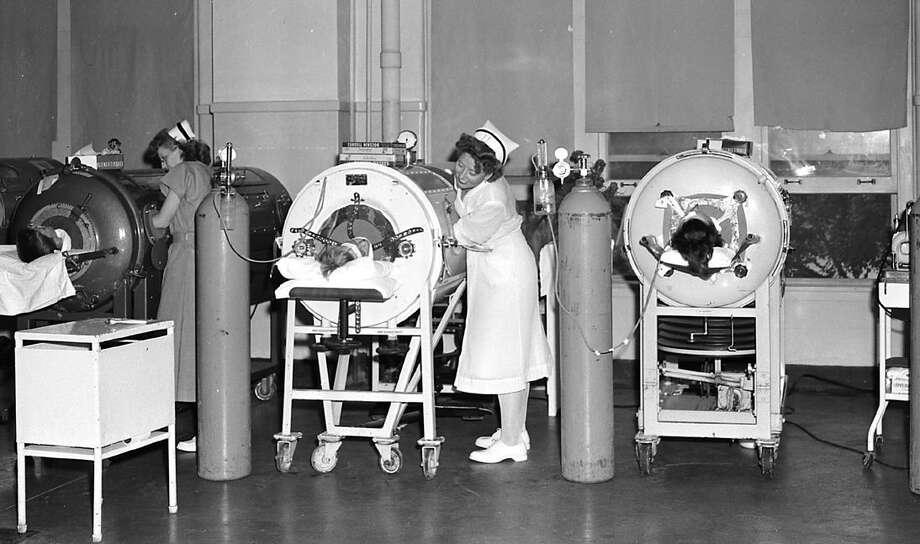
March of Dimes Foundation photo:

March of Dimes Foundation photo: “Nurses tended to polio patients in iron lung respirators at the Robert B. Green Memorial Hospital polio ward in San Antonio in 1950. It was a common scene throughout the polio crisis that swept Texas.” From the San Antonio Express-News article on the history of polio in the city.

It didn’t work.

In a desperate move to stop polio epidemics, after World War II but before the Salk polio vaccine was available, some American towns authorized aerial spraying of DDT over their cities.

Of course, DDT doesn’t stop viruses, and polio is a virus. Polio virus is not spread by a vector, an insect or other creature which might have been stopped by DDT, as mosquitoes spread malaria parasites and West Nile virus.

Aerial spraying of DDT against polio did not one thing.

A podcast from the Science History Institute discussed these misdirected events recently, and someone there did a sharp, short video to explain the issue.

YouTube explanation:

An animation drawn from episode 207 of Distillations podcast, DDT: The Britney Spears of Chemicals.

The podcast is a short 15 minutes, and fun, “Distillations.”

Americans have had a long, complicated relationship with the pesticide DDT, or dichloro-diphenyl-trichloroethane, if you want to get fancy. First we loved it, then we hated it, then we realized it might not be as bad as we thought. But we’ll never restore it to its former glory. And couldn’t you say the same about America’s once-favorite pop star?

We had a hunch that the usual narrative about DDT’s rise and fall left a few things out, so we talked to historian and CHF fellow Elena Conis. She has been discovering little-known pieces of this story one dusty letter at a time.

But first our associate producer Rigoberto Hernandez checks out some of CHF’s own DDT cans—that’s right, we have a DDT collection—and talks to the retired exterminator who donated them.

I bring it up here because in recent weeks there’s been a little surge on Twitter, and probably on Facebook and other places, in people claiming DDT causes polio, or causes symptoms so close to polio that physicians could never tell the difference. A lot of anti-vaccine advocates pile on, claiming that this would prove that the polio vaccine doesn’t work.

That’s all quite hooey-licious, off course. Polio’s paralysis of muscles in almost no way resembles acute DDT poisoning, which causes muscle misfiring instead of paralysis. As with almost every other disease, acute DDT poisoning can cause nausea; but DDT poisoning either kills its victim rather quickly, or goes away after a couple of weeks.

Polio doesn’t do that.

In the podcast, you’ll hear the common story of kids running behind DDT fogging trucks, because people thought DDT was harmless. In the concentrations in the DDT fogs, it would be almost impossible to ingest the 4 ounces or so of DDT required to get acute poisoning.

In any case, it’s one more odd facet of a long story of human relations to DDT and diseases. It’s worth a listen for history’s sake. But in this case, it’s entertaining, too. You’ll hear stories of people who opposed government actions to spray DDT, and who thought the government was too lax in its regulation and use of DDT.

More:

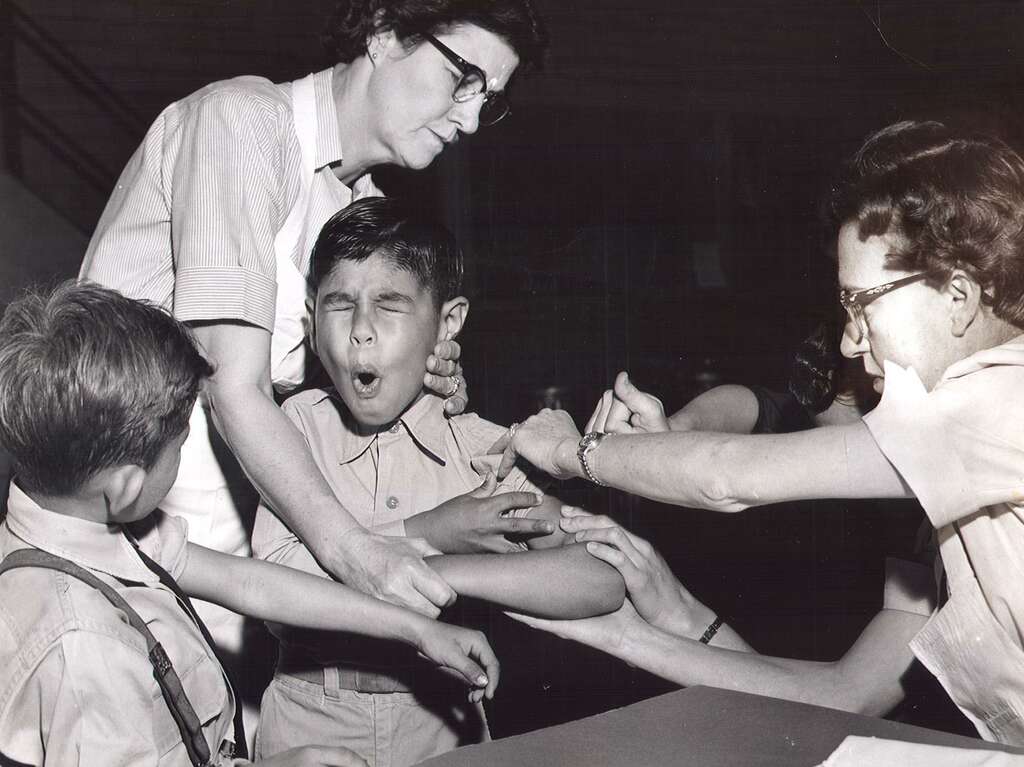
San Antonio Express-News file photo.

San Antonio Express-News file photo. “A young boy gets polio vaccine in this undated photo.”

Tip of the old scrub brush to Science History Institute (@SciHistoryOrg on Twitter).


January 30 – Happy birthday, Franklin Roosevelt

January 30, 2018

Franklin Delano Roosevelt greeted the world on January 30, 1882, in Hyde Park, New York. He was a “blue baby.” Sara Delano Roosevelt’s only child.

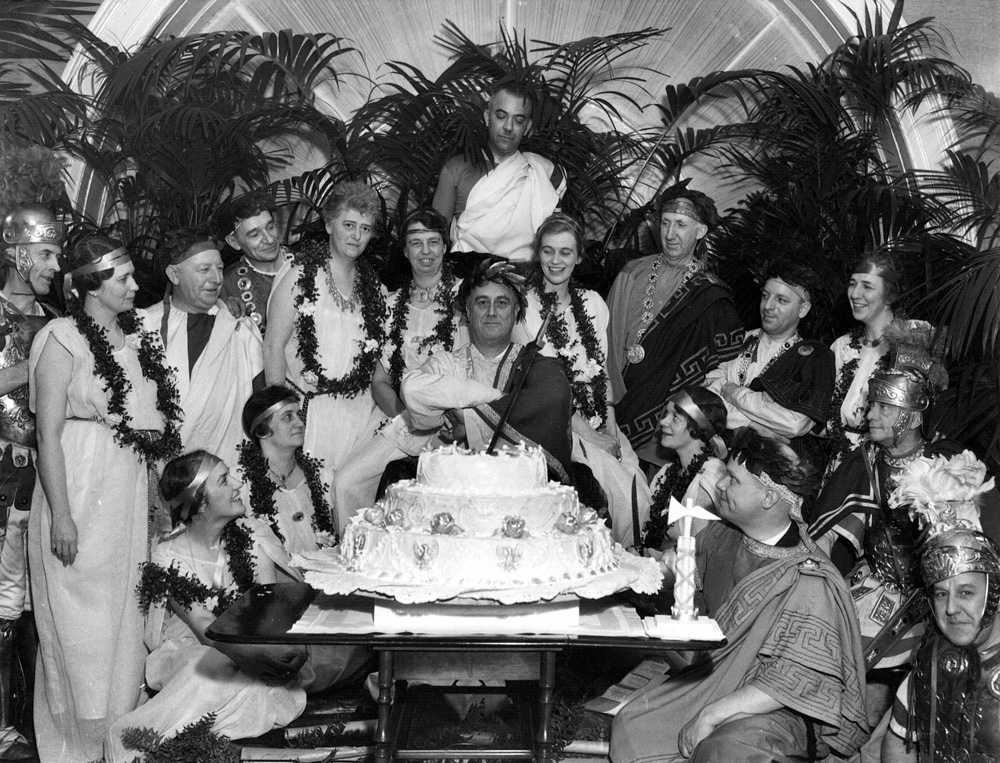
Franklin Roosevelt's 1934 toga-themed birthday party including the

Franklin Roosevelt’s 1934 toga-themed birthday party including the “Cufflinks Gang,” became a fund-raiser for the Juvenile Paralysis Foundation, the fore-runner of the March of Dimes which campaigned against polio. Each of Roosevelt’s subsequent birthday celebrations, except the one on the way to Casablanca, raised money to fight polio. Roosevelt Presidential Library and Museum image.

Roosevelt missed election to the vice presidency in 1924, but was elected president four times, in 1932, 1936, 1940 and 1944, dying in office in April 1945. Presidents now are limited to two terms.

More: