Celebrating darkness, ignorance, and calumny

August 1, 2008

Quote of the moment:

Darkness is cheap, and Scrooge liked it.

— Charles Dickens, A Christmas Carol, Stave 1

I thought of that line of Dickens’s when I read of this celebration of darkness, ignorance and calumny. Although, with the recent renewing of Limbaugh’s contract, it may no longer be true that his particular brand of darkness is cheap.

Still, it remains dark.

Scrooge meets Ignorance and Want, the products of his stinginess (drawing by John Leech, 1809-1870)

Scrooge meets Ignorance and Want, the products of his stinginess (drawing by John Leech, 1809-1870)

(More about the drawing below the fold)

Read the rest of this entry »


Exciting times dept.: New inflation control – no paper to print money

July 29, 2008

This year is an exciting time to be teaching history, government or civics, or economics. So many events in national politics and in the world expose the workings of government, politics and history, that teachers should have smoking scissors by the time they finish the morning newspaper.

From Agence France Presse - A Zimbabwean $50 million note in April, not enough to buy a banana

Image from The Guardian/EPA - A Zimbabwean $50 million note in April, not enough to buy a banana; worth less than $0.01 US now

Zimbabwe’s unbelievable inflation rates are textbook cases for economics and government teachers, aren’t they? Inflation has been running more than 1 million percent for some time. Reports I saw a few days ago said inflation is now at something like 2 million percent — in a story about a new currency being printed there, the Zimbabwean $100 billion note.

Authorities last week released a new $100 billion bank note. By Sunday it was not enough even to buy a scarce loaf of bread in what has become one of the world’s most expensive — and impoverished — countries.

Is that a cruel enough example to get the attention of high school economics students?

But the story has gotten even more bizarre. Even with a government making absolutely no effort to control inflation, supply and demand can put a crunch on affairs.

Zimbabwe has run out of paper upon which to print the money to pay government workers.

So the elaborate work by the despotic Robert Mugabe to keep his hold on the reins of power, the carefully planned murders of opposition political workers, the threats of violence if the vote didn’t go his way — all of that may come crashing down. Mugabe can’t print money to pay the thugs to terrorize the people. The thugs may turn on Mugabe.

The government is reported to have run out of paper to print money and is believed to be panicking over how to pay salaries for civil servants, especially soldiers and police who are the backbone of the Mugabe dictatorship. From AllAfrica.com, a report from SW Radio Africa:

Giesecke & Devrient, the European company that was providing the paper, was last month pressured to cut supplies by the German government, after protests were threatened. In addition, a company that provides the software licences for the design and printing of the banknotes, is reported to be considering withdrawing their contract.

The military has helped run the country for some years now and the Mugabe regime needs to sustain military and police operations in order to maintain political control. There is much consensus among observers that Mugabe’s recent decision to sign the Memorandum of Agreement with the two MDC formations was clearly based on increased economic pressure. One English pound this week is trading at Z$1.3 trillion.

Earlier in the week, Mugabe was out of the country trying to negotiate a power-sharing agreement with his opposition, Morgan Tsvangarai. What power will be left to share?

The software for the notes, which is supplied by a Hungarian-Austrian company called Jura JSP, is reportedly very technical. The UK Guardian newspaper quoted a ‘knowledgeable source’ at the Zimbabwe government’s Fidelity Printers, who said the software issue was a major problem and had created an air of panic. “They are in a panic because without the software they can’t print anything,” the source added.

Helmoed-Romer Heitman, the South Africa correspondent for Jane’s Defence Weekly (a global military security publication) said the situation faced by the regime is quite typical of many African countries that are falling apart. He said the result tends to be at least violent demonstrations, if not a mutiny by the military.

“Given the current situation in Zimbabwe, I am inclined to think that a lot of the military, certainly middle ranking officers and some seniors, are not all that enamoured of the party that is running the show”, said Heitman.

Oh, and that 2 million percent inflation?

With experts estimating that the inflation rate is currently at 15 million per cent, and pressure on those doing business with the Mugabe regime increasing, the economy has proved to be the straw that finally broke the camel’s back.

Today comes word that the government plans to revalue Zimbabwean money, lopping a few zeroes off, to make it sound more rational.

Observations: First, these are great examples to use in classes, stark contrasts of inflation out of control. Second, Mugabe is riding a tiger, finally, after holding power for several decades. He should study the words of Winston Churchill. Churchill wrote, in While England Slept:

“Dictators ride to and fro upon tigers which they dare not dismount. And the tigers are getting hungry.”

If you read this blog regularly, you may wonder with me, is there a malaria problem in Zimbabwe? If so, how will the wackoes blame all of this on Rachel Carson?

Resources:


Rape: A weapon of war

July 28, 2008

With very little fanfare U.S. Secretary of State Condoleeza Rice used her time at the UN recently to get a resolution through the Security Council that recognizes rape as an instrument of war (report from Global Sociology Blog).

UN Security Council (UN photo)

UN Security Council (UN photo)

Unfortunately the act got very little coverage in the U.S. press, so far as I can tell. (Please feel free to post links to articles you know about in comments.)

Mark this carefully, you’ll not read it often here: Kudos and thank you to Rice and the Bush Administration.

The UN News Centre reported:

In a resolution adopted unanimously after a day-long debate on women, peace and security, Council members said women and girls are consistently targeted during conflicts “as a tactic of war to humiliate, dominate, instil fear in, disperse and/or forcibly relocate civilian members of a community or ethnic group.”

The effect is to also prolong or deepen conflicts and to exacerbate already dire security and humanitarian conditions, particularly when the perpetrators of violent crimes against women go unpunished for their actions.

The resolution demands that all parties immediate stop sexual violence against civilians and begin taking measures, from the training of troops and upholding of military discipline procedures, to protect women and girls.

Sexual violence crimes should be excluded from amnesties reached at the end of conflicts, the 15-member Council added, calling on States to also strengthen their judicial and health-care systems to provide better assistance to victims of violence.

The resolution was adopted after dozens of speakers told the Council about the appalling effects of sexual violence during armed conflicts, with Secretary-General Ban Ki-moon saying the problem had reached “unspeakable and pandemic proportions” in some countries.

Mr. Ban announced he will soon appoint a UN envoy tasked entirely with advocating for an end to violence against women.

Opening today’s meeting, United States Secretary of State Condoleezza Rice said the truest test of the will of the international community was the protection it gave to the most vulnerable.

“When women and girls are raped, we cannot be silent… we must be their advocates,” Ms. Rice said.

See a second report here. Security Council report and resolution text here. The text of Resolution 1820 (2008) is listed below the fold.

International law develops quickly, but often out of sight of most people. This action is another in a long string of international agreements that build on the laws of war, and the laws of human rights. As part of the string of treaties including the Geneva Conventions on war, this offers a 21st century turn on the laws that gave rise to the International Red Cross, the rules of war, the war crimes trials following World War II, the drive for NATO and the UN to intervene in Bosnia, and it provides commentary on events and genocides in Turkey, World War II China and Europe, Cambodia, Guatemala, San Salvador, Rwanda, Congo and Darfur — and other places we don’t even know about yet. Each class will differ; these materials suggest topics for in-class debates about current issues seen through a lens of the experience of history.

The resolution and debates offer opportunities for Document Based Questions for AP and pre-AP course practice.

A look at some of the events in a reverse chronology of the issue, from the archives of the New York Times, reveals both the difficulty of getting this simple acknowledgement made, and the horrors of rape as a tactic or weapon.

Other Resources:

Read the rest of this entry »


400 years of river history: NY celebrates Hudson, Champlain and Fulton in 2009

July 26, 2008

Okay, it’s the 202nd anniversary of Robert Fulton’s historic, 32-hour steamboat trip from New York City to Albany, demonstrating the viability of steamboat travel for commerce on the Hudson.  But for such a historic river, why not delay that fete for a couple of years and roll it into the 400th anniversary of Champlain’s exploration of the lake that now bears his name, and Henry Hudson’s discover of the mouth of the river to the south, the Hudson, whose mouth is home to New York City.

400 years of Hudson River history in 2009 - Hudson, Champlain, Fulton

400 years of Hudson River history in 2009 - Hudson, Champlain, Fulton

And so 2009 marks the Quadricentennial Celebration on the Hudson, honoring Hudson, Fulton and Champlain.

Alas, the committee to coordinate the celebration along the length of the river was not put in place until February, so there is a scramble.  Local celebrations will proceed, but the overall effort may fall short of the 1909 tricentennial, with replicas of Hudson’s ship, Half Moon, and Champlain’s boats, and Fulton’s steamer, and parades, and festivals, and . . .

Still, the history is notable, and the stories worth telling.

Most of my students in U.S. and world history over the past five years have been almost completely unaware of any of these stories.  One kid was familiar with the Sons of Champlin, the rock band of Bill Champlin, because his father played the old vinyl records.  Most students know nothing of the lore of Hudson, the mutiny and the old Dutch stories that have thunder caused by Hudson and his loyal crewman bowling in the clouds over the Catskills.  They don’t even know the story of Rip van Winkle, since it’s not in the Texas Essential Knowledge and Skills (TEKS) list and so gets left out of even elementary school curricula.  Is this an essential piece of culture that American children should know?  American adults won’t know it, if we don’t teach it.

Henry Hudson, from a woodcut

Henry Hudson, from a woodcut

Explorations and settlement of Quebec by Samuel de Champlain get overlooked in post-NCLB texts.  Texts tend to make mention of the French settlement of Canada, but placing these explorations in the larger frame of the drive to find a route through or around North America to get to China, or the often-bitter contests between French, English, Spanish, Dutch and other European explorers and settlers gets lost.  French-speaking Cajuns just show up in histories of Texas and the Southwest, with little acknowledgment given to the once-great French holdings in North America, nor the incredible migration of French from Acadia to Louisiana that gives the State of Louisiana such a distinctive culture today.

French explorer and settler Samuel de Champlain

French explorer and settler Samuel de Champlain

Champlain’s explorations and settlement set up the conflict between England and France that would result in the French and Indian War in the U.S., and would not play out completely until after the Louisiana Purchase and War of 1812.

Fulton’s steamboat success ushered in the age of the modern, non-sail powered navies, and also highlights the role geography plays in the development of technology. The Hudson River is ideally suited for navigation from its mouth, north to present-day Albany.  This is such a distance over essentially calm waters that sail would have been preferred, except that the winds on the Hudson were not so reliable as ocean winds.  Steam solved the problem.  Few other rivers in America would have offered such an opportunity for commercial development — so the Hudson River helped drive the age of steam.

New York City remains an economic powerhouse.  New York Harbor remains one of the most active trading areas in the world.  Robert Fulton helped propel New York ahead of Charleston, Baltimore and Boston — a role in New York history that earned him a place in for New York in the U.S. Capitol’s Statuary Hall.  The steamboat monopoly Fulton helped establish was a key player in Gibbons v. Ogden, the landmark Supreme Court case in which the Court held that Congress has the power to regulate commerce between states — an upholding of the Commerce Clause against the old structures created under colonial rule and the Articles of Confederation.

Robert Fultons statute in the U.S. Capitol - photo by Robert Lienhard

Robert Fulton's statute in the U.S. Capitol - photo by Robert Lienhard

400 years of history along the Hudson, a river of great prominence in world history.  History teachers should watch those festivities for new sources of information, new ideas for classroom exercises.

Resources:


Rachel Carson: Nice lady scientist, no mass murderer

July 26, 2008

Aaron Swartz has the summary.  Start with the introduction here, and see the full text with links here.

He goes easy on the hoaxers, those who cast stones at Ms. Carson, but you still get the idea if you read the article.


What if we’re wrong about global warming? Bob Park sez . . .

July 25, 2008

4. UNCOOL: LOT OF HEAT FROM GLOBAL-WARMING DENIERS.
Suppose, I asked myself, that the deniers are right and the CO2 thing is a mistake? What will happen if the world takes the CO2 thing seriously, adopting common sense measures to counter anthropogenic warming and there never was any warming in the first place? 1) there will more non-renewable resources to leave to our progeny; 2) we will breath cleaner air and see the stars again, the way we saw them half a century ago; 3) we could stop paving over the planet, and 4) cut down on the number of billionaires. If we’re wrong we could have a party. We could have a party either way.

Robert L. Park, What’s New, July 25, 2008

At Millard Fillmore’s Bathtub, see also: “Starbucks controversy: The Way I See It #289 (global warming)”


Bloggers’ rights: A quandary

July 25, 2008

Freedom of expression is the key to all other rights in our American system of government, I am convinced. Defending the First Amendment becomes the way to defend all other rights. Telling the King he has no clothes, without fear of retribution, makes it possible to keep the King clothed.

I support most groups and efforts to defend and protect the First Amendment. I’ve been a member of the Society of Professional Journalists for most years since 1974, I’ve been a member of the National Freedom of Information coordinating committee, and I’ve worked in three states and the federal legislature to expand freedom of information, reporters’ access to information, and especially the people’s right to know.

In the press, there are few hard-core idiots. A few exist, but they are outweighed by the many who make sincere efforts to get the story right. That’s a long way of saying, it’s easy to support rights of people who aren’t always yapping at you.  Their existence puts me in a little quandary, and I need to resolve it.

Last night I found one more deluded, on-line writer working against the First Amendment and, IMHO, hammering away at the foundations of the Constitution in other ways. (Incredibly, this guy asked Jonathan Rowe to abandon commenting at his blog, suggesting Rowe’s carefully crafted, court-tested, generally take-’em-to-the-bank correct ideas about history are “lies.” Yeah, he has a right to hold foolish opinions.)

Does he have a right to do that, on-line?

Yes he does have that right. As I’ve often said before, I put a lot of stock into the old Ben Franklin maxim that truth wins in a fair fight. So we need to keep the fight fair.

We also need to defend the rights of bloggers whose work helps expose the truth, even at the expense of defending the deluded writers who get it wrong.

What are blogger’s rights and protections? The Electronic Frontier Foundation (EFF) put together a concise and nearly complete legal guide for bloggers — you can find it here.

EFF campaigns to protect and defend bloggers’ rights. Bloggers, and other supporters of freedom, should join that campaign. Millard Fillmore’s Bathtub will display a badge of the campaign to encourage others to join it.

Bloggers' Rights at EFF

Do you like freedom? Do you read a lot? Do you read on-line? Do you express your opinions? Then you have a vested interest in supporting these groups. Since you’re reading this on-line, you have a vested interest in supporting the Electronic Freedom Foundation’s work to defend bloggers’ rights. Click over to EFF, get informed, lend some support, and get involved.

This blog is banned in Turkey, prohibited from viewing in China, non-grata in much of Singapore and Iran, and blocked from the Duncanville, Texas, Independent School District.  I appreciate the freedom to blog, and I hope we can keep blogging free everywhere else, and make blogging free in those areas darkened by bans on expression.

(Okay, I like the cat in the one badge from the EFF — would it kill them to put a dog in one?)


Atomic bomb madness: A real blast

July 23, 2008

Truly the lazy days of summer — I missed the anniversary of the Trinity Project, the first atomic bomb ever exploded, at White Sands, New Mexico, early on the morning of July 16, 1945. That was 63 years ago.

The Trinity atomic bomb test, culmination of the Manhattan Project, July 16, 1945

The Trinity atomic bomb test, culmination of the Manhattan Project, July 16, 1945

The New Mexico blast demonstrated that atomic bombs work. President Harry S Truman got the word of the successful test while attending the Potsdam Conference with Winston Churchill of England and Joseph Stalin of the Soviet Union.

The Potsdam Conference, July 1945 - Churchill, Stalin, and Truman at the table - Photo from the Truman

The Potsdam Conference, July 1945 – Churchill, Stalin, and Truman at the table – Photo from the Truman

Truman hoped to avoid a land invasion of Japan, which experts said would leave at least a million dead U.S. soldiers and five million dead Japanese. Truman was a soldier in World War I, who saw the trenches close up. He hoped to avoid anything similar for soldiers, and civilians. From Potsdam, Truman, Churchill and Stalin issued the Potsdam Declaration, ending with an ultimatum to Japan to surrender unconditionally or face terrible consequences.

Japan did not surrender. On August 6, 1945, the U.S. detonated the first atomic bomb used in warfare over Hiroshima, Japan, a city with large military support facilities. Within a few minutes, nearly 100,000 people were dead. When Japan failed to offer unconditional surrender even then, a second atomic device was detonated over Nagasaki, Japan, on August 9. (Had Japan not surrendered then a scramble would have been on — the U.S. had materials for about four more bombs, but they were not ready to go.)

1945 launched the world into the Atomic Age, by many accounts. The existence of atomic weaponry added to tensions on the planet played out during the Cold War. The creation of thermonuclear weapons, many times as powerful as a simple atomic bomb, only added to the tension. Perhaps we should call it the Atomic Angst Age.

Does that explain the fascination with photos of atomic blasts in recent days?

Wired’s online version noted the anniversary and included a slide show of atomic milestones, featuring a few blasts.

Then this post, from a blog named Picdit — “8 Insane Nuclear Explosions” rode the top of the popularity index of WordPress for the past couple of days. I’m not sure why these photos or the events they portray deserve to be called “insane.” I’m perplexed about why they are so popular.

These events around the creation, testing and use of nuclear arsenals resonate deeply with those of us who lived through any of these times. High school students have tested poorly on these issues during the past five years, however. Many of my history students do not know the significance of the classic mushroom cloud that marks an atomic blast.

I hope the curiosity is genuine curiosity for the historic events, that this curiosity leads to understanding of the destructive power of nuclear weapons, and that those tens of thousands who clicked on those images achieved an iota of understanding. I hope.

The First Bomb at Bikini, Charles Bittinger, 1946 - Captured at the peak of formation, this painting illustrates the classic mushroom cloud shape. The pink color of the cloud is due to the oxidation of nitrogen caused by high heat and radiation from the explosion. The rapidly cooling fireball is the cause of the red glow seen deep within the cloud. The blast wave created the massive waves and steam that engulfed the target fleet at the bottom.

The First Bomb at Bikini, Charles Bittinger, 1946 – “Captured at the peak of formation, this painting illustrates the classic mushroom cloud shape. The pink color of the cloud is due to the oxidation of nitrogen caused by high heat and radiation from the explosion. The rapidly cooling fireball is the cause of the red glow seen deep within the cloud. The blast wave created the massive waves and steam that engulfed the target fleet at the bottom.” From the Naval Historical Center Art Collection.

Check out:


Quote of the moment: William Pitt, on the crime of being young

July 22, 2008

One of the philosophers of Rising Sun (CRS – LA Jonas Foundation) observed that it is impossible to be both young and brave, and old and wise. Age of our leaders often equates to experience. Age becomes an issue in election campaigns — Ronald Reagan, the previous record holder of the oldest person ever to run for a first term as president of the United States before John McCain, headed off arguments that he was “too old” with a zinger in a debate with Walter Mondale in Reagan’s campaign for reelection in 1984.

It was the second debate in 1984, from Kansas City’s Municipal Auditorium (To confuse our foreign readers, we should note that this is in Kansas City, Missouri; Kansas City, Kansas, is on the western side of the river, and is a city of less consequence than Kansas City, Missouri, in population, and in most discussions. We confuse our foreign readers in revenge for English politics, which pertains to the Quote of the Moment, but cannot be explained by or to a person who is not intoxicated). The debate focused on foreign policy and the future of the world. Among the panel of journalists doing the questioning in this deformed type of debate, was the late Henry Trewhitt, then diplomatic correspondent for The Baltimore Sun, one of America’s historically great newspapers, and still great.

About 20 minutes into the debate, Trewhitt asked this question:

REPORTER: Mr. President, I want to raise an issue that I think has been lurking out there for two or three weeks, and cast it specifically in national security terms. You already are the oldest President in history, and some of your staff say you were tired after your most recent encounter with Mr. Mondale. I recall, yes, that President Kennedy, who had to go for days on end with very little sleep during the Cuba missile crisis. Is there any doubt in your mind that you would be able to function in such circumstances?

Reagan sealed his reputation for wit, and probably sealed the election, with this previously-scripted (we know now) zinger:

REAGAN: Not at all, Mr. Trewhitt and I want you to know that also I will not make age an issue of this campaign. I am not going to exploit for political purposes my opponent’s youth and inexperience. If I still have time, I might add, Mr. Trewhitt, I might add that it was Seneca or it was Cicero, I don’t know which, that said if it was not for the elders correcting the mistakes of the young, there would be no state.

Former Vice President Walter Mondale, a great statesman in his own right, and no youth at the time, had a solid response, but not an election-winning response: It won no laughter. (It’s interesting, in 2008, to remember that Mondale was criticizing Reagan for his failure to act to prevent a terrorist attack on U.S. forces in Lebanon, that killed more than 200 Marines.):

REPORTER [Henry Trewhitt]: Mr. Mondale, I’m going to hang in there. Should the President’s age and stamina be an issue in the political campaign?

MONDALE: No. And I have not made it an issue nor should it be. What’s at issue here is the President’s application of his authority to understand what a President must know to lead this nation, secure our defense and make the decisions and judgments that are necessary. A minute ago, the President quoted Cicero, I believe. I want to quote somebody a little closer home, Harry Truman. He said the buck stops here. We just heard the President’s answer for the problems at the barracks in Lebanon where 241 Marines were killed. What happened? First, the Joint Chiefs of Staff, with the President, said don’t put those troops there. They did it. And then five days before the troops were killed, they went back to the President, through the Secretary of Defense, and said please, Mr. President, take those troops out of there because we can’t defend them. They didn’t do it. And we know what’s – what happened. After that, once again our embassy was exploded. This is the fourth time this has happened – an identical attack in the same region, despite warnings even public warnings from the terrorists. Who’s in charge? Who’s handling this matter. That’s my main point.

Which brings us to William Pitt’s remarks.

William Pitt, later Earl of Chatham, was 32 years old, and already a powerful member of the Whig opposition to England’s de facto first, and longest-serving Prime Minister, Robert Walpole, (who also was a Whig — see what I mean about English politics?). Though leading the opposition to Walpole, Pitt and a few of his colleagues were known as the Patriot Boys (Kansas City residing mostly in Missouri pales in comparison to these complexities of British politics).

Walpole, 32 years older than Pitt, leader of the House of Commons, complained at some point about Pitt’s youth. Walpole played dirty against Pitt, getting Pitt’s commission in the military cancelled. The two would dispute for a few years yet — finally, Pitt’s side prevailed, and Walpole lost a vote of confidence.

But on March 6, 1741, Pitt rose in the House of Commons and responded to Walpole’s charges:

“The atrocious crime of being a young man, which the honorable gentleman [Walpole] has with such spirit and decency charged upon me, I shall neither attempt to palliate nor deny; but content myself with wishing that I may be one of those whose follies may cease with their youth, and not of that number who are ignorant in spite of experience.”*

Walpole, Massachusetts, founded in 1724, is named after Robert Walpole. Pittsburgh, Pennsylvania, is named after William Pitt (the elder), as are Pittsfield County, Virginia, Chatham County, North Carolina (remember, Pitt was later Earl of Chatham), Pittsburg, New Hampshire, Chatham, New Jersey, and Chatham University, in Pittsburgh, Pennsylvania.

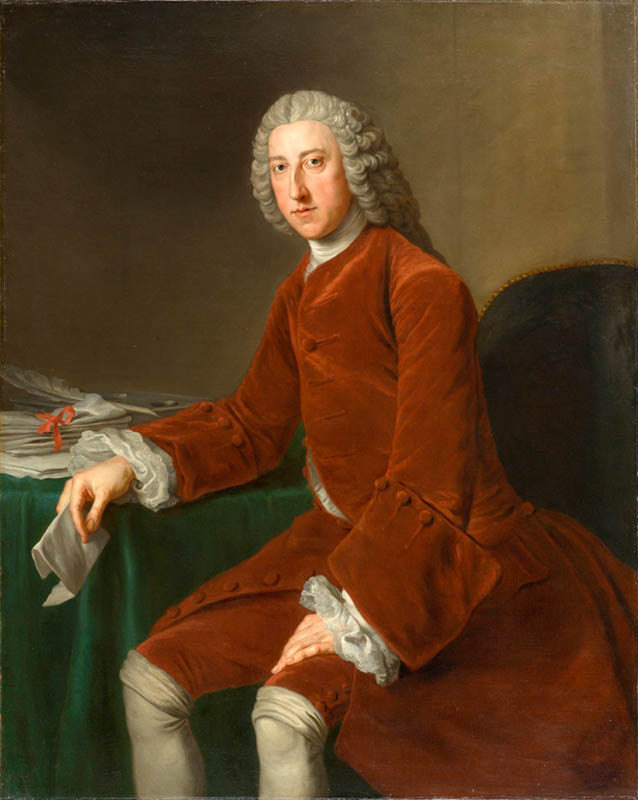
William Pitt, later Earl of Chatham

William Pitt, later Earl of Chatham

* Did Pitt ever actually utter these words? There was no official reporting service for debates in the House of Commons in 1741. Some speeches were written out before hand, some were carefully noted. This speech, alas, comes to us reported by the essayist and literature critic Samuel Johnson, who was famous for writing great speeches for members of the House of Commons, after the fact. Of this particular speech, Bartlett’s Familiar Quotations, 17th ed. carries this footnote: “This was the composition of Johnson, founded on some note or statement of the actual speech. Johnson said, ‘That speech I wrote in a garret, in Exeter Street'” – Boswell, Life of Johnson [1791]. If only Walter Mondale had Samuel Johnson whispering in his ear. Barack Obama may need the whisperings of Johnson in the current campaign.


Not for children, not for sleeping: Goodnight Bush

July 21, 2008

Goodnight Moon by Margaret Wise Brown and Clement Hurd is one of my favorite books of all time. I first read it when I was in college, but it was a toddler favorite of both of our sons, and it rapidly became one of mine, too. Reading it to them at bedtime helped calm them down and put them to sleep. There is from the book a feeling of safety, of warmth, coziness, and love. I may have liked reading it to them more than they liked being read to.

With our youngest off to college this fall, I wish there were some book to give them that would reproduce those good feelings of nearly 20 years ago.

::sigh::

Here’s what we have instead. Goodnight Bush.

This image is scary enough (see the bugging microphone? the burning ballot box? the tilted scales of justice? the polluting smokestacks?).

Cover of Goodnight Bush

Cover of Goodnight Bush

This is the one that makes the more serious statement:

Goodnight human rights, everywhere

Goodnight human rights, everywhere

A story on this book at NPR was the “most e-mailed” last week.

Images by Gan Golen and Erich Origen, Goodnight Bush, copyright © 2008, Little, Brown and Co.


Powerline jumps on the chance to screw up

July 19, 2008

As long as there’s a dogpile of screw-ups, Powerline thought they’d jump on, regarding the hoaxes about a change in position on global warming at the American Physical Society.

If a lot of people screw up, where’s the shame? Right?

Powerline said, contrary to the facts:

Most people do not realize that the U.N.’s IPCC report was a political document, not a scientific one. As such, it explicitly refused to consider any of the recent scientific work on carbon dioxide and the earth’s climate. That work seems to show rather definitively that human activity has little to do with climate change, which has occurred constantly for millions of years.

Anyone who still had illusions that Powerline thinks about anything before they post it, or that they have any controls on accuracy or care for the facts, has had that illusion shattered. Of course, Powerline is a political organ, with not a whiff of science about it.

Give a fool enough rope . . .

Other resources:


New book: Sex Trafficking by Siddarth Kara

July 18, 2008

1.  Siddarth Kara has written an important new book on trafficking in sex:

2.  Columbia University Press’s move into internet, viral videos to sell books is a good idea with decent execution, so far.


American history denialism

July 14, 2008

A new outbreak of David Barton has been noted. The Centers for Disease Control offer no help, but you can find some relief here, at American Creation, in a post by Brad Hart.

Tip of the old scrub brush to Ed Brayton at Dispatches from the Culture Wars, “Another Barton Debunking.”


“Louisiana’s exorcist governor”

June 30, 2008

I love the headline: “Anti-science law signed by Louisiana’s exorcist governor.”

Tony Whitson’s quick analysis is good, too.

One might begin to think Louisiana really is cursed. Katrina, Rita, other political troubles — and then they elect the bright, young reformer as governor, and he turns out to be a voodoo history and voodoo science practitioner — heck, maybe he practices just plain old voodoo.

All this comes at a time when it may have saved John McCain from making a mistake that would make George McGovern’s selection of Tom Eagleton look like wisdom of the ages (when news came out that Eagleton had undergone convulsive shock therapy for depression, he was replaced on the ticket by Sargent Shriver, but not after much damage had been done to the credibility and viability of the McGovern campaign — why Nixon thought it necessary to sponsor burglary to defeat this ticket is one of the mysteries of the ages of Shakespearian tragedy come to life in in American politics).

Mind you, I like and respect McGovern, and I found working with Tom Eagleton on the Senate Labor Committee a great joy.


Dobson group pushes religious nature of intelligent design, in New Zealand

June 29, 2008

In the end, Dr. James Dobson and other ideological Christians may be the worst enemies of the idea that intelligent design should be taught as science. They just can’t resist emphasizing that ID is, to them, good Christian doctrine.

In the latest outbreak, the New Zealand chapter of Dobson’s group Focus on the Family has sent copies of the DVD, “The Privileged Planet,” to 400 New Zealand high schools. Why?

Focus on the Family’s executive director Tim Sisarich said the material was intended to expose pupils to an alterative theory of cosmology.

“We’re a Christian organisation so we believe that God made the planet and God made the cosmos … Science takes a theory and tries to establish it as the truth, and that’s all this is.”

Education Ministry senior manager Mary Chamberlain said parents had a right to withdraw children from religious instruction.

This undercuts the lobby group, Discovery Institute (DI), which argues that intelligent design should be considered good science and not religiously related. The DVD in question features an intelligent design advocate, Guillermo Gonzalez, who was denied tenure at Iowa State University in 2007 — in that flap, DI argued that the DVD was good science, not religion.

Creationism does tend to require being flexible on the truth. When fundraising, or when trying to defend Christian ideas, intelligent design is Christian doctrine. When DI and others are trying to sneak ID into science curricula in the U.S., it’s not religion at all, but scientifically related.

Treating subjects in that fashion is a form of moral relativism, or to most people, simple dishonesty.

(The discussion at the site of the Dominion Post is quite lively; see what New Zealanders think of intelligent design.)

Tip of the old scrub brush to Dr. Bumsted at Grassroots Science.

Update: P. Z. Myers at Pharyngula was already on it. Morris, Minnesota is just such a hub of scientific activity, it’s difficult to stay ahead of Dr. Myers when we’re stuck here in what appears to be the scientific backwater of Dallas.