Fly your flag April 28: Maryland statehood day

April 28, 2013

U.S. and Maryland flags flown together. Photo from the Maryland Secretary of State's office.

U.S. and Maryland flags flown together. Photo from the Maryland Secretary of State’s office.

Maryland’s convention to ratify the Constitution voted approval on April 28, 1788, the sixth of the former British colonies to ratify.

April 28 is considered Maryland’s statehood date.  According to the suggestions for proper times to fly the U.S. flag, Marylanders should fly their flags on April 28.

It’s only my opinion, but I think there is no grander display of a state and U.S. flag than with Maryland’s.  Maryland’s flag is a unique design in the state flags, and it features colors not common to state flags.  Our displays of both flags at our Maryland home often drew comments from passers-by (we lived on the street leading to the town’s Metro stop, so there was a lot of foot traffic.

Maryland’s flag features the two family crests of George Calvert, the First Lord Baltimore.  In Maryland law it’s described:

The Maryland flag is divided into four quarters. The first and fourth quarters consist of six vertical bars alternately yellow (representing gold) and black with a diagonal band on which the colors are reversed. The yellow and black quarters represent the family arms of the first proprietor of Maryland, George Calvert, first Lord Baltimore. The second and third quarters consist of a quartered field of red and white (representing silver) bearing a Greek cross with arms terminating in trefoils. The colors in the second and third quarters alternate, with red on the white ground and white on the red. The red and white quarters display the arms of Lord Baltimore’s maternal family, the Crosslands.

The flag was officially adopted only in 1904.  Maryland also has a detailed, but not too lengthy set of instructions on proper display and other care of the state flag.
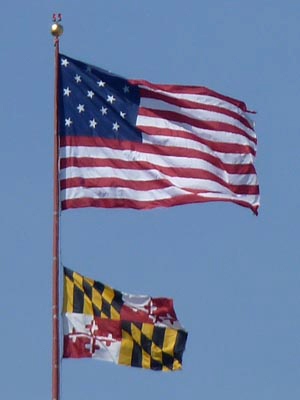
Historic 15-star/15-stripe U.S. flag, and Maryland flag, in Baltimore

From the W&M Blogs: “American and Maryland flags flying high over downtown Baltimore. Just why does the American flag have 15 stars and stripes? Think about Baltimore’s Fort McHenry and Francis Scott Key.”

Baltimore Harbor is home to Fort McHenry, the fort whose siege inspired Georgetown lawyer Francis Scott Key to write a poem about the U.S. flag, which became our national anthem.  Partly due to this history, U.S. flags in Maryland often are the historic, 15-star/15-stripe flag that inspired Key.

More:

Maryland flag on the cover of a Justice League of America comic book.

Maryland flag on the cover of a Justice League of America comic book.

Save


Fly your flag on Valentine’s Day? Okay in Oregon and Arizona

February 14, 2013

Some wag e-mailed to ask about flying the flag for Valentine’s Day.

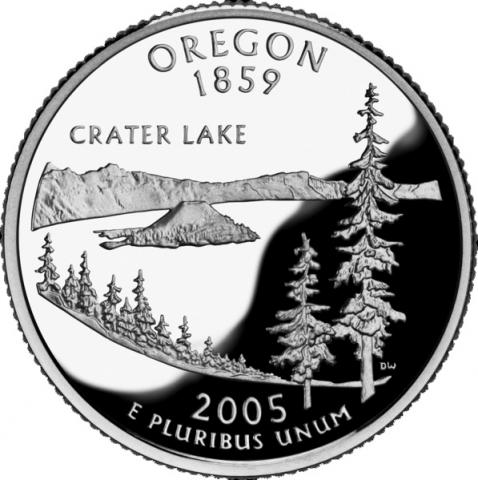
Reverse of Oregon quarter

Oregon entered as the 33rd state in 1859 – this is the Oregon commemorative quarter-dollar coin.

Legally, nothing stops a resident from flying the U.S. flag following protocol on any day.  So the short answer is, yes, you may fly your U.S. flag on Valentine’s Day.

The Flag Code urges flying the flag on the day a state achieved statehood, too.

So for Oregon and Arizona, there is an expectation that residents will fly their flags.  Oregon came into the union on February 14, 1859; Arizona joined the Republic as a state in 1912.

Taft signs Arizona statehood papers, February 14, 1912

President William Howard Taft signed the papers accepting Arizona into statehood, on February 14, 1912. He still finished third behind Democrat Woodrow Wilson and Bullmoose Party’s Teddy Roosevelt in that fall’s elections. Photo found at Mrs. Convir’s page, Balboa Magnet School  (Can you identify others in the photo?  Who is the young man?)

More:


January 9 – fly your flag today for Connecticut statehood

January 9, 2013

There were not states at all, yet.  But on January 9, 1788, Connecticut became the fifth of the 13 colonies to ratify the proposed Constitution for the United States of America.  Within 12 months, four more colonies ratified the document, making it effective.  When the government of the new nation started functioning in 1789, Connecticut was counted as the fifth state.

Connecticut capitol building, Hartford

Capitol building for Connecticut in Hartford; this photo is from the rear of the building, so the U.S. flag is flying correctly on its own right. The building was completed in 1878. The dome is covered in gold. Image from Wikimedia Commons

To avoid political scheming by anti-federalist colony governors, especially Patrick Henry in Virginia, in September 1787 James Madison proposed that the draft constitution be ratified not by legislatures in the colonies, but instead by a specially-called convention of the people of the colony.  Connecticut’s convention met first on January 3, 1788, and with six days of discussion and debate, passed a resolution of ratification on January 9.

So by tradition, January 9 is Connecticut’s statehood anniversary.  According to U.S. law, citizens and residents of a state should fly their flags on statehood anniversaries.

More:

Carol Highsmith photo of Connecticut's Hall of Flags

Hall of Flags in the Connecticut State Capitol Building; photo by the great photo-historian Carol Highsmith, from the Library of Congress collection; the statue is Connecticut’s Civil War Governor, William A. Buckingham (1804-1875), honored for his personal contributions to the equipping of Connecticut’s men fighting in the Civil War;.


Utah statehood: A coda, and a flag code violation

January 6, 2013

Holly Munson at the Constitution Center wrote up a piece about Utah’s perhaps odd path to statehood, certainly complementary to my reminder that you could fly your flags on January 4, to honor Utah’s statehood, under the U.S. Flag Code.  Munson’s piece was distributed on Yahoo! News.

Her report is very solid, even though brief.  Utah history is nothing if not a convoluted path to statehood through what amounted to a civil war, the Mexican War, the discovery of gold in California, the transcontinental railroads, mining and immigration, Indian wars, old west shootouts, rampant environmental destruction with sheep grazing and mineral extraction and smelting, union strife, astonishing agricultural applications, and a lot of books written from tens of thousands of Mormon pioneer journals — Mormonism appears to be impossible without ink and paper and time to write.

Go read her story.

What caught my eye was the George W. Reed photograph of the Salt Lake City Temple of the Church of Jesus Christ of Latter-day Saints — the LDS, or Mormon church.  The Temple and the Tabernacle, also in the photo, both have their own unique architectural histories, and quirks that make them noteworthy purely from architecture.  (This George W. Reed should not be confused with the Civil War Medal of Honor winner, George W. Reed)

Reed was an early photographer for newspapers in Salt Lake City, and he took some wonderful photos for posterity.  He was also a founder of the leading non-Mormon paper in the state, The Salt Lake Tribune.  At points in its history, it’s been known as an anti-Mormon paper.  The University of Utah’s library holds about five dozen of his photos in their collection, indexed electronically if not quite available yet; there Reed is described:

A pioneer in the development of Utah newspapers, George Reed was originally employed by the Deseret News and in 1871 helped in establishing the Salt Lake Tribune. His photographs include nineteenth century views of Salt Lake City, individuals at Reed’s Avenue home, Wasatch Resort in Little Cottonwood Canyon, and a photograph of the American flag hung on the Salt Lake Temple in 1896 to commemorate Utah’s statehood.

In the collection of Utah State University, in Logan, Reed has yet more papers.  There we get a bit more of his history:

A pioneer in Utah journalism, George W. Reed was born in London, England, on April 7, 1833. He emigrated to Utah in 1862 and became manager of the Deseret News, a position he held until 1871 when he founded the Salt Lake Tribune. In 1882, after a decade at the Tribune, Reed sold his interest in the paper to P. H. Lannan. He married Elizabeth Tuddenham in 1866 and passed away December 1, 1909.

U.S. flag on the Mormon Temple, at Utah statehood in 1896

The Mormon Temple in Salt Lake City, Utah, draped with a U.S. flag in 1896, commemorating the completion of Utah’s statehood campaign when President Grover Cleveland declared Utah a member of the Union. Photo by George W. Reed; Reed worked for the Deseret News, and helped found the Salt Lake Tribune. I do not know whether this photo was published in either paper.  From the George W. Reed Collection, University of Utah Libraries.

Yes, you’re right!  That flag is backwards.  Well, it’s backwards according to the modern U.S. Flag Code, which specifies that when hung from a building, the flag’s union should always be in the viewer’s upper left corner (“northwest” corner were it a standard map).  In the photograph, the union is in the opposite corner.  No, we know the photo is not reversed, because it accurately portrays the location of the Tabernacle, to the west and slightly south of the Temple.

But we hear the protests:  The U.S. Flag Code did not exist in 1896!  How can that be a violation of a code that did not exist?

That’s right, too.

That is an indication that the traditions of flag display that some people get riled up about, that many people think we should amend the Constitution to protect, are new inventions more than old traditions.  Flag code violations are legion by well-meaning citizens celebrating the flag and patriotism, and rare by anyone with any malignant motives.

After a 49-year fight for statehood, through wars with the U.S., fighting with the U.S. forces in Mexico, the administrations of several presidents and 25 different U.S. Congresses, and pledges to change the rules of the church to ban polygamy and put that ban in the state constitution,  the people of Utah, especially the Mormon officials, were not trying to insult America by displaying the flag incorrectly.  Somebody said ‘fly the flag from the Temple,’ and some engineer or custodian got it done.  By 1896, most of the First Amendment litigation done in the U.S. had involved whether Mormons could keep their marriage policies (Mormons lost).  There was no intent to violate any rule of separation of church and state — nor would that be considered a violation today.  Churches may fly the nation’s flag with all the approval that suggests; it’s the government which may not fly a church’s flag.

Finally, there is no grand story in the flag’s being flown backwards.  It’s just one of those historical footnotes that mark the changing mores of the times, in this case, for standards of how to fly the U.S. flag.

Perhaps Utah history textbooks should make note of the day the U.S. flag was flown, backwards, to honor statehood.

More, and related resources:


January 4 – Fly your flag for Utah statehood

January 4, 2013

Utah Capitol, with flags

South entrance (main) to the Utah State Capitol, with U.S. and Utah flags flying on the single flag poll, and the snow-dusted Wasatch Mountains in the background. Utah State Law Library photo.

Utah joined the Union on January 4, 1896.  It had been a 49-year slog to statehood for Deseret, the Mormon settlement in the Desert.  The size had been pared down, so it would not be the biggest state, incorporating parts of what is now Nevada, Arizona, Oregon, Idaho, Colorado and New Mexico.  New capitals had been tried and cast aside (Fillmore, Utah).  Democratic Party rule was broken when LDS church authorities went door-to-door, calling every other family to the Republican Party, and party parity.  The Mormon Church abandoned polygamy, and adopted a state constitution that gave the vote to women.

Finally, Utah became the 45th state.

You may fly your U.S. flag today for Utah statehood, especially if you’re in Utah.

More:

U.S. flag in Capitol Reef NP

U.S. flag flying at Capitol Reef National Park, in Utah. Photo by longyang0369, via Flickr


Texas Statehood, December 29, 1845 – 167 years ago

December 28, 2012

texas our texas

U.S. and Texas flags at the Texas Capitol – photo: jmtimages

167 years ago today: Rub your pet armadillo’s belly, slaughter the fatted longhorn, crank up the barbecue pit with the mesquite wood, put Willie Nelson and Bob Wills on the mp3 player, put the “Giant” DVD on the television, and raise your glass of Big Red, Dr. Pepper, or Lone Star Beer (or Pearl, or Shiner Bock, or Llano Wine).

U.S. Flag Code rules urge flying the U.S. flag on the anniversary of a state’s joining the Union — even as much as that will frost the tiny band of desperate Texas secessionists.  (Will the secessionists fly the Texas flag at half-staff?)

Texas was admitted to the union of the United States of America on December 29, 1845.

President Polk's authorization to affix Great Seal of the U.S. to Texas Statehood documents

President Polk’s Authorization to Affix the Great Seal to Texas Statehood documents – Texas Memorial Museum, University of Texas at Austin

The text of Polk’s message:

I hereby authorize and direct the Secretary of State to affix the Seal of the United States to an authenticated copy of “an act to extend the laws of the United States over the State of Texas and for other purposes” approved Dec. 29, 1845 dated this day, and signed by me and for so doing this shall be his warrant.

James K. Polk
Washington, Dec. 29, 1845

Seal of the U.S. affixed to Texas Statehood Proclamation

Great Seal of the United States of America, affixed to the Texas Statehood Proclamation – image from State Archives Division, Texas State Library

Resources:

More:


Iowa Statehood, December 28, 1846 – Iowans, fly your flags today

December 28, 2012

Iowans may fly their flags today in celebration of the anniversary of Iowa statehood.  Iowa’s admission to the Union came on December 28, 1846; Iowa was the 29th state admitted.

The Flag Code, 4 USC §6 (d), notes that the U.S. flag may be flown on “the birthdays of States (date of admission),” in addition to the other score of dates specifically written into law.

Randy Olson photo of flags at rodeo in Spencer, Iowa, 1996

American Flag, Spencer, Iowa, 1996caption from the National Geographic Society: A man rolls up U.S. flags at the end of the Clay County Fair in Spencer, Iowa. “Although the population of Spencer is only about 12,000, the fair draws some 300,000 visitors. Once a year, rising from the endless flatness of the Iowa countryside, a crowd forms—to stroll, to hear big country music acts like the Statler Brothers, to sell a grand champion boar, to buy a new silo.” (Photographed on assignment for, but not published in, “County Fairs,” October 1997, National Geographic magazine) Photograph by Randy Olson; copyright National Geographic Society


Texas Statehood, December 29, 1845

December 29, 2011

166 years ago today: Rub your pet armadillo’s belly, slaughter the fatted longhorn, crank up the barbecue pit with the mesquite wood, put Willie Nelson and Bob Wills on the mp3 player, put the “Giant” DVD on the television, and raise your glass of Big Red, Dr. Pepper, or Lone Star Beer (or Pearl, or Shiner Bock, or Llano Wine).

Texas was admitted to the union of the United States of America on December 29, 1845.

President Polk's authorization to affix Great Seal of the U.S. to Texas Statehood documentsPresident Polk’s Authorization to Affix the Great Seal to Texas Statehood documents – Texas Memorial Museum, University of Texas at Austin

The text reads:

I hereby authorize and direct the Secretary of State to affix the Seal of the United States to an authenticated copy of “an act to extend the laws of the United States over the State of Texas and for other purposes” approved Dec. 29, 1845 dated this day, and signed by me and for so doing this shall be his warrant.

James K. Polk
Washington, Dec. 29, 1845

Texas Statehood - Great Seal of the U.S., State Archives Division, Texas State Library

Great Seal of the United States, as affixed to Texas Statehood proclamation - image from State Archives Division, Texas State Library

Resources:


7th time the charm: Exhibit on Utah’s becoming the 45th state

January 19, 2010

Interior of main floor (second floor) of Utah Capitol, looking west from the Rotunda to the House of Representatives' chamber - Wikimedia photo by BigBen

Interior of main floor (second floor) of Utah Capitol, looking west from the Rotunda to the House of Representatives' chamber - Wikimedia photo by BigBen

Got a couple of hours in Salt Lake City?

Utah’s copper-domed capitol building is among my favorites in the U.S. for style and grace.  The high-hillside location gives one a hawk’s eye view of Salt Lake City and especially State Street (which runs, by tradition, south about 400 miles to the Utah-Nevada border).  So it’s a good piece of architecture to tour.

Starting March 3, it will also have a display on Utah’s many attempts to become a state.  Between 1847 and 1896 when finally admitted to the union, Utah submitted seven different constitutions trying to get approval of Congress.  Utah relocated its capital to the center of the state, named the town Fillmore and the county Millard to flatter the sitting president.  That didn’t work, either.  Later the capital was moved back to Salt Lake City, nearer to where most of the people resided.

To assuage fears that Utah would upset the balance of power in Washington, at one point Latter-day Saint church authorities designated every-other household Democrat or Republican, giving Utah a 50/50 split electorate that survived in that fashion until the 1970s.

It’s all there at the exhibit, in the capitol building.

It took 7 Constitutions and 47 years to get Utah admitted as the Nation’s 45th state. The Utah State Capitol celebrates that effort in a free exhibit opening on March 3,2010. Open March 2010 through Jan. 2011! Free to the Public! Docent guided tours available! For more information visit www.utahstatecapitol.utah.gov Hours: Mon-Fri: 8 a.m. – 8 p.m. Sat & Sun: 8 a.m. – 6 p.m. This exhibit is a building-wide exhibit. Main displays are located on the 1st and 4th floors. Ask any Capitol Docent for additional help.

Tip of the old scrub brush to UtahPolicy.com.

Utah Capitol, dlmark photo

Utah Capitol, photographed from the headquarters of the LDS Church - dlmark photo