Listen to your teachers . . . you politicians

May 26, 2007

Long-time friend John Florez erupts at the Deseret News in Salt Lake City from time to time.  Back on April 2, when the Utah legislature was still wrestling with vouchers, a budget surplus and a vastly underfunded education system, Florez had some gentle advice to policymakers everywhere:  “Policy makers must heed teachers’ views.”

      Politicians ought to listen to what the teachers think is needed to improve education. For starters, they want smaller class sizes and an environment that gives them the opportunity to do the most important thing: challenge and motivate students to learn. One wrote that after 30 years of teaching he has “…discouraged … nieces and nephews from taking up the career. What a shame when there is so much possible with all these young minds.” Another wrote that her school had a student teacher quit halfway through, frustrated because the students wouldn’t work; phoning parents resulted in getting an earful, and the principal made little effort to back her up.
The following year, the school had an opening so they phoned her “…to see if she wouldn’t try again at our school.” The reply: “Thank you, if I ever came back it would be there, but never. I have a job now with great opportunities to grow and a great working environment.”

But, John — would better working conditions really help pass the standardized tests?

Some principals and administrators of which I am aware haven’t found the sign yet, but would put it up if they had it:

The daily floggings of staff will continue until morale improves!

They wouldn’t mean it as the joke it was originally intended; or even if they did, the staff would know differently.


Girls and technology: Girl Scouts on the ‘net

May 26, 2007

Here, try this brain teaser.

Girl Scouts of America can be found on the web; some of the stuff at this “Go Tech” site could be useful in the classroom. The design appears to encourage girls to pursue the use of technology, and to open them up to possibilities for careers where women are badly needed, but too seldom go. That becomes clear with this .pdf, 14-page guide for parents, It’s Her Future: Encourage a Girl in Math, Science and Technology.

I wish more organizations would put up sites for kids to use to learn. I’d love to see some interactive sites with great depth on several topics: Geography map skills, navigation, European explorers in the 15th through 20th centuries, market fluctuations for commodities and securities (for economics), Native Americans from 1500 through the 21st century, westward expansion of European colonists in America, time lines of history, great battles, etc., etc. etc.

We are missing the boat when it comes to using computers as tools for learning. Like unicorns and centaurs standing on the dock as Noah sailed away, education as a whole institution and educators individually are missing the boat (with a few notable exceptions — pitifully few).

Where is the Boy Scout site with games and material for the boys?


Mining the Internet Archive: Education reform

May 22, 2007

Do we use enough different media in our classrooms?

In my continuing search for sources of useful and inspiring video and audio stuff, I keep running into the Internet Archive. A few of Dorothy Fadiman’s thought-provoking films can be viewed there, including this one some of us may recall from past PBS broadcasts, which features nine schools that appear to work well: “Why Do These Kids Love School?” (1990)

Now I have two questions: First, since 1990, how have these schools fared? Second, since 1990, have we learned anything really significant about how students learn that would change our views of what goes on in these schools?


Where are your student blogs?

May 19, 2007

While you’re wondering about how to get your podcast going, have given much attention to getting your students blogging?  Student blogging is a great classroom tool, to generate interest, and to help gauge progress.  Here’s one from fifth graders, on science:  Steve Spangler.

Let me also mention this site, The Living Classroom, which shows how blogging can be integrated into a great program for very young students — kindergarten, first grade, etc.


Notes from the Sub Terrain: Drafting class

May 18, 2007

[Another in an occasional series of stories from a substitute teacher.]

In the days prior to the Civil Rights Act of 1964 (and for many years after, really), in our district every 7th grade male took wood shop, and every female took home economics.  The wood shop course included a half year of drafting.   Shop courses continued annually after that for anyone so inclined, and a lot of people were. 

In our not-yet-suburban community, the skills of using high power tools were highly prized.  Every male was expected to know how to bend metal, use a torch or electric welder.  Farm kids were expected to know how to castrate sheep, turn a calf that started down the birth canal the wrong way, put crude shoe on a horse in an emergency when the farrier was too far away. 

Houses came with as few as two bedrooms.  Every man was expected to be able to plan out the additions as the babies came, and build the things – laying out the plans, getting the permits, calculating the lumber required, laying the foundation, wiring and plumbing as necessary, putting up the lath and plaster, or later, dry wall, making the trim, laying carpet or tile, painting and finishing.

Kids in Texas can take a shop course or two in high school, but especially under the scheme of the No Child Left Behind Act, the skills of drawing up plans for a room or a chest of drawers, and executing the plans, are skills of little regard. 

Drafting was always fun, though.  The architect’s rule, protractor and S-curve were exotic tools, and we took great pride in mastering their use.  Shop instructors usually had  story or two about George Washington as a surveyor, and Thomas Jefferson as inventor. 

Drafting is still fun, but it’s a different course completely.  The course is all electronic.  The drafting room is cool to keep the computers cool, and the software is fantastic.  Drawings are printed out on 3-foot-wide sheets of paper by large ink-jet printers that make a graphic display-oriented teacher salivate.  When I lamented the lack of the tools we had used, the kids said that they had spent several weeks using them at the start of the year – and then they switched to computers.  They said it was the difference between horse and buggy and jet airplanes. 

About half-way through the first block, a student came in with a note from another class.  His teacher said he’d finished his work there, and he was free to do drafting.  He booted up a machine, spent about 20 minutes in furious action completing a blueprint for a building.  With about 15 minutes left in the class, he hollered to another student across the room that the student had pulled a dirty move.  Immediately five or six others commented on it – and it became clear they were deep into a group role play game.  Hard work, then hard play.

As with the basketball class, discipline was no problem.  The students, with savvy that  made it look easy, took care of the class details.  Their own discipline got them through work they claimed to be fun, and then they moved on to what would be distracting frivolity, had they not completed everything else first. 

A lesson in motivation is buried there, somewhere.


Another intelligent design advocate denied tenure

May 14, 2007

News out of Ames, Iowa, is that intelligent design advocate, physicist and astronomer Guillermo Gonzalez, was denied tenure at Iowa State University.

Advocates of intelligent design will argue this as evidence of a bias against counter ideas, part of a massive, monolithic conspiracy to hide the truth about intelligent design. Gonzalez will be more circumspect, at least until his appeal of the tenure denial is finished.

Another friend of intelligent design, Dr. Francis Beckwith, a philosopher, was originally denied tenure at Baylor last year. His appeal was successful, however, and he now has tenure at Baylor, though he is moving from the Institute for Church State Relations to the philosophy department. Beckwith also made a splash in conservative evangelical news recently when he made public his return to the Catholic church.

I can’t speak for Iowa State, but it has been my experience that professors who get tangled up in crank science projects get distracted from the work that will get them tenure. While faculty certainly have free speech rights to advocate causes, much of the backing for intelligent design is sub-standard academically, or even bogus.  Such advocacy does not help a case for tenure.

Advocates argue that Gonzalez has more than enough publications to meet the standards set by Iowa State, but the numbers do not account for how many of the publications may be in suspect journals that support intelligent design, nor do they account for the publicity an ardent ID advocate brings to a department which is often unwanted. Faculty at Iowa State collected 120 signatures on a petition disowning intelligent design, in what they billed was an attempt to convince the outside world that Iowa State is not “an intelligent design school.”

ID advocates frequently miss the point that science is not a game of racking up publication points, and that the quality and accuracy of the research also plays an important role in tenure decisions.

Wailing and gnashing, and perhaps rending of garments, from the ID group should begin any moment now.


Carnival still in town? We didn’t miss it?

May 13, 2007

History Carnival 52 was up on May 1 at Clioweb. What sort of a fog have I been in? Check out especially this post at Food History, demonstrating several uses of critical thinking tools as they might analyze the bizarre idea that most meat in Middle Ages Europe was rancid, thereby leading to a rise in the use of spices. Spices don’t make up for stomach cramps, for example. There must be some sort of critical thinking exercise in there for a world history class.

Carnival of the Liberals 38 came online earlier this week, at This Is So Queer. With fires raging in the hills around Burbank — documented with eerily beautiful photography — a fire of war in Iraq, and a fire around the Second Amendment, posts collected at the carnival offer fuel for intellectual fires on big issues.

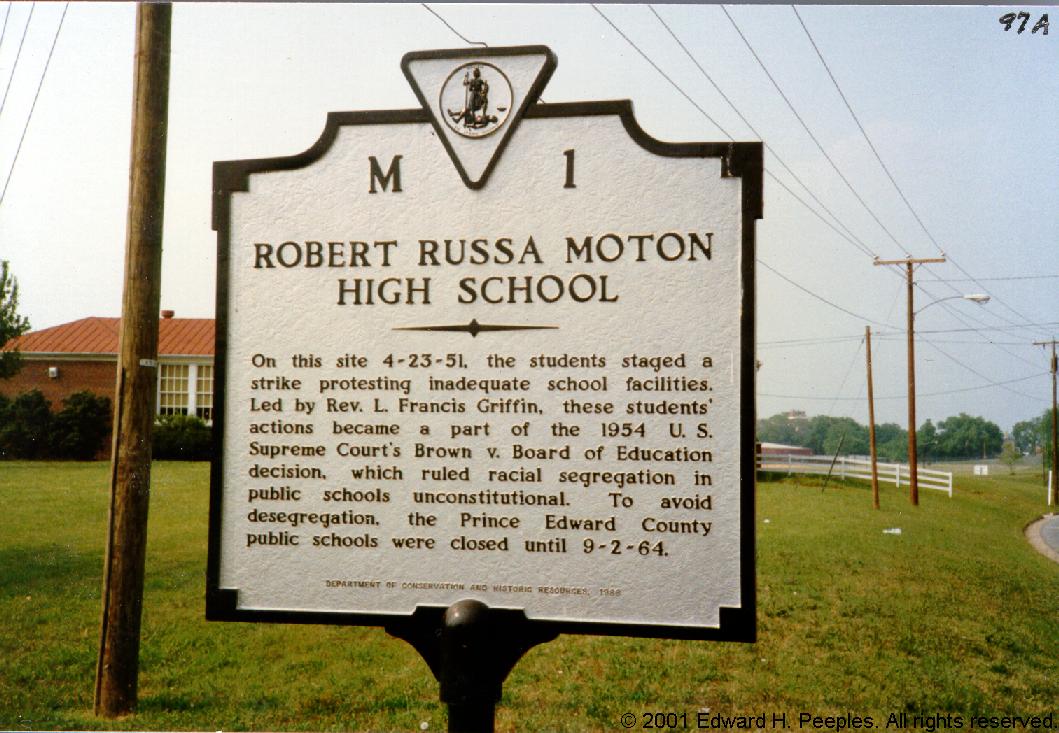
Moton HS historical markerAnd, the venerable Carnival of Education, issue 118, was up earlier at NYC Educator, with good posts on laptops in school, parenting, administering, enduring, and everything else related to education. (Click on the photo for a larger image — it’s the historical marker at the former Robert R. Moton High School, in Prince Edward County, Virginia — where one of the most poignant of the cases against school segregation began, Davis vs. Prince Edwards County Schools — part of the Brown vs. Topeka Board of Education case decided in 1954. Photo from Virginia Commonwealth University.)

Carnival of Homeschooling 71 lolls, at On The Company Porch.

And, of course, if you wish to nominate a post for the next Fiesta de Tejas!, scheduled for June 2, just use this button:


Blog Carnival submission form - fiesta de tejas!

Have a good Mother’s Day — call all the mothers you know. Why be picky?


Where is your podcast?

May 11, 2007

Kids in schools have things in their ears. Between classes it’s earphones for iPods, MP3 players, CD players, cell phones that play music an video — and of course they try to stretch it into class, too. “If I can listen to my music in class, I won’t make trouble,” they say.

To which I respond, “I don’t deal with terrorists.”

The students are telling teachers something, and most of us are missing the message: We need to get education into their iPods and MP3 players.

For example, Nora’s itec 845 blog wonders about converting podcasts to print, for hearing-impaired students. Do you even have podcasts for classroom use or augmentation? (I wager this blog is a classroom assignment — students are working in areas their teachers don’t know anything about?)

Check out the Education Podcast Network. If your students told you they were getting information from this site, would you know whether it was quality information? Would you even know how to check?

Teachers should be using podcasts to deliver lectures, deliver supplementary material, to discuss homework, and to inform parents about homework and other activities.  Are you using podcasts for any of that?

If you don’t think you’re missing the podcast boat, go here and see what some of the possibilities you’re missing really are:  Around the Corner.   Or, go there just to get ideas.

Hey, what are you waiting for?


Inherent evils of public education

May 11, 2007

Public schools have serious problems.  Regular readers here should know me as a defender of public education, especially in the Thomas Jefferson/James Madison model of a foundation stone for a free people and essential tool for good government in a democratic republic.

Can you take another view?  Here’s one that should offer serious material for thought:  How the Public School System Crushes Souls.

Tip of the old scrub brush to Pick the Brain.


Global warming effects: More nasty bugs

May 1, 2007

This news can fit into curricula in several ways, in several courses: Insects have already evolved in response to climate shifts due to global warming.

The Boston Globe has a series on global warming, and a recent article detailed how mosquitoes on the Maine frontier have already changed their breeding seasons in response to warming weather.

A mosquito that can barely fly is one of only five known species that scientists say have already evolved because of global warming. The unobtrusive mosquito’s story illustrates a sobering consequence of climate change: The species best suited to adapting may not be the ones people want to survive.

Such news enhances biology studies of genetics and insects, geography studies of climate, animal dispersal patterns and disease and pest ranges (a subject more technically known as biogeography), and the articles lend urgency to studies of how governments react to natural crises, a topic suitable for government classes, economics, and U.S. and world history.

Global Warming illustration Click on the thumbnail to see four examples of genetic change credited to global warming. (Graphic by David Butler of the Boston Globe staff.) Read the rest of this entry »


Civil War symposium for high school teachers, in Denton, Texas

April 22, 2007

A history symposium aimed at high school teachers is set for next Saturday, April 28, at the University of North Texas in Denton. Featured speakers include Ft. Worth Star-Telegram vice president Bob Ray Sanders, and Civil War historian Carl Moneyhon, from the University of Arkansas at Little Rock.

Details from the university’s press release below the fold.  Read the rest of this entry »


Celebrating April 19: Paul Revere, “shot heard ’round the world”

April 20, 2007

April 19. Does the date have significance? Paul Revere's ride, from Paul Revere House

Among other things, it is the date of the firing of the “shot heard ’round the world,” the first shots in the American Revolution. On April 19, 1775, American Minutemen stood to protect arsenals they had created at Lexington and Concord, Massachusetts, against seizure by the British Army then occupying Boston.

April is National Poetry Month. What have we done to celebrate poetry?

What have we done to properly acknowledge the key events of April 18 and 19, 1775?  Happily, poetry helps us out in history studies, or can do.

In contrast to my childhood, when we as students had poems to memorize weekly throughout our curriculum, modern students too often come to my classes seemingly unaware that rhyming and rhythm are used for anything other than celebrating materialist, establishment values obtained sub rosa. Poetry, to them, is mostly rhythm; but certainly not for polite company, and never for learning.

Poems slipped from our national curriculum, dropped away from our national consciousness.

And that is one small part of the reason that Aprils in the past two decades turned instead to memorials to violence, and fear that violence will break out again. We have allowed darker ideas to dominate April, and especially the days around April 19.

You and I have failed to properly commemorate the good, I fear. We have a duty to pass along these cultural icons, as touchstones to understanding America.

So, reclaim the high ground. Reclaim the high cultural ground.

Read a poem today. Plan to be sure to have the commemorative reading of “Paul Revere’s Ride” in your classes next April 18 or 19, and “The Concord Hymn” on April 19.

We must work to be sure our heritage of freedom is remembered, lest we condemn our students, our children and grandchildren to having to relearn these lessons of history, as Santayana warned.

Texts of the poems are below the fold, though you may be much better off to use the links and see those sites, the Paul Revere House, and the Minuteman National Historical Park.

Read the rest of this entry »


Up to our ears in carnivals

April 19, 2007

Weren’t we here just a few days ago?  In the last week, for sure.

The 115th Carnival of Education is up at DY/DAN.

Look for Fuji Bucks.  Look for selection processes for advanced classes.  A lot of very good stuff.

Image:  Horace Mann School, 1st Grade Class, 1923

Which Horace Mann?  Oh, Saline County, Illinois.  Seriously, how many Horace Mann Schools can there be in America?  Anyone have a clue?


Water to the Arctic

April 19, 2007

It didn’t start out to be such an odd question. “How does water get to the Arctic Ocean,” the kid asked. I’d just dropped on them a warm-up noting the designation of a fifth ocean, the Southern Ocean. They were working on maps, some coloring them in. To some of the students, it was news that we have more than one ocean on the planet.

“Water seeks its own level,” I explained. “Rivers carry waters to the oceans.”

He was really confused. Puzzling over Canada especially, he was venting. I was stupid, and not getting his question. “How come rivers don’t flow north?” he asked.  Read the rest of this entry »


Carnival catch-up

April 16, 2007

Uh-oh. Running behind.

One of the reasons I list various carnivals is to make sure I have a note of the good ones somewhere easy to find. Busy-ness in the last week just kept me away from the keyboard.

Carnivals you ought to check out:

Oekologie 4.1: Over at Behavioral Ecology. Lots on climate change, of course, and some very nice bird photos.

Carnival of the Godless at Neural Gourmet has a good run down of the Blog Against Theocracy, and complaints about it, too.

Carnival of the Liberals #36 is up at Truth in Politics. Well, that’s an obvious pairing. Free speech, the president and the Constitution, tyranny in the Middle East, and quite a bit more.

Carnival of Education #114 is back at The Education Wonks.  State legislatures may be wrapping up their sessions, but education issues are heating up.

Skeptics’ Circle #58 finds a hangout at Geek Counterpoint, with several posts that get at how we know what is true — good stuff for historians and economists to ponder.

This is as good a time as any to remind you that that Fiesta de Tejas! #2 is coming up on May 2 — deadline for  post nominations April 30.  You may e-mail entries to me (edarrellATsbcglobalDOTnet), or submit them at the Blog Carnival portal to the Fiesta.