That flag you flew yesterday — want to burn it today?

July 5, 2011

Some of the more astute students in our high school classes ask questions about everything.  For example, they ask:  “What does the Pledge of Allegiance mean, when it says, ‘ . . . and to the Republic for which it stands?'”

Is the Pledge all that important?  Is the flag all that important?

Maybe.  How would you answer that question, really?

Penn and Teller offer a demonstration:

What do you think?  Did they burn a flag?  Should that sort of performance be legal?

What if Penn and Teller burned a flag in the White House?

An exercise in ambiguity:  A fictional drama about a sleight of hand, illusionary performance.  (Best line:  The answer to the question, “Did you go to law school?”  For the record, yes, I did go to law school.  I’m an amateur clown.)

Did you fly your  flag yesterday?


Is the Constitution dead?

May 13, 2011

Oh, the eternal crabbiness of the conservative, striving-to-be intellectual mind.

Time cover, Is God Dead?

Time cover, Is God Dead? -- April 8, 1966

At one of those hangouts for conservatives with more education and degrees than brains and sense — for example, friends and sympathizers with Francis “I am not an ID advocate” Beckwith — forgetting the trouble Time got into with the cover story asking “Is God dead?” I nearly twisted my ankle on a rhetorical hole that opened with this:

But more importantly, America has a problem: the Constitution is dead. Now what?

Assuming that statement to be a fact rather than a radical, perhaps hallucinatory claim, comments proceeded to denigrate the New Deal as completely unconstitutional and therefore worthy of complete rollback, in that future when these people take over and replace the Constitution.

Can you imagine what they would say if they stumbled into a leftist, pro-communist site making the same claims?

So, I questioned their judgment that the New Deal was unconstitutional, bad, and unjustified.   No nibbles on the invite to make a case they might be right, so I noted the thread earlier.

Those who think they are He-and-She-Who-Must-Be Obeyed* took great exception to my posts, said I had “one more chance.”

Skroom, you know?

Dear Readers:  Is the Constitution dead?  What evidence do you see?

Was the New Deal complete, unvarnished hoakum, or do you see value in any of the vestiges and legacy of the New Deal?

It could be an interesting discussion, if the Bathtub had any influence and a bunch of readers who would chime in.

Constitution in a casket

Is the U.S. Constitution dead? Libertarians, Conservatives, and other ne'er-get-wells can't tell. So they use it as cover for raucous behavior, What's Wrong With the World, May 5, 2011.

_____________

* Apologies to John Mortimer and Horace Rumpole.


May 7: Anniversary of the 27th Amendment to the Constitution

May 8, 2011

Oops.  I forgot this anniversary yesterday.

September 25, 1789, Congress had approved and enrolled the proposals, and sent twelve proposed amendments to the Constitution to the states for ratification.  Ten of the twelve amendments were approved, rather quickly, and by 1791 the were attached to the Constitution.  These ten we now call the Bill of Rights.

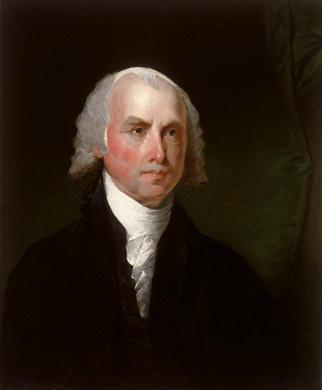
James Madison before he was president

James Madison proposed the first 10 Amendments to the Constitution, and the 27th Amendment; the 203 years it took to ratify the 27th Amendment is the longest legislative process in the history of the U.S., and probably the world.

The two proposals that failed to earn the required approval of three-fourths of the 13 states fell into a special limbo for Constitutional amendments that became clear only in the late 1970s when Congress discussed how long to wait for states to approve the Equal Rights Amendment (this is a much-simplified explanation, I know).  Congress put deadlines on the ratification process in the late 20th century, but the first twelve proposals had no deadlines, nor did any other proposal before the Equal Rights Amendment proposal.  In the 1980s, Congress passed a law that said any amendments floating around, unapproved, would be considered dead after a date certain.  There were six amendments in that category.

Before that date certain passed, more states took a look at one of James Madison’s 1789 proposals.  They liked it, and they ratified it — 34 states total.

That amendment became the 27th Amendment to the Constitution, on May 7, 1992, 203 years after it was proposed:

No law, varying the compensation for the services of the Senators and Representatives, shall take effect, until an election of Representatives shall have intervened.

This is the longest legislative procedure in U.S. history, perhaps the longest ever — it lasted much longer than many nations.  By that ratification in 1992, James Madison became the person who proposed both the first, and last amendments to the Constitution.

Madison’s reaching out from the grave 156 years after his death — he died on June 28, 1836 — is one of the greatest legislative coups in history, too.


No, Henry Wallace would not have been president long, had FDR died a few months early

March 25, 2011

Oh, it’s a technical quibble, I know.

Henry Wallace campaign button from 1948

Henry Wallace campaign button, probably from 1948. R. Emmett Tyrell worries unnecessarily that Henry Wallace might have been president, had FDR died a few months earlier.

I’ve read R. Emmett Tyrell for years.  Back in the day, when American Spectator was scratching to get anyone to read, they sent me free copies — I presume because they got my name off of a list for National Review.  At some point they decided they could actually get someone to pay for the magazine, and I fell off their list.

It was a fun read back then.  American Spectator showed up on newsprint, not slick paper.  There was a college newspaper feel to it.  They had a great section called “Brayings from the barnyard,” in which they’d quote stupid things that people said.  That was the first place I encountered the old saw, “Those whom the gods destroy, they first make mad.”

And I’m sure that, had he thought about it for three minutes, he wouldn’t have written it.  But Tyrell didn’t think.

In the on-line blog for the Spectator, in the traditionally-named “The Current Crisis,” Tyrell wrote:

Progressives have long been in favor of One World vouchsafed by the United Nations. Henry Wallace, Franklin Delano Roosevelt’s second vice president and the 1948 presidential candidate for the Progressive Party, spoke of it often. On the campaign trail in 1948 he spoke of “jobs, peace, and freedom” that “can be attained together and make possible One World, prosperous and free, within our lifetime.” He too promised to coordinate policy through the United Nations. Had President Roosevelt died but six months earlier, America would have had this fantastico in the White House. As it was, in one last act of cunning for his country, Roosevelt maneuvered Wallace out of the vice presidency and Harry Truman in. Harry was green but he was not naïve. We came that close to Henry Wallace and his “Gideon’s Army” in the White House.

Does Tyrell really believe that?

Henry Wallace could not have succeeded to the presidency at any time after noon, January 21, 1945, and had he succeeded to the presidency any time before January 21, he’d have served only until January 21.  Had Roosevelt died any time after November 7, 1944, Harry S Truman would have been inaugurated on January 21, 1945.  Had Roosevelt died between the Democratic Convention and the election, one could make an argument that Truman would not have won the nomination nor the presidency — we’ve never had a candidate die before election day, nor between election and inauguration (though William Henry Harrison sure pushed it).

Berryman cartoon, 1948, Truman v. Tom Dewey

Berryman cartoon, probably from the Washington Star, 1948 — New York Gov. Thomas Dewey was expected to handily defeat President Harry S Truman; the election was held anyway. Elections have consequences.

Roosevelt died on April 12, 1945.  Six months earlier quickly calculated would have been October 12.  [I goofed when I submitted a comment at the Spectator site, and calculated December — too quick a calculation!]  Wallace, then the vice president to FDR, almost certainly would not have won the Democrats’ nomination for president.  It may have been possible for the party to name a new ticket, and if so, it would not have had Wallace on top.  One can make a case that Truman wouldn’t have been on top of a new ticket, either — but even October 12 may have been too late to change the ballot, for pragmatic purposes, prior to the election.  Most discussions I’ve seen suggest that the vice presidential candidate would be moved up in such a case.

So, had Roosevelt died months prior to April 12, 1945, we would have had Henry Wallace as president for only a few weeks, until inauguration day the next January.  Then we would have had Harry S Truman, or Thomas E. Dewey.  Dewey ran against Truman in 1948, and lost.  There’s a good case to be made that Truman would have defeated Dewey in 1944, had they run against each other then.  Truman would have had the sympathy vote, and he would have been thought to have been the heir to the Roosevelt legacy and policies near the end of World War II.  With Hitler and Tojo on the run, it would have been a bad time to switch parties and policies.

We’ll never know, but Tyrell need not worry.

Harry Truman and Chicago Tribune from November 4, 1948

Harry Truman and Chicago Tribune from November 4, 1948


Tea Party birthday?

March 2, 2011

George Washington signed the law authorizing the first U.S. census on March 1, 1790. [True]

[Satire, below?]

I presume, then, that the post-Boston, Tea Party dates from the protests of the census beginning on March 2, 1790.  “Nothing but what the founders intended in the Constitution,” was the muddled battle cry of the early Tea Partiers.

Editorials pointed out that Washington himself had presided at the Constitutional Convention, but Tea Partiers would have none of it.  “If the King James Version was good enough for Jesus, it’s good enough for the ‘new King George,’ they yelled in New York City, outside Washington’s home.  “Patrick Henry didn’t throw tea in Baltimore Harbor so some tyrant could ask us how many are in our family!”

Washington denied that the capital’s move to Philadelphia later that year had anything to do with the protests.


Lincoln and the Emancipation Proclamation: Free lesson plans from the Bill of Rights Institute!

February 12, 2011

A little history bauble for Abraham Lincoln’s birthday, today:

From Presidents and the Constitution, a great resource from the Bill of Rights Institute, a lesson plan on Lincoln and the Constitutional issues around the Emancipation Proclamation.  It’s very good, I think — and free (maybe only for a while?).

Presidents and the Constitution, Bill of Rights Institute

Presidents and the Constitution, Bill of Rights Institute

This Presidents and the Constitution focuses on Abraham Lincoln and the Emancipation Proclamation. Though he had always hated slavery, President Lincoln did not believe the Constitution gave him the authority to bring it to an end—until it became necessary to free the slaves in order to save the Union. With the Emancipation Proclamation, which he viewed as an essential wartime measure to cripple the Confederacy’s ability to fight, Lincoln took the first step toward abolition of slavery in the United States.

If you teach social studies, you probably know about the Bill of Rights Institute already — subscribe for lesson plans, news updates, and news about seminars.  They do good work, and the provide great resources.


How to find “separation of church and state” in the Constitution

December 27, 2010

It’s been at least 20 years since I first heard the old canard of an argument that “there’s no separation of church and state in the Constitution.”  I think I first heard it attributed to David Barton, which would make sense, since he doesn’t understand the Constitution, but neither does he fear sharing his misunderstandings.

It was an incorrect statement then, and it’s been incorrect since September 1787.  Separation of state and church is woven throughout the Constitution, part of the warp and woof.

Recently, latter-day Constitution ignorami repeat the old canard.

Toles cartoon on dangers of marrying church and state

Toles cartoon on dangers of marrying church and state

I was surprised to discover I’ve not posted this before on this blog.  So here’s a slightly-edited version of a response I gave many months ago to someone who made that silly claim, a basic description that I developed years ago to explain the issue, in speeches by members of the Senate Subcommittee on the Constitution:

Separation of church and state: It’s in the Constitution.

I don’t play a constitutional lawyer on television, I am one*, but it seems to me anyone can read the Constitution and see. One can see especially if one understands that the Constitution sets up a limited government, as Madison described, one that can do only what is delegated to it. The Constitution is a short document.

Where should you look to find separation of church and state in the Constitution?

First, look in the Preamble.  It is made clear that the document is a compact between citizens: “We the people . . . do ordain and establish this Constitution . . .” The usual role of God ordaining (in some western nations) is altered, intentionally. It is not God who establishes this government, but you and I, together. From the first words of the Constitution, there is separation of church and state.  The power of our government grows out of a secular compact between you and me, and 308 million other residents of the nation.   We have a government created by consent of the governed, as the Declaration of Independence said a just government should be.  It is not a government created by the will of God directly (though some, including the Mormons, argue it is divinely inspired).  We have no divine right kings or other monarchs under the Constitution.  The government is not the grantor of rights from God, but is instead the protector of the rights of citizens, whatever the source of the rights and whatever the rights.

Second, look in the key parts of the document itself.  Start with Article 1 The legislative branch is given no role in religion; neither is any religion given any role in the legislature. In Article 2, the executive branch gets no role in religion, and religion gets no role in the executive branch. In Article 3, the judicial branch gets no role in religion, and religion gets no role in the judicial branch. In Article 4, the people get a guarantee of a republican form of government in the states, but the states get no role in religion, and religion gets no role in state government. This is, by design of the founders, a perfect separation of church and state.

Third, in Article 6, the convention wrote the hard and fast rule that no religious test can be used for any office in government, federal, state or local, means that no official will have a formal, governmental role in religion, and no religion can insist on a role in any official’s duties.

Fourth, Amendment 1 closes the door to weasling around it: Congress is prohibited from even considering any legislation that might grant a new bureaucracy or a new power to get around the other bans on state and church marriage, plus the peoples’ rights in religion are enumerated.

Fifth: In 1801 the Baptists (!) in Danbury, Connecticut, grew concerned that Connecticut would act to infringe on their church services, or teachings, or right to exist. So they wrote to President Jefferson. Jefferson responded with an official declaration of government policy on what the First Amendment and Constitution mean in such cases. Jefferson carefully constructed the form of the device as well as the content with his Attorney General, Levi Lincoln, to be sure that it would state what the law was. This “letter” is the proclamation. It’s an official statement of the U.S. government, collected in the president’s official papers and not in his personal papers. Make no mistake: Jefferson’s letter to the Danbury Baptists was an official act, an official statement of the law of the United States. Jefferson intended it to assuage the Baptists in Danbury, to inform and warn the Connecticut legislatures, and to be a touchstone to which future Americans could turn for information. It was only fitting and proper for the Supreme Court to use the letter in this capacity as it has done several times.

Sixth: The phrase, “separation of church and state” dates back another 100 years and more, to the founding of Rhode Island. It is the religion/state facet of the idea of government by consent of the governed without interference from religious entities, expressed so well in the Mayflower Compact, in the first paragraphs of the Declaration of Independence, and carried through in the Constitution (see especially the Preamble, above).

No, the phrase “separation of church and state” never appears in the Constitution. The principles of separation of church and state are part of the warp and woof, and history, of the document, however. The law is clear, the law was clear, the law has always been clear, and denying the Constitution says what it says, won’t change it or make it go away.  You could just as easily point out that the word “democracy” or “democratic” never appears in the document, though we rely on democratic mechanisms and institutions to make it work.  You could point out that nowhere does it say that our national government is a republic, though it is.  The Constitution doesn’t say “checks and balances,” nor does it say “federalism.”  The Constitution doesn’t mention political parties.  The Constitution was written before the advent of broadcasting, and makes no mention of radio nor television, nor of the internet — but the First Amendment freedoms apply there anyway.  The Constitution doesn’t say “privacy,” though it protects your right to privacy.

You won’t find “separation of church and state” as a phrase in the Constitution.  If you read it, you’ll find that the concept of the separation of state and church can’t be taken out of the document, either — it’s a fundamental principle of our government.

More, and Resources:

__________

*  A non-practicing one.  We have way more than 50,000 lawyers in Texas.  That’s enough trouble for one lifetime.  Someone has to look out for the welfare of the world.


Secession? Matthews sounds off, appropriately

December 22, 2010

All that talk about secession, and nullification, and states’ rights? Matthews calls it for what it is.

Maybe we should say he calls it out for what it is.

Vodpod videos no longer available.

Secession? Matthews sounds off, appropriately, posted with vodpod

It’s time to stop the talk of tearing our nation apart. If you’ve been talking this smack, stop it.

Santayana’s Ghost keeps a wary eye on all such discussion.

Tip of the old scrub brush to Mike Heath sitting in for Ed Brayton at Dispatches from the Culture Wars.


Stunning photo: What happened here, 795 years ago?

December 5, 2010

Runnymede, Magna Carta Isle, photo by Wyrdlight, Antony McCallum, 2008 (Wikimedia)

What event critical to western history and the development of the democratic republic in the U.S. happened here in 1215?

A teacher might use some of these photos explaining the steps to the Constitution, in English law and the heritage of U.S. laws.  Other than the Magna Carta, all the events of Runnymede get overlooked in American studies of history. Antony McCallum, working under the name Wyrdlight, took these stunning shots of this historic meadow.  (He photographs stuff for studies of history, it appears.)

Maybe it’s a geography story.

View of Runnymede Meadow from Engham Village -- Wyrdlight photo through Wikimedia

View of Runnymede Meadow from Engham Village -- Wyrdlight photo through Wikimedia

Several monuments to different events of the past millennium populate the site.  The American Bar Association dedicated a memorial to the Magna Carta there — a small thing open to the air, but with a beautiful ceiling that is probably worth the trip to see it once you get to England.

Wikipedia explains briefly, with a note that the ABA plans to meet there again in 2015, the 800th anniversary of the Great Charter:

Magna Carta Memorial


The Magna Carta Memorial & view towards the ‘medes’


Engraved stone recalling the 1985 ABA visit

Situated in a grassed enclosure on the lower slopes of Cooper’s Hill, this memorial is of a domed classical style, containing a pillar of English granite on which is inscribed “To commemorate Magna Carta, symbol of Freedom Under Law”. The memorial was created by the American Bar Association to a design by Sir Edward Maufe R.A., and was unveiled on 18 July 1957 at a ceremony attended by American and English lawyers.[5]

Since 1957 representatives of the ABA have visited and rededicated the Memorial renewing pledges to the Great Charter. In 1971 and 1985 commemorative stones were placed on the Memorial plinth. In July 2000 the ABA came:

to celebrate Magna Carta, foundation of the rule of law for ages past and for the new millennium.

In 2007 on its 50th anniversary the ABA again visited Runnymede and during the convention installed as President Charles Rhyne who devised Law Day which seeks in the USA an annual reaffirmation of faith in the forces of law for peace.

The ABA will be meeting at Runnymede in 2015 on the 800th anniversary of the sealing of the original charter.

The Magna Carta Memorial is administered by the Magna Carta Trust, which is chaired by the Master of the Rolls.[10]

In 2008, flood lights were installed to light the memorial at night, but due to vandalism they now lie smashed.

I’ll wager the lights get fixed before 2015.

Detail of ceiling of the Magna Carta Memorial, Runnymede - Wikimedia image

Detail of ceiling of the Magna Carta Memorial detailing play of light, and star pattern, Runnymede - Wikimedia image

More, resources:


New blog: Bill of Rights Institute

October 30, 2010

Have you found the blog of the Bill of Rights Institute yet?

Teachers especially, bookmark A More Perfect Blog.

They’re suitable for school, but they are not ducking issues — see the post on the First Amendment and NPR’s firing of Juan Williams.  See the post on Juan Williams talking about what it means to be an American.

Mast for Bill of Rights Institute Blog


Washington, by Ron Chernow – great scholarship, a good read, significant light

October 28, 2010

Welcome, Book Tourists!  This is the last stop on a virtual book tour for Ron Chernow’s biography, Washington.

Virtual cocktails afterward, I hope.  Then sit down and read the book.

In a piece of great fortune for me, six years ago I spent a week at Mount Vernon, George Washington’s home in Virginia, through the good graces of the Bill of Rights Institute and the National Endowment for the Humanities, studying George Washington’s role in the creation of the U.S. Constitution.

Cover of Ron Chernow's book, Washington

Washington, by Ron Chernow. Penguin Press, 2010; 906 pages, $40.00

My academic interest leaned more toward James Madison’s role.  I thought then, and I still think, that Madison deserves a good, popular biography to complement the great recent work of others on the American Revolution and post-revolutionary organization of the nation.  We’ve had recent books by Edmund Morris, Ron Chernow, David McCullough, Joseph Ellis, Walter Isaacs  and others on Franklin, Jefferson, Adams, the “founding brothers,” Hamilton and Washington.   But for Garry Wills’ short and crabby assessment of Madison’s presidency, I am unaware of a good, popularly-readable Madison book.    As a professional journalist, as a civil libertarian, as a lawyer and occasional investigator, my studies of the era favored Franklin, Jefferson and Madison.  George Washington took the center stage, in my conception of events, while those working around him and in the wings frantically worked to put on the production that made America and allowed Washington to play the role of a hero, the face of the “Father of His Country” role — while the truth was that such success really did have many fathers.

For most history purposes in elementary and secondary schools, for most of the past 200 years, Washington is the easy center of attention, and I suspected a different story.  Jefferson wrote better, and more thoughtfully, did he not?  Madison’s legislative work in Virginia alone shone above Washington’s.  Washington had military experience, and he managed to cling on through the revolution — but his role as president was often more as a referee between the great creative forces driven by Hamilton, Madison and Jefferson.

What I hoped to find at the Mount Vernon meetings were sources to reveal the true role of James Madison — maybe I could get the story together and write it myself.

Simply put, I was not prepared to confront the genius of Washington, nor did I appreciate the depth of his involvement in so many areas where our common understanding of history simply gave Washington the title of hero, but without telling much of the backstory.

I looked for the evidence of Madison’s genius.  What I found was the overwhelming evidence of Washington’s genius, too.

Washington’s economic genius now displays proudly at Mount Vernon, with the reconstruction of his 16-sided barn for wheat thrashing, and with the reconstruction of the distillery which made the man who put down the Whiskey Rebellion, ironically, the leading distiller of whiskey in America shortly before his death.  I learned that Washington got out of tobacco a decade before the revolution, because he didn’t like the economics of sending a crop to agents he did not fully trust in London, for sales in markets whose prices he could not track, for sales to purchasers he could not see.  Instead, he took his business into wheat, a commodity much in demand since most other farmers locally grew tobacco.  Washington became a leading wheat producer, and grew richer as a result of that and other similar decisions of clear-thinking economics.  By the end of his life, he was producing a surplus of wheat — which excited his Scotland-born farm foreman, who had a recipe for whiskey.

Washington was not merely the frontman for the convention in Philadelphia in 1787.  It became clear to me that he was a driving force, introducing Madison to Hamilton, and mentoring both in their work to get the convention approved, and then to get the Constitution written and ratified.   Washington had financial interests in seeing a great, united nation out of the 13 colonies:  He had land in the Ohio River Valley to sell, to get rich, if only there were an authority to made transportation into the valley hospitable to settlers, and transportation out to let those settler farmers get rich from their produce.   Washington’s vision, I learned, was much greater than I had understood.

Ron Chernow’s thick biography of Alexander Hamilton excited historians in 2004.  As studies of Jefferson lead to studies of Madison, and vice-versa, so do studies of Hamilton inevitably lead to studies of Washington.  We are fortunate that Chernow wrote the thick biography of Washington, the first great study of the man for the 21st century.

Chernow’s Washington, A Life (2010, Penguin Press, 906 pages) is every bit the great study of Washington we need and can use.  My bias as a teacher of high school students leans toward usefulness in the classroom — a higher standard than most imagine, since, for a high school classroom, a book must be eminently readable as well as accurate and clear.

Chernow had me at the Prelude.  In a brisk five pages he tells the story of Gilbert Stuart, an often-economically-bereft artist who saw fortune in Washington’s election.  Stuart arranged to get the great man to sit for a portrait — Washington did not like it — but Stuart never finished Washington’s commission in Washington’s life.  Instead, Stuart used the portrait to copy, for others.    Stuart’s fortune came not from Washington, but from the vast throng of Washington admirers who would pay handsomely for an image of the man.  It’s a well-told story, and a great introduction to the lionizing of Washington and his image, the reality of the man who sat for the portrait, and the way history has treated the man and the myth.  [Courtesy of the New York Times, you may read the Prelude, here.]

Readers of McCullough’s 1776 know of some of Washington’s genius at war, and some of his attention to details of making things work right — whether it be the way latrines were dug so an army could relieve itself and avoid disease, or the the exact tints of the color of green paint applied to the massive dining room he had added to the house at Mount Vernon.  McCullough’s book is a taste, a sampling of the work Chernow has.  One may compare Chernow’s story-telling ability to McCullough’s, and Chernow may suffer a bit.  For Washington, the drama is so often in the details, however — and details we have, galore.

Is it too much detail?  For the life of another, it may be.  Not for Washington.  Chernow is able to make readable even the details.  One may open this book at any page, start with a paragraph, and learn something about Washington — most often, learning something one did not know precisely before.  Chernow relied on the massive project at the University of Virginia to publish all the papers of Washington, collected from various sources.  Washington had not been quite so assiduous as Jefferson in making copies of everything he wrote for posterity, though much he was an assiduous diarist and taker of notes.  No biographer before had the advantage of the catalogueing done at Virginia, nor perhaps of the scope of the material there.

For this reason alone, this book should be read.

Chernow’s portrait is painstaking.  What emerges in the end is a George Washington whose vanity would be quirky and irksome in others, but necessary to the building of the image history graces to him, as the standard-bearer for the founders of the nation, truly the Father of His Country.  The vanities quickly become clear as careful consideration by a man who understood, especially as president, that each move he made would be a precedent for those who would follow, he hoped.   One example:  Washington’s work on the bank bill of 1791, made possible as we know by the dinner at Jefferson’s where Hamilton and Madison struck the bargain that sited the District of Columbia on the Potomac, and set up the finances that would make the nation successful in business and international relations over the next 200 years.

Though he had sat through every session of the Constitutional Convention, Washington did not pretend to expertise in constitutional nuances — he nce wrote that he had ‘had as little to do with lawyers as any man of my age” — and engaged in much hand-wringing over the bank bill.  He would be forced to issue a black and white opinion that would alienate some, gratify others, and irrevocably shape the future government.  He called in Madison, supremely well versed in the Constitution, for a series of quiet, confidential talks.  “The constitutionality of the nation bank was a question on which his mind was greatly perplexed,” Madison would recall, noting that Washington was already biased in favor of a national bank and “a liberal construction of the national powers.”  On the other hand, Washington was shaken by uncompromising verdicts from Randolph and Jefferson and asked Madison, as a precaution, to draft a veto message for the bank bill.

When Washington turned to Hamilton, he made plain that, unless he could vanquish the arguments of Randolph and Jefferson, he planned to veto the bank bill, telling him that he wished to “be fully possessed of the arguments for and against the measure before I express any opinion of my own.”  By this point Washington knew the vigor of Hamilton’s mind and his extraordinary knack for legal argument.  In little more than a week, Hamilton, in a superhuman burst of energy, produced more than thirteen thousand words that buried his opponents beneath an avalanche of arguments.  His exegesis of the “necessary and proper” clause not only made way for a central bank but would enable the federal government to respond to emergencies throughout American history.  Hamilton interpreted the “necessary and proper” clause to mean that “every power vested in a government is in its nature sovereign and includes, by force of the term, a right to employ all the means requisite and fairly applicable to the ends of such power.”  In other words, the Constitution gave the federal government not only the powers explicitly enumerated but also a series of unstated or “implied powers” indispensable to attain those ends.  (circa page 649)

Two paragraphs, easily read without seriously taxing the vocabulary of an SAT-studying high school junior.  They clearly detail Washington’s care in analyzing all sides of an issue.  They reveal Washington’s ability to harness the good work of men of greatly differing viewpoints, to the enlightenment of Washington and benefit of the nation — which benefit likely would not have occurred had another man been in Washington’s place (can you imagine anyone else mediating Madison and Hamilton — and keeping them both as friends?).  Chernow gracefully slips from telling a good story to providing scholarly details (I have omitted footnotes here), but not in an eye-glazing fashion — weaving the scholarship into a story fantastic enough that it would not sell for fiction, as Twain warned because it does not stick to the probabilities.

A few years ago a student offered what I considered a great insight.  We were comparing the American Revolution to the French Revolution; naturally, considering the Reign of Terror and the rise of the dictatorial Emperor Napoleon, students wondered where the French went wrong, and where the Americans got luck and went right.  Israel Pena summed it up neatly:  “The French didn’t have George Washington.  Americans came out of their revolution with George Washington; France came out of their revolution with Napoleon.”

Napoleon would have done well to have studied George Washington.

It is reported that when King George III learned that Gen. George Washington had, at the end of the American Revolution and the peace treaty negotiations, resigned his commission to the Continental Congress, the news was met with disbelief.  Washington improbably held together a ragamuffin mob of an army, disciplined them into a fighting force, and through evasion tactics, inspiration and sheer luck, and great aid from the King of France and the French Navy, defeated Great Britain in a war where no one, probably  including Washington had thought it possible to do so.  Many Europeans expected Washington would assume the crown of America and have himself declared king.

Instead, following the story of his Roman hero, Cincinnatus, Washington declined the power, deferring to civilian and more democratic rule, sublimating military might and prowess to the greater powers of reason.  (Washington, following Cincinnatus again, bowed out after two terms in the presidency — the power of story and early education over the fate of a nation.)

King George said he didn’t believe the news.  “But if it is true, [Washington] is the greatest man who ever lived.”

Without unnecessary shine, Ron Chernow has written more than 800 pages of the brief for the case proving King George’s judgment.  In these times, when people claim to wish to follow Washington and the Constitution, we would do well to study what Washington said, wrote and did, and how he came to create the Constitution and the nation it frames.

Note: My review copy did not include an index. The book, Washington covers the man as an encyclopedia.  For the sake of high school teachers and researchers, I hope an index comes with the published text.

More, and resources; other reviews:

Other stops on the virtual book tour:


Quote of the moment: Hamilton, on taxes and the Constitution, Federalist #30

October 16, 2010

They claim to be constitutionalists, and they claim to want to uphold the U.S. Constitution.  But here’s an excerpt from Federalist #30, in which Alexander Hamilton explains why it is necessary for a federal government to tax, and sometimes to tax heavily.

Alexander Hamilton

Alexander Hamilton: "Money is, with propriety, considered as the vital principle of the body politic; as that which sustains its life and motion, and enables it to perform its most essential functions."

This is the U.S. Constitution and the “Founding Fathers” the Tea Partiers hope you will never see, and this is the Constitution and Founders they work hard to hide (some highlights added):

IT HAS been already observed that the federal government ought to possess the power of providing for the support of the national forces; in which proposition was intended to be included the expense of raising troops, of building and equipping fleets, and all other expenses in any wise connected with military arrangements and operations. But these are not the only objects to which the jurisdiction of the Union, in respect to revenue, must necessarily be empowered to extend. It must embrace a provision for the support of the national civil list; for the payment of the national debts contracted, or that may be contracted; and, in general, for all those matters which will call for disbursements out of the national treasury. The conclusion is, that there must be interwoven, in the frame of the government, a general power of taxation, in one shape or another.

Money is, with propriety, considered as the vital principle of the body politic; as that which sustains its life and motion, and enables it to perform its most essential functions. A complete power, therefore, to procure a regular and adequate supply of it, as far as the resources of the community will permit, may be regarded as an indispensable ingredient in every constitution. From a deficiency in this particular, one of two evils must ensue; either the people must be subjected to continual plunder, as a substitute for a more eligible mode of supplying the public wants, or the government must sink into a fatal atrophy, and, in a short course of time, perish.

In the Ottoman or Turkish empire, the sovereign, though in other respects absolute master of the lives and fortunes of his subjects, has no right to impose a new tax. The consequence is that he permits the bashaws or governors of provinces to pillage the people without mercy; and, in turn, squeezes out of them the sums of which he stands in need, to satisfy his own exigencies and those of the state. In America, from a like cause, the government of the Union has gradually dwindled into a state of decay, approaching nearly to annihilation. Who can doubt, that the happiness of the people in both countries would be promoted by competent authorities in the proper hands, to provide the revenues which the necessities of the public might require?

The present Confederation, feeble as it is intended to repose in the United States, an unlimited power of providing for the pecuniary wants of the Union. But proceeding upon an erroneous principle, it has been done in such a manner as entirely to have frustrated the intention. Congress, by the articles which compose that compact (as has already been stated), are authorized to ascertain and call for any sums of money necessary, in their judgment, to the service of the United States; and their requisitions, if conformable to the rule of apportionment, are in every constitutional sense obligatory upon the States. These have no right to question the propriety of the demand; no discretion beyond that of devising the ways and means of furnishing the sums demanded. But though this be strictly and truly the case; though the assumption of such a right would be an infringement of the articles of Union; though it may seldom or never have been avowedly claimed, yet in practice it has been constantly exercised, and would continue to be so, as long as the revenues of the Confederacy should remain dependent on the intermediate agency of its members. What the consequences of this system have been, is within the knowledge of every man the least conversant in our public affairs, and has been amply unfolded in different parts of these inquiries. It is this which has chiefly contributed to reduce us to a situation, which affords ample cause both of mortification to ourselves, and of triumph to our enemies.

What remedy can there be for this situation, but in a change of the system which has produced it in a change of the fallacious and delusive system of quotas and requisitions? What substitute can there be imagined for this ignis fatuus in finance, but that of permitting the national government to raise its own revenues by the ordinary methods of taxation authorized in every well-ordered constitution of civil government? Ingenious men may declaim with plausibility on any subject; but no human ingenuity can point out any other expedient to rescue us from the inconveniences and embarrassments naturally resulting from defective supplies of the public treasury.

More

IT HAS been already observed that the federal government ought to possess the power of providing for the support of the national forces; in which proposition was intended to be included the expense of raising troops, of building and equipping fleets, and all other expenses in any wise connected with military arrangements and operations. But these are not the only objects to which the jurisdiction of the Union, in respect to revenue, must necessarily be empowered to extend. It must embrace a provision for the support of the national civil list; for the payment of the national debts contracted, or that may be contracted; and, in general, for all those matters which will call for disbursements out of the national treasury. The conclusion is, that there must be interwoven, in the frame of the government, a general power of taxation, in one shape or another.Money is, with propriety, considered as the vital principle of the body politic; as that which sustains its life and motion, and enables it to perform its most essential functions. A complete power, therefore, to procure a regular and adequate supply of it, as far as the resources of the community will permit, may be regarded as an indispensable ingredient in every constitution. From a deficiency in this particular, one of two evils must ensue; either the people must be subjected to continual plunder, as a substitute for a more eligible mode of supplying the public wants, or the government must sink into a fatal atrophy, and, in a short course of time, perish.

In the Ottoman or Turkish empire, the sovereign, though in other respects absolute master of the lives and fortunes of his subjects, has no right to impose a new tax. The consequence is that he permits the bashaws or governors of provinces to pillage the people without mercy; and, in turn, squeezes out of them the sums of which he stands in need, to satisfy his own exigencies and those of the state. In America, from a like cause, the government of the Union has gradually dwindled into a state of decay, approaching nearly to annihilation. Who can doubt, that the happiness of the people in both countries would be promoted by competent authorities in the proper hands, to provide the revenues which the necessities of the public might require?

The present Confederation, feeble as it is intended to repose in the United States, an unlimited power of providing for the pecuniary wants of the Union. But proceeding upon an erroneous principle, it has been done in such a manner as entirely to have frustrated the intention. Congress, by the articles which compose that compact (as has already been stated), are authorized to ascertain and call for any sums of money necessary, in their judgment, to the service of the United States; and their requisitions, if conformable to the rule of apportionment, are in every constitutional sense obligatory upon the States. These have no right to question the propriety of the demand; no discretion beyond that of devising the ways and means of furnishing the sums demanded. But though this be strictly and truly the case; though the assumption of such a right would be an infringement of the articles of Union; though it may seldom or never have been avowedly claimed, yet in practice it has been constantly exercised, and would continue to be so, as long as the revenues of the Confederacy should remain dependent on the intermediate agency of its members. What the consequences of this system have been, is within the knowledge of every man the least conversant in our public affairs, and has been amply unfolded in different parts of these inquiries. It is this which has chiefly contributed to reduce us to a situation, which affords ample cause both of mortification to ourselves, and of triumph to our enemies.

What remedy can there be for this situation, but in a change of the system which has produced it in a change of the fallacious and delusive system of quotas and requisitions? What substitute can there be imagined for this ignis fatuus in finance, but that of permitting the national government to raise its own revenues by the ordinary methods of taxation authorized in every well-ordered constitution of civil government? Ingenious men may declaim with plausibility on any subject; but no human ingenuity can point out any other expedient to rescue us from the inconveniences and embarrassments naturally resulting from defective supplies of the public treasury.


Constitution Monday

October 2, 2010

Here’s an idea your class could carry out in its own blog:  Alaskan Librarian covers part of the Constitution each monday — here’s the middle of coverage on the amendments.

There’s a bell ringer or 27 bell ringers in there somewhere.


A missed Bill of Rights anniversary, and the 27th Amendment

September 26, 2010

September 25, 1789, Congress had approved and enrolled the proposals, and sent twelve proposed amendments to the Constitution to the states for ratification.  Ten of the twelve amendments were approved, rather quickly, and by 1791 the were attached to the Constitution, known as the Bill of Rights.

The two proposals that failed to earn the required approval of three-fourths of the 13 states fell into a special limbo for Constitutional amendments that became clear only in the late 1970s when Congress discussed how long to wait for states to approve the Equal Rights Amendment (this is a much-simplified explanation, I know).  Congress put deadlines on the ratification process in the late 20th century, but the first twelve proposals had no deadlines.  In the 1980s, Congress passed a law that said any amendments floating around, unapproved, would be considered dead after a date certain.

Before that date passed, more states took a look at one of James Madison’s 1789 proposals, liked it, and passed it.

That amendment became the 27th Amendment to the Constitution, on May 7, 1992, 203 years after it was proposed:

No law, varying the compensation for the services of the Senators and Representatives, shall take effect, until an election of Representatives shall have intervened.


Impeachment trial TODAY! More background . . .

September 15, 2010

Government teachers especially, take note.

Remember last summer I told you about the impeachment of New Orleans federal Judge Thomas Porteus?

The trial started yesterday in the U.S. Senate.

I gather that George Washington University law professor Jonathan Turley joined the defense of Judge Porteus.  Turley is very much the patron saint-attorney for almost-lost legal causes.  His always-interesting blog has links to some of the papers filed to dismiss Article II of the impeachment, and other documents.  That may be a very good site from which to observe the proceedings, especially for government and AP government and politics classes.

Turley’s motion for dismissal goes to the heart of what kinds of conduct may be impeachable, and when the jurisdiction of the impeachment clauses apply — maybe subtle, maybe somewhat obscure, but still delicious constitutional issues.  I can imagine a government class reading the motion as a group and discussing it, in a more perfect world.

Is your government class watching this trial at all?

More: