Why give Holocaust denial a platform?

November 25, 2007

lipstadt-deborah-emory-u.png

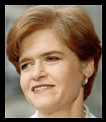
Deborah Lipstadt asks the key question at her blog: Why should any honorable, noble agency give a platform to people who don’t respect the facts and who have a track record of distorting history?

The distinguished debating group, the Oxford Union, has invited history distorter David Irving to speak. He was invited to speak with representatives of the British National Party (BNP), a group not known for tolerance on racial and immigration issues. While there is value to getting a range of views on any issue, Prof. Lipstadt and many others among us think that inviting a known distorter to speak is practicing open-mindedness past the point of letting one’s brains fall out (what is the difference between “open mind” and “hole in the head?”).

You know this story and these characters, right, teachers of history? You should, since these people play important roles in the modern art of history, and in the discussion over what we know, and how we know it. These are issues of “what is truth,” that your students badger you about (rightfully, perhaps righteously).

American teachers of history need to be particularly alert to these issues, since Holocaust deniers have been so successful at placing their material on the internet in a fashion that makes it pop up early in any search on the Holocaust. Most searches on “Holocaust” will produce a majority of sites from Holocaust deniers. It is easy for unwary students to be led astray, into paths of racist harangues well-disguised as “fairness in history and speech.”

Prof. Lipstadt practices history at Emory University in Atlanta, where she is the Dorot Professor of Modern Jewish and Holocaust Studies. She chronicled much of the modern assault on history in her book, Denying the Holocaust, The Growing Assault on Truth and Memory (1994). In that book, she documented the work of British historian David Irving, much of which consists of questionable denial of events in the Holocaust.

Cover of Lipstadt's book, Denying the Holocaust

Cover of Deborah Lipstadt’s book, Denying the Holocaust, the Growing Assault on Truth and Memory

Irving sued her for libel in Britain in 2000, where it is not enough to establish the truth of the matter to mount a defense. In a stunning and welcomed rebuke to Holocaust denial and deniers, the judge ruled in her favor, and documented Irving’s distortions in his 350-page opinion.

While his claims are legal in England, in several places in Europe his denial of Holocaust events is not protected as free speech. Traveling in Austria in 2005, he was arrested and imprisoned for an earlier conviction under a law that makes it a crime to deny the events. Prof. Lipstadt opposed the Austrian court’s decision: “I am uncomfortable with imprisoning people for speech. Let him go and let him fade from everyone’s radar screens.”

The drama plays out again. Serious questioning of what happened is the front line of history. Denying what happened, however, wastes time and misleads honest citizens and even serious students, sometimes with bad effect. Santayana’s warning about not knowing history assumes that we learn accurate history, not a parody of it.

This event will raise false questions about censorship of Holocaust deniers, and the discussion is likely to confuse a lot of people, including your students. U.S. history courses in high school probably will not get to the Holocaust until next semester. This issue, now, is an opportunity for teachers to collect news stories that illuminate the practice of history for students. At least, we hope to illuminate, rather than snuff out the candles of knowledge.

Resources:

Save


Oswald’s Ghost appears in Texas Theatre, 44 years later

November 22, 2007

President John F. Kennedy died 44 years ago today. Five year anniversaries tend to get more attention.

High school U.S. history students have been alive less than half the time since the assassination. To them it is ancient history, even more than the Vietnam War. Teachers need to find ways to make the history stick even in years that are not multiples of 5.

President Kennedy greeting a crowd in Ft. Worth, Texas, Nov. 22, 1963

A new film offers some aid.Oswald’s Ghost” had it’s world premiere at the Texas Theater in Oak Cliff, the place where Lee Oswald was arrested. Restoration of the theater is not complete, but it is far enough along to host events.

The movie is in severely limited release prior to a January 14, 2008 premier on PBS stations. Director Robert Stone places the assassination in history and tells some of the effects on America, rather than dwelling on facts or controversies around the shooting. The movie got a good review from the Dallas Morning News:

“Nobody had stepped back and told the story of the debate itself,” he says.

“How did these ideas come about? Who propagated them and why were they so widely believed? And what had they done to this country? Seventy percent of Americans still believe the government was involved in the Kennedy assassination or has worked to cover it up. And that’s had a huge impact.”

In the end, a seemingly disparate chorus of voices – including the late Norman Mailer – accomplish the filmmaker’s objective.

As he says, Oswald’s Ghost is “a way of explaining the ’60s. We’re not arguing anymore about what happened in Dealey Plaza. It’s an argument about explaining what came after … and how did everything go so wrong.”

With luck, it will be on DVD for classroom use by early February.

Dallas’s PBS outlet, KERA, is showing another locally-produced film this week that I have found useful in the classroom, focusing on the news coverage that day, JFK: Breaking the News. For slightly more adult teachers, there is the fun of finding news people in their infant careers, people like Robert McNeil then of NBC, Peter Jennings, and then-local Dallas reporters Jim Lehrer and Dan Rather, and Fort Worth reporter Bob Schieffer. Few other one-day events have produced such a stable of news greats — the Kennedy assassination spurred the careers of more new people than any other event with the possible exception of World War II. Jane Pauley narrates the story.

The Baltimore Sun’s Frank James offers serious thought on the historical influence of the day in a blog post, “The Big ‘What If?‘”

There is a webcam view of Dealey Plaza from the Texas Book Depository Building — the cam claims to be from the 6th floor window from which Oswald shot, but it looks like the top of the building to me.

The Kennedy assassination kicked the wind out of America. In many ways it was the event that triggered 1968, perhaps the worst single year in American history.

44 years, and we still don’t know the full set of ramifications of the events of that day. Historians keep chipping away.


Texas was thankful first

November 22, 2007

Thanksgiving? Texas had it first. No kidding (unless you count the Vinlanders, who probably were grateful to be out of Greenland, but left no records that they ever actually had a feast to say so — but see the comments in the posts linked at various places).

Mrs. Bathtub is in the hospital. Nothing major, but it appears the staff who should have signed her out yesterday all headed off for Turkey Day and may not return until mid-December, so Mrs. Bathtub languishes at the expense of the insurance companies because security is tight and there are only enough sheets to get her down two stories, and she’s on the third floor (and the people-with-unknown-fathers at the hospital have sealed the door to the balcony anyway — that’s got to get you thinking). So Mr. Bathtub is frantically reading the back of the Libby’s Pumpkin can, and you can imagine what antics are up in the kitchen today. Blogging will be sparse.

So it’s reprise post stuff, mostly, today. If you need more, go here:

Google's Thanksgiving logo, 2007

Here’s the main reprise post, text below (there were some good comments last year); Margaritas and nachos do sound good, don’t they?
___________________________
Patricia Burroughs has the story — you New Englanders are way, way behind.

Palo Duro Canyon in a winter inversion

Palo Duro Canyon during inversion, Winter 2001, site in 1541 of the first Thanksgiving celebration in what would become the United States. Go here: www.visitamarillotx.com/Gallery/index3.html, and here: www.tpwd.state.tx.us/park/paloduro/

Update, 11/27/2006: Great post here, “Top 10 Myths About Thanksgiving.”

_______________________

Resources for 2007:


Gettysburg Address, November 19, 1863

November 19, 2007


144 years ago today, Abraham Lincoln redefined the Declaration of Independence and the goals of the American Civil War, in a less-than-two-minute speech dedicating part of the battlefield at Gettysburg, Pennsylvania, as a cemetery and final resting place for soldiers who died in the fierce battle fought there the previous July 1 through 3.

Interesting news for 2007: More photos from the Library of Congress collection may contain images of Lincoln. The photo above, detail from a much larger photo, had been thought for years to be the only image of Lincoln from that day. The lore is that photographers, taking a break from former Massachusetts Sen. Edward Everett’ s more than two-hour oration, had expected Lincoln to go on for at least an hour. His short speech caught them totally off-guard, focusing their cameras or taking a break. Lincoln finished before any photographer got a lens open to capture images.

Images of people in these photos are very small, and difficult to identify. Lincoln was not identified at all until 1952:

The plate lay unidentified in the Archives for some fifty-five years until in 1952, Josephine Cobb, Chief of the Still Pictures Branch, recognized Lincoln in the center of the detail, head bared and probably seated. To the immediate left (Lincoln’s right) is Lincoln’s bodyguard, Ward Hill Lamon, and to the far right (beyond the limits of the detail) is Governor Andrew G. Curtin of Pennsylvania. Cobb estimated that the photograph was taken about noontime, just after Lincoln arrived at the site and before Edward Everett’s arrival, and some three hours before Lincoln gave his now famous address.

On-line, the Abraham Lincoln Blog covered the discovery that two more photographic plates from the 1863 speech at Gettysburg may contain images of Lincoln in his trademark stove-pipe hat. Wander over to the story at the USA Today site, and you can see just how tiny are these detail images in relation to the photographs themselves. These images are tiny parts of photos of the crowd at Gettysburg. (The story ran in USA Today last Thursday or Friday — you may be able to find a copy of that paper buried in the returns pile at your local Kwikee Mart.) Digital technologies, and these suspected finds of Lincoln, should prompt a review of every image from Gettysburg that day.

To the complaints of students, I have required my junior U.S. history students to memorize the Gettysburg Address. In Irving I found a couple of students who had memorized it for a an elementary teacher years earlier, and who still could recite it. Others protested, until they learned the speech. This little act of memorization appears to me to instill confidence in the students that they can master history, once they get it done.

To that end, I discovered a good, ten-minute piece on the address in Ken Burns’ “Civil War” (in Episode 5). On DVD, it’s a good piece for classroom use, short enough for a bell ringer or warm-up, detailed enough for a deeper study, and well done, including the full text of the address itself performed by Sam Waterson.

Edward Everett, the former Massachusetts senator and secretary of state, was regarded as the greatest orator of the time. A man of infinite grace, and a historian with some sense of events and what the nation was going through, Everett wrote to Lincoln the next day after their speeches:

“I should be glad, if I could flatter myself that I came as near the central idea of the occasion in two hours, as you did in two minutes.”

Interesting note: P. Z. Myers at Pharyngula notes that the Gettysburg Address was delivered “seven score and four years ago.” Of course, that will never happen again. I’ll wager he was the first to notice that odd juxtaposition on the opening line.

Resources for students and teachers:


Sticking by the error

November 17, 2007

Neil Boortz has a bottomless well of venom. Boortz appears to be the chief source of the mean-spirited, cut-from-whole-cloth fables about Hillary Clinton being next to Marx.

Checking to see whether he had run a correction of those errors* (he did not), I found this little spittle of acid in that same post from October 8: Boortz wonders about former National Security Advisor Sandy Berger advising Hillary Clinton’s campaign, citing Berger’s admission that he took documents out of the National Archives as a basis for some conspiracy about a cover-up of Bill Clinton’s actions prior to September 11, 2001.

Berger pled to misdemeanor charges. He had the right to view the documents, especially since many of the documents he was reviewing were his own. NARA staff said he took copies of documents only. He was working to prepare a report to the 9-11 Commission at the time.

Neil, here are the facts: Berger was right about Osama bin Laden, years before you ever thought about it. Berger was the guy who was left standing at the White House door, ready to brief President George W. Bush on the need to continue chasing Osama bin Laden and the threat al Quaeda posed to America when Condoleeza Rice informed him that the Bush administration would not continue the chase. Berger was the guy who first got the news that Bush was letting al Quaeda off the hook.

There is great value in getting advice from people who seem to have an ability to see the future, or at least get the present right. Boortz can’t even bring himself to admit error for a silly quiz. We shouldn’t expect him to admit the larger error: Sandy Berger was right about Osama bin Laden and al Quaeda, and it was a nasty, damaging error for the Bush group to brush him off and ignore his warnings. Now we are involved in a great, perhaps misguided war that could have been avoided had Bush listened to Sandy Berger in January 2001.

It must be painful for Boortz to even imagine such things.

It’s a great idea for Berger to advise Clinton, or anyone else, because George W. Bush didn’t allow it, would not listen. Nearly 10,000 Americans are dead, 100,000 to more than a million Iraqis and Afghanis are dead, the U.S. has a multi-trillion-dollar debt, and the entire planet is a lot less safe because of Bush’s error. Let’s not compound the error.

(Boortz’s radio show is carried on a backwater AM station here in Dallas — oddly on KSL’s old clear channel frequency. I’ve never heard it. Is he this reckless with facts on all things? If the FCC were alive today, such inaccuracies might endanger a license, back when broadcasters had to broadcast in the public interest. Nostalgia is appropriate here. Too bad such broadcasters are not required to be licensed like history teachers; worse that Boortz doesn’t work for accuracy himself.)

* No, I don’t really believe Boortz simply erred; but it’s polite to pretend so, so that he may more gracefully make corrections.

Historic site vs. attractive nuisance: The famous Alaska bus

November 15, 2007

It’s being called the McCandless Bus, after the young man who died there, but its roots in local culture, lore and history are quite a bit deeper. Alaskans debate whether to preserve the bus where Chris McCandless died, how to preserve it, or whether to get rid of it, on Public Radio’s Talk of Alaska.

The rant of commenter Will Forsberg was the most informative and entertaining part of the on-line version — I didn’t listen to the radio program.

Tip of the old scrub brush to PB.


What happened in 1066, again?

November 14, 2007

If I ever run into a class of U.S. kids who know why 1066 is an important date, I shall be moved to smile. Hasn’t happened yet.

Here’s an interesting and almost-fun post on the Battle of Hastings, from Samurai Dave.


Texas History Day, and National History Day 2008

November 12, 2007

Your classes are gearing up for the competition, no?

Alfie Kohn might not like the idea of competition in history. In a state famous for competition in almost everything, but most famous for athletic competitions to the detriment of academics, I find great appeal in a contest that requires kids to find, analyze and write history.

Then the students get together to present and discuss history — and usually about 60 Texas kids go on to the National History Day festival. (Details here from the Texas State Historical Association)

Q. What is Texas History Day?

A. Texas History Day, a part of the National History Day program, is a yearlong education program that culminates in an annual state-level history fair for students in grades six through twelve. It provides an opportunity for students to demonstrate their interest in, and knowledge of, history through creative and original papers, performances, documentaries, individual interpretive web sites, or three-dimensional exhibits.

Over the course of the school year, students research and produce a History Day entry, the results of which are presented at a regional competition in early spring. From there, some students advance to the state fair in May, or even to the national contest held each June at the University of Maryland at College Park. At each level of competition, outstanding achievement may be recognized through certificates, medals, trophies, or monetary awards. The most important rewards are the skills and insight that students acquire as they move through the History Day program.

As many as 33,000 young Texans are involved in the program at the regional and state level each year. More than 900 students participate in Texas History Day, and approximately 60 students represent Texas at National History Day each year.

The 2008 National History Day Theme is “Conflict and Compromise in History.”

Texas has 23 regions for preliminary rounds. Details here. A list of sample topics for Texas students should give lots of good ideas.

The topics and the papers promise a lot. These projects could make good lesson plans. (Who publishes the winning entries? I have not found that yet.)

Don’t forget the Texas History Day T-shirt Design Contest — entries are due by December 14, 2007.


Nobelist’s biography questioned: We’re still inspired

November 7, 2007

Mario Capecchi’s story of his mother’s arrest by the Gestapo, and his life on the streets of Italy as a young boy, only piqued interest in the story of his winning a Nobel Prize in Medicine or Physiology, earlier this year.

It is such a great story, people set out to write it down in detail. Some of the details discovered, however, don’t quite square with historical records.

A group of reporters with the Associated Press uncovered the discrepancies. Realizing that the story comes from the memory of a very young child, so far the headlines and the stories have been corrective, but gently and adoringly so.

The story Capecchi has told repeatedly over the years in speeches and interviews begins when he is 3 and the Gestapo, Adolf Hitler’s secret police, snatch his mother before his very eyes and dispatch her to Dachau concentration camp. The peasant family that takes him in abandons him and he spends four years wandering about northern Italy – a street urchin, alone and begging for food.

At war’s end – on the boy’s ninth birthday – mother and son are reunited in the hospital ward where he is being treated for malnutrition and typhoid. They set sail for America where he flourishes, embarks on a brilliant research career – and goes on to win the Nobel Prize for medicine.

But The Associated Press, which set out to chronicle his extraordinary story in greater detail, has uncovered several inconsistencies and unanswered questions, chief among them whether his mother was in Dachau, and whether he really was for a long time a homeless street child.

You can read the full story at The Salt Lake Tribune.

This is a classic case. Memory differs from the facts. Human minds fill in details that would otherwise leave a mystery, and the details filled in differ from the details that can be corroborated.

This is part of what keeps history lively.

We see here also a demonstration that there is much we can never really know for sure. Historians work from imperfect records in the best of circumstances.

The director of the Dachau Memorial, Barbara Distel, said women weren’t imprisoned at Dachau until September 1943 – more than two years after Capecchi says his mother was arrested. She also said only Jewish women from eastern Europe were held in Dachau’s satellite camps.

”I do remember – I remember the Gestapo coming to the Wolfsgruben chalet,” Capecchi told AP in the interview, conducted days after his Nobel Prize was announced. ”It’s sort of like a photograph. I can tell you how many people were in the room, which ones were in uniform and which ones weren’t. Just boom. It’s there.”

Pressed to explain how he could be certain he was just 3 1/2 at the time and remember it so clearly, he stood by his account.

The big question we want answered here is this: How can we get more great people like Mario Capecchi? Can we get a few Nobelists out of the current generation of children?

No one proposes revisiting war to make kids great, so the fascination with Capecchi’s childhood is more academic, if still for inspiration.

In the end, we have a mystery. How did Capecchi get to be such a great man? There remains that great chapter near the end of the book; early chapters are missing.

Perhaps AP could put a team of reporters on a story to explain exactly how Capecchi’ s research explains what it does, and what it means down the road. That’s a story that needs to be told, too.


Accuracy in quoting: Hotheads after Kennedy again

November 5, 2007

Historian David Kennedy of Stanford University attracts flack almost everywhere he writes, these days, and for the life of me, I can’t figure out why.

A couple of years ago the neocons were angry at him for saying that America’s people are generally unconnected to America’s soldiers in Iraq, and that’s bad for policy. But a few months later when others noted exactly the same thing and issued the same call Kennedy issued to support troops, neocon pundits were quick to praise the idea they’d claimed was destructive a few weeks earlier.

Kennedy wrote a review of economist Paul Krugman’s Conscience of a Liberal, for the New York Times. It’s arcane, sure, but economist Brad DeLong at UCLA takes Kennedy to task for not understanding laissez faire economics well enough.

Academic disputes are so bitter because the stakes are so small, still.


Quote of the moment: Price of repeating history

November 3, 2007


“Each time history repeats itself, the price goes up.”

Ronald Wright, A Short History of Progress, (House of Anansi Press, 2004) (Carroll and Graf, 2005)

Cover of Ronald Wright's A Short History of Progress(This book resulted from Ronald Wright’s 2004 lectures in the famous Canadian series, the Massey Lectures. The lectures are broadcast on radio by the Canadian Broadcasting Company (CBC), whose website features an excerpt from the Wright lectures. You may get a podcast of Wright’s lecture 1, here; and lecture 2, here. Wright suggests that, after 10,000 years of experimenting with civilization, generally leading to failure, we have a chance to get things right, now, if we act wisely. “It describes in particular how four historical civilisations – those of Easter Island, Sumer, the Maya and Rome – self-destructed due to a lack of foresight and to wrong choices. Wright argues ‘each time history repeats itself, the price goes up.'” Martin Scorsese is developing the movie rights.)

Wright’s use of the phrase is the earliest I’ve been able to document quickly; but it’s a popular phrase now. Please note in comments if you know of an earlier use that can be tracked down.


The first use of “terrorism”

November 3, 2007

Did you ever wonder when the term “terrorism” first appeared, and against what terror it was aimed?

George Bush and Dick Cheney will not like the answer. François Furstenberg gives the history of the term in an opposite-editorial page piece in the New York Times, “Bush’s Dangerous Liaisons.”

Here’s a hint: The phrase referred to governmental the ruling party’s actions against its own people, originally.

Furstenberg is a professor of history at the University of Montreal, and a scholar of George Washington.


Cleveland Plain Dealer, what’s gotten into you?

November 3, 2007

My brothers in journalism at the usually sensible Cleveland Plain Dealer have lost their journalistic senses.

In an editorial this morning, the paper supports, defends and calls for the reinstatement of the inaccurate, insulting and embarrassing flag folding script that the Department of Veterans Affairs’ National Cemeteries finally, belatedly but justly, stopped promulgating a few weeks ago.

In the words of the Plain Dealer:

Those are not just folds in a meaningless fabric or empty words spoken at the grave site. They represent honor, continuity with the past, traditions to be preserved, even when some of the words may quietly be set aside for families who wish a different approach.

America’s military men and women put on the line not just life and limb, but often precious time with their children, higher pay or easier jobs, help to a spouse or an aging parent. They do so to serve their country. Their recompense when they get home is a veterans system at best struggling to meet crescendoing needs for medical, rehabilitative and psychiatric care – and now with a tin ear for what matters.

Except that they ARE meaningless words in the script, violative of tradition and law, historically inaccurate, and insulting to the memory of patriots like George Washington. They do not honor the past, portraying a false past instead. The ceremony is not traditional, having been written only in the past three decades or so. The script departs radically from the historic path of America’s patriots, defending freedom without regard to profession of faith.

Christians, Jews, Moslems, atheists and others put their lives on the line to defend this nation. They didn’t ask that their memories be fogged with silly and historically inaccurate glop.

The Air Force has a flag folding script that does not bend history or assault anyone’s religion. If someone wants to use a ceremony, why not that one? The accurate, Air Force version honors America’s veterans:

Traditionally, a symbol of liberty, the American flag has carried the message of freedom, and inspired Americans, both at home and abroad.

In 1814, Francis Scott Key was so moved at seeing the Stars and Stripes waving after the British shelling of Baltimore’s Fort McHenry that he wrote the words to “The Star Spangled Banner.”

In 1892, the flag inspired Francis Bellamy to write the “Pledge of Allegiance,” our most famous flag salute and patriotic oath.

In July 1969, the American flag was “flown” in space when Neil Armstrong planted it on the surface of the moon.

Why does the Plain Dealer choose a religious screed that insults history over a script that accurately honors all of America’s veterans?

The full text of the newer, accurate ceremony is below the fold.

Read the rest of this entry »


“Why should I read Shakespeare? Why should I study history?”

November 2, 2007

David McCullough might answer that question this way:

In conclusion I want to share a scene that took place on the last day of the year of 1776, Dec. 31. All the enlistments for the entire army were up. Every soldier, because of the system at the time, was free to go home as of the first day of January 1777. Washington called a large part of the troops out into formation. He appeared in front of these ragged men on his horse, and he urged them to reenlist. He said that if they would sign up for another six months, he’d give them a bonus of 10 dollars. It was an enormous amount then because that’s about what they were being paid for a month—if and when they could get paid. These were men who were desperate for pay of any kind. Their families were starving.

The drums rolled, and he asked those who would stay on to step forward. The drums kept rolling, and nobody stepped forward. Washington turned and rode away from them. Then he stopped, and he turned back and rode up to them again. This is what we know he said:

My brave fellows, you have done all I asked you to do, and more than could be reasonably expected, but your country is at stake, your wives, your houses, and all that you hold dear. You have worn yourselves out with fatigues and hardships, but we know not how to spare you. If you will consent to stay one month longer, you will render that service to the cause of liberty, and to your country, which you can probably never do under any other circumstance.3

Again the drums rolled. This time the men began stepping forward. “God Almighty,” wrote Nathanael Greene, “inclined their hearts to listen to the proposal and they engaged anew.”4

Now that is an amazing scene, to say the least, and it’s real. This wasn’t some contrivance of a screenwriter. However, I believe there is something very familiar about what Washington said to those troops. It was as if he was saying, “You are fortunate. You have a chance to serve your country in a way that nobody else is going to be able to, and everybody else is going to be jealous of you, and you will count this the most important decision and the most valuable service of your lives.” Now doesn’t that have a familiar ring? Isn’t it very like the speech of Henry V in Shakespeare’s play Henry V: “We few, we happy few, we band of brothers . . . And gentlemen in England now a-bed / Shall think themselves accursed they were not here”?5 Washington loved the theater; Washington loved Shakespeare. I can’t help but feel that he was greatly influenced.

He was also greatly influenced, as they all were, by the classical ideals of the Romans and the Greeks. The history they read was the history of Greece and Rome. And while Washington and Knox and Greene, not being educated men, didn’t read Greek and Latin as Adams and Jefferson did, they knew the play Cato, and they knew about Cincinnatus. They knew that Cincinnatus had stepped forward to save his country in its hour of peril and then, after the war was over, returned to the farm. Washington, the political general, had never forgotten that Congress was boss. When the war was at last over, Washington, in one of the most important events in our entire history, turned back his command to Congress—a scene portrayed in a magnificent painting by John Trumbull that hangs in the rotunda of our national Capitol. When George III heard that George Washington might do this, he said that “if he does, he will be the greatest man in the world.”

So what does this tell us? That the original decision of the Continental Congress was the wise one. They knew the man, they knew his character, and he lived up to his reputation.

I hope very much that those of you who are studying history here will pursue it avidly, with diligence, with attention. I hope you do this not just because it will make you a better citizen, and it will; not just because you will learn a great deal about human nature and about cause and effect in your own lives, as well as the life of the nation, which you will; but as a source of strength, as an example of how to conduct yourself in difficult times—and we live in very difficult times, very uncertain times. But I hope you also find history to be a source of pleasure. Read history for pleasure as you would read a great novel or poetry or go to see a great play.

And I hope when you read about the American Revolution and the reality of those people that you will never think of them again as just figures in a costume pageant or as gods. They were not perfect; they were imperfect—that’s what’s so miraculous. They rose to the occasion as very few generations ever have.

David McCullough, from a speech delivered at Brigham Young University in Provo, Utah, on September 27, 2005, “The Glorious Cause of America.”

Do your students know that speech from Henry V? Do your students know the story of Cincinnatus?

Tip of the old scrub brush to Collecting My Thoughts.

Writing the history texts: What is history?

October 29, 2007

History textbook controversies abound, really. Just a list to pull some sources together:
