Historians are fond of citing it, though I suspect that few have actually read Housman’s version of the line. The idea is that historians should not get kudos for accuracy, because in their trade, accuracy is not a virtue, but instead is the baseline duty. Housman arrived at that conclusion in comparing versions of translations of Manilius, and he made the comment in the preface to fifth volume of his own translation of the works of Roman poet Marcus Manilius. Housman’s five volumes were published between 1903 and 1930.
The full quote lacks the punch of the usual truncations, however. The Housman Society in Britain was kind to track down the precise quote and the citation.
p. xxii ll. 27 sqq. I did not quote Brechart’s accuracy, because accuracy is a duty and not a virtue; but if I could have seen the shameful carelessness’ of Breiter and van Wageningen I should have said with emphasis, as I do now, that he was very accurate indeed.
Admit it — like me you were probably unaware that Housman had ever translated Manilius. Perhaps you were unaware that Manilius existed (don’t ask me to recite anything he wrote). Historians have this further problem: Housman probably was talking about the accuracy of the translation, not accuracy in recording history.
One more quote that has been dragooned into duty in fields unrelated to its usual use. Got a problem with that?
The statement is good advice in every field I can think of.
By now you should have learned this is not a place from which to get clockwork notes about blog carnivals to read. Sometimes I look at a carnival, and finding not much to interest me, I assume in all hubris that you won’t find much there, either. More often I get bogged down doing other things and just forget to note some.
I post about carnivals here when I think there is good material.
See what I mean? How can you ignore stuff like that?
There are posts about volcanoes, posts about excavating shell mounds and prehistoric garbage dumps (no, Mr. Dembski, no Pebbles cereal boxes), your standard skeleton moving fees story, polyandrous sex and sexual dimorphism among human ancestors, and a couple of notes about the flooding of the Black Sea (“Noah’s flood”) and what that did to human civilization. And a bunch of other stuff.
This isn’t a kids’ carnival in any way. For your geography and history students, there is a lot of material in this one carnival about prehistory, material that simply will not be in the textbooks (but probably should be).
Great stuff. It’ll take a while to wade through all of it, and you will find material that will excite your students in class.
The next Four Stone Hearth is set for December 19th, at The Greenbelt.
Spread the word; friends don't allow friends to repeat history.
The Bill of Rights was ratified December 15, 1791.
__
Congress adopted twelve amendments, of which only ten were ratified by the states by 1791.
__
Over 200 years later, one more of the original twelve, concerning compensation for Congress was ratified on May 7, 1992, becoming the Twenty-Seventh Amendment.
__
James Madison wrote the Bill of Rights and was inspired, in part, by the Virginia Declaration of Rights, written by George Mason.
__
The Bill of Rights initially applied only to the federal government; however, the Supreme Court, through the Fourteenth Amendment, has incorporated some portions to apply to the states.
__
Only 17 amendments have been ratified since the adoption of the Bill of Rights.
Spread the word; friends don't allow friends to repeat history.
Here’s the latest Carnival of Education, at the Colossus of Rhodey. Considering the angst in Texas over science standards, and the recent angst in Utah over vouchers, and the national angst over science and math performance, it’s really a rather tame bunch of posts. Great stuff, though, in about every other one.
Surely you’ve seen some of these photos; if you’re a photographer, you’ve marveled over the ability of the photographer to get all those people to their proper positions, and you’ve wondered at the sheer creative genius required to set the photos up.
The outbreak of World War I and its inherent violence engendered a new commitment by the world’s photographers to document every aspect of the fighting, ending an era of In A Patriotic Mole, A Living Photograph, Louis Kaplan, of Southern Illinois University, writes, “The so-called living photographs and living insignia of Arthur Mole [and John Thomas] are photo-literal attempts to recover the old image of national identity at the very moment when the United States entered the Great War in 1917.
Mole’s [and Thomas’s] photos assert, bolster, and recover the image of American national identity via photographic imaging. Moreover, these military formations serve as rallying points to support U.S. involvement in the war and to ward off any isolationist tendencies. In life during wartime, [their] patriotic images function as “nationalist propaganda” and instantiate photo cultural formations of citizenship for both the participants and the consumers of these group photographs.”
The monumentality of this project somewhat overshadows the philanthropic magnanimity of the artists themselves.Instead of prospering from the sale of the images produced, the artists donated the entire income derived to the families of the returning soldiers and to this country’s efforts to re-build their lives as a part of the re-entry process.
Eventually, other photographers, appeared on the scene, a bit later in time than the activity conducted by Mole and Thomas, but all were very clearly inspired by the creativity and monumentality of the duo’s production of the “Living” photograph.
One of the most notable of those artists was Eugene Omar Goldbeck. Hespecialized in the large scale group portrait and photographed important people (Albert Einstein), events, and scenes (Babe Ruth’s New York Yankees in his home town, San Antonio) both locally and around the world (Mt. McKinley). Among his military photographs, the Living Insignia projects are of particular significance as to how he is remembered.
Most of these pictures were taken prior to 1930. Veterans who posed as part of these photos would be between 80 and 100 years old now. Are there veterans in your town who posed for one of these photos?
Good photographic copies of some of these pictures are available from galleries. They are discussion starters, that’s for sure.
Some questions for discussion:
Considering the years of the photos, do you think many of these men saw duty overseas in World War I.
Look at the camps, and do an internet search for influenza outbreaks in that era. Were any of these camps focal points for influenza?
Considering the toll influenza took on these men, about how many out of each photo would have survived the influenza, on average?
Considering the time, assume these men were between the ages of 18 and 25. What was their fate after the Stock Market Crash of 1929? Where were they during World War II?
Do a search: Do these camps still exist? Can you find their locations on a map, whether they exist or not?
Why do the critics say these photos might have been used to build national unity, and to cement national identity and will in time of war?
What is it about making these photos that would build patriotism? Are these photos patriotic now?
These quirky photos are true snapshots in time. They can be used for warm-ups/bell ringers, or to construct lesson plans around.
Tip of the old scrub brush to Gil Brassard, a native, patriotic and corporate historian hiding in Baton Rouge, Louisiana.
Spread the word; friends don't allow friends to repeat history.
Our friends and benefactors at the Bill of Rights Institute put up a great branch of their site, Founders Online. A grant from the Shelby Cullom Davis Foundation made the project possible.
This page should be a first stop for your students doing biographies on any of these people, and it should be a test review feature for your classes that they can do on the internet at home, or in class if you’re lucky enough to have access in your classroom.
Good on-line sources are still too rare. This is stuff you can trust to be accurate and appropriate for your students. Send a note of thanks to the Bill of Rights Institute, and send your students to the site.
December 15th is Bill of Rights Day, a tradition since Franklin Roosevelt first declared it in 1941.
It falls on Saturday this year — which means teachers can choose whether to commemorate it Friday, or next Monday, or on both days. It marks the date of the approval of the Bill of Rights, in 1790.
Texas requires social studies teachers to spend a day on the Constitution. The law isn’t well enforced, but Bill of Rights Day might be a good time to fill the legal duty in your classrooms.
More material here, and the National Archives material can be reached here.
_____________
* The ides is merely the middle of the month. Of course you thought of Shakespeare’s witch warning Julius Caesar to “beware the ides of March.” In this case, we can celebrate the ides of December — Hanukkah mostly gone, Christmas, Eid and KWANZAA on the way. Read the rest of this entry »
Spread the word; friends don't allow friends to repeat history.
Especially in science — how do we know what we know?
A charitable trust in Britain called Sense About Science makes a start on explaining peer review, the process scientists use in science journals to referee what is accurate and what is not.
The site looks legitimate, though I’m no great judge of British scientists (see the board of trustees and advisors).
The site has several sets of debunking material, debunking things like “alternative” treatments for malaria, plus an 8-page pamphlet on how peer review works.
See especially these publications (available in downloadable .pdf):
The booklets are available free, but I’ll wager they were intended for British consumption — I’m not sure they’d mail them across the Atlantic.
It’s worth a look. See any problems with using that pamphlet in a classroom? I am very interested if you find a problem with any of the materials there.
Spread the word; friends don't allow friends to repeat history.
This is an encore post, from a year ago. That was the last official reunion of the Pearl Harbor veterans, though I suspect a few will be there today, unofficially. New resources at the end of the post:
December 7, 2006 Associated Press 1941 file photo of a small boat assisting in rescue of Pearl Harbor attack victims, near the U.S.S. West Virginia, as the ship burns.
Today is the 65th anniversary of Japan’s attack on the U.S.’s Pacific Fleet at Pearl Harbor, Hawaii.
Our local newspaper, The Dallas Morning News, has a front-page story on survivors of the attack, who have met every five years in reunion at Pearl Harbor. Today will be their last official reunion. The 18-year-olds who suffered the attack, many on their first trips away from home, are in their 80s now. Age makes future reunions impractical.
From the article:
“We’re like the dodo bird. We’re almost extinct,” said Middlesworth, now an 83-year-old retiree from Upland, Calif., but then – on Dec. 7, 1941 – an 18-year-old Marine on the USS San Francisco.
Nearly 500 survivors from across the nation were expected to make the trip to Hawaii, bringing with them 1,300 family members, numerous wheelchairs and too many haunting memories.
Memories of a shocking, two-hour aerial raid that destroyed or heavily damaged 21 ships and 320 aircraft, that killed 2,390 people and wounded 1,178 others, that plunged the United States into World War II and set in motion the events that led to atomic bombings of Hiroshima and Nagasaki.
“I suspect not many people have thought about this, but we’re witnessing history,” said Daniel Martinez, chief historian at the USS Arizona Memorial. “We are seeing the passing of a generation.”
Another article notes the work of retired history professor Ron Marcello from the University of North Texas, in Denton, in creating oral histories from more than 350 of the survivors. This is the sort of project that high school history students could do well, and from which they would learn, and from which the nation would benefit. If you have World War II veterans in your town, encourage the high school history classes to go interview the people. This opportunity will not be available forever.
There is much to be learned, Dr. Marcello said:
Dr. Marcello said that in doing the World War II history project, he learned several common themes among soldiers.
“When they get into battle, they don’t do it because of patriotism, love of country or any of that. It’s about survival, doing your job and not letting down your comrades,” he said. “I heard that over and over.”
Another theme among soldiers is the progression of their fear.
“When they first got into combat, their first thought is ‘It’s not going to happen to me.’ The next thought is ‘It might happen to me,’ and the last thought is ‘I’m living on borrowed time. I hope this is over soon,’ ” Dr. Marcello said.
Dr. Marcello said the collection started in the early 1960s. He took charge of it in 1968. Since Dr. Marcello has retired, Todd Moye has taken over as the director.
Someone should have said “every really good idea can be summarized in 30 seconds.” To whom shall we attribute that: Lincoln? Einstein? Twain? Jefferson? Jesus? Round up the usual suspects, indeed.
The School of Arts and Sciences at the University of Pennsylvania sponsors a series of lectures — some topic distilled down to 60 seconds.
These are geographies of human thought. A map of what to think, sans details. Here, we get the history of humans in 60 seconds (plus a few), from April 19, 2006:
George H. Walker Endowed Term Professor of History
First, tribes: tough life.
The defaults beyond the intimate tribe were violence, aversion to difference, and slavery. Superstition: everywhere.
Culture overcomes them partially.
Rainfall agriculture, which allows loners.
Irrigation agriculture, which favors community.
Division of labor plus exchange in trade bring mutual cooperation, even outside the tribe.
The impulse is always there, though: “Kill or enslave the outsider.”
Gradual science from Athens’ compact with reason.
Division of labor, trade, the mastery of knowledge, plus time brought surplus, sometimes a peaceful extended order and, rules diversely evolved and, the cooperation of strangers – always warring against the fierce defaults of tribalism, violence, and ignorance.
Press release from Michigan Gov. Jennifer M. Granholm:
Flags to Fly Half-Staff Throughout Michigan on Friday in Honor of Pearl Harbor Day
LANSING – Governor Jennifer M. Granholm today encouraged Michigan citizens to observe Pearl Harbor Day on Friday, December 7, by lowering flags across the state to half-staff and remembering those who lost their lives in the attack on Pearl Harbor on December 7, 1941.
“On Pearl Harbor Day, we honor the lives lost in the attack 66 years ago and remember that we enjoy freedom thanks to their supreme sacrifices,” Granholm said. “This year, we also salute the men and women stationed around the world, including those fighting in Iraq and Afghanistan, who are defending and protecting our freedom today.”
In December 2005, Granholm signed Executive Order 2005-27 ordering the flag of the United States of America be flown half-staff on all state buildings and facilities throughout the state of Michigan on Pearl Harbor Day each December 7. Procedures for flag lowering, including on Pearl Harbor Day, were detailed by Governor Granholm in Executive Order 2006-10. The Legislature officially recognized the sacrifice of the servicemen and servicewomen who gave their lives at Pearl Harbor by enacting Public Act 157 of 2000, which declares that December 7 of each year be known as Pearl Harbor Day in the state.
On the morning of December 7, 1941, the Armed Forces of the United State of America stationed at Pearl Harbor, Hawaii, were attacked by the air and naval forces of Imperial Japan. The attack claimed the lives of 2,334 servicemen and servicewomen and wounded another 1,143.
When flown at half-staff or half-mast, the United States flag should be hoisted first to the peak for an instant and then lowered to the half-staff or half-mast position. The flag should again be raised to the peak before it is lowered for the day.
# # #
Michiganders, or anyone else, may subscribe to Flag Honors, the service notifying when flags in Michigan are to be flown half-staff. If you know of similar services for any other state, kindly make a note in comments.
Spread the word; friends don't allow friends to repeat history.
“HEROES SALUTE: World War II veteran Silvestre S. Herrera, left, is applauded Thursday by Dr. Connie Mariano, veteran and former White House physician. Mariano gave a speech honoring veterans at a ceremony in Scottsdale.” Photo by Bettina Hansen, For the Tribune
For Veterans Day this year, they gathered in Scottsdale, Arizona — mostly local veterans. Among them was World War II vet Silvestre Herrera, who fought in France.
One by one, veterans took their turn shaking hands and exchanging nods of respect with war hero Silvestre S. Herrera, 91, as he stood proudly wearing his Medal of Honor around his neck.
About 40 people gathered in 90-degree heat in north Scottsdale admiring a presentation of colors and listening in reverence to a high school band play in honor of the upcoming Veterans Day.
“It was very touching,” said Jackie Wolf, executive sales director for Classic Residence at Silverstone, where the event took place Thursday on a breezy patio.
It was fitting, somber and joyful all at once. A lot of veterans, paying honor to all veterans. [More below the fold]
On the evening of December 1, 1955, Rosa Parks, an African American, was arrested for disobeying an Alabama law requiring black passengers to relinquish seats to white passengers when the bus was full. Blacks were also required to sit at the back of the bus. Her arrest sparked a 381-day boycott of the Montgomery bus system and led to a 1956 Supreme Court decision banning segregation on public transportation.
Rosa Parks made a nearly perfect subject for a protest on racism. College-educated, trained in peaceful protest at the famous Highlander Folk School, Parks was known as a peaceful and respected person. The sight of such a proper woman being arrested and jailed would provide a schocking image to most Americans. Americans jolted awake.
Often lost in the retelling of the story are the threads that tie together the events of the civil rights movement through the 1940s, 1950s and 1960s. As noted, Parks was a trained civil rights activist. Such training in peaceful and nonviolent protest provided a moral power to the movement probably unattainable any other way. Parks’ arrest was not planned, however. Parks wrote that as she sat on the bus, she was thinking of the tragedy of Emmet Till, the young African American man from Chicago, brutally murdered in Mississippi early in 1955. She was thinking that someone had to take a stand for civil rights, at about the time the bus driver told her to move to allow a white man to take her seat. To take a stand, she remained seated. [More below the fold] Read the rest of this entry »
Spread the word; friends don't allow friends to repeat history.
Steven Milloy won’t like this. It’s a parable, based on a true story, about why we shouldn’t willy-nilly increase DDT spraying, anywhere. Amory Lovins tells it quickly, and well.
So in this tranquil but unwavering spirit of applied hope, let me tell you a story.
In the early 1950s, the Dayak people in Borneo had malaria. The World Health Organization had a solution: spray DDT. They did; mosquitoes died; malaria declined; so far, so good. But there were side-effects. House roofs started falling down on people’s heads, because the DDT also killed tiny parasitic wasps that had previously controlled thatch-eating caterpillars. The colonial government gave people sheet-metal roofs, but the noise of the tropical rain on the tin roofs kept people awake. Meanwhile, the DDT-poisoned bugs were eaten by geckoes, which were eaten by cats. The DDT built up in the food chain and killed the cats. Without the cats, the rats flourished and multiplied. Soon the World Health Organization was threatened with potential outbreaks of typhus and plague, which it would itself have created, and had to call in RAF Singapore to conduct Operation Cat Drop–parachuting a great many live cats into Borneo.
This story–our guiding parable at Rocky Mountain Institute–shows that if you don’t understand how things are connected, often the cause of problems is solutions. Most of today’s problems are like that. But we can harness hidden connections so the cause of solutions is solutions: we solve, or better still avoid, not just one problem but many, without making new ones, before someone has to go parachuting more cats. So join me in envisioning where these linked, multiplying solutions can lead if you apply and extend what you’ve learned and take responsibility for creating the world you want. Details of this business-led future will be described this autumn in a book my team and I are now finishing, called Reinventing Fire.
[Here, used to be a Google Video of that part of the speech. O tempora, O mores! Is the format even available anymore? Below, video of a 2011 commencement speech, with the same parable near the beginning.]
“Effects of DDT in Borneo,” a flow chart showing the need for “Operation Cat Drop,” the UN-sponsored parachuting of cats into Borneo after a DDT-caused disastrous avalanche of events. From ActionOutdoors.org
Spread the word; friends don't allow friends to repeat history.
The map of Baghdad, above, was found in a raid on an al Quaeda house in the past year. It details the organization of al Quaeda, especially with regard to shipping guns, ammunition and explosives into Baghdad.
Armed with this knowledge, U.S. forces set about severing each of the cells from each other, separating the pieces of the snake to kill the beast.
A map drawn by Al Qaeda in Iraq leader Abu Musab al-Zarqawi — who was killed last year by U.S. forces — turned up last December in an Al Qaeda safe house and essentially gave U.S. war planners insight into the terrorist group’s methods for moving explosives, fighters and money into Baghdad.
“The map essentially laid out how Al Qaeda controlled Baghdad. And they did it through four belts that surrounded the city, and these belts controlled access to the city for reinforcements and weapons and money,” said Maj. Gen. Bob Scales, a FOX News contributor who recently visited Iraq.
That’s what geographic knowledge can do. It can be the difference between peace and war, the difference between life and death.
Spread the word; friends don't allow friends to repeat history.
Or, until that account is unsuspended by the forces supporting Donald Trump: Follow @FillmoreWhite, the account of the Millard Fillmore White House Library
We've been soaking in the Bathtub for several months, long enough that some of the links we've used have gone to the Great Internet in the Sky.
If you find a dead link, please leave a comment to that post, and tell us what link has expired.
Thanks!
Retired teacher of law, economics, history, AP government, psychology and science. Former speechwriter, press guy and legislative aide in U.S. Senate. Former Department of Education. Former airline real estate, telecom towers, Big 6 (that old!) consultant. Lab and field research in air pollution control.
My blog, Millard Fillmore's Bathtub, is a continuing experiment to test how to use blogs to improve and speed up learning processes for students, perhaps by making some of the courses actually interesting. It is a blog for teachers, to see if we can use blogs. It is for people interested in social studies and social studies education, to see if we can learn to get it right. It's a blog for science fans, to promote good science and good science policy. It's a blog for people interested in good government and how to achieve it.
BS in Mass Communication, University of Utah
Graduate study in Rhetoric and Speech Communication, University of Arizona
JD from the National Law Center, George Washington University


 Posted by Ed Darrell
 The Carl Hammer Gallery in Chicago featured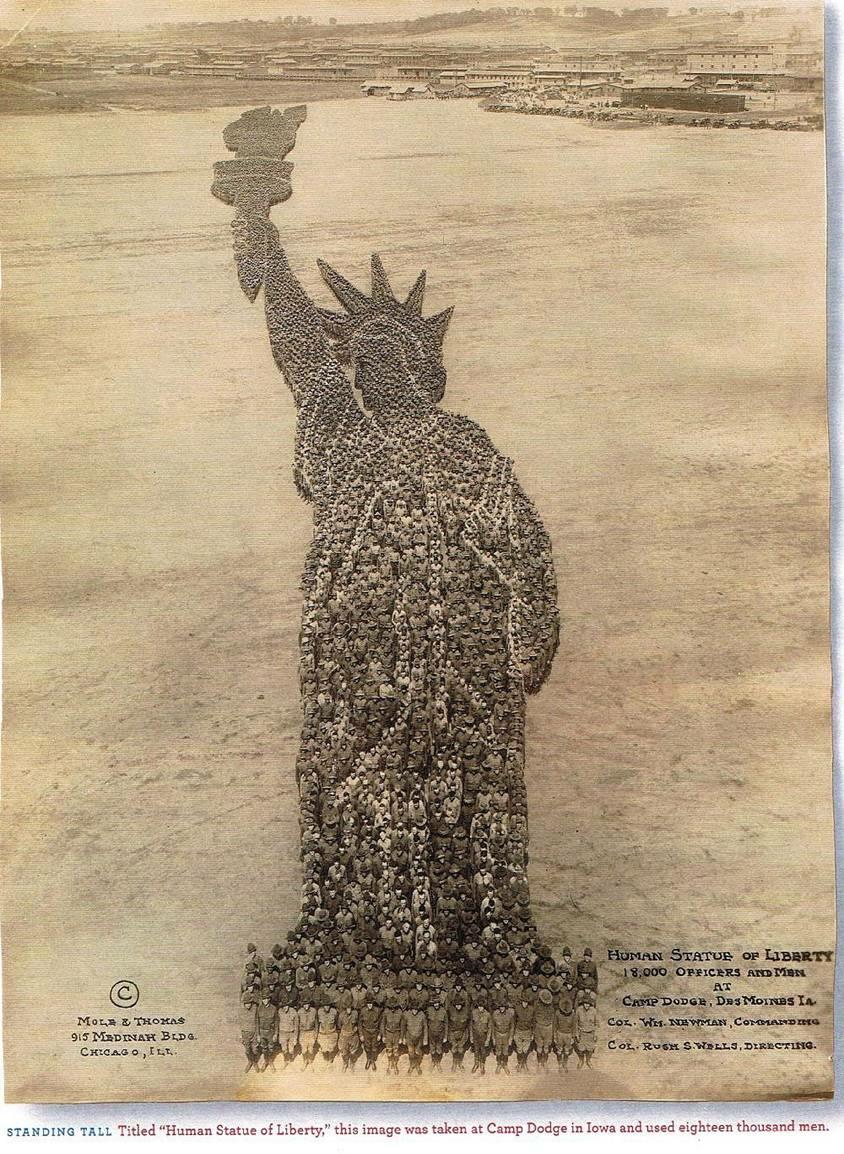





 Millard Fillmore's Bathtub