Driving with a banjo

June 20, 2008

There can be only three or four legitimate banjo jokes possible, right? There’s the one about the banjo player’s Porsche, there’s the one about perfect pitch . . .

Somebody was really ticketed for driving while strumming a banjo and singing into a cell phone? Read the story at The Bluegrass Blog, and be sure to catch the definition of “reckless.”

Tip of the old scrub brush to a perplexed NYC Educator.


Good though: Folksinger, Storyteller, Railroad Tramp Utah Phillips Dead at 73

May 27, 2008

Utah Phillips died Friday. He was 73. He died at his home in Nevada City, California.

Wonderful tribute at Fifteen Iguana.

Utah Phillips publicity shot

Utah Phillips (publicity photo via Bluegrass Today)

Phillips’s website lists planned tributes, memorials and the funeral in Nevada City, California. KVMR Radio’s site has an obit and links to other tributes.

Read the rest of this entry »


Happy 75th, Willie Nelson

April 30, 2008

He’s on the cover of Texas Monthly looking like the oldest piece of shoe leather south of the Red River (see photo at right — by Platon).  He was featured in the Dallas Morning News last week for “Red Headed Stranger,” the album that broke the country music mold and made him the monument to iconoclasm that he is.  And there’s a new book on  his life from Joe Nick Patoski:  Willie:  An epic life. Texas Monthly cover photo of Willie Nelson, 5-2008

I’ll wager he’s on the road today, ready to make music.

Willie Nelson turns 75 today.

You oughtta check out:


The last Morton Meyerson Marathon

April 12, 2008

It is done.

James Darrell and the trombones of the Duncanville Wind Ensemble leave the stage at the Morton H. Meyerson Symphony Hall

The curly-headed guy with the trombone at the center — that’s James.

For the last eight years we have attended what we affectionately call the Meyerson Marathon, an evening of concert performances by Duncanville’s bands, capped with an always-stellar performance by the Wind Ensemble. Duncanville borrows the Morton H. Meyerson Symphony Center for an evening. The bands always sound great, but sometimes the great hall adds a little to their performances. In Duncanville, even the junior high bands are very, very good.

Kenny played euphonium (playing trumpet with his braces was too painful; he’s gone back to trumpet for college jazz performances). James played trombone — and April 1 was James’ last performance at the Meyerson.

One more sign of time’s incessant march. Of course, On April 1, time’s march was accompanied with some fine band music.

Next week the Wind Ensemble decamps for Washington, D.C., for a Friday performance at the Festival of Music.


Top 25 guitar riffs of all time? This school needs a history class

April 6, 2008

Guitar-X students — from London Tech Music School — picked what they consider to be the top 25 guitar riffs of all time.

You can listen to the top 25 in The Sun’s video below linked to below [I can’t get the video to embed correctly, alas]. The entire list is below that.

The Beeb’s report:

Here’s the full 25 on the list, courtesy of Reuters’ wire:

1. Smoke On The Water – Deep Purple (1973)
2. Smells Like Teen Spirit – Nirvana (1991)
3. Walk This Way – Aerosmith (1975)
4. Purple Haze – Jimi Hendrix (1967)
5. Sweet Child O Mine – Guns N Roses (1987)
6. Paradise City – Guns N Roses (1987)
7. Ace Of Spades – Motorhead (1980)
8. Enter Sandman – Metallica (1991)
9. Under The Bridge – Red Hot Chilli Peppers (1992)
10. Welcome To The Jungle – Guns N Roses (1987)
11. Run To The Hills – Iron Maiden (1982)
12. Walk – Pantera (1992)
13. Johnny Be Goode – Chuck Berry (1958)
14. Back In Black – AC/DC (1980)
15. Immigrant Song – Led Zeppelin (1970)
16. Wake Up – Rage Against The Machine (1992)
17. Highway to Hell – AC/DC (1979)
18. My Generation – The Who (1965)
19. 7 Nation Army – The White Stripes (2003)
20. Born To Be Wild – Steppenwolf (1968)
21. Give It Away – Red Hot Chilli Peppers (1991)
22. Paranoid – Black Sabbath (1970)
23. Voodoo Chile (Slight Return) – Jimi Hendrix (1967)
24. Eye Of The Tiger – Survivor (1982)
25. Money For Nothing – Dire Straits (1984)
(Editing by Paul Casciato)

A spokesman for the school seemed quite proud that a lot of the top 25 are 20 years old; no one who ever listened to rock and roll between 1957 and 2008 will think this list to be perfect, though. There is too much good guitar riffing absent. The Idolator, obviously more current than I, complains:

As you’d expect from a list based on the opinions of young guitar students, you’ve got some Hendrix, some Angus, three from Slash in the Top 10. But two Frusciantes? A Dimebag? A Knopfler?

. . . Duuuuuuude, no “Stone Cold Crazy?” And if you’re going to bother with Jack White, you have to go with “Icky Thump.” Maybe it’s just my patriotism talking, I think an American school would have made a much fiercer list. One with some Kerry King! Some John Petrucci! Some John Mayer!

John Mayer? Things that pass for value these days! (No Steely Dan licks made the list.)

How about the Beatles? No “Ticket to Ride?” How about the Stones, for the love of blues roots: No “Satisfaction?” This can’t be the list ’cause it doesn’t list the same guitar riffs as me!

No Santana? Nothing from Clapton, not even Cream? “Sunshine of Your Love” doesn’t rate over something on that list? “Layla” isn’t mentioned!? What sort of time warp list warping is that! Where is one of the three dozen great riffs from Motown? Duane Allman? How about the Beach Boys and “Surfin’ USA?”

The list seems limited by genre, too. Surely Wes Montgomery or George Benson, or both of them, should be in there. Somebody’s version of “Malagena” ought to be in there.

Comments are wide open, Dear Readers: What guitar riff ought to be in the top 25, that is not included on that list?

Resources:


World’s oldest playable musical instruments: Listen

March 14, 2008

About that 5,200-year old animation: Was there a musical score to accompany it?

Certainly flutes could have provided accompaniment: Research establishes that several neolithic bone flutes found in China are 7,000 to 9,000 years old.

9,000 year-old flutes from crane bones, Brookhaven National Lab

A 1999 release from the Brookhaven National Laboratory (BNL) discussed the dating of the flutes:

Recent excavations at the early Neolithic site of Jiahu, located in Henan province, China, have yielded six complete bone flutes between 7,000 and 9,000 years old. Fragments of approximately 30 other flutes were also discovered. The flutes may be the earliest complete, playable, tightly-dated, multinote musical instruments.

Garman Harbottle, a chemist at the U.S. Department of Energy’s Brookhaven National Laboratory and member of the Jiahu research team, helped analyze data from carbon-14 dating done in China on materials taken from the site. “Jiahu has the potential to be one of the most significant and exciting early Neolithic sites ever investigated,” said Harbottle. “The carbon dating was of crucial importance to my Chinese colleagues in establishing the age of the site and the relics found within it.”

These flutes were found in modern China, and the bowl with the jumping goat images was found in modern Iran. The spread of technology may have worked on a millennial time scale then. Did the flute technology cover the approximately 3,500 miles between the sites, in the 3,000 to 4,000 years in between their creation?

At least two .wav files exist of one of the flutes being played (here, and here), again from BNL; the actual tunes the flute creators played, we do not know, ASCAP and BMI did not protect the publication of the tunes.

What other astounding archaeological finds are out there, relatively unpublicized?

Resources:


Park your camel, the music’s begun

January 12, 2008

As long as we’re in Mali anyway, why not arrive a couple of days early for this other music festival? Michael Kessler writes about the Festival du Chameau in the Sydney Morning Herald, “The sound of the desert blues”:

A week ago, when the doctor was jabbing me with yellow fever, polio and hepatitis shots and supplying malaria tablets, I’d tried imagining what a camel festival would look like. The Festival du Chameau [in its third year in 2008] is the brainchild of Tinariwen, the international darlings of world music – a group of Touareg nomadic musicians, purveyors of the desert blues, whose political past combined with their hypnotic electric guitars make them local heroes in this, the Adrar des Iforas region of Mali.

Toronto Globe and Mail reporter Stephanie Nolen accompanied a group of Inuit musicians to Mali, documented in a blog for the newspaper, Trail to Timbuktu; from her reports, we know the festival is underway, music is on the dunes:

There’s no down-in-front with a camel, really.

The 8th Festival in the Desert began a couple of hours ago, with several thousand people sitting and standing in the cool, white sand at the edge of the oasis at Essekane. The sun set just as the event kicked off, silhouetting robed men, veiled women and camels on all the surrounding ridges. On the small, raised stage there were speeches by notables including the local governor and Mali’s Minister of Culture.

Then the music began, with the opening provided by Tamnana, a traditional ensemble of men and women from Essekane who drum, chant, clap and ululate. They’re a big hit with the locals, and it turns out that demonstrations of musical appreciation hereabouts take the form of camel tricks. When the spirit moves them, nomads on camelback suddenly charge down from the dunes to the front of the stage, where they coax their camels down to “walk” on their front knees a much-admired feat. Or they dismount and launch sudden sword fights with phantom opponents, before swinging back up and charging the camel back and forth in front of the stage a few times. It’s the Tuareg version of the mosh pit, and it’s magical to watch, but it does tend to blot out the action on the stage.

Inuit performers in the sand at Essakane Festival, Mali, 2008 - photo by Stephanie Nolen, Toronto Globe and Mail

Inuit performers from Canada, in the sands at the Essakane Festival, Mali, 2008; photo by Stephanie Nolen, Toronto Globe and Mail.

News still travels slowly out of Mali’s desert, though. Most of the news about the Mali Festival in the Desert comes in the form of festival veterans spreading the music, in other, far-flung venuues.

Influences of the Essakane Festival of the Desert reach Salina, Kansas, where the Salina Journal talks about the music of Toubab Crewe, a group of North Caronlians who have performed at the big Mali festival in the past.

Oregon feels it, too: MacArthur Foundation grant recipient Corey Harris, a veteran bluesman whose work was featured in the PBS series on the blues, especially his work in Mali with the late Ali Farka Toure, performs at the Rogue Valley Blues Festival in Ashland, Oregon, on January 18 (that’s the Southern Oregon Mail Tribune, not Mali Tribune).

Mali, and Africa, have much more than just these few festivals. Why should we concern ourselves with the Essakane festival at all? Africa. PopMatters carries a column by journalist Mark Reynolds, reviewing events and arts in Africa in 2007, with a look to 2008. It’s a survey of events and publications, but it’s a good backgrounder for a high school student in Africa concerns, an article that should suggest connections to be made in geography, history, government and economics courses.

Thanks to Ann at Peoples Geography for the correction — Sydney Morning Herald.


Festival au Desert Essakane! January 10-12, 2008

January 10, 2008

BBC’s internet services carried this slide and sound account of the 2007 Essakane festival in far off Mali; this is one music festival I would really like to attend. Snippets of songs crop up on NPR or PRI (especially The World), and on PBS, and in record stores with really savvy staff — or where Putumayo discs are on sale. Everything I have heard from these festivals is very, very good.

Robert Plant helped make it famous with his 2003 performance. But its fame is relative; it’s famous only among a select group of people — those who have heard the music.

[Alas, Vodpod died, and the video that I had captured via that service seems to appear nowhere else on the web.  If you should find the piece by Paula Dear which the BBC broadcast in 2007, please note it in comments.]

Vodpod videos no longer available. from news.bbc.co.uk posted with vodpod

.

The festival is set for January 10-12 in 2008. Who is playing? Where are news stories? Where are the CDs? Here’s the official website.

Geography teachers, think of the possibilities this festival offers for fun in the classroom! Adam Fisher wrote about it for the New York Times a couple of years ago:

My real aim is Essakane, an obscure desert oasis a half-day’s drive beyond Timbuktu, and the site of what’s billed as the “most remote music festival in the world.” It’s a three-day Afro-pop powwow held by the Tuareg, the traditionally nomadic “blue people” of the Sahara.

It’s a tribe often feared for the banditry of its rebels and respected for the fact that it has never really been conquered. Historically its great power came from its role in the trans-Saharan trade in gold, slaves and salt. Even now, Tuareg caravans make the 15-day journey south from the northern salt mines to Timbuktu on the Niger River. They rest their camels during the day and use the stars to navigate at night. The skin tint of the nomads comes from the indigo dye they use for their turbans and robes, which leaves a permanent stain.

What more exciting stuff do you have in your classroom on the Tuareg? Does it resonate better with your teenagers than this story would?

Read the rest of this entry »


Tuba Christmas, St. Louis!

December 10, 2007

I love a good tuba tune — I love all the low brass.  Tuba Christmas is one of the great joys of this season.  It may be better than the sing-along “Messiah!”

Tuba Christmas at Rockefeller Center, NYC - Voice of America photograph

Photo at left:  Tuba Christmas at Rockefeller Center, New York City, 2006; Voice of America photograph

The St. Louis Post-Dispatch has a good slide show on Tuba Christmas in St. Louis this year.

Not to brag, but there are 21 Tuba Christmas events set for Texas this year, equal to the total of California and New York together.  (That link shows events in all states.)


Pete Seeger: Standing taller than his critics

September 10, 2007

Some people can’t let go of the past, and like the greedy chimpanzee who grasps the rice in the jar, and then is trapped when he cannot pull out his fist nor will he give up his prize to save his freedom, they trap themselves out of a good life.

Like this fellow, whose father’s dislike of an old political position of Pete Seeger kept them both from a good concert. He appears to agree with his father, though, thinking that somehow Seeger is responsible for the evils of Stalinism, and complaining that Seeger was tardy in making note of the fact that Stalin was evil. And Instapundit’s Glenn Reynolds agrees, profanely, and inaccurately, as I’ll explain below the fold. But heed this warning: I’m explaining at length.

Get a life, people! Pete Seeger did.

Read the rest of this entry »


Bluegrass good news: John Starling is back

May 1, 2007

Not only is John Starling back, he’s got his old colleagues from the original Seldom Scene with him, Mike Auldridge and Tom Gray (Ben Eldridge continues to hold down the fort with the new casts of players in the Scene).

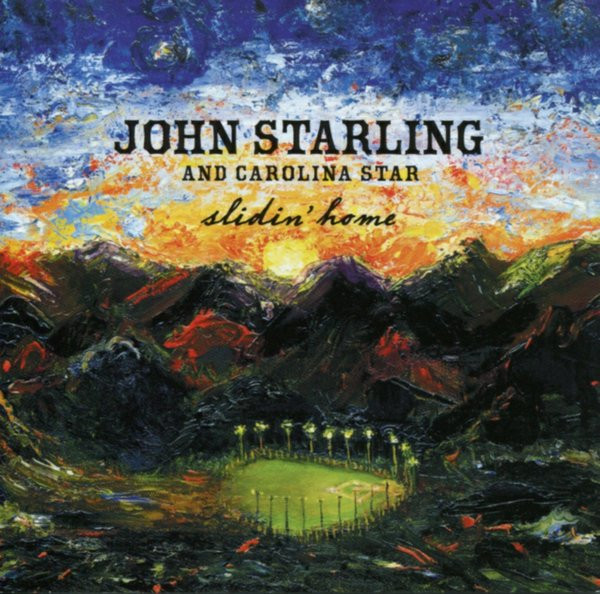
“Sliding Home,” 2007 album from John Starling and Carolina Star, featuring a lot of Starling’s friends as guests (and great musicians), including from Seldom Scene.

John Starling and Carolina Star have a new CD out, “Slidin’ Home.John Starling and Carolina Star, Slidin' Home (cover)

The seeds for this reunion were planted in 2005 at a benefit concert for Eddie Adcock in Washington D.C. “I knew they (Auldridge and Gray) were going to be there, and I called Ben, and he came, and Larry Stephenson was there,” Starling recalls. “We just went up there, Larry sang tenor and the other four of us were original members of Seldom Scene, just went up and did a show. We worked it up backstage, and next thing you know, we had so much fun, we decided to do another couple of shows.”

With encouragement from Massenburg and an attentive audience base, Starling, Auldridge and Gray decided to go into the studio and record a few songs to see how things went. “We liked it and decided to come back to Washington and put together a group that would go out and play it and decided to take a couple of Beltway bandits, Jimmy Gaudreau and Richie Simpkins, who also live in the Washington area and went back and finished the album with that group,” he says.

Rebel Records has a setup to allow listening to the album, at Rebel Records’ site.