Watching the Big 10 Men’s Basketball tournament (Michigan vs. Michigan State) — it was the game that was on, my best chance short of internet to get news of PAC-12 and Mountain West conference results — and I looked at the backboard.
Someone thought college basketball needed to make a patriotic display beyond the usual hoo-haw, I suppose. “Let’s put U.S. flag decals on the glass backboards.” Nice little touch. Every photograph of a ball going through the hoop, every shot of a fight for a rebound or to block a shot at the hoop, and there’s that little U.S. flag, reminding us of something.
In displaying the U.S. flag, the U.S. Flag Code notes that the flag should always be on its own right, or to the left of the audience facing it (See 4 U.S. Code § 7 (k)).
In that arena in Indianapolis, the flag is on the right. Here’s a still photo from USA Today from an earlier game.
Caption of AP photo: Brian Spurlock-USA TODAY Sports Mar 14, 2014; Indianapolis, IN, USA; Michigan Wolverines react as the Illinois Fighting Illini miss the potential winning shot at the buzzer in the quarterfinals of the Big Ten college basketball tournament at Bankers Life Fieldhouse. Michigan defeats Illinois 65-64. Mandatory Credit: Brian Spurlock-USA TODAY Sports
Looking for an image of the Indianapolis backboard, I came across this image from the 2012 NBA finals.
AP caption: A ball is stuck between the backboard and basket during the first half of Game 5 of the NBA finals basketball series between the Oklahoma City Thunder and the Miami Heat, Thursday, June 21, 2012, in Miami (AP Photo by Lynne Sladky) [Note flag decal on right.]
This error of flag display has been around for at least two years. What’s up with that?
Those who advocate amending the Constitution to make it a crime to desecrate the flag probably don’t anticipate jailing the entire NCAA or NBA. Maybe we should revise the flag code, to be more reasonable.
None of the five states previously required the Pledge, and then stopped.
None of the five states claim to not require the pledge in order to avoid offending anyone. Oklahoma would be happy to offend people on such issues, most of the time.
Reposting historically inaccurate claims, without fear of offending anyone, is no virtue. It’s just silly.
The creator of that poster is probably well under the age of 50, and may have grown up with the hand-over-heart salute used after World War II. That was not the original salute, and I’d imagine the author is wholly ignorant of the original and why it was changed.
Wikipedia image and caption: Students pledging to the flag, 1899, 8th Division, Washington, D.C. Part of the Frances Benjamin Johnston 1890 – 1900 Washington, D.C., school survey.
Wikipedia gives a concise history of the salute:
Swearing of the Pledge is accompanied by a salute. An early version of the salute, adopted in 1892, was known as the Bellamy salute. It started with the hand outstretched toward the flag, palm down, and ended with the palm up. Because of the similarity between the Bellamy salute and the Nazi salute, developed later, the United States Congress instituted the hand-over-the-heart gesture as the salute to be rendered by civilians during the Pledge of Allegiance and the national anthem in the United States, instead of the Bellamy salute. Removal of the Bellamy salute occurred on December 22, 1942, when Congress amended the Flag Code language first passed into law on June 22, 1942.
Students in an unnamed school in 1941, offering the Bellamy Salute for the Pledge of Allegiance. Wikipedia image.
One might understand why the Bellamy Salute was changed, during war with Nazi Germany.
Arrogance and ignorance combine to form many different kinds of prejudices, all of them ugly. The arrogant assumption that only “our generation” learned patriotism and that whatever goes on in schools today is not as good as it was “in our day,” regardless how many decades it’s been since the speaker was in a public school, compounds the ignorance of the fact that since 1980, forced patriotic exercises in schools have increased, not decreased.
In 1943, the Supreme Court determined that the Free Speech Clause of the First Amendment protects the right of a student to NOT recite the Pledge of Allegiance; Jehovah’s Witnesses students had been reprimanded in West Virginia, but they protested that the Pledge is exactly the sort of oath their religion claims to be against God. The case is West Virginia vs. Barnette 319 U.S. 625 (1943). Explanation of the case here; full text and more history of the case here, at Oyez; in irony the maker of the poster above will miss, Justice Jackson pointed out that the First Amendment especially protects Americans against the tyranny of forced thought
Labor Day passed, so you can put your flags away until . . . what, Thanksgiving?
Not so fast, patriot!
U.S. Flag Code rules list specific days for flying the flag, and Constitution Day on September 17 is one of those dates.
Also, the Flag Code urges flying the U.S. flag on the anniversary of a state’s entering the union, in that state. California’s statehood day is September 9 (next week!)
California flag flies on the same pole as the U.S. flag; photo from tumblr deepspaceromans.
It’s Labor Day 2013 in the United States, a federal holiday, and one of those days Americans are urged to fly the U.S. flag.
“Free Labor Will Win,” the poster said, encouraging a theme important during World War II, when unions were encouraged to avoid strikes or any action that might interrupt work to build the “arsenal of democracy” believed necessary to win the war. Labor complied, the war was won, and organized labor was the stronger for it. In 2012, some have difficulty remembering when all Americans knew that our future rides on the backs of organized labor.
The poster was issued by the Office of War Information in 1942, in full color. A black-and-white version at the Library of Congress provides a few details for the time:
Labor Day poster. Labor Day poster distributed to war plants and labor organizations. The original is twenty-eight and one-half inches by forty inches and is printed in full color. It was designed by the Office of War Information (OWI) from a photograph especially arranged by Anton Bruehl, well-known photographer. Copies may be obtained by writing the Distribution Section, Office of War Information [alas, you can’t get a copy from the Office of War Information in 2012]
Even down here in deepest, darkest-right-to-work Texas, patriots fly their flags to honor Labor today. It’s heartening.
Flags fly all around in 1882 at the first Labor Day Parade in New York City’s Union Square; lithograph from USC’s Dornsife History Center, via Wikipedia, artist unidentified
It’s a day of tradition — oddly enough, since we are in reality a very new nation, and Lee’s resolution to declare independence from Britain came on July 2.
A soak in Millard Fillmore’s Bathtub is nothing if not a steeping in tradition. Fly your flag today, to celebrate the independence of the American colonies of Britain.
At the White House, traditionally, new citizens are sworn in — often people who joined our armed forces and fought for our nation, before even getting the privileges of citizenship. Fireworks on the Capital Mall will be grand, with the White House hosting a few thousand military people and their families from some of the best views. Traditionally, five photographers, chosen by lottery, get to shoot photos of the fireworks from the windows of the Washington Monument; will that occur, with the Monument shut down from public view for repair from the earthquake?
There will be great fireworks also in Baltimore Harbor over Fort McHenry, the fort whose siege inspired Francis Scott Key to write the “Star-spangled Banner” from his boat in the harbor, in 1814. Firworks will frighten the bluebirds nesting at Yorktown National Battlefield. I suspect there will be a grand display at Gettysburg, on the 150th anniversary of the end of that battle. July 4, 1863, also marked the end of the Siege of Vicksburg; tradition holds that Vicksburg did not celebrate the 4th of July for 83 years after that. I’ll wager there will be fireworks there tonight. In Provo, Utah, the city poobahs will have done all they can to try to live up to their self-proclaimed reputation as having the biggest Independence Day celebration in the nation. The celebration in Prescott, Arizona, is muted by the tragic deaths of 19 Hot Shot firefighters last week; will drought halt the fireworks, too? There will be fireworks around the Golden Gate Bridge, in Anchorage, Alaska, reflecting on the waters of Pearl Harbor, and probably in Guam, American Samoa, and the Northern Marianas Islands.
This is mostly an encore post, but I so love that photo of the flag with the Earth in the distance.
Happy birthday, Kathryn!
Fireworks in Duncanville, Texas, for July 4 — Kathryn Knowles’s birthday. We’re always happy the town chimes in with the celebratory spirit.
Tip of the old scrub brush to Thomas Jefferson, Richard Henry Lee, John Adams, Benjamin Franklin, Roger Sherman, Robert Livingston, and the cast of thousands of patriots including George Washington.
Spread the word; friends don't allow friends to repeat history.
140th US Flag Day poster. 1777-1917. The birthday of the stars and stripes, June 14th, 1917. ‘Tis the Star Spangled Banner, oh, long may it wave, o’er the land of the free and the home of the brave!” Library of Congress description: “Poster showing a man raising the American flag, with a Minuteman cheering and an eagle flying above.” – Wikipedia
1777-1917: The 140th flag day. The birthday of the stars and stripes, June 14th, 1917. The text continues: ‘Tis the Star Spangled Banner, oh, long may it wave, o’er the land of the free and the home of the brave! President Woodrow Wilson remarked, “this flag, which we honor and under which we serve, is the emblem of our unity, our power, our thought and purpose as a nation. Though silent, it speaks to us of the past, of the men and women who went before us, and of the records they wrote upon it.”
MEDIUM: 1 print (poster) : lithograph, color ; 101 x 65 cm.
CREATED/PUBLISHED: 1917.
NOTES: Forms part of: Willard and Dorothy Straight Collection.
Who was the artist? Who ordered the printing, and for what specific purpose? Anyone know? (Still looking for the history of this poster, which has become quite popular in the past two years.)
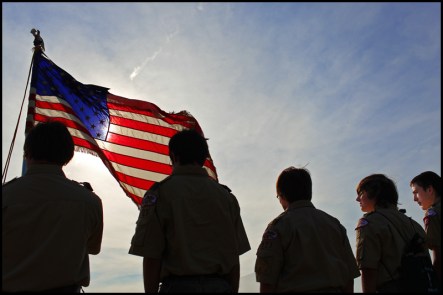
Boy Scouts from Troop 123 stand together during a Flag Day ceremony Thursday, June 14, 2012 at Veterans Memorial Park in Peru, Ill. Photo and caption from Reactions
Fly your U.S. flag all week!
Of course, you may fly your state and local flags, too.
Each June, our Nation lifts its sights to the flag that has watched over us since the days of our founding. In those broad stripes and bright stars, we see the arc of the American story — from a handful of colonies to 50 States, united and free.
When proud patriots took up the fight for independence, they came together under a standard that showed their common cause. When the wounds of civil war were still fresh and our country walked the long road to reconstruction, our people found hope in a banner that testified to the strength of our Union. Wherever our American journey has taken us, whether on that unending path to the mountaintop or high above into the reaches of space, Old Glory has followed, reminding us of the rights and responsibilities we share as citizens.
This week, we celebrate that legacy, and we honor the brave men and women who have secured it through centuries of service at home and abroad. Let us raise our flags high, from small-town storefronts to duty stations stretched around the globe, and let us look to them once more as we press on in the march toward a more perfect Union.
To commemorate the adoption of our flag, the Congress, by joint resolution approved August 3, 1949, as amended (63 Stat. 492), designated June 14 of each year as “Flag Day” and requested that the President issue an annual proclamation calling for its observance and for the display of the flag of the United States on all Federal Government buildings. The Congress also requested, by joint resolution approved June 9, 1966, as amended (80 Stat. 194), that the President annually issue a proclamation designating the week in which June 14 occurs as “National Flag Week” and call upon citizens of the United States to display the flag during that week.
NOW, THEREFORE, I, BARACK OBAMA, President of the United States of America, do hereby proclaim June 14, 2013, as Flag Day and the week beginning June 9, 2013, as National Flag Week. I direct the appropriate officials to display the flag on all Federal Government buildings during that week, and I urge all Americans to observe Flag Day and National Flag Week by displaying the flag. I also call upon the people of the United States to observe with pride and all due ceremony those days from Flag Day through Independence Day, also set aside by the Congress (89 Stat. 211), as a time to honor America, to celebrate our heritage in public gatherings and activities, and to publicly recite the Pledge of Allegiance to the Flag of the United States of America.
IN WITNESS WHEREOF, I have hereunto set my hand this seventh day of June, in the year of our Lord two thousand thirteen, and of the Independence of the United States of America the two hundred and thirty-seventh.
Joel Mielke cartoon in the North Coast Journal, Humboldt, California. Each of these flag uses is, technically, a violation of the flag code. Fly your flag on Flag Day; it’s a non-violative, non-offensive way to honor the flag, and our nation.
Falling down on the job here as arbiter of your flag-flying habits. How could I forget that some of America celebrates this day as Columbus Day? (No one in this household gets the day off.)
Fly your U.S. flag today. Fly it to honor Columbus’s discovery of the Americas. Or, fly your flag to honor exploration and explorers, and to remember the people who suffered so greatly as a result of the collision of European cultures in search of money, and American cultures lacking gunpowder and steel.
The second Monday in October is celebrated as Columbus Day, a federal holiday (though not widely honored in private enterprise). Columbus made landfall in the Americas for the first time on October 12, 1492, 520 years ago.
John Vanderlyn, Oil on canvas, 12′ x 18′ – Commissioned 1836/1837; placed 1847 in the Rotunda of the Capitol. Christopher Columbus is shown landing in the West Indies, on an island that the natives called Guanahani and he named San Salvador, on October 12, 1492. He raises the royal banner, claiming the land for his Spanish patrons, and stands bareheaded, with his hat at his feet, in honor of the sacredness of the event. The captains of the Niña and Pinta follow, carrying the banner of Ferdinand and Isabella. The crew displays a range of emotions, some searching for gold in the sand. Natives watch from behind a tree. John Vanderlyn (1775-1852) had studied with Gilbert Stuart and was the first American painter to be trained in Paris, where he worked on this canvas for ten years with the help of assistants.
Did you notice? In the painting in the U.S. Capitol, Columbus isn’t flying the U.S. flag. Acccuracy over political correctness winds, eh?
Below the fold: A description of the painting in the Capitol Rotunda, from the Architect of the U.S. Capitol (the “official” version.)
The distinguished commentator Pat Carrithers, on Facebook: “Today is a special day. It’s Columbus Day. That’s the day on which illegal immigration is called Discovery.”
(Updating dead links, especially from the late and lamented (here at least) VodPod, I found myself back in 2008, with this post on Mark Twain’s “The War Prayer.” Fortunately, I found the film migrated to YouTube, though split in two parts. Some information that should have caught our attention in 2008 deserves noting now, and we can update and add new links.)
It’s largely forgotten now, especially in history texts in high schools. After the Spanish-American War, when the U.S. wrested several territories from Spain, including Guam, Cuba, Puerto Rico and the Philippines, the U.S. quickly got mired in one of the original guerrilla wars in the Philippines. It took 15 years, but the U.S. finally put down the rebellion — 15 brutal, bloody years. The conduct of that war shocked many people, including Mark Twain.
This piece was written partly in response to that war.
Many Americans, like Twain, who questioned the war, in turn had their patriotism questioned. Why wouldn’t they get on board with the war, and kill off those Filipino rebels? the critics asked.
Why didn’t I notice this in 2008? The film is narrated by Peter Coyote. Poet Lawrence Ferlinghetti plays the minister. Erik Bauersfeld plays the Stranger.
From the Mexican-American Legal Defense and Education Fund (MALDEF), a six-minute film commemorating Latino contributions to America, with a Latin version of the “Star-spangled Banner” performed by the Rondstadt Generation.
Can anyone identify the Medal of Honor winner pictured?
Information on the film from MALDEF (links to general information added; specific links from MALDEF):
When MALDEF announced its lawsuit against Arizona’s anti-immigrant SB1070 at the state capitol in Phoenix, President and General Counsel Thomas A. Saenz took with him an iconic delegation of Latino leaders, renowned as symbols of American perseverance, including Dolores Huerta, Arizona native Richard E. Chavez (brother of Cesar E. Chavez), and legendary recording artist, Linda Ronstadt. These leaders’ contributions to American progress stood in stark contrast to the anti-Latino environment in Arizona; and it was out of that contradiction that MALDEF was inspired to develop “America, Our Home,” a project to set the record straight and celebrate the Latino legacy in the United States. MALDEF staff works relentlessly each day to spread this message, but MALDEF needs your support to ensure that that message reaches every American in every state and municipality across the country.
MALDEF’s compelling short film featuring The Star Spangled Banner from a new collection of American patriotic songs recorded in Mexican musical styles by the group Ronstadt Generations, also titled “America, Our Home.” The film is directed by Edgar Pablos and features the photography of George Rodríguez, well-known for photographing key moments in the Chicano Civil Rights Movement.
It’s Labor Day 2011 in the United States, a federal holiday, and one of those days Americans are urged to fly the U.S. flag.
“Free Labor Will Win,” the poster said, encouraging a theme important during World War II, when unions were encouraged to avoid strikes or any action that might interrupt work to build the “arsenal of democracy” believed necessary to win the war. Labor complied, the war was won, and organized labor was the stronger for it. In 2012, some have difficulty remembering when all Americans knew that our future rides on the backs of organized labor.
The poster was issued by the Office of War Information in 1942, in full color. A black-and-white version at the Library of Congress provides a few details for the time:
Labor Day poster. Labor Day poster distributed to war plants and labor organizations. The original is twenty-eight and one-half inches by forty inches and is printed in full color. It was designed by the Office of War Information (OWI) from a photograph especially arranged by Anton Bruehl, well-known photographer. Copies may be obtained by writing the Distribution Section, Office of War Information [alas, you can’t get a copy from the Office of War Information in 2012]
Even down here in deepest, darkest-right-to-work Texas, patriots fly their flags to honor Labor today. It’s heartening.
Flags fly all around in 1882 at the first Labor Day Parade in New York City’s Union Square; lithograph from USC’s Dornsife History Center, via Wikipedia, artist unidentified
Listen to him: This is why conservatives fear Van Jones. He speaks clearly, simply, and he’s right.
Are you a patriot?
“Who is fighting harder for liberty and justice for all than the progressives? We’re the ones fighting for that. Who is fighting, not just singing ‘America the Beautiful,’ who is defending America’s beauty from the oil spillers, from the clear cutters, from the mountain-top removers. That’s progressives. Who is honoring the Statue of Liberty when the statue says ‘Give me your tired, give me your poor, give me your huddled masses.’ You can’t be an anti-immigrant bigot and a patriot at the same time. Who are these people to claim that they’re patriots and we are not?” (From The War Room, on Current)
Spread the word; friends don't allow friends to repeat history.
Fourth of July: NPR has already read the Declaration of Independence, PBS is ready to broadcast the Capitol Fourth concert (maybe a rebroadcast is available, if you’re off at your own town’s fireworks — check your local listings), your town has a parade somewhere this weekend, or a neighboring community does, and fireworks are everywhere.
Remember to put your flag up today.
Last flag on the Moon: Astronaut Eugene Cernan and the U.S. Flag — Apollo 17 on the Moon (NASA photo)
This is mostly an encore post, but I so love that photo of the flag with the Earth in the distance.
Happy birthday, Kathryn!
Tip of the old scrub brush to Thomas Jefferson, Richard Henry Lee, John Adams, Benjamin Franklin, Roger Sherman, Robert Livingston, and the cast of thousands of patriots including George Washington.
Spread the word; friends don't allow friends to repeat history.
Every kid should learn this stuff by third grade, but it’s clear from what we see that they don’t.
Flag flying at the eastern front of the U.S. Capitol. Library of Congress photo
So here’s a quick review of dos and don’ts for display and behavior toward the U.S. flag on this most flag-worthy of days, the 4th of July. With a few comments.
1. Fly your flag, from sunup to sundown. If you’re lucky enough to have a flagpole, run the flag up quickly. Retire it slowly at sunset. Then go see fireworks.
2. Display flags appropriately, if not flown from a staff. If suspended from a building or a wall, remember the blue field of stars should always be on the right — the “northwest corner” as you look at it. Do not display a flag flat.
3. Salute the flag as it opens the 4th of July parade. In a better world, there would be just one U.S. flag at the opening of the parade, and the entire crowd would rise as it passes them in a great patriotic, emotional wave — civilians with their hands over their hearts, hats off; people in uniform saluting appropriately with hats on. It’s likely that your local parade will not be so crisp. Other entries in the parade will have flags, and many will be displayed inappropriately. A true patriot might rise and salute each one — but that would look silly, perhaps even sillier than those sunshine patriots who display the flag inappropriately. Send them a nice letter this year, correcting their behavior. But don’t be obnoxious about it.
4. Do not display the flag from a car antenna, attached to a window of a car, or attached in the back of a truck. That’s against the Flag Code, which says a flag can only be displayed attached to the right front fender of a car, usually with a special attachment. This means that a lot of the National Guard entries in local parades will be wrongly done, according to the flag code. They defend the flag, and we should not make pests of ourselves about it. Write them a letter commending their patriotism. Enclose the Flag Code, and ask them to stick to it next time. Innocent children are watching.
5. Do not dishonor the flag by abusing it or throwing it on the ground. It’s become popular for a local merchant to buy a lot of little plastic flags and pass them out to parade goers. If there is an advertisement on the flag, that is another violation of the Flag Code. The flag should not be used for such commercial purposes. I have, several times, found piles of these flags on the ground, dumped by tired people who were passing them out, or dumped by parade goers who didn’t want to carry the things home. It doesn’t matter if it’s printed on cheap plastic, and made in China — it is our nation’s flag anyway. Honor it. If it is worn, dispose of it soberly, solemnly, and properly.
That’s probably enough for today. When the Flag Desecration Amendment passes — if it ever does — those parade float makers, National Guard soldiers, and merchants, can all be jailed, perhaps. Or punished in other ways. And wouldn’t that be silly and unproductive?
Until that time, our best hope is to review the rules, obey them, and set examples for others.
Have a wonderful 4th of July! Fly the flag. Read the Declaration of Independence out loud. Love your family, hug them, and feed them well. That’s part of the Pursuit of Happiness that this day honors. It is your right, your unalienable right. Use it wisely, often and well.
At some small risk of sacrificing the G rating of this blog, I offer this little scene from HBO’s “Newsroom,” a program I can’t see because our cable company is not customer-oriented (but we take it for the bundled internet package). From this small snippet, I would say HBO is again showing how a cable program aimed at adult minds can achieve high quality, if not greatness. Aaron Sorkin created and writes the thing, and Jeff Daniels stars as the television news guy. This scene will give every patriotic American something to think about.
Something to think about, sure.
It’s not a question, or should not be a question, of whether one “believes in” American exceptionalism. It is a question of whether we understand that what makes America exceptional is the people who work to make things better, the people who work to make change — and that exceptionalism slips from our mantle, and from our grasp, if we don’t work to keep it.
I’m also reminded of the two posters somebody put out that showed up in every speech department in every college in America when I was a speech graduate student. They were based loosely on Plutarch‘s Lives, the book comparing biographies of great Romans and great Greeks, and the section that compared the two great orators, the later Roman, Cicero and the earlier Greek, Demosthenes.
One poster said, “When Cicero spoke, the people said how well he spoke.”
The second said, “When Demosthenes spoke, the people said ‘Let us march!‘”
Are you ready to march? November’s election day comes sooner than we anticipate.
Or, until that account is unsuspended by the forces supporting Donald Trump: Follow @FillmoreWhite, the account of the Millard Fillmore White House Library
We've been soaking in the Bathtub for several months, long enough that some of the links we've used have gone to the Great Internet in the Sky.
If you find a dead link, please leave a comment to that post, and tell us what link has expired.
Thanks!
Retired teacher of law, economics, history, AP government, psychology and science. Former speechwriter, press guy and legislative aide in U.S. Senate. Former Department of Education. Former airline real estate, telecom towers, Big 6 (that old!) consultant. Lab and field research in air pollution control.
My blog, Millard Fillmore's Bathtub, is a continuing experiment to test how to use blogs to improve and speed up learning processes for students, perhaps by making some of the courses actually interesting. It is a blog for teachers, to see if we can use blogs. It is for people interested in social studies and social studies education, to see if we can learn to get it right. It's a blog for science fans, to promote good science and good science policy. It's a blog for people interested in good government and how to achieve it.
BS in Mass Communication, University of Utah
Graduate study in Rhetoric and Speech Communication, University of Arizona
JD from the National Law Center, George Washington University


 Posted by Ed Darrell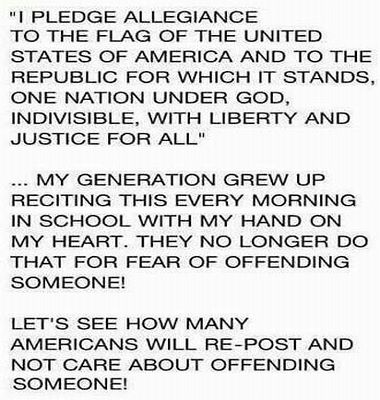







 Millard Fillmore's Bathtub