Fisking “Junk Science’s” campaign FOR the poison DDT, against Rachel Carson: Point #8, mosquito resistance to DDT

June 29, 2007

This is the second in a series of Fisks of “100 things you should know about DDT,” a grotesquely misleading list of factoids about DDT put up a site called JunkScience.com. While one would assume that such a site would be opposed, this particular site promotes junk science. I’m not taking the points in order.The “100 things” list is attributed to Steven Milloy, a guy who used to argue that tobacco use isn’t harmful, and who has engaged in other hoaxes such as the bizarre and false claim that Compact Fluorescent Lightbulbs (CFLs) can pose serious toxic hazards in your home (and therefore, you should continue to waste energy with less efficient bulbs); and to J. Gordon Edwards, a San Jose State University entomologist who, despite being a great entomologist, was a bit of a nut on some political things; Edwards assisted Lyndon Larouche’s group in their campaign against Rachel Carson before his death in 2004. (Did Edwards actually have a role in the development of this list?)

100 things you should know about DDT

Claim #8. Some mosquitoes became “resistant” to DDT. “There is persuasive evidence that antimalarial operations did not produce mosquito resistance to DDT. That crime, and in a very real sense it was a crime, can be laid to the intemperate and inappropriate use of DDT by farmers, especially cotton growers. They used the insecticide at levels that would accelerate, if not actually induce, the selection of a resistant population of mosquitoes.”

[Desowitz, RS. 1992. Malaria Capers, W.W. Norton & Company]

Cover of The Malaria Capers, by Robert S. Desowitz

Cover of The Malaria Capers, by Robert S. Desowitz

This was what Rachel Carson warned about. Indiscriminate use of DDT, such as broadcast application on crops to kill all insect, arthropod or other pests, would lead to mosquitoes and other dangerous insects developing resistance to the chemical. Of course, resistance developed as a result of overspraying of crops has exactly the same result, in the fight against malaria, as overuse in the fight against malaria.  Cover of The Malaria Capers, by Robert S. Desowitz

Worse, such overuse also killed predators of mosquitoes, especially birds. In an integrated pest management program, or in a well-balanced ecosystem, birds and other insect predators would eliminate a large number of mosquitoes, holding the population in check and preventing the spread of malaria. Unfortunately, when the predators are killed off, the mosquitoes have a population explosion, spreading their range, and spreading the diseases they carry.

Assuming Milloy quoted the book accurately, and assuming the book actually exists, this point says nothing in particular in favor of DDT; but it reaffirms the case Rachel Carson made in her 1962 book, Silent Spring. Contrary to suggestions from the campaign against Rachel Carson, she urged that we limit use of DDT to tasks like preventing malaria, around humans, to preserve the effectiveness of DDT and prevent overspraying.

And then, there is this: Milloy doesn’t bother to quote the first part of the paragraph he quotes, on page 214 of Malaria Capers. Here is what the paragraph actually says:

There were a number of reasons for the failure, not least that the anophaline vector mosquitoes were becoming resistant to the action of DDT both physiologically — they developed the enzymes to detoxify the insecticide — and behaviorally — instead of feeding and wall-resting, they changed in character to feed and then quickly bugger off to the great outdoors. [from this point, Milloy quotes correctly]

In other words, the DDT-based campaign against malaria failed because DDT failed; mosquitoes became resistant to it.  DDT’s declining ability to kill mosquitoes is one of the major reasons DDT use plunged after 1963, and continues to decline to no use at all.

To combat the dastardly campaign of calumny against Rachel Carson and science, you should also read: Deltoid, here, here and here, and the rest of his posts on the topic; Bug Girl, here, at least, and here, and the rest of her posts; denialism, here; and Rabett Run, here.

Save

Save


Cold, Clear and Deadly

June 28, 2007

Title of a book that documents and discusses the omnipresence of DDT and related pesticides in waters all over the world, even in places far from any known application, such as the Arctic and Antarctic.

Author Melvin J. Visser wrote a tribute to Rachel Carson at his blog, also called Cold, Clear and Deadly.

Cover of Cold, Clear and Deadly, by Melvin J. Visser.  Michigan State University Press

Cover of Cold, Clear and Deadly, by Melvin J. Visser. Michigan State University Press; at Thrift Books

More:


Rachel Carson’s honor defended

June 25, 2007

Bug Girl sleuthed around a bit, and found information from official sources that really demonstrates the critics of Rachel Carson are using Gillette Foamy to make us think “mad dog!”

DDT concentration in the food chain - USFWS

Chart from US Fish and Wildlife Service (USFWS) illustrates biomagnification, by which a minuscule dose of DDT to small plankton gets magnified a few million times by the time the top predators in the food chain get it.

So the evidence continues to pile up that Rachel Carson was simply a fine writer, a good scientist, and correct about DDT’s dangers.

Check out the Fish and Wildlife Service’s site, here; notice especially their structure of the site, to dispel the falsehoods.

FWS quotes Carson on DDT use:

In Audubon magazine she wrote, “We do not ask that all chemicals be abandoned. We ask moderation. We ask the use of other methods less harmful to our environment” (4). Countering claims that she was advocating a back-to-nature philosophy, she said, “We must have insect control. I do not favor turning nature over to insects. I favor the sparing, selective and intelligent use of chemicals. It is the indiscriminate, blanket spraying that I oppose” (5).

Evidence mounts that claims against Rachel Carson are sheer calumny. While the political motivations of this smear campaign are not clear, we don’t need to know for certain who is telling lies about a great American hero, or why. As Americans, as concerned citizens, as teachers and parents — as patriots — we only need to know that the claims against Rachel Carson are false.

And now it is our duty to call on Oklahoma’s Sen. Tom Coburn to stop the campaign against Carson. Coburn is the point man in the smear campaign right now: He has put a committee hold on the well-intentioned, justified bill to name a post office in her hometown after Rachel Carson. It is time for Tom Coburn to stand up and do the right thing for a great American. Sen. Coburn needs to lift his committee hold and allow committee action on this minor honor.

Other sources of note:

Bruce Watson, “Sounding the Alarm,” Smithsonian Magazine, September 2002. (Watson, Bruce. Sounding the alarm. Smithsonian, v. 33, Sept. 2002: 115-117.   AS30.S6)

“The Berry and the Poison,” about methyl bromide and its ban, Smithsonian Magazine, December 1997.


Rachel Carson’s friends chime in

June 19, 2007

Anti-environmental long-knives leave the impression that Rachel Carson knew little about science, and had a crabby disposition toward business and life in general.

Go read this: “Rachel Carson: I knew her when.

She was a poet and a scientist. You won’t learn anything about the controversy, really, other than the fact that Rachel Carson was a genuine woman, a very nice person. But it’s worth the read.

While you’re at Mort Reichek’s site, noodle around and see what else he’s got. He is a retired journalist with a lot to say. Pay attention. [New Jersey history and economics teachers: Do you realize what a resource you could have in this guy? Washington correspondent for Business Week? Hello!!???]

Update: Sadly, Mort passed on in 2011.  His blog remains up as a tribute to a great journalist and early blogger.


GOP war on science victim: Rachel Carson

May 14, 2007

Some people do things that are so stupid that one wonders how they manage to shave or put make-up on the next morning, having to look at their own face.

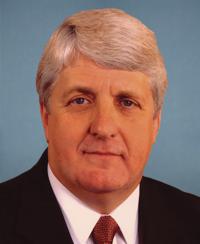
Mugshot of Utah Rep. Rob Bishop

Mugshot of Utah Rep. Rob Bishop

53 Republican representatives voted against naming the post office in Springdale, Pennsylvania, after Rachel Carson, the scientist who wrote Silent Spring, generally considered one of the most important or most influential scientists of the 20th century. No kidding. Springdale is Carson’s hometown.

2007 is the centennial of Carson’s birth — her birthday was May 27. (The bill, H.R. 1434, passed, 334-53.)

Why did the Wacky 53 vote against the honor for Carson, who got the Presidential Medal of Freedom in 1980? In an earnest ritual of voodoo science, they claim that bans on DDT kill millions, and that DDT is harmless. No, I’m not making this uphere’s the story from the Salt Lake Tribune, which covers territory represented by Rep. Rob Bishop and Rep. Chris Cannon, both R-Utah:

They contend that Carson’s actions – which led to a ban on the chemical DDT used to kill pests – actually has caused more deaths because of malaria and other diseases spread by insects. DDT, Carson wrote, was detrimental to the environment and to humans. Some scientists say DDT led to the California condor’s near-extinction.

Read the rest of this entry »