Vox Day: Trapped in a quote mine cave-in

August 31, 2007

Vox Day, who claims to know more than most mortals can even think about, has fallen into a quote mine. (Quote mine defined.) Worse, the mine appears to have caved in.

Vox Day wishes to make the claim that Darwin is responsible for the evils of the Soviet Union. Apart from the prima facie absurdity of the claim, Vox has a dozen highly tenuous links he wishes to torture into supporting his claim, despite their refusal to do so.

This just in: Since I started out on this particular Fisking, Vox has popped up with this gem:

Unsurprisingly, evolutionists are reacting strongly to my column today. They swear up and down that there is no connection whatsoever between evolution and Communism, despite the fact that every single major Communist not only subscribed to Darwinist evolution but considered Darwin to be second only to Hegel as a pre-Marxist socialist figure.

There is no evidence Stalin or Lenin ever subscribed to evolution theory, and at any rate, Stalin expressly rejected Darwin and evolution, eviscerating the Soviets’ lead in genetics in 1920 by banning the teaching of evolution, banning research in evolution or research that had Darwinian overtones, stripping Darwin-theory subscribing biologists of their jobs, exiling a few to Siberia and death in several cases, and executing a few just for good measure. In place of evolution, Stalin backed Trofim Lysenko who advocated, apart from his creationist-like hatred of Darwin, an odd, almost-Lamarckian idea that stress in utero would change characteristics.

So, for example, Lysenko ordered that seed wheat be frozen, and then planted in winter. The freezing, the Stalin-Lysenko idea held, would make the wheat able to grow in cold weather. The crop failures were so spectacular that at least 4 million people died of starvation in the Soviet Union. By 1954 the crop failures were so massive the Soviet Union had to purchase wheat from the U.S., with loans from the U.S. These loans crippled any hope of the Soviet economy ever breaking out of its doldrums, and started the long slide to the collapse of the Soviet Union. You’d think Vox Day, who professes to be a libertarian and a Christian, would approve of the collapse of the Soviet Union by any cause — but he does not approve of the collapse if it came by a lack of evolution theory.

Vox Day never lets the facts get in the way of a rant. (As evidence that Marx was so deeply influenced by evolution theory, Vox notes that a fellow who knew Darwin, Edward Aveling attended Marx’s funeral. If that doesn’t convince, you, Vox says, Aveling later wrote an article saying it’s true, Marxism was based on evolution theory. So take THAT all you people who think Marxism emphasizes collectivism and the state: Darwin’s individual competition for survival is the REAL root of socialism. No, I’m not making this up — go read it for yourself. Then get some facts — read this account, which includes the guest list of Marx’s funeral. There were only nine people at Marx’s funeral, and Vox got the guest list wrong: Aveling wasn’t there. One more Vox claim refuted.)

Back to the regularly scheduled Vox Day quote mine cave-in, below the fold.

Read the rest of this entry »


Instapundit supports pollution, but with a smile

August 23, 2007

DDT follows the same path as PCBs in the environment, both persistent organic pollutants. From World Ocean Review:  Bioaccumulation of toxins in the marine food chain has long been recognized as a problem. The process illustrated here relates to polychlorinated biphenyls (PCBs), a typical environ-mental toxin.

DDT follows the same path as PCBs in the environment, both persistent organic pollutants. This illustration from World Ocean Review: Bioaccumulation of toxins in the marine food chain has long been recognized as a problem. The process illustrated here relates to polychlorinated biphenyls (PCBs), a typical environmental toxin.

Instapundit is happy to promote the use of poison:

SOME KIND WORDS FOR DDT — in the New York Times, no less. “Today, indoor DDT spraying to control malaria in Africa is supported by the World Health Organization; the Global Fund to Fight AIDS, Tuberculosis and Malaria; and the United States Agency for International Development. . . . Even those mosquitoes already resistant to poisoning by DDT are repelled by it.”

The debate over DDT is over. There’s scientific consensus. Anyone who disagrees is a DDT denialist and a mouthpiece for Big Mosquito.

posted at 10:18 AM by Glenn Reynolds

No, Glenn, the debate is not over so long as people continue to deny the harmful effects of DDT and act as mouthpieces for Big Poison, Big Garbage, Big Cancer, Big Pollution, voodoo science and Big Stupid.

There is a scientific consensus, but Reynolds misstates it. Scientists agree that DDT kills birds, bats, reptiles and beneficial insects that prey on malaria-bearing mosquitoes, making control of malaria more difficult (among many other harms). Consequently, DDT use under the rules laid down by the U.S. EPA in 1972 make a lot of sense. Those rules are the same as agreed to in the Persistent Organic Pollutants Treaty (POPs) — no DDT use in broadcast spraying, especially on crops; DDT use is allowed when necessary to fight disease; alternatives to DDT must be researched and created. The POPs Treaty lists DDT as one of the “Dirty Dozen” persistent pollutants.

POPs are a set of chemicals that are toxic, persist in the environment for long periods of time, and biomagnify as they move up through the food chain. POPs have been linked to adverse effects on human health and animals, such as cancer, damage to the nervous system, reproductive disorders, and disruption of the immune system. Because they circulate globally via the atmosphere, oceans, and other pathways, POPs released in one part of the world can travel to regions far from their source of origin.

Reynolds appears not to have read the treaty, nor even the article he cites, by Donald Roberts, from the odd, industry-funded Africa Fighting Malaria; even the most optimistic DDT fanatics generally nod in the direction of the dangers. Roberts wrote:

It would be a mistake to think we could rely on DDT alone to fight mosquitoes in Africa. Fortunately, research aimed at developing new and better insecticides continues — thanks especially to the work of the international Innovative Vector Control Consortium. Until a suitable alternative is found, however, DDT remains the cheapest and most effective long-term malaria fighter we have.

Africa Fighting Malaria is apoplectically happy to have one study that shows some repellent effects of DDT. As Bug Girl and Deltoid note, AFM urged unreasonable responses from many of us (I got their request, too). The study is encouraging, but it fails to make DDT the panacea Roberts paints it, and the study completely ignores the dangers of DDT, which have not changed a whit.

The best solutions to fighting malaria do not require DDT. Other new studies show that simple mosquito netting is amazingly effective — in Kenya, a switch in policy to give the nets out for free reduced malaria incidence by 44%. Under policies urged by U.S. conservatives, Kenyans had been required to pay for the nets previously. Reducing the cost of the nets left them beyond the means of many poor Kenyans.

Where is Glenn Reynolds’ promotion of non-poisonous and non-polluting, effective means to fight malaria. Why does he only go for the damaging solutions?

Perhaps Glenn Reynolds and Donald Roberts could make a showing of good faith in this case. Since this one study did tend to break their way, perhaps they could show their gratitude by calling on Sen. Tom Coburn to stop acting like a brat throwing a tantrum and remove his holds on the bill that would name a post office in Pennsylvania for Rachel Carson, honoring her work against pollution.  (Coburn cites junk science and voodoo science as his justification — and he’s an M.D.!)
Or, would making a statement against pollution be contrary to their politics?

To the chronically science challenged, DDT is an answer to more ills than you can imagine. We face new infestations of bed bugs — how long before AFM’s editorial ghosts have people urging DDT spraying wholesale to fight bed bugs? West Nile virus continues to plague the U.S., and already articles have appeared calling for broadcast spraying of towns and marshes to fight it, though that would probably be exactly the wrong thing to do.

The fight against ignorance goes on, but some wear ignorance like a badge of honor.


DDT poisoning at the Wall Street Journal

August 17, 2007

The Wall Street Journals editorial page continues to exhibit signs of hysteria that can only be described as DDT poisoning. DDT has poisoned their view of what to do about malaria. (The article is now available by paid subscription.)

Malaria is a nasty disease that kills more than a million people every year. It is particularly brutal in attacking infants and pregnant women.

Malaria continues to rage because western nations with the resources to fight the disease spent their money on other things in the past 40 years, because the nations most affected lack the governmental adequacy or financial resources and willpower to mount effective campaigns against the disease, but mostly because malaria is a tough disease to fight.

Malaria is spread by several different species of mosquito, some of which have habits or constitutions which make mosquito eradication programs much less effective. Human malaria is really four different parasites, some of which have acquired resistance to the drugs used to fight it. The HIV/AIDS epidemics in tropical nations have not helped matters: What used to be minor cases of malaria now kill thousands who have compromised immune systems because of HIV/AIDS.

Hospitals in far too many nations are overwhelmed with malaria patients, and unable to provide care for many who could be saved. Most of those who die every year could live, with better distribution of health care, and with better prevention.

A few people have been afflicted with what can only be described as a different problem: DDT poisoning. Their views of malaria and what we need to do to fight the disease are poisoned by their anti-science political views. For at least five years there has been a nasty, persistent campaign to impugn “environmentalists” and Rachel Carson, claiming that DDT is the answer to all the world’s malaria woes. Though DDT has been available to fight malaria since 1946, these people complain that bans on spraying crops have discouraged the use of DDT against malaria, fatally.

Below the fold I’ll fisk the short piece from yesterday’s WSJ. It’s difficult to keep ahead of hoaxers, though — today they’ve got another call for DDT use, this time to fight West Nile Virus. Ironically, West Nile is most deadly against several species of bird, some of which are acutely subject to death by DDT.

Read the rest of this entry »


DDT’s disruption of hormone activities

August 12, 2007

Critics of Rachel Carson and sponsors of the anti-science, anti-environmentalist campaign to bring back DDT as a major killer, frequently misinform in very selective ways. For example, they like to mention DDT’s role in causing human cancers, because, they claim Rachel Carson was dead wrong about that link. Therefore, they say, DDT is a nice chemical and bans should be lifted.

In reality, carcinogenicity played a very small role in banning DDT. DDT was banned because it kills indiscriminately, killing beneficial insects along with the bad, killing untargeted species, like songbirds, along with the insect targets; and DDT was banned because once released into the wild, it is very long-lived, and its ultimate destructive effects cannot be known or controlled — though some harms, such as the devestation of America’s birds of prey, are extremely well documented.

Similarly, the anti-science crowd doesn’t like to talk about the third big area where DDT produces harms: Hormone disruption. In fact, Steven Milloy’s “100 things you should know about DDT” at the site that peddles junk science, JunkScience.com, does not even contain the word “hormone.”

They play down the fact that DDT and its by-products disrupt reproductive processes, and sometimes disrupt and deform reproductive organs, of nearly every animal it touches. They don’t want you to know about the hormonal effects of DDT and its breakdown products.

So, they never mention books like the National Academy of Sciences’ compilation of the harms of such chemicals, Hormonally Active Agents in the Environment.

Milloy will misquote the NAS when NAS mentions slightly the benefits of DDT; Milloy will not quote NAS when they cite the dangers of DDT. So this book on hormonally active agents, which mentions DDT specifically in 16 chapters for a total of 309 times, will never be mentioned in a discussion of DDT’s dangers — unless you bring it up.

Go see what the book says in the Executive Summary. If you debate the anti-Rachel Carson crowd, use this book frequently — they will have no answers.

And, Sen. Tom Coburn, are you listening? Since when do your constituents want you to defend a chemical which will ruin their farm animals, and especially the ducks they want to hunt? It’s time to quit trying to tarnish the memory of Rachel Carson, Sen. Coburn, and let that post office in Pennsylvania be named after her.


Accuracy: A good bias (DDT again)

August 4, 2007

Jay Ambrose retired from editing newspapers, and now writes commentary for the Scripps News chain of papers. Because of his experience in editing, I was suprised to see his commentary from last week which takes broad, inaccurate swipes at environmental groups (here from the Evansville, Indiana, Courier & Press).

Ambrose is victim of the “DDT and Rachel Carson bad” hoax.

His column addresses bias in reporting, bias against Christians, which he claims he sees in reporting on issues of stem cell research, and bias “in favor” of environmentalists, which has resulted in a foolish reduction in the use of DDT. I don’t comment here on the stem cell controversy, though Ambrose’s cartoonish presentation of how federally-funded research works invites someone to correct its errors.

Relevant excerpts of Ambrose’s column appear below the fold, with my reply (which I have posted to the Scripps News editorial section, and in an earlier version, to the on-line version of the Evansville paper).

Read the rest of this entry »


Spreading miasma on malaria

July 23, 2007

The Straight Dope has a motto: “Fighting ignorance since 1973. (It’s taking longer than we thought.)”

Alas, the motto could work as well for people who understand science, who understand chemistry and biology, and who urge sanity in discussions about DDT, malaria prevention and control, and Rachel Carson.

Photo from a 1950s science text, showing DDT spraying on crowded beach

DDT sprayed on a crowded beach -- photo from an unidentified 1950s publication. Caption in the photo: "This machine is spreading a kind of fog of DDT spray to see if it will kill the mosquitoes and other insects on the beach. Outdoors, the spray soon spreads and does not harm people."

The meme that “Rachel Carson caused millions of deaths” and prompted the disappearance of DDT is factually in error, but popular, and still spreading. It doesn’t help that there are well-funded groups that work hard to spread the disinformation.

As Ben Franklin noted, in a fair fight, truth wins. The difficulty is that the fight for truth about DDT and Rachel Carson has never been fair, and the anti-sense forces have a 25-year head start on wise people like Bug Girl, Deltoid, Rep. Jason Altmire of Pennsylvania, and even dunderheads like me.

How widespread is the damage? Well, how many editorial pieces were there slamming Rachel Carson, falsely, on the event of the 100th anniversary of her birth? Has Sen. Tom Coburn, R-Okla., lifted his holds on naming a post office for her?

The damage continues to spread.

For example, these blogs have fallen victim to the malaria/DDT/Rachel Carson hoax:

a. London Fog, ostensibly about government in London, Ontario, goes off half-cocked on DDT

b. Irrational Optimism, about a Georgian transplanted to Utah, picks up the misunderstandings of DDT

c. The Squamata Report, a general diatribe, accepts at face value all the falsehoods about DDT, especially those that cast scientists and environmentally-concerned politicians in a light where they can be ridiculed

d. PoliPundit.com — not the most bizarre view there, so of course it also accepts the false myths as good data

e. Boots and Sabers, sort of a frat party for young military guys, makes the gung-ho gonzo claim that it would have been worth it to sacrifice bald eagles because DDT could have saved African kids

d. Even Forbes Magazine’s blogs put out the faulty version of the story

e. Red State includes an artless and caustic piece here (repeated during what appears to be a brain power failure at PowerLine)

f. The famous column at the Wall Street Journal, marking a premature end of fact checking at that newspaper’s opinion columns

g. “Rachel Carson’s Genocide,” hysteria at a Ron Paul site misnamed Rational Review

h. Even Nobel Prize winning economists and distinguished federal judges get sucked into the vortex of specious information if they are not scrupulously careful — as Becker and Posner did here, and again here. (See final installment,too.)

And even while fighting ignorance and generally rebutting the wild claims about Rachel Carson, even Cecil Adams at Straight Dope gets suckered in by some of the myths. (In “moderate amounts,” DDT concentrates up to 10 million times in the wild, poisoning birds of prey and predator fishes, especially; DDT is deadly to mosquito-eating birds and bats, and pest-eating lizards; EPA’s hearings on DDT were overwhelmingly in favor of banning the substance — a court suit cited EPA for not moving fast enough to ban such a dangerous substance, and evidence in such trials is not made up; the cause of egg-shell thinning in birds is pretty solidly established to be DDT and its breakdown substances, only the exact process is not well understood; the international treaty against POPs has a specific out-clause for DDT to be used to prevent malaria; and so on).

So, there’s a lot of work to be done, and little time. Stay tuned.

Update: The Capital Times in Madison, Wisconsin, had a wonderful feature on the 1970 hearings in that state to ban DDT,[alternate URL here] and the subsequent success with the spectacular return of the bald eagle to local waterways. In comments, early in the process, the junk science about DDT and malaria appear. It’s everywhere.

P.S. — Here’s a reading for a lecture at Purdue University that neatly summarizes Carson’s life and work, accurately. (In fact, the entire lecture series, by Jules Janick, should prove interesting to people interested in horticulture.)


Fisking “Junk Science” and “100 things you should know about DDT”: A new project

June 27, 2007

Looking at the odd campaign against the reputation of Rachel Carson, conducted largely by a group of corporate-paid, political scalawags, one will eventually come across a site named JunkScience.com, which has as a motto, “All the junk that’s fit to debunk.”

One might be forgiven if one assumes that the site debunks junk science claims. But that does not appear to be it’s aim at all. On this page, for example, “100 things you should know about DDT,” the site perpetrates or perpetuates dozens of junk science claims against Rachel Carson, against public health, against government and against reason. The site promotes junk science, rather than debunking it!

For example, I had just read a chunk of history reminding me that our first Environmental Protection Agency Administrator, William Ruckelshaus, had been ordered by a federal court to review the pesticide certification for DDT, and had acted against DDT only after two different review panels recommended it be phased out, and states had already started bans of their own. At the time, in 1972, Ruckelshaus faced a heap of criticism for moving so slowly on the issue.

EPA history caption: Rachel Carson's Silent Spring led to banning DDT and other pesticides. [EPA iimage]

EPA history caption: Rachel Carson’s Silent Spring led to banning DDT and other pesticides. [EPA iimage]

How is this action described at JunkScience.com?

You wouldn’t quite recognize the events — and I doubt you could verify other oddities the JunkScience.com site claims:

17. Extensive hearings on DDT before an EPA administrative law judge occurred during 1971-1972. The EPA hearing examiner, Judge Edmund Sweeney, concluded that “DDT is not a carcinogenic hazard to man… DDT is not a mutagenic or teratogenic hazard to man… The use of DDT under the regulations involved here do not have a deleterious effect on freshwater fish, estuarine organisms, wild birds or other wildlife.”

[Sweeney, EM. 1972. EPA Hearing Examiner’s recommendations and findings concerning DDT hearings, April 25, 1972 (40 CFR 164.32, 113 pages). Summarized in Barrons (May 1, 1972) and Oregonian (April 26, 1972)]

18. Overruling the EPA hearing examiner, EPA administrator Ruckelshaus banned DDT in 1972. Ruckelshaus never attended a single hour of the seven months of EPA hearings on DDT. Ruckelshaus’ aides reported he did not even read the transcript of the EPA hearings on DDT.

[Santa Ana Register, April 25, 1972]

19. After reversing the EPA hearing examiner’s decision, Ruckelshaus refused to release materials upon which his ban was based. Ruckelshaus rebuffed USDA efforts to obtain those materials through the Freedom of Information Act, claiming that they were just “internal memos.” Scientists were therefore prevented from refuting the false allegations in the Ruckelshaus’ “Opinion and Order on DDT.”

I propose to Fisk much of the list of 100 claims against Carson (which is really a list over 100 items now), in a serial, spasmodic fashion. I’ll post my findings here, making them generally available to internet searches for information on Rachel Carson and DDT. Below the fold, I’ll start, with these three specious claims listed above.

Read the rest of this entry »


GOP war on science victim: Rachel Carson

May 14, 2007

Some people do things that are so stupid that one wonders how they manage to shave or put make-up on the next morning, having to look at their own face.

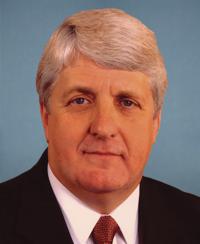
Mugshot of Utah Rep. Rob Bishop

Mugshot of Utah Rep. Rob Bishop

53 Republican representatives voted against naming the post office in Springdale, Pennsylvania, after Rachel Carson, the scientist who wrote Silent Spring, generally considered one of the most important or most influential scientists of the 20th century. No kidding. Springdale is Carson’s hometown.

2007 is the centennial of Carson’s birth — her birthday was May 27. (The bill, H.R. 1434, passed, 334-53.)

Why did the Wacky 53 vote against the honor for Carson, who got the Presidential Medal of Freedom in 1980? In an earnest ritual of voodoo science, they claim that bans on DDT kill millions, and that DDT is harmless. No, I’m not making this uphere’s the story from the Salt Lake Tribune, which covers territory represented by Rep. Rob Bishop and Rep. Chris Cannon, both R-Utah:

They contend that Carson’s actions – which led to a ban on the chemical DDT used to kill pests – actually has caused more deaths because of malaria and other diseases spread by insects. DDT, Carson wrote, was detrimental to the environment and to humans. Some scientists say DDT led to the California condor’s near-extinction.

Read the rest of this entry »


Fearful IDists can’t meet ethics challenge in Dallas

April 10, 2007

Advocates of intelligent design at the Discovery Institute have been rattled by the strong showing of scientists at Southern Methodist University who called their bluff, and questioned SMU for hosting an ID conference this week. SMU’s officials pointed out they were just renting out facilities, and not hosting the conference at all.

The ID conference, with special religious group activities preceding it, is scheduled for April 13 and 14 at SMU. It is a rerun of a similar revival held in Knoxville, Tennessee, last month. The conference features no new scientific research, no serious science sessions with scientists looking at new research, or new findings from old data.

In return, ID advocates “challenged” scientists to show up at a creationist-stacked function Friday evening. To the best of my knowledge, all working scientists declined the invitation, on the understanding that in science, there is no debate.

This morning’s Dallas Morning News features the expected desperation move by Discovery Institute officials Bruce Chapman and John West. They accuse the scientists of being “would-be censors.”

This is highly ironic coming from the group that spent tens of thousands of dollars trying to convince the Texas State Board of Education to censor and bowdlerize* Texas biology books in 2003.  (*  Thanks, Jim Dixon)

But go read the stuff for yourself. Some of us have real work to do today, and there is not time for the appropriate, godly Fisking this piece deserves right now. (Readers? Friends?)

My dander is up, however, and I offer a counter challenge:

Discovery Institute, what is it you’re afraid of? Let’s meet, and discuss the ethical challenges you’ve experienced in this discussion. Specifically, let’s discuss:

One, your misrepresentation of the science of Darwin, and your repeated attempts to mislead school officials — remember the claim in Ohio that federal law requires discussion of intelligent design? Was that a hoax that fell flat, or an honest misunderstanding? In any case, we still await your disowning of the falsehood, years later.

Two, your support of unethical screeds against science and scientists. I’ll mention one here: You need to disown the dishonest and unethical work of Jonathan Wells. Look at his book, Icons of Evolution, which is promoted at your website. I call your attention to his chapter of misinformation against the work of Bernard Kettlewell on peppered moths. Check out the citations in his chapter. If one believes his footnotes, there are many scientists who support his views on Kettlewell’s pioneering and still valid work. You need to acknowledge that the footnotes are ethically challenged; you need to acknowledge in print that each of the scientists involved, and others, have disowned Wells’ work and said that his claims misrepresent their work and the status of science. In polite, scientific terms, these people have called Wells a prevaricator. You still promote his screed as valid.

Three, your support of name-calling must stop. Especially, you need to pull your support from books, conferences, and editorial pieces that say evolution was a cause of the Holocaust. The attempts to connect Darwin to Hitler are scurrilous, inaccurate, unethical and unholy.

Chapman, West, the Methodist Church does not endorse your views on evolution, and if they understood your tactics I suspect they would disown your tactics as well. You are guests on a campus that does serious science work and also hosts people of faith. You need to bring your organizations ethical standards up to a higher level.

You want a debate? The science journals are open — the federal courts have repeatedly found that claims of bias against you are completely unfounded (untrue, that is . . . well, you understand what I’m trying to say politely, right?). The journals await your research reports.

All of science has been awaiting your research reports for years, for decades. (Here’s one famous case: “Three Years and Counting,” at Pharyngula (a science-related blog run by an evolutionary biologist).

You want to debate? Stop hurling epithets, and bring evidence.

As an attorney, parent, teacher, and reader of Texas biology textbooks, I’d be pleased to debate your need to change your ways. The debate needs to focus on your methods and ethics. Are you up to it?

Earlier posts of interest:


Intelligent design – a pig that doesn’t fly

October 9, 2006

We’re talking past each other now over at Right Reason[*], on a thread that started out lamenting Baylor’s initial decision to deny Dr. Francis Beckwith tenure last year, but quickly changed once news got out that Beckwith’s appeal of the decision was successful.

I noted that Beckwith’s getting tenure denies ID advocates of an argument that Beckwith is being persecuted for his ID views (wholly apart from the fact that there is zero indication his views on this issue had anything to do with his tenure discussions). Of course, I was wrong there — ID advocates have since continued to claim persecution where none exists. Never let the facts get in the way of a creationism rant, is the first rule of creationism.

Steve Sack cartoon in the Minneapolis Star-Tribune

Steve Sack cartoon in the Minneapolis Star-Tribune

Discussion has since turned to the legality of teaching intelligent design in a public school science class. This is well settled law — it’s not legal, not so long as there remains no undisproven science to back ID or any other form of creationism.

Read the rest of this entry »


The moral imperative against intelligent design

August 14, 2006

I’m straying only a bit off topic, and only by certain legalistic interpretations. History folks, bear with me.

My complaint about what is called “intelligent design” in biology is the same complaint I have against people who wish to crown Millard Fillmore as a great light for bringing plumbing to the White House over the complaints of health officials — that is, my complaint against those who push H. L. Mencken’s hoax over the facts.

Joe Carter at Evangelical Outpost listed at great lengths his list of reasons that arguing for science actually promotes intelligent design instead (Part 1, Part 2, Part 3). This blog’s response was in two parts, one and two. Other people offered other rebuttals, including notably, P. Z. Myers at Pharyngula, a very good blog that features the hard science of biology and especially evolution.

Joe provided a first affirmative rebuttal here. This post is my reply, on the single point of whether it’s fair to say creationists, IDists, or others who twist the facts and research, are “dishonest.”

The text is below the fold; I left it in remarks at Evangelical Outpost. I have one other observation I’ll make quickly in the next post.

Enjoy, and chime in with your own remarks (I’m headed back to the grindstone). Read the rest of this entry »