August 6: Hiroshima atomic bomb, 68 years ago today

August 6, 2013

A-Bomb Dome in Hiroshima, Japan

A-Bomb Dome in Hiroshima, Japan Wikipedia image

As a Utah Downwinder, I fight depressing ideas every August 6, and August 9.

The first atomic bomb used in war was dropped by my nation on August 6, 1945.  The second, on August 9.  Hiroshima, then Nagasaki, were the targets.

I know the arguments, both ways.  I feel certain my Uncle Leo B. Stewart’s life was saved by the bombs — and the lives of probably two or three million more Americans, and five or ten million Japanese.  And still I am troubled.

I’m troubled that there seems to be so little attention paid to the anniversary in the U.S.  Year by year, it gets tougher to get news out of remembrance ceremonies in Japan.  Here are some Twitter notes on the day.  I may be back with more, later.

http://twitter.com/TimHarford/status/364792998275448835

This comes from a pseudo-Truman, but it’s an accurate reflection of the angst Truman went through; once he made the decision, he did not have doubts that it was the right one.

Fortunately, in 68 years since, no other nuclear device has ever been used in war. May we have a planet that never sees their use in war, again.

More:


Gracefulness in high places

May 10, 2013

The ability to say the right thing at the right time is a gift.  Sometimes it’s an earned gift, but a gift nevertheless.

Britain’s Prince Harry visited wounded U.S. soldiers in Washington area hospitals today, and he paid a visit to Arlington National Cemetery where he laid a wreath of remembrance at the grave of a soldier who died in a recent war.  Scott Simon of NPR was there.

More:


Photographs for which there are no words: Going to school in Palestine

February 20, 2013

A picture is worth a thousand words?  For some pictures, no adequate words exist.

Ammar Awad/Reuters girl going to school in Palestine, with combat troops looking on

Photo by Ammar Awad, Reuters; caption from L’Express: De l’audace! – 17/03/2010 Afin de se rendre à l’école, une enfant traverse les lieux des affrontements entre les troupes israéliennes et les Palestiniens, dans le camp de réfugiés de Shuafat, près de Jérusalem.

L’Express caption in English:

The audacity! – 17/03/2010

To go to school, a child crosses the scene of clashes between Israeli troops and Palestinians in the refugee camp Shuafat, near Jerusalem.

Rather puts into a different perspective the whines of students about “having to go to school,” not bringing pencils or paper, and not making it to class on time, doesn’t it?  What value does this girl and her family place on education?

To those who think the U.S. should in no case offer aid to Palestinians to build or operate schools, I ask:  Who do you want to pay for this child’s schooling, and direct the curriculum?

Teachers, is this photo useful for studying human rights?  Education?  Middle Eastern human geography (AP), geography, or other issues?  Contrast this girl’s path to school with that of Linda Brown in Topeka, Kansas, in 1951 (Brown vs. Topeka Board of Education).

Is education a civil right? Is education a basic human right?

Tip of the old scrub brush to James Kessler, who posted a slightly profanely-captioned version of this on Facebook.

Update:  Amusing Planet has this photo (with a nice shout out) and several others, showing kids risking their lives to get to school in China, Vietnam, and Indonesia — it’s awe-inspiring, scary and encouraging at the same time.

More:


Ingenious anti-personnel mine finder

December 19, 2012

Brilliant little film about a wonderfully creative guy, a war refugee, who developed a wind-powered device that can find and detonate anti-personnel mines.  It’s part of the GE-sponsored FOCUS/FORWARD film contest:

Description and credits at Vimeo’s site:

MINE KAFON is a Finalist in the $200,000 FOCUS FORWARD Filmmaker Competition and is in the running to become the $100,000 Grand Prize Winner. It could also be named an Audience Favorite if it’s among the ten that receives the most votes. If you love it, vote for it. Click on the VOTE button in the top right corner of the video player. Note that voting may not be available on all mobile platforms, and browser cookies must be enabled to vote.

A short documentary portrait on a designer who has created a low cost solution to landmine clearance.

Check out his website:  massoudhassani.com
or for other films by us at Ardent Film Trust:  ardentfilm.org

DIRECTOR
Callum Cooper
DOP
Michael Latham
CAMERA
Michael Latham
Mahmud Hassani
Callum Cooper
SLOW MOTION CAMERA
Ed Edwards
EDITOR
Anna Meller
COLOR GRADER
Chris Teeder
SOUND MIXER AND DESIGNER
Sandy Milne
TITLE DESIGNER
Ray O’Meara
EXECUTIVE PRODUCER
Bobby Kapur
PRODUCERS
Alicia Brown
Michael Latham
Callum Cooper
THANKS
Lucie Kalmar
Slowmo High Speed
Optimism Films
The RNLA explosive ordnance disposal service
Copyright Ardent Film Trust 2012


2012 Anniversary of Pearl Harbor, still “infamous”

December 7, 2012

Encore and traditional post, mostly, from December 7, 2006 with updates.

1941 AP file photo, small boat rescues victims from U.S.S. West Virginia

Caption from Naval History and Heritage Command: Photo #: 80-G-19930
Pearl Harbor Attack, 7 December 1941
Sailors in a motor launch rescue a survivor from the water alongside the sunken USS West Virginia (BB-48) during or shortly after the Japanese air raid on Pearl Harbor.
USS Tennessee (BB-43) is inboard of the sunken battleship.
Note extensive distortion of West Virginia’s lower midships superstructure, caused by torpedoes that exploded below that location.
Also note 5″/25 gun, still partially covered with canvas, boat crane swung outboard and empty boat cradles near the smokestacks, and base of radar antenna atop West Virginia’s foremast.
Official U.S. Navy Photograph, National Archives Collection.

Today is the 71st anniversary of Japan’s attack on the U.S.’s Pacific Fleet at Pearl Harbor, Hawaii.

Many Americans fly their U.S. flags today.  The date is not one specified in law for flag-flying.  President Obama issued a proclamation asking citizens to fly flags at half-staff today.

Our local newspaper, The Dallas Morning News, ran a front-page story on survivors of the attack in 2006, who have met every five years in reunion at Pearl Harbor. [December 7, 2006] was their last official reunion. The 18-year-olds who suffered the attack, many on their first trips away from home, are in their 80s now. Age makes future reunions impractical.

In 2010, it is estimated that fewer than 4,000 veterans of Pearl Harbor still live to remember, though, of course those surviving do.

From the article:

“We’re like the dodo bird. We’re almost extinct,” said Middlesworth, now an 83-year-old retiree from Upland, Calif., but then – on Dec. 7, 1941 – an 18-year-old Marine on the USS San Francisco.

Nearly 500 survivors from across the nation were expected to make the trip to Hawaii, bringing with them 1,300 family members, numerous wheelchairs and too many haunting memories.

Memories of a shocking, two-hour aerial raid that destroyed or heavily damaged 21 ships and 320 aircraft, that killed 2,390 people and wounded 1,178 others, that plunged the United States into World War II and set in motion the events that led to atomic bombings of Hiroshima and Nagasaki.

“I suspect not many people have thought about this, but we’re witnessing history,” said Daniel Martinez, chief historian at the USS Arizona Memorial. “We are seeing the passing of a generation.”

Another article notes the work of retired history professor Ron Marcello from the University of North Texas, in Denton, in creating oral histories from more than 350 of the survivors. This is the sort of project that high school history students could do well, and from which they would learn, and from which the nation would benefit. If you have World War II veterans in your town, encourage the high school history classes to go interview the people. This opportunity will not be available forever.

There is much to be learned, Dr. Marcello said:

Dr. Marcello said that in doing the World War II history project, he learned several common themes among soldiers.

“When they get into battle, they don’t do it because of patriotism, love of country or any of that. It’s about survival, doing your job and not letting down your comrades,” he said. “I heard that over and over.”

Another theme among soldiers is the progression of their fear.

“When they first got into combat, their first thought is ‘It’s not going to happen to me.’ The next thought is ‘It might happen to me,’ and the last thought is ‘I’m living on borrowed time. I hope this is over soon,’ ” Dr. Marcello said.

Dr. Marcello said the collection started in the early 1960s. He took charge of it in 1968. Since Dr. Marcello has retired, Todd Moye has taken over as the director.

Other sources:

While this is not one of the usual dates listed by Congress, you may fly your U.S. flag today.

End of 2006 post —

Other resources (2007):

USS Missouri Memorial – Main Battery - from the Panoramas of World War II site

USS Missouri Memorial – Main Battery – from the Panoramas of World War II site

More, 2012:


“The War Prayer” of Mark Twain (encore post)

September 21, 2012

(Updating dead links, especially from the late and lamented (here at least) VodPod, I found myself back in 2008, with this post on Mark Twain’s “The War Prayer.”  Fortunately, I found the film migrated to YouTube, though split in two parts.  Some information that should have caught our attention in 2008 deserves noting now, and we can update and add new links.)

It’s largely forgotten now, especially in history texts in high schools.  After the Spanish-American War, when the U.S. wrested several territories from Spain, including Guam, Cuba, Puerto Rico and the Philippines, the U.S. quickly got mired in one of the original guerrilla wars in the Philippines.  It took 15 years, but the U.S. finally put down the rebellion — 15 brutal, bloody years.  The conduct of that war shocked many people, including Mark Twain.

This piece was written partly in response to that war.

Many Americans, like Twain, who questioned the war, in turn had their patriotism questioned.  Why wouldn’t they get on board with the war, and kill off those Filipino rebels? the critics asked.

Here’s a film in two parts, a stunning production, produced and directed by Markos Kounalakis (who uploaded the thing); go to the film’s website for a copy of the text.

Part I:

Part II:

Why didn’t I notice this in 2008?  The film is narrated by Peter Coyote.  Poet Lawrence Ferlinghetti plays the minister.  Erik Bauersfeld plays the Stranger.

Another short film of The War Prayer came out in 2007, from Lyceum Productions.  Neither version appears to be available on DVD or Blu-Ray.  Too bad.


Medal of Honor to former Sgt. Dakota Meyer

July 6, 2012

WhiteHouse.org:

President Obama awards Sergeant Dakota L. Meyer, United States Marine Corps, the Medal of Honor for conspicuous gallantry and intrepidity at the risk of his life above and beyond the call of duty, while serving with Marine Embedded Training Team 2-8, Regional Corps Advisory Command 3-7, in Kunar Province, Afghanistan, on 8 September 2009. [Ceremony:] September 15, 2011.

Video from the White House includes the prayers offered before and after the ceremony (excluded from the commercial television video).

The citation for Meyer’s Medal of Honor described his gallantry in detail:

The President of the United States in the name of The Congress takes pleasure in presenting the MEDAL OF HONOR to

CORPORAL DAKOTA L. MEYER
UNITED STATES MARINE CORPS

For service as set forth in the following

For conspicuous gallantry and intrepidity at the risk of his life above and beyond the call of duty while serving with Marine Embedded Training Team 2-8, Regional Corps Advisory Command 3-7, in Kunar Province, Afghanistan, on 8 September 2009. Corporal Meyer maintained security at a patrol rally point while other members of his team moved on foot with two platoons of Afghan National Army and Border Police into the village of Ganjgal for a pre-dawn meeting with village elders. Moving into the village, the patrol was ambushed by more than 50 enemy fighters firing rocket propelled grenades, mortars, and machine guns from houses and fortified positions on the slopes above. Hearing over the radio that four U.S. team members were cut off, Corporal Meyer seized the initiative. With a fellow Marine driving, Corporal Meyer took the exposed gunner’s position in a gun-truck as they drove down the steeply terraced terrain in a daring attempt to disrupt the enemy attack and locate the trapped U.S. team. Disregarding intense enemy fire now concentrated on their lone vehicle, Corporal Meyer killed a number of enemy fighters with the mounted machine guns and his rifle, some at near point blank range, as he and his driver made three solo trips into the ambush area. During the first two trips, he and his driver evacuated two dozen Afghan soldiers, many of whom were wounded. When one machine gun became inoperable, he directed a return to the rally point to switch to another gun-truck for a third trip into the ambush area where his accurate fire directly supported the remaining U.S. personnel and Afghan soldiers fighting their way out of the ambush. Despite a shrapnel wound to his arm, Corporal Meyer made two more trips into the ambush area in a third gun-truck accompanied by four other Afghan vehicles to recover more wounded Afghan soldiers and search for the missing U.S. team members. Still under heavy enemy fire, he dismounted the vehicle on the fifth trip and moved on foot to locate and recover the bodies of his team members. Corporal Meyer’s daring initiative and bold fighting spirit throughout the 6-hour battle significantly disrupted the enemy’s attack and inspired the members of the combined force to fight on. His unwavering courage and steadfast devotion to his U.S. and Afghan comrades in the face of almost certain death reflected great credit upon himself and upheld the highest traditions of the Marine Corps and the United States Naval Service.


Lessons of Vietnam: Honor the people who serve

July 5, 2012

Years ago I feared that many of us learned the wrong lessons from Vietnam, or if we learned the right ones, we weren’t applying what we’d learned.  This was a bit more important in the earlier days of our involvement in Afghanistan and Iraq.  So I wrote about one of the lessons we needed to improve on:  Honoring the people who serve, regardless our view on the entire engagement.

Someday, perhaps when I’m wiser, I’ll get back to that series on the lessons of Vietnam.

A lot of water flowed under the bridge since then.  A lot of blood flowed, too.

We did better with our two latest engagements, as a nation, in honoring soldiers.  For just one example, DFW Airport set up a special lounge for soldiers returning stateside, and dozens of organizations set up programs to get people out to welcome the soldiers from Iraq with an indoor parade of sorts — Girl Scouts, Boy Scouts, groups of retired veterans and other citizens, school social studies classes, and many more.

That still leaves us with the scab of our treatment of veterans from Vietnam.  It’s been good to see cities and organizations make serious efforts to remember them specifically, as well as veterans of Korea-“The-Forgotten-War,” with soldiers and veterans of the modern conflicts.  There is more we need to do, I’m sure.

I ran into this short video from Moments.org.  I don’t know about the rest of that organization’s ministries, but this video got it right:

So, Wes, McClain, Kevin, Ben, Brenda, Steve, Pat, Al, Ken, Ray, David, Jeff and Jon, and all the rest of you who served, especially in or during Vietnam, consider this as one for you.

Tip of the old scrub brush to cmblake6, who probably won’t ever get another one here.  Happily surprised to find something right over there.

More, Resources:


Howard Zinn: Empire or humanity?

November 1, 2011

We get to choose.

We can choose, if we know there are choices, and how to distinguish between them.

Do we know there are choices?  Can we distinguish?

Wish I’d seen this little film a couple of years earlier; but it’s more poignant now, perhaps, that Zinn is no longer with us.

It’s a film from Henry Holt and Metropolitan Books, made to promote Zinn’s 2008 book, A People’s History of American Empire.  This is how the film is described at the Holt site at YouTube:

Empire or Humanity?
What the Classroom Didn’t Teach Me about the American Empire
by Howard Zinn
Narrated by Viggo Mortensen
Art by Mike Konopacki
Video editing by Eric Wold

To read more from Howard Zinn visit http://www.TomDispatch.com.

A serious student of U.S. history should always consider the view of Howard Zinn on an issue or period.  Teachers of history must consider Zinn’s views, agree or disagree.


Channeling Monty Python: “The border between India and Pakistan is closed for the day”

September 7, 2011

BBC map showing location of Wagah and Punjab

BBC map showing location of Wagah and Punjab, divided between Pakistan and India, south of Kashmir

Written accounts cannot possibly do justice to the ceremonies that mark the daily close of business at the border between India and Pakistan.  I had understood it was quite a good show, rivaling the changing of the guard at Buckingham Palace.

But, you don’t expect Monty Python to break out at these affairs, do you? Here’s a video of the ceremony as it was conducted prior to July 2010, I believe, which I found at Wimp.com.  It’s a video clip from BBC Worldwide, narrated by comedian Sanjeev Bhaskar.

Vodpod videos no longer available.

(If that one doesn’t work, try this one — a bit lower quality video):

(Or, here’s a shorter, YouTube version of Baskar’s film.)

Where in the world is this?  It’s in a town and area called Wagah, in Punjab, divided between India and Pakistan since the 1947 independence of those nations (links to Wikipedia left in for your convenience).

Wagah (Punjabi: ਵਾਘਾ, Hindi: वाघा, Urdu: واہگہ) is the only road border crossing between India and Pakistan[1], and lies on the Grand Trunk Road between the cities of Amritsar, India and Lahore, Pakistan. Wagah itself is a village through which the controversial Radcliffe Line was drawn. The village was divided by independence in 1947. Today, the eastern half of the village remains in the Republic of India while the western half is in Pakistan.

While both nations and local residents fully recognize the silliness, it also stands as a symbol of the deep divisions between the two nations.

The Wagah border, often called the “Berlin wall of Asia”,[2] is a ceremonial border on the India–Pakistan Border where each evening there is a retreat ceremony called ‘lowering of the flags’,[3] which has been held since 1959.[4] At that time there is an energetic parade by the Border Security Force (B.S.F) of India and the Pakistan Rangers soldiers. It may appear slightly aggressive and even hostile to foreigners but in fact the paraders are imitating the pride and anger of a Cockerel.[1][5][6] Troops of each country put on a show in their uniforms with their colorful turbans.[7] Border officials from the two countries sometimes walk over to the offices on the other side for day to day affairs. The happenings at this border post have been a barometer of the India-Pakistan relations over the years.[1]

Did someone say “Pythonesque?”

Here’s Michael Palin narrating another view of the ceremony for one of his BBC enterprises, Himalaya with Michael Palin:

Would you be surprised to hear that local people refer to this as “the dance of the roosters?”

Events at this crossing reflect some minor easing of tension between the two nations in the last decade, and in 2010 both nations announced they would tone down the retreat ceremonies. Surely some scholar has analyzed this retreat ceremony and its history, to determine whether it helped ease the tension, or increased the conflict between the two nations.  Could soldiers who participate in such goings-on actually shoot at each other?

Has anyone got a more recent viewing of the ceremony?

How will you explain this to your sophomore world history class?  Is there anything sillier than humans in conflict?

Video via VodPod.

An astonished tip of the old scrub brush to Judith Shields.

More:


Famine in Somalia: ‘This is a race against time to save lives’ | Need to Know (PBS)

July 24, 2011

About genocide and other political issues that lead to the deaths of tens of thousands, or hundreds of thousands of people:  We keep saying “never again!”  When is never?  There is famine today in Somalia.

Alison Stewart of PBS’s Need To Know:

This week, the U.N. declared a state of famine in parts of Somalia. Need to Know speaks with Adrian Edwards of the U.N.’s Refugee Agency about the unfolding humanitarian crisis in the region.

Vodpod videos no longer available.

Video: Famine in Somalia: ‘This is a race again…, posted with vodpod

[2014 Update: Video expired, no longer available for streaming. Story and some details, here.]

More, Resources:


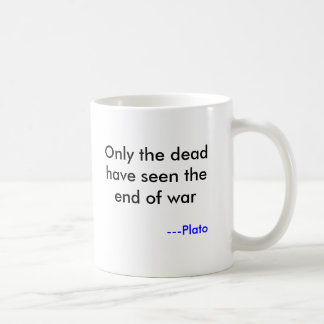
“Only the dead have seen the end of war.” Who said that?

February 25, 2011

When I wrote about George Santayana’s observation that, “Only the dead have seen the end of war,” I didn’t realize it was a quote with controversy over the attribution.

English: Spanish-American philosopher and writ...

He said it: Spanish-American philosopher and writer George Santayana, early in his career (Photo: Wikipedia)

Ridley Scott‘s outstanding 2001 movie, “Blackhawk Down,” opened with the quote, but attributing it to Plato, according to Plato expert Bernard Suzanne in Paris.  One philosopher is as good as another, you might say, so it’s understandable that a good line from a modern philosopher like Santayana might be attributed to one of the most famous philosophers of all time (“they all look alike,” I hear someone saying).  Or, the cynics might say, perhaps Santayana lifted it from Plato — after all, who but another philosopher would actually read the stuff?  Who would know?

Suzanne’s sleuthing is impressive if only because it shows the murkiness of the issue.  According to Suzanne:

  • The quote is popular among American soldiers (ask one — report back in comments).
  • Michael Takiff found it attributed to Plato by a U.S. soldier in Vietnam, writing home, in a book published in 2003.
  • No one has found it in any of Plato’s dialogues — at least, no one Suzanne can find.
  • Gen. Douglas MacArthur used the quote in a farewell address to cadets at the U.S. Military Academy at West Point, in 1962, attributing it to Plato.  That would be a likely source of its popularity among U.S. soldiers.
  • The Imperial War Museum, in London, has the quote engraved on its walls, attributed to Plato.  The museum opened in 1936.  Santayana’s version was published in 1922.
  • Reminder: Santayana said it here: Soliloquies in England and Later Soliloquies, number 25 (1922)

Who put it on the wall of the Imperial War Museum, and why did they misattribute it, just a dozen years after Santayana wrote it?

More:

Quote from George Santayana misattributed to Plato

Quote from George Santayana misattributed to Plato, on a coffee mug from Zazzle

Save


Gunning against UN peacekeeping

January 30, 2011

Chicago Boyz fancy themselves as hard-nosed, free-enterprise economics sorts of guys (as opposed to capitalists — but let’s not let Texas education politics muddy the waters).  It seems to me, too often people who self-label themselves as skeptics are not, and those who label themselves as “just give me the facts” sorts of people don’t really want to look at the facts at all.

A recent Chicago Boyz post expresses excitement about Republican investigations into corruption, which would indeed be news were it directed at corruption among Republicans in Congress, and good news at that.  Despite the hopeful ambiguity of the statement, I gather the author favors investigations into corruption in the UN, as if that were one of the top problems we face in the world today.

Corruption is not pretty.  Corruption should be prosecuted.  Corruption is not the target of the Chicago Boyz and their fellow travelers, however — the UN itself is.

Do they know what they’re talking about?  I have my doubts.  James Rummel complains about UN corruption in humanitarian missions after 9/11.  Um, don’t look now, boyz, but you’re confusing things.  The UN is located in New York, but didn’t carry out humanitarian missions there after 9/11.  Of course, that’s not what they meant to imply — Rummel was complaining about the Oil for Food program in Iraq, which was set up in 1996 to allow Iraq’s people to get needed food and medicines from foreign suppliers, food and medicine that had been cut off as a result of Gulf War I, putting Iraqi citizens in dire straits.  (The mention of 9/11 was just gratuitous red meat to the conservatives, probably.)

Ultimately the program was found to be riddled with fraud.  The UN shouldered blame, but a careful reading of the Volcker Report on the incident shows facts we should consider:  The fraud was contrary to UN guidelines — that is, not caused by the UN — and the UN could not monitor the program adequately because it was underfunded.  Why was the UN program underfunded?  In 1996, all UN programs were underfunded because North Carolina Sen. Jesse Helms successfully cut U.S. funding because of his allegations of fraud and waste — allegations that didn’t bear out.  In addition, political considerations pushed operations to high-cost contractors.  In particular, the U.S. didn’t want Swiss banks to be in on the operation at all.

So, the last time the Republicans went after the UN  for fraud and abuse, the Republicans’ actions caused fraud and abuse. And if we look to pin blame for the problems, fingers point to the U.S.

Oy.

I don’t think a new investigation and cutting funding to the UN makes a lot of sense, now.

Rummel also complains that UN sanctions didn’t seem to affect Saddam Hussein after 9/11.  This is astonishingly selective memory.  All evidence we have now indicates that there were no weapons of mass destruction — and, consequently, the judgment must be that the UN sanctions worked, and worked well.  This is a continuing embarrassment to the United States, and while we wish it were ancient history and could be forgotten, we do so at great peril as we deal with every other nation on Earth who well remembers that the U.S. invaded Iraq to stop the spread of “weapons of mass destruction,” only to find there were none.  Don’t embarrass the U.S. further by looking dotty in foreign relations.  (Were I feeling snarkier, I’d put in a link to Bush’s “humorous” show at one of the Washington correspondents association dinners, where he feigned searching for WMDs in the Oval Office, under White House beds, etc.)

But then, in comments, the truth starts to get smoked out in comments at Chicago Boyz.  One commenter complains about all the socialist nations sitting on the human rights commission, including the U.S.    One commenter complains about how ineffective  the UN has been in making peace in Korea, Vietnam, and Israel.

Oversimplifying, but no more so than Chicago Boyz, we should note that the truce in Korea has held for more than 57 years, even without a formal end to hostilities.  That sounds rather successful, to me.  And Israel’s existence since 1948 seems to have caught hold, even if to the chagrin of major Arabic groups in the region.  Israel is generally considered the great power in the area.  Not exactly a failed enterprise on the UN’s part, on that score.

Vietnam?  That was never a UN project. Much as it pains me to point it out, it was the U.S. who stopped elections in Vietnam in the 1950s (1956?), and it was the South Vietnamese government whose corruption so often derailed attempts to make a lasting peace that would have kept any part of Vietnam noncommunist.  (Investigations into corruption, anyone?)

So, of the three so-called “failed” UN peacekeeping projects, two really were very successful, and the third had nothing to do with the UN.  Is this the accuracy and level of analysis that calls for an investigation of the UN now?

A complete set of facts might be useful before going off half-cocked.  Since 1948 the UN was called in for 64 peacekeeping operations — the UN has no troops, and so cannot wage war nor force war-waging nations to stop.  If we conceded the two operations, Israel and Korea, as failures, that would leave 62 other operations unstudied.  Most of those missions ended years ago, and without making an actual count, I’ll wager most of them ended successfully.  We don’t regard Guatemala anymore as a hotbed of unrest and civil war, for example.  Angola isn’t perfect, but neither is there a civil war there fueled by Cuban assistance, for another example.

One commenter complaints about a “fantasy world” about the UN that the left occupies:

One of the big differences between the Left and Right is that the Left is more controlled by fantasy narratives and can’t separate the real world organization from the one that Leftists would like to have. In other words, they can’t separate the real world U.N. from the noble goals it is supposed to achieve.

Quite the opposite, it’s the right who occupy a hallucinogenic world with regard to the UN, unable to count accurately even the peace operations of the UN, and unable to accurately state the history of operations they wish to criticize.  Fantasy narratives in this case reside almost completely on the right.  Rightists can’t separate the real world UN from the ignoble beast they wish to crucify.

They hope to take the UN hostage to begin the crucifixion, soon.

Resources:


2010 Anniversary of Pearl Harbor – Remembering

December 7, 2010

Encore post, mostly, from December 7, 2006.

1941 AP file photo, small boat rescues victims from U.S.S. West Virginia

Caption from Naval History and Heritage Command: Photo #: 80-G-19930
Pearl Harbor Attack, 7 December 1941
Sailors in a motor launch rescue a survivor from the water alongside the sunken USS West Virginia (BB-48) during or shortly after the Japanese air raid on Pearl Harbor.
USS Tennessee (BB-43) is inboard of the sunken battleship.
Note extensive distortion of West Virginia’s lower midships superstructure, caused by torpedoes that exploded below that location.
Also note 5″/25 gun, still partially covered with canvas, boat crane swung outboard and empty boat cradles near the smokestacks, and base of radar antenna atop West Virginia’s foremast.
Official U.S. Navy Photograph, National Archives Collection.

Today is the 69th anniversary of Japan’s attack on the U.S.’s Pacific Fleet at Pearl Harbor, Hawaii.

Many Americans fly their U.S. flags today.  The date is not one specified in law for flag-flying.

Our local newspaper, The Dallas Morning News, ran a front-page story on survivors of the attack in 2006, who have met every five years in reunion at Pearl Harbor. [December 7, 2006] was their last official reunion. The 18-year-olds who suffered the attack, many on their first trips away from home, are in their 80s now. Age makes future reunions impractical.

In 2010, it is estimated that fewer than 4,000 veterans of Pearl Harbor still live to remember, though, of course those surviving do.

From the article:

“We’re like the dodo bird. We’re almost extinct,” said Middlesworth, now an 83-year-old retiree from Upland, Calif., but then – on Dec. 7, 1941 – an 18-year-old Marine on the USS San Francisco.

Nearly 500 survivors from across the nation were expected to make the trip to Hawaii, bringing with them 1,300 family members, numerous wheelchairs and too many haunting memories.

Memories of a shocking, two-hour aerial raid that destroyed or heavily damaged 21 ships and 320 aircraft, that killed 2,390 people and wounded 1,178 others, that plunged the United States into World War II and set in motion the events that led to atomic bombings of Hiroshima and Nagasaki.

“I suspect not many people have thought about this, but we’re witnessing history,” said Daniel Martinez, chief historian at the USS Arizona Memorial. “We are seeing the passing of a generation.”

Another article notes the work of retired history professor Ron Marcello from the University of North Texas, in Denton, in creating oral histories from more than 350 of the survivors. This is the sort of project that high school history students could do well, and from which they would learn, and from which the nation would benefit. If you have World War II veterans in your town, encourage the high school history classes to go interview the people. This opportunity will not be available forever.

There is much to be learned, Dr. Marcello said:

Dr. Marcello said that in doing the World War II history project, he learned several common themes among soldiers.

“When they get into battle, they don’t do it because of patriotism, love of country or any of that. It’s about survival, doing your job and not letting down your comrades,” he said. “I heard that over and over.”

Another theme among soldiers is the progression of their fear.

“When they first got into combat, their first thought is ‘It’s not going to happen to me.’ The next thought is ‘It might happen to me,’ and the last thought is ‘I’m living on borrowed time. I hope this is over soon,’ ” Dr. Marcello said.

Dr. Marcello said the collection started in the early 1960s. He took charge of it in 1968. Since Dr. Marcello has retired, Todd Moye has taken over as the director.

Other sources:

While this is not one of the usual dates listed by Congress, you may fly your U.S. flag today.

End of 2006 post —

Other resources (2007):

USS Missouri Memorial – Main Battery - from the Panoramas of World War II site

USS Missouri Memorial – Main Battery – from the Panoramas of World War II site


Whiskey and Cigar Day, 2010: Mark Twain and Winston Churchill

November 30, 2010

Mark Twain, afloat

November 30 is the birthday of Mark Twain (1835), and Winston Churchill (1874).

Twain had a comment on the Texas Education Agency and State Board of Education:

In the first place God made idiots. This was for practice. Then He made School Boards.

– Following the Equator; Pudd’nhead Wilson’s New Calendar

The Nobel literature committees were slow; Twain did not win a Nobel in Literature; he died in 1910. Churchill did win, in 1953.

Both men were aficionados of good whiskey and good cigars. Both men suffered from depression in old age.

Both men made a living writing, early in their careers as newspaper correspondents. One waged wars of a kind the other campaigned against. Both were sustained by their hope for the human race, against overwhelming evidence that such hope was sadly misplaced.

churchill-time-cover-man-of-the-year-1941.jpg

Both endured fantastic failures that would have killed other people, and both rebounded.

Each possessed a great facility with words, and wit, and frequently said or wrote things that people like to remember and repeat again.

Both of them rank near the top of the list of people to whom almost any quote will be attributed if the quote is witty and the speaker can’t remember, or doesn’t know, who actually said it.

Both men are worth study.  And wouldn’t you really love to have had them over to dinner?

Twain, on prisons versus education:

Every time you stop a school, you will have to build a jail. What you gain at one end you lose at the other. It’s like feeding a dog on his own tail. It won’t fatten the dog.” – Speech, November 23, 1900

Churchill on the evil men and nations do:

“No One Would Do Such Things”

“So now the Admiralty wireless whispers through the ether to the tall masts of ships, and captains pace their decks absorbed in thought. It is nothing. It is less than nothing. It is too foolish, too fantastic to be thought of in the twentieth century. Or is it fire and murder leaping out of the darkness at our throats, torpedoes ripping the bellies of half-awakened ships, a sunrise on a vanished naval supremacy, and an island well-guarded hitherto, at last defenceless? No, it is nothing. No one would do such things. Civilization has climbed above such perils. The interdependence of nations in trade and traffic, the sense of public law, the Hague Convention, Liberal principles, the Labour Party, high finance, Christian charity, common sense have rendered such nightmares impossible. Are you quite sure? It would be a pity to be wrong. Such a mistake could only be made once—once for all.”

—1923, recalling the possibility of war between France and Germany after the Agadir Crisis of 1911, in The World Crisis,vol. 1, 1911-1914, pp. 48-49.

Image of Twain aboard ship – origin unknown. Image of Winston S. Churchill, Time Magazine’s Man of the Year for 1941, copyright 1941 by Time Magazine.

More on Mark Twain

More on Winston Churchill

Orson Welles, with Dick Cavett, on Churchill, his wit, humor and grace (tip of the old scrub brush to the Churchill Centre):

Yeah, mostly this is an encore post from past years.