With 1000-year flooding having killed two in Ellicott City, Maryland, over the weekend, we should be reminded that delugic rains may increase with global warming.
[Thunderhead that produced a slow-moving, and consquently more catastrophic deluge in the headwaters of the Big Thompson River, Colorado, on July 31, 1976.]
The Big Thompson Disaster: Reverberations of a Flash Flood, 40 Years Later.Dr. Jeff Masters has the post at WunderBlog: “What began as a celebratory Saturday in the mountains ended in tragedy 40 years ago this weekend, when a catastrophic flash flood ripped through the narrow Big Thompson Canyon of Colorado’s Front Range. A total of 144 people were killed on that Saturday evening, July 31, 1976–the eve of the 100th anniversary of Colorado’s statehood. On just about any summer weekend, the canyons northwest of Denver are packed with vacationers and day-trippers. With the state’s centennial falling on this particular weekend, the mood was especially festive, and the weather seemed no more threatening than on many other summer days. Forecasts through the day called for a 40% to 50% chance of showers and thunderstorms, but there was no particular concern about flood risk. Only a few hours later, critical gaps in weather data, communication, and public awareness had teamed up with a slow-moving deluge to create a true disaster–one that’s had a noteworthy influence on how we deal with flash floods today….”
Image credit: NOAA.
Hiking in the area recently, in a different canyon, I reflected on the tremendous changes in weather forecasting in the past 40 years. A lot of warnings about flash floods, and paths to climb up the canyon in emergencies. Plus, we had constant weather updates. Big Thompson was just one of several flood disasters in the 1970s, Masters notes. It’s worth reading his full post.
139 bodies were recovered from the flood, but many other bodies were never recovered. People died from injuries of being tossed about by the flood, and colliding with rocks and trees. Few died of drowning.
How do we prepare to survive and avoid such disasters in the future?
Save
Save
Spread the word; friends don't allow friends to repeat history.
Colorado won proclamation as a state on August 1, 1876, the 38th state in the United States.
August 1 is Colorado Statehood day. U.S. Flag Code urges residents to fly the U.S. flag on the day their state entered the union — today, for Colorado. They call it Colorado Day now.
U.S. and Colorado flags flutter from the same flagpole. Denver Library image
1. There was such a small population in the area, Johnson felt Colorado would fare better as a territory without the added taxation of statehood.
2. Also due to the small population, Colorado would have only one representative to speak for the people in Congress. (New York, on the other hand, had thirty-one).
3. Johnson felt the citizens of Colorado were not prepared for, and not all wanted, statehood. Johnson wanted to hold a census or an election there first. This would ascertain the number of people in the area, as well as find out what their strongest desire was.
Second veto:
1. Johnson didn’t agree with the Edmunds Amendment which said that Nebraska and Colorado had to give equal suffrage to blacks and whites as a statehood condition. Johnson felt this was unconstitutional because Congress couldn’t regulate a state’s franchise, and the people had not been allowed to vote on it.
2. After holding a census, Johnson felt the population was still too small for statehood.
NOTE: In addition, Johnson did not feel right about adding new states to the Union when the Confederate States had not yet been readmitted to the Union and were still unrepresented.
Congress sustained the veto.
Jerome B. Chaffee, one of Colorado’s first U.S. Senators, and the man who earlier pushed through Congress the law admitting Colorado into the Union. Library of Congress description: “Chaffee, Hon. J.B. of Colorado” (Photo credit: Wikipedia)
Colorado Republican and millionaire Jerome Chaffee, serving as the Colorado Territory delegate to Congress, managed to get a statehood bill passed in 1875, in the second term of President Ulysses S Grant; Grant signed the law. Colorado drafted a state constitution that passed muster, Coloradans approved it, and President Grant declared Colorado the 38th state on August 1, 1876. Chaffee was elected one of the first U.S. Senators from Colorado by the new state legislature. In an odd footnote, President Grant’s son, Ulysses S Grant, Jr., married Chaffee’s daughter Fannie in 1881.
In 1875, Chaffee claimed 150,000 people lived in the state, but most historians think that figure was inflated; the 1880 census counted 194,000 people. Some historians doubt that count was accurate.
No doubt there are at least that many people in Colorado today. Several counties in the northeast corner of the state got together in 2013 to explore the possibility of separating from Colorado to form their own state. Does the political cauldron in Colorado ever cool? (Did those secessionists ever cool?)
One of the more dramatic images from Colorado in recent years, courtesy the U.S. Air Force. Captioned in the Las Vegas Review-Journal, June 15, 2013: “An American flag hangs in front of a burning structure in the Black Forest, a thickly wooded rural region north of Colorado Springs, Colo. Authorities reported early Saturday that 473 houses had been incinerated.” Wildfires plagued Colorado 2012-2015, a function of effects of a warming climate.
DoD photo by Master Sgt. Christopher DeWitt, U.S. Air Force
PRCA Rodeo in Steamboat Springs, Colorado; photo from SeaSweetie’s Pages
Save
Save
Yes, this is mostly an encore post. Fighting ignorance requires patience.
Spread the word; friends don't allow friends to repeat history.
Or, until that account is unsuspended by the forces supporting Donald Trump: Follow @FillmoreWhite, the account of the Millard Fillmore White House Library
We've been soaking in the Bathtub for several months, long enough that some of the links we've used have gone to the Great Internet in the Sky.
If you find a dead link, please leave a comment to that post, and tell us what link has expired.
Thanks!
Retired teacher of law, economics, history, AP government, psychology and science. Former speechwriter, press guy and legislative aide in U.S. Senate. Former Department of Education. Former airline real estate, telecom towers, Big 6 (that old!) consultant. Lab and field research in air pollution control.
My blog, Millard Fillmore's Bathtub, is a continuing experiment to test how to use blogs to improve and speed up learning processes for students, perhaps by making some of the courses actually interesting. It is a blog for teachers, to see if we can use blogs. It is for people interested in social studies and social studies education, to see if we can learn to get it right. It's a blog for science fans, to promote good science and good science policy. It's a blog for people interested in good government and how to achieve it.
BS in Mass Communication, University of Utah
Graduate study in Rhetoric and Speech Communication, University of Arizona
JD from the National Law Center, George Washington University
![[Thunderhead that produced a slow-moving, and consquently more catastrophic deluge in the headwaters of the Big Thompson River, Colorado, on July 31, 1976.]](https://i0.wp.com/apps.startribune.com/blogs/user_images/pauldouglas_1469933288_cb%20NOAA.GIF)


 Posted by Ed Darrell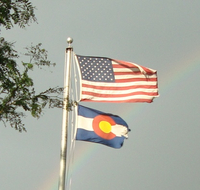





 Millard Fillmore's Bathtub