January 9 was Richard Nixon’s birthday

January 10, 2018

President Richard Milhous Nixon was born in Yorba Linda, California, on January 9, 1913.

Interesting to see so little public acknowledgement of Nixon’s presidency and his trials and vexations, which history offers insight and perhaps solutions to problems the nation has today.

Some views of Richard Nixon.
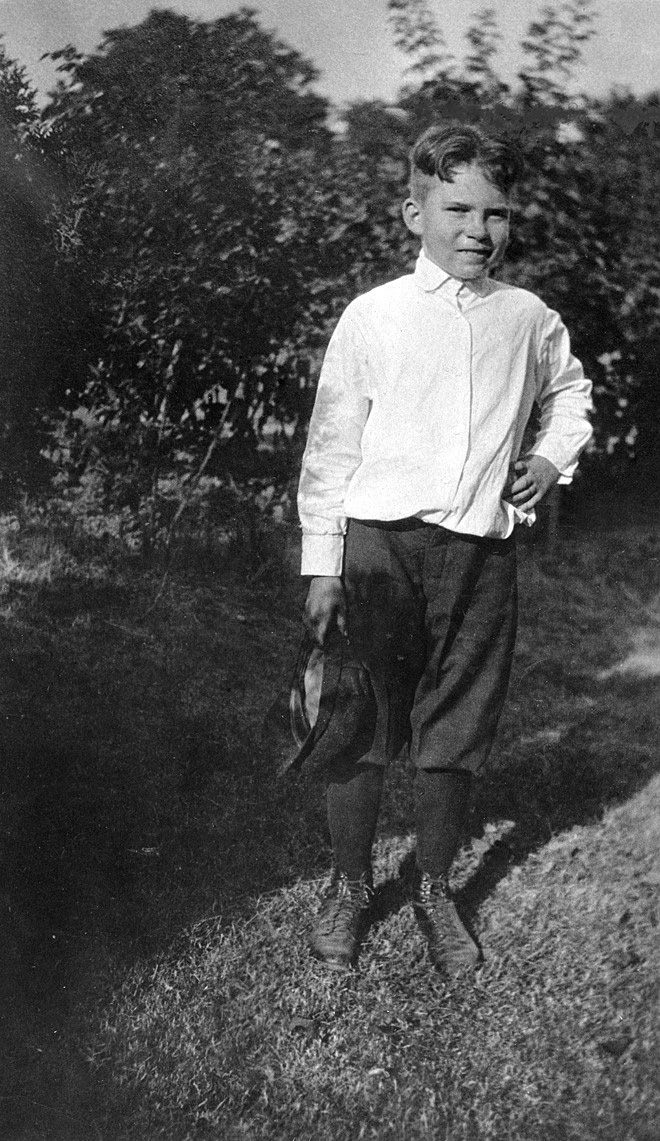
National Archives and Records Administration image: Nine-year old Richard Nixon in Yorba Linda, 1922. National Archives Identifier: 306-PSD-68-3769.
National Archives and Records Administration image: Nine-year old Richard Nixon in Yorba Linda, 1922. National Archives Identifier: 306-PSD-68-3769.

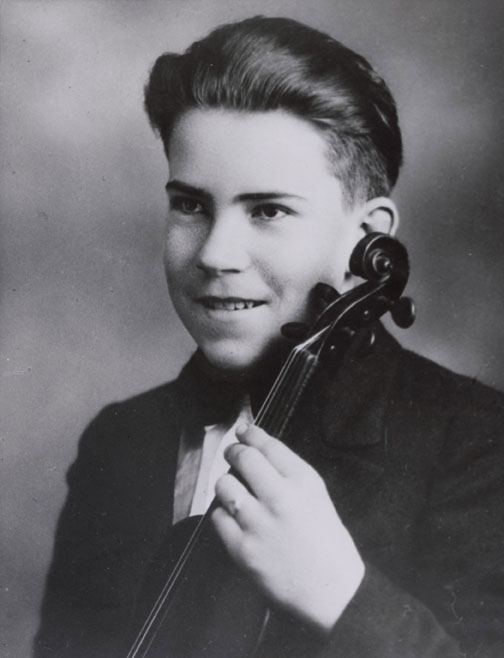
Richard Nixon, age 15, holding his violin, ca 1927-1928. Richard Nixon learned to play the violin, clarinet, saxophone, piano, and the accordion. When he was 12, Richard was sent to live and study music with his mother’s sister in central California. He returned home six months later and eventually discontinued his studies, but his love of music continued. Richard Nixon Presidential Library & Museum.

Richard Nixon, age 15, holding his violin, ca 1927-1928. Richard Nixon learned to play the violin, clarinet, saxophone, piano, and the accordion. When he was 12, Richard was sent to live and study music with his mother’s sister in central California. He returned home six months later and eventually discontinued his studies, but his love of music continued. Richard Nixon Presidential Library & Museum.

Richard Nixon with two friends, Fullerton High School, Fullerton, CA, circa 1929. (Surely someone could identify the other two men. I wonder who they are? What happened to them?) Richard Nixon Presidential Library & Museum Identifier: WHPO-B-0199.
Richard Nixon with two friends, Fullerton High School, Fullerton, CA, circa 1929. (Surely someone could identify the other two men. I wonder who they are? What happened to them?) Richard Nixon Presidential Library & Museum Identifier: WHPO-B-0199.

1945 photograph of Lt. Commander Richard Nixon wearing his Navy uniform. When Richard Nixon ran for Congress in 1946 he wore his Navy uniform as he declared at the time that he did not have a civilian suit. Richard Nixon Presidential Library and Museum, used with permission of the Richard Nixon Foundation and Julie Nixon Eisenhower.
1945 photograph of Lt. Commander Richard Nixon wearing his Navy uniform. When Richard Nixon ran for Congress in 1946 he wore his Navy uniform as he declared at the time that he did not have a civilian suit. Richard Nixon Presidential Library and Museum, used with permission of the Richard Nixon Foundation and Julie Nixon Eisenhower.
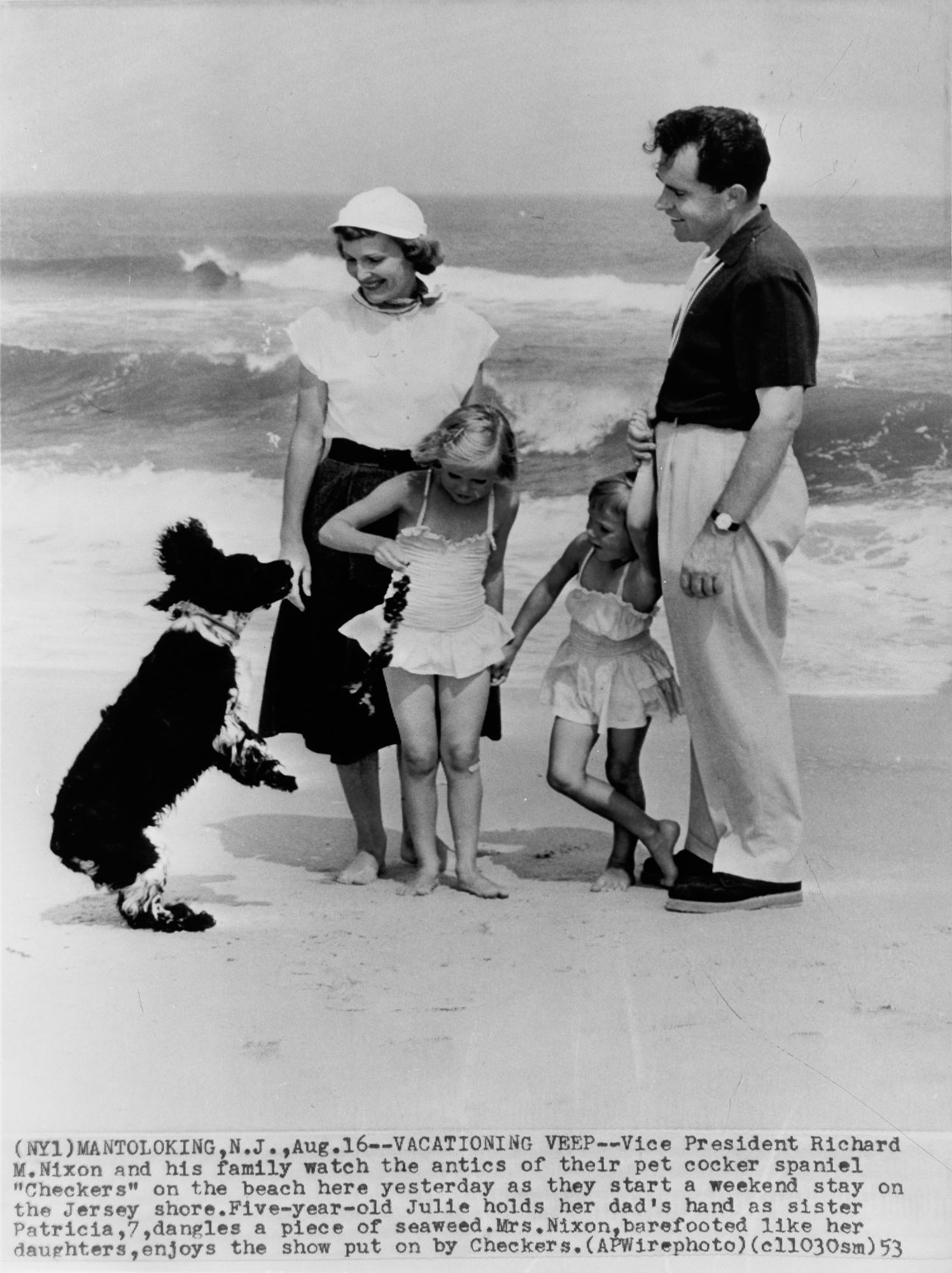
Vice-President Richard Nixon, with wife Pat and daughters Tricia and Julie, watch the antics of their pet cocker spaniel

Vice-President Richard Nixon, with wife Pat and daughters Tricia and Julie, watch the antics of their pet cocker spaniel “Checkers” while on a weekend visit to the Jersey Shore in Mantoloking, NJ, August 16, 1953. Richard Nixon Presidential Library and Museum, used with permission of the Richard Nixon Foundation and Julie Nixon Eisenhower.

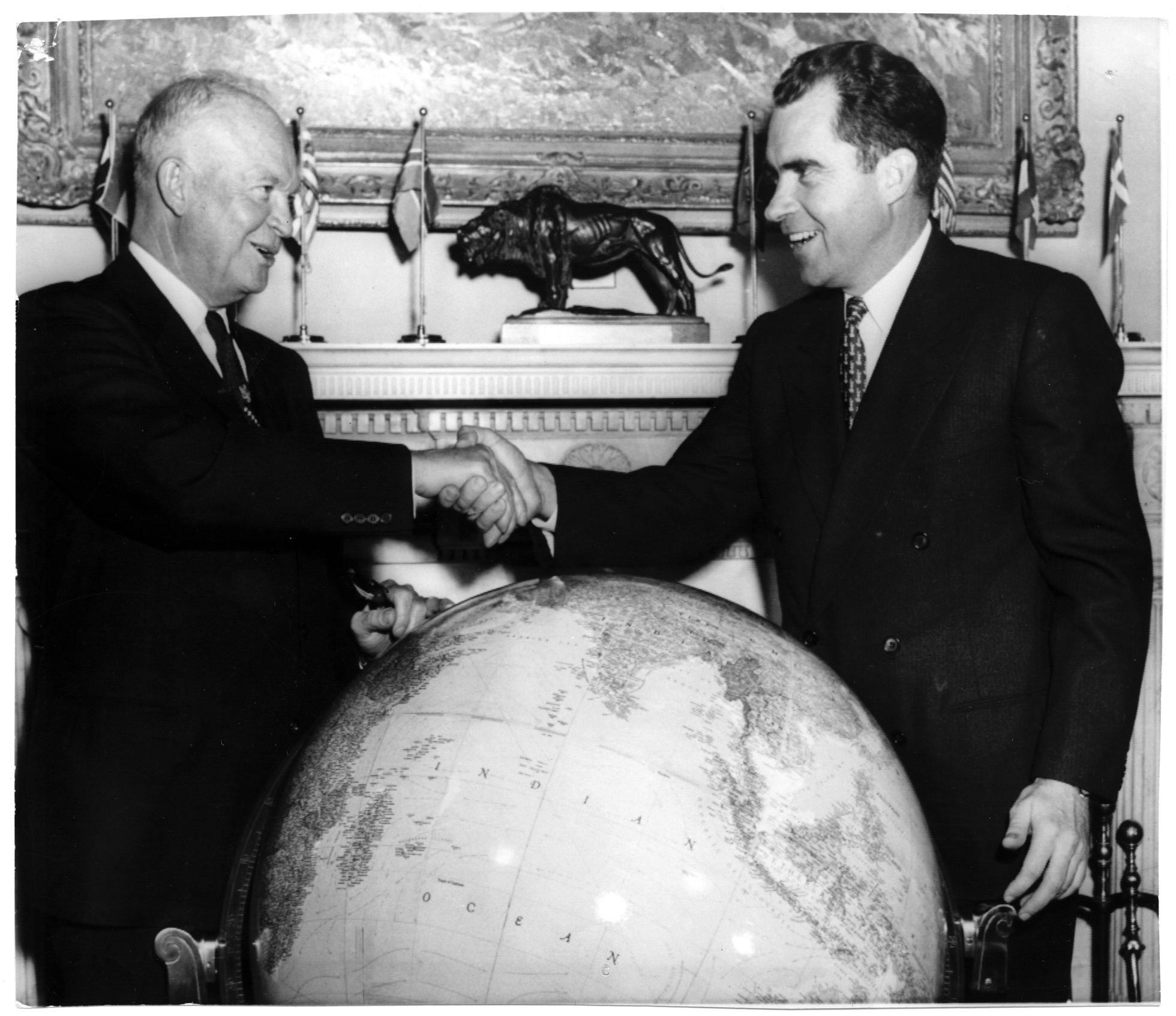
President Dwight D. Eisenhower and Vice President Richard Nixon at the White House before the Vice President’s Ambassador of Goodwill tour departure to the Far East, October 5, 1953. Richard Nixon Presidential Library and Museum, used with permission of the Richard Nixon Foundation and Julie Nixon Eisenhower.

President Dwight D. Eisenhower and Vice President Richard Nixon at the White House before the Vice President’s Ambassador of Goodwill tour departure to the Far East, October 5, 1953. Richard Nixon Presidential Library and Museum, used with permission of the Richard Nixon Foundation and Julie Nixon Eisenhower.

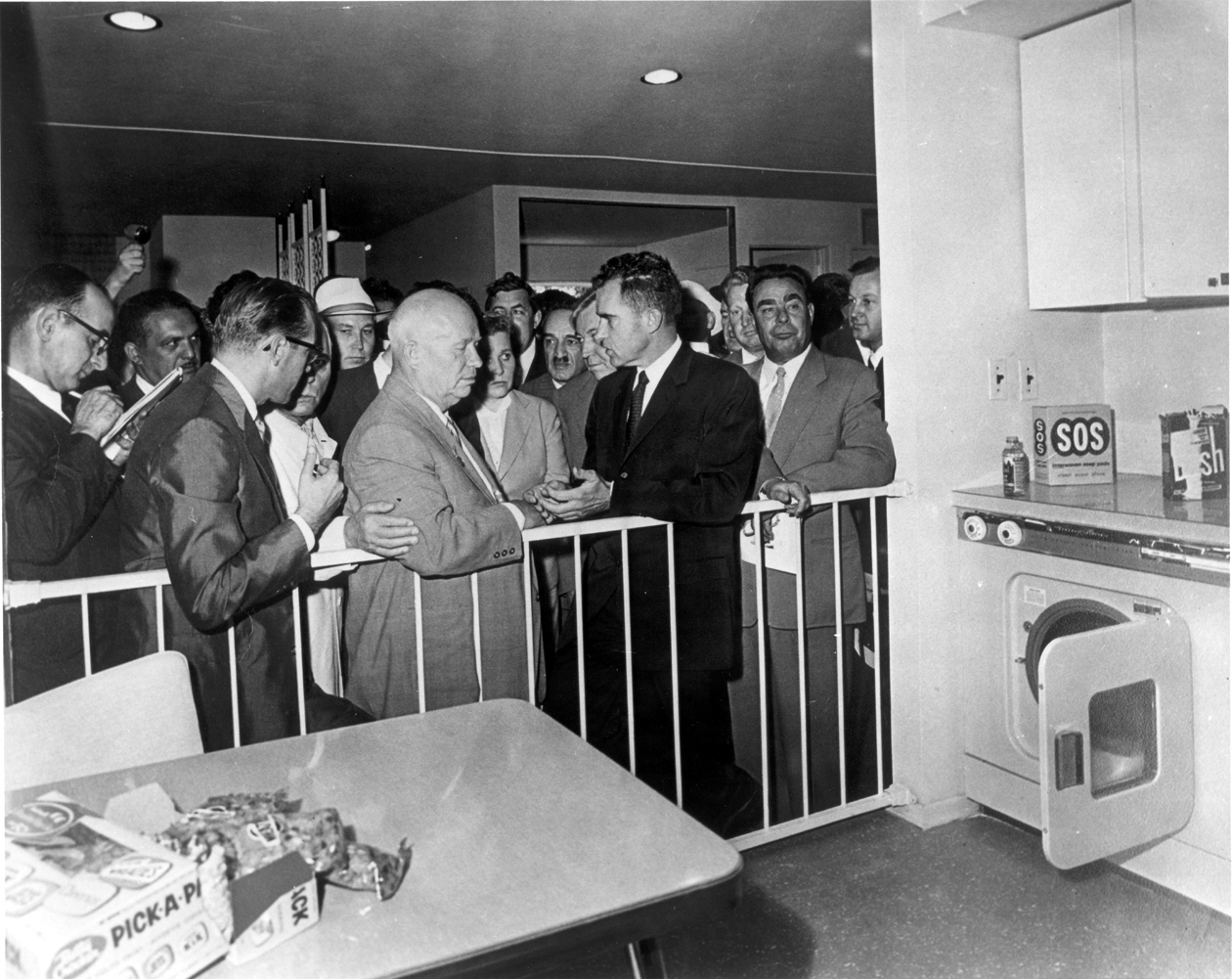
Vice-President Nixon spars with Premier Khrushchev before reporters and onlookers, including Politburo member Leonid Brezhnev at the American National Exhibition at Sokolniki Park, in Moscow, 1959. Nixon and Khrushchev are photographed in front of a kitchen display – the impromptu exchanges came to be known as the Kitchen Debate, July 24, 1959. Richard Nixon Presidential Library and Museum, used with permission of the Richard Nixon Foundation and Julie Nixon Eisenhower.

Vice-President Nixon spars with Premier Khrushchev before reporters and onlookers, including Politburo member Leonid Brezhnev at the American National Exhibition at Sokolniki Park, in Moscow, 1959. Nixon and Khrushchev are photographed in front of a kitchen display – the impromptu exchanges came to be known as the Kitchen Debate, July 24, 1959. Richard Nixon Presidential Library and Museum, used with permission of the Richard Nixon Foundation and Julie Nixon Eisenhower.

Nixon’s life offers many interesting twists and turns. His Watergate scandal rather overshadows much of the rest — I think high school textbooks do not spend enough time on telling why Nixon was considered a good candidate for the presidency after losing to John F. Kennedy in the 1960 election, nor do they dwell enough on the effect of the Cold War on his career, and his effect on the Cold War. Check your kid’s U.S. history book — is the Kitchen Debate even mentioned?

Nixon would have been 105 years old on January 9. We might pause to reflect, and learn, from his life and trials.

More:

A wreath-laying ceremony commemorating President Richard Nixon’s 105th birthday is moved indoors because of rain. The wreath was placed by a large photo of the 37th president in Yorba Linda on Tuesday, Jan 9, 2018. (Photo by Mindy Schauer, Orange County Register/SCNG)

Orange County Register caption: A wreath-laying ceremony commemorating President Richard Nixon’s 105th birthday is moved indoors because of rain. The wreath was placed by a large photo of the 37th president in Yorba Linda on Tuesday, Jan 9, 2018. (Photo by Mindy Schauer, Orange County Register/SCNG)


Happy 218th birthday, Millard Fillmore!

January 8, 2018

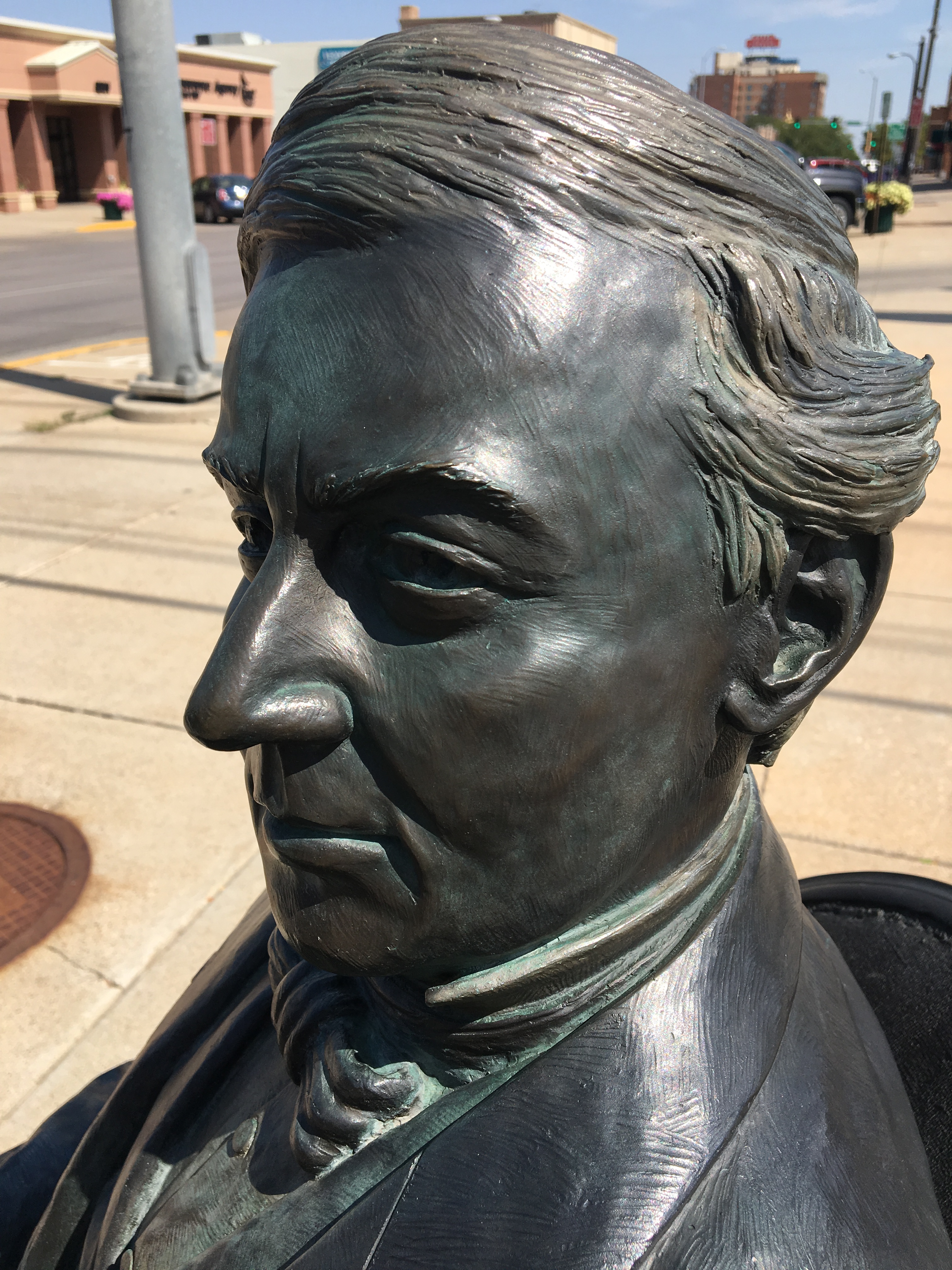
Millard Fillmore, bronzed, sitting at the corner of 9th and St. Joseph Streets in Rapid City, South Dakota. He still gets around. Photo by Ed Darrell. Please use.

Millard Fillmore, bronzed, sitting at the corner of 9th and St. Joseph Streets in Rapid City, South Dakota. He still gets around. Photo by Ed Darrell. Please use. Creative Commons copyright.

Millard Fillmore, our 13th President, was born on January 7, 1800.

That was 24 days after the death of our first President, George Washington.

Yes, I’m a day late in noting the anniversary. Fillmore’s birthday isn’t such a big deal anymore, since fun organizers discontinued the bathtub races once word got out that the story of Millard Fillmore putting the first bathtub in the White House, is a hoax.

Historians from the University of Buffalo — an institution founded by Fillmore after his presidency — usually hold a graveside ceremony with speeches. But for at least the second time in recent years, they got frozen out. (About as cold as the response I get from the University of Buffalo when I ask for a copy of the speech or paper to publish here.)

It’s a shame, really. Fillmore is the victim of fake news, a hoax perpetrated by H. L. Mencken 100 years ago, in 1917. Mencken claimed, falsely, that Fillmore’s sole good, memorable deed was putting that fictitious bathtub in the White House. That story crowds out the real history, and any good Fillmore should be remembered for.

Fillmore did a few notable things as president.

  • Fillmore secured a steady supply of bird guano for the United States. Funny as that may be, the guano was essential for making gun powder, which in turn helped fuel the military might of the United States for years (including through the Civil War).
  • Millard Fillmore and his first wife, Abigail, read books all the time. Deprived of the opportunity of going to school much in his youth, Fillmore became an ardent reader, read for the law, became a lawyer, got into politics and was selected Vice President for President Zachary Taylor. When Taylor died (probably of typhoid) in 1850, Fillmore succeeded to the presidency. In the White House, the Fillmores found few books to read, and so established the White House Library. Say prayers that library survives the current president.
  • Fillmore thought globally, and he could see world trade as a huge opportunity for a young nation with a strong navy and army, and a lot of resources including intellectual capacity to manufacture things. Trade in the Pacific was problematic, and a large number of problems stemmed from Japan’s closing itself off from the world. Japan had coal, which could refuel steamships. Japan instead closed its ports. An occasional U.S. sailor would be executed if he washed up on Japanese shores. Fillmore sent a small fleet of “black ships” under Commodore Matthew Perry, to tell Japan it was time to open up to trade and assume its place among nations. Perry was successful, after a second visit and a small round of cannon fire. Japan became a strong economic power in the West Pacific, and in its march to glory decided to take over resources of several other Asian nations. We might say Fillmore started the slide to World War II in the Pacific.

History should be kept to accuracy. Mencken upset the ship of accuracy with his essay, and America has not recovered, nor has Millard Fillmore’s reputation. There’s a moral there: Don’t spread hoaxes; seek the truth, and glorify it. (Mencken apologized for the hoax, but too late.)

Rapid City, South Dakota, is a booming town. Mineral wealth and oil in the state combine with an Air Force Base, great housing prices and good weather to the benefit of the town. One of its civic watchdogs got the idea of putting statues of all U.S. presidents on downtown corners. That is how Millard Fillmore comes to be seated at a desk with a book nearby, at the corner of 9th Street and St. Joseph Street, where I met him last August. Altogether a fun little history enterprise for Rapid City, very well executed, and worthy of a stop there if you’re passing by.

Perhaps someday Rapid City will take to decorating the statues on the birthdays of the men (so far!) represented. I hope they won’t be frozen out like Buffalo, New York, is, if they commemorate Millard Fillmore’s birthday.

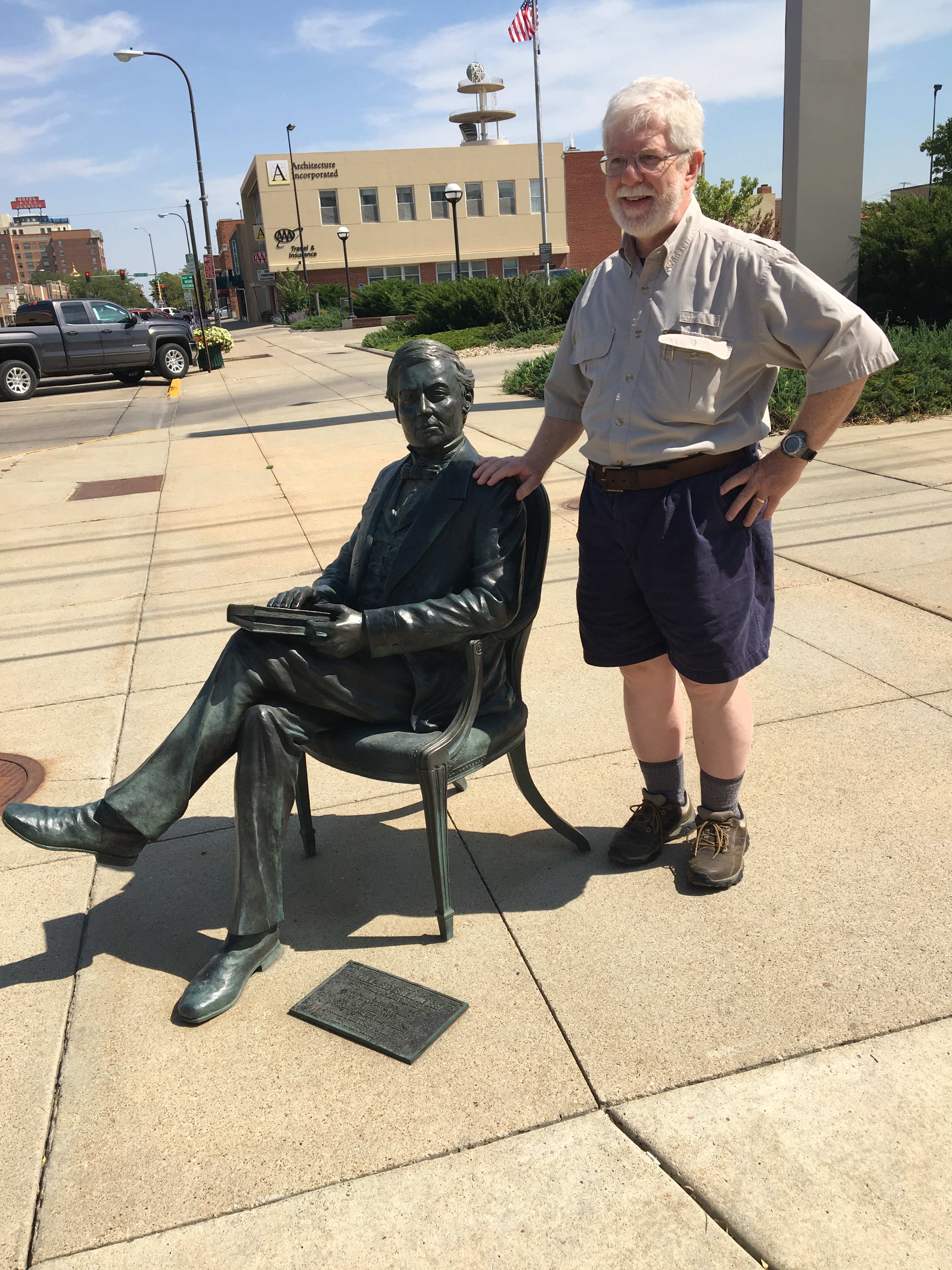
Millard Fillmore and Ed Darrell meet, in Rapid City, South Dakota, August 2017

Millard Fillmore and Ed Darrell meet, in Rapid City, South Dakota, August 2017; photo by Kathryn Knowles

More:


How did we celebrate Utah statehood?

January 4, 2018

Followers of this blog may note that, with 50 states having statehood days, only a handful actually celebrate with anything like the ceremonies Congress probably intended when they wrote the U.S. Flag Code, which calls for citizens to fly the U.S. flag on their statehood day.

It’s a bit of a disappointment.

Utah doesn’t make it a holiday, but Utahns note the day and the history, as we find on Twitter today.

Good for Utah.

AlRounds.com, a painting and image sale site, have this painting for sale; it shows the Latter-day Saints' Temple in Salt Lake City, festooned as it was through 1896 with a giant U.S. flag -- hung backwards by today's standards. Painting probably by Al Rounds.

AlRounds.com, a painting and image sale site, have this painting for sale; it shows the Latter-day Saints’ Temple in Salt Lake City, festooned as it was through 1896 with a giant U.S. flag — hung backwards by today’s standards. Painting probably by Al Rounds.

In the past five years, the image above has become a popular one, based on a photo by pioneering Utah journalist George Reed, from 1896.

Twitter shows much, much more, starting with that photo (did the Republicans link to Al Rounds’s site?). It’s not all love and peace pipes, either — who knew Utah statehood could be controversial 122 years later?

https://twitter.com/EdDarrell/status/948990904488136706

I think the state tree of Utah was changed in a recent session of the legislature. Utah’s state bird is the California gull, and there is history behind that (if questionable history); but Utah garden clubs lobbied for the Colorado Blue Spruce as state tree, in the 20th century. Lovely tree, but not native to Utah at all, it turns out. We used to joke Utah’s state bird is the California Gull, the state tree the Colorado Spruce, and the state song, “On Wisconsin.” State song is actually, “Utah, We Love Thee.” I’ll have to look up the state tree issue. Prof. Irving McNulty, from whom I took botany at the University of Utah, said he thought the state tree should be the Utah juniper (then Juniperus utahensis, but probably differently named now), because it was a squat, rather ugly tree that has legendary pollen and seed production. It’s considered a junk tree in most places, because it ruins grazing lands.

Do you wear your bib and tucker for formal occasions?

https://twitter.com/tannerholcomb/status/948969283194793984

Does your state celebrate with a state dance in an isolated, former capital?

Why do I mention that? Nothing at all to do with the former capital’s being Fillmore, in Millard County, I promise.

Is Delicate Arch in Arches National Park just one of the best symbols of any state, anywhere?

https://twitter.com/EdDarrell/status/948989025247027200

Here’s one of the photos that prompted the painting at the top of this post.

https://twitter.com/KyleTreasure/status/948962533959872512

More to come, perhaps, as the day goes on.


January 4 is Utah Statehood Day – Utahns fly their U.S. flags

January 4, 2018

I don’t think I ever knew anyone in Utah who had a Utah state flag.

But on Utah Statehood Day, the Flag Code says to fly the U.S. flag, so it’s okay.

Giant U.S. flag flies over Grovecreek Canyon, near Pleasant Grove, Utah (July 4, 2016). KSL News photo by Devan Dewey

Giant U.S. flag flies over Grovecreek Canyon, near Pleasant Grove, Utah (July 4, 2016). KSL News photo by Devan Dewey

Utah’s statehood came on January 4, 1896, after 49 years of attempts to join the union.

Utah is also one of those states that actually celebrates statehood day. The government calendar starts on January 4, the day new officials are sworn into office.

I chose the photo above partly because it demonstrates Utahns unusual love for the U.S. flag, and partly because it’s from my Utah hometown of Pleasant Grove. Not sure why they chose Grovecreek Canyon for this display — I think it would have been more spectacular a few miles south, at the mouth of Battlecreek Canyon, with a better view of Mt. Timpanogos in the background.

Happy 122nd birthday, Utah.

Utah Highways magazine caption for the video:

Utah Valley is very patriotic – sort of like Texas except that Texas doesn’t have mountains large enough to fly the largest flag ever flown in the U.S.! (According to http://followtheflag.org/) This flag is over 1/4 acre in size – that’s bigger than the lot my house sits on. See this flag for yourself until July 10 in the mouth of Grove Creek Canyon (http://utahhighways.com/utah-hiking/g…) above Pleasant Grove, Utah.


January 3, Alaska’s statehood day

January 3, 2018

Late for me to remind you, if you didn’t, but January 3 is Alaska’s Statehood Day. Alaskans should have flown their U.S. flags today in commemoration.

Of course, some people would like to fly their state flags, too — makes more sense, some say. I don’t argue, but I note that very rarely do I come across some household that has a state flag. Most homes have a U.S. flag.

Alaska’s flag is a work of art, though, and many Alaskans have one. Did you fly it today, if you have one?

More:

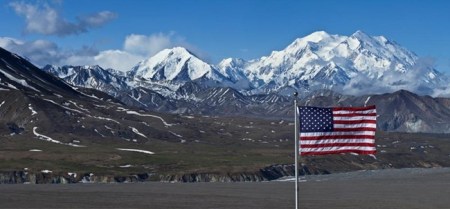
U.S. flag flying at the Eielson Visitor Center, Denali National Park, Alaska. National Park Service image

U.S. flag flying at the Eielson Visitor Center, Denali National Park, Alaska. National Park Service image, photo by Jacob W. Frank.


Video flag in Times Square, reflected

January 1, 2018

Reuters photo, at the Baltimore Sun’s “Darkroom” blog.

Baltimore Sun caption: The U.S. flag is reflected in the window of a police car as a police man stands guard in Times Square ahead of New Year’s Eve celebrations in New York, December 31, 2013. Security has been stepped up in the area around where the celebrations will take place. (REUTERS/Carlo Allegri)

Baltimore Sun caption: The U.S. flag is reflected in the window of a police car as a police man stands guard in Times Square ahead of New Year’s Eve celebrations in New York, December 31, 2013. Security has been stepped up in the area around where the celebrations will take place. (REUTERS/Carlo Allegri)

Of course you’re flying your flag today, as the U.S. Flag Code recommends.

Is every holiday going to be taken over by flag-waving?


Fly Old Glory, to welcome the New Year

January 1, 2018

Reuters photo captured the Polar Bear Swim at Coney Island on January 1, 2016. New Years Day is one of the Flag Code designated days to fly the flag.

Reuters photo captured the Polar Bear Swim at Coney Island on January 1, 2016. New Years Day is one of the Flag Code designated days to fly the flag.

Fly your flag on January 1, one of the designated dates in the U.S. Flag Code. It’s a new year, a good time to fly the colors to get any new enterprise off to a good start.

Let’s hope for a better 2018 than the past two years have been.

Got a photo of your flag flying on January 1? Let us see it, in comments.

More: