4. GLOBAL WARMING HOAX: OR WAS IT JUST A HOAX OF A HOAX?
There was a wild scramble on Wednesday about the death of the manmade global warming theory, except the authors didn’t exist, nor their institution, nor the journal. It took two minutes to find this out, so what was the purpose? Just a prank?
What was it?
Nature reports the hoax site, looking like the website of a research journal, took the article down (that’s the link to the article; it’s gone, as you can see. The hoax included a purported article and a purported editorial from the journal.
But nothing checked out. The journal doesn’t exist. The researchers probably are bogus, too, nor does their purported institution/department exist.
In the meantime, junk science purveyor Steven Milloy claims that it was the skeptics of global warming who smoked out the hoax, not the many scientists who immediately smelled fishiness. Does he suggest the name of even one warming “skeptic” who called it? No.
Did Limbaugh apologize yet? Do you think he’ll be more skeptical next time?
10. Rachel Carson sounded the initial alarm against DDT, but represented the science of DDT erroneously in her 1962 book Silent Spring. Carson wrote “Dr. DeWitt’s now classic experiments [on quail and pheasants] have now established the fact that exposure to DDT, even when doing no observable harm to the birds, may seriously affect reproduction. Quail into whose diet DDT was introduced throughout the breeding season survived and even produced normal numbers of fertile eggs. But few of the eggs hatched.” DeWitt’s 1956 article (in Journal of Agriculture and Food Chemistry) actually yielded a very different conclusion. Quail were fed 200 parts per million of DDT in all of their food throughout the breeding season. DeWitt reports that 80% of their eggs hatched, compared with the “control”” birds which hatched 83.9% of their eggs. Carson also omitted mention of DeWitt’s report that “control” pheasants hatched only 57 percent of their eggs, while those that were fed high levels of DDT in all of their food for an entire year hatched more than 80% of their eggs.
Considering Carson’s careful citing of studies on all sides of the issue, and her use of sources dating back 30 years and more, it would be difficult for her to have “represented the science of DDT erroneously.” Carson got the science right.Milloy doesn’t even get the quote of Carson right, however, deleting her main point, and editing it to set up a straw man argument which misleads unwary readers.
Carson represented the science faithfully. Milloy simply dissembles in his accusation that she got it wrong.
In fact, Carson offered more than 50 pages of citations to studies, virtually everything available on DDT and the other chemicals she wrote about, up to the time of publication. Carson had started working on the issue in 1948, and worked almost solely on the work that became Silent Spring between 1959 and the book’s publication. None of the studies she cited has been retracted. Most of the studies were determined to be accurate in follow-up studies.
Mario Capecchi’s story of his mother’s arrest by the Gestapo, and his life on the streets of Italy as a young boy, only piqued interest in the story of his winning a Nobel Prize in Medicine or Physiology, earlier this year.
It is such a great story, people set out to write it down in detail. Some of the details discovered, however, don’t quite square with historical records.
The story Capecchi has told repeatedly over the years in speeches and interviews begins when he is 3 and the Gestapo, Adolf Hitler’s secret police, snatch his mother before his very eyes and dispatch her to Dachau concentration camp. The peasant family that takes him in abandons him and he spends four years wandering about northern Italy – a street urchin, alone and begging for food.
At war’s end – on the boy’s ninth birthday – mother and son are reunited in the hospital ward where he is being treated for malnutrition and typhoid. They set sail for America where he flourishes, embarks on a brilliant research career – and goes on to win the Nobel Prize for medicine.
But The Associated Press, which set out to chronicle his extraordinary story in greater detail, has uncovered several inconsistencies and unanswered questions, chief among them whether his mother was in Dachau, and whether he really was for a long time a homeless street child.
This is a classic case. Memory differs from the facts. Human minds fill in details that would otherwise leave a mystery, and the details filled in differ from the details that can be corroborated.
This is part of what keeps history lively.
We see here also a demonstration that there is much we can never really know for sure. Historians work from imperfect records in the best of circumstances.
The director of the Dachau Memorial, Barbara Distel, said women weren’t imprisoned at Dachau until September 1943 – more than two years after Capecchi says his mother was arrested. She also said only Jewish women from eastern Europe were held in Dachau’s satellite camps.
”I do remember – I remember the Gestapo coming to the Wolfsgruben chalet,” Capecchi told AP in the interview, conducted days after his Nobel Prize was announced. ”It’s sort of like a photograph. I can tell you how many people were in the room, which ones were in uniform and which ones weren’t. Just boom. It’s there.”
Pressed to explain how he could be certain he was just 3 1/2 at the time and remember it so clearly, he stood by his account.
The big question we want answered here is this: How can we get more great people like Mario Capecchi? Can we get a few Nobelists out of the current generation of children?
No one proposes revisiting war to make kids great, so the fascination with Capecchi’s childhood is more academic, if still for inspiration.
In the end, we have a mystery. How did Capecchi get to be such a great man? There remains that great chapter near the end of the book; early chapters are missing.
Perhaps AP could put a team of reporters on a story to explain exactly how Capecchi’ s research explains what it does, and what it means down the road. That’s a story that needs to be told, too.
Spread the word; friends don't allow friends to repeat history.
The subhead: “Experts questioning abstinence-only education approach.”
What was the clue?
While the national teen birth rate has slowed, Texas has made far less headway, alarming public health officials and child advocates.
Texas teens lead the nation in having babies. Last month, the nonprofit group Child Trends conferred another No. 1 ranking on Texas. In the latest statistics available, 24 percent of the state’s teen births in 2004 were not the girl’s first delivery.
“That astounded me,” said Kathryn Allen, senior vice president for community relations at Planned Parenthood of North Texas. “I mean, what are we doing wrong?”
Texas’ policy is to deny contraceptives without parental consent wherever possible and to push an abstinence-only sex education program in public schools.
Conservatives blame liberal policies. The radical, “pregnancy is punishment from God” Eagle Forum believes success in reducing teen-aged pregnancies in other states is due to increased abortions, though there is not an iota of evidence to support such a claim.
The good news is that Texas’ teen pregnancy rates are down 19%. The bad news for Texas is that the national rates are down about 30%, and California has achieved a 47% reduction in the same period of time, by emphasizing honest sex education that teaches the use of prophylactics and by making birth control devices available to teens for free at public health clinics.
I have suffered through amazingly destructive presentations in which abstinence-only educators tell fantastic falsehoods to kids. In one presentation, the fellow started out claiming condoms are effective only 60% of the time, but got the failure rate up to 90% by the end of his talk. Kids in the school told me that they learned not to use condoms.
At the same time the Cleveland Plain Dealer defended inaccurate history in flag-folding ceremonies, the U.S. Department of Veterans Affairs announced it would allow inaccurate ceremonies, if the family of the departed veteran requests it, and if the family provides the script. Here’s the news from the Akron Beacon-Journal.
Scripts must still adhere to standards that prohibit racism, obscenity, or political partisanship.
Spread the word; friends don't allow friends to repeat history.
My brothers in journalism at the usually sensible Cleveland Plain Dealer have lost their journalistic senses.
In an editorial this morning, the paper supports, defends and calls for the reinstatement of the inaccurate, insulting and embarrassing flag folding script that the Department of Veterans Affairs’ National Cemeteries finally, belatedly but justly, stopped promulgating a few weeks ago.
Those are not just folds in a meaningless fabric or empty words spoken at the grave site. They represent honor, continuity with the past, traditions to be preserved, even when some of the words may quietly be set aside for families who wish a different approach.
America’s military men and women put on the line not just life and limb, but often precious time with their children, higher pay or easier jobs, help to a spouse or an aging parent. They do so to serve their country. Their recompense when they get home is a veterans system at best struggling to meet crescendoing needs for medical, rehabilitative and psychiatric care – and now with a tin ear for what matters.
Except that they ARE meaningless words in the script, violative of tradition and law, historically inaccurate, and insulting to the memory of patriots like George Washington. They do not honor the past, portraying a false past instead. The ceremony is not traditional, having been written only in the past three decades or so. The script departs radically from the historic path of America’s patriots, defending freedom without regard to profession of faith.
Christians, Jews, Moslems, atheists and others put their lives on the line to defend this nation. They didn’t ask that their memories be fogged with silly and historically inaccurate glop.
Traditionally, a symbol of liberty, the American flag has carried the message of freedom, and inspired Americans, both at home and abroad.
In 1814, Francis Scott Key was so moved at seeing the Stars and Stripes waving after the British shelling of Baltimore’s Fort McHenry that he wrote the words to “The Star Spangled Banner.”
In 1892, the flag inspired Francis Bellamy to write the “Pledge of Allegiance,” our most famous flag salute and patriotic oath.
In July 1969, the American flag was “flown” in space when Neil Armstrong planted it on the surface of the moon.
Why does the Plain Dealer choose a religious screed that insults history over a script that accurately honors all of America’s veterans?
The full text of the newer, accurate ceremony is below the fold.
Chris Rodda has a bee in her bonnet about wacky claims about early U.S. government and Christianity — same bee I get on occasion (hence the famous phrase, “busy bee”).
At Talk to Action, Chris dissects one of the more odd and arcane claims of people like the late D. James Kennedy, that Thomas Jefferson tried to import a group of Calvinist seminarians to make the University of Virginia a religious institution. Kennedy’s claim is voodoo history at its most voodoo.
There are two things wrong with Kennedy’s claim. The first is the time frame. Jefferson did consider a proposal to move the Geneva Academy to the United States, but this was in 1794 and 1795, thirty years before the University of Virginia opened. The second is that, although the Geneva Academy was originally founded by John Calvin in 1559 as theological seminary, by the late 1700s it had been transformed into an academy of science. The plan considered by Jefferson was not to import a religious school. It was to import a group of Europe’s top science professors.
This one is so obscure I have heard it only a couple of times. I’m not sure if that’s because it is so far outside the world of reality that even most victims of these hoaxes recognize it, or if it just hasn’t gotten traction yet.
Jefferson’s relationship with religious instruction in higher education really never varied. When he was a member of the governing board of the College of William and Mary, the board of visitors, he successfully campaigned to rid the college of preachers in teaching positions, and with the money saved, he got lawyers hired to instruct in other topics instead. In his design for the University of Virginia, he most carefully left out religious instruction from the curriculum, and from the space of the university. Since he shared this view of religion in education with James Madison, Madison followed through on keeping the University of Virginia as an institution of learning and not religious indoctrination.
So, how could someone with the research chops claimed by the late Rev. Kennedy get this stuff so exactly wrong? He relied on an old hoaxer, Mark A. Beliles. Why could a scholar like Kennedy could be sucked in by such a clear and blatant hoax? Bogus history seemed to attract him like seagulls to and overturned hot dog cart.
Bush administration officials make the case more powerfully that we need to resurrect the Office of Technology Assessment (OTA).
Bushies, going against their earlier claims that they accept that the nation needs to do something about changing climate, “eviscerated” testimony of a government official designed to protect public health. More voodoo science from Bush. According to The Carpetbagger Report:
Dr. Julie Gerberding, director of the Centers for Disease Control and Prevention, told a Senate panel yesterday that climate change “is anticipated to have a broad range of impacts on the health of Americans.” If that sounds a little vague and non-specific, there’s a good reason — the White House refused to let her say what she wanted to say.
Sadly, Carpetbagger Report lists several other instances in which White House officials have gutted the release of important information on global warming’s dangers.
If Osama bin Laden did something like that, we’d invade a smaller nation to stop it. Preventing Americans from being prepared for disaster is a terroristic threat under the Homeland Security Act, isn’t it? Is there a clause for citizen suits in there somewhere? Who will stand up to the abuses by George Bush?
Hillary Clinton specifically calls for the recreation of OTA, a clue some of us politicos use to indicate she really does know what government under the Constitution should be doing. Other Democrats are friendly to the idea, but so far I’ve not heard a peep from any of the Republican presidential candidates. Orrin? What about you?
Bring back the OTA. Exorcise the demons of totalitarian Bushism.
Spread the word; friends don't allow friends to repeat history.
Really? Hoaxes are good things? Politicians make fair game?
Nuts.
Part of the problem comes from the way the questions plop out at people on that quiz. Any national polling firm can give us chapter and verse on the need to phrase questions and potential answers just so, so that they do not mislead the people questioned into making an answer choice they would not normally make. Any teacher can tell you that phrasing of questions and answer choices can affect the way students perform on a test.
So, let’s rephrase the quiz. How about a hoax quiz that makes Hillary look good? I’ll wager not one of the blogs that runs the earlier hoax would dare to run this quiz:
_________________________
American Free Enterprise: Who said it?
A little history lesson: If you don’t know the answer make your best guess. Answer all the questions before looking at the answers. Who said it?
1) “We’re going to take things away from you on behalf of the common good.”
A. Abraham Lincoln
B. Alexander Hamilton
C. Andrew Jackson
D. None of the above
2) “It’s time for a new beginning, for an end to government of the few, by the few, and for the few…and to replace it with shared responsibility for shared prosperity.”
A. Ronald Reagan
B. Franklin D. Roosevelt
C. Jesus
D. None of the Above
3) “(We)…can’t just let business as usual go on, and that means something has to be taken away from some people.”
A. Herbert Hoover
B. Theodore Roosevelt
C. Rudolph Giuliani
D. None of the above
4) “We have to build a political consensus and that requires people to give up a little bit of their own…in order to create this common ground.”
A. Winston Churchill
B. Sam Houston
C. Lincoln
D. None of the above
5) “I certainly think the free-market has failed.”
A. Ludwig von Mises
B. Milton Friedman
C. Herbert Hoover
D. None of the above
6) “I think it’s time to send a clear message to what has become the most profitable sector in (the) entire economy that they are being watched.”
A. Alan Greenspan
B. Ben Bernanke
C. Teddy Roosevelt
D. None of the above
A UK High Court judge has rejected a lawsuit by political activist Stuart Dimmock to ban the showing of Al Gore’s An Inconvenient Truth in British schools. Justice Burton agreed that
“Al Gore’s presentation of the causes and likely effects of climate change in the film was broadly accurate.”
There were nine points where Burton decided that AIT differed from the IPCC and that this should be addressed in the Guidance Notes for teachers to be sent out with the movie.
Unfortunately a gaggle of useless journalists have misreported this decision as one that AIT contained nine scientific errors.
Got that? The British Court said Gore is right.
I’ll bet I’ve seen that case cited a half dozen times today, with claims that Gore’s film is generally wrong.
Tim’s detail on the case, and the nine allegations of “error” (scare quotes from the judge in the original opinion) should be read by anyone following the climate change debates. I doubt that any Gore critics will read, nor, just to be nasty, that many of them can.
This is another political hoax in the making. Bad reporting, caused largely because the news of the case hit as the announcement of Gore’s Nobel Prize win crossed the news wires, makes Gore a target for the denialist and right-wing spin machines. Though their charges are inaccurate, they will make the charges, and repeat them endlessly. Buckle up — it’s going to be a bumpy night.
Spread the word; friends don't allow friends to repeat history.
First, this is a big win for science. The IPCC has been victim of political knee-capping as virulent as any we’ve seen in the last 25 years. Science wins out with the Nobel.
Second, if, in October 2000, we had been able to see a headline, “Al Gore wins Nobel Peace Prize,” what would we have thought that meant about the results of the 2000 election? It’s an indictment of the inaction of the Bush regime that in 6 years Al Gore has done enough to win a Nobel for his efforts, while the Bush administration has not.
Third, while Gore is U.S. citizen, he’s a graduate of St. Alban’s School in Washington, D.C., a good private school. I’m 0-4 on public school grads winning Nobels this year. So much for my predictions. Of course, P. Z. Myers argues Nobels are at best a lagging indicator (how’s that for zipping in an economic term, social studies teachers?). But he’s talking about science, not education in general. P. Z. says the real disaster for U.S. awards is ahead, when our failure to support science in research and graduate study starts to “pay off.”
Al Gore is a good guy, in my experience. He’s knowledgeable about a lot of things, he has foresight (we’d not have this internet but for Gore’s work to save it in its infancy), and he’s a mensch. Ah, for the things that could have been.
Teachers ARE superheroes, a lot of them. More than in other professions, certainly.
Which reminds me of this video. Teachers, you need to watch this sometime here in the first month of school. What do you say when someone rudely asks, “What do you make?” Wholly apart from the Ann Landers-style answer, “Whatever would possess anyone to ask such a personal question?” there is an answer to give, as explained by slam poet Taylor Mali; surely you’ve seen this before, but watch it again — to remember what teachers should be doing, as well as how to talk about it. See below.
You can support Mr. Mali and his campaign for good teachers in another way, too. Make sure that whenever you talk about this poem of his, you credit it to him. I think we as teachers owe that to artists, and other teachers, as part of our continuing struggles against plagiarism.
But we also owe it to ourselves to get credit to Mr. Mali. Odds are he has some other good things to say. When you properly attribute his work, you increase the chances that someone else will find the rest of his work. You increase the chances that some superintendent will hire Mr. Mali to speak to the teachers in his district. You increase the chances that someone will understand that Mr. Mali is a real human being who loves teaching — he is, in short, one of those superheroes we call “teachers,” even without a cape.
Uncaped crusaders need compliments, too.
Spread the word; friends don't allow friends to repeat history.
For the past several years, Jennifer E. Fox at the University of Oregon in Eugene has used test tube experiments to study the subtle way pesticides impede this nitrogen-fixing process. Last June she joined several colleagues to report research with real plants. Their paper, published in the Proceedings of the National Academy of Sciences, shows that the pesticides block the bacteria recruitment “signal” that legumes emit. “In essence,” Dr. Fox says, “the agrichemicals are cutting the lines of communication between the host plants and symbiotic bacteria.”
This has serious implications for farmers. Heavy use of commercial nitrogen fertilizers is showing diminishing returns in terms of crop yields, while fertilizer runoff contaminates streams, lakes, and even coastal ocean areas. If legumes can’t do their natural fertilizing job, even more artificial fertilizer will be required.
Spread the word; friends don't allow friends to repeat history.
Or, until that account is unsuspended by the forces supporting Donald Trump: Follow @FillmoreWhite, the account of the Millard Fillmore White House Library
We've been soaking in the Bathtub for several months, long enough that some of the links we've used have gone to the Great Internet in the Sky.
If you find a dead link, please leave a comment to that post, and tell us what link has expired.
Thanks!
Retired teacher of law, economics, history, AP government, psychology and science. Former speechwriter, press guy and legislative aide in U.S. Senate. Former Department of Education. Former airline real estate, telecom towers, Big 6 (that old!) consultant. Lab and field research in air pollution control.
My blog, Millard Fillmore's Bathtub, is a continuing experiment to test how to use blogs to improve and speed up learning processes for students, perhaps by making some of the courses actually interesting. It is a blog for teachers, to see if we can use blogs. It is for people interested in social studies and social studies education, to see if we can learn to get it right. It's a blog for science fans, to promote good science and good science policy. It's a blog for people interested in good government and how to achieve it.
BS in Mass Communication, University of Utah
Graduate study in Rhetoric and Speech Communication, University of Arizona
JD from the National Law Center, George Washington University


 Posted by Ed Darrell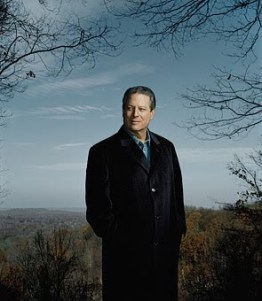




 Millard Fillmore's Bathtub