Creationist fear to debate in the spotlight

July 12, 2007

How can we tell creationists and intelligent design advocates fear debating their ideas with scientists?

Religious kooks send threatening notes to biologists at the University of Colorado.

Other religious kooks contemptibly make excuses for the threats.

– Don’t take my word for it; read the things for yourself, and you decide.

Bug Girl lists several instances of threats against teachers of evolution. The phenomenon is not new, and does not appear to be decreasing (though not rampant, either — thank God).

Vox Day, Pat Sullivan, time to stand up for free debate, civilized answers, and no threats — where are you?


Inexplicable insanity about DDT and Rachel Carson

July 3, 2007

Sheesh! I thought Rep. Rob Bishop, R-Utah, and Sen. Tom Coburn, R-Okla., pretty much took the cake in fanatical ideas close to insanity in the calumny campaign against Rachel Carson. I may have erred.

Please understand, it is important that good people speak up for science, for political sanity, for reason and reality. There are forces of ignorance and evil who willingly fill the information vacuum with excrement, and who thereby pollute political discourse — if you don’t speak up.

Here: Send Sen. Tom Coburn a note, tell him you think he should come to his senses and stop blocking a bill giving a minor honor to Rachel Carson. He needs to do the Christian thing and stand up for truth, for health care, for honesty, you should tell him. Here’s his official message-leaving site.

No, he’s not answered me, either. Swamp him with mail. Or telephone his office: 202-224-5754 (Washington, D.C. office).


Fisking “Junk Science’s” campaign FOR the poison DDT, against Rachel Carson: Point #8, mosquito resistance to DDT

June 29, 2007

This is the second in a series of Fisks of “100 things you should know about DDT,” a grotesquely misleading list of factoids about DDT put up a site called JunkScience.com. While one would assume that such a site would be opposed, this particular site promotes junk science. I’m not taking the points in order.The “100 things” list is attributed to Steven Milloy, a guy who used to argue that tobacco use isn’t harmful, and who has engaged in other hoaxes such as the bizarre and false claim that Compact Fluorescent Lightbulbs (CFLs) can pose serious toxic hazards in your home (and therefore, you should continue to waste energy with less efficient bulbs); and to J. Gordon Edwards, a San Jose State University entomologist who, despite being a great entomologist, was a bit of a nut on some political things; Edwards assisted Lyndon Larouche’s group in their campaign against Rachel Carson before his death in 2004. (Did Edwards actually have a role in the development of this list?)

100 things you should know about DDT

Claim #8. Some mosquitoes became “resistant” to DDT. “There is persuasive evidence that antimalarial operations did not produce mosquito resistance to DDT. That crime, and in a very real sense it was a crime, can be laid to the intemperate and inappropriate use of DDT by farmers, especially cotton growers. They used the insecticide at levels that would accelerate, if not actually induce, the selection of a resistant population of mosquitoes.”

[Desowitz, RS. 1992. Malaria Capers, W.W. Norton & Company]

Cover of The Malaria Capers, by Robert S. Desowitz

Cover of The Malaria Capers, by Robert S. Desowitz

This was what Rachel Carson warned about. Indiscriminate use of DDT, such as broadcast application on crops to kill all insect, arthropod or other pests, would lead to mosquitoes and other dangerous insects developing resistance to the chemical. Of course, resistance developed as a result of overspraying of crops has exactly the same result, in the fight against malaria, as overuse in the fight against malaria.  Cover of The Malaria Capers, by Robert S. Desowitz

Worse, such overuse also killed predators of mosquitoes, especially birds. In an integrated pest management program, or in a well-balanced ecosystem, birds and other insect predators would eliminate a large number of mosquitoes, holding the population in check and preventing the spread of malaria. Unfortunately, when the predators are killed off, the mosquitoes have a population explosion, spreading their range, and spreading the diseases they carry.

Assuming Milloy quoted the book accurately, and assuming the book actually exists, this point says nothing in particular in favor of DDT; but it reaffirms the case Rachel Carson made in her 1962 book, Silent Spring. Contrary to suggestions from the campaign against Rachel Carson, she urged that we limit use of DDT to tasks like preventing malaria, around humans, to preserve the effectiveness of DDT and prevent overspraying.

And then, there is this: Milloy doesn’t bother to quote the first part of the paragraph he quotes, on page 214 of Malaria Capers. Here is what the paragraph actually says:

There were a number of reasons for the failure, not least that the anophaline vector mosquitoes were becoming resistant to the action of DDT both physiologically — they developed the enzymes to detoxify the insecticide — and behaviorally — instead of feeding and wall-resting, they changed in character to feed and then quickly bugger off to the great outdoors. [from this point, Milloy quotes correctly]

In other words, the DDT-based campaign against malaria failed because DDT failed; mosquitoes became resistant to it.  DDT’s declining ability to kill mosquitoes is one of the major reasons DDT use plunged after 1963, and continues to decline to no use at all.

To combat the dastardly campaign of calumny against Rachel Carson and science, you should also read: Deltoid, here, here and here, and the rest of his posts on the topic; Bug Girl, here, at least, and here, and the rest of her posts; denialism, here; and Rabett Run, here.

Save

Save


Japanese-American internment: Statesman-Journal web special

June 29, 2007

Looking for good sources on Japanese internment?

Editor & Publisher highlights the web version of a special series on Japanese internment during World War II, put together by the Statesman-Journal in Salem, Oregon. The series is featured in “Pauline’s Picks,” a feature by Pauline Millard showing off the best use of the web by old-line print publications.

Beyond Barbed Wire, photo by Salem Statesman-Journal

The Statesman-Journal’s web piece is “Beyond Barbed Wire,” featuring timelines, maps of the Tule Lake internment facility (closest to Oregon), stories about Japanese Americans in Oregon, especially in Salem, photos, video interviews, and a significant collection of original documents perfectly suited for document-based studies.

Texas kids test particularly badly in this part of U.S. history. Several districts ask U.S. history teachers and other social studies groups to shore up student knowledge in the area to overcome gaps pointed out in testing in the past three years, on the Texas Assessment of Knowledge and Skills (TAKS). In teacher training, I’ve noted a lot of Texas social studies teachers are a bit shaky on the history.

The Korematsu decision was drummed into my conscious working on civil rights issues at the Senate Labor and Human Resources Committee, and complemented by Constitutional Law (thank you, Mary Cheh) and other courses I was taking at the same time at George Washington University. It helped that Utah has a significant Japanese population and had “hosted” one of the internment camps; one of my tasks was to be sure committee Chairman Orrin Hatch was up on issues and concerns when he met with Japanese descendants in his constituencies in Utah. Hatch was a cosponsor of the bills to study the internment, and then to apologize to Japanese Americans affected, and pay reparations.
The internment was also a sore spot with my father, G. Paul Darrell, who witnessed the rounding up of American citizens in California. Many of those arrested were his friends, business associates and acquaintances. Those events formed a standard against which he measured almost all other claims of civil rights violations.

Because children were imprisoned with their parents, because a lot of teenagers were imprisoned, this chunk of American history strikes particular sympathetic chords with students of any conscience.  Dorothea Lange’s having photographed some of the events and places, as well as Ansel Adams and others, also leaves a rich pictorial history.

(I found this thanks to the RSS feed of headlines from Editor & Publisher at the Scholars & Rogues site.)


Quote of the Moment: Barry Commoner and presidential campaigns

June 19, 2007

Barry Commoner turned 90 on May 28. He is profiled in The New York Times Science section on June 19, 2007 (if your local newspaper has a science section half as good, I’d love to hear about it). Commoner is a plant physiologist and great eminence at Washington University in St. Louis for 34 years, now at Queens College. He was a key informant of public opinion during the rise of ecological awareness in the 1960s and 1970s, probably the nation’s best known “ecologist.”

Barry Commoner on cover of Time, 2-2-1970

In 1980 he helped found the Citizens’ Party, and ran for the presidency their ticket.

He explained to the Times:

The peak of the campaign happened in Albuquerque, where a local reporter said to me, “Dr. Commoner, are you a serious candidate or are you just running on the issues?”

Time Magazine cover from February 2, 1970; Time sells replicas of historic covers.


40 years of Loving — the changes we see

June 15, 2007

1968 propelled history in dramatic fashion, much of it tragic. History teachers might await the 40th anniversary stories of 1968’s events, knowing that the newspapers and television specials will provide much richer material than any textbook could hope for.

Was 1967 less momentous? Perhaps. But an anniversary this week only serves to highlight how the entire decade was a series of turning points for the United States. This week marks the 40th anniversary of the Supreme Court’s issuing the decision in Loving v. Virginia. The Lovings had been arrested, convicted and exiled from the state of Virginia for the crime of — brace yourself — getting married.

Richard and Mildred Loving, Bettman-Corbis Archive

Photo of Richard and Mildred Loving from Bettman-Corbis Archive.

You see, Virginia in those days prohibited marriage between a black person and a white person. So did 15 other states. In language that is quaint and archaic to all but Biblical literalist creationists, the trial judge said:

“Almighty God created the races white, black, yellow, malay and red, and he placed them on separate continents. And but for the interference with his arrangement there would be no cause for such marriages. The fact that he separated the races shows that he did not intend for the races to mix.”

The Lovings appealed their conviction. They appealed to the U.S. Supreme Court. And on June 12, 1967, the Supreme Court of the United States struck down laws that prohibit a person of one “race” from marrying a person of another. (I put “race” in quotes because, as we have since learned from DNA studies, there is just one race among us, the human race. Science verifies that the Supreme Court got it right, as did the Americans before them who wrote the laws upon which the Supreme Court’s decision was based.)

From 1958 to 1967 — nine years the case wended through the courts. Oral argument was had on April 10 — the decision coming down in just two months seems dramatically quick by today’s standards. This was one of the cases that angered so many Americans against the Court presided over by Chief Justice Earl Warren.

Ed Brayton at Dispatches from Culture Wars points to a statement from Mildred Loving on this anniversary. The statement is below the fold. Read the rest of this entry »


GOP war on science victim: Rachel Carson

May 14, 2007

Some people do things that are so stupid that one wonders how they manage to shave or put make-up on the next morning, having to look at their own face.

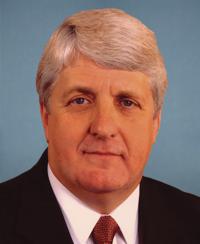
Mugshot of Utah Rep. Rob Bishop

Mugshot of Utah Rep. Rob Bishop

53 Republican representatives voted against naming the post office in Springdale, Pennsylvania, after Rachel Carson, the scientist who wrote Silent Spring, generally considered one of the most important or most influential scientists of the 20th century. No kidding. Springdale is Carson’s hometown.

2007 is the centennial of Carson’s birth — her birthday was May 27. (The bill, H.R. 1434, passed, 334-53.)

Why did the Wacky 53 vote against the honor for Carson, who got the Presidential Medal of Freedom in 1980? In an earnest ritual of voodoo science, they claim that bans on DDT kill millions, and that DDT is harmless. No, I’m not making this uphere’s the story from the Salt Lake Tribune, which covers territory represented by Rep. Rob Bishop and Rep. Chris Cannon, both R-Utah:

They contend that Carson’s actions – which led to a ban on the chemical DDT used to kill pests – actually has caused more deaths because of malaria and other diseases spread by insects. DDT, Carson wrote, was detrimental to the environment and to humans. Some scientists say DDT led to the California condor’s near-extinction.

Read the rest of this entry »


Fighting history hoaxes

May 11, 2007

Daily Kos I don’t get to daily. But here’s a post I did see that all history teachers ought to read, if only to raise their consciousness about the frauds that plague us every day: Help Fight Fake History that Powers the American Right.

Fight fake historyChris Rodda needs help supporting her research against all the old dogs of history revisionism, and the post from Troutfishing goes through most of the dishonor roll: D. James Kennedy, David Barton, Catherine Millard, and Chuck Norris

Rodda’s blog series can be found at Talk2Action.

My interest in getting history done right was kindled when high school teachers mentioned early versions of David Barton’s work — stuff that showed up on tests, though anyone who had read our texts and had a passing knowledge of real history would have known was in error. As a staffer in the U.S. Senate I had to got to read letters from people who bought the Barton tales lock, stock, and monkey barrel, and who consequently felt that everyone else on Earth was lying to them.

I wish Rodda luck.


Get the kids outside

April 20, 2007

It’s almost over for this year, but the lesson plans at the site for National Environmental Education Week don’t have to be done in April only. Texas will have a new beefed up science requirement kick in, in a couple of years. Until then, however, this is a good set of ideas, even for social studies, especially if no other class is delivering the material well.

Environmental protection weaves science — biology, chemistry, geology, meteorology, and more — with applied social studies, especially history, economics and government, to make changes. For younger students studies of recycling can be a lot of fun and give students something to take with them for the rest of the life. Similarly, a study of migratory birds and the policy issues related to them (tall buildings, cellular communications towers, oil well sumps, lights in cities, hunting and the Treaty of 1948, etc., etc.) offers a lot of ways to get kids interested, if not excited, about these so-called dry topics. An advanced class in high school might analyze the Supreme Court decisions that brought down the price of shipping of recycled metals, making recycling economically feasible.

Whatever you do, don’t despair: International Migratory Bird Day is just a couple of weeks away.  Birding is one of the more fun areas one can use in discussions of climate change and global warming; the Roger Tory Peterson Institute of Natural History points the way to good resources.