121st Carnival of Education — School’s out, part I

May 30, 2007

The Education Wonks hosts (host?) the 121sth Carnival of Education — including a nice referral to my post on the voucher wars in Utah.

Franklin HS in Seattle, WA -- Natl Reg of Hist Places

School’s out in much of the nation, and won’t last much longer in the rest (except for full-year schools). It’s a good time to reflect on what worked, what didn’t, and what to change for next year. I was especially intrigued to learn that Mr. Teacher of Learn Me Good teaches in Dallas — close by, somewhere. One wonders how an alternative certification sneaked through the human resources shredder of the Dallas ISD to get a job, and one hopes it may show a trend; and then one wonders why DISD doesn’t pay more attention to the obvious success of the guy and go back to that alternative certification well. (HR departments in Texas school districts have reputations that they really don’t like alternative certification, even when the teachers work out well; one more indication that we don’t know what the heck we’re doing in education. My experience suggests the reputation is well-earned.) [See comment on alternative certification by Mr. Teacher, below.]

There is much, much more in the carnival. The Carnival of Education is an outstanding example of what blog carnivals can be — useful packages of information, summaries of the field they cover. Spread the word.


West High best in Utah

May 28, 2007

West High School, Salt Lake City, Utah

Main entrance to West High School, Salt Lake City, Utah. Wikipedia image

I coulda told you that. It’s my mother’s high school. (Class of ’32)

(My old school, Pleasant Grove High, didn’t make the list.)


Listen to your teachers . . . you politicians

May 26, 2007

Long-time friend John Florez erupts at the Deseret News in Salt Lake City from time to time.  Back on April 2, when the Utah legislature was still wrestling with vouchers, a budget surplus and a vastly underfunded education system, Florez had some gentle advice to policymakers everywhere:  “Policy makers must heed teachers’ views.”

      Politicians ought to listen to what the teachers think is needed to improve education. For starters, they want smaller class sizes and an environment that gives them the opportunity to do the most important thing: challenge and motivate students to learn. One wrote that after 30 years of teaching he has “…discouraged … nieces and nephews from taking up the career. What a shame when there is so much possible with all these young minds.” Another wrote that her school had a student teacher quit halfway through, frustrated because the students wouldn’t work; phoning parents resulted in getting an earful, and the principal made little effort to back her up.
The following year, the school had an opening so they phoned her “…to see if she wouldn’t try again at our school.” The reply: “Thank you, if I ever came back it would be there, but never. I have a job now with great opportunities to grow and a great working environment.”

But, John — would better working conditions really help pass the standardized tests?

Some principals and administrators of which I am aware haven’t found the sign yet, but would put it up if they had it:

The daily floggings of staff will continue until morale improves!

They wouldn’t mean it as the joke it was originally intended; or even if they did, the staff would know differently.


Utah voucher fight: Ball of confusion

May 25, 2007

It’s not clear who will win in the bloody vouchers war going on in Utah — it’s only clear that, once again, public education, students and teachers, lose.

Utah’s legislature, a bastion of Republican conservatism in the last decade or so, passed a voucher bill in its just-ended regular session. Conservative legislature, conservative governor — a law authorizing vouchers is what should be expected these days, no? What the advocates of vouchers failed to take into account has made this quite a drama.

Utah’s voters don’t like vouchers much, but love their public schools a lot.

So, the Utah state board of education opposed the measure. A hint of graft in existing alternatives to public schools angered many citizens. Opponents pointed to, among other things, the possibility that vouchers would vacuum funding from public schools — Utah is already dead last in per-pupil spending in the U.S.

It’s turned into a real donneybrook. [Bloody details below the fold.] Read the rest of this entry »


Carny barking today: Education, git yer education here!

May 23, 2007

Another of my favorite blogs, I Thought A Think, hosts the 120th Carnival of Education this week. Graciously, ITAT included Millard Fillmore’s Bathtub — part of the sideshow or part of the midway, I’m not sure. But I’m grateful. The link is to my post on the Internet Archive features on tobacco, and the Flintstones promoting Winston cigarettes.

Interesting that the Carnival of Education cites the post on tobacco in the Internet Archive, and not the post on education reform in the same archive.

Sketch of Flintstone School, Flintstone, Maryland

Sketch of the Flintstone Elementary School, Flintstone, Maryland (Allegany County Public Schools)


Mining the Internet Archive: Education reform

May 22, 2007

Do we use enough different media in our classrooms?

In my continuing search for sources of useful and inspiring video and audio stuff, I keep running into the Internet Archive. A few of Dorothy Fadiman’s thought-provoking films can be viewed there, including this one some of us may recall from past PBS broadcasts, which features nine schools that appear to work well: “Why Do These Kids Love School?” (1990)

Now I have two questions: First, since 1990, how have these schools fared? Second, since 1990, have we learned anything really significant about how students learn that would change our views of what goes on in these schools?


Where are your student blogs?

May 19, 2007

While you’re wondering about how to get your podcast going, have given much attention to getting your students blogging?  Student blogging is a great classroom tool, to generate interest, and to help gauge progress.  Here’s one from fifth graders, on science:  Steve Spangler.

Let me also mention this site, The Living Classroom, which shows how blogging can be integrated into a great program for very young students — kindergarten, first grade, etc.


Notes from the Sub Terrain: Drafting class

May 18, 2007

[Another in an occasional series of stories from a substitute teacher.]

In the days prior to the Civil Rights Act of 1964 (and for many years after, really), in our district every 7th grade male took wood shop, and every female took home economics.  The wood shop course included a half year of drafting.   Shop courses continued annually after that for anyone so inclined, and a lot of people were. 

In our not-yet-suburban community, the skills of using high power tools were highly prized.  Every male was expected to know how to bend metal, use a torch or electric welder.  Farm kids were expected to know how to castrate sheep, turn a calf that started down the birth canal the wrong way, put crude shoe on a horse in an emergency when the farrier was too far away. 

Houses came with as few as two bedrooms.  Every man was expected to be able to plan out the additions as the babies came, and build the things – laying out the plans, getting the permits, calculating the lumber required, laying the foundation, wiring and plumbing as necessary, putting up the lath and plaster, or later, dry wall, making the trim, laying carpet or tile, painting and finishing.

Kids in Texas can take a shop course or two in high school, but especially under the scheme of the No Child Left Behind Act, the skills of drawing up plans for a room or a chest of drawers, and executing the plans, are skills of little regard. 

Drafting was always fun, though.  The architect’s rule, protractor and S-curve were exotic tools, and we took great pride in mastering their use.  Shop instructors usually had  story or two about George Washington as a surveyor, and Thomas Jefferson as inventor. 

Drafting is still fun, but it’s a different course completely.  The course is all electronic.  The drafting room is cool to keep the computers cool, and the software is fantastic.  Drawings are printed out on 3-foot-wide sheets of paper by large ink-jet printers that make a graphic display-oriented teacher salivate.  When I lamented the lack of the tools we had used, the kids said that they had spent several weeks using them at the start of the year – and then they switched to computers.  They said it was the difference between horse and buggy and jet airplanes. 

About half-way through the first block, a student came in with a note from another class.  His teacher said he’d finished his work there, and he was free to do drafting.  He booted up a machine, spent about 20 minutes in furious action completing a blueprint for a building.  With about 15 minutes left in the class, he hollered to another student across the room that the student had pulled a dirty move.  Immediately five or six others commented on it – and it became clear they were deep into a group role play game.  Hard work, then hard play.

As with the basketball class, discipline was no problem.  The students, with savvy that  made it look easy, took care of the class details.  Their own discipline got them through work they claimed to be fun, and then they moved on to what would be distracting frivolity, had they not completed everything else first. 

A lesson in motivation is buried there, somewhere.


Carnival still in town? We didn’t miss it?

May 13, 2007

History Carnival 52 was up on May 1 at Clioweb. What sort of a fog have I been in? Check out especially this post at Food History, demonstrating several uses of critical thinking tools as they might analyze the bizarre idea that most meat in Middle Ages Europe was rancid, thereby leading to a rise in the use of spices. Spices don’t make up for stomach cramps, for example. There must be some sort of critical thinking exercise in there for a world history class.

Carnival of the Liberals 38 came online earlier this week, at This Is So Queer. With fires raging in the hills around Burbank — documented with eerily beautiful photography — a fire of war in Iraq, and a fire around the Second Amendment, posts collected at the carnival offer fuel for intellectual fires on big issues.

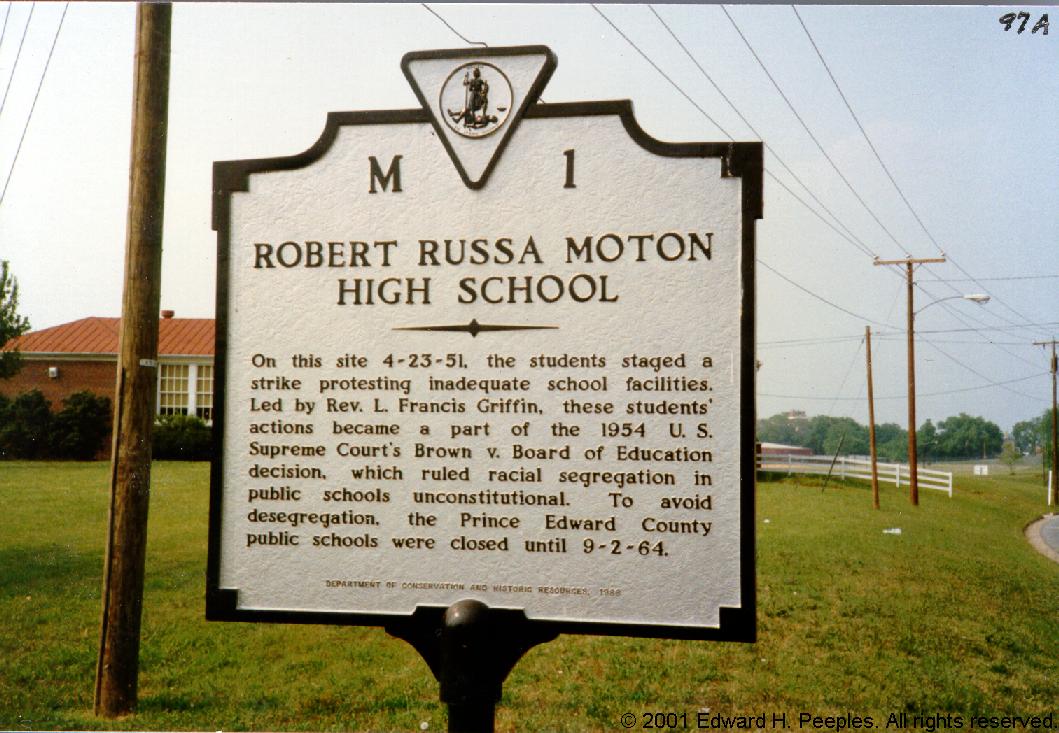
Moton HS historical markerAnd, the venerable Carnival of Education, issue 118, was up earlier at NYC Educator, with good posts on laptops in school, parenting, administering, enduring, and everything else related to education. (Click on the photo for a larger image — it’s the historical marker at the former Robert R. Moton High School, in Prince Edward County, Virginia — where one of the most poignant of the cases against school segregation began, Davis vs. Prince Edwards County Schools — part of the Brown vs. Topeka Board of Education case decided in 1954. Photo from Virginia Commonwealth University.)

Carnival of Homeschooling 71 lolls, at On The Company Porch.

And, of course, if you wish to nominate a post for the next Fiesta de Tejas!, scheduled for June 2, just use this button:


Blog Carnival submission form - fiesta de tejas!

Have a good Mother’s Day — call all the mothers you know. Why be picky?


Inherent evils of public education

May 11, 2007

Public schools have serious problems.  Regular readers here should know me as a defender of public education, especially in the Thomas Jefferson/James Madison model of a foundation stone for a free people and essential tool for good government in a democratic republic.

Can you take another view?  Here’s one that should offer serious material for thought:  How the Public School System Crushes Souls.

Tip of the old scrub brush to Pick the Brain.


Up to our ears in carnivals

April 19, 2007

Weren’t we here just a few days ago?  In the last week, for sure.

The 115th Carnival of Education is up at DY/DAN.

Look for Fuji Bucks.  Look for selection processes for advanced classes.  A lot of very good stuff.

Image:  Horace Mann School, 1st Grade Class, 1923

Which Horace Mann?  Oh, Saline County, Illinois.  Seriously, how many Horace Mann Schools can there be in America?  Anyone have a clue?


Call for contributions: Fiesta de Tejas!

April 19, 2007

We have a couple of sterling contributions for the next Fiesta de Tejas!

More. We should have more submissions. Texas is a big state, with a lot of people, and a lot of entertaining history. We need more entries. Deadline for entries is end of day April 30, 2007 — I’m looking to publish on May 2.

You may e-mail entries to me at edarrellATsbcglobalDOTnet, or you can take advantage of the Blog Carnival entry form, which has the advantage that it makes copies to keep the thing going should I get hit by a speeding Indian Motorcycle on its way from Fort Worth to North Carolina. If you blog, too, please feel free to pass this call for submissions along to your readers.
Blog Carnival submission form - fiesta de tejas!

Last issue was the wildflower issue, but if you have photos of Texas wildflowers you would like to submit, please feel free to do that, too.

Pecan Tejas95a, from Texas A&M -- commercial since 1973 Pecan Tejas 95a, cultivar created at Texas A&M University in 1945, first fruited in 1949, released commercially in 1973.

Fiesta de Tejas! is a blog carnival celebrating Texas, Texas history and Texana. This blog focuses on education and social studies (though the focus wanders a bit sometimes). If you wonder whether a particular post might be useful to the Fiesta de Tejas!, simply ask whether you think more Texans ought to know about, especially Texas social studies teachers.

Whaddya know about Texas? Share it.


Carnival catch-up

April 16, 2007

Uh-oh. Running behind.

One of the reasons I list various carnivals is to make sure I have a note of the good ones somewhere easy to find. Busy-ness in the last week just kept me away from the keyboard.

Carnivals you ought to check out:

Oekologie 4.1: Over at Behavioral Ecology. Lots on climate change, of course, and some very nice bird photos.

Carnival of the Godless at Neural Gourmet has a good run down of the Blog Against Theocracy, and complaints about it, too.

Carnival of the Liberals #36 is up at Truth in Politics. Well, that’s an obvious pairing. Free speech, the president and the Constitution, tyranny in the Middle East, and quite a bit more.

Carnival of Education #114 is back at The Education Wonks.  State legislatures may be wrapping up their sessions, but education issues are heating up.

Skeptics’ Circle #58 finds a hangout at Geek Counterpoint, with several posts that get at how we know what is true — good stuff for historians and economists to ponder.

This is as good a time as any to remind you that that Fiesta de Tejas! #2 is coming up on May 2 — deadline for  post nominations April 30.  You may e-mail entries to me (edarrellATsbcglobalDOTnet), or submit them at the Blog Carnival portal to the Fiesta.


Last call for Texas history carnival, Fiesta de Tejas!

March 31, 2007

Today’s the last day to nominate your post, or another’s post, for the inaugural (and we hope not last) Fiesta de Tejas! blog carnival of Texas history and other things Texan.

Texas relief map from geology.comSend the good stuff! You can send it through the Blog Carnival entry site for Fiesta de Tejas! (which is a good idea, since it saves copies), found here, or send it to me directly at edarrell AT sbcglobal DOT net.

Map image: Texas relief map from Geology.com


Carnivals! Education, liberals . . .

March 30, 2007

Ecole des Beaux-Arts

. . . what’s the difference?

The Education Wonks host Education Carnival 112.

Lots of carnivalia at Framed: Discourse & Democracy, with Carnival of the Liberals #35.

And, while we’re at it, one of my favorite blogs hosts the 57th Skeptic’s Circle, at Aardvarchaeology. It’s well worth a browse. Brain learning, how do we tell what’s accurate, etc.

Photo: Ecole des Beaux-Arts, Paris