Mike Luckovich on Texas education board gutting social studies standards, March 18 or 20, 2010 - Atlanta Journal-Constitution
I found this brilliant Mike Luckovich cartoon from March 18, just in time for the anniversary of Paul Revere’s ride, and the anniversity of Longfellow’s poem, “Paul Revere’s Ride.” What will SBOE members be reading for poetry to their kids, on April 18?
Spread the word; friends don't allow friends to repeat history.
But of course, we studied the Civil War in our U.S. history classes last fall, in the first six weeks, as a review of what the students were supposed to get in 8th grade.
In your classroom, how do you deal with anniversaries when they are out of the current course of study? How have you seen it done well?
The Surrender, by Keith Rocco – image from National Park Service, via Pillar to Post
Tomorrow, April 14, Mission Specialists Dottie Metcalf-Lindenburger is scheduled to talk with students at Eastern Guilford High School in North Carolina, and all of the 71,000 students in Eastern Guilford School District.
Caption from NASA: STS-131 Mission Specialist Dorothy Metcalf-Lindenburger, attired in a training version of her shuttle launch and entry suit, poses for a photo prior to the start of an ingress/egress training session in the Space Vehicle Mock-up Facility at NASA's Johnson Space Center. Photo Credit: NASA
Metcalf-Lindenburger is one of three teachers selected in 2004 as astronauts. NASA is committed to help education out. After the Challenger disaster, and the death of “teacher in space” Christa McAuliffe, NASA finally determined to make teachers into astronauts rather than fly “civilians.”
Haley Miller
Guilford Public Schools, Guilford, N.C.
336-370-3200 millerh3@gcsnc.com
April 12, 2010
MEDIA ADVISORY : M10-048
Orbiting Space Shuttle Astronauts — Including Former Teacher — Call North Carolina Students
WASHINGTON — Astronauts orbiting 220 miles above Earth will speak with students in Gibsonville, N.C., on Wednesday, April 14. The call with the students and space shuttle Commander Alan Poindexter and Mission Specialists Dottie Metcalf-Lindenburger, Stephanie Wilson and Clay Anderson will take place at 1:06 p.m. EDT at Eastern Guilford High School in Gibsonville.
Eastern Guilford High School is hosting students from Eastern Guilford Middle School, Gibsonville Elementary, McLeansville Elementary, Rankin Elementary and Sedalia Elementary for the downlink. The school also will broadcast the event to the entire Guilford County Schools district, which serves more than 71,000 students.
The astronauts launched Monday, April 5, aboard space shuttle Discovery from NASA’s Kennedy Space Center in Florida. During the 13-day mission to the International Space Station, the crew will deliver science experiments and supplies; take three spacewalks to switch out a gyroscope on the station’s truss, or backbone; install a spare ammonia storage tank and return a used one; and retrieve a Japanese experiment from the station’s exterior.
Metcalf-Lindenburger is one of three teachers selected to fly as shuttle mission specialists in the 2004 Educator Astronaut Class. She operates the shuttle’s robotic arm. Without robotics, major accomplishments like building the station, repairing satellites in space and exploring other worlds would not be possible.
Students have been preparing for the downlink by conducting NASA engineering design challenges and implementing agency robotics resources and activities into K-12 classrooms. A science, technology, engineering and math, or STEM, club was organized to increase participation and interest, particularly by female students.
The school’s guidance department also is collaborating with local universities to help students investigate and explore STEM opportunities beyond graduation. During follow up in-district workshops in April and May, a NASA Aerospace Education Services Program specialist will demonstrate how to access and use NASA resources in K-12 curricula.
Eastern Guilford High School employee Michael Woods, a former Aerospace Education Services Project specialist at NASA’s Goddard Space Flight Center in Greenbelt, Md., and the agency’s Langley Research Center in Hampton, Va., is leading the downlink effort. In December 2009, NASA awarded Guilford County Schools a two-year grant of nearly $1 million to help middle and high school teachers develop science lessons using the space agency’s content.
The event is part of a series with educational organizations in the U.S. and abroad to improve teaching and learning in science, technology, engineering and mathematics. The in-orbit call is part of Teaching From Space, a NASA project that uses the unique environment of human spaceflight to promote learning opportunities and build partnerships with the kindergarten through 12th grade education community.
NASA Television will air video of the astronauts during the downlink. For NASA TV downlink, schedule and streaming video information, visit:
Here’s another opportunity to put real, cutting edge technology in your classroom. In fact, your kids could probably invent all sorts of new uses for it.
Have you even heard of this stuff? Can you use it, live, with the equipment you’ve got?
Blaise Aguera y Arcas of MicroSoft demonstrated augmented-reality maps using the power of Bing maps, Flickr, Worldwide Telescope, Video overlays and Photosynth, to an appreciative and wowed audience at TEDS:
My prediction: One more advance in computer technology that classrooms will not see in a timely or useful manner.
But have you figured out how to use this stuff in your geography, history, economics or government classes? Please tell us about it in comments. Give examples and links, please.
Pulitzer Prize-winner Tom Toles in the Washington Post, March 19, 2010
It’s pretty embarrassing when the State Board of Education’s actions leave Texas open to jokes about whether Texans remember the Alamo. Remembering the Alamo is as much a Texas monument or icon as anything else — maybe moreso.
Tom Toles demonstrates why Texas should be embarrassed by the Texas State Board of Education’s work on social studies standards.
Spread the word; friends don't allow friends to repeat history.
Clay Bennett, Chattanooga Times-Free Press, March 16, 2010
Bennett remains one of my favorite cartoonists today. His work is incisive, intelligent, and persuasive to the side of reason and light almost all of the time. Why hasn’t he won a Pulitzer yet?
Bennett is generally a powerful supporter of U.S. education; see the two other recent cartoons, below the fold.
Ben Sargent, Austin American-Statesman (GoComics) March 17, 2010
(I first saw a Ben Sargent cartoon published in the Daily Utah Chronicle in about 1974. 35 years of great stuff from that guy. He officially retired from the Austin American-Statesman in 2009, running one cartoon a week now.)
David Elkind of Tufts wrote in the New York Times about the trend to getting recess coaches. It’s probably much better than killing recess altogether, but still problematic, don’t you think? Elkind said:
We have to adapt to childhood as it is today, not as we knew it or would like it to be. The question isn’t whether recess coaches are good or bad — they seem to be with us to stay — but whether they help students form the age-old bonds of childhood. To the extent that the coaches focus on play, give children freedom of choice about what they want to do, and stay out of the way as much as possible, they are likely a good influence.
In any case, recess coaching is a vastly better solution than eliminating recess in favor of more academics. Not only does recess aid personal development, but studies have found that children who are most physically fit tend to score highest on tests of reading, math and science.
Night out for the boys — well, for Kenny and me — while Kathryn had some of the girls over.
Kenny introduced me to a Dallas sushi venue, Asian Mint. His appearing-to-be deep-fried Texas Roll was a pleasant, crunchy blend of oriental and Texas. The mango sauce added a sweet smoothness. My more standard tuna came with a little internal heat — the wasabi perfectly blended (Kenny is the one who doesn’t like horseradish heat, having somehow missed that gene from my grandfather).
We closed off the night at Half-Price Books, at the store on Northwest Highway fans and employees fondly deem “the mother ship.” (Years ago, across the street to the east, the store was in an old, converted restaurant which had a pirate’s ship inside; the store kept the ship as a kids’ reading area. Was that the origin of “mother ship?”)
Books? Today?
I don’t read enough. 20 years ago I found a study that said if you read one book a month, 12 books a year, you’re in the 99th percentile of readers.
The coffee mug with Einstein on it says “Coffee makes me smart.” Kenny, our family’s most-tech savvy early-adopter — a high commendation in a family where Mom and Dad have been in computers since mainframes were the way to go — agreed that it’s more likely books that make us smart. We don’t read enough, but we stay in the 99th percentile.
What an easy, easy way to get ahead! Get a book: Read it.
Michael D. Green, the real estate impresario for Murray Hill who formerly headed the Louis August Jonas Foundation when I had so much fun there, used to say that he was not educated, but he read the book reviews. Reading the book reviews would be better than not knowing. At a Manhattan cocktail party he could hold his ground with just about anyone. I’ve never found a topic on which he didn’t know something, usually cutting-edge. His book recommendations are always epiphanies.
George Clayton pulled a dramatic upset in the March primary elections, for one of Dallas’s two seats on the Texas State Board of Education. He defeated incumbent, long-time conservative-but-not-always-crazily-so Geraldine Miller.
With no Democratic opposition in November, he just has to wait until January to take his seat.
With these new Social Studies TEKS, TX students won’t know what such a
book is about.
Small bit of humor from a truly sad situation. One of the leaders of the Texas State Soviet of Education defended the evisceration and defenestration of social studies standards saying they didn’t need to listen to liberal college professors.
In economics, the professor was a conservative, well-respected economics professor from Texas A&M University, one of the most conservative state universities in the nation (with a Corps of Cadets numbering in the thousands and tradition deeper than Palo Duro Canyon and broader than the Gulf of Mexico). Calling these people “liberal” is tantamount to complaining about the communism espoused by Ronald Reagan and Dwight Eisenhower — that is, it demonstrates a divorce from reality and rationality.
In the grand scheme of things it’s not a huge problem, but it’s more than a trifle. It’s difficult, if not impossible, to fully comprehend market economics in the U.S. without understanding what capitalism is, and how it works. Teachers will be left to find their own materials to explain “free enterprise” and, if the students ever make it into a real economics course in college, they will discover “free enterprise” is a quaint, political term that is not discussed in serious economics circles. Texas students will, once again, be pushed to the hindmost by Don McLeroy’s odd views of America and what he doesn’t want Americans to know.
For example, look at the Council for Economic Education — while “capitalism” is not the only word they use for market-based economies, you’ll have a tougher time finding any definition of “free enterprise.” Or, more telling, look at the Advanced Placement courses, or the International Baccalaureate courses. AP and IB courses are the most academically rigorous courses offered in American high schools. The Texas TEKS step away from such rigor, however (while the Texas Education Agency rides Texas schools to add rigor — go figure). IB courses talk a lot about enterprise, but they don’t censor “capitalism,” nor do they pretend it’s not an important concept.
At the very conservative and very good Library of Economics and Liberty (which every social studies teacher should have bookmarked and should use extensively), a search for “free enterprise” produces 77 entries (today). “Capitalism” produces almost ten times as much, with more than 750 listings.
Which phrase do you think is more useful in studying American economics, history and politics?
Teachers will deal with it. It’s one more hurdle to overcome on the path to trying to educate Texas students. It’s one more roadblock to their learning what they need to keep the freedom in America.
Capitalism - Warren Buffett - BusinessWeek image
Free Enterprise - Bernie Madoff
The real difference? Literature on capitalism frequently address the issue of moral investments, and the need for some regulation to bolster the Invisible Hand in producing discipline to steer markets from immoral and harmful investments. The essential history politics economic question of the 20th and 21st centuries is, can economic freedom exist without political freedom, and which one is more crucial to the other? We know from every period of chaos in history when governments did not function well, but bandits did, that free enterprise can exist without either political freedom or economic freedom. I think of it like this:
Capitalism
Free Enterprise
Adam Smith
Blackbeard the Pirate
Warren Buffett
Bernie Madoff
Investing
Spending
Building institutions
Taking profits
Retail
Robbery
Wholesale
Extortion
Save for a rainy day
debt-equity swap
Antitrust enforcement to keep markets fair
Don’t get caught, hope for acquittal
Milton Friedman
P. T. Barnum
Ludwig von Mises
Charles Ponzi
Friedrich von Hayek
Richard Cheney, “deficits don’t matter”
Paul Krugman
Kato Kaelin
Stockholders
Victims and suckers
Spread the word; friends don't allow friends to repeat history.
“America. A country where people believe the moon landing is fake, but wrestling is real.”
And now we can add even more captions:
A country where state curriculum officials go to churches that warn against belief in ghosts, but who believe Thomas Aquinas and John Calvin came back from the grave to wrestle the quill from Jefferson and write the Declaration of Independence.
[Heh. Wouldn’t you love to see Aquinas and Calvin in the same room, trying to come to agreement on anything?]
A country with Barack Obama as president and where women’s basketball is a joy to watch during March Madness thanks to the the Civil Rights Act of 1964 Title IX, but Cynthia Dunbar believes the Civil Rights Act itself was a mistake.
A country where Barbara McClintock did the research that showed how evolution works and won her a Nobel, but where Texans deny that a woman should do such work, and deny evolution.
A capitalist nation where Jack Kilby invented the printed circuit and had a good life, but where the Texas SSOE thinks “capitalism” is a dirty word.
(No, ma’am, I couldn’t make that up. They did it. They took out the word “capitalism” because they say those “liberal economists” like Milton Friedman can’t be trusted. Seriously. No, really. Go look it up.)
Home of Thomas Jefferson, whose words in the Declaration of Independence so sting tyrants and dictators that today, in the most repressive nations, even oppressive systems must pretend to follow Jefferson — hence, the “Peoples Republic of Korea,” “the Democratic Republic of the Congo,” “Peoples Republic of China,” and the provisions of the old Soviet Union’s Constitution that “guaranteed” freedom of speech and freedom of religion; but where Thomas Jefferson is held in contempt, and John Calvin and Thomas Aquinas claimed as the authors of American freedom. [I wonder what the Society of the Cincinnati have to say about that?]
Where Mark Twain’s profound, greatest American novel Huckleberry Finn made clear the case against racism and oppression of former slaves, but where school kids don’t read it because their misguided parents think it’s racist.
A nation where conservatives complain that the Supreme Court should never look at foreign laws for advice, wisdom, or precedent, but believe that Thomas Aquinas, a Dominican friar from Italy, and John Calvin, a French dissident who fled to Switzerland, pulled a religious coup d’etat and is infamous for executing people who disagreed with his religious views, wrote the Declaration of Independence.
I’ll wager there are more, more annoying, more inaccurate statements from the Texas SSOE members in the Texas Education Follies, which will make much briefer complaints and better bumper stickers.
Other posts at the Bathtub you should read, mostly featuring Ms. Dunbar:
Or, until that account is unsuspended by the forces supporting Donald Trump: Follow @FillmoreWhite, the account of the Millard Fillmore White House Library
We've been soaking in the Bathtub for several months, long enough that some of the links we've used have gone to the Great Internet in the Sky.
If you find a dead link, please leave a comment to that post, and tell us what link has expired.
Thanks!
Retired teacher of law, economics, history, AP government, psychology and science. Former speechwriter, press guy and legislative aide in U.S. Senate. Former Department of Education. Former airline real estate, telecom towers, Big 6 (that old!) consultant. Lab and field research in air pollution control.
My blog, Millard Fillmore's Bathtub, is a continuing experiment to test how to use blogs to improve and speed up learning processes for students, perhaps by making some of the courses actually interesting. It is a blog for teachers, to see if we can use blogs. It is for people interested in social studies and social studies education, to see if we can learn to get it right. It's a blog for science fans, to promote good science and good science policy. It's a blog for people interested in good government and how to achieve it.
BS in Mass Communication, University of Utah
Graduate study in Rhetoric and Speech Communication, University of Arizona
JD from the National Law Center, George Washington University


 Posted by Ed Darrell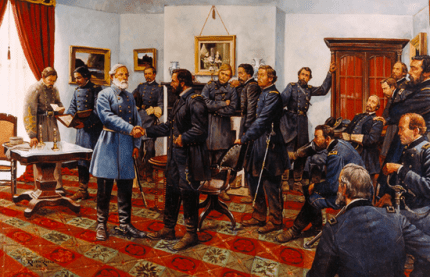





 Millard Fillmore's Bathtub