New Texas science education source, Teach Them Science

January 15, 2009

Joint project of the Clergy Project and the Center for Inquiry, Teach Them Science debuted on-line just a few weeks before the next round of science curriculum decisions by the State Board of Education.

Science education is at risk in Texas and across the country.
If you are a parent, educator, or concerned citizen, the information on these pages will help you understand the importance of a 21st Century science education. Particularly important in the 21st Century is a scientific understanding of evolution. These pages will also show you how you can help in Texas.

Center for Inquiry and The Clergy Letter Project are secular and religious communities who have come together to protect our children’s future in science. We call on you to help defend science education.

Joe Lapp, who I know through Texas Citizens for Science, played a big role in getting this site up and running.  Go look.  Pass the link on to all the science teachers you know, especially in Texas.

(Go see this wonderful, wry photo by Ralph Barrera of the Austin American-Statesman.)

Tip of the old scrub brush to Texas Citizens for Science.


And you thought your school is a lousy place to work . . .

January 11, 2009

NYC Educator tells the story:  Teachers, denied parking permits, park on the street — legally.

School day starts.  City crews show up, post brand new “no parking signs.”

Cops show up.  Cops ticket teachers’ cars.

$150 to park for the day.

Do you love education?  Do you support teachers?  Write to New York City Mayor Michael Bloomberg.  Tell him to investigate, and to establish justice:

You may contact me directly by writing, calling, faxing or e-mailing:

Mayor Michael R. Bloomberg
City Hall
New York, NY 10007
PHONE 311 (or 212-NEW-YORK outside NYC)

FAX (212) 788-2460

E-MAIL:
http://www.nyc.gov/html/mail/html/mayor.html

I hope you will visit NYC.gov regularly as we continue to update the site with information about new happenings throughout New York City.

Sincerely,

Good teachers leave education every day.  When I talk to them about it, these little insults boil up, and boil over.  The small insults add up.  These are the things that, left uncorrected, hammer away at the foundations of education.  Does New York respect teachers, and want good schools?  Let New York show it.


Stu’s Double Jeopardy – classroom quiz tool

January 6, 2009

A few teachers resist technology with everything they have.  Several years ago I ran into a history teacher who had a “Jeopardy” style quiz on PowerPoint, for one chapter of Texas history.  She loved it.

But that one quiz was all she had.  I got a copy of it, did a quiz for the next chapter by simply replacing the questions and answers, and passed it back to her.  She treated me as if I had done some magic incantation and filled the room with smoke.  It had not occurred to her that she had it in her power to use the template to make her own quizzes.

Along comes Stu Hasic, with more computer moxie than I, to create Stu’s Double Jeopardy.  He assumes you want to make your own quizzes, and he’s got a few add-on tools and instructions to make it easier.

Go explore his blog, download the quiz tools, and put them to use.  Will you report back here how it works for you?  Thank you.


Teaching evolution is good for business

January 4, 2009

Do you remember this study, the “2008 Massachusetts Life Sciences Super Cluster report?” This goes to the heart of the business issue in biology education:  Can a state have a thriving life sciences sector when it teaches against such industries in public school science classes?

Life sciences is a major contributor to the economy of Massachusetts.  These reports document the contributions, and tell what needs to be done to keep the successes flowing.

This report confirms the testimony to the Texas State Board of Education by Andy Ellington, in the current rounds of science curriculum rewrites — Texas needs to boost its science education achievement, not hobble it with weak academics.  Here’s the press release:

Sector Driving Job Growth, Contributes $8.8 billion to State’s Economy

The Massachusetts life sciences “Super Cluster” continues to change the face of medicine by driving research innovation, but it faces increasing competition for talent and funding from other states and countries, according to the 2008 Massachusetts Life Sciences Super Cluster report, released today by PricewaterhouseCoopers, the New England Healthcare Institute, the Massachusetts Life Sciences Center, Xconomy and the Massachusetts Technology Collaborative.

The Massachusetts Biomedical Initiatives organization has estimated that the life sciences sector contributes approximately $8.8 billion annually to the Massachusetts economy. Behind the related industries of healthcare and education, the life sciences industry is a powerful driver of job growth in Massachusetts, directly employing 77,247 people, according to the Bureau of Labor Statistics Quarterly Census of Employment and Wages and PricewaterhouseCoopers’ analysis. Its workforce grew eight percent in the five-year period between 2001 and 2006 while the entire Massachusetts workforce shrunk by 2.5 percent in the same period.

Massachusetts has a high concentration of life sciences assets in close proximity, including academic medical centers, researchers, entrepreneurs, venture capitalists, and biotechnology, medical device and pharmaceutical companies. While the report highlights the region’s strength, it also says there are signs that industry and government may need to work harder to protect the state’s pipeline of innovation and ensure Massachusetts long-term success in life sciences.

Despite the fact that Massachusetts receives more funding from the National Institutes of Health on a per capita basis than any other state, NIH grants to Massachusetts researchers declined for the first time in 2006, and in 2007 were at their lowest level in three years, according to the report. Nationally, NIH funding has not kept pace with inflation for the past five years, and if this trend continues, the report states, it could hit particularly hard in Massachusetts, whose young researchers have served as a wellspring of ideas and products for the rest of the industry.

The 2008 Massachusetts Super Cluster report includes the personal perspectives of some of life sciences industry leaders from Massachusetts and findings of a survey of 147 industry executives from Massachusetts life sciences organizations. The report also raised some concerns about whether Massachusetts companies will be able to continue to mine its strengths in research and commercialize the ideas coming out of the state’s laboratories. According to the findings in the survey:

* With federal research funding falling behind the rate of inflation in recent years, nearly half of respondents (44%) said that a lack of funding for collaborative efforts was the factor that had the biggest negative impact on cooperation between institutions.
* Only one in four survey respondents (27%) rated the Commonwealth’s venture capital firms as strong in their “willingness to fund radically new ideas.”
* Just one in four respondents (28%) from life sciences companies said their own organization is “effective” at spinning off or commercializing new ideas that do not fit its core mission or business lines.

“A key takeaway from the report is that while Massachusetts has world renowned scientists and researchers and is positioned to thrive in an environment that places a premium on innovation, making the jump from pure research to marketable products will require strengthening the partnerships among universities, teaching hospitals, life sciences companies and venture capitalists,” said James Connolly, PricewaterhouseCoopers partner and New England life sciences assurance practice leader.

“Massachusetts has a tradition of innovation in the life sciences that has produced a true Super Cluster of talent. However, we must build on the strength of this Super Cluster, because the future of our economy depends on it. That is why the Governor proposed a 10-year, $1 billion investment package to assist the private sector, academia and the research community in working together to reaffirm the position of the Commonwealth as the international home of the life sciences,” said Daniel O’Connell, Massachusetts Secretary of Housing and Economic Development.

The survey respondents see Massachusetts researchers excelling in several of the most promising areas in the life sciences during the coming decade. More than a quarter (27%) cited convergent technologies, such as drug-device combinations, as being the area in which the Commonwealth is most likely to excel, followed by biologic products (21%) and personalized medicine (19%). Other highlights of the 2008 Massachusetts Life Sciences Super Cluster Survey:

* While nearly three in five respondents (58%) are based in the Boston-Cambridge area, notable concentrations of life sciences researchers and companies are emerging in the Lowell, Lexington-Waltham and Framingham-Marlborough areas.
* Seven in 10 respondents (71%) said it was important for them to be in the Massachusetts Super Cluster, in close proximity to other life sciences firms.
* More than half (51%) said that the ability to just “run into” people has resulted in a business opportunity or research collaboration.

“Talent attracts talent, and success breeds success,” said Dr. Wendy Everett, president of the New England Health Care Institute. “This clustering brings enormous benefits to the organizations and communities involved, such as ease of collaboration. That is why it is so important to maintain the momentum that the Massachusetts Super Cluster has made possible.”

When asked what would cause them to consider leaving Massachusetts, surprisingly, fewer than eight percent cited the commute to work. One-quarter of respondents cited “pay” and four in 10 said “lifestyle.” Each of these factors has been raised as a concern by employers attempting to recruit and retain workers in Massachusetts.

In spite of their concerns about the life sciences industry, the survey respondents looked to the future optimistically:

* More than half (55.1%) said that job opportunities in the Massachusetts Super Cluster would strengthen during the next decade, and an additional 35.9% said they would stay the same. Only nine percent thought that the life sciences job market would weaken.
* Seven in 10 (69.6%) were confident that, if they lost their job today, they could find an opportunity in Massachusetts at an equivalent or higher level.
* Two-thirds of respondents (66.2%) consider themselves to be entrepreneurs, and an even larger number (68.8%) expect their next position to be in a start-up company.

Source: PriceWaterhouseCoopers

Download the .pdf of the report from PriceWaterhouseCoopers, here.


On life support since 2006: R.I.P., VHS

December 24, 2008

The last U.S. source of pre-recorded VHS videos has pulled the plug.

VHS is dead, but for the twitches of life carrying on in schools and homes where people cling to the format Hollywood has not supported for the past two years.

Stories in ArsTechnica and The Los Angeles Times say Distribution Video Audio, the last U.S. supplier, will toss its inventory in early 2009.

After three decades of steady if unspectacular service, the spinning wheels of the home-entertainment stalwart are slowing to a halt at retail outlets. On a crisp Friday morning in October, the final truckload of VHS tapes rolled out of a Palm Harbor, Fla., warehouse run by Ryan J. Kugler, the last major supplier of the tapes.

“It’s dead, this is it, this is the last Christmas, without a doubt,” said Kugler, 34, a Burbank businessman. “I was the last one buying VHS and the last one selling it, and I’m done. Anything left in warehouse we’ll just give away or throw away.”

How much longer can DVD hold on?

Asked how the death of VHS might affect U.S. education, Mrs. Americanteacher said, “Hold on, I need to stoke the wood in the stove here, and clean the chalkboard.  Just a minute.  I’ll get back to you.”

VHS was about 30 years old.

Interment will be in thousands of landfills across North America, though some relics will be sent to small shrines in bars and bodegas around the world, mostly in second- and third-world countries.


Robert Zajonc, and what he revealed to teachers, politicians, and propagandists

December 23, 2008

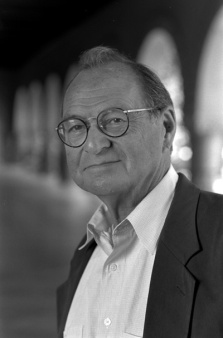
The Situationist brings the sad news:  Psychologist Robert Zajonc died on December 3. (It’s a repost of a story by Adam Gorlick from Stanford News Service.)

Zajonc wasn’t a household name (I didn’t even know it rhymes with “science”), but his research was.

Psychologist Robert Zajonc, pioneer of social psychology

Psychologist Robert Zajonc, pioneer of social psychology

Plus, he led a stunning, dramatic and sometimes wonderful life, surviving horrors in the Holocaust and contributing great things to science.

Gorlick’ s memorial may be best read there, and I encourage you to click over there to read it.

Several of  Zajonc’s articles are listed as “Classics” at Science Magazine, including his 1981 defense of research spending, in the first year of the Reagan administration.

I also urge you to consider what teachers might do with some of Zajonc’s findings, things that propagandists and dastardly politicians (and a few nice politicians) have already used:

  • People like images they see over and over, the “mere exposure” effect  (It’s important what pictures you post in your classroom, yes?)
  • Parental contact with older children can raise their IQs — well, parental contact does raise the IQs of older children, but having less time for younger children tends to keep the younger kids’ IQs from developing as much.  (Did you read to your youngest kid last night?)
  • Challenging kids to tell why things work the way they claim makes them smarter. (This was the same research:  The younger kids’ challenging the older kids made the older kids smarter.  Heck, their challenging of the parents probably make the parents smarter, too.  Do we make students defend their views to other students?)
  • Facial expression affects emotions (“Emotions and Facial Expression,” Zajonc, Science 8 November 1985: 608-687; DOI: 10.1126/science.230.4726.608-b)
  • People who perform tasks well, perform them even better in front of an audience.
  • People who perform an unknown task before an audience tend to make more mistakes than they would if they practiced it in private.

Some of Professor Zajonc’s most influential work concerned “social facilitation” — the effect of the presence of others on a person’s performance of a specific task. Previous research on the subject appeared contradictory, suggesting that spectators helped performers in some cases but not in others. But in which cases?

What Professor Zajonc found was that when performers have mastered a skill at a high level, they are helped by the presence of an audience. (Think of professional musicians or athletes.) But he also found that when a performer has mastered a skill only imperfectly, the existence of onlookers is a hindrance. (Think of Sunday duffers in any arena.)

Elsewhere in his work, Professor Zajonc explored the nexus between psychology and physiology. In one widely reported study, he found that smiling or frowning can alter blood flow to the brain as facial muscles relax or contract. This in turn affects the parts of the brain that regulate feelings, helping induce happy or sad emotional states.

And do you ever wonder about why old couples tend to resemble each other so much?  Zajonc worked that out, too.

Why didn’t he get a Presidential Medal of Freedom?

Resources:


Creationism vs. Christianity

December 20, 2008

Several weeks ago I responded to a lengthy thread at Unreasonable FaithThe original post was Garry Trudeau’s “Doonesbury” cartoon of the guy in a doctor’s office, just diagnosed with an infection.  The physician asks the guy if he’s a creationist, explaining that if he is, the doc will treat him with old antibiotics in honor of his belief that evolution of bacteria doesn’t occur. [Time passes: You may find the Doonesbury cartoon here, at Nature.com, in an article discussing issues with creationism.]

Point being, of course, that evolution occurs in the real world.  Creationists rarely exhibit the faith of their claims when their life, or just nagging pain, is on the line.  They’ll choose the evolution-based medical treatment almost every time.  There are no creationists in the cancer or infectious disease wards.

At one point I responded to a comment loaded with typical creationist error.  It was a long post.  It covered some ground that I’ve not written about on this blog.  And partly because it took some time to assemble, I’m reposting my comments here.  Of course, without the Trudeau cartoon, it won’t get nearly the comments here.

I’ll add links here when I get a chance, which I lacked the time to do earlier.  See my post, below the fold.

Read the rest of this entry »

Holy Pythagoras! Creationists are targeting math

December 20, 2008

They complain that they shouldn’t be compared to the Taliban in Afghanistan, but then creationists do what the Taliban do.

Watch out.  Creationists appear to be targeting mathematics, in addition to their misaimed criticisms of biology.  You remember the “God centered” math courses at Castle Hills First Baptist School, in San Antonio.

So, when I came across this post, at Joe Carter’s Home for Wayward Evangelicals, I thought it time to sound an alarm.  See “Mathematics and Religiously-based Explanations.

Did Leibniz’s religion seriously affect his mathematics?  Is it time to call in the men in white, with the nets?

Mark at Pseudo-Polymath adds to the discussion — it’s difficult to tell if he’s writing in parody or not.


Creationist as Texan of the Year

December 10, 2008

Time Magazine’s Person of the Year selection sometimes produces a shudder, such as when Ayotullah Khomeini got the designation for 1979.  Time patiently explains that the designation is for the person who most affected the year, not necessarily the good guys.  Even bad guys affect history.

The Dallas Morning News designates a “Texan of the Year,” with a month of conjecture and nominations for who it should be.  True to the Time tradition, News columnist Steve Blow nominated a member of the Texas State Board of Eduacation, Cynthia Dunbar.  Blow explained his nomination:

I mean, how do you top someone who warned us that the next president is a terrorist sympathizer with plans to topple the government?

Thank you, Cynthia Dunbar.

You knew about that, of course.

Dunbar is part of Dark Ages Coalition threatening to take Texas school kids hostage if science standards should — brace yourself — support science in Texas public school classrooms.   You think I’m kidding?  Blow noted that Dunbar’s views, now available in a book, do not count America’s public schools as things of much value.

In fact, she calls public education itself a “subtly deceptive tool of perversion.” (Her kids have been home-schooled and attended private school.)

So on the slight possibility that she’s completely wrong about Barack Obama’s secret plan to overthrow America, I’d make her Texan of the Year for a second reason.

The Prophet Dunbar just might wake Texans up to the circus that is our State Board of Education.

That would be valuable, yes.

Note:  I do object, with a smile, to Blow’s calling Dunbar our state Cassandra.  Cassandra’s curse was that no one would listen to her, though she accurately foresaw the future.  Dunbar doesn’t seem to be connected with accuracy in any discernible fashion.

Other resources:


Two steps backward . . .

December 7, 2008

//creativecommons.org/licenses/by-sa/3.0  Scott McLeod, J.D., Ph.D., scottmcleod.net/contact

Licensed under a Creative Commons attribution-share alike license. http://creativecommons.org/licenses/by-sa/3.0 Scott McLeod, J.D., Ph.D., scottmcleod.net/contact

Go read for yourself, solid commentary at Dangerously Irrelevant.

How well does your classroom incorporate technology that helps students learn better, or faster, and helps prepare them for the age into which they will graduate?

Tip of the old scrub brush to Edu-Nerd.


Texas soon to follow?

December 3, 2008

An entire nation has expunged evolution from its school curricula:  Romania.

Maybe it’s a preview.  Which state in the U.S. wants to be like Romania?

Resources:


Anniversary of evolution

December 2, 2008

Almost let one slip by — Larry Moran at Sandwalk remembered it, though, and probably better than I could here.

November 24 was the 149th anniversary of the publication of Charles Darwin’s “big book,” On the Origin of Species. If history studies turning points, that’s one date that needs to be remembered.

Even better, David Quammen published a copy of Darwin’s first edition, supplemented with historic illustrations – the layout of the Beagle, some of the plants and animals Darwin saw, the people who went along, and more.  See Moran’s post, check out the book.

David Quammens new version of Darwins Origin of Species, illustrated

David Quammen's new version of Darwin's Origin of Species, illustrated


Round-up of Thanksgiving Op-eds

November 27, 2008

Nice round-up of op-eds and other writings in newspapers and other media, on Thanksgiving, at Religion In American History.

I learned a lot.

There’s more.  This one post could be the source for a fun Documents Based Question for practice in an AP class, history or economics — maybe English, too?


Hudson’s Half Moon

November 25, 2008

New Yorkers, Vermonters and Candadians continue to celebrate 400 years since Hudson and Champlain, and 200 years since Robert Fulton brought steam power to the Hudson’s commercial ways.

Tugster: A Waterblog features some nice shots, and a couple of stunning shots, of the reconstruction of Henry Hudson’s ship, Half Moon.  Great stuff for presentations, and he likes to share.

Tugster is an outstanding repository of images of tugboats, ships and other things related to the commerce of Greater New York Harbor, and boats on the water generally.  Tugster’s collection of images should be regular source material for teachers of history, economics, geography and government.

A Waterblog

Stern of Half Moon, Henry Hudson's ship; from Tugster: A Waterblog

Notice how the figurehead frightens even the trees to blazing red.

A Waterblog

Bowsprite of Henry Hudson's Half Moon, via Tugster: A Waterblog

Tugster tells us that Henry Hudson himself is blogging, channeling across 400 years — perhaps tired of duckpins with his crew in the Adirondacks (hello, Rip van Winkel!).  Can your students correspond with Henry Hudson?

Resources:


What should our representatives do?

November 24, 2008

John Florez, writing in Utah’s Deseret News:

It would be even more refreshing to have elected leaders openly declare conflicts of interest without having to be caught or hounded into doing so. Even better would be if they quickly recused themselves where conflicts exist — just because it’s the right thing to do.

It is encouraging to see much of the talk before the state pre-legislative -session talk has included ethics reform and enforcement. That government officials know the public is watching them closely is a gentle and persistent reminder that ethics isn’t going away once the election ended.

Keeping the people’s trust is vital, and that means keeping one’s word. It has been amazing to see the way the administration and Legislature can work together in rapid fashion when they want to accomplish things that a majority of the voters did not want, i.e. soccer stadiums, foreign nuclear waste, vouchers, school district splits, to name a few. If they can do it so quickly for the things we don’t want, they most certainly can work quickly together for the things we do want.