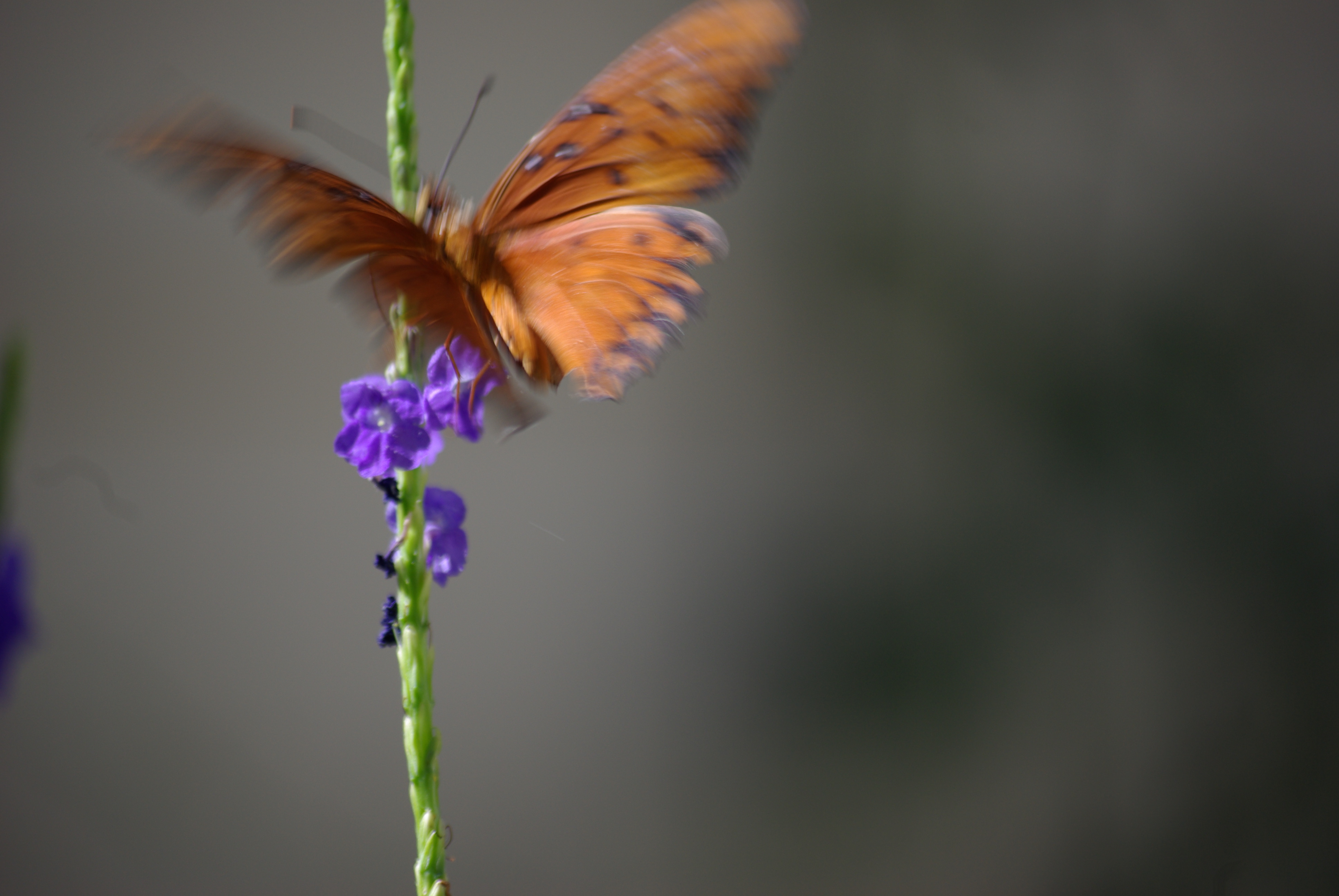
Gulf fritillary on blue porterweed

August 9, 2010

Gulf fritillary on blue porterweed - photo by Ed Darrell - copy free with attribution IMGP4824

Gulf fritillary butterfly on blue porterweed, Dallas, Texas — photo by Ed Darrell — use free with attribution

A gulf fritillary (Agraulis vanillae (Linnaeus, 1758)) on blue porterweed, Stachytarpheta urticifolia, also known as blue rats tail, or nettleleaf velvetberry.  Dallas, Texas, August 9, 2010.

Gulf fritillary on blue porterweed - photo by Ed Darrell, use permitted with attribution IMGP4820

This fritillary hung around for a few minutes.

Kathryn plants butterfly-attracting plants — a concept that was new to me when she introduced it at our home in Cheverly, Maryland, with several plants that acted like butterfly magnets, to my astonished delight.  We first ran into the brilliant orange gulf fritillaries in 1988 or 1989 here in Dallas.  For the past few summers, fritillaries have not been frequent visitors in our yard.

Kathryn stepped up the butterfly plantings this spring, including passion vine (Passiflora incarnata).  The passion vine twines toward one of the bird feeders, but in the past week or so has been losing leaves — to caterpillars of the gulf fritillary, it turns out.  Blue porterweed attracts all sorts of butterflies, but the fritillaries have been rather common, no doubt hoping to give their progeny a little boost with the passion vine, their favored food.

Butterfly afficianadoes in Dallas are urged to plant milkweed and butterfly bush to help the monarchs, whose populations are stressed by the recent cold winter, dramatic reductions in habitat, and destruction of their sanctuary trees in Mexico where they migrate each winter.  But all butterflies could use some habitat help, I think.  The rewards are great.
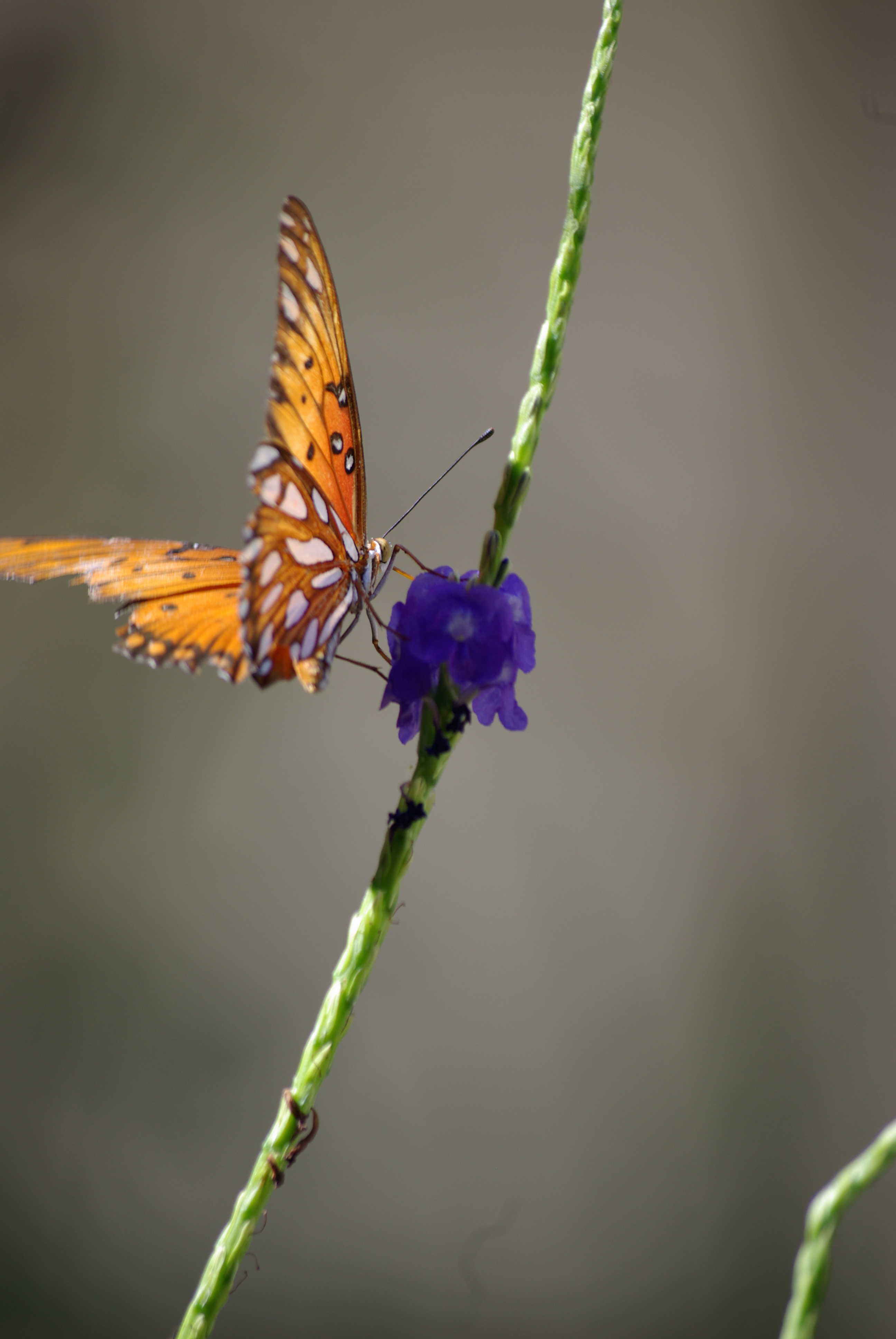
Gulf fritillary on blue porterweed - photo by Ed Darrell, use permitted with attribution - IMGP4822

Gulf fritillary on blue porterweed, catching the morning sun

Gulf fritillary butterfly on blue porterweed - photo by Ed Darrell, use permitted with attribution - IMGP4823

Butterfly plantings will attract butterflies, guaranteed. Gulf fritillary enjoys some blue porterweed nectar.


First cicada killer sighting of 2010

July 19, 2010

Cicada killer wasps appeared as early as July 7, in our yard.  This year we had a cold winter, with snows that appear to have stymied even the nasty, invasive Argentine fire ant.  But June was dry and hot.  July came with rains, and cicada killers don’t like wet soil to dig in.

For that matter, we don’t have many cicadas, either.

Plus, we had to tear down a planter box attached to the dining room window, since it hid termites too well.  No doubt that planter had young from the cicada killers in it.

Early yesterday evening, as we finished dinner, we watched the house finches (Carpodacus mexicanus) escorting their young to the bird feeders, the cardinal “babies” (Cardinalis cardinalis) breaking out of their baby feathering, we looked for the family of red-bellied woodpeckers (Melanerpes carolinus) — and there it was:  One lone cicada hawk zooming across the patio, yellow-and-black striped abdomen standing out among the other paper wasps (almost certainly Sphecius speciosa).

They’re back!

Earlier at Millard Fillmore’s Bathtub:

More:


Malaria tough to beat: Canadian Press review of The Fever

July 5, 2010

At Canadian Press, Carl Hartman reviewed The Fever: How Malaria Has Ruled Humankind for 500,000 Years, a dramatic work of non-fiction about malaria and mosquitoes by Sonia Shah (Sarah Crichton Books/Farrar, Straus and Giroux 2010).  Hartman concluded:

Evidence of mosquito resistance to the drug has been recently reported.

Shah is skeptical of a surge of private charity that emphasizes the use of mosquito nets following the decline of government-led anti-malaria programs in the 1990s. Acknowledging the contributions of Bill Gates and former Presidents George W. Bush and Bill Clinton, she lists Veto the ‘Squito, a youth-led charity; Nothing but Nets, an anti-malarial basketball charity; and World Swim Against Malaria. She quotes The New York Times as decrying “hip ways to show you care.”

Her own comment: “Just because something is simple doesn’t necessarily mean that people will do it.”

“(T)he schools, roads, clinics, secure housing and good governance that enable regular prevention and prompt treatment must be built,” she concludes. “Otherwise the cycle of depression and resurgence will begin anew; malaria will win, as it always has.”

Anti-environmentalists, anti-scientists, and other conservatives won’t like the book:  It says we can’t beat malaria cheaply by just spreading a lot of poison on Africa and Africans.

Especially if you’re doing the noble thing and vacationing in the Gulf of Mexico in Alabama, or Mississippi, or Louisiana, you may want to read this.  If you’re vacationing in the Hamptons, Martha’s Vinyard, or Cannes, buy several copies to pass out at dinner with your friends.

More:


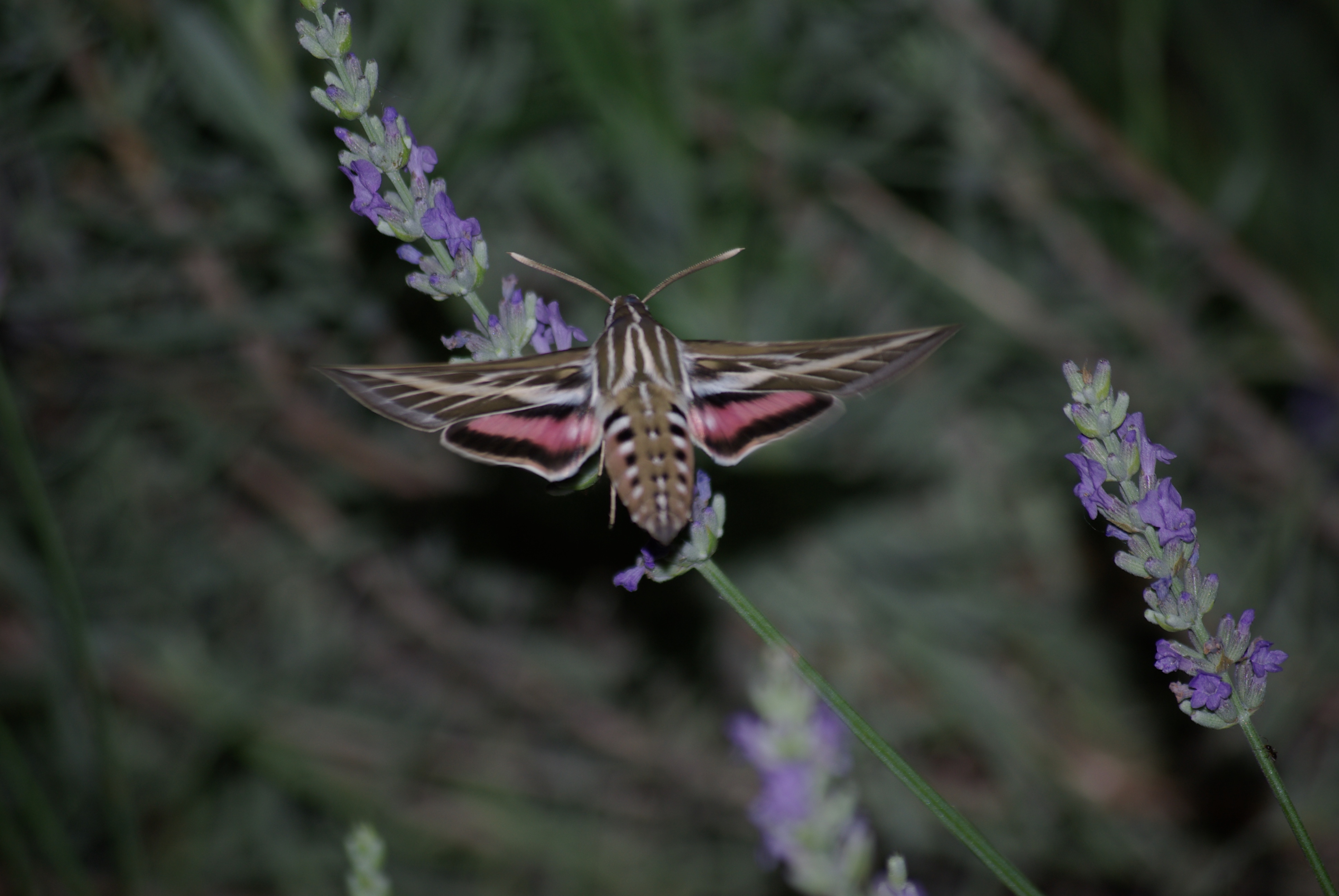
Hummingbird moth in the lavender at 6:00 a.m.

May 25, 2010

Hummingbird moth at the lavender, May 25, 2010

Hummingbird moth (Hyla lineata?) breakfasts at the lavender in the front yard - photo by Ed Darrell

Kathryn planted lavendar on the front walk.  It crowds the walk, so you have to brush by it coming in or going out of the house, and sometimes you get a great whiff of lavender.

On the way back from getting the newspaper this morning I was greeted by this hummingbird moth sipping its breakfast from the lavender blossoms.  It was too dark for natural lighting.  The flash froze the wings, and exposed colors that you can’t see as the little creature hovers.

Probably a Hyla lineata, no?

Hummingbird moth at the lavender, #2 - IMGP4107 - photo by Ed Darrell, all rights reservedHummingbird moth at the lavender, #2 - IMGP4107 - photo by Ed Darrell, all rights reserved

Hummingbird moth in the lavender in the morning