Fly your flag at half-staff today, honoring President John F. Kennedy

November 22, 2013

U.S. flags at the Washington Monument fly at half-staff, with the dome of the U.S. Capitol in the background.  Image captured from U.S. Flags.com

U.S. flags at the Washington Monument fly at half-staff, with the dome of the U.S. Capitol in the background. Image captured from U.S. Flags.com

November 22, 2013:  A proclamation from President Barack Obama:

Obama Proclamation on Day of Remembrance for President Kennedy

21 November 2013

THE WHITE HOUSE
Office of the Press Secretary
November 21, 2013

DAY OF REMEMBRANCE FOR PRESIDENT JOHN F. KENNEDY

BY THE PRESIDENT OF THE UNITED STATES OF AMERICA

A PROCLAMATION

A half century ago, America mourned the loss of an extraordinary public servant. With broad vision and soaring but sober idealism, President John F. Kennedy had called a generation to service and summoned a Nation to greatness. Today, we honor his memory and celebrate his enduring imprint on American history.

In his 3 years as President of the United States, John F. Kennedy weathered some of the most perilous tests of the Cold War and led America to the cusp of a bright new age. His leadership through the Cuban Missile Crisis remains the standard for American diplomacy at its finest. In a divided Berlin, he delivered a stirring defense of freedom that would echo through the ages, yet he also knew that we must advance human rights here at home. During his final year in office, he proposed a civil rights bill that called for an end to segregation in America. And recognizing women’s basic right to earn a living equal to their efforts, he signed the Equal Pay Act into law.

While President Kennedy’s life was tragically cut short, his vision lives on in the generations he inspired — volunteers who serve as ambassadors for peace in distant corners of the globe, scientists and engineers who reach for new heights in the face of impossible odds, innovators who set their sights on the new frontiers of our time. Today and in the decades to come, let us carry his legacy forward. Let us face today’s tests by beckoning the spirit he embodied — that fearless, resilient, uniquely American character that has always driven our Nation to defy the odds, write our own destiny, and make the world anew.

NOW, THEREFORE, I, BARACK OBAMA, President of the United States of America, by virtue of the authority vested in me by the Constitution and the laws of the United States, do hereby proclaim November 22, 2013, as a Day of Remembrance for President John F. Kennedy. I call upon all Americans to honor his life and legacy with appropriate programs, ceremonies, and activities. I also call upon Governors of the United States and the Commonwealth of Puerto Rico, officials of the other territories subject to the jurisdiction of the United States, and appropriate officials of all units of government, to direct that the flag be flown at half-staff on the Day of Remembrance for President John F. Kennedy. I further encourage all Americans to display the flag at half-staff from their homes and businesses on that day.

IN WITNESS WHEREOF, I have hereunto set my hand this twenty-first day of November, in the year of our Lord two thousand thirteen, and of the Independence of the United States of America the two hundred and thirty-eighth.

BARACK OBAMA

More:

White House photo:  Presidents and First Ladies, Barack and Michelle Obama, and Bill and Hillary Clinton, post a wreath and salute President John F. Kennedy at Kennedy's gravesite in Arlington National Cemetery, November 20, 2013

White House photo: Presidents and First Ladies, Barack and Michelle Obama, and Bill and Hillary Clinton, post a wreath and salute President John F. Kennedy at Kennedy’s gravesite in Arlington National Cemetery, November 20, 2013


Veterans Day ceremony at Arlington National Cemetery, 2013

November 11, 2013

President Obama Honors Veterans at Arlington National Cemetery on Veterans Day. November 11, 2013.


National Patriot Day 2013 — Fly your flag today, volunteer service

September 11, 2013

Flags at the Washington Monument fly at half staff honoring Sen. Arlen Specter of Pennsylvania, with the dome of the U.S. Capitol in the background.

Flags at the Washington Monument fly at half staff, with the dome of the U.S. Capitol in the background. Fly your flag at half-staff today, Patriot Day.

Federal law and presidential proclamation urge Americans to fly flags today at half-staff, in honor of patriots and those who died in the attacks on the U.S. on September 11, 2001.

President Barack Obama issued a declaration yesterday:

PATRIOT DAY AND NATIONAL DAY OF SERVICE AND REMEMBRANCE, 2013
– – – – – – –

BY THE PRESIDENT OF THE UNITED STATES OF AMERICA

A PROCLAMATION

Twelve years ago this month, nearly three thousand innocent men, women, and children lost their lives in attacks meant to terrorize our Nation. They had been going about their day, harming no one, when sudden violence struck. We will never undo the pain and injustice borne that terrible morning, nor will we ever forget those we lost.

On September 11, 2001, amid shattered glass, twisted steel, and clouds of dust, the spirit of America shone through. We remember the sacrifice of strangers and first responders who rushed into darkness to carry others from danger. We remember the unbreakable bonds of unity we felt in the long days that followed — how we held each other, how we came to our neighbors’ aid, how we prayed for one another. We recall how Americans of every station joined together to support the survivors in their hour of need and to heal our Nation in the years that followed.

Today, we can honor those we lost by building a Nation worthy of their memories. Let us also live up to the selfless example of the heroes who gave of themselves in the face of such great evil. As we mark the anniversary of September 11, I invite all Americans to observe a National Day of Service and Remembrance by uniting in the same extraordinary way we came together after the attacks. Like the Americans who chose compassion when confronted with cruelty, we can show our love for one another by devoting our time and talents to those in need. I encourage all Americans to visit www.Serve.gov, or www.Servir.gov for Spanish speakers, to find ways to get involved in their communities.

As we serve and remember, we reaffirm our ties to one another. On September 11, 2001, no matter where we came from, what God we prayed to, or what race or ethnicity we were, we were united as one American family. May the same be said of us today, and always.

By a joint resolution approved December 18, 2001 (Public Law 107-89), the Congress has designated September 11 of each year as “Patriot Day,” and by Public Law 111-13, approved April 21, 2009, the Congress has requested the observance of September 11 as an annually recognized “National Day of Service and Remembrance.”

NOW, THEREFORE, I, BARACK OBAMA, President of the United States of America, do hereby proclaim September 11, 2013, as Patriot Day and National Day of Service and Remembrance. I call upon all departments, agencies, and instrumentalities of the United States to display the flag of the United States at half-staff on Patriot Day and National Day of Service and Remembrance in honor of the individuals who lost their lives on September 11, 2001. I invite the Governors of the United States and the Commonwealth of Puerto Rico and interested organizations and individuals to join in this observance. I call upon the people of the United States to participate in community service in honor of those our Nation lost, to observe this day with appropriate ceremonies and activities, including remembrance services, and to observe a moment of silence beginning at 8:46 a.m. Eastern Daylight Time to honor the innocent victims who perished as a result of the terrorist attacks of September 11, 2001.

IN WITNESS WHEREOF, I have hereunto set my hand this tenth day of September, in the year of our Lord two thousand thirteen, and of the Independence of the United States of America the two hundred and thirty-eighth.

BARACK OBAMA

According to Cornell University’s Legal Information Institute, the law says:

TITLE 36 > Subtitle I > Part A > CHAPTER 1> § 144

§ 144. Patriot Day

How Current is This?

(a) Designation.— September 11 is Patriot Day.

(b) Proclamation.— The President is requested to issue each year a proclamation calling on—
(1) State and local governments and the people of the United States to observe Patriot Day with appropriate programs and activities;

(2) all departments, agencies, and instrumentalities of the United States and interested organizations and individuals to display the flag of the United States at halfstaff on Patriot Day in honor of the individuals who lost their lives as a result of the terrorist attacks against the United States that occurred on September 11, 2001; and

(3) the people of the United States to observe a moment of silence on Patriot Day in honor of the individuals who lost their lives as a result of the terrorist attacks against the United States that occurred on September 11, 2001.

Patriot Day formerly occurred earlier in the year; information on flag flying has not been added to the Flag Code portions of U.S. law, and consequently this news gets missed.

Fly your flag today, at half-staff if you can. Remember when flying a flag at half-staff, it is first raised to full staff, then slowly lowered to the half-staff position. When the flag is retired at the end of the day, it should again be crisply raised to the full-staff position before being lowered.

A flag attached to a pole that does not allow a half-staff position should be posted as usual.

A National Day of Service

September 11 is also designated as a national day of service, under the Edward M. Kennedy Serve America Act, Public Law 111-13 (April 21, 2009). The Corporation for National and Community Service is charged with encouraging appropriate service in honor of the day and in honor of those who died.

National Day of Service and Remembrance

Date(s): September 11, 2010

Location: National

Event URL: http://911day.org/

Description
On April 21, 2009, President Barack Obama signed legislation that for the first time officially established September 11 as a federally recognized National Day of Service and Remembrance.

By pledging to volunteer, perform good deeds, or engage in other forms of charitable service during the week of 9/11, you and your organization will help rekindle the remarkable spirit of unity, service and compassion shared by so many in the immediate aftermath of the attacks. And you’ll help create a fitting, enduring and historic legacy in the name of those lost and injured on 9/11, and in tribute to the 9/11 first responders, rescue and recovery workers, and volunteers, and our brave military personnel who continue to serve to this day.

Check in your own community to find opportunities for service projects.

Texas schools this year will make a mandatory one-minute observance of the events of September 11, 2001, under a new law, H. B. 1501.

More:

Boy Scouts and Girl Scouts raised the U.S. flag at Patriot Day ceremonies in 2012 at Willie Brown Elementary School, in Mansfield ISD, Mansfield, Texas.

Boy Scouts and Girl Scouts raised the U.S. flag at Patriot Day ceremonies in 2012 at Willie Brown Elementary School, in Mansfield ISD, Mansfield, Texas.


Keep your flags clean and dry for September

September 4, 2013

Labor Day passed, so you can put your flags away until . . . what, Thanksgiving?

Not so fast, patriot!

U.S. Flag Code rules list specific days for flying the flag, and Constitution Day on September 17 is one of those dates.

Also, the Flag Code urges flying the U.S. flag on the anniversary of a state’s entering the union, in that state.  California’s statehood day is September 9 (next week!)

California flag

California flag flies on the same pole as the U.S. flag; photo from tumblr deepspaceromans.

Stay ready, patriots.

More:


Fly your flag today, Labor Day 2013

September 2, 2013

Still important in 2013: Fly your flag for American labor today.

Free Labor Will Win, poster from 1942, (Library of Congress)

Poster from the Office of War Information, 1942

It’s Labor Day 2013 in the United States, a federal holiday, and one of those days Americans are urged to fly the U.S. flag.

“Free Labor Will Win,” the poster said, encouraging a theme important during World War II, when unions were encouraged to avoid strikes or any action that might interrupt work to build the “arsenal of democracy” believed necessary to win the war.  Labor complied, the war was won, and organized labor was the stronger for it. In 2012, some have difficulty remembering when all Americans knew that our future rides on the backs of organized labor.

The poster was issued by the Office of War Information in 1942, in full color. A black-and-white version at the Library of Congress provides a few details for the time:

Labor Day poster. Labor Day poster distributed to war plants and labor organizations. The original is twenty-eight and one-half inches by forty inches and is printed in full color. It was designed by the Office of War Information (OWI) from a photograph especially arranged by Anton Bruehl, well-known photographer. Copies may be obtained by writing the Distribution Section, Office of War Information [alas, you can’t get a copy from the Office of War Information in 2012]

Even down here in deepest, darkest-right-to-work Texas, patriots fly their flags to honor Labor today. It’s heartening.

Flags fly all around in 1882 at the first Labor Day Parade in New York City’s Union Square; lithograph from USC’s Dornsife History Center, via Wikipedia, artist unidentified

This is partly an encore post, a Labor Day tradition.

More, Other Resources:


Fly your flag August 21, for Hawaii Statehood

August 21, 2013

A newsboy happily hawks the Honolulu Star-Bulletin with the headline showing the state had achieved statehood, August 21, 1959.  Star-Bulletin photo

13-year-old paperboy Chester Kahapea happily hawks a commemorative edition of the Honolulu Star-Bulletin with the headline showing the state had achieved statehood after the U.S. House of Representatives passed the law authorizing Hawaii as a state. Star-Bulletin photo by Murray Befeler.

Hawaii’s official statehood day is August 21, commemorating the day in 1959 when Hawaii was recognized as a member of the union of the United States of America.  Hawaiians should fly their flags to day in honor of the date (you may, too).

Hawaii formally celebrates the day on the third Friday in August — oops, last Friday, for 2013.  I hope you joined in the festivities (it’s a holiday in Hawaii) — but under the U.S. Flag Code, you may certainly fly your flags on August 21, regardless which day of the week that is.

Specimen copy of the ballot used by Hawaiians in a June 27, 1959, plebiscite to approve conditions of statehood.  Image from Hawaii Magazine, 2009

Specimen copy of the ballot used by Hawaiians in a June 27, 1959, plebiscite to approve conditions of statehood. Image from Hawaii Magazine, 2009

After the U.S. annexed Hawaii in 1898 (in action separate from the Spanish-American War) attempts at getting Hawaii admitted as a state got rolling.  After World War II, with the strategic importance of the islands firmly implanted in Americans’ minds, the project picked up some steam.  Still, it was 14 years after the end of the war that agreements were worked out between the people of Hawaii, the Hawaiian royal family, Congress and the executive branch.  The deal passed into law had to be ratified by a plebiscite among Hawaiian citizens.  The proposition won approval with 94% of votes in favor.

Some native Hawaiian opposition to statehood arose later, and deference to those complaints has muted statehood celebrations in the 21st century.

Other than the tiny handful of loudmouth birthers, most Americans today are happy to have Hawaii as a state, the fifth richest in the U.S. by personal income.  The nation has a lot of good and great beaches, but the idea of catching sun and surf in Hawaii on vacation might be considered an idealized part of the American dream.

Hawaiian and U.S. flags fly from the stern of a boat touring Hawaii. Are these flags displayed properly, under the U.S. flag code?

Hawaiian and U.S. flags fly from the stern of a boat touring Hawaii. Are these flags displayed properly, under the U.S. flag code?

More:

From Prologue, the blog of the National Archives: This petition, rolled onto a wooden spool, was signed by 116,000 supporters of Hawaii statehood and presented to the U.S. Senate on February 26, 1954. (RG 46, Records of the U.S. Senate)

From Prologue, the blog of the National Archives: This petition, rolled onto a wooden spool, was signed by 116,000 supporters of Hawaii statehood and presented to the U.S. Senate on February 26, 1954. (RG 46, Records of the U.S. Senate)

U.S. postage stamp issued in 2009 commemorating the 50th anniversary of Hawaii's admission to the union.

U.S. postage stamp issued in 2009 commemorating the 50th anniversary of Hawaii’s admission to the union.

English: August 21, 1959 7¢ Rose Hawaii Stateh...

Contrast the first class postage price above with the airmail postage price of this stamp issued in 1959 — August 21, 1959 7¢ Rose Hawaii Statehood C55 26432. Wikipedia image


Fly your flags on August 1 in Colorado: Statehood day

August 1, 2013

August 1 is the anniversary of the day in 1876 when Colorado was proclaimed a member of the union, the 38th state in the United States.

U.S. and Colorado flags flutter from the same flagpole.  Denver Library image

U.S. and Colorado flags flutter from the same flagpole. Denver Library image

According to Colorado newspaperman and politician Jerry Koppel, Colorado’s path to statehood started in 1864, in an attempt to get another Republican state to boost Abraham Lincoln’s re-election chances.  Coloradans rejected the proposed constitution in a plebiscite, however, which pushed the effort into the next Lincoln administration — which, sadly, a month into Lincoln’s new term, became the Andrew Johnson administration.

High politics:  Colorado’s path to statehood was not straight.  While Colorado was not frustrated so often nor so long as Utah, proposed laws to bring the state into the union were vetoed twice by President Andrew Johnson.  History from the Andrew Johnson National Historical Site in Greenville, Tennessee:

Colorado Statehood

First Veto:

1. There was such a small population in the area, Johnson felt Colorado would fare better as a territory without the added taxation of statehood.

2. Also due to the small population, Colorado would have only one representative to speak for the people in Congress. (New York, on the other hand, had thirty-one).

3. Johnson felt the citizens of Colorado were not prepared for, and not all wanted, statehood. Johnson wanted to hold a census or an election there first. This would ascertain the number of people in the area, as well as find out what their strongest desire was.

Second veto:

1. Johnson didn’t agree with the Edmunds Amendment which said that Nebraska and Colorado had to give equal suffrage to blacks and whites as a statehood condition. Johnson felt this was unconstitutional because Congress couldn’t regulate a state’s franchise, and the people had not been allowed to vote on it.

2. After holding a census, Johnson felt the population was still too small for statehood.

NOTE: In addition, Johnson did not feel right about adding new states to the Union when the Confederate States had not yet been readmitted to the Union and were still unrepresented.

Congress sustained the veto.

Jerome B. Chaffee. Library of Congress descrip...

Jerome B. Chaffee, one of Colorado’s first U.S. Senators, and the man who earlier pushed through Congress the law admitting Colorado into the Union. Library of Congress description: “Chaffee, Hon. J.B. of Colorado” (Photo credit: Wikipedia)

Colorado Republican and millionaire Jerome Chaffee, serving as the Colorado Territory delegate to Congress, managed to get a statehood bill passed in 1875, in the second term of President Ulysses S Grant; Grant signed the law.   Colorado drafted a state constitution that passed muster, Coloradans approved it, and President Grant declared Colorado the 38th state on July 1, 1876.  Chaffee was elected one of the first U.S. Senators from Colorado by the new state legislature.  In an odd footnote, President Grant’s son, Ulysses S Grant, Jr., married Chaffee’s daughter Fannie in 1881.  In 1875, Chaffee claimed 150,000 people lived in the state, but most historians think that figure was inflated; the 1880 census counted 194,000 people, but some historians doubt that count was accurate.

No doubt there are at least that many people in Colorado today.  Several counties in the northeast corner of the state recently got together to explore the possibility of separating from Colorado to form their own state.  Does the political cauldron in Colorado ever cool?

More:

An American flag hangs in front of a burning structure in the Black Forest, a thickly wooded rural region north of Colorado Springs, Colo. Authorities reported early Saturday that 473 houses had been incinerated.  Air Force photo

One of the more dramatic images from Colorado in recent years, courtesy the U.S. Air Force. Captioned in the Las Vegas Review-Journal, June 15, 2013: An American flag hangs in front of a burning structure in the Black Forest, a thickly wooded rural region north of Colorado Springs, Colo. Authorities reported early Saturday that 473 houses had been incinerated.

PRCA Rodeo in Steamboat Springs, Colorado; photo from SeaSweetie's Pages

PRCA Rodeo in Steamboat Springs, Colorado; photo from SeaSweetie’s Pages


Fly your flag today! July 4, 2013, 237 years since the Declaration of Independence

July 4, 2013

It’s a day of tradition — oddly enough, since we are in reality a very new nation, and Lee’s resolution to declare independence from Britain came on July 2.

A soak in Millard Fillmore’s Bathtub is nothing if not a steeping in tradition.  Fly your flag today, to celebrate the independence of the American colonies of Britain.

Fourth of July: NPR has already read the Declaration of Independence (or will soon, if you’re up early), PBS is ready to broadcast the Capitol Fourth concert  (maybe a rebroadcast is available, if you’re off at your own town’s fireworks — check your local listings), your town has a parade somewhere this weekend, or a neighboring community does, and fireworks are everywhere.

At the White House, traditionally, new citizens are sworn in — often people who joined our armed forces and fought for our nation, before even getting the privileges of citizenship.  Fireworks on the Capital Mall will be grand, with the White House hosting a few thousand military people and their families from some of the best views.  Traditionally, five photographers, chosen by lottery, get to shoot photos of the fireworks from the windows of the Washington Monument; will that occur, with the Monument shut down from public view for repair from the earthquake?

There will be great fireworks also in Baltimore Harbor over Fort McHenry, the fort whose siege inspired Francis Scott Key to write the “Star-spangled Banner” from his boat in the harbor, in 1814. Firworks will frighten the bluebirds nesting at Yorktown National Battlefield.  I suspect there will be a grand display at Gettysburg, on the 150th anniversary of the end of that battle. July 4, 1863, also marked the end of the Siege of Vicksburg; tradition holds that Vicksburg did not celebrate the 4th of July for 83 years after that. I’ll wager there will be fireworks there tonight.  In Provo, Utah, the city poobahs will have done all they can to try to live up to their self-proclaimed reputation as having the biggest Independence Day celebration in the nation.  The celebration in Prescott, Arizona, is muted by the tragic deaths of 19 Hot Shot firefighters last week; will drought halt the fireworks, too?  There will be fireworks around the Golden Gate Bridge, in Anchorage, Alaska, reflecting on the waters of Pearl Harbor, and probably in Guam, American Samoa, and the Northern Marianas Islands.

Fireworks on the Fourth is a long tradition — a tradition that kept John Adams and Thomas Jefferson alive, until they both died on the 50th anniversary of the Declaration of Independence, in 1826, the sounds of the fireworks letting Adams know the celebration had begun (Adams erroneously celebrated that Jefferson, the Declaration’s author, still lived, unable to know Jefferson had passed just hours earlier).

Remember to put your flag up today.

Astronaut Eugene Cernan and the U.S. Flag -- Apollo 17 on the Moon (NASA photo)

Last flag on the Moon: Astronaut Eugene Cernan and the U.S. Flag — Apollo 17 on the Moon (NASA photo)

If you’re not on the Moon, here are some tips on flag etiquette, how to appropriately fly our national standard.

Also:

Lunar Reconnaissance Orbiter photo of Apollo 17 landing site

Lunar Reconnaissance Orbiter photo of Apollo 17 landing site

This is mostly an encore post, but I so love that photo of the flag with the Earth in the distance.

Happy birthday, Kathryn!

Fireworks in Duncanville, Texas, for July 4

Fireworks in Duncanville, Texas, for July 4 — Kathryn Knowles’s birthday. We’re always happy the town chimes in with the celebratory spirit.

Tip of the old scrub brush to Thomas Jefferson, Richard Henry Lee, John Adams, Benjamin Franklin, Roger Sherman, Robert Livingston, and the cast of thousands of patriots including George Washington.


Flag Day poster from 1917, remembered 96 years later

June 14, 2013

140th US Flag Day poster. 1777-1917. The birthday of the stars and stripes, June 14th, 1917. 'Tis the Star Spangled Banner, oh, long may it wave, o'er the land of the free and the home of the brave!" Library of Congress description: "Poster showing a man raising the American flag, with a minuteman cheering and an eagle flying above." - Wikipedia

140th US Flag Day poster. 1777-1917. The birthday of the stars and stripes, June 14th, 1917. ‘Tis the Star Spangled Banner, oh, long may it wave, o’er the land of the free and the home of the brave!” Library of Congress description: “Poster showing a man raising the American flag, with a Minuteman cheering and an eagle flying above.” – Wikipedia

Details about the poster, from the Library of Congress:


1777-1917: The 140th flag day. The birthday of the stars and stripes, June 14th, 1917. The text continues: ‘Tis the Star Spangled Banner, oh, long may it wave, o’er the land of the free and the home of the brave! President Woodrow Wilson remarked, “this flag, which we honor and under which we serve, is the emblem of our unity, our power, our thought and purpose as a nation. Though silent, it speaks to us of the past, of the men and women who went before us, and of the records they wrote upon it.”

MEDIUM: 1 print (poster) : lithograph, color ; 101 x 65 cm.

CREATED/PUBLISHED: 1917.

NOTES: Forms part of: Willard and Dorothy Straight Collection.

Who was the artist?  Who ordered the printing, and for what specific purpose?  Anyone know? (Still looking for the history of this poster, which has become quite popular in the past two years.)

The Library of Congress sells copies of this poster.

Additional reading in 2013:


Flag Day 2013 – Fly your flag today!

June 14, 2013

Of course, you’re already flying your Stars and Stripes, right?

I’ve been on the road, mostly without internet access; I’m tardy in my reminder.

June 14th marks the anniversary of the resolution passed by the Second Continental Congress in 1777, adopting the Stars and Stripes as the national flag.

Fly your flag today. This is one of the score of dates upon which Congress suggests we fly our flags.

Flag Day 1916, parade in Washington, D.C. - employees of National Geographic Society march - photo by Gilbert Grosvenor

Flag Day 1916, parade in Washington, D.C. – employees of National Geographic Society march – photo by Gilbert Grosvenor

The photo above drips with history. Here’s the description from the National Geographic Society site:

One hundred and fifty National Geographic Society employees march in the Preparedness Parade on Flag Day, June 14, in 1916. With WWI underway in Europe and increasing tensions along the Mexican border, President Woodrow Wilson marched alongside 60,000 participants in the parade, just one event of many around the country intended to rededicate the American people to the ideals of the nation.

Not only the anniversary of the day the flag was adopted by Congress, Flag Day is also the anniversary of President Dwight Eisenhower’s controversial addition of the words “under God” to the Pledge of Allegiance in 1954.

(Text adapted from “:Culture: Allegiance to the Pledge?” June 2006, National Geographic magazine)

The first presidential declaration of Flag Day was 1916, by President Woodrow Wilson. Wilson won re-election the following November with his pledge to keep America out of World War I, but by April of 1917 he would ask for a declaration of war after Germany resumed torpedoing of U.S. ships. The photo shows an America dedicated to peace but closer to war than anyone imagined. Because the suffragettes supported Wilson so strongly, he returned the favor, supporting an amendment to the Constitution to grant women a Constitutional right to vote. The amendment passed Congress with Wilson’s support and was ratified by the states.

The flags of 1916 should have carried 48 stars. New Mexico and Arizona were the 47th and 48th states, Arizona joining the union in 1913. No new states would be added until Alaska and Hawaii in 1959. That 46-year period marked the longest time the U.S. had gone without adding states, until today. No new states have been added since Hawaii, more than 49 years ago. (U.S. history students: Have ever heard of an essay, “Manifest destiny fulfilled?”)

150 employees of the National Geographic Society marched, and as the proud CEO of any organization, Society founder Gilbert H. Grosvenor wanted a photo of his organization’s contribution to the parade. Notice that Grosvenor himself is the photographer.

I wonder if Woodrow Wilson took any photos that day, and where they might be hidden.

History of Flag Day from a larger perspective, from the Library of Congress:

Since 1916, when President Woodrow Wilson issued a presidential proclamation establishing a national Flag Day on June 14, Americans have commemorated the adoption of the Stars and Stripes by celebrating June 14 as Flag Day. Prior to 1916, many localities and a few states had been celebrating the day for years. Congressional legislation designating that date as the national Flag Day was signed into law by President Harry Truman in 1949; the legislation also called upon the president to issue a flag day proclamation every year.

According to legend, in 1776, George Washington commissioned Philadelphia seamstress Betsy Ross to create a flag for the new nation. Scholars debate this legend, but agree that Mrs. Ross most likely knew Washington and sewed flags. To date, there have been twenty-seven official versions of the flag, but the arrangement of the stars varied according to the flag-makers’ preferences until 1912 when President Taft standardized the then-new flag’s forty-eight stars into six rows of eight. The forty-nine-star flag (1959-60), as well as the fifty-star flag, also have standardized star patterns. The current version of the flag dates to July 4, 1960, after Hawaii became the fiftieth state on August 21, 1959.

Fly your flag with pride today.

Elmhurst Flag Day 1939, DuPage County Centennial - Posters From the WPA

Elmhurst flag day, June 18, 1939, Du Page County centennial / Beauparlant.
Chicago, Ill.: WPA Federal Art Project, 1939.
By the People, For the People: Posters from the WPA, 1936-1943

This is an encore post, from June 14, 2009, and other previous Flag Days.

More, and Other Voices:


Fly your flag today? Remembering D-Day, 1944 – 69 years ago

June 6, 2013

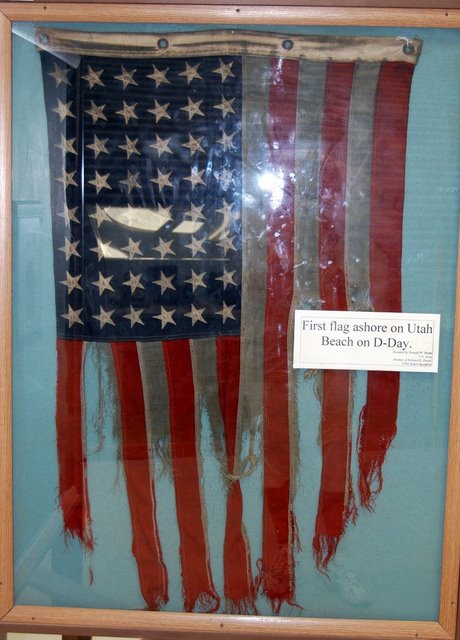
First Flag on Utah Beach, June 6, 1944

First Flag on Utah Beach, June 6, 1944 – Photo by Mark Wainwright

Today is the 69th anniversary of the Invasion of Normandy in World War II, a date generally called D-Day.  I usually get at least one e-mail request:  No, you don’t have to fly your flag.  This is not one of the days designated by Congress for flag-flying.

But you may fly your flag, and probably, you should.  If there are any D-Day veterans in your town, they’ll appreciate it.

This is mostly an encore post.


June 1: Fly your flags today in Kentucky and Tennessee to celebrate their statehood

June 1, 2013

Law on flag flying encourages citizens to fly their U.S. flags on specific dates, and on the date of statehood of the state in which a citizen lives.

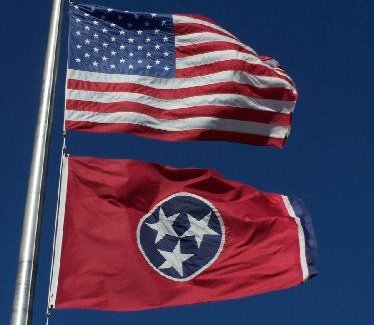
Kentucky joined the union on June 1, 1792, the 15th state.  Tennessee joined four years later, on June 1, 1796, becoming the 16th state.

U.S. and Tennessee flags flying together on one staff.  Photo by J. Stephen Conn

U.S. and Tennessee flags flying together on one staff. Photo by J. Stephen Conn

Kentucky's state flag, by Gage Skidmore

Kentucky’s state flag features a Native American and European colonist standing together, and the state motto, “United We Stand, Divided We Fall.” Photo by Gage Skidmore

Kentucky’s admission to the union pushed the U.S. flag to 15 stars and 15 stripes.   President George Washington signed the law that authorized the U.S. flag be expanded to 15 stripes in early 1794.  I’ve not pinned down the history of what happened next.  So far as I know there was no law expanding the flag to 16 stripes, and in 1818, Congress said the flag would be 13 stripes, and stars equal to the number of states.

A 15-striped Star-spangled Banner that flew over Fort McHenry in Baltimore Harbor in 1814 and inspired Francis Scott Key to write the poem that is now the lyric to our national anthem.  President James Monroe signed the 13-stripe law in 1818.

What happened in between?  I suspect there are a lot of 15-stripe flags, but it wouldn’t surprise me to find a 16-stripe flag somewhere.  A variety of stars-and-stripes flags cropped up, which the 1818 law was intended to squelch.

Residents of the Bluegrass State and the Volunteer State should fly their flags today, in honor of their state’s having joined the union on June 1.


Flags flying on Memorial Day, 2013

May 27, 2013

Certainly you’ve remembered to put your flags up for Memorial Day.

This is what it looks like at Officers Row, at Mammoth Hot Springs in Yellowstone National Park:

Flags on Officers' Row, Mammoth Hot Springs, Yellowstone NP

Yellowstone National Park “On this Memorial Day, American Flags are proudly displayed on Officers’ Row in Mammoth Hot Spring as we remember those who gave their lives in military service to our country. (dr2)”

More:


Memorial Day, May 27 – Fly your flag, at half-staff until noon

May 24, 2013

Michigan Gov. Rick Snyder continued the program started by his predecessor, Jennifer Granholm, to send out notices electronically of occasions to fly the U.S. flag, and when to fly flags at half staff.  Michigan honors every soldier who dies with a day of mourning, with half-staff flags.

Notices also go out for things like Memorial Day.  Here is the e-mail the system sent out today, a notice to fly the flag on Memorial Day, and how to fly it:  Half-staff until noon, full staff from noon until sunset.

So now you know.

Flag Honors banner

FLAGS ORDERED LOWERED ON MONDAY, MAY 27

LANSING, MI – The flag of the United States has been ordered lowered to half-staff in Michigan on Monday, May 27, 2013 in honor of Memorial Day. This recognition is asked to be observed until noon of the same day at which point it should be raised to the peak.

“It is a great honor to join with fellow Americans in paying special tribute to the selfless individuals who serve and protect our country,” said Gov. Rick Snyder. “On this day, and every day, we say ‘thank you’ to the courageous and vigilant men and women who sacrifice much to ensure our safety, and we remember those who made the ultimate sacrifice in carrying out their sworn duties.”

Michigan residents, businesses, schools, local governments and other organizations are encouraged to display the flag at half-staff.

When flown at half-staff or half-mast, the U.S. flag should be hoisted first to the peak for an instant and then lowered to the half-staff or half-mast position.

###

You may fly your flag all weekend if you wish, of course.

Different activities honoring fallen soldiers are scheduled through the weekend.  What’s going on in your town?

33,000 flags on Boston Common for Memorial Day 2013

“A garden of 33,000 flags was planted by city officials and members of the Massachusetts Military Heroes Fund this week, and will cover part of the Boston Common near the Soldiers and Sailors Monument through Memorial Day, in honor of fallen soldiers from the state. Each flag put in the ground near the monument will represent a service member from Massachusetts who gave his or her life defending the country since the Civil War to the present day.” Photo via Lorie Jenkins on Twitter, in Boston Magazine.

More:


Fly your flag for South Carolina, May 23 – Statehood Day

May 23, 2013

U.S. and South Carolina flags flying together on one pole. Photo from Bluffton Breeze

U.S. and South Carolina flags flying together on one pole. Photo from Bluffton Breeze

Fly your flag for South Carolina’s statehood on May 23.

South Carolina is one of the original 13 colonies who banded together, first to fight for independence from Britain, and then to create the United States of America.  “Statehood Day” for the 13 original members is the anniversary of the date that colony ratified the Constitution.

South Carolina’s convention of citizens ratified the constitution on May 23, 1788 — the 8th state to do so.  A three-fourths, 75% majority put the Constitution into operation; 75% was 9 states.  While South Carolina’s ratification technically didn’t become viable until one more state joined in, we give South Carolina a pass, so they can celebrate.

The U.S. Flag Code urges residents of a state to fly U.S.  flags on the anniversary of that state’s statehood.  I gather South Carolina doesn’t do much to celebrate statehood.

English: The Great Seal of the State of South ...

The Great Seal of the State of South Carolina. Wikipedia image

More: