Once the Senate opposition to making Juneteenth a federal holiday, the bill moved rapidly through the Senate where it was approved on unanimous consent, and the House of Representatives, where it passed overwhelmingly, with 14 nay votes out of 335 Members.
President Joe Biden signed it into law today, on June 17. Can the federal government move fast enough to actually honor the holiday this year?
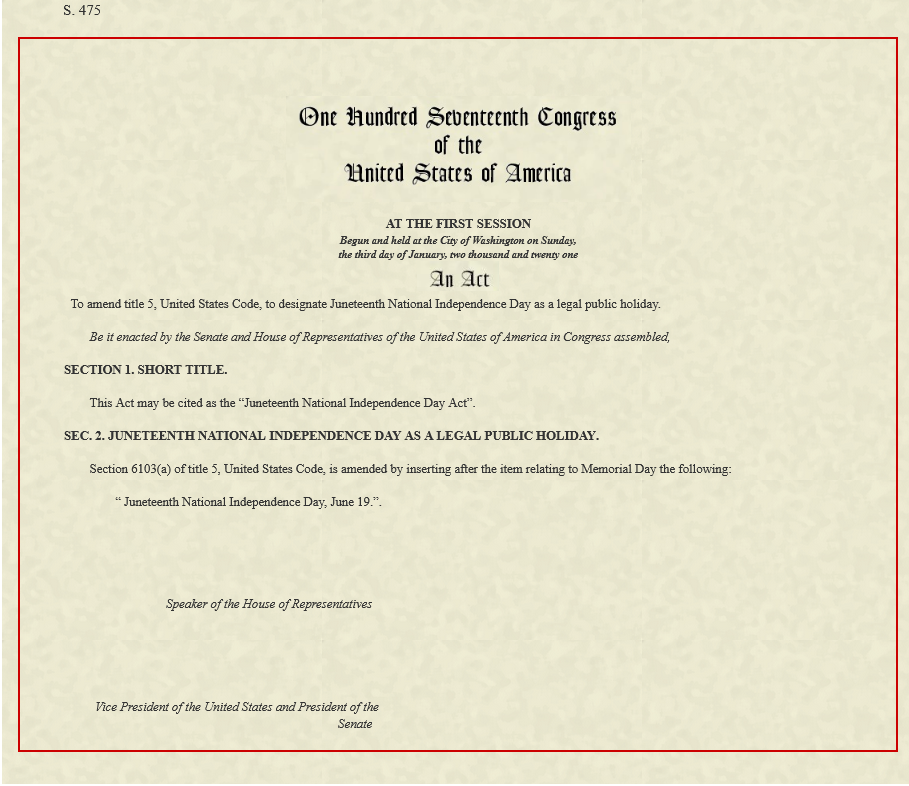
This new law inserts Juneteenth in the law governing when flags should be flown for holidays and commemorations — so we might assume without looking too much deeper, we should fly the U.S. flag on Friday, June 18, when the federal holiday is celebrated with a day off, and on Saturday, June 19, the actual date of Juneteenth.
Fly your flag Friday and Saturday, for Juneteenth, noting triumphs of freedom over slavery, accurate information over destructive propaganda, and a great advance in human rights for the world.
Text of the law making Juneteenth a federal holiday; enrolled version from the U.S. Senate.
Of course you know to fly your flag on June 14 for Flag Day — but did you know that the week containing Flag Day is Flag Week, and we are encouraged to fly the flag every day?
Clifford Berryman’s 1901 Flag Day cartoon, found at the National Archives: “In this June 14, 1904, cartoon, Uncle Sam gives a lesson to schoolchildren on the meaning of Flag Day. Holding the American flag in one hand, Uncle Sam explains that the flag has great importance, unlike the Vice Presidency, which he ridicules in a kindly manner. (National Archives Identifier 6010464)”
On June 14, 1885, Bernard J. Cigrand placed a 10-inch, 38-star flag in a bottle on his desk at the Stony Hill School in Ozaukee County, Wisconsin. The 19-year-old teacher then asked his students to write essays on the flag and its significance to them. This small observance marked the beginning of a long and devoted campaign by Cigrand to bring about national recognition for Flag Day.
And so we do, today, still.
Yes, this is an encore post. Defeating ignorance takes patience and perseverance.
Spread the word; friends don't allow friends to repeat history.
“Flag Day, Pittsburgh, Pennsylvania.” 1942 photo by John Vachon (1914-1975) for the U.S. Farm Security Administration/Office of War Information. Image from the National Archives and Records Administration (NARA)
Fathers Day, third Sunday in June (June 20 in 2021)
Several states celebrate statehood. New Hampshire, Virginia, Arkansas, Kentucky, Tennessee and West Virginia celebrate statehood; Kentucky and Tennessee share the same date.
Kentucky, June 1 (1792, 15th state)
Tennessee, June 1 (1796, 16th state)
Arkansas, June 15 (1836, 25th state)
West Virginia, June 20 (1863, 35th state)
New Hampshire, June 21 (1788, 9th state), and
Virginia, June 25 (1788, 10th state)
Additionally, Congress passed a resolution designating the week in which June 14th falls as National Flag Week, and urging that citizens fly the flag each day of that week. In 2021 that would be the week of June 13, which falls on Sunday, through June 19.
Flag-flying days for June, listed chronologically:
Kentucky and Tennessee statehood, June 1
Flag Day, June 14; National Flag week, June 10 to 16
Arkansas statehood, June 15 (duplicating a day in National Flag Week)
Fathers Day, June 17
West Virginia statehood, June 20
New Hampshire statehood, June 21
Virginia statehood, June 25
As you know, any resident may fly the flag any day of the year, under the etiquette provided in the Flag Code.
National Archives caption: This illustration entitled, “Flag Day – 1900”, by cartoonist Clifford Berryman, which appeared in the Washington Post on June 14, 1900, depicts the growth of American influence in the world as the European powers watch in the background as new century is ushered in.
Flag Day, 1918, at Fort Sam Houston, Texas. Photo by Miles F. Weaver (1879-1932), from the collection of the National Archives (NARA)
Yes, this is an encore post. Defeating ignorance takes patience and perseverance.
Save
Spread the word; friends don't allow friends to repeat history.
On Memorial Day, flags should be flown at half-staff until noon, then raised to full staff (and retired at sunset).
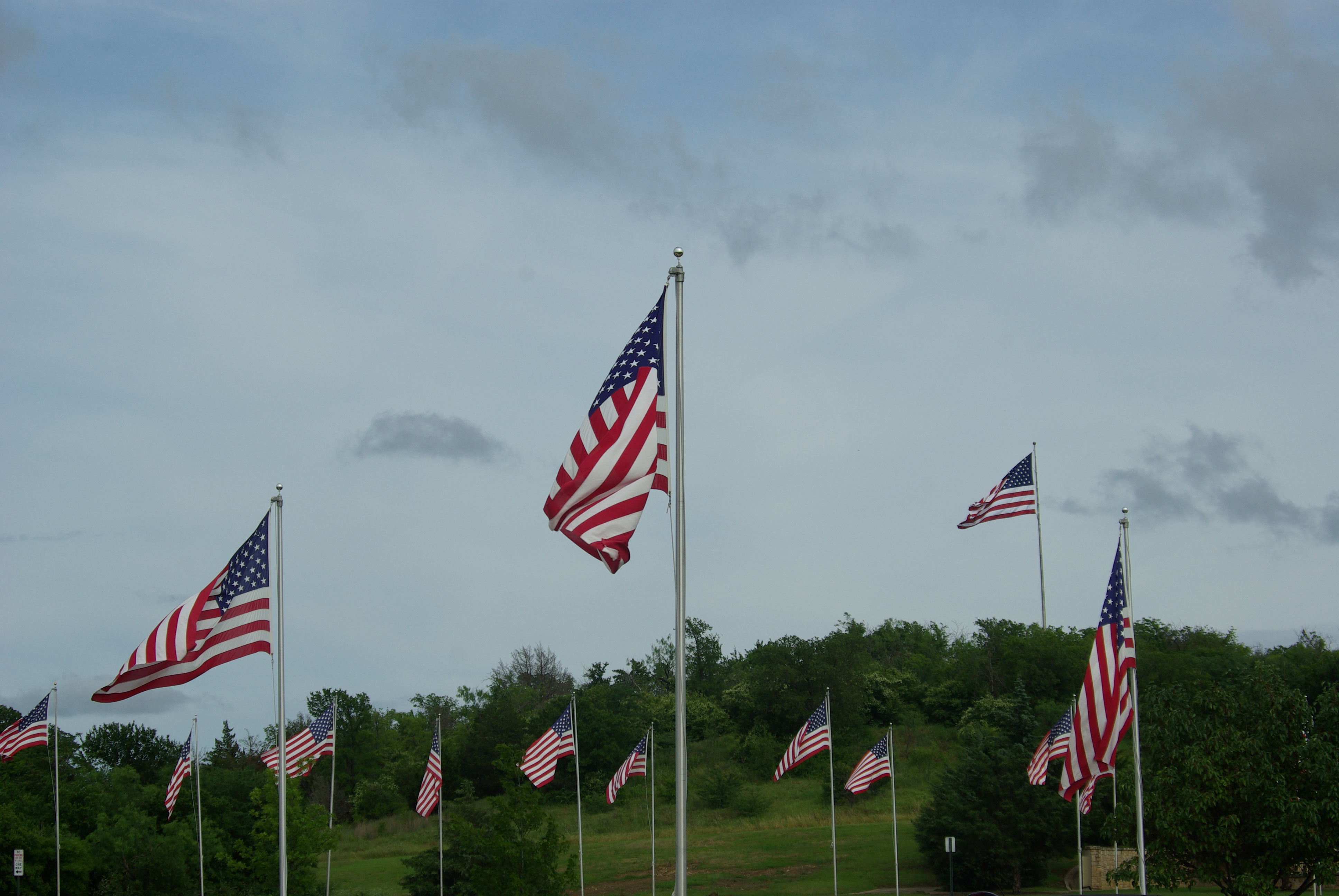
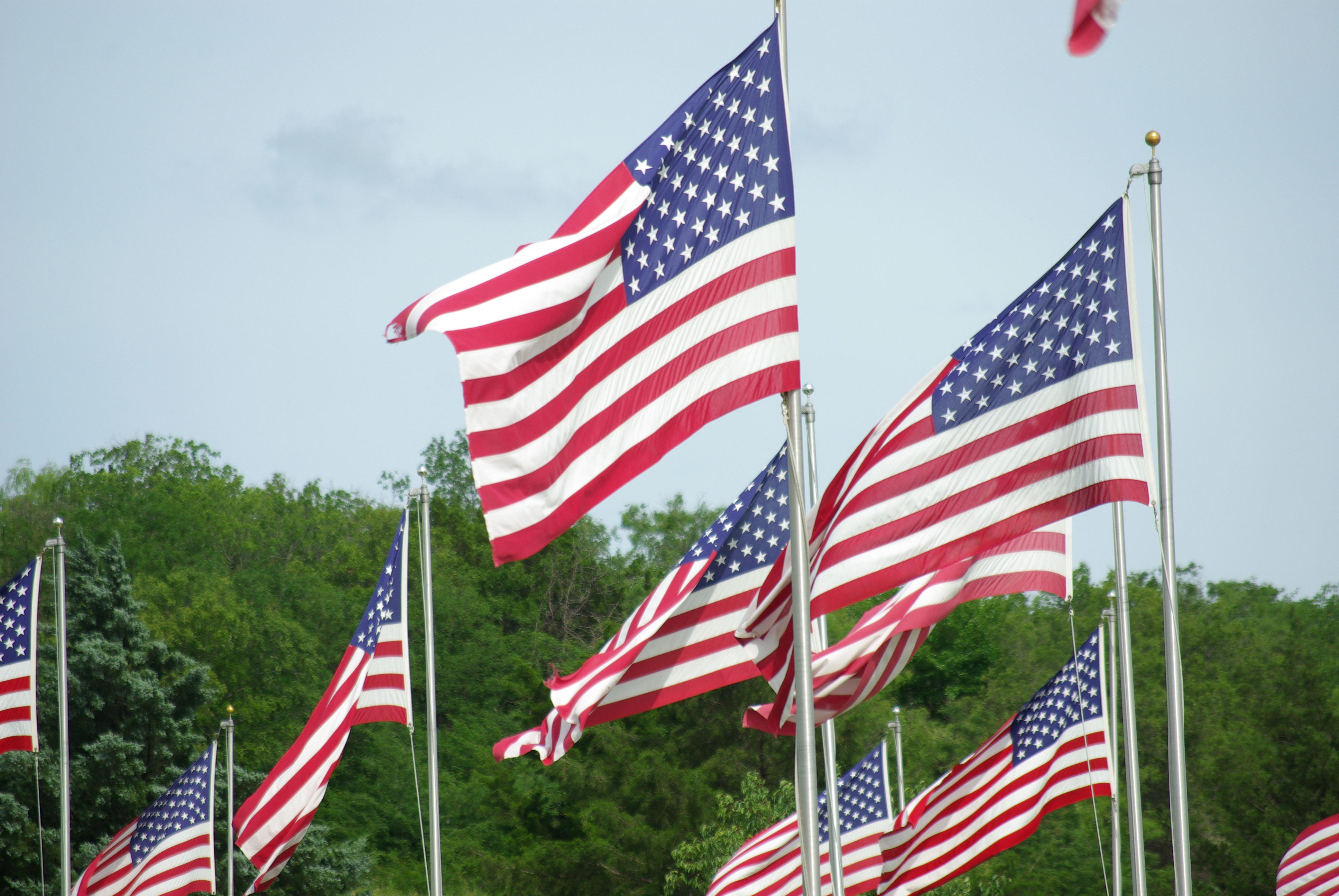
U.S. flags flying at the Dallas-Fort Worth National Cemetery, for Memorial Day 2015. Photo by Ed Darrell. Please use.
Just a reminder: When posting a flag to half-staff,it should be raised with gusto to full staff, then slowly lowered to the half-staff position. On Memorial Day, when changing the flag’s position at noon, simply raise the flag briskly to full staff. At retirement, the flag should be lowered in a stately fashion.
U.S. flags flying at the Dallas Fort Worth National Cemetery, for Memorial Day 2015. You may use this photo.
U.S. Flag Code asks for flag flying only on the actual Memorial Day holiday, which floats on the last Monday in May. It’s become tradition in much of Texas to fly flags all through the weekend. Fine by me.
Most residential flag poles lack a way to display a flag at half staff. In that case, fly the flag at full staff.
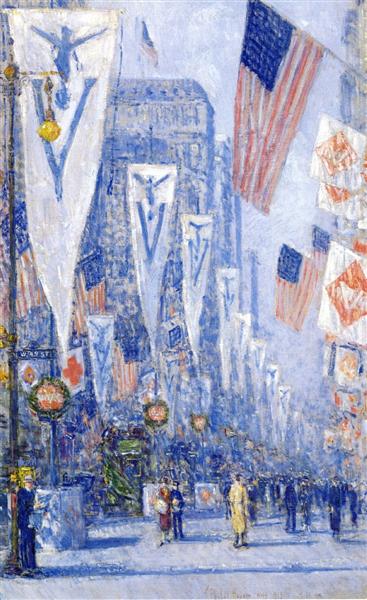
Childe Hassam, “Victory Day, May 1919,” 1919, oil on canvas, 36 x 21 3/4 inches (91.4 x 55.2 cm), American Academy of Arts and Letters, NY. There were at least twenty-three paintings in Hassam’s series of flag paintings. This Victory Day celebration no longer occurs, though there are several other May days to fly the colors.
Twelve events on fourteen days to fly the U.S. flag. May could be quite busy for flag fliers.
Law Day, May 1, AND
Loyalty Day, May 1
Victory in Europe Day, May 8
Mothers Day, May 9
Minnesota Statehood, May 11
Peace Officers Memorial Day, May 15 (half-staff flags; the law for Police Week calls for flags to be half-staff the entire week in which May 15 occurs, May 9-15 in 2021)
Armed Forces Day, May 17
National Maritime Day, May 22
South Carolina Statehood, May 23, AND
Wisconsin Statehood, May 23
Rhode Island Statehood, May 29
Memorial Day, May 31
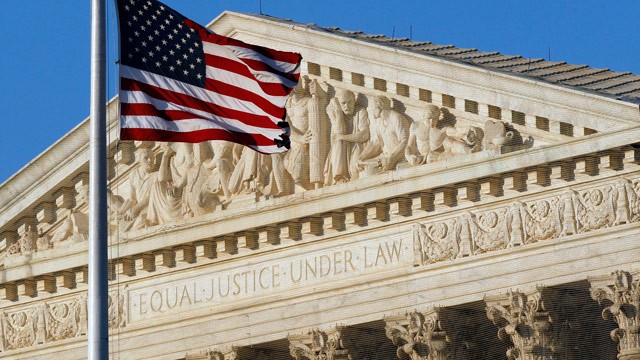
US flag flying at the U.S. Supreme Court’s west portico, suitable for Law Day, May 1. (But this photo was taken in June, 2012; Alex Brandon/AP)
Save
Save
Yes, this is mostly an encore post. Fighting ignorance requires patience.
Spread the word; friends don't allow friends to repeat history.
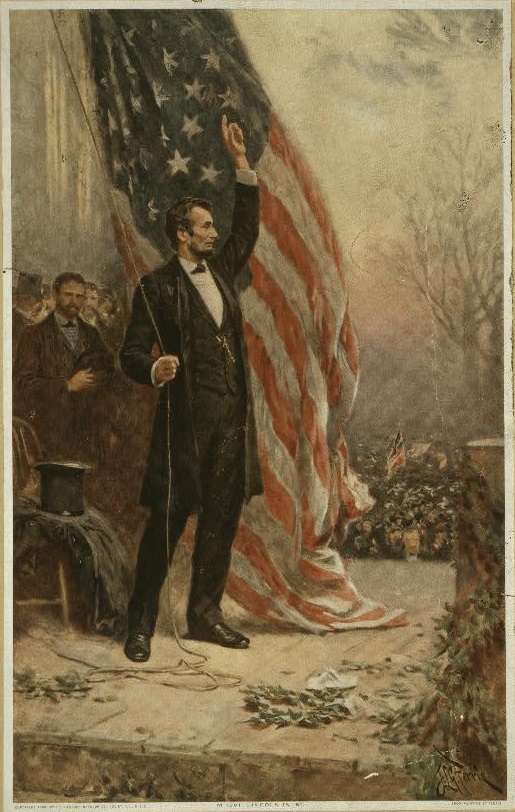
Lincoln at Independence Hall, February 22, 1861, raising a flag in honor of George Washington’s birthday; Library of Congress image via Lincoln’s Cottage
You want to mark your calendar so you remember to put your U.S. flag up on those dates designated by law and tradition, right?
Is the flag flying a bit more easily and briskly, with the new administration in Washington?
Massachusetts statehood, February 6 (6th state, 1788)
Lincoln’s birthday, February 12 (yes, it’s still designated in law as a date to fly the flag)
Oregon statehood, February 14 (33rd state, 1859)
Arizona statehood, February 14 (48th state, 1913)
Washington’s birthday, now designated President’s Day, the third Monday in February, February 15 in 2021 (Washington’s actual birthday is February 22 on the Gregorian calendar; some people fly the flag then, also)
You may fly your flag on state holidays, too — which of those dates do we see in February? Is there a good list? (I don’t have one.)
Though we don’t mark it usually, February 14 is the anniversary of the first recognition of the Stars and Stripes by a foreign government, in 1778. The French fleet recognized the ensign carried by Capt. John Paul Jones, at Quiberon Bay.
February 23 is the anniversary of the raising of the U.S. flag on Iwo Jima, in 1945 — 76 years ago. We should probably watch for proclamations to fly the flag on that date, an anniversary made more important simply because so few survivors of from among the veterans of that war and that fight can be expected to live to see the 80th anniversary. Regardless any official, formal proclamation to fly the flag for the Iwo Jima events, you may always fly your flag.
Image of Lincoln and the flag is in the collection of the Library of Congress, probably more than once; artist is Jean Louis Gerome Ferris, and thought to be circa 1908, in Detroit, Michigan
Yes, some of this is an encore post. Defeating ignorance takes patience and perseverance.
Spread the word; friends don't allow friends to repeat history.
Martin Luther King, Jr., speaking at microphones, during anti-war demonstration, New York City in 1967 / World Journal Tribune photo by Don Rice. Library of Congress image.
Remember to fly your U.S. flag today in honor of the Rev. Dr. Martin Luther King, Jr.
While King’s birthday is January 15, the law setting up a day to honor King puts the holiday on the third Monday of January every year.
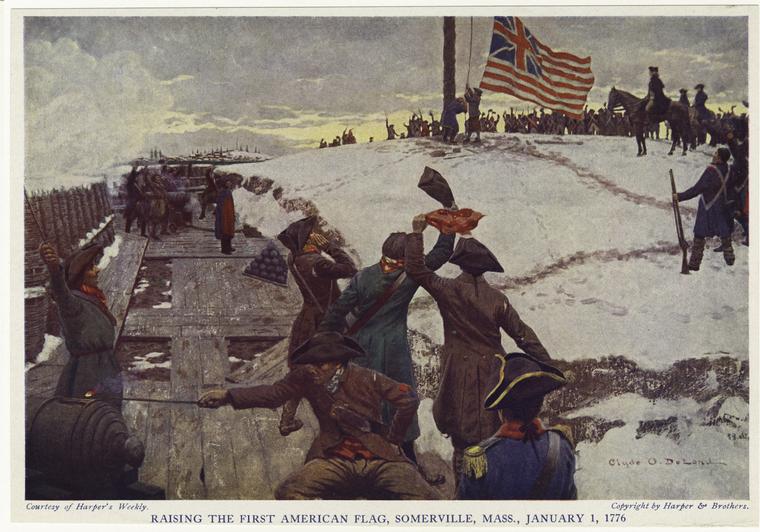
“Raising the first American flag, Somerville, Mass., January 1, 1776.” Harper’s Weekly painting by Clyde Osmer DeLand, 1897. From the digital collections of the New York Public Library; yes, MFB has used this painting before. I like it.
One problem with January’s flag flying dates is that if I snooze a little, you miss a lot. There are four flag-flying dates in the first five days of January: New Year’s Day and statehood days for Georgia, Alaska and Utah. You, Dear Reader, are alert and didn’t let any of those dates pass unmarked if you’re in those states, right?
There are six more dates to go in January 2021, including New Mexico’s statehood today. We’re not halfway done, yet.
In January 2020, the U.S. Flag Code urges citizens to fly flags on these dates, listed chronologically:
New Year’s Day, January 1, a federal holiday
January 2, Georgia Statehood Day
January 3, Alaska Statehood Day
January 4, Utah Statehood Day
January 6, New Mexico Statehood Day
January 9, Connecticut Statehood Day
Martin Luther King’s Birthday, a federal holiday on the third Monday of January; that date is January 18, in 2021; King’s actual birthday is January 15, and you may fly your flag then, too
Inauguration Day, January 20, the year after election years; 2021 will see the inauguration of President Joseph R. Biden (first President named Joe; what took so long?)
January 26, Michigan Statehood Day
January 29, Kansas Statehood Day
You may fly your flag any other day you wish, too; flags should not be flown after sundown unless they are specially lighted, or at one of the few places designated by Congress or Presidential Proclamation for 24-hour flag flying. According to Wikipedia’s listing, those sites include:
Fort McHenry, Baltimore, Maryland (Presidential Proclamation No. 2795, July 2, 1948).
Flag House Square, Albemarle and Pratt Streets, Baltimore, Maryland (Public Law 83-319, approved March 26, 1954).
Lexington Battle Green, Lexington, Massachusetts (Public Law 89-335, approved November 8, 1965).
White House, Washington, D.C. (Presidential Proclamation No. 4000, September 4, 1970).
Washington Monument, Washington, D.C. (Presidential Proclamation No. 4064, July 6, 1971, effective July 4, 1971).
Any port of entry to the United States which is continuously open (Presidential Proclamation No. 413 1, May 5, 1972).
Grounds of the National Memorial Arch in Valley Forge State Park, Valley Forge, Pennsylvania (Public Law 94-53, approved July 4, 1975).
Flag House in 1936, where Mary Pickersgill sewed the garrison-sized, 15-star flag that flew over Fort McHenry at the Battle of Baltimore in 1814; one of the sites where the U.S. flag may be flown 24 hours. The house is at 844 East Pratt & Albemarle Streets (Baltimore, Independent City, Maryland). Cropped image courtesy of the federal HABS—Historic American Buildings Survey of Maryland.
Save
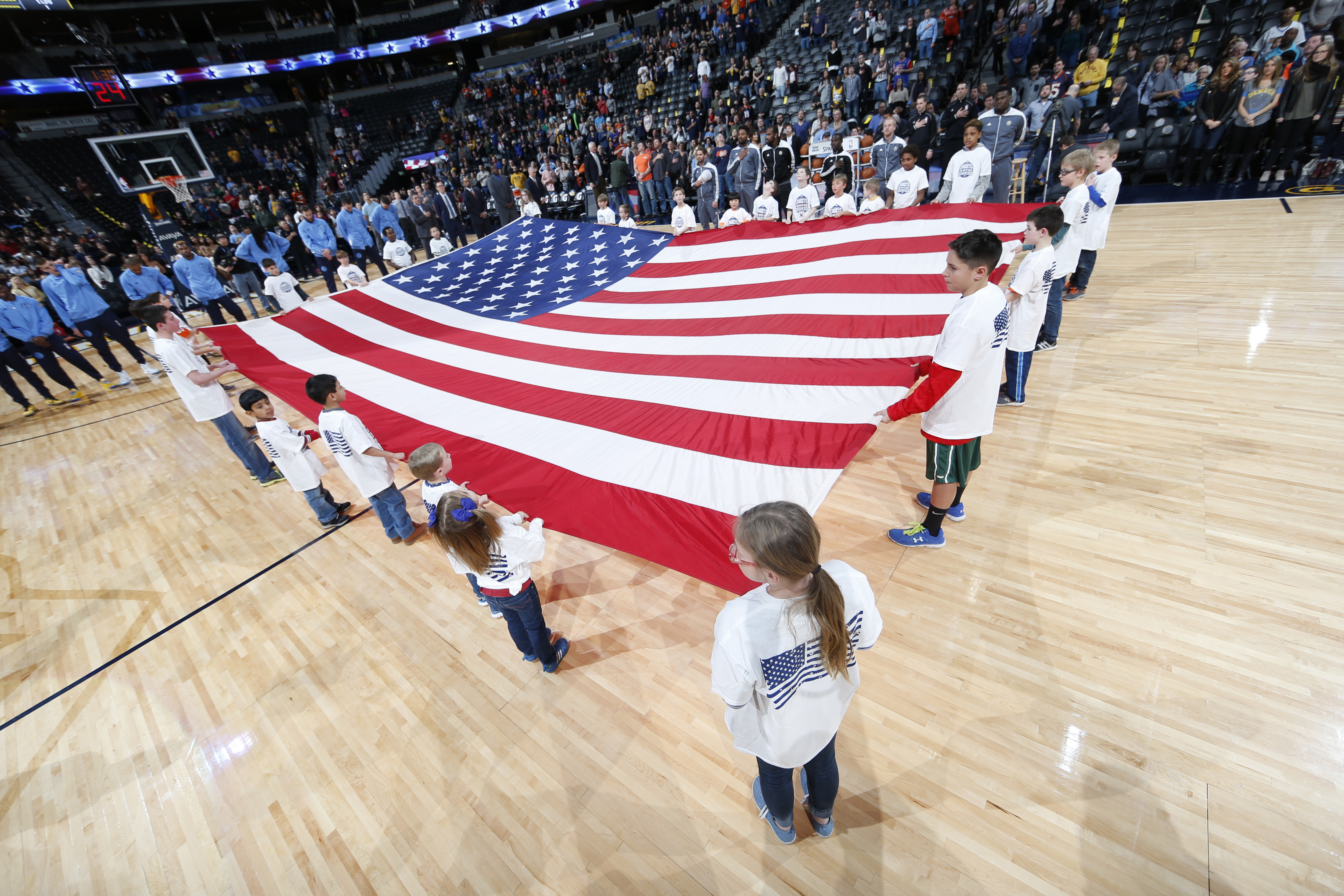
Children unfurl a large flag at a Denver Nuggets/Indiana Pacers NBA basketball game in Denver, January 2016. Colorado Public Radio image.Yes, this is an encore post. Defeating ignorance takes patience and perseverance.
Spread the word; friends don't allow friends to repeat history.
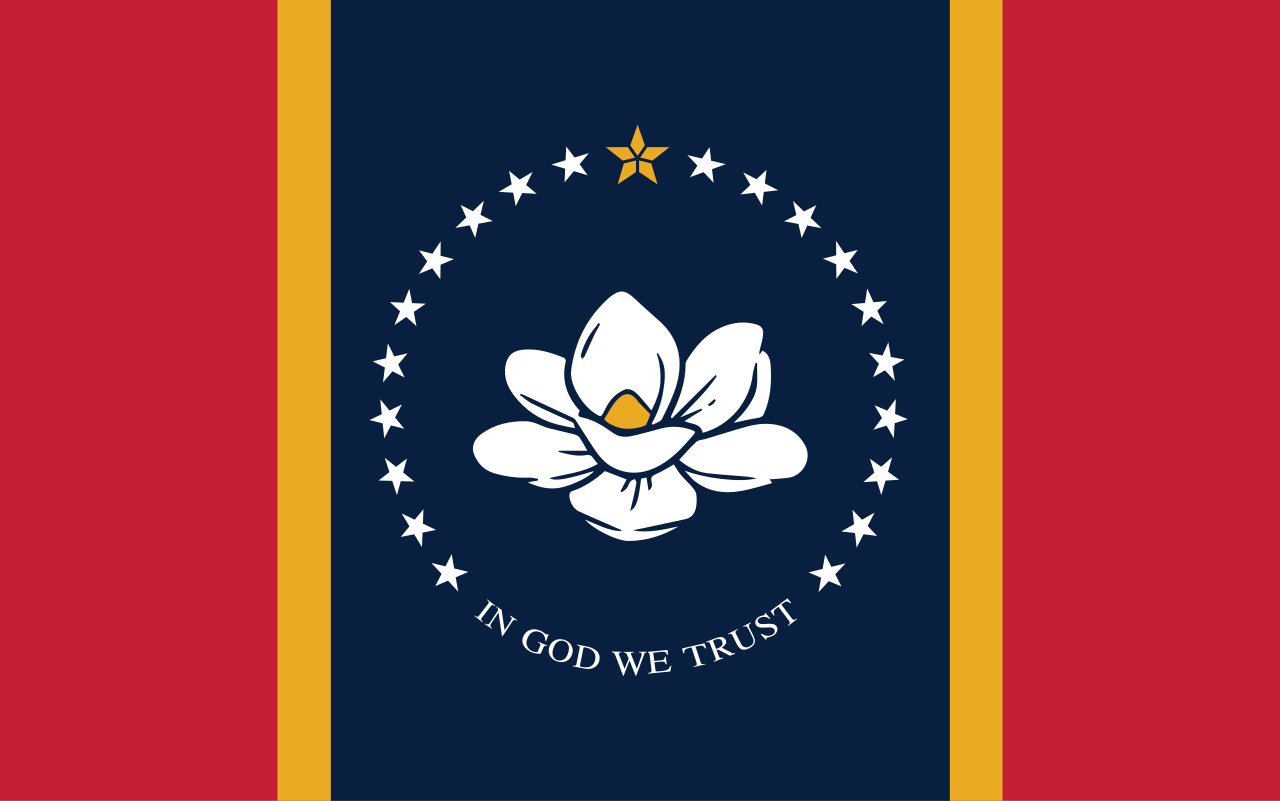
For statehood day this year, Mississippi has a new state flag.
Abandoning vestiges of the old Confederacy, Mississippi voters approved a new flag for the state in November, harkening back to its original flag featuring a magnolia tree. This flag is popularly called the “In God We Trust” flag, carrying the most recent of the “official” mottoes of the U.S. The flag change was prompted by Black Lives Matter protests following the killing of George Floyd
Illinois entered the Union on December 3, 1818. The twenty-first state takes its name from the Illinois Confederation—a group of Algonquian-speaking tribes native to the area. An Algonquian word, “Illinois” means “tribe of superior men.”
Remnants of a much earlier Algonquin civilization thought the most sophisticated prehistoric society north of Mexico, are preserved at the Cahokia Mounds State Historic Site in the southwestern part of the state.
French explorers Louis Jolliet and Jesuit Father Jacques Marquette entered the Illinois region in 1673. Control of the territory passed to Great Britain in 1763. When the United States acquired the land that became Illinois Territory in 1783, most European settlers there were of French descent. In 1788, the Continental Congress received information concerning the inhabitants of the Illinois area. “There are sundry French settlements on the river Mississippi within the tract,” the committee reported:
Near the mouth of the river Kaskaskies, there is a village which appears to have contained near eighty families from the beginning of the late revolution. There are twelve families in a small village at la Prairie duRochers, and near fifty families—the Kahokia village. There are also four or five families at fort Chartres and St. Philips, which is five miles farther up the river. The heads of families in those villages appear each of them to have had a certain quantity of arable land allotted to them, and a proportionate quantity of meadow and of woodland or pasture. The Committee…referred the memorial of George Morgan…respecting a tract of land in the Illinois, June 20, 1788. Documents from the Continental Congress and Constitutional Convention, 1774-1789
Twenty years later, Congress organized the Illinois Territory. Pioneers from Kentucky, Virginia, and Tennessee settled the southern part of the territory, while New Englanders ventured to northern Illinois via the Erie Canal.
Land of Lincoln, the state slogan, pays homage to famous son Abraham Lincoln. Born in Kentucky, Lincoln came to Illinois in 1830. He was instrumental, along with his colleagues in the Illinois legislature, in moving the state capital from Vandalia to Springfield. Settling there in 1837, Lincoln married socially prominent resident Mary Todd, practiced law, and built the political career that brought him the presidency in 1861.
Chicago, a minor trading post at the southwestern tip of Lake Michigan until the 1830s, developed into a railroad hub and industrial center. After the Civil War, industrialization attracted a new wave of immigrants. People from all over the U.S. and the world ventured to Chicago to work in the meat-packing and steel industries. Even the Great Conflagration of 1871 failed to prevent the Windy City from becoming one of the largest urban centers in the country. It remains the third most populous city and metropolitan area in the United States.
Search on Illinois in Map Collections to view a number of small towns in the state. See, for example, an 1880 map of Elgin, an 1869 map of Moline, or an 1869 map of Urbana.
Search on Jolliet or Marquette in France in America both in the interpretive text and collections sections to learn more about these explorers and the settlement of the West.
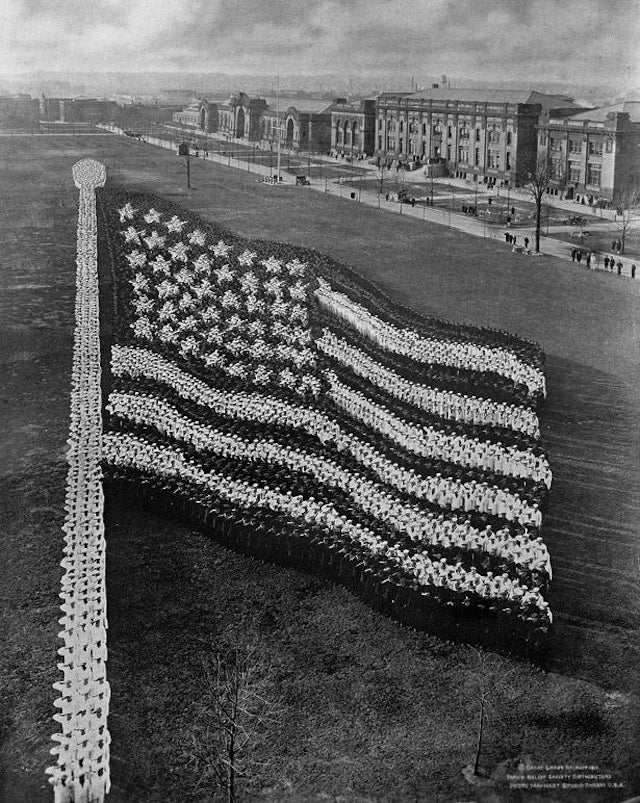
A “living flag” composed of 10,000 sailors, or “Blue Jackets at Salute,” by the Mayhart Studios, December 1917; image probably at the Great Lakes training facility of the Navy. Gawker media image
November offers several flag flying days, especially in years when there is an election.
But December may be the month with the most flag-flying dates, when we include statehood days.
December 25 is Christmas Day, a federal holiday, and one of the score of dates designated in the Flag Code. If you watch your neighborhood closely, you’ll note even some of the most ardent flag wavers miss posting the colors on this day, as they do on Thanksgiving and New Years and Easter.
Other dates?
Nine states attained statehood in December, so people in those states should fly their flags (and you may join them). Included in this group is Delaware, traditionally the “First State,” called that because it was the first former England colony to ratify the U.S. Constitution:
Illinois, December 3 (1818, 21st state)
Delaware, December 7 (1787, 1st state)
Mississippi, December 10 (1817, 20th state)
Indiana, December 11 (1816, 19th state)
Pennsylvania, December 12 (1787, 2nd state)
Alabama, December 14 (1819, 22nd state)
New Jersey, December 18 (1787, 3rd state)
Iowa, December 28 (1846, 29th state)
Texas, December 29 (1845, 28th state)
December 15 is Bill of Rights Day, marking the day in 1791 when the Bill of Rights was declared ratified; but though this event generally gets a presidential proclamation, there is no law or executive action that requires flags to fly on that date, for that occasion. I predict there will be no proclamation from the White House in 2020.
Eleven flag-flying dates in December. Does any other month have as many flag flying opportunities?
Have I missed any December flag-flying dates? 11 events on 10 days (Delaware’s statehood falls on the anniversary of the Pearl Harbor attack).
Here’s a list of the 10 days to fly the flag in December 2020, under national law, in chronological order:
Delaware, December 7 (1787, 1st state) (shared with Pearl Harbor Remembrance Day)
Mississippi, December 10 (1817, 20th state)
Indiana, December 11 (1816, 19th state)
Pennsylvania, December 12 (1787, 2nd state)
Alabama, December 14 (1819, 22nd state)
New Jersey, December 18 (1787, 3rd state)
Christmas Day, December 25
Iowa, December 28 (1846, 29th state)
Texas, December 29 (1845, 28th state)
Fly your flag with respect, for the flag, for the republic it represents, and for all those who sacrificed that it may wave on your residence.
Appropriate to a snowy December. “The Barn on Grayson-New Hope Road. This barn with its old truck and ever-present American flag, is often the subject of photographs and paintings by the locals.” Photo and copyright by Melinda Anderson
Save
Save
Yes, this is an encore post. Defeating ignorance takes patience and perseverance. Plus, I like these photos.
Spread the word; friends don't allow friends to repeat history.
The Major, a very large U.S. flag made in honor of Maj. Brent R. Taylor, Mayor of North Ogden, Utah, killed in action in Afghanistan in 2018. The flag flew at the mouth of Coldwater Canyon. The flag is a quarter-acre in size, more than 100 feet on the longest side. North Ogden plans an annual celebration of the U.S. flag in early November. Photo by Ben Dorger, for the Ogden Standard-Examiner newspaper.
2020 is not exactly flying by — but November 3 will probably change our perception of how fast time moves, and how the year moves at all.
Do we even fly our flags during a pandemic? Sure we do.
Eight events spread over seven different days come with urgings to fly the U.S. flag in November: Six states celebrate statehood, Veterans Day falls as always on November 11, and Thanksgiving Day on November 26.
Did I say eight? Elections are dates to fly the flag. 2020 is a presidential election year — in Texas, May and other election dates for counties, cities and school boards were moved to November. (Some thought a pandemic would surely be over by November. Who knew?)
You may fly your flag at home on election day, too. (Yes, flags should be flown at all early polling places, on days of early voting, too — do you know of poll where that did not occur? Tell us in comments.)
Two states, North Dakota and South Dakota, celebrate their statehood on the same date. Washington’s statehood day falls on Veterans Day, November 11 — so there are only seven days covering nine events.
In calendar order for 2019, these are the seven days:
North Dakota statehood day, November 2 (1889, 39th or 40th state)
South Dakota statehood day, November 2 (1889, 39th or 40th state) (shared with North Dakota)
Election day, November 3 (all states; federal offices) — Go vote!
Montana statehood day, November 8 (1889, 41st state)
Veterans Day, November 11
Washington statehood day, November 11 (1889, 42nd state) (shared with Veterans Day)
Oklahoma statehood day, November 16 (1907, 46th state)
North Carolina statehood day, November 21 (1789, 12th state)
Thanksgiving Day, fourth Thursday in November (November 26 in 2020)
Most Americans will concern themselves only with Veterans Day and Thanksgiving Day. Is flying the U.S. flag for statehood day a dying tradition?
President William Howard Taft signing the proclamation that made New Mexico a state, on January 6, 1912. (Other people in the photo, I have not yet identified; can you help?). Image from Library of Congress Harris and Ewing Collection, via Albuquerque Historical Society.
New Mexico became the 47th member of the Union on January 6, 1912. New Mexicans should fly their U.S. flags today in honor of statehood, the U.S. Flag Code urges.
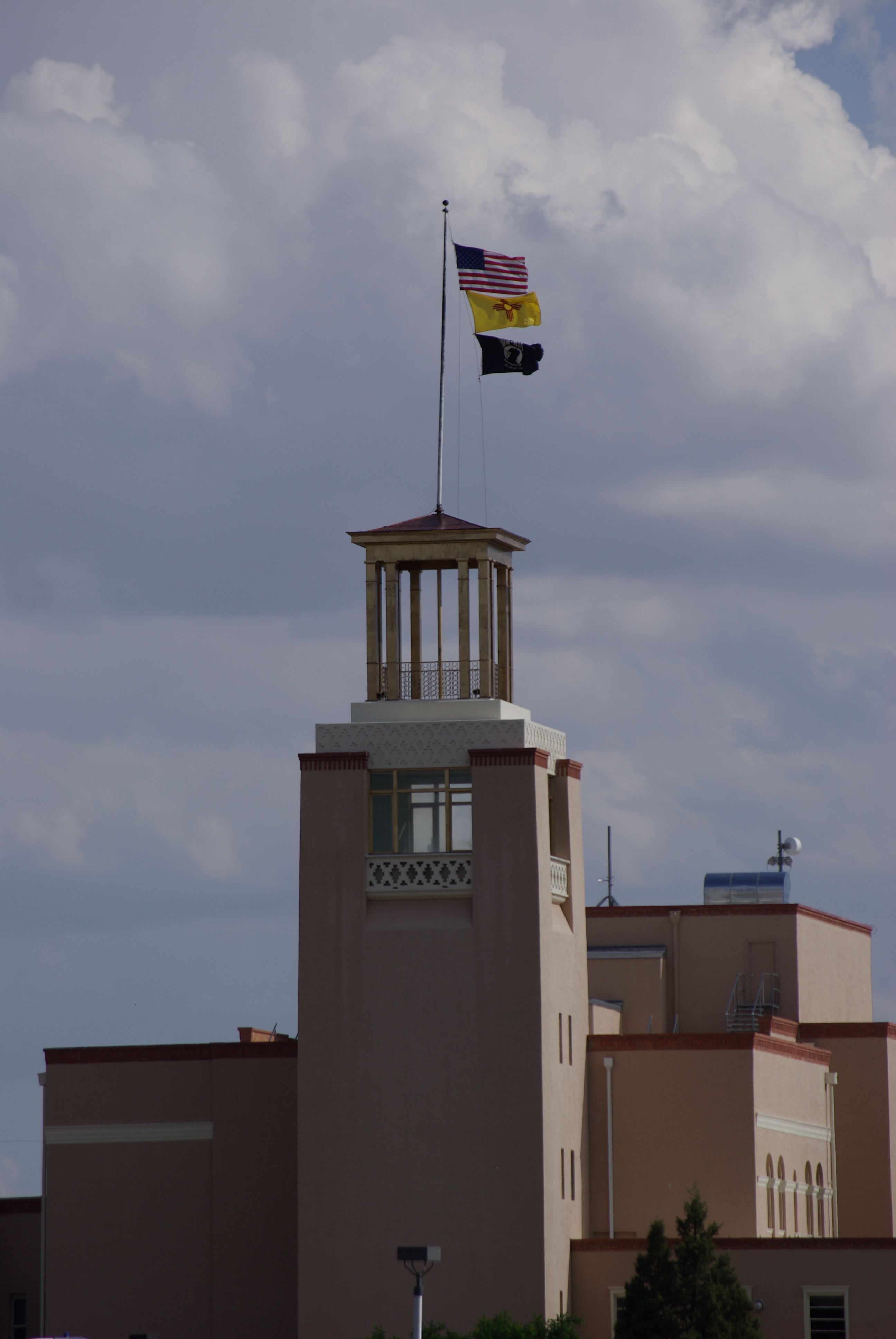
U.S. and New Mexico flags fly from the state education administration building in Santa Fe, 2014. The third flag is the U.S. POW/MIA flag.
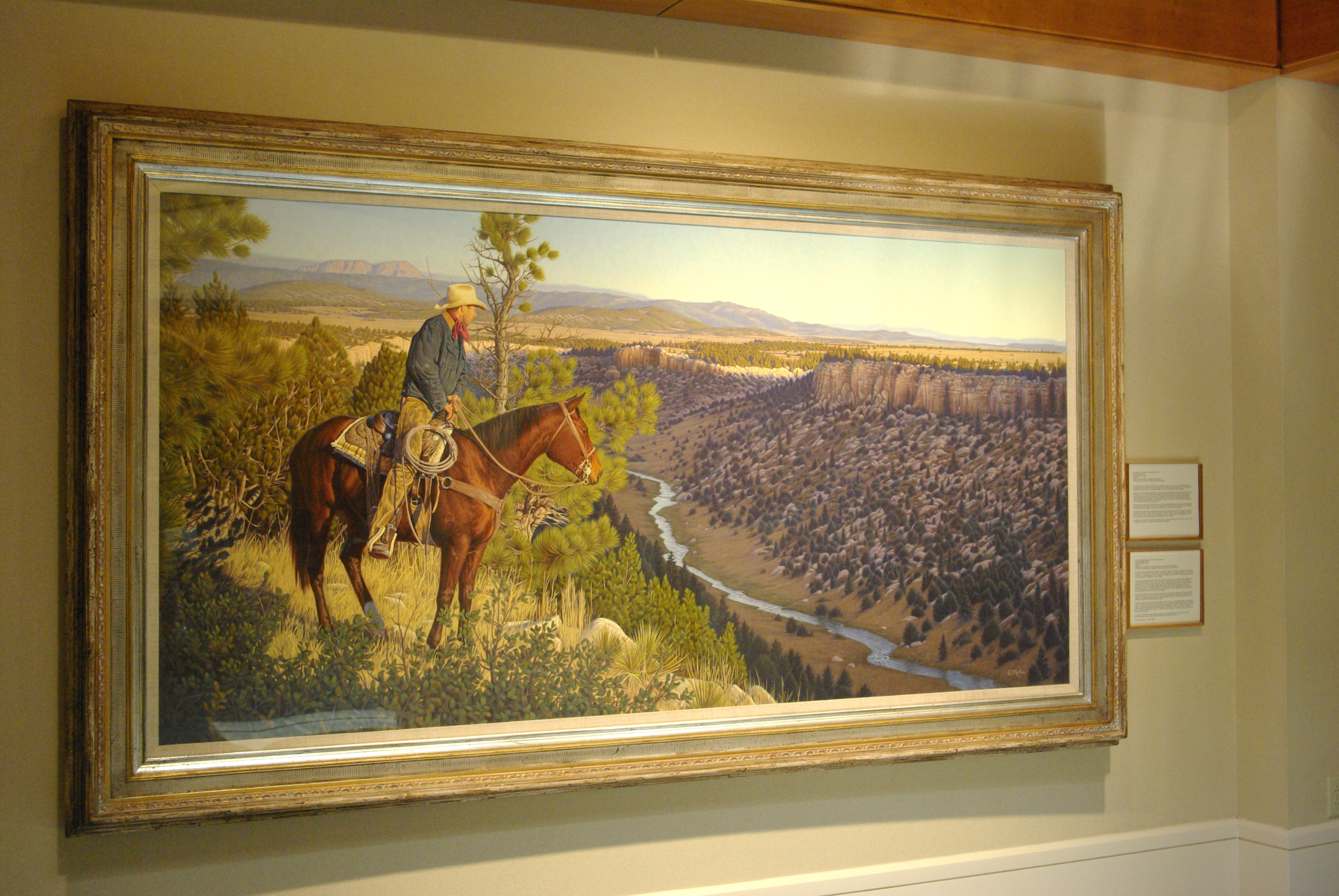
I don’t think Statehood Day is a big deal in New Mexico. New Mexicans love art, though, and statehood and history of the land and the peoples who live there are celebrated throughout Santa Fe and New Mexico. The New Mexico Art Museum features a lot about history.
The New Mexico State Capitol is one of the more unique in the U.S. There is no grand dome. Instead, the building is a large, circular structure, a giant kiva, honoring New Mexico’s ancient residents and ancestors.
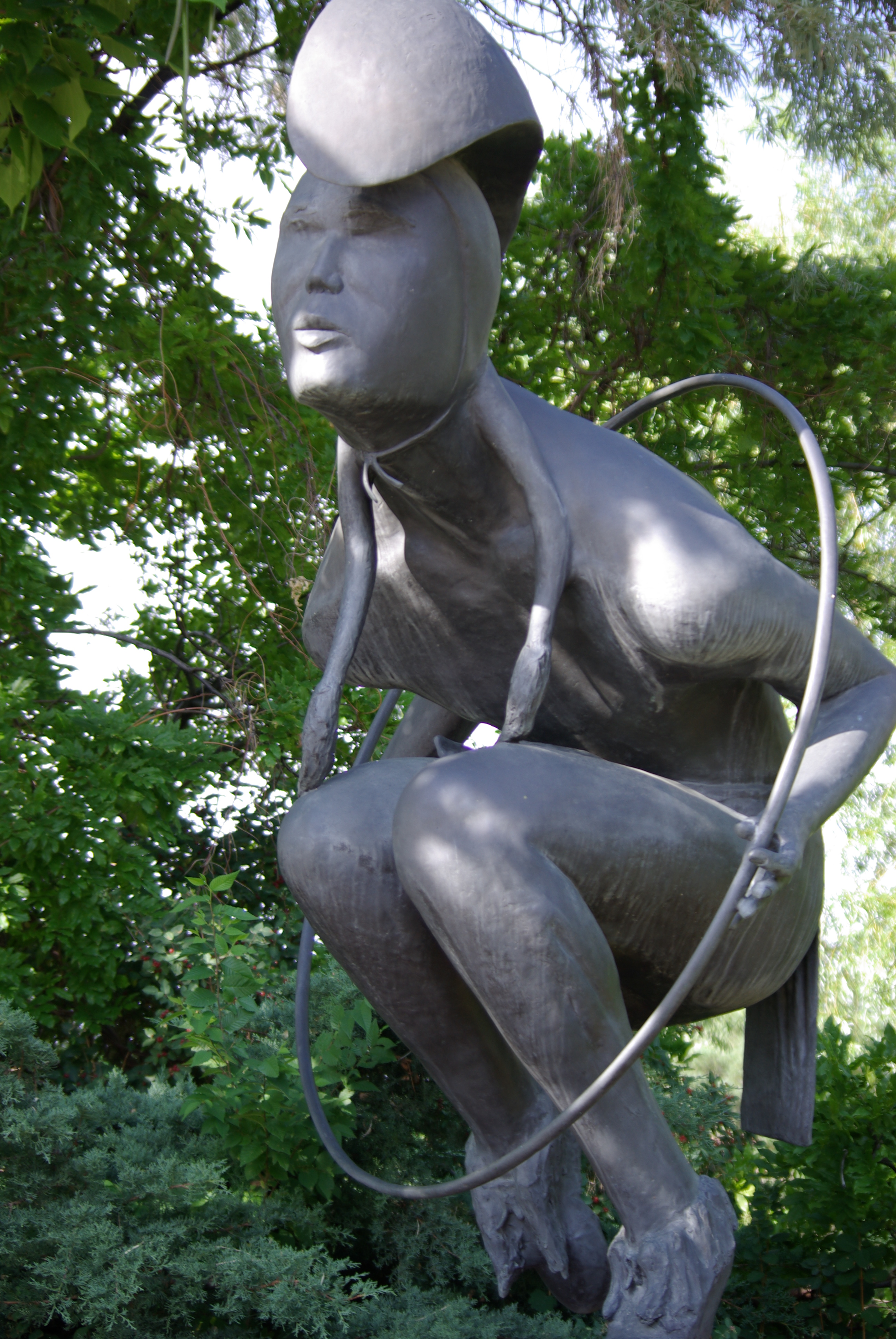
“Emergence,” a representation of the creation of the present Earth and people, by Michael A. Naranjo, 2000. Part of the massive collection of New Mexico Art at the State Capitol — this one outside the building itself.
“Simple Pleasures of New Mexico,” stunning painting in acrylic by Gary Morton, 1992
If you’re in Santa Fe, plan to spend a half of a day, at least, looking at the Capitol and its art collections. There are more than 400 pieces on display, sculpture, paintings, mixed media, and more. It’s a world class gallery, free for the browsing. Much of the art packs a powerful emotional punch, too, such as the sculpture outside the building honoring the vanished native tribes of North America.
USPS stamp honoring the centennial of New Mexico’s statehood, in 2012. The stamp features a representation of the beauty of the state found in its desert hills and mountains. VirtualStampClub.com
Yes, this is an encore post. Defeating ignorance takes patience and perseverance.
Spread the word; friends don't allow friends to repeat history.
“Raising the first American flag, Somerville, Mass., January 1, 1776.” Harper’s Weekly painting by Clyde Osmer DeLand, 1897. From the digital collections of the New York Public Library
January is loaded with flag flying dates, when we add in statehood days, dates those states are invited to fly their U.S. flags.
In January 2020, the U.S. Flag Code urges citizens to fly flags on these dates, listed chronologically:
New Year’s Day, January 1, a federal holiday
January 2, Georgia Statehood Day
January 3, Alaska Statehood Day
January 4, Utah Statehood Day
January 6, New Mexico Statehood Day
January 9, Connecticut Statehood Day
Martin Luther King’s Birthday, a federal holiday on the third Monday of January; that date is January 20, in 2020; King’s actual birthday is January 15, and you may fly your flag then, too
Inauguration Day, January 20, the year after election years; 2020 is not an inauguration year; 2021 will be
January 26, Michigan Statehood Day
January 29, Kansas Statehood Day
You may fly your flag any other day you wish, too; flags should not be flown after sundown unless they are specially lighted, or at one of the few places designated by Congress or Presidential Proclamation for 24-hour flag flying. According to Wikipedia’s listing, those sites include:
Fort McHenry, Baltimore, Maryland (Presidential Proclamation No. 2795, July 2, 1948).
Flag House Square, Albemarle and Pratt Streets, Baltimore, Maryland (Public Law 83-319, approved March 26, 1954).
Lexington Battle Green, Lexington, Massachusetts (Public Law 89-335, approved November 8, 1965).
White House, Washington, D.C. (Presidential Proclamation No. 4000, September 4, 1970).
Washington Monument, Washington, D.C. (Presidential Proclamation No. 4064, July 6, 1971, effective July 4, 1971).
Any port of entry to the United States which is continuously open (Presidential Proclamation No. 413 1, May 5, 1972).
Grounds of the National Memorial Arch in Valley Forge State Park, Valley Forge, Pennsylvania (Public Law 94-53, approved July 4, 1975).
Flag House in 1936, where Mary Pickersgill sewed the garrison-sized, 15-star flag that flew over Fort McHenry at the Battle of Baltimore in 1814; one of the sites where the U.S. flag may be flown 24 hours. The house is at 844 East Pratt & Albemarle Streets (Baltimore, Independent City, Maryland). Cropped image courtesy of the federal HABS—Historic American Buildings Survey of Maryland.
Save
Children unfurl a large flag at a Denver Nuggets/Indiana Pacers NBA basketball game in Denver, January 2016. Colorado Public Radio image.Yes, this is an encore post. Defeating ignorance takes patience and perseverance.
Spread the word; friends don't allow friends to repeat history.
Or, until that account is unsuspended by the forces supporting Donald Trump: Follow @FillmoreWhite, the account of the Millard Fillmore White House Library
We've been soaking in the Bathtub for several months, long enough that some of the links we've used have gone to the Great Internet in the Sky.
If you find a dead link, please leave a comment to that post, and tell us what link has expired.
Thanks!
Retired teacher of law, economics, history, AP government, psychology and science. Former speechwriter, press guy and legislative aide in U.S. Senate. Former Department of Education. Former airline real estate, telecom towers, Big 6 (that old!) consultant. Lab and field research in air pollution control.
My blog, Millard Fillmore's Bathtub, is a continuing experiment to test how to use blogs to improve and speed up learning processes for students, perhaps by making some of the courses actually interesting. It is a blog for teachers, to see if we can use blogs. It is for people interested in social studies and social studies education, to see if we can learn to get it right. It's a blog for science fans, to promote good science and good science policy. It's a blog for people interested in good government and how to achieve it.
BS in Mass Communication, University of Utah
Graduate study in Rhetoric and Speech Communication, University of Arizona
JD from the National Law Center, George Washington University


 Posted by Ed Darrell
















 Millard Fillmore's Bathtub