Odd conjunction of history: January 21, Louis XVI and Vladimir I. Lenin

January 21, 2012

The Dallas Morning News and the Associated Press inform us that France’s King Louis XVI died on January 21, 1793.  In 1924, Russian revolutionary Vladimir I. Lenin died on January 21.

Portrait of Louis XVI

France's King Louis XVI died on January 21, 1793. He is seen here in his most famous portrait, in happier times. Image via Wikipedia

Both died of strokes, but of different kinds of strokes.  Lenin’s was a cerebral stroke; Louis’s was the stroke of the blade of a guillotine.

Painting of Lenin in front of the Smolny Institute, circa 1925,  by Isaak Brodsky - Wikipedia

Lenin died on January 21, 1924. Painting of Lenin in front of the Smolny Institute, circa 1925, by Isaak Brodsky

Ruminations on the date, and the men:  How much of current history can be understood by studying those two events, and those two men?  How much if we add in George Washington, and Napoleon, other men affected by revolution?

A few years ago I had a sophomore student spell out the importance of people in history.  Israel Pena observed that  Americans got rid of their king through revolution, and ended up with George Washington as leader, and then president.  Washington’s modeling of his life after the Roman patriot Cincinattus led Washington to resign as commander of the Continental Army when the warring was done, instead of declaring himself king, and then later to step down from the presidency after two terms, to promote peaceful retirement of presidents.  The French got rid of their king through revolution in 1789, but in the chaos that followed, got Napoleon who took over the government after battlefield victories against France’s enemies.  Then Napoleon declared himself emperor, and took off on a reign of conquest and war across Europe.

Mr. Pena’s commentary compared only those two nations.  What if we add in a third, Russia?  Russia got rid of its king (czar) through revolution in 1917.  In the chaos that followed it got a government led by Lenin, and upon Lenin’s early death, taken over by Joseph Stalin.

George Washington, by Gilbert Stuart - Wikipedia

George Washington, by Gilbert Stuart - Wikipedia

Is the future written by the character of the men who run the government?  One might make a good case of that in the deaths paint most of the picture we really need to have, that of Louis XVI, at the age of 39, on the guillotine; of Vladimir I. Lenin, at the age of 53, of stroke, both still working to cling to the strings of power; and compare the death in 1799 of George Washington, at the age of 67, of complications from a strep throat, in retirement and in his bed at Mount Vernon, Virginia; and of Napoleon Bonaparte, 52, probably from stomach cancer, while he suffered in humiliating exile on the far distant South Atlantic isle of St. Helena, in 1821.

The Emperor Napoleon in His Study at the Tuileries, by Jacques-Louis David, 1812 - Wikipedia

The Emperor Napoleon in His Study at the Tuileries, by Jacques-Louis David, 1812 - Wikipedia

Revolution marked these men, three of whom led them, and the fourth of whom was put out of power by one.  Whose life would you have preferred to follow?  Which of these lives is most meritorious of modeling?


Fly your flag today, in honor of the Rev. Dr. Martin Luther King, Jr.

January 16, 2012

You already have it up and waving, right?  Did I really need to remind you?

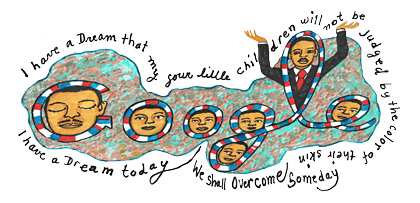
Google logo for Martin Luther King, Jr., Day 2012

Google logo for Martin Luther King, Jr., Day 2012 - click for more information

Fly your flag today, in honor of our nation, and in honor of our nation’s honoring the memory and legacy of the Rev. Dr. Martin Luther King, Jr.

U.S. law encourages Americans to fly the U.S. flag on holidays and a few other occasions. Congress set aside the third Monday in January as a holiday to commemorate the life of the Rev. Dr. Martin Luther King, Jr.

To honor Dr. King, for several years civil rights leaders and others have urged us to find some way to serve our communities on this day — Americans have done it long enough to make it a tradition. Here’s the official find-a-way-to-serve page from the the federal government; look out your window, go spend a few minutes at your city hall, post office, or at the biggest church in town, or walk into any middle school in America, and opportunities to serve will caress you at every turn.

More, much more:

King, by photographer Ben Fernandez's "Countdown to Eternity"

King, by photographer Ben Fernandez's portfolio of photos from one year in the life of Dr. King, "Countdown to Eternity"

MLK logo from Google mlk2010

Google's logo for Martin Luther King, Jr. Day, 2010 - click for more information


Happy 254th birthday, Alexander Hamilton!

January 11, 2012

Today, January 11,  is Alexander Hamilton’s birthday — had he lived so long, he’d be 254 years old today!

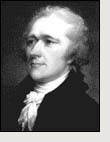
Alexander Hamilton on the U.S. ten dollar note - Guardian image

Alexander Hamilton on the U.S. ten dollar note - Guardian image

But of course, the bullet from Aaron Burr’s gun cut Hamilton’s life short, after the duel in Weehawken, New Jersey. Hamilton died of the wound on July 12, 1804. He was 47 years old.

Had Hamilton survived the duel, would he have been elected president? Some people think so. In any case, Hamilton’s wise management of the new nation’s finances, and his establishment of the idea that government should have a working bank, and that good government is a key to economic success of a nation, leave a great legacy for the nation, and the world.

Hamilton’s portrait adorns the U.S. $10 bill.

Read Hamilton’s biography from the U.S. National Archives’ feature on “America’s Founding Fathers/Charters of Freedom” exhibit:

Alexander Hamilton

Alexander Hamilton

Hamilton was born in 1757 on the island of Nevis, in the Leeward group, British West Indies. He was the illegitimate son of a common-law marriage between a poor itinerant Scottish merchant of aristocratic descent and an English-French Huguenot mother who was a planter’s daughter. In 1766, after the father had moved his family elsewhere in the Leewards to St. Croix in the Danish (now United States) Virgin Islands, he returned to St. Kitts while his wife and two sons remained on St. Croix.

The mother, who opened a small store to make ends meet, and a Presbyterian clergyman provided Hamilton with a basic education, and he learned to speak fluent French. About the time of his mother’s death in 1768, he became an apprentice clerk at Christiansted in a mercantile establishment, whose proprietor became one of his benefactors. Recognizing his ambition and superior intelligence, they raised a fund for his education.

In 1772, bearing letters of introduction, Hamilton traveled to New York City. Patrons he met there arranged for him to attend Barber’s Academy at Elizabethtown (present Elizabeth), NJ. During this time, he met and stayed for a while at the home of William Livingston, who would one day be a fellow signer of the Constitution. Late the next year, 1773, Hamilton entered King’s College (later Columbia College and University) in New York City, but the Revolution interrupted his studies.

Although not yet 20 years of age, in 1774-75 Hamilton wrote several widely read pro-Whig pamphlets. Right after the war broke out, he accepted an artillery captaincy and fought in the principal campaigns of 1776-77. In the latter year, winning the rank of lieutenant colonel, he joined the staff of General Washington as secretary and aide-de-camp and soon became his close confidant as well.

In 1780 Hamilton wed New Yorker Elizabeth Schuyler, whose family was rich and politically powerful; they were to have eight children. In 1781, after some disagreements with Washington, he took a command position under Lafayette in the Yorktown, VA, campaign (1781). He resigned his commission that November.

Hamilton then read law at Albany and quickly entered practice, but public service soon attracted him. He was elected to the Continental Congress in 1782-83. In the latter year, he established a law office in New York City. Because of his interest in strengthening the central government, he represented his state at the Annapolis Convention in 1786, where he urged the calling of the Constitutional Convention.

In 1787 Hamilton served in the legislature, which appointed him as a delegate to the convention. He played a surprisingly small part in the debates, apparently because he was frequently absent on legal business, his extreme nationalism put him at odds with most of the delegates, and he was frustrated by the conservative views of his two fellow delegates from New York. He did, however, sit on the Committee of Style, and he was the only one of the three delegates from his state who signed the finished document. Hamilton’s part in New York’s ratification the next year was substantial, though he felt the Constitution was deficient in many respects. Against determined opposition, he waged a strenuous and successful campaign, including collaboration with John Jay and James Madison in writing The Federalist. In 1787 Hamilton was again elected to the Continental Congress.

When the new government got under way in 1789, Hamilton won the position of Secretary of the Treasury. He began at once to place the nation’s disorganized finances on a sound footing. In a series of reports (1790-91), he presented a program not only to stabilize national finances but also to shape the future of the country as a powerful, industrial nation. He proposed establishment of a national bank, funding of the national debt, assumption of state war debts, and the encouragement of manufacturing.

Hamilton’s policies soon brought him into conflict with Jefferson and Madison. Their disputes with him over his pro-business economic program, sympathies for Great Britain, disdain for the common man, and opposition to the principles and excesses of the French revolution contributed to the formation of the first U.S. party system. It pitted Hamilton and the Federalists against Jefferson and Madison and the Democratic-Republicans.

During most of the Washington administration, Hamilton’s views usually prevailed with the President, especially after 1793 when Jefferson left the government. In 1795 family and financial needs forced Hamilton to resign from the Treasury Department and resume his law practice in New York City. Except for a stint as inspector-general of the Army (1798-1800) during the undeclared war with France, he never again held public office.

While gaining stature in the law, Hamilton continued to exert a powerful impact on New York and national politics. Always an opponent of fellow-Federalist John Adams, he sought to prevent his election to the presidency in 1796. When that failed, he continued to use his influence secretly within Adams’ cabinet. The bitterness between the two men became public knowledge in 1800 when Hamilton denounced Adams in a letter that was published through the efforts of the Democratic-Republicans.

In 1802 Hamilton and his family moved into The Grange, a country home he had built in a rural part of Manhattan not far north of New York City. But the expenses involved and investments in northern land speculations seriously strained his finances.

Meanwhile, when Jefferson and Aaron Burr tied in Presidential electoral votes in 1800, Hamilton threw valuable support to Jefferson. In 1804, when Burr sought the governorship of New York, Hamilton again managed to defeat him. That same year, Burr, taking offense at remarks he believed to have originated with Hamilton, challenged him to a duel, which took place at present Weehawken, NJ, on July 11. Mortally wounded, Hamilton died the next day. He was in his late forties at death. He was buried in Trinity Churchyard in New York City.

Image: Courtesy of The National Portrait Gallery, Smithsonian Institution

Post mostly borrowed, with express permission, from Mr. Darrell’s Wayback Machine.

Remember to watch for progress on “The Alexander Hamilton Mixtape,” a hip-hop version of Alexander Hamilton’s life by Lin-Manuel Miranda, seen here performing Aaron Burr’s soliloquey, at the White House.


Make plans now: Carl Sagan Day, November 9

October 25, 2011

Press release from the Center for Inquiry:

Carl Sagan Day: November 9 — Celebrate with us!
Event Ideas & Sagan Day Commemorative Posters

Carl Sagan Day Poster 2011Carl Sagan was a Professor of Astronomy and Space Science and Director of the Laboratory for Planetary Studies at Cornell University, but most of us know him as a Pulitzer Prize winning author and the creator of COSMOS. That Emmy and Peabody award-winning PBS television series transformed educational television and continues to affect the hearts and minds of over a billion people in over sixty countries.

No other scientist has been able to reach and engage so many nonscientists in such a meaningful way, and that is why we honor Dr. Sagan, remember his work, and revel in the cosmos he helped us understand.

Two years ago, CFI–Fort Lauderdale and other groups hostd the first Carl Sagan Day event in Florida.  It was a fantastic success and now individuals and groups around the world are planning their own tributes with science fairs, planetarium shows, teacher workshops, star parties, COSMOS marathons, and more—all to say “Thanks!” to Sagan and to bring his gifts to another generation of “starstuff.”

How can you celebrate Carl Sagan Day?

Whether you’re an independent skeptics group, an astronomy club, a science department, a researcher, a teacher, a student, or just a really big Sagan fan, there are plenty of ways to celebrate Sagan Day:

  • Host a COSMOS marathon—all 13 episodes are available for free at hulu.com.
  • Check out Sagan’s many books at your local library or bookstore using the thorough listings from WorldCat.org.
  • Enjoy the special collection of articles by or about Sagan, previously published in Skeptical Inquirer magazine.
  • Listen to Sagan’s last public address for the Committee for Skeptical Inquiry (formerly CSICOP) as replayed on CFI’s podcast, Point of Inquiry: “Wonder and Skepticism.”
  • Listen to Ann Druyan, writer, producer, and widow of Sagan, discuss life with Carl, his outlook on life, and his famous Gifford Lectures, “The Varieties of Scientific Experience,” also on Point of Inquiry.
  • Host your own apple pie baking contest (from scratch, of course).
  • Dress like Carl for a day!
  • Refresh your skeptic skills with a review of Sagan’s Baloney Detection Kit.
  • Invite your friends over and try to convince them you have a dragon in your garage.
  • Take in a star show at your local planetarium.
  • At the very least, seek out a dark sky, look UP, and reconnect with the grandeur of the cosmos.

Let us know how you’re planning to commemorate Carl Sagan Day 2011 and we’ll add your event to our Carl Sagan Day Event Calendar to help spread the word.  Please email your event information to grassroots@centerforinquiry.net.

Great collection of posters, featuring Sagan, the Very Large Array, and quotes from the good doctor, here.

November 9 is the anniversary of Sagan’s birth, of course.


Pete Seeger: STILL standing taller than his critics

September 6, 2011

(This is almost completely an encore post — one that should get more circulation.  From four years ago, in 2007.  I have not updated years or ages — sharpen your math skills, and do it as you go.)

Some people can’t let go of the past, and like the greedy chimpanzee who grasps the rice in the jar, and then is trapped when he cannot pull out his fist nor will he give up his prize to save his freedom, they trap themselves out of a good life.

  • Cover to Pete Seeger album

    Cover of 1996 album of songs, "Pete." Seeger, born May 3, 1919, is 88 years old now.

Like this fellow, whose father’s dislike of an old political position of Pete Seeger kept them both from a good concert. He appears to agree with his father, though, thinking that somehow Seeger is responsible for the evils of Stalinism, and complaining that Seeger was tardy in making note of the fact that Stalin was evil. And Instapundit’s Glenn Reynolds agrees, profanely, and inaccurately, as I’ll explain below the fold. But heed this warning: I’m explaining at length.

Get a life, people! Pete Seeger did.

Read the rest of this entry »


June 7, 1776: Politics, heavy lifting and Richard Henry Lee

June 7, 2011

Thomas Jefferson got much of the glory, and we celebrate July 4.

We might learn about how politics works, and who does the heavy lifting, if we remember the full history.

Richard Henry Lee by Charles Wilson Peale

Richard Henry Lee by Charles Wilson Peale (wikimedia)

On June 7, 1776, Richard Henry Lee of Virginia rose in the 2nd Continental Congress to propose a resolution calling for a declaration of independence of the thirteen colonies, from Britain.

Lee came to Philadelphia as a delegate to the First Continental Congress in 1774, and was reappointed to the Second Continental Congress.

On June 7, 1776, Lee proposed a resolution which read in part:

Resolved: That these United Colonies are, and of right ought to be, free and independent States, that they are absolved from all allegiance to the British Crown, and that all political connection between them and the State of Great Britain is, and ought to be, totally dissolved.

He had returned to Virginia by the time the Declaration of Independence was drafted and approved on July 2, but he signed the document when he returned to Congress.

Lee served as president of the Second Continental Congress (November 1784 to November 1785), and after the formation of the United States, as U.S. Senator from Virginia.  In the Senate, he was President pro tempore.

Richard Henry Lee's resolution calling for a declaration of independence - National Archives

Richard Henry Lee's resolution calling for a declaration of independence - image from the National Archives


May 7: Anniversary of the 27th Amendment to the Constitution

May 8, 2011

Oops.  I forgot this anniversary yesterday.

September 25, 1789, Congress had approved and enrolled the proposals, and sent twelve proposed amendments to the Constitution to the states for ratification.  Ten of the twelve amendments were approved, rather quickly, and by 1791 the were attached to the Constitution.  These ten we now call the Bill of Rights.

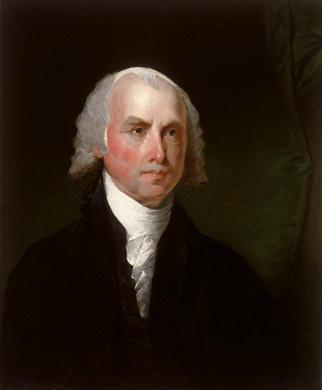
James Madison before he was president

James Madison proposed the first 10 Amendments to the Constitution, and the 27th Amendment; the 203 years it took to ratify the 27th Amendment is the longest legislative process in the history of the U.S., and probably the world.

The two proposals that failed to earn the required approval of three-fourths of the 13 states fell into a special limbo for Constitutional amendments that became clear only in the late 1970s when Congress discussed how long to wait for states to approve the Equal Rights Amendment (this is a much-simplified explanation, I know).  Congress put deadlines on the ratification process in the late 20th century, but the first twelve proposals had no deadlines, nor did any other proposal before the Equal Rights Amendment proposal.  In the 1980s, Congress passed a law that said any amendments floating around, unapproved, would be considered dead after a date certain.  There were six amendments in that category.

Before that date certain passed, more states took a look at one of James Madison’s 1789 proposals.  They liked it, and they ratified it — 34 states total.

That amendment became the 27th Amendment to the Constitution, on May 7, 1992, 203 years after it was proposed:

No law, varying the compensation for the services of the Senators and Representatives, shall take effect, until an election of Representatives shall have intervened.

This is the longest legislative procedure in U.S. history, perhaps the longest ever — it lasted much longer than many nations.  By that ratification in 1992, James Madison became the person who proposed both the first, and last amendments to the Constitution.

Madison’s reaching out from the grave 156 years after his death — he died on June 28, 1836 — is one of the greatest legislative coups in history, too.


Cinco de Mayo is NOT Mexico’s Independence Day

May 5, 2011

(Mostly an encore post, from 2009)

You thought Cinco de Mayo was Independence Day for Mexico?

No, it’s not.

History.com has a nice explanation, with a nice little video

Perhaps the U.S. should celebrate the day, too, at least in those states who were not in the old Confederacy. On May 5, 1862, Mexicans under the command of 33 year old Commander General Ignacio Zaragoza Seguín stopped the quick advance of superior French forces trying to invade Mexico to take it over, at the Battle of Puebla. While France did eventually defeat Mexican forces (after getting 30,000 men in reinforcements), the spirit of May 5 inspired Mexicans to continue to fight for freedom. And ultimately, Mexican forces overpowered and captured the French forces and Emperor Maximilian, who was executed.

Thus ended a great hope for the Confederacy, that French-supported Mexican Army would lend aid to the Confederates in their struggle to secede from the Union.

It is one of the great what-ifs of history: What if France had kept Mexico, and what if French-led Mexican forces backed up the Confederate Army?

One thing is rather sure: Had that happened, and had the Confederacy been successful, we wouldn’t be celebrating Cinco de Mayo in Texas today.

Battle of Puebla, Wikimedia (artist?)

Battle of Puebla, Wikimedia (artist?)

Mexican Independence Day is September 16.

_______________________________________

Update: Sam DeBerry sends a note that Seguin was a Texan. So the Mexican hero of the Battle of Puebla was a Texan. You couldn’t make this stuff up — real history is always more interesting than fiction.


Scouts Shooting for the Moon: The story of twelve Moon walkers, and Scouting

April 30, 2011

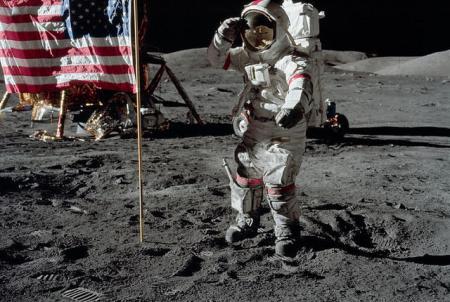
1cernan_jump_salutes_flag_-_gpn-2000-001273_0

Astronaut and 2nd Class Boy Scout Eugene Cernan saluted the U.S. flag on the Moon, on the last Apollo mission, Apollo 17. Photography by Astronaut and Tenderfoot Scout Harrison Schmitt. NASA image.

A short piece I presented this morning to the Tom Harbin Scout Museum Symposium on Scout History, a great morning organized by Bob Reitz, the curator of the Tom Harbin Scout Museum at Camp Wisdom, in Dallas, Texas. Of course the material is copyrighted, but by all means you have permission to use the material at Courts of Honor or in recounting the better history of Boy Scouting.

Scouts Shooting for the Moon:  The story of twelve Moon walkers, and Scouting

This is a recreation with modern numbers of a presentation first used a decade ago. Searching for material for a speech to honor Eagles at our District Dinner, several people suggested in a short period of time, ‘Why not talk about the astronauts who landed on the Moon. I hear they were all Eagle Scouts.’  Was that accurate?  It would have been a good story if so. Research revealed something quite different. The true story can carry just as much inspiration, however. Scouting is shown to be a program that can lead to a lifetime of adventure and accomplishment. Also, Eagles may take some inspiration in knowing they have accomplished something most of the men who walked on the Moon did not.

Speakers constantly need good material for Eagle Scout Courts of Honor and other events honoring Scouts and Scouters. For one event honoring a group of new Eagle Scouts, several people urged that I research the facts behind the story they had heard, that most, or all of the men who walked on the Moon were Eagle Scouts. New Eagles would find comfort in knowing they had soared into the midst of such company, they reasoned.

So it came to pass that, before the advent of Wikipedia and Google, I spent hours on the telephone until a press person at NASA pointed out to me a collection of information on astronauts that NASA had thoughtfully put on-line. At some high cost I printed out the few pages that dealt with the Scouting experience of astronauts, and worked to correlate it with information about which of them had gone to the moon, and which had not.

Anyone can find that book online with ease, today. The NASA Astronaut Fact Book provides information on almost every detail about NASA’s crew of astronauts, past and present. It includes one-and-a-half pages on the Scouting background of people working as astronauts and payload specialists for NASA, and others NASA has launched into manned missions. Cross-indexing that information with lists of Apollo Mission astronauts, I created four short tables showing the Apollo astronauts who went to the Moon, their missions, and the Scout rank they achieved, if any.

Lunar Astronauts and Scouting Experience

Twelve Moon Walkers

Name Mission Dates on the Moon Scout Rank
1 Neil Armstrong Apollo 11 July 21, 1969 Eagle Scout
2 Buzz Aldrin Apollo 11 July 21, 1969 Tenderfoot Scout
3 Pete Conrad Apollo 12 November 19-20, 1969 Cub Scout
4 Alan Bean Apollo 12 November 19-20, 1969 1st Class
5 Alan Shepard Apollo 14 February 5-6, 1971 1st Class
6 Edgar Mitchell Apollo 14 February 5-6, 1971 Life Scout
7 David Scott Apollo 15 July 31-August 2, 1971 Life Scout
8 James Irwin Apollo 15 July 31-August 2, 1971 None
9 John Young Apollo 16 April 21-23, 1972 2nd Class
10 Charles Duke Apollo 16 April 21-23, 1972 Eagle Scout
11 Eugene Cernan Apollo 17 December 11-14, 1972 2nd Class
12 Harrison Schmitt Apollo 17 December 11-14, 1972 Tenderfoot Scout

Apollo 13

Name Mission Dates on the Moon Scout Rank
1 Jim Lovell Apollo 13 Lunar Swingby Eagle Scout
2 Jack Swigert Apollo 13 Lunar Swingby 2nd Class
3 Fred Haise Apollo 13 Lunar Swingby Star

Lunar Missions That Did Not Land

Name Mission Dates on the Moon Scout Rank
1 Frank Borman Apollo 8 Orbited only None
2 Jim Lovell Apollo 8 (&13) Orbited only Eagle Scout
3 William Anders Apollo 8 Orbited only Life Scout
4 Tom Stafford Apollo 10 Orbited only Star Scout
5 John Young Apollo 10 (& 16) Orbited only 2nd Class
6 Eugene Cernan Apollo 10 (& 17) Orbited only 2nd Class

Others Who Did Not Land

Name Mission Dates on the Moon Scout Rank
1 Michael Collins Apollo 11 Capsule pilot None
2 Dick Gordon Apollo 12 Capsule pilot Star Scout
3 Stewart Roosa Apollo 14 Capsule pilot None
4 Al Worden Apollo 15 Capsule pilot 1st Class
5 Ken Mattingly Apollo 16 Capsule pilot Life Scout
6 Ronald Evans Apollo 17 Capsule pilot Life Scout

In all, 24 men flew to the Moon. Twelve set foot on the lunar surface. Of the twelve, eleven were Scouts, two were Eagles. Of the 24, 20 were Scouts, three were Eagles.

At the time I originally researched, about 70% of all astronauts were alumni of Scouting, men and women. Officially, BSA lists 181 NASA astronauts as being alumni, 57.4%

NASA lists the colleges and universities astronauts attended. NASA lists military service, hometowns, and states of birth. But with the possible exception of a generic category of “public schools,” no category of astronauts is larger than the category of Scouting experience. If we were advising a young person on how to get to become an astronaut, we would be remiss if we did not advise him or her to join Scouting.

What can we conclude?

Three things became apparent to me in tracking these figures down. One, I learned once again that the true stories most often carry great value, more value than the stories people make up, or assume.

Two, I learned that Scouting by itself carries great value, without a Scout’s having earned Eagle. We know that not all the Moon walkers earned the Eagle rank. But we also notice that no flight ever went to the Moon without at least two Scouts aboard. Three of the 24 lunar voyagers are Eagles, 12.5%. Two of the dozen who actually set foot on the Moon are Eagles, 16.7%. Eleven of the twelve Moon walkers were Scouts, 91.7%. 21 of 24 lunar voyagers were Scouts, 87.5%.

So, while it was not necessary to be an Eagle, it certainly seemed to help. But simply having Scouting experience seemed to be the biggest help. There may be some magic in a boy’s having taken that oath that carries through his entire life, and spurs him to do daring and great things. That is important. A trend begins to emerge. Scouting by itself, without earning the highest rank, provides great value. When a boy signs up, he signs on for the adventure of a lifetime, and often that leads to a lifetime of adventure. That venturesome spirit carries on well past his Scouting years.

The story of Jim Lovell might carry some great weight with Scouts. Lovell is the only person to have gone to the Moon twice, but never set foot on it. He was the commander of Apollo 13, whose near-disaster was chronicled in the movie of the same name. Among other lessons that might be pulled out of the story:  When your Moon-bound spaceship explodes and loses power on the way to the Moon, it is often good to have an Eagle Scout handy to help get through the experience and return safely.

Is there inspiration here?

When I first presented these figures at a Scout meeting, a parent asked me whether these numbers would discourage boys from working for any rank advancement, since just being a Scout seems to carry such weight. This should not discourage Eagles, nor discourage any Scout from working to get the Eagle rank. We should look at it this way:  Every Scout who earns an Eagle has done what ten of the twelve who walked on the Moon did not do, perhaps could not do. Nine more Moon walkers started on that path to Eagle, but did not finish, or could not finish.

Not every Eagle can go to the Moon, but every Eagle has already won an award that most of those who did go to the Moon wish they had.

Especially in the circles of corporate and government leadership, character, what it is and how to get it, concerns people. What sort of character does it take to go to the Moon? Every Scout has a glimpse of what is required, and every Eagle can say, “I know what it takes to get such character.”

Bibliography

Human Spaceflight, “The Apollo Program,” NASA, July 2, 2009; accessed April 28, 2011; http://spaceflight.nasa.gov/history/apollo/

Astronaut Fact Book, NASA,  NP-2005-01-001JSC, January 2005; accessed April 27, 2011; spaceflight.nasa.gov/spacenews/factsheets/pdfs/astro.pdf

BSA, “Facts About Scouting,” 2009; accessed April 28, 2011; http://www.scouting.org/about/factsheets/scoutingfacts.aspx

“Astronauts With Scouting Experience,” Eagle Scout Information, U.S. Scouting Service Project, April 6, 2011; accessed April 29, 2011; http://www.usscouts.org/eagle/eagleastronauts.asp

About the author:

Ed Darrell teaches U.S. History at Moises E. Molina High School in Dallas. He has taught economics, government, world history and street law in high schools; he also taught at the University of Utah, University of Arizona, and DeVry University. He is a former speech writer for politicians. His degree in Mass Communication came from the University of Utah, and his law degree from George Washington University. This was presented to the Jack Harbin Museum Symposium of Scout History, April 30, 2011.

World Scout badge carried to the Moon by Astronaut Neil Armstrong.

World Scout badge carried to the Moon by Astronaut Neil Armstrong.


Save


A salute to Medal of Honor winner Rodolfo Hernandez

April 1, 2011

No television cameras.  No professional photographers.  An employee of American Airlines, Andres Otero, standing by, caught the event, probably with his phone camera.

Here’s the picture, published in the obscure Queens Gazette:

Congressional Medal of Honor Winner Rodolfo Hernandez March 25, 2011.  Photo by Andres Otero, American Airlines

Congressional Medal of Honor Winner Rodolfo Hernandez received a salute from active duty military, as he boarded an American Airlines flight to Washington, D.C., for Medal of Honor Day, March 25. Photo by Andres Otero, American Airlines

[Click through to the Queens Gazette for a larger image.]

The rest of the story?

California-native Corporal Rodolfo P. Hernandez served in the U.S. Army, and saw action in the Korean conflict.  He and his unit came under attack near Wontong-ni, Korea, on May 31, 1951.  Here’s the citation, from the Congressional Medal of Honor Society:

Cpl. Hernandez, a member of Company G, distinguished himself by conspicuous gallantry and intrepidity above and beyond the call of duty in action against the enemy. His platoon, in defensive positions on Hill 420, came under ruthless attack by a numerically superior and fanatical hostile force, accompanied by heavy artillery, mortar, and machine gun fire which inflicted numerous casualties on the platoon. His comrades were forced to withdraw due to lack of ammunition but Cpl. Hernandez, although wounded in an exchange of grenades, continued to deliver deadly fire into the ranks of the onrushing assailants until a ruptured cartridge rendered his rifle inoperative. Immediately leaving his position, Cpl. Hernandez rushed the enemy armed only with rifle and bayonet. Fearlessly engaging the foe, he killed 6 of the enemy before falling unconscious from grenade, bayonet, and bullet wounds but his heroic action momentarily halted the enemy advance and enabled his unit to counterattack and retake the lost ground. The indomitable fighting spirit, outstanding courage, and tenacious devotion to duty clearly demonstrated by Cpl. Hernandez reflect the highest credit upon himself, the infantry, and the U.S. Army.

Congressional Medal of Honor awardee Cpl. Rodolfo P. Hernandez - CMOHS image

Congressional Medal of Honor awardee Cpl. Rodolfo P. Hernandez - Congressional Medal of Honor Society image

Cpl. Hernandez received the Congressional Medal of Honor on April 21, 1962.

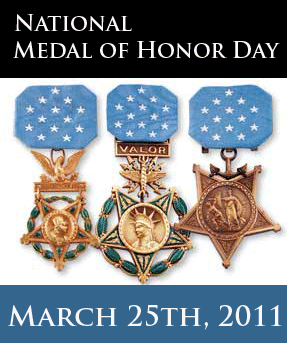
No, I had not heard of Medal of Honor Day, either.

Here are some details from MedalofHonorNews.com, so you can get a head start on next year’s observation:

Sunday, March 13, 2011

National Medal of Honor Day: Let’s not forget our heroes on March 25th, 2011


National Medal of Honor Day is officially observed on March 25th. The Medal of Honor is the highest distinction that can be awarded by the President, in the name of the Congress, to members of the Armed Forces who have distinguished themselves conspicuously by gallantry and intrepidity at the risk of their lives above and beyond the call of duty.

“This holiday should be one of our most revered. Unfortunately all too many Americans are not even aware of its existence.” Home of Heroes

The date of March 25th was chosen because the first Medals of Honor were awarded to members of Andrew’s Raiders on March 25, 1863, for their actions during the “Great Locomotive Chase.”

Col. Robert Howard (USA Ret.) president of the Congressional Medal of Honor Society on National Medal of Honor Day states:

“Hard times ask us to put a greater good before our own interests. It is sometimes physically or emotionally painful. Yet throughout history, you will find common men and women who fought selflessly in a variety of ways for something so much larger than just their own benefit.

Today, we’re fighting terrorism and the spread of tyranny. We’re challenged by market upheaval, joblessness and perhaps hunger. But the human spirit is resilient and can withstand more than sometimes we are able to immediately comprehend.

It’s up to each of us to not lay and wait for better days, but instead look for opportunities to make the lives of those around us better. National Medal of Honor Day is not a celebration. It is a solemn time to reflect on the freedom we enjoy, its price, and how our own bravery can improve the world around us.”

Home of Heroes, a premier resource of Medal of Honor information on the internet suggests:

“National Medal of Honor day is celebrated in some communities, however for the most part the occasion comes and goes with little notice. As a patriotic American there are a few things you can do to commemorate this day:

  • Fly your flag with pride and patriotism on this day.
  • Remember our heroes. As a gesture of your appreciation, why not take just a few moments in the week prior to National Medal of Honor Day to mail a “Thank You” card to one of our living Medal of Honor recipients. You can find a list of the living as well as information on writing to them among the pages of the Home of Heroes website or contact the Congressional Medal of Honor Society who will forward the letter to the Medal of Honor Recipient.
  • Inform your local media. Most newspapers aren’t even aware that this special day exists. Why not tip your local media to the occasion. Before you do, check out the Home of Heroes database for Medal of Honor recipients from your city and state as well as any who might be buried in your city. This information can give your media a “local angle” that can increase the probability that they will consider doing a story to remind Americans of our heroes.
  • If there is a Medal of Honor recipient buried in your home town, get a school class, scout troop, or other youth organization to “adopt a grave site”.

Please visit the Home of Heroes website and the Educational Resources section of Medal of Honor News.

Also read our upcoming article: Lesson plans for History and Social Studies teachers on National Medal of Honor Day, March 25th, 2011


Medal of Honor for Staff Sergeant Salvatore Giunta

January 12, 2011

President Obama awarded Staff Sergeant Salvatore Giunta, U.S. Army, the Medal of Honor for conspicuous gallantry for his courageous actions against an armed enemy in the Korengal Valley of Afghanistan in October 2007. November 16, 2010.  The ceremony inspires.  Notice at the end of the ceremony as the president turned to past Medal of Honor winners invited in for the moment.

Vodpod videos no longer available.

Medal of Honor for Staff Sergeant Salvatore Giunta, posted with vodpod

George Washington: Study history, refuse to be king, make the republic last

December 16, 2010

This is a mostly encore post, emphasizing George Washington’s astounding ability to draw from history just exactly the right lesson, and then set the example that makes history.

Washington, though having never attended college, was an inveterate reader, and a sharp student of history.  Early he read the story of the great Roman, Cincinnatus, who made the Roman Republic great with his refusal to lust for power.  Cincinnatus twice was named Dictator, and both times resigned the commission rather than personally profit as others did — after saving Rome both times, of course.

In his own life, Washington also twice cast off the mantle of top leader, once when he resigned his commission as Commander in Chief of the Continental Army when so many assumed he would just keep on, and add the title of “King of America;” and the second time when, as president, he stepped aside and retired, leaving the leadership of the nation up to the Constitutional processes that had never before been tried successfully in any nation.

Washington’s resignation from the army command came on December 23, 1783 — such an important anniversary usually gets lost in preparations for Christmas, so I’ll post it a bit early.  In your holiday toasts, lift a glass to George Washington, who gave us civilian rule, an end to monarchy, and an example of responsible leadership making way for peaceful succession.

In 2007, I wrote:


On December 23, 1783, Commander of the Continental Army, Gen. George Washington resigned his commission, to the Continental Congress sitting in Annapolis, Maryland. Washington modeled his actions on the life of Roman general and patriot Cincinnatus. (See especially this site, the Society of the Cincinnati)

John Trumbull painting of Washington resigning his commission

John Trumbull's painting of Washington resigning his commission; one of eight great paintings hanging in the Rotunda of the U.S. Capitol

Washington had been thought to be in a position to take over the government and declare himself king, if he chose. Instead, at some cost to himself he personally put down a rebellion of the officers of the army who proposed a coup d’etat against the Continental Congress, angered that they had not been paid. Washington quietly asked that the men act honorably and not sully the great victory they had won against Britain. Then Washington reviewed the army, wrapped up affairs, journeyed to Annapolis to resign, and returned to his farm and holdings at Mount Vernon, Virginia.

Because Washington could have turned into a tyrant, it is reported that King George III of England, upon hearing the news of Washington’s resignation, refused to believe it. If the report were true, George is reported to have said, Washington was the greatest man who ever lived.

Washington’s resignation set precedent: Civilian government controlled the military; Americans served, then went back to their private lives and private business; Americans would act nobly, sometimes when least expected.

Read the rest of this entry »


Unhappy marriage led to founding of Texas?

November 23, 2010

I’m looking for more photographs of presidents, especially Millard Fillmore and Andrew Johnson at the moment.  Only a tiny handful of photos are available for Fillmore, and generally, there are only three photos of Andrew Johnson.  Are there other photos hidden in archives, or is that really a reflection of how many photos were made of the two men?

The search continues.

While searching the archives at the University of Tennessee, I came across this press release on a wedding invitation to Sam Houston’s first marriage, in Tennessee, when he was governor of that state.  It features a photo of Houston that’s a little rare — and an interesting story.

Houston’s first marriage failed fast and hard.  He was so shaken that he resigned his office as governor of Tennessee, and left for Indian territories.  Eventually he found himself in Texas, and he was the leader of the Texian forces that defeated and captured Mexico’s President Santa Ana, securing independence from Mexico for Texas.  Houston was president of the Texas Republic, and governor of the State of Texas.

What would Texas history be had Houston’s first marriage been happy, and he had stayed in Tennessee?


March 23, 2007

University of Tennessee Special Collections Library acquires rare invitation to Sam Houston’s 1829 wedding

samhouston.jpgThe Special Collections Library at the University of Tennessee recently purchased a copy of an invitation to the sudden January 1829 wedding of then-Tennessee governor Sam Houston and Eliza Allen. This rare item may be only one of its kind.

Aaron Purcell, university archivist, discovered the piece on eBay.com and purchased the invitation on February 14, 2007, just over 178 years after the wedding date. The invitation was kept by descendants of one of the wedding guests for five generations.

Sam Houston is an important figure in Tennessee’s history, serving as governor from 1827-1829 and representing the state in the U.S. House of Representatives from 1823-1827. Born in Lexington, Virginia, in 1793, his family moved to Maryville, Tennessee, in 1806. Houston joined the army in 1813 and fought at the Battle of Horseshoe Bend in 1814. There he caught the attention of Andrew Jackson. Jackson became Houston’s mentor and helped guide his political career.

While governor, Houston briefly courted 18-year-old Eliza Allen, daughter of a wealthy Gallatin, Tennessee, businessman. On January 15, 1829, the couple mailed a handful of invitations to a small January 22nd wedding at the Allen family home. It is one of these few invitations that UT was able to purchase.

invitation.jpgThe invitation UT acquired is addressed to Miss Harriet Roulstone, the daughter of George Roulstone, who in 1791 founded the Knoxville Gazette, the state’s first newspaper.

Shortly after the ceremony, the newlyweds were at odds. After 11 weeks, Eliza Allen left her husband and returned to her family’s home in Gallatin. There are many theories as to why the marriage was so short-lived, but none are substantiated. Allen burned all of her letters regarding the relationship and Houston was reluctant to speak about his brief marriage.

The invitation gives few details about the wedding, but the piece remained in the Roulstone family for many years, tucked in a trunk with other important family papers.

Shortly after his marriage dissolved, Houston resigned his position as governor and fled to Indian Territory. He married a Cherokee woman and became a citizen of the Cherokee Nation. Houston returned to public service in Texas, serving as president of the Republic of Texas, U.S. senator, and making several failed presidential runs. He died in 1863, leaving behind a complex legacy.

“Sam Houston materials are exceedingly rare and expensive,” Purcell said. UT holds only one other Houston item in its collections, a letter to Colonel Ramsey, dated February 1829. Both items are available for research use in the Special Collections Library at 1401 Cumberland Avenue.

About the Special Collections Library
The University of Tennessee Special Collections Library was founded in 1960 and resides in the historic James D. Hoskins Library building. Materials in special collections include manuscripts, books and other rare materials for research use. For more information, contact the library at (865) 974-4480  or visit www.lib.utk.edu/spcoll/.


October 14: Chuck Yeager/BOOM! Day

October 15, 2010

Rats. On October 14 I missed noting the anniversary of Chuck Yeager’s great feat, breaking the sound barrier in level flight.

BOOM! Day.

Greg Laden’s blog reminded me, “Happy Anniversary, the Breaking of the Barrier.” Below, what I wrote in 2007, mostly still accurate.

_____________

Panorama of the Mountains noted the 60th anniversary of the first known faster-than-sound flight by a human — October 14, 1947. Test pilot and all-around good guy Chuck Yeager did it.

Bell X-1, on display at National Air and Space Museum

Bell X-1 displayed at the National Air and Space Museum

This is a great post-World War II, Cold War story of technology that should pique interest in the time and the events for many students. For a 90 minute class, a solid lesson plan could be developed around the science and technology of the flight (yes, even in history — this is key stuff in the development of economics, too). The physics of sound, a brief history of flight and aircraft, the reasons for post-war development of such technologies, the political situation: There are a dozen hooks to get into the topic. Fair use would cover showing a clip from “The Right Stuff” about the flight, and there are some dramatic clips there. (The movie is 3 hours and 13 minutes; great stuff in a format too long for classroom use. Is there any possibility your kids would read the Tom Wolfe book?)

When will someone – the Air Force? NASA? an aircraft company? — put together a DVD with authorized film clips from the newsreels and the movie, and suggested warm ups and quiz questions?

Back in the bad old days one of my elementary school teachers did an entire morning on the speed of sound, aircraft engineering, and the history of faster-than-sound flight. I learned the accurate way to measure the distance to lightning by counting seconds to the thunder (it’s about a mile for every 5 seconds, not a mile for every second, as our school-yard lore had it).

Chuck Yeager at C. R. Smith Museum, 7-25-2010 - photo by Ed Darrell

Brig. Gen. Chuck Yeager at the C. R. Smith Museum at American Airlines HQ, July 25, 2010. Photo by Ed Darrell

This program, to fly at the speed of sound, at what is now Edwards Air Force Base changed the way science of flight is done in the U.S. Yeager led the group of Air Force pilots who proved that military pilots could do the testing of aircraft; the project proved the value of conducting research with experimental aircraft on military time. The methods developed for testing, evaluating, redesigning and retesting are still used today. The drive for safety for the pilots also grew out of these early efforts at supersonic flight.

Yeager’s flight came when technology was cool, not just for the virtual reality role playing games (RPGs), which were still decades in the future, but because it was new, interesting, and it opened a world of possibilities. We all wanted to fly airplanes, especially small, fast airplanes. A sonic boom over southern Idaho produced a couple dozen calls to the local police and fire departments (long before 911 emergency calling systems), and a couple of paragraphs in the local newspaper.Later, when we moved to Utah County at the foot of Mt. Timpanogos, we kids relished the flights of fighter jets at 6,000 or 7,000 feet above MSL on their way to or from Hill AFB in Ogden, only a thousand feet or so above our heads in those mountain valleys.

Whether authorized to fly them or not, the fighter jocks recruited us kids with their ground-hugging forays. And if one jet occasionally passed the speed of sound, the school bus-stop would buzz with it for a couple of days, as we tried to determine whether anybody ever really lost a window to such fun and excitement as a sonic boom. We could hardly wait to be the pilots of those airplanes, giving a start and a thrill to housewives across America who worried their replica Ming vases and picture windows would crash to smithereens.

Supersonic transport excited me then, and still does. As a lover of the environment, perhaps I should have stood firmly against supersonic flights of the British-French Concord over the U.S., but I hoped a compromise could be reached. New York to Los Angeles in two hours seemed like a good idea to me at the time, and it still does. The U.S. legislated ban on supersonic passenger flights probably doomed the idea of supersonic transport. Boeing dropped its plans to build a competitor to the Concord. The Concord itself never got the support it needed to continue production and refinement of the idea. By the time the Concord was retired in October 2004, it was 50-year-old technology.

I wondered at the time what would have happened had research on passenger supersonic flight continued. Shutting off technology is a strange thing. Steam engine technology was poised to make a great leap forward in the early 20th century, some argue. Diesel and gasoline engine sales blocked the leap, especially the creation of the Diesel-electric railroad locomotive engine.

But make no mistake about it: The Concord was fun. My friend Perry W. Buffington — as amiable and useful a traveling companion as is known in the modern world — found a fantastic fare for a Concord flight for us over the Christmas-New Year’s holidays, 1978 and 1979. We flew to London on a Delta L-1011 on Christmas night; we spent a week in London getting cheap tickets to great shows (the Royal Ballet’s Nutcracker, featuring a kid I knew from Spanish Fork, Utah; Pirates of Penzance at D’Oyly Carte; Evita in the first run, as I recall; a great revival of Oliver! Great stuff, cheap tickets). Then, to cap it off, the Concord from London to New York. Mach 2, on January 1.

It snowed record depths in all of southern England. On New Year’s Eve day, we skated the snow-packed streets to Harrod’s for last minute souvenir shopping, and bumped into Lauren Bacall. Then we sat in the bar of the hotel and watched the news reports of how the entire country was shut down by the snow, including the British Railroad. Our flight out seemed to be due a delay, at least. But we got a call from British Airways confirming the flight, later that night. So on January 1 we got a snowcat — not really, just a brave taxi — to the downtown check-in office of BA.

Then the show kicked in. The agent checking us in took our bags, reached into a drawer and pulled out a roll of pound notes. Without breaking his conversation with us, he beckoned over a woman who was helping passengers onto the shuttle bus to Heathrow, handed her the roll of bills and said simply, “Concord for these gentleman.” She sprinted to the curb outside and hailed a taxi. The agent had called the airport and informed us that while nothing else had flown, “The Concord will depart on schedule. Thank you for flying British Air — your taxi is waiting.” The woman at the curb held the door for us — no bus shuttle for Concord passengers!

The taxi rocketed to Heathrow. I don’t know how much BA paid, but the driver was extremely happy to move us at extreme speeds over slippery roads.

Concord waiting lounges provided the best amenities. Separated from even First Class lounges, the free champagne, and any other liquor, was served on the ground as well as in the air. For morning departures, a chef in the lounge created elaborate egg dishes to order, for breakfast.

Flying the Concord was always a celebrity experience. The festive feeling of our New Year’s Day flight zoomed considerably when Lauren Bacall breezed into the waiting room. (The only other time I got into a Concord lounge was at Dulles a few years later; Ray Charles checked in for the flight. He asked for a window seat.) We watched a television news report that all flights at Heathrow were delayed by the snow as we got the announcement the Concord was ready to board, on time. If our flight wasn’t the only flight leaving Heathrow that day, it was definitely the first. “Snow doesn’t bother the Concord,” one agent explained.

Supersonic flight passenger jets present special problems to air traffic control, especially with their speed. Plus, they fly better where the air is thinner. So instead of the normal 30,000 to 45,000 feet altitude of commercial airliners, Concords flew at about 70,000 feet. This becomes clear to a passenger on take off: Concords get off the ground, and then take a radically steeper climb that, from the inside, feels like going straight up. At cruising altitude, at about noon, a passenger looking out the window can look up to see the blue sky disappearing into darkness (a night flight with the Aurora Borealis must have been some great spectacle).

Concord’s cabin was not spacious. It held 100 passengers, a bit smaller than a modern 737. The food service was divine, with plenty of stewards on hand to attend to passengers. Among the best lamb chops I’ve ever had (and mind you, I come from sheep country). Complimentary champagne, wine, and cigars — “not Cuban, I’m sorry,” the steward explained. “U.S. rules.”

Sit back, sip the champagne, or puff a cigar and sip the port, and watch the Machmeter: “0.5 . . . 0.7 . . . 0.9 . . . 1.0 (Mach 1, the speed of sound).” The ride, smooth as it was, got a lot smoother. The entire aircraft was quieter. “1.3 . . . 1.7 . . . 2.0.” Twice the speed of sound is half as scary as Mach 1, once you’re already moving so fast.

Two hours from Heathrow to JFK. We flew faster than the time zones changed, landing a couple of hours earlier than our departure. Time travel!

(The week in London, airfare there, and the Concord back, was under $1,500 in 1978. Inflation affected the prices before the Concord retired.)

Two in my immediate family have flown faster than sound. My brother, Wes, flew F-4s. And champagne and steward service notwithstanding, he had the much better deal. He did it more often, and he had the stick.

Chuck Yeager did it first, in level flight (there is some conjecture that a British pilot had done it earlier, in a dive — but he didn’t recover from the dive).

How best to commemorate breaking the sound barrier? Do it again!

Photo of Astronauts Chuck Yeager and Dave Scott, with their co-pilots, prior to the 60th anniversary sound-barrier breaking flight, 2007 Edwards AFB

Astronauts Chuck Yeager and Dave Scott, with their co-pilots, prior to the 60th anniversary sound-barrier breaking flight, 2007 Edwards AFB

Edwards Air Force Base, September 21, 2007 – General Yeager flew a US Air Force F-16 to commemorate the 60th anniversary of Breaking the Sound Barrier (October 14, 2007), the 60th anniversary of the United States Air Force (September 18, 2007) and 65 years of General Yeager flying in military cockpits. Yeager was part of a flight of four planes; two F-16’s with Gen. Chuck Yeager and Maj. Gen. Joe Engle aboard, and two T-38’s carrying F-15 pilot Fitz Fulton, NASA Astronaut Col. Dave Scott, and Commander Curt Bedke. Yeager and Engle’s F-16’s broke the sound barrier high above the Base Operations Center – a double sonic boom, then the four planes executed a slow straight through pass, pitched out, landed, and taxied up to the hanger where the 2007 Air Force Ball was about to begin, attended by more than 1,000. Hundreds of ball guests, in gowns, tuxedoes, and dress blues, were assembled to greet the flyers, who snapped on black bowties and strolled into the ball wearing their flight suits. Gen. Yeager was honored at the dinner with a 60th Anniversary Sound Barrier Busting cake.

Additional resources:


BSA awards Bill Gates the Silver Buffalo

September 15, 2010

News came out during the Jamboree, but yesterday in Seattle the Boy Scouts of America made it tangibly official.

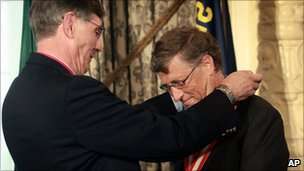
Microsoft founder and philanthropist Bill Gates, Jr. received the Silver Buffalo Award, the highest honor BSA gives to any Scouter.

Gates was a Life Scout; his father, William Gates, Sr.,  is an Eagle Scout.  The awards ceremony was scheduled to include members of Gates’s Cub Scout Pack 144 and Boy Scout Troop 186.

Microsoft founder Bill Gates receiving the Silver Buffalo award from Boy Scouts of America. BBC image

Microsoft founder Bill Gates receiving the Silver Buffalo award from Boy Scouts of America. BBC image

More: