One billion nets to Africa

May 21, 2015

Malaria No More reports a billion mosquito nets in Africa produce great results in the fight against malaria.

Malaria No More reports a billion mosquito nets in Africa produce great results in the fight against malaria.

Interesting week.

All that, and the World Health Assembly 68 is meeting in Geneva, Switzerland.  Among top items on the agenda of the world’s top public health experts: What are the next steps in fighting malaria?

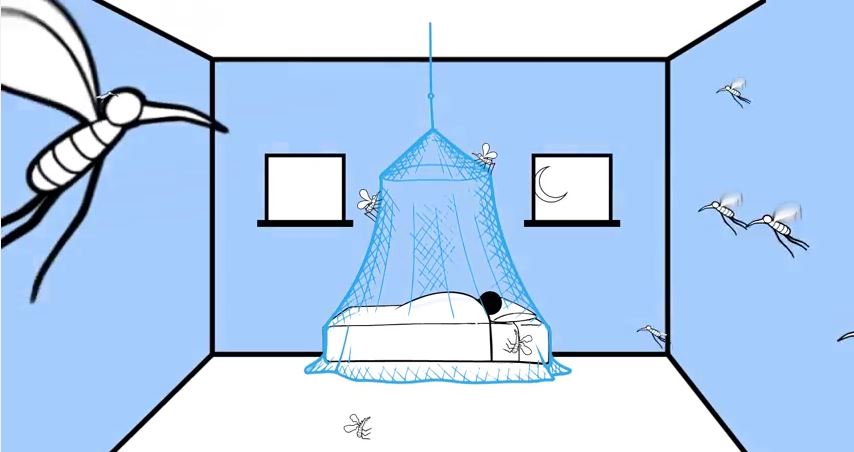
Malaria No More produced this short video in time for World Malaria Day, April 25, 2015 — but I just saw it this week.  It depicts the Ochieng family in Kenya, and the effects of malaria, and beating malaria, have on the family:

One Billion Nets to Africa

Description of the film:

Meet the Ochieng family. They are one of the families that received the #OneBillionNets to Africa and is now protected from malaria-transmitting mosquitoes because of this unprecedented global effort. See more at 1BillionNets.org

  • Music:  “Eyes Wide Open” by Tony Anderson

This film caught my interest on a personal scale.  One of my great students at Molina High School in Dallas was a Kenyan immigrant, named Ochieng.  Can’t help but wonder if there is a relation.

Bednets, and a concentrated, international campaign to prevent mosquito bites and cure infected humans of the disease, have cut malaria deaths from just over 1 million per year in 2000, to fewer than 600,000 per year in 2014.  This progress produces hope again that malaria can be beaten, though there are many more hurdles blocking the path.

You may have noted: The malaria fighters at Malaria No More make no plea for more DDT, nor do they claim any handicap from the U.S. having banned the use of DDT on agricultural crops in the U.S.  In saving lives, disease fighters don’t have time to deal with destructive hoaxes.

Tip of the old scrub brush to PMI, the President’s Malaria Initiative:
http://twitter.com/PMIgov/status/596689144618823680


WHO’s malaria fact sheet, April 2015 edition

May 17, 2015

Progress against the diseases we know as malaria — parasitic infections — is dramatic and rapid since several non-governmental organizations (NGOs) entered the fight seriously at the turn of the last century. But problems arise and also rapidly become serious.

Bednets prove the best single method of preventing the spread of malaria. Distribution of bednets in malaria-prone regions greatly aided the 47% reduction in malaria deaths since 1999.  WHO photo.

Bednets prove the best single method of preventing the spread of malaria. Distribution of bednets in malaria-prone regions greatly aided the 47% reduction in malaria deaths since 1999. WHO photo.

For political reasons often obscure, there is an industry in creating misinformation and propaganda against malaria-fighting groups like the World Health Organization, the Bill and Melinda Gates Foundation, and other groups who advocate bednet preventive measures. The propagandists often make absurd and false claims against medical workers, against scientists and activists including people they pejoratively call environmentalists, and in favor of the deadly poison DDT.

Factual matter takes longer to spread — truth has a smaller public relations budget.

What are the facts about malaria?

Here is WHO’s fact sheet on malaria, current as of the first of this month 2015.

WHO’s fact sheet is almost dull in its recitation of the facts.  What you don’t see recorded here is that the death toll of over 500,000 last year, is the lowest death toll from malaria since World War II, the lowest death toll estimated in the past 120 years, and perhaps the lowest death toll in recorded human history.  Similarly, while nearly 200 million malaria infections seems an enormous number, that number records a dramatic reduction from the 500 million estimated in the 1960s.

Malaria is not Rachel Carson’s fault. DDT is not a magic cure for the disease. It’s beatable, but beating a disease requires constant vigilance, militant prevention and treatment — and that costs money. The propagandists won’t tell you those facts, and malaria wins when bad information chases out the good.

For the record:

Malaria

Fact sheet N°94
Reviewed April 2015


Key facts

  • Malaria is a life-threatening disease caused by parasites that are transmitted to people through the bites of infected mosquitoes.
  • In 2013, malaria caused an estimated 584 000 deaths (with an uncertainty range of 367 000 to 755 000), mostly among African children.
  • Malaria is preventable and curable.
  • Increased malaria prevention and control measures are dramatically reducing the malaria burden in many places.
  • Non-immune travellers from malaria-free areas are very vulnerable to the disease when they get infected.

According to the latest estimates, released in December 2014, there were about 198 million cases of malaria in 2013 (with an uncertainty range of 124 million to 283 million) and an estimated 584 000 deaths (with an uncertainty range of 367 000 to 755 000). Malaria mortality rates have fallen by 47% globally since 2000, and by 54% in the WHO African Region.

Most deaths occur among children living in Africa where a child dies every minute from malaria. Malaria mortality rates among children in Africa have been reduced by an estimated 58% since 2000.

Malaria is caused by Plasmodium parasites. The parasites are spread to people through the bites of infected Anopheles mosquitoes, called “malaria vectors”, which bite mainly between dusk and dawn.

There are four parasite species that cause malaria in humans:

  • Plasmodium falciparum
  • Plasmodium vivax
  • Plasmodium malariae
  • Plasmodium ovale.

Plasmodium falciparum and Plasmodium vivax are the most common. Plasmodium falciparum is the most deadly.

In recent years, some human cases of malaria have also occurred with Plasmodium knowlesi – a species that causes malaria among monkeys and occurs in certain forested areas of South-East Asia.

Transmission

Malaria is transmitted exclusively through the bites of Anopheles mosquitoes. The intensity of transmission depends on factors related to the parasite, the vector, the human host, and the environment.

About 20 different Anopheles species are locally important around the world. All of the important vector species bite at night. Anopheles mosquitoes breed in water and each species has its own breeding preference; for example some prefer shallow collections of fresh water, such as puddles, rice fields, and hoof prints. Transmission is more intense in places where the mosquito lifespan is longer (so that the parasite has time to complete its development inside the mosquito) and where it prefers to bite humans rather than other animals. For example, the long lifespan and strong human-biting habit of the African vector species is the main reason why about 90% of the world’s malaria deaths are in Africa.

Transmission also depends on climatic conditions that may affect the number and survival of mosquitoes, such as rainfall patterns, temperature and humidity. In many places, transmission is seasonal, with the peak during and just after the rainy season. Malaria epidemics can occur when climate and other conditions suddenly favour transmission in areas where people have little or no immunity to malaria. They can also occur when people with low immunity move into areas with intense malaria transmission, for instance to find work, or as refugees.

Human immunity is another important factor, especially among adults in areas of moderate or intense transmission conditions. Partial immunity is developed over years of exposure, and while it never provides complete protection, it does reduce the risk that malaria infection will cause severe disease. For this reason, most malaria deaths in Africa occur in young children, whereas in areas with less transmission and low immunity, all age groups are at risk.

Symptoms

Malaria is an acute febrile illness. In a non-immune individual, symptoms appear seven days or more (usually 10–15 days) after the infective mosquito bite. The first symptoms – fever, headache, chills and vomiting – may be mild and difficult to recognize as malaria. If not treated within 24 hours, P. falciparum malaria can progress to severe illness often leading to death. Children with severe malaria frequently develop one or more of the following symptoms: severe anaemia, respiratory distress in relation to metabolic acidosis, or cerebral malaria. In adults, multi-organ involvement is also frequent. In malaria endemic areas, persons may develop partial immunity, allowing asymptomatic infections to occur.

For both P. vivax and P. ovale, clinical relapses may occur weeks to months after the first infection, even if the patient has left the malarious area. These new episodes arise from dormant liver forms known as hypnozoites (absent in P. falciparum and P. malariae); special treatment – targeted at these liver stages – is required for a complete cure.

Who is at risk?

Approximately half of the world’s population is at risk of malaria. Most malaria cases and deaths occur in sub-Saharan Africa. However, Asia, Latin America, and to a lesser extent the Middle East and parts of Europe are also affected. In 2014, 97 countries and territories had ongoing malaria transmission.

Specific population risk groups include:

  • young children in stable transmission areas who have not yet developed protective immunity against the most severe forms of the disease;
  • non-immune pregnant women as malaria causes high rates of miscarriage and can lead to maternal death;
  • semi-immune pregnant women in areas of high transmission. Malaria can result in miscarriage and low birth weight, especially during first and second pregnancies;
  • semi-immune HIV-infected pregnant women in stable transmission areas, during all pregnancies. Women with malaria infection of the placenta also have a higher risk of passing HIV infection to their newborns;
  • people with HIV/AIDS;
  • international travellers from non-endemic areas because they lack immunity;
  • immigrants from endemic areas and their children living in non-endemic areas and returning to their home countries to visit friends and relatives are similarly at risk because of waning or absent immunity.

Diagnosis and treatment

Early diagnosis and treatment of malaria reduces disease and prevents deaths. It also contributes to reducing malaria transmission.

The best available treatment, particularly for P. falciparum malaria, is artemisinin-based combination therapy (ACT).

WHO recommends that all cases of suspected malaria be confirmed using parasite-based diagnostic testing (either microscopy or rapid diagnostic test) before administering treatment. Results of parasitological confirmation can be available in 15 minutes or less. Treatment solely on the basis of symptoms should only be considered when a parasitological diagnosis is not possible. More detailed recommendations are available in the “Guidelines for the treatment of malaria” (second edition). An updated edition will be published in 2015.

Antimalarial drug resistance

Resistance to antimalarial medicines is a recurring problem. Resistance of P. falciparum to previous generations of medicines, such as chloroquine and sulfadoxine-pyrimethamine (SP), became widespread in the 1970s and 1980s, undermining malaria control efforts and reversing gains in child survival.

In recent years, parasite resistance to artemisinins has been detected in 5 countries of the Greater Mekong subregion: Cambodia, Laos, Myanmar, Thailand and Viet Nam. While there are likely many factors that contribute to the emergence and spread of resistance, the use of oral artemisinins alone, as monotherapy, is thought to be an important driver. When treated with an oral artemisinin-based monotherapy, patients may discontinue treatment prematurely following the rapid disappearance of malaria symptoms. This results in incomplete treatment, and such patients still have persistent parasites in their blood. Without a second drug given as part of a combination (as is provided with an ACT), these resistant parasites survive and can be passed on to a mosquito and then another person.

If resistance to artemisinins develops and spreads to other large geographical areas, the public health consequences could be dire.

WHO recommends the routine monitoring of antimalarial drug resistance, and supports countries to strengthen their efforts in this important area of work.

More comprehensive recommendations are available in the “WHO Global Plan for Artemisinin Resistance Containment (GPARC)”, which was released in 2011. For countries in the Greater Mekong subregion, WHO has issued a regional framework for action titled “Emergency response to artemisinin resistance in the Greater Mekong subregion” in 2013.

Prevention

Vector control is the main way to reduce malaria transmission at the community level. It is the only intervention that can reduce malaria transmission from very high levels to close to zero.

For individuals, personal protection against mosquito bites represents the first line of defence for malaria prevention.

Two forms of vector control are effective in a wide range of circumstances.

Insecticide-treated mosquito nets (ITNs)

Long-lasting insecticidal nets (LLINs) are the preferred form of ITNs for public health distribution programmes. WHO recommends coverage for all at-risk persons; and in most settings. The most cost effective way to achieve this is through provision of free LLINs, so that everyone sleeps under a LLIN every night.

Indoor spraying with residual insecticides

Indoor residual spraying (IRS) with insecticides is a powerful way to rapidly reduce malaria transmission. Its full potential is realized when at least 80% of houses in targeted areas are sprayed. Indoor spraying is effective for 3–6 months, depending on the insecticide used and the type of surface on which it is sprayed. DDT can be effective for 9–12 months in some cases. Longer-lasting forms of existing IRS insecticides, as well as new classes of insecticides for use in IRS programmes, are under development.

Antimalarial medicines can also be used to prevent malaria. For travellers, malaria can be prevented through chemoprophylaxis, which suppresses the blood stage of malaria infections, thereby preventing malaria disease. In addition, WHO recommends intermittent preventive treatment with sulfadoxine-pyrimethamine for pregnant women living in high transmission areas, at each scheduled antenatal visit after the first trimester. Similarly, for infants living in high-transmission areas of Africa, 3 doses of intermittent preventive treatment with sulfadoxine-pyrimethamine is recommended delivered alongside routine vaccinations. In 2012, WHO recommended Seasonal Malaria Chemoprevention as an additional malaria prevention strategy for areas of the Sahel sub-Region of Africa. The strategy involves the administration of monthly courses of amodiaquine plus sulfadoxine-pyrimethamine to all children under 5 years of age during the high transmission season.

Insecticide resistance

Much of the success to date in controlling malaria is due to vector control. Vector control is highly dependent on the use of pyrethroids, which are the only class of insecticides currently recommended for ITNs or LLINs. In recent years, mosquito resistance to pyrethroids has emerged in many countries. In some areas, resistance to all 4 classes of insecticides used for public health has been detected. Fortunately, this resistance has only rarely been associated with decreased efficacy, and LLINs and IRS remain highly effective tools in almost all settings.

However, countries in sub-Saharan Africa and India are of significant concern. These countries are characterized by high levels of malaria transmission and widespread reports of insecticide resistance. The development of new, alternative insecticides is a high priority and several promising products are in the pipeline. Development of new insecticides for use on bed nets is a particular priority.

Detection of insecticide resistance should be an essential component of all national malaria control efforts to ensure that the most effective vector control methods are being used. The choice of insecticide for IRS should always be informed by recent, local data on the susceptibility target vectors.

In order to ensure a timely and coordinated global response to the threat of insecticide resistance, WHO has worked with a wide range of stakeholders to develop the “Global Plan for Insecticide Resistance Management in malaria vectors” (GPIRM), which was released in May 2012. The GPIRM puts forward a five-pillar strategy calling on the global malaria community to:

  • plan and implement insecticide resistance management strategies in malaria-endemic countries;
  • ensure proper and timely entomological and resistance monitoring, and effective data management;
  • develop new and innovative vector control tools;
  • fill gaps in knowledge on mechanisms of insecticide resistance and the impact of current insecticide resistance management approaches; and
  • ensure that enabling mechanisms (advocacy as well as human and financial resources) are in place.

Surveillance

Tracking progress is a major challenge in malaria control. In 2012, malaria surveillance systems detected only around 14% of the estimated global number of cases. Stronger malaria surveillance systems are urgently needed to enable a timely and effective malaria response in endemic regions, to prevent outbreaks and resurgences, to track progress, and to hold governments and the global malaria community accountable.

Elimination

Malaria elimination is defined as interrupting local mosquito-borne malaria transmission in a defined geographical area, i.e. zero incidence of locally contracted cases. Malaria eradication is defined as the permanent reduction to zero of the worldwide incidence of malaria infection caused by a specific agent; i.e. applies to a particular malaria parasite species.

On the basis of reported cases for 2013, 55 countries are on track to reduce their malaria case incidence rates by 75%, in line with World Health Assembly targets for 2015. Large-scale use of WHO-recommended strategies, currently available tools, strong national commitments, and coordinated efforts with partners, will enable more countries – particularly those where malaria transmission is low and unstable – to reduce their disease burden and progress towards elimination.

In recent years, 4 countries have been certified by the WHO Director-General as having eliminated malaria: United Arab Emirates (2007), Morocco (2010), Turkmenistan (2010), and Armenia (2011).

Vaccines against malaria

There are currently no licensed vaccines against malaria or any other human parasite. One research vaccine against P. falciparum, known as RTS, S/AS01, is most advanced. This vaccine has been evaluated in a large clinical trial in 7 countries in Africa and has been submitted to the European Medicines Agency under art. 58 for regulatory review. A WHO recommendation for use will depend on the final results from the large clinical trial and a positive regulatory review. The recommendation as to whether or not this vaccine should be added to existing malaria control tools is expected in late 2015.

WHO response

The WHO Global Malaria Programme (GMP) is responsible for charting the course for malaria control and elimination through:

  • setting, communicating and promoting the adoption of evidence-based norms, standards, policies, technical strategies, and guidelines;
  • keeping independent score of global progress;
  • developing approaches for capacity building, systems strengthening, and surveillance;
  • identifying threats to malaria control and elimination as well as new areas for action.

GMP serves as the secretariat for the Malaria Policy Advisory Committee (MPAC), a group of 15 global malaria experts appointed following an open nomination process. The MPAC, which meets twice yearly, provides independent advice to WHO to develop policy recommendations for the control and elimination of malaria. The mandate of MPAC is to provide strategic advice and technical input, and extends to all aspects of malaria control and elimination, as part of a transparent, responsive and credible policy setting process.

WHO is also a co-founder and host of the Roll Back Malaria partnership, which is the global framework to implement coordinated action against malaria. The partnership mobilizes for action and resources and forges consensus among partners. It is comprised of over 500 partners, including malaria endemic countries, development partners, the private sector, nongovernmental and community-based organizations, foundations, and research and academic institutions.

For more information contact:

WHO Media centre
Telephone: +41 22 791 2222
E-mail: mediainquiries@who.int

WHO provides a short video summary of many of these facts.


Letter to IVCC: Please correct history of DDT

May 11, 2015

Screen capture of IVCC's introductory film, explaining benefits of mosquito bednets and the need for new pesticides to replace those now in use, to which mosquitoes have developed resistance and immunity.

Screen capture of IVCC’s introductory film, explaining benefits of mosquito bednets and the need for new pesticides to replace those now in use, to which mosquitoes have developed resistance and immunity.

Text of an e-mail I sent to the non-profit vector control group IVCC at the Liverpool School of Tropical Medicine.  “Vector” is the fancy name for “disease-carrying arthropod,” usually an insect.

Dear IVCC,

Generally your website is very useful.  I am happy to recommend it for most people, for most purposes.

However, I’ve discovered errors in history you need to correct. On this page: Highlights of vector-borne disease history | IVCC

You say:

1962: Rachel Carson publishes Silent Spring; a powerfully written book arguing that DDT is not safe. The reaction is immediate in several US states: DDT is banned. A nation-wide ban follows ten years later.

When Rachel Carson’s book Silent Spring hit the shelves, it caused outrage.

Carson’s engaging and populist style meant the book appealed to many ordinary people, not just scientists. Carson used the scientific evidence of many researchers to argue that DDT can kill animals, cause bird populations to decline and lead certain pests to proliferate. Workers who handled the chemical suffer health problems and exposed fish got liver cancer. She also found evidence of DDT in mother’s breast milk and in the bodies of babies. Several US states immediately banned the use of DDT as a pesticide and for crops. In 1972, the USA banned it outright.

But there was a problem. DDT was and is the most effective means of reducing malaria incidences, particularly in developing countries. DDT is cheap, effective, easily stored and transported and relatively safe for the person spraying. It does not have to be applied very often and provides the best means of protection possible. But how could the USA promote DDT through its aid programmes if DDT was a banned chemical at home?

In 2000, a worldwide ban on DDT nearly ensued but it was stopped at the last minute. Today, DDT is still produced in China and India and available globally for use uniquely in anti-malarial efforts.

I find that to be an inaccurate history, and one that falsely contributes to the idea that scientists, the World Health Organization, and African malaria fighters are fools.

In 1972, the U.S. Environmental Protection Agency issued an order banning DDT from use on crops. The order specifically worked around then-current U.S. law which would have required an absolute ban on DTT, or “outright” as you call it.  But the U.S. action was not “outright.”

EPA Administrator William Ruckelshaus fully appreciated the utility of DDT for fighting insect vectors of disease. The regulation banned ONLY crop use, and specifically exempted from ban the use of DDT to fight insect vectors — in the U.S., as well as world wide.  See this article, and follow the links for the actual text of the regulation:  Oh, look: EPA ordered DDT to be used to fight malaria in 1972!

You can see EPA’s action also did not ban manufacturing in the U.S.  Many scientists in the U.S. saw this as a bow to chemical manufacturers who would have lost money invested in manufacturing plants.  Production of DDT in the U.S. continued, almost exclusively for export, until 1984.  In 1984, there were exports of 300 tons of DDT from the U.S.

DDT remains a deadly toxin, one that kills indiscriminately in the wild.  It is not at all clear to me that the POPs Treaty negotiations were speeding to a complete ban on the stuff — but in any case, a special carve out was created to allow DDT use to continue, to fight disease.   That amendment was proposed first in early negotiations — not a “last-minute” change of mind.

DDT was never “the most effective means of reducing malaria incidences;” it was a key part of WHO’s eradication program, precisely because it is so toxic, and precisely because it is long-lasting, the two key features that make it a “persistent organic pollutant.” DDT only works when coupled with a program of medical care to cure humans of the disease while mosquito populations are temporarily knocked down — a point you recognize at other places on your website.  Alone, DDT sets a stage for malaria to come roaring back, as soon as the DDT effectiveness wears off due to wall washing, painting or time, and when the mosquitoes come roaring back resistant to DDT, they will spread any malaria left in the population of humans.

I hope you can make corrections.  There is a widespread, well-funded effort to claim DDT is perfectly harmless to humans, that evil scientists and environmentalists prevailed on WHO and nations to stop using DDT, that the complete cessation of DDT use led to a massive expansion of malaria, and that therefore we should ignore scientists, environmentalists, NGOs and anyone else like the Liverpool School of Tropical Medicine, who advocate doing anything other than massive DDT spraying campaigns to fight malaria.

Please don’t contribute to that political and science hoax campaign.

Sincerely,

Ed Darrell
Dallas, Texas

We’ll see whether anyone is awake and tending the message box at IVCC in Liverpool.  I hope the project is not dormant.

Fighting malaria requires accurate information if malaria fighters are to be able to outsmart malaria, which has outsmarted humans for a half-million years.

IVCC’s film of introduction:

More:

[Not sure why WordPress wants this post to show up on May 11’s schedule, when I posted in on May 21.  Haven’t figured out how to fix it; so I’ve reposted this closer to when it was written.  FYI.]


Do something to fight malaria today: April 25, 2015, is World Malaria Day

April 25, 2015

Photo from the World Health Organization (WHO), the lead agency in fighting malaria.

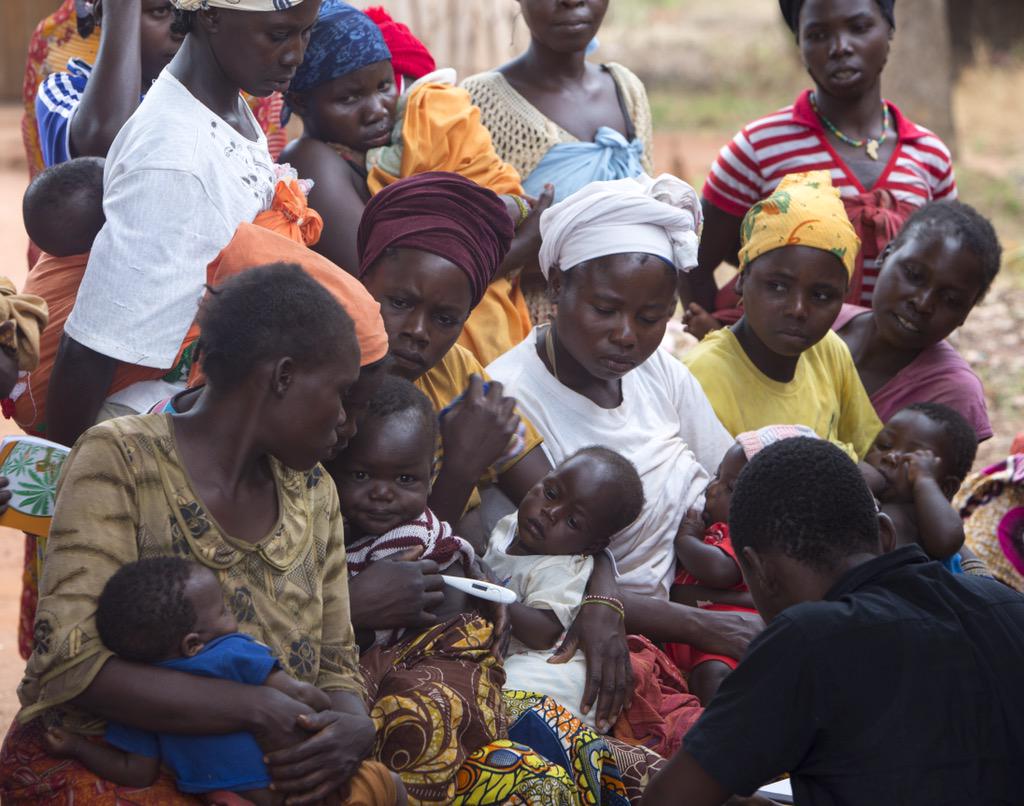
Photo from the World Health Organization (WHO), the lead agency in fighting malaria. “A child dies every minute from #malaria in Africa http://goo.gl/46QhJq #WorldMalariaDay”

One day dedicated to education and spurs to action to beat malaria.

Amazingly, there are ways to get it wrong. Please avoid them.

Don’t claim that all we need to do to beat this nasty disease is shoot environmentalists and poison the world with DDT.  Don’t claim that health workers who risk their lives to prevent malaria with bednets, are misguided. No, Rachel Carson didn’t kill millions with false claims against DDT (in fact, she tried to keep DDT viable as a key tool to fight malaria, but we failed to listen to her in time).

You might kick in $10 to Nothing But Nets, and save a life in the most effective anti-malaria campaign in the last 50 years. In fact, I recommend it.

Have a thoughtful World Malaria Day.

http://twitter.com/bbbrieger/status/588795413387423744


Good news: Malaria deaths cut by half in last 15 years

March 20, 2015

Bad news — still about 600,000 people die from malaria every year, worldwide.

Good news: Dramatic progress against malaria since the turn of the century renews hopes that the disease might be mostly conquered in another 15 to 20 years, and perhaps even obliterated from the Earth. Malaria deaths have been cut in half in the past 15 years, from just over a million a year, to fewer than 610,000.

Since 1963, malaria deaths have been cut more than 80%, from more than 4 million per year, to fewer than 610,000.

That’s dramatic progress.

The Bill and Melinda Gates Foundation shared a video from Comic Relief, a charity set up to fight diseases, featuring David Tennant, perhaps better known the Harry Potter movies and Dr. Who sci-fi series.

Comic Relief isn’t such a big deal in the U.S.  But perhaps you’ll share, and donate?

Red Nose Day was March 13.


Malaria fight, February 2015

February 20, 2015

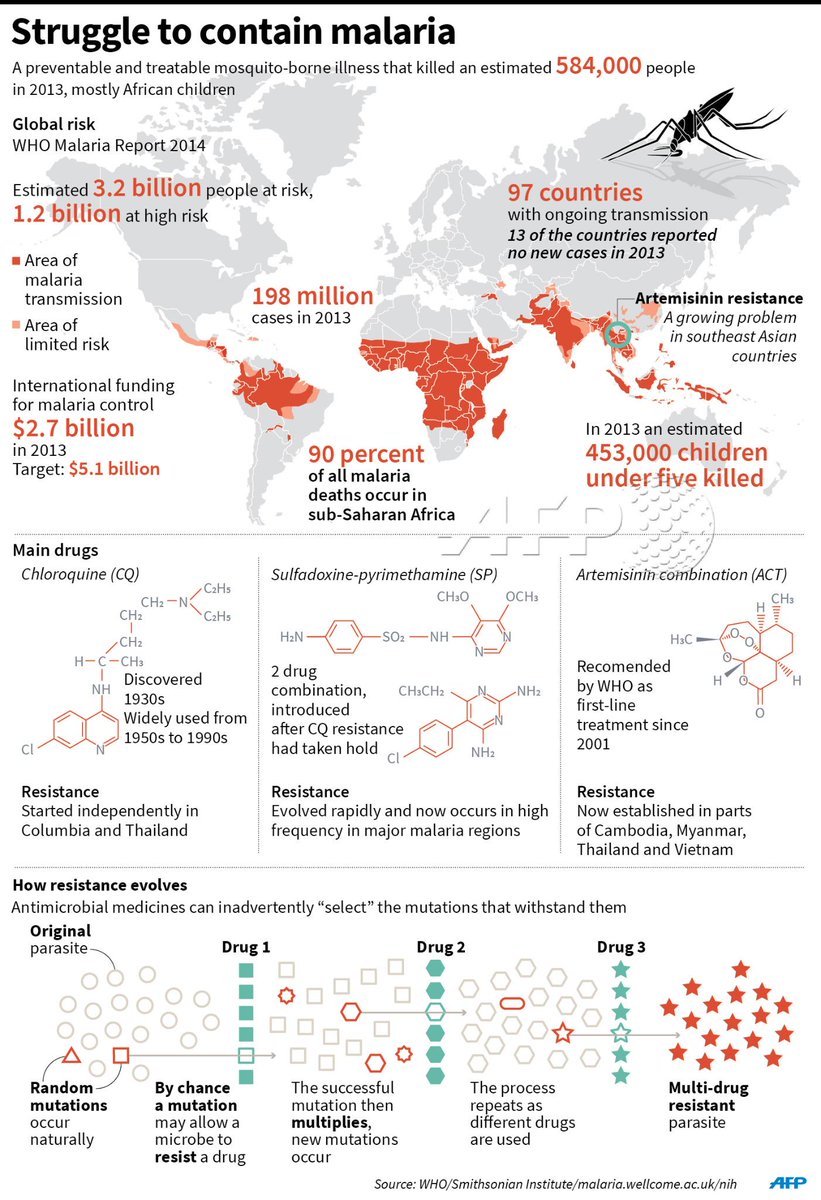
Timely infographic from Agence France Presse.

Some background:  The newly-formed World Health Organization (WHO) estimated worldwide malaria deaths at more than 5 million per year, when it kicked off the ambitious but ultimately unsuccessful malaria eradication program in 1955.  Eradication hopes hung on the use of DDT, sprayed on the walls of homes in affected areas (Indoor Residual Spraying, or IRS), to temporarily knock down mosquito populations so that humans infected with malaria could be cured.  After early successes in temperate zones, malaria fighters took the fight to tropical Africa in 1963.  There they discovered that overuse and abuse of DDT had already bred mosquitoes resistant to the pesticide.  With no substitute for DDT available, WHO wound down the campaign on the ground by 1965, and officially abandoned it in 1969.

Nations who had pledged money for the fight early, cut back when DDT failed.  In 1963, about 4 million people died from malaria, worldwide.

Despite the lack of an international, worldwide fight against malaria, malaria fighters soldiered on.  Better housing and better medicines made gains.  By the time the U.S. banned DDT use on crops in 1972, pledging all U.S. production of DDT to fight disease elsewhere, annual malaria deaths had fallen to just over 2 million per year. By 1990, the annual death toll was cut to about a million per year.  Through the 1980s, malaria parasites themselves developed resistance to the main pharmaceuticals used to cure humans.

By the end of the 1990s, international agencies and especially NGOs like the Bill and Melinda Gates Foundation brought new funding and new urgency to the fight against malaria.  Expansion of production of artemisinin-based pharmaceuticals provided a new tool for health workers.  Funding from the U.S., through the President’s Malaria Initiative, helped a lot.  In 2000, about a million people died from malaria.  By 2014, malaria deaths fell to under 600,000.

Parasite resistance to the new pharmaceuticals poses a new threat to continued progress.  Funding is still far short of what experts estimate to be needed, and short of pledges from developed nations.  Mosquitoes that carry malaria parasites from human to human (after a step of the life cycle in infected mosquitoes) quickly evolve resistance to pesticides; malaria parasites develop resistance to pharmaceuticals used to treat humans.  Funding to rotate pesticides and drugs falls short, causing improper use of both, and quicker evolution of resistance in mosquitoes, and parasites.

Infgraphic from Agence France Presse, on the fight against malaria, February 2015.

Infgraphic from Agence France Presse, on the fight against malaria, February 2015.


Bill Gates agrees: We can eliminate malaria in a generation

January 9, 2015

Do we have the will to do it?

More:

Gates Foundation image:  A nurse dispenses a malaria drug to treat an infected child in Tanzania.

Gates Foundation image: A nurse dispenses a malaria drug to treat an infected child in Tanzania.


Want to do a good turn? Nothing But Nets needs you to save a kid from malaria. It’s cheap.

December 30, 2014

I get e-mail from the good people fighting malaria, those who can take your ten-spot and save an African kid from death by malaria.

Dear Ed,

We have 6,000 nets left to reach our 60,000 goal to protect refugee children and their families in Cameroon from malaria!

But I still need your last-minute help to hit our target before the December 31 deadline.

That’s why a generous donor has extended his extraordinary $500,000 matching gift campaign until midnight, December 31.

I can’t think of a more meaningful way to close out the year than by making a life-saving difference for $10.

Contribute now and your tax-deductible donation will have twice the life-saving impact and help Nothing But Nets and our UN partners protect refugees in Cameroon.

Doubled!

That means your year-end donation of $25 will be worth $50, and a generous gift of $50 will be worth $100.

Thank you for caring enough to help us defeat malaria and protect even more lives.

Chris Helfrich

Chris Helfrich
Director, Nothing But Nets

P.S. Please don’t wait another moment. Contribute now to our 60,000 net campaign for Cameroon and your donation will be matched by an extraordinary $500,000 matching gift provided by a generous donor—doubling the impact of your life-saving gift. Thank you for whatever you can afford.

Donate Now | View in browser

1750 Pennsylvania Avenue NW, Suite 300, Washington, DC 20006
© Nothing But Nets

$10 buys one net, delivered to a family in Africa, usually for a child. When the net is suspended over the bed of the child, mosquitoes cannot bite, and malaria transmission can be stopped. Nets help even if a kid already has malaria, because mosquitoes can’t bite him and get malaria parasites to spread.

Studies over the past 20 years show bednets alone are more effective than Indoor Residual Spraying (IRS), with DDT or any of the other eleven pesticides used.  To increase effectiveness, nets usually come impregnated with an insecticide, so mosquitoes that try to get to the sleeping people inside will die, too.

With the help of the Bill and Melinda Gates Foundation, millions of nets stopped malaria in its tracks in several different African nations; since the campaign got underway in earnest in 1999, malaria deaths have been cut by 45%, from more than a million each year in 1999 to fewer than 610,000 in 2013, according to the World Health Organization (WHO).

Malaria deaths declined from the 4 million per year at peak DDT use, circa 1958-63, to about 1 million per year in 1999 — a reduction of 75% from peak DDT use. Malaria deaths today may be the lowest in recorded human history.

Got $10 to save a life? Cut that death toll even further.


World Malaria Report 2014: Dramatic progress (no call for DDT)

December 9, 2014

World Malaria Report 2014 dropped this week.  It’s the annual report from the World Health Organization (WHO) on the fight against malaria, the problems, critical needs — and this year, wonderful news of progress.

Cover of WHO's World Malaria Report 2014, a child, and the red blood cells the malaria parasites attack.

Cover of WHO’s World Malaria Report 2014, a child, and the red blood cells the malaria parasites attack.

Copies of the report in .pdf format come in English, French and Spanish.  A host of supplemental materials and statistical compilations accompany the report every year.

The World Malaria Report 2014 summarizes information received from malaria-endemic countries and other sources, and updates the analyses presented in the 2013 report.

It assesses global and regional malaria trends, highlights progress towards global targets, and describes opportunities and challenges in controlling and eliminating the disease. The report was launched in the United Kingdom Houses of Parliament on 9 December 2014.

The press release on the report, from WHO:

Scale-up in effective malaria control dramatically reduces deaths

News release

The number of people dying from malaria has fallen dramatically since 2000 and malaria cases are also steadily declining, according to the World malaria report 2014. Between 2000 and 2013, the malaria mortality rate decreased by 47% worldwide and by 54% in the WHO African Region – where about 90% of malaria deaths occur.

New analysis across sub-Saharan Africa reveals that despite a 43% population increase, fewer people are infected or carry asymptomatic malaria infections every year: the number of people infected fell from 173 million in 2000 to 128 million in 2013.

“We can win the fight against malaria,” says Dr Margaret Chan, Director-General, WHO. “We have the right tools and our defences are working. But we still need to get those tools to a lot more people if we are to make these gains sustainable.”

Between 2000 and 2013, access to insecticide-treated bed nets increased substantially. In 2013, almost half of all people at risk of malaria in sub-Saharan Africa had access to an insecticide-treated net, a marked increase from just 3% in 2004. And this trend is set to continue, with a record 214 million bed nets scheduled for delivery to endemic countries in Africa by year-end.

Access to accurate malaria diagnostic testing and effective treatment has significantly improved worldwide. In 2013, the number of rapid diagnostic tests (RDTs) procured globally increased to 319 million, up from 46 million in 2008. Meanwhile, in 2013, 392 million courses of artemisinin-based combination therapies (ACTs), a key intervention to treat malaria, were procured, up from 11 million in 2005.

Moving towards elimination

Globally, an increasing number of countries are moving towards malaria elimination, and many regional groups are setting ambitious elimination targets, the most recent being a declaration at the East Asia Summit to eliminate malaria from the Asia-Pacific region by 2030.

In 2013, 2 countries reported zero indigenous cases for the first time (Azerbaijan and Sri Lanka), and 11 countries succeeded in maintaining zero cases (Argentina, Armenia, Egypt, Georgia, Iraq, Kyrgyzstan, Morocco, Oman, Paraguay, Uzbekistan and Turkmenistan). Another 4 countries reported fewer than 10 local cases annually (Algeria, Cabo Verde, Costa Rica and El Salvador).

Fragile gains

But significant challenges remain: “The next few years are going to be critical to show that we can maintain momentum and build on the gains,” notes Dr Pedro L Alonso, Director of WHO’s Global Malaria Programme.

In 2013, one third of households in areas with malaria transmission in sub-Saharan Africa did not have a single insecticide treated net. Indoor residual spraying, another key vector control intervention, has decreased in recent years, and insecticide resistance has been reported in 49 countries around the world.

Even though diagnostic testing and treatment have been strengthened, millions of people continue to lack access to these interventions. Progress has also been slow in scaling up preventive therapies for pregnant women, and in adopting recommended preventive therapies for children under 5 years of age and infants.

In addition, resistance to artemisinin has been detected in 5 countries of the Greater Mekong subregion and insufficient data on malaria transmission continues to hamper efforts to reduce the disease burden.

Dr Alonso believes, however, that with sufficient funding and commitment huge strides forward can still be made. “There are biological and technical challenges, but we are working with partners to be proactive in developing the right responses to these. There is a strong pipeline of innovative new products that will soon transform malaria control and elimination. We can go a lot further,” he says.

While funding to combat malaria has increased threefold since 2005, it is still only around half of the US$ 5.1 billion that is needed if global targets are to be achieved.

“Against a backdrop of continued insufficient funding the fight against malaria needs a renewed focus to ensure maximum value for money,” says Fatoumata Nafo-Traoré, Executive Director of the Roll Back Malaria Partnership. “We must work together to strengthen country ownership, empower communities, increase efficiencies, and engage multiple sectors outside health. We need to explore ways to do things better at all levels.”

Ray Chambers, who has served as the UN Secretary-General’s Special Envoy for Malaria since 2007, highlights the remarkable progress made in recent years. “While staying focused on the work ahead, we should note that the number of children dying from malaria today is markedly less than 8 years ago. The world can expect even greater reductions in malaria cases and mortality by the end of 2015, but any death from malaria remains simply unacceptable,” he says.

Gains at risk in Ebola-affected countries

At particular risk is progress on malaria in countries affected by the Ebola virus. The outbreak in West Africa has had a devastating impact on malaria treatment and the roll-out of malaria interventions. In Guinea, Sierra Leone and Liberia, the 3 countries most severely affected by the epidemic, the majority of inpatient health facilities remain closed, while attendance at outpatient facilities is down to a small fraction of rates seen prior to the outbreak.

Given the intense malaria transmission in these 3 countries, which together saw an estimated 6.6 million malaria cases and 20 000 malaria deaths in 2013, WHO has issued new guidance on temporary measures to control the disease during the Ebola outbreak: to provide ACTs to all fever patients, even when they have not been tested for malaria, and to carry out mass anti-malaria drug administration with ACTs in areas that are heavily affected by the Ebola virus and where malaria transmission is high. In addition, international donor financing is being stepped up to meet the further recommendation that bednets be distributed to all affected areas.

Note to editors

Globally, 3.2 billion people in 97 countries and territories are at risk of being infected with malaria. In 2013, there were an estimated 198 million malaria cases worldwide (range 124-283 million), 82% of which were in the WHO African region. Malaria was responsible for an estimated 584 000 deaths worldwide in 2013 (range: 367 000 – 755 000), killing an estimated 453 000 children under five years of age.

Based on an assessment of trends in reported malaria cases, a total of 64 countries are on track to meet the Millennium Development Goal target of reversing the incidence of malaria. Of these, 55 are on track to meet Roll Back Malaria and World Health Assembly targets of reducing malaria case incidence rates by 75% by 2015.

The World malaria report 2014 will be launched on 9 December 2014 in the United Kingdom Houses of Parliament. The event will be co-hosted by the All-Party Parliamentary Group on Malaria and Neglected Tropical Diseases (APPMG) and Malaria No More UK.

Contacts for press queries will be found at the link above.

Canadian-educated, Dr. Margaret Chan of the Peoples Republic of China heads the World Health Organization.

Canadian-educated, Dr. Margaret Chan of the Peoples Republic of China heads the World Health Organization, the world’s leading anti-malaria organization.

You may note that the press release says nothing about DDT, the pesticide most famous in the malaria fight after World War II.  WHO abandoned its ambitious campaign to eradicate malaria from the Earth, in the mid-1960s, when it was discovered that mosquitoes in central Africa and other malaria-endemic regions near the tropics were already resistant or immune to the pesticide.  DDT had been used by super-mosquito fighter Fred Soper, in campaigns by the Rockefeller Foundation and WHO, to knock down mosquito populations temporarily, to get breathing room to beat malaria.  While the populations were temporarily reduced, health workers would frantically work to diagnose and completely treat to a cure, malaria infections in humans. Then, when the mosquito populations came roaring back, the bugs would have no well of disease from which to draw parasites for new infections.

Soper’s methods used DDT sprayed on walls of homes, to specifically get those mosquitoes that bite humans. Anopheles spp. mosquitoes carry malaria parasites through a critical part of the parasites’ life cycle; those mosquitoes typically bite from about dusk to just after midnight.  After a blood meal, mosquitoes pause to rest on nearby vertical structures — walls in this case — to squeeze out excess water from the blood they’ve ingested, so they’re light enough to fly.  When the mosquito encounters DDT on the walls, the hope is that the DDT kills the mosquito, ending the transmission cycle.

A brutal public relations campaign in Africa, the U.S. and Europe through the late 1990s to now, has vilified science writer Rachel Carson for her indictment of DDT in Silent Spring, her brilliant book on the dangers of indiscriminate use of untested new chemicals.

So it’s important to note that the world’s leading organization that fights malaria makes no call for more DDT.  Professional health care workers worldwide have not been hornswoggled by pro-DDT, anti-environment, anti-science, anti-WHO propaganda.  That’s good news, too.

More:


November is National Malaria Awareness Month in Philippines

November 9, 2014

Education is still a key tool in the fight against malaria.  In that spirit, the President of the Philippines declares November as National Malaria Awareness Month.

Philippines President Gloria Macapagal-Arroyo

Philippines President Gloria Macapagal-Arroyo – Wikipedia image

Hope it works.

Proclamation from the President of the Philippines:

MALACAÑANPALACE

MANILA

BY THE PRESIDENT OF THE PHILIPPINES

PROCLAMATION NO. 1168

DECLARING THE MONTH OF NOVEMBER OF EVERY YEAR AS MALARIA AWARENESS MONTH

WHEREAS, Malaria is the 8th leading cause of morbidity in the Philippines, affecting most Filipinos of productive age group, and vulnerable groups which includes pregnant women, children and indigenous population groups, and continue to be a major impediment to human and economic development in area where it persists;

WHEREAS, Malaria remains endemic in 65 of the 79 provinces affecting 12.5 million Filipinos, with pockets of high endemicity along municipal/provincial borders, in far flung remote areas and barangays populated by indigenous cultural groups and areas with socio-political conflicts;

WHEREAS, Malaria, with morbidity rate of 55 per 100,000 population and mortality rate of 0.17 per 100,000 population, has to be reduced and controlled by effective malaria prevention and treatment measures, such as increase in the use of insecticide-treated mosquito nets and early diagnosis and prompt treatment in malaria risk areas;

WHEREAS, Goal six of Millennium Development Goals aims to combat HIV/AIDS, malaria and other diseases, with the target of halting and reversing the incidence of malaria and other diseases by 2015;

WHEREAS, the WHO/UNICEF Regional Child Survival Strategy focuses on the implementation of an Essential Package for Child Survival, one of which is the use of insecticide-treated mosquito nets of children 0-59 months in malarious areas;

WHEREAS, Malaria is one of the 5 diseases to be targeted under the disease-free zones initiative of service delivery component of “FOURmula One for Health”, an implementation strategy for health reforms;

WHEREAS, recent advances in the field of diagnosis, treatment and vector control makes the disease preventable and curable despite increasing trends of drug and insecticide resistance;

WHEREAS, the main strategies to reduce morbidity and mortality against malaria are through early diagnosis and prompt treatment, vector control through the use of insecticide treated mosquito nets supplemented by indoor residual spraying of insecticides, and early detection and management of epidemics;

WHEREAS, Republic Act No. 7160, otherwise known. as the Local Government Code, devolves the provision of basic health services to prevent and control malaria to the local government units. Enhancement on the program management capacity of the LGUs will be one of the major thrusts of the Department of Health and its partners;

WHEREAS, to facilitate program management and inculcate better health-seeking behaviors among the general population especially the high risk population on prevention and control of malaria, the National Malaria Control Program in consultation with the Regional Coordinators, Provincial Health Offices, LGUs, and other stakeholders, recommends that the month of November of every year be declared for the creation of awareness on the prevention and control of malaria.

NOW, THEREFORE, I, GLORIA MACAPAGAL-ARROYO, President of the Republic of the Philippines, by virtue of the powers vested in me by law, do hereby order:

SECTION 1.            Lead agency. — The Department of Health (DOH) shall lead in the implementation of the Malaria Awareness Month every November of the year starting 2006. As such, it shall call upon all government agencies/organizations for assistance in the implementation of this Proclamation, including but not limited to the following:

a.              Department of the Interior and Local Government

b.              Department of Education

c.              Department of National Defense

d.              National Disaster and Coordinating Council

e.              Department of Tourism

f.               Local Government Units/Organizations

1.              Liga ng mga Barangay

2.              League of Municipalities

3.              League of Provinces

g.              Philippine Information Agency

h.              National Commission on Indigenous Peoples

As the lead agency, the Department of Health shall formulate and disseminate guidelines and procedures on the implementation of the campaign, provide technical assistance to LGUs and/or implementing units or organizations, conduct national/regional advocacy and social mobilization in endemic provinces, augment local logistics for malaria prevention and control, and monitor LGU activities in all phases of the campaign. The DOH will also coordinate activities with major donor funded programs such as Global Fund to Fight AIDS, Tuberculosis and Malaria — Malaria Component and Australian Agency for International Development — WHO-RBM [Roll Back Malaria] projects.

SECTION 2.            Responsibilities of the. Department of the Interior and Local Government (DILG). — The DILG, through its Secretary, shall issue and disseminate appropriate memorandum, circulars to all local chief executives, mobilize field offices, and assist in the supervision and monitoring of malaria awareness campaign and other prevention and control activities.

SECTION 3.            Responsibilities of the Department of Education (DepEd). — The DepEd, through its Secretary, shall incorporate or integrate malaria prevention and control into the school curriculum, provide a venue in schools for treatment or re-treatment of mosquito nets through school children (each pupil will bring their mosquito net for re-treatment) in coordination with local health officials. The DepEd shall issue and disseminate appropriate circulars for the purpose.

SECTION 4.            Responsibilities of the Department of National Defense (DND). — The DND, through its Secretary, shall issue and disseminate appropriate memorandum circulars to its regional and provincial units to conduct activities in raising the awareness on malaria prevention and control among their personnel and staff especially in endemic areas. The Armed Forces of the Philippines, through the Surgeon General, must ensure that military personnel assigned to endemic areas should undergo the pre- and post- malaria smear test. Provide assistance in terms of transportation and security support to local health personnel in the implementation of the campaign. Strengthen management of severe malaria to prevent deaths in its hospitals in partnership with DOH.

SECTION 5.            Responsibilities of the National Disaster Coordinating Council (NDCC). — The NDCC, through the Office of Civil Defense (OCD), shall coordinate the implementation of the malaria awareness month activities with the LGUs through the Barangay/Municipal/City Disaster Coordinating Councils, Regional Disaster Coordinating Councils, and Provincial Disaster Coordinating Councils.

SECTION 6.            Responsibilities of the Philippine Information Agency (PIA). — The PIA, through its Director-General, shall guide, integrate and supervise the public communication activities including advertisements of the malaria awareness communication campaign.

SECTION 7.            Responsibilities of the Local Government Units (LGUs). — The LGUs shall lead the local implementation of the malaria awareness campaign and allocate appropriate resources for the purpose. Ensure that basic quality health, services on the diagnosis, treatment, vector control (distribution of treated mosquito nets, re-treatment, indoor residual spraying) are sustained until 2015. Further, the LGUs shall coordinate with partner NGOs and/or private sectors in the conduct of the campaign and establish a network of all partners at the local level. The concerned LGUs shall issue appropriate local ordinances, resolutions, memorandum circulars and other relevant orders.

SECTION 8.            Responsibilities of the League of Provinces/Municipalities/Barangays. — Through their presidents, shall issue circulars, memoranda and other issuances to their members on the local implementation of malaria awareness activities.

SECTION 9.            Responsibilities of the National Commission on Indigenous Peoples (NCIP). — The NCIP, through their Chairperson, shall issue memorandum circulars to the field offices to participate actively in the conduct of malaria awareness campaign among tribal minorities/indigenous communities in coordination with local health officials. The NCIP shall likewise support and help in coordinating field activities and help in the translation of IEC materials.

SECTION 10.         Responsibilities of the Department of Tourism (DOT). — The DOT, through its Secretary, shall issue and disseminate appropriate memorandum circulars to its regional field offices to conduct activities, in coordination with the Provincial Health Offices, in raising the awareness of tourists on malaria prevention especially in endemic areas.

SECTION 11.         Participation of the Civil Societies. — All non-government organizations, members of the civil societies, professional groups, business sectors and other concerned groups are encouraged to contribute to the success of the malaria awareness campaign through information dissemination, social mobilization, providing donations and other appropriate means.

SECTION 12.         Bilateral and multilateral agencies. — All donor partners will be encouraged to support malaria control program in line with the goals of Millennium Development Goal No. 6: Combat HIV/AIDS, malaria and other diseases at all levels. Integrated programs shall be encouraged.

IN WITNESS WHEREOF, I have hereunto set my hand and caused the seal of the Republic of the Philippines to be affixed.

DONE in the City of Manila, this 10th day of November, in the year of Our Lord, Two Thousand and Six.

(Sgd.) GLORIA MACAPAGAL-ARROYO


Oh, look: EPA ordered DDT to be used to fight malaria in 1972!

October 29, 2014

U.S. Environmental Protection Agency did not start a “worldwide ban” on using DDT to fight malaria. EPA instead lifted a court imposed ban on use of the pesticide to fight disease.

At least a couple of times a week I run into someone who claims that environmentalists are evil people, led by Rachel Carson (who, they say, may be as evil as Stalin, Hitler and Mao put together), and that their hysteria-and-n0t-fact-based “worldwide ban” on DDT use led to tens of millions of people dying from malaria.

Each point of the rant is false.

air pollution control activities in the Four Corners area of the U.S., in the 1970s -- soon after the agency completed its hearings and rule making on the pesticide DDT.  EPA photo.

EPA Administrator William Rucklshaus during an airplane tour of air pollution control activities in the Four Corners area of the U.S., in the 1970s — soon after the agency completed its hearings and rule making on the pesticide DDT. EPA photo.

But lack of truth to claims doesn’t stop them from being made.

Serious students of history know better, of course.  Federal agencies, like EPA, cannot issue orders on science-based topics, without enough hard science behind the order to justify it.  That’s the rule given by courts, inscribed in law for all agencies in the Administrative Procedure Act (5 USC Chapter 5), and required of EPA specifically in the various laws delegating authority to EPA for clean air, clean water, toxics clean up, pesticides, etc.   Were an agency to issue a rule based on whim, the courts overturn it on the basis that it is “arbitrary and capricious.”  EPA’s 1972 ban on DDT use on certain crops was challenged in court, in fact — and the courts said the science behind the ban is sufficient.  None of that science has been found faulty, or the DDT manufacturers and users would have been back in court to get the EPA order overturned.

Reading the actual documents, you may discover something else, too:  Not only did the EPA order apply only to certain crop uses, not only was the order restricted to the jurisdiction of the EPA (which is to say, the U.S., and not Africa, Asia, nor any area outside U.S. jurisdiction), but the order in fact specifically overturned a previously-imposed court ruling that stopped DDT use to fight malaria.

That’s right: Bill Ruckelshaus ordered that use of DDT fight malaria is okay, in the U.S., or anywhere else in the world.

Quite the opposite of the claimed “worldwide ban on DDT to fight malaria,” it was, and is, an order to allow DDT to be used in any disease vector tussle.

How did the ranters miss that?

Here are the relevant clauses from the 1972 order, from a short order following a few pages of explanation and justification:

Administrator’s Order Regarding DDT

Order. Before the Environmental Protection Agency. In regard: Stevens Industries, Inc., et al. (Consolidated DDT Hearings). I.F.&R. Docket No. 83 et al.

In accordance with the foregoing opinion, findings and conclusions of law, use of DDT on cotton, beans (snap, lima and dry), peanuts, cabbage, cauliflower, brussel sprouts, tomatoes, fresh market corn, garlic, pimentos, in commercial greenhouses, for moth-proofing and control of bats and rodents are hereby canceled as of December 31, 1972.

Use of DDT for control of weevils on stored sweet potatoes, green peppers in the Del Marva Peninsula and cutworms on onions are canceled unless without 30 days users or registrants move to supplement the record in accordance with Part V of my opinion of today. In such event the order shall be stayed, pending the completion of the record, on terms and conditions set by the Hearing Examiner: Provided, That this stay may be dissolved if interested users or registrants do not present the required evidence in an expeditious fashion. At the conclusion of such proceedings, the issue of cancellation shall be resolved in accordance with my opinion today.

Cancellation for uses of DDT by public health officials in disease control programs and by USDA and the military for health quarantine and use in prescription drugs is lifted. [emphasis added]

In order to implement this decision no DDT shall be shipped in interstate commerce or within the District of Columbia or any American territory after December 31, 1972, unless its label bears in a prominent fashion in bold type and capital letters, in a manner satisfactory to the Pesticides Regulation Division, the following language:

  1. For use by and distribution to only U.S. Public Health Service Officials or for distribution by or on approval by the U.S. Public Health Service to other Health Service Officials for control of vector diseases;
  2. For use by and distribution to the USDA or Military for Health Quarantine Use;
  3. For use in the formulation for prescription drugs for controlling body lice;
  4. Or in drug; for use in controlling body lice – to be dispensed only by physicians. [emphasis added]

Use by or distribution to unauthorized users or use for a purpose not specified hereon or not in accordance with directions is disapproved by the Federal Government; This substance is harmful to the environment.

The Pesticides Regulation Division may require such other language as it considers appropriate.

This label may be adjusted to reflect the terms and conditions for shipment for use on green peppers in Del Marva, cutworms on onions, and weevils on sweet potatoes if a stay is in effect.

Dated: June 2, 1972

William D. Ruckelshaus

[FR Doc.72-10340 Filed 7-6-72; 8:50 am]
Federal Register, Vol. 37, No. 131 – Friday, July 7, 1972 pp. 13375-13376

Here is the entire order, in .pdf format. ddt-ruckelshaus order

More:


Curing malaria in the USA, 1938

September 26, 2014

Photo from the collections of the Library of Congress:

“Groves Bromo Quinine,” sign on a shack advertises a treatment for malaria, and other products; near Summerville, South Carolina. Photo by Marion Post Wolcott, December 1938. Library of Congress.

This photo was taken by Marion Post Wolcott for the Farm Security Administration, documenting how farmers and other Americans lived during the Great Depression.

1938 was a year before DDT’s insecticidal properties were discovered, and at least six years before DDT became available for civilian work against malaria and the mosquitoes who spread the parasites.


U.N. General Assembly notes progress against malaria

September 16, 2014

In Ghana:  Community members perform a scene to educate others on how and why to use bednets. (USAID/Kasia McCormick) 2012. USAID Africa Bureau

In Ghana: Community members perform a scene to educate others on how and why to use bednets. (USAID/Kasia McCormick) 2012. USAID Africa Bureau, via Wikimedia

In stark contrast to the usual hoax stories we get in the U.S. about malaria and DDT, the United Nations General Assembly this past week passed a resolution noting progress made in fighting the parasitic disease.

Quoting wholesale from Ghana Web:

The United Nations General Assembly at its 68th Session, adopted Resolution A/68/L.60, “Consolidating Gains and Accelerating Efforts to Control and Eliminate Malaria in Developing Countries, Particularly in Africa, by 2015” by consensus.

Recognising progress made through political leadership and a broad range of national and international actions to scale-up malaria control interventions, this annual resolution urges governments, United Nations agencies, and all stakeholders to work together to meet the targets set out in the Roll Back Malaria Partnership’s Global Malaria Action Plan (GMAP) and the UN’s Millennium Development Goals (MDGs).

An official statement issued in Accra and copied the Ghana News Agency said with just less than 500 days until the 2015 deadline of the MDGs, the adoption of this resolution by the General Assembly reiterates the commitment of UN Member States to keep malaria high on the international development agenda.

“We have seen tremendous progress against this killer disease in recent years, but continued success will require increased political and financial commitment from donor and endemic governments alike. Together we can scale-up efforts and continue saving lives,” it said.

The statement said since 2001, the World Health Organisation (WHO) estimated that malaria death rates have decreased by nearly 50 per cent in Africa alone, where 90 per cent of all malaria-related deaths still occur – contributing to a 20 per cent reduction in global child mortality and helping drive progress towards UN MDG 4.

“Between 2001 and 2012, collective efforts helped avert an estimated 3.3 million deaths (69 per cent) of which were in the 10 countries with the highest malaria burden in 2000 and more than half of the 103 countries that had ongoing malaria transmission in 2000 are meeting the MDG of reversing malaria incidence by 2015.

“Despite these advances, almost half of the world’s population remains at risk from malaria, with an estimated 207 million cases of infection around the world each year and 627,000 deaths. Around the world, a child still dies from malaria every minute.

“The resolution calls for donor and endemic governments alike to support global malaria control efforts, including the secretariat of the Roll Back Malaria Partnership, and to intensify efforts to secure the political commitment, partnerships and funds needed to continue saving lives.

“Increased financing will be critical to further advancements, as current international and domestic financing for malaria of US 2.5 billion dollars in 2012 amounts to less than half of the US 5.1 billion dollars estimates to be needed annually through 2020 to achieve universal coverage of malaria control interventions,” the statement said.

In 2012, United Nations Secretary-General Ban Ki-moon named malaria as a top priority of his second mandate. Malaria control has consistently proven to be a strong global health investment, generating high return on low investments.

Impacting all eight of the United Nations MDGs, malaria prevention and treatment serves as an entry point to help advance progress against other health and development targets across the board by reducing school absenteeism, fighting poverty, and improving maternal and child health.

Did you see that report in your local newspapers, or on radio or television?

More:


No, DDT was not ‘erroneously’ banned from the world

July 13, 2014

Fights over genetically-modified organism (GMO) foods take some odd turns.  Some anti-GMO people point to the dangers of DDT in the past as a warning to be super cautious; and some pro-GMO people claim DDT wasn’t all that bad.

If there ever was a shortage of DDT in Africa, 40 tons would probably fill the gap, right?  The UN Food and Agricultural Organization today struggles to clean up surplus DDT left over in Africa from the past 50 years. There was no shortage. Caption from FAO: TN (Tanzania) before: 40 tonnes of 50 year old DDT were found in Menzel Bourguiba Hospital, TN – : M. Davis

If there ever was a shortage of DDT in Africa, 40 tons would probably fill the gap, right? The UN Food and Agricultural Organization today struggles to clean up surplus DDT left over in Africa from the past 50 years. There was no shortage. Caption from FAO: TN (Tanzania) before: 40 tonnes of 50 year old DDT were found in Menzel Bourguiba Hospital, TN – : M. Davis

Before we hold up the history and science and law of DDT as an example, can we at least get the facts right?  That generally is a failing of the pro-DDT people.

Logo for

Logo for “greener ideal.” An astroturf group?

Like Mischa Popoff at Greener Ideal.

He wrote:

In its first major action in 1972, the United States Environmental Protection Agency made history by banning dichloro-diphenyl-trichloroethane (DDT). It led to a worldwide ban, all based on the public outcry elicited by marine biologist Rachel Carson’s 1962 book Silent Spring.

This marks the beginning of the organic movement in America, and remains a badge of honor for organic activists, in spite of the fact that this ban resulted in the deaths of over 41 million people – roughly the same number of people Chairman Mao murdered in his Great Leap Forward – as public-health authorities lost their only effective means of controlling mosquitos that act as a vector for tropical diseases like malaria and dengue fever.

[There’s more, dealing with making the case for GMO foods; feel free to click over and read his opinion.]

I wrote:  There has never been a worldwide ban on DDT. DDT has never been banned in Africa, nor Asia, nor South America.

The U.S. ban on DDT applied only to the U.S. EPA has no jurisdiction outside the U.S. EPA’s order specifically granted DDT manufacturers the right and duty to keep making the stuff in the U.S., for export.

Malaria deaths have fallen most years since the U.S. ban on DDT — there was no malaria in the U.S. of any consequence, then. But malaria deaths have fallen from 4 million annually at peak-DDT-use years of 1958-1963, to fewer than 700,000 annual deaths, today.

Popoff responded.

You are so completely out of touch Ed.

The United States and the World Trade Organization banned DDT, and then threatened to withhold financial aid from any nation that continued to use it. This resulted in an effective world-wide ban on DDT.

It doesn’t matter whether Africa, Asia or South America actually went through the trouble of writing up legislation and passing it into law to ban DDT. After the big boys in Europe and the U.S. of A. banned it, it was banned for all.

And so it came to pass that tens-of-millions of people would die from preventable diseases like malaria and dengue fever.

You should be ashamed of yourself for getting this so wrong, and for misleading people.

Should I have been stung?  His errors of history blunted any sting.  I responded again (but it’s being held; too many links, I suspect):

The US banned DDT for use on crops, out of doors. Indoor Residual Spraying (as for malaria) is legal in the U.S.

The World Trade Organization has no authority to ban any substance, anywhere. Anyone who told you otherwise was pulling your leg.

EPA tried to save the chemical companies who made DDT. The order banning it for use on crops, specifically allowed manufacture in the U.S. to continue, for export. ALL that DDT, several millions of pounds, was exported to Africa and Asia, for use against mosqutoes or any other pest people there wanted to use it against.

There has never been a shortage of DDT in Africa or Asia.

The World Health Organization started using DDT in 1955, and though they had to end their ambitious campaign to eradicate malaria in 1965 (seven years before the U.S. ban) due to DDT abuse by farmers and other businesses, WHO has used DDT constantly since 1955. Mexico used DDT since 1948 — and still does.

When DDT was banned in the U.S., it became cheaper and much more available everywhere else in the world. In fact, one problem now is what to do with all the surplus DDT that was left over. (See the photos, especially — and click through for the full FAO report: http://timpanogos.wordpress.co… ) DDT manufacture in the U.S. continued at least through 1984; today it is made in massive quantities in India; it’s easy to make, and anyone who wants to manufacture it, may.

Though WHO ended the malaria eradication campaign, people kept fighting it. Many fail to understand that DDT was just one leg of the platform used to beat malaria. The idea was to knock down the local mosquito population TEMPORARILY, and then treat and cure all the humans — so when the mosquitoes came roaring back as they always do, there would be no well of malaria disease for the mosquitoes to draw from, to spread it (mosquitoes must get infected with malaria before they can pass it on, and then they have to incubate the parasite for another two weeks). Efforts to treat and cure malaria continued, and from the DDT-peak-use high of 4 million dying each year of malaria, the death toll was reduced to about a million a year by 1999. With the assistance of NGOs like the Gates Foundation, WHO and several nations re-energized the anti-malaria fight in 1999, using Integrated Vector Management, the methods Rachel Carson urged in 1962. Since 1999, malaria deaths have been cut by 45% more, WHO calculates — about 600,000/year. That’s a dramatic difference from 4 million a year. Still too many, but much, much improvement.

And so it came to pass that, mostly without DDT, malaria deaths did NOT INCREASE, but instead DECREASED, year over year, after the U.S. banned DDT use on cotton in Arkansas.

By the way, the head of the U.S. Public Health Service testified to the EPA in 1971 that there was not need to keep DDT around in the U.S. for malaria or any other disease — “no legitimate use” of the stuff for 20 years prior, he said. Norman Borlaug, fresh from his Nobel Prize, testified DDT was important to third-world nations — which was one more factor in EPA’s odd order, against U.S. law, leaving the manufacturing going, for export.

Mischa, there is a lot written on DDT history, at EPA’s site (though much of it was taken down prior to 2008), and at many other sites. You can catch up by starting here, at Millard Fillmore’s Bathtub: http://timpanogos.wordpress.co…

Other good sources include the blog Deltoid, and look for John Quiggin’s book on Zombie Economics.

DDT has never been banned worldwide. The Persistent Organic Pollutants Treaty names it one of the “dirty dozen” chemicals, but there is a special addendum to the treaty that keeps it available to fight malaria, for any nation.

I also recommend WHO’s annual “World Malaria Report.”

And if you’re interested in actually helping fight malaria, go to Nothing But Nets, and buy a bednet for a kid. Nets are about double the effectiveness of DDT or other pesticide spraying to prevent malaria.

Get in touch with what’s really going on in the malaria fight, and join in.

He responded again, with more tartness (this comment has since been cast into “moderation,” so it’s not visible; are they thinking of deleting it, or what?):

Ed, Ed, Ed… you’re wallowing in details my friend. And, again, you should be ashamed of yourself.

It’s one thing to clarify, or provide background. But you’re actually implying that people in the Third World never suffered or died in the MILLIONS after authorities lost the ability to control disease-carrying mosquitoes with DDT. You’re lying, plain and simple.

You’re right to point out that DDT is only one part of how to control malaria, but it is the MOST IMPORTANT part because DDT persists on surfaces inside people’s homes, and thereby prevents children from being bitten by mosquitoes in their sleep.

And on that note, you’re wrong (dead wrong) to suggest that mosquito nets are more effective than DDT. “Nothing But Nets” is nothing but a feel-good attempt by Hollywood elites to assuage their guilt for being part of the world-wide campaign to ban DDT.

What’s simpler? Sending tens-of-millions of mosquito nets to people in the Third World? Or simply spraying the inside of a hut with a few ounces of DDT?

DDT was most-certainly and quite effectively banned by organic activists in spite of the fact that the hero of the organic movement, Rachel Carson, never called for a ban on ANY synthetic pesticides. Here: https://www.fcpp.org/files/1/R…
See for yourself.

To which I responded:

Mischa, I provided corrections. You call me a liar?

Your history is wrong.  You’re wrong on the law, wrong on history, wrong on the chemistry, wrong on the medicine.

Are you lying?  I assumed you had made an error.  I offer you links to sources you can check.

Before you falsely malign those who offer you correction, I urge you to get the facts.

With such a rabid attack on a those who correct your history, can we trust what you claim about GMOs, either?  Unlikely.

It’s one thing to imply that people in the Third World have a tough time with malaria.  Quite another to falsely malign scientists, science, and history to claim, falsely, that environmentalists made malaria worse than it was.

Malcolm Gladwell makes it clear in his history of Fred Soper, the super mosquito fighter who created the malaria eradication campaign, that it was DDT advocates who killed the malaria eradication campaign, by overusing DDT where it wasn’t necessary.  In doing that, they forced the bugs to evolve resistance and immunity to DDT.  By the time the malaria fighters got to Central Africa with DDT as their champion tool to knock down mosquitoes, DDT didn’t work as well as they needed to buy time to cure the humans.  (See Gladwell’s piece here, especially sections 5 and 6, remembering Soper was no great fan of Carson: http://gladwell.com/the-mosquito-killer/ .)

So it was DDT advocates who created the trouble, and environmentalists who warned us it would happen — though Rachel Carson didn’t think it would happen until much later (Soper had hoped he’d have until about 1975).  The DDT advocates were wrong, and reckless.

You’re right, Rachel Carson did NOT call for a ban in DDT. She did warn that abuse of DDT would ruin it for fighting disease.

That came to pass. Seven years after her death, the case to ban DDT in the U.S. was firm (nor was there any malaria there to fight).

The ban in the U.S. covered ONLY the U.S.  DDT was NEVER banned in Africa nor Asia.  DDT has been in constant use outside of North America and western  Europe — but also in constantly diminishing effectiveness.

Your criticism of environmentalists is misplaced and wrong.

You falsely malign the critics who were right.  I must assume that you, too, are wrong, and reckless about GMOs.  What else explains your unfair and inaccurate criticism of me and my post?

What are the odds he’s right about GMOs, but just sadly and badly informed on DDT?

You know, I wonder if this guy is related to Roger Bate and Richard Tren.  Is Greener Ideal part of the greenwash movement?

If you’re looking for opposition to genetically-modified organisms in our food supply, I’m not the guy to see.  I started out in biology, remember, and I’ve seen and come to understand that humans have been altering the genomes of creatures for at least 5,000 years.  Otherwise, we’d not be able to plant wheat, we’d not have maize corn, we’d not have beef or chicken, or pork.  The question is whether the modifications are dangerous.  We’ve had some disastrous genetic modification with simple hybridization.  Obviously, the idea of crossing African bees with European honeybees turned out to be a bad idea — but that was not done in a laboratory, but by simple hybridization.  Hip dysplasia in domesticated canines is one more indication of the evils of “natural” genetic modification.

I’m not the guy to look to for evidence that science always screws things up.  Those who argue on the razor’s edge, that scientists screwed up their warnings about things in the past and therefore should not be trusted now if they happen to warn against science modifying genes in foods we eat, won’t find safe haven with me.  They’d get a sympathetic ear for their presentation of facts, though, if they could avoid patently false claims, like the repetition of the various forms of the Rachel-Carson-was-evil-DDT-is-manna-from-heaven hoaxes.  It’s difficult to argue that all scientists are bad when they warn us of dangers, but those scientists who create the dangers are always right and do things only for our benefit.  The story is much more complex than that, and broad-brush, landscape views often cover over the facts, and obscure wise policy paths.  When they claim the poison DDT is “harmless,” one must wonder what else they have completely wrong, and wonder whether they erred with bad research, or have ulterior motives for making false claims.

Popoff didn’t avoid that trap this time.

More:

Save


Does “Twitchy” really just mean “knee jerk?” Correcting the record, deflecting the hoaxes, propaganda and Mau-Mauing about Rachel Carson and DDT

June 1, 2014

Or is there any “knee” in that at all? Maybe it’s just jerk.

You know the drill. Someone says something nice about Rachel Carson’s great work. Someone on the right can’t stand that a scientist gets spoken of well, comes unglued, and spills every lie about Rachel Carson anyone can find, including the big lie, that “millions of kids died unnecessarily because DDT was banned because Rachel Carson lied about DDT, which is really a lot like sugar water to humans and all other living things.”

For the record, each of those claims is false; in reverse order:

  1. DDT is toxic to almost all living things, a long-lived and potent poison (which is why DDT was used to kill harmful insects and other vermin). While bed bugs and mosquitoes have evolved resistance and total immunity to the stuff, few other creatures have.
  2. Rachel Carson told all the truth about DDT that was known at the timeHer accuracy was confirmed by a panel of the nation’s top scientists, who reviewed her work for errors, and federal policy for usefulness and safety.  Since the 1962 publication of Silent Spring, and since Carson’s untimely death from cancer in 1964, we’ve learned that DDT is a carcinogen (though, we hope, a weak one); we’ve learned that DDT is an endocrine disruptor that fouls up sex organs and sexual maturity in more animals than anyone can count, including humans; and we’ve learned that  DDT causes birds to lay eggs with shells so thin the chicks cannot survive, even if the DDT doesn’t kill the chick outright.
  3. Carson didn’t urge a ban on DDT, nor did it happen until eight years after her death.  As I explain below, Carson fought to stop DDT abuses, to preserve DDT’s utility in the fight against disease.  She lost that fight, and as a resul tof DDT abuse by DDT advocates, the World Health Organization (WHO) had to scrap it’s ambitious program to eradicate malaria from the Earth — just as the campaign got to tropical areas of Africa.  DDT was banned for crops in the U.S. (health uses have never been banned here), after two different federal courts ordered EPA to do something because under the existing law they’d be required to ban DDT completely if EPA didn’t act, and after a rather adversary administrative law hearing that lasted nine months, featured testimony and document submissions from more than 30 DDT manufacturers, and compiled a record of DDT’s benefits and harms nearly 10,000 pages long.  It was science that got DDT banned, not Rachel Carson’s great writing.
  4. Almost every year since EPA banned DDT use on crops in the U.S., worldwide malaria deaths dropped, from peak-DDT use years (circa 1958-1963) levels of approximately 4 million deaths per year, to 2013’s approximately 627,000 deaths.  It’s unfair and grotesquely inaccurate to claim a reduction in deaths of about 84% is, instead, an increase.  Malaria was not close to eradication in 1965 when WHO stopped its campaign on the ground, nor in 1969 when WHO officially abandoned eradication as a goal, nor in 1972 when the U.S. banned DDT use in the U.S., and dedicated all U.S. production of DDT to export, mostly for fighting insects that cause disease.

In short, Rachel Carson is exactly as the history books present her, a very good scientist with a special gift for communicating science issues.

That’s exactly the stuff that galls the hell out of self-proclaimed conservatives, especially those who know they are the smartest person in any room, even an internet chat room with a few million people in it.  Say something good about a scientist, and they know that statement must be false, and what’s more  “. . .  let’s see, there should be something bad about this guy on Google . . . um, yeah . . . yessss! here, Lyndon Larouche’s magazine has some guy I’ve never heard of, but he’s smarter than any librul because he agrees with my bias! Take THAT you scurvy dog!”  And in short order they’ve scooped up all five or six nuts who said bad stuff about Rachel Carson and cross-cited each other, and they’ve copied the links to the three articles on the internet that obscure groups like CEI and AEI and Heritage have paid to raise in the Google searches, and . . .

Done deal.  “Good scientist!  Heh! No one will listen to old Rachel Carson any more!”

Unless good people stand up to the reputation lynch mobs, and stop them.  That’s why I’m telling you, so you’ll have the stuff you need to stand up.  I’m hoping you will stand up.

Shortly after dawn on May 27, Twitchy rose out of the mucky water and lobbed some mud balls at Google and especially Rachel Carson.  Twitchy is an interesting site.  It’s mostly composed of Tweets that support conservative causes and are snarky enough earn a snicker.  In short, there is no fact checking, and biases are preferred — whatever is the imagined conservative bias of the day (oddly enough, never is conservation of soil, water, nor human life ever a conservative-enough issue . . . but I digress).

It’s the nervous twitch of a knee-jerk mind and knee-jerk political mentality.

Twitchy opened up with a straightforward salvo from IowaHawk.

Note that, above, and again below, WHO records show that there were no “millions of malaria victims” of Rachel Carson.  IowaHawk, David Burge,  assumes — without a whit of real information — that DDT was the key to beating malaria, and so after the EPA ban on DDT, malaria must have risen, and so there must have been millions who died unnecessarily. Challenge the guy to put evidence to any part of that chain, and he’ll demur, probably suggest you’re mentally defective, and cast aspersions on what he assumes your political stand to be.  Or, he’ll ignore the challenge in hopes everybody will forget.   And another person will retweet Burge’s disinformative bit of propaganda — no facts, but what sounds like a nasty charge at someone who is presumed to be a liberal.  Burge’s erroneous Tweet had 504 retweets when I wrote this on June 1, great impact.

Eh. Truth wins in a fair fight, Ben Franklin said.  [I’m pretty sure it was Franklin; I’m still sourcing it, and if you have a correction, let me know!]

At length, more people chime in . . . and the level of misinformation in that discourse makes me crazy.

Occasionally I’ll drop in a correction, often a link to contrary information.  Then the abuse is astonishing. This conservative “hate information” machine is ugly.

CDC image of a child sleeping under an insecticide treated bednet (ITN) to prevent bites from malaria-carrying mosquitoes.

CDC image and caption: How do insecticide-treated nets work? People sleep under ITNs during the time when the mosquitoes that spread malaria like to feed. The insecticide on the nets helps reduce the numbers of mosquitoes that enter the house and works to kill the ones that do enter. In this way, the ITN protects the person or people sleeping under the net. If large numbers of people in the community sleep under an ITN, the numbers of mosquitoes, as well as their lifespan, will be reduced. When this happens, all members of the community receive some protection, whether or not they own or use an ITN.

From the Wellcome Trust malaria page, an explanation for why it's so important to stop bites in the home, at night, and why it's generally not necessary to kill mosquitoes out of doors, in daylight.

[Image link failed] From the Wellcome Trust malaria page, an explanation for why it’s so important to stop bites in the home, at night, and why it’s generally not necessary to kill mosquitoes out of doors, in daylight.

Sometimes I unload.  I was on hold for a more than an hour on a couple of phone calls that day.  Some guy working the handle OmaJohn took great exception to something I said — I think his complaint was that thought I knew what I was talking about — and of course, he knew better!  How dare I refer to facts!

Here’s my response.  I think OmaJohn may have gotten the message, or rethought the thing.

But others haven’t.

I list his statements, indented; my responses are not indented.  Links will be added as I can.  All images are added here.

Rachel Carson is still right, still a great scientist and an amazing writer.  DDT is still poisonous, still banned for agricultural use in the U.S., and still not the answer to “how do we beat malaria.”

OmaJohn said (double indent), and I responded (single indent):

Always with the crow’s lofty view to try and cherry-pick facts to paint a valid conclusion.

I wouldn’t know, Mr. Corvus. I’ve been looking at DDT professionally for science and policy, and as a hobby, and for law and history courses, for more than 30 years. I’m rather drowning in studies and statistics. A crow might be able to find some information that contradicts Rachel Carson’s writings and EPA’s rulings — but it’s not evident in this data ocean. You see some of those cherries? Do they outweigh the ocean they float in?

I do like how you use blogs to justify your condescension, though. [He complaining that I offered links to answers here, at this blog; how brazenly wrong of me to study an issue!]

I think your denigration of people who actually study a subject is ill-advised behavior. Research papers are printed on paper, just like comic books. It’s up to us to use the information to form cogent ideas about history, science, and make good policy as a result. The blogs I cite are often written by experts in the field — see especially Bug Girl, Tim Lambert and John Quiggen — and they most often provide links to the original sources.

(I gather you didn’t bother to read to see what was actually there. Your loss.)

I don’t like what appears to be your view that your non-informed opinion of something you really know little about is as valid as the work of people who devote their lives to getting the facts right. In the long run, your life depends on their winning that game, and always has.

Without having read a lot, I took a gander at a few of the folks ‘on the other side’ on this, and I was Jack’s complete lack of surprise to see you in here with your head high, throwing around blog references and talking down to people.

Much as you are talking down to me, from your position has head muckraker? I see.

I’m not sure what you mean by “folks on the other side.” If you mean on the other side of Rachel Carson, please note that in 52 years not a single science source she listed has ever been found to be in error, or fading as a result of changing science. Discover Magazine took a look at this issue in 2007, concluding Carson was right, and DDT use should be restricted as it was then and remains. The author wrote this, about claims that Carson erred on damage to birds from DDT:

In fact, Carson may have underestimated the impact of DDT on birds, says Michael Fry, an avian toxicologist and director of the American Bird Conservancy’s pesticides and birds program. She was not aware that DDT—or rather its metabolite, DDE—causes eggshell thinning because the data were not published until the late 1960s and early 1970s. It was eggshell thinning that devastated fish-eating birds and birds of prey, says Fry, and this effect is well documented in a report (pdf) on DDT published in 2002 by the Department of Health and Human Services’ Agency for Toxic Substances and Disease Registry (ATSDR). The report, which cites over 1,000 references, also describes how DDT and its breakdown products accumulate in the tissues of animals high up on terrestrial and aquatic food chains—a process that induced reproductive and neurological defects in birds and fish.

Don’t take my word for it. Go read for yourself. Check out PubMed, and read the first 50 citations you find on DDT and birds, the first 20 on DDT and human health, the first 50 on DDT and malaria. Check out the recent good books on the issue — William Souder’s great biography of Carson last year, On a Farther Shore, or Sonia Shah’s wonderful biography of malaria, [The Fever, How malaria has ruled humankind for 500,000 years].

Get real facts, in other words. Don’t talk down to people who might know what they’re talking about.

You wrote:

DDT use was officially stopped in most countries (perhaps all, I’ve not read anything I’d tout as even remotely conclusive, but I’ve not spent a substantial amount of time on this issue), but quickly (within a decade) was brought back to common use.

You should compost that, but it’s too green to do anything but foul things up indoors, here.

DDT was banned first in Sweden in 1971, then in the U.S. in 1972 — the U.S. ban was on crop use, only. About the only use that actually fell under that ban was cotton crops.

A few other European nations banned DDT.

DDT has never been banned in China, India, nor most of Asia, nor in any nation in Africa. Some African nations stopped using it when it stopped being effective; some African nations stopped using it when DDT runoff killed off food fishes and several thousands starved to death.

The World Health Organization never stopped using DDT, though its dramatic decline in effectiveness, especially in Africa, was key to the collapse and abandonment of WHO’s campaign to eradicate malaria. WHO stopped that campaign in 1965, and officially killed it off at the 1969 WHO meetings. You’ll note that was years before the 1972 ban in the U.S. — so the claims that the U.S. ban prompted a WHO to act is also false just on calendar terms.

If you check with the Wellcome Trust, they have several papers and PowerPoint presentations on the problems with malaria in Mexico, Central and South America — where DDT has been used constantly since 1948, with no ban. Unfortunately, malaria came back. Resistance to DDT in mosquitoes is real, and if malaria is not cured in the humans while the populations are temporarily knocked down, when the mosquitoes come back, they will find those humans with malaria, withdraw some of the parasites from that human, incubate them to the next part of the life cycle, and start a plague within a couple of weeks.

So, no, DDT was never banned in most places. There is a treaty, the Persistent Organic Pollutants Treaty (POPs), which names DDT as one of the dirtiest pollutants in the world. Though every other pollutant on the list is severely restricted or completely banned, DDT has a special carve out (Addenda D, if I recall correctly) which says DDT may be used by any nation to fight any vector-borne disease.

All a nation need do is send a letter to WHO explaining that it plans to use DDT, and when.

And, no, DDT was not brought back in haste to make up for a lack of the stuff.

Not sure where you’re getting your history, but it’s not exactly square with what’s happened.

That’s a pretty huge, expensive policy shift — twice.

Would have been, had it been done as you described. Not so.

There was a lot of pressure to make those changes.

So in the fight on Malaria, I think that scientists and bureaucrats generally agree that DDT plays an important role, particularly after seriously slowing or stopping use for a substantial amount of time.

Read the POPs treaty — go to the WHO site and you can still get some of the deliberative papers.

For almost all uses, DDT has much better alternatives available today.

Malaria is a special case because humans screwed up the eradication campaign, first, by abusing DDT and creating DDT resistance in the mosquitoes, and second, by completely abandoning most other parts of the program when DDT crapped out.

DDT doesn’t cure malaria. All it does is temporarily knock down the mosquitoes that carry the parasite through part of its life cycle. Better medical care is a very important part of beating the disease, and as in the U.S., improving housing cuts malaria rates dramatically, especially with windows that are screened roughly from sundown to early morning.

DDT is one of 12 chemicals WHO approves for use in Indoor Residual Spraying (IRS), in areas where there are outbreaks of the disease. If any one chemical were used alone, it would be ineffective within months, or weeks.

When tobacco farmers in Uganda sued to stop DDT spraying in the early years of the 21st century, WHO issued a press release saying it still believes in DDT. Well, WHO always did. But as of 2010, DDT’s effectiveness is even less, and many nations use only the other 11 chemicals for IRS against malaria.

DDT is still there, if it works, and if it helps; bednets alone are more than double the effectiveness of DDT in preventing malaria. We could probably phase out DDT completely without anyone noticing. DDT is not a panacea. There is no shortage of DDT anywhere today. No one dies for a lack of DDT — though many may die from a lack of bednets or appropriate medical care, problems DDT cannot touch

I believe that Rachel Carson championed her cause very successfully. I believe there was sizeable, if not perfectly tangible, fallout that would only be measurable in human livesand misery thanks to her efforts. And in the end, things were as they should have been, despite her best efforts to force them where they
shouldn’t be.

I see. You don’t know what Rachel Carson said about DDT.

Carson said that DDT was — in 1962 — a pesticide without a clear replacement. She said it was absolutely critical to the then-existing WHO campaign to fight malaria.

And because of that, she urged that use of DDT on crops, or to kill cockroaches, or to kill flies at picnic sites, be stopped — because unless it were stopped, the overuse could not fail to leak into the rest of the ecosystem. Mosquitoes would quickly develop resistance to DDT — that had been a key problem in Greece in 1948, and Carson cites several other places where anti-typhus and anti-malaria campaigns were scuttled when the insects started eating DDT — and once that resistance developed, Carson said, beating malaria would be set back decades at a minimum, and maybe centuries.

She wrote that in 1962.

Fred Soper was the super mosquito fighter in the employ of the Rockefeller Foundation who developed the DDT-based malaria eradication program. He was loaned to WHO to take the campaign worldwide. Soper thought Carson was too tough on DDT in her book, but he had already calculated that DDT resistance would develop by 1975. He had just more than a dozen years to eliminate malaria, he wrote. (This is chronicled in Malcom McDowell’s 2001 profile of Soper in The New Yorker; you can read it at McDowell’s website.)

WHO’s campaign had mopped up pockets of malaria left in temperate zone nations; he had massive successes in sub-tropical nations, and he was poised to strike at the heart of malaria country, in equatorial Africa, in 1963.

The first campaign launched there fizzled completely. When they captured some mosquitoes, they found the mosquitoes were highly resistant to DDT already. Turns out that farmers in Africa wanted spotless fruit, too, and were using tons of DDT to get it.

For the health workers, what that meant was they had no tool at all to knock down mosquitoes even temporarily, to then finish the medical care, housing improvement and education components of the malaria eradication campaign.

It is also true that many of those nations had unstable governments. Soper’s formula required that 80% of the homes in an affected area be treated. That required highly trained, very devoted workers, and a willing population. Those things were difficult to find in nations with unstable governments, or worse, civil war. So there were other complicating factors. But Soper had faced those, and beaten them, behind the Iron Curtain, in Asia, in the Pacific and in South America.

When DDT quit on him, as Carson predicted it would without official action to save its potency, Soper called it quits.

Soper ended his campaign without approaching most of equatorial Africa in 1965. WHO officially ended the program in 1969.

Carson died in 1964. She would have been saddened that DDT stopped working in the malaria fight so early. She had written about it occurring in some future year — she probably knew of Soper’s calculation in the 1970s.

The public relations smear campaign against Carson, costing the chemical companies $500,000, generated some doubt among the public, but the President’s Science Advisory Council published its report saying Carson was accurate on the science, and calling for immediate action against DDT — in 1963.

It was 7 years after her death that EPA was organized, and 8 years before EPA moved against DDT.

Carson pleaded for a dramatic reduction in unnecessary DDT use — to make spotless apples, for example — in order to save people from malaria.

What did you think she said? What things were back where they should have been — poor kids dying of malaria is as it should be?

We could have done better, had we listened to Rachel Carson in 1962.

You’ve offered nothing that logically refutes those conclusions.

You should have read those blogs.

More:

  • David Burge, Iowahawk, whose post started the Twitchy twitches, several years ago revealed that a young boy his family had been sponsoring in Africa through a private charity, had died from malaria.  Death from malaria is a tragic reality.  Burge urged people to speak out for more DDT, and to donate money to Africa Fighting Malaria.  Readers of my blog may recall that AFM is the astro-turf organization founded by Roger Bate years ago, from all appearance to pay Roger Bate to say nasty things about Rachel Carson.  We could find on their IRS 990 form no evidence that the organization does anything to fight malaria, anywhere.  One might wonder how much anti-malaria activity Roger Bate’s $100,000/year salary would have purchased, in any of the several years he headed the non-help group, or since.  Adding insult to tragedy, Burge noted at his blog that “environmental groups” opposed Indoor Residual Spraying in Africa, and especially the use of DDT.  But it turns out that the chief opposition at that time came from tobacco growers and tobacco organizations — the groups from whom Roger Bate solicited money to start up AFM.  Wouldn’t it be easier just to stick with the facts?
  • If you want to do something, to save a life from malaria, send $10 to Nothing But Nets.  In stark contrast to AFM, NbN sends almost all its money to buy bednets to give away to people in malaria-endemic areas of Africa.  While AFM ridicules nets, they are much more effective at preventing malaria than IRS, especially IRS with DDT alone.  Nets are much cheaper, too.  NbN acts in partnership with the NBA and the United Methodist Church in the United States, and is one of the most upstanding charities anywhere.  They do not say nasty things about Rachel Carson — probably wouldn’t if they thought to, because they are so busy fighting malaria.