Heather Burcham, 31 — campaigner for HPV vaccinations

August 3, 2007

Then-Texas Gov. Rick Perry introducing Heather Burcham to Texas reporters, in Austin, Texas, Feb. 19, 2007 (AP Photo/LM Otero)

Then-Texas Gov. Rick Perry introducing Heather Burcham to Texas reporters, in Austin, Texas, Feb. 19, 2007 (AP Photo/LM Otero, via Houston Chronicle)

From The Dallas Morning News of July 25, 2007:

Heather Burcham, HPV vaccine advocate, who died July 21, 2007

Face of state’s HPV vaccine debate dies from cervical cancer

Burcham worked to keep girls from getting cancer that killed her

08:20 AM CDT on Tuesday, July 24, 2007

Associated Press AUSTIN – The 31-year-old woman who put a human face on the state debate over whether to require that schoolgirls be vaccinated against the virus that causes cervical cancer has died from the disease.

* * * * *

Earlier in this year’s legislative session, Ms. Burcham spoke to reporters about the issue at Mr. Perry’s request. She also tried to testify before a House committee considering the vaccine ban, but the hearing ran so late that she was unable to stay at the Capitol.

In a news conference to announce that he would not veto the bill, Mr. Perry closed with a video of Ms. Burcham speaking from her hospice bed.

With oxygen tubes snaking out of her nose, she spoke of the pain she had endured for four years. She also mourned for the husband she’ll never meet and the children she’ll never raise. “If I could help one child, take this cancer away from one child, it would mean the world to me,” she said. “If they knew what I was going through, how incredibly painful that this was … then I feel like I’ve done my job as a human on this earth.”

The governor said that Ms. Burcham “was intent on making a difference. Her life, she said, would not be in vain.”

The strains of HPV that the vaccine prevents cause 70 percent of cervical cancer cases. But opponents said the vaccine was still unproven, and some objected to a state mandate involving a sexually transmitted virus. Mr. Perry’s order would have allowed parents to decline to have their daughters inoculate.

_______________

I post this notice more than a week late. A discussion at Pharyngula revealed that many people either had not learned from the Texas discussion, or had already forgotten the key points. Then Only Crook provided the link to a homeschooler’s rant against the vaccine (read, “in favor of our children getting cancer”). Dear Reader: Remember Heather Burcham, and remember the facts about HPV vaccines.

Heather Burcham waiting to testify to the Texas lege

A thumbnail version of Heather Burcham’s photo by Eric Schlegelman

Update September 23, 2011:  Lots of hits on this post today, probably because of the association of Rick Perry with this issue.   Welcome, new readers.  I regret that the larger version of the photograph of Heather Burcham, by Eric Schlegelman of the Dallas Morning News, is no longer available at their website, to which I linked.  If you need a photo to publish, I urge you to contact the paper or Mr. Schlegelman to get a copy.


Uganda expands controlled DDT use

July 30, 2007

Contrary to the scare stories from JunkScience.com and other politicos, Uganda is expanding their use of DDT on a controlled basis, to fight malaria — exactly as Environmental Defense and other U.S. environmental groups have urged.  The story doesn’t say whether the Bush administration has come on board, but one can hope.

From New Vision:

By Fred Ouma

THE Government is to start indoor spraying of DDT in January 2008, the Malaria Control Programme manager with the health ministry has said.

Dr. John Bosco Rwakimari, who did not disclose the cost of the exercise, on Wednesday told participants at the malaria conference at the Imperial Resort Beach, Entebbe that the Government had secured funds to buy the pesticide.

“We have seen impressive results in Kabale and Kanungu districts where the malaria prevalence has reduced from 30% to less than 4% and 45% to 4.7% respectively,” he affirmed.

“DDT should be here (in Uganda) at beginning of the year. We shall start with high malaria endemic districts of Apac, Lira, Kitgum, Amuru, Gulu, Pader, Mbale and Pallisa in accordance with WHO and Stockholm Convention guidelines,” he added.

Rwakimari affirmed that by the end of 2010, all areas considered prone to the epidemic would be covered.

Were there a worldwide ban on DDT use, how could this happen?


Tripoli 6 home in Bulgaria today

July 24, 2007

The six health workers — five nurses and one physician — accused and convicted and sentenced to death for practices that passed HIV/AIDS to hundreds of Libyan children in a series of trials devoid of evidence, reason and justice — are home in Bulgaria today.

Tripoli Six home in Sofia, Bulgaria

The president of Bulgaria pardoned them of any wrongdoing. Details from the Associated Press via The New York Times:

SOFIA, Bulgaria (AP) — Five Bulgarian nurses and a Palestinian doctor were pardoned by President Georgi Parvanov upon their arrival in Sofia on Tuesday after spending 8 1/2 years in prison in Libya.

The medics, who were sentenced to life in prison for allegedly contaminating children with the AIDS virus, arrived on a plane with French first lady Cecilia Sarkozy and the EU’s commissioner for foreign affairs, Benita Ferrero-Waldner.

The six came down the steps from the airplane and were welcomed on the tarmac by family members who hugged them, one lifting the Palestinian doctor off the ground.

They were given bouquets of flowers, and Bulgaria’s president and prime minister were on hand, greeting the nurses and Sarkozy, who had been part of the delegation that negotiated the group’s return.

Their defense had been that the contamination of tools used in the hospital caused the infections before the six arrived to help out. Before the second trial, an international team of scientists tracked mutations and the evolution of the viruses in each victim, and produced DNA evidence that proved beyond the shadow of a doubt that the infections had occurred prior to any of the six arriving in Libya. The evidence was not granted credence by Libya’s courts, and the six were reconvicted and resentenced. Their release was negotiated only after European sources created a fund to handsomely compensate the victims’ families.

Thank you, readers, for your e-mails, letters and phone calls. In the U.S., it was the work of Nature writer Declan Butler, and bloggers like Revere at Effect Measure, and Tara C. Smith at Aetiology who carried the torch for justice. Give them some credit.


Criminal investigation in Lubbock pesticide death

July 22, 2007

A Lubbock 2-year-old died from misapplication of a potent industrial insecticide, as I noted earlier. The investigation is now a criminal investigation, with Lubbock police pursuing the person who gave the family the poison.


Collateral damage from magic bullets

July 22, 2007

In an earlier post I noted Norman Borlaug’s receiving the Congressional Gold Medal. In comments, Bernarda noted those who disagree with the claim that Borlaug’s Green Revolution was much of a benefit, or perhaps more accurately, those who note the problems that result from such advances — and there are many. Bernarda pointed to a BBC lecture from Vendana Shiva, detailing the problems that Punjab experienced as a result of governmental and society structures unable to deal with the changes required by high-yield crops: “Poverty and Globalisation.” It’s worth a read or a listen.
Similarly, in another BBC lecture in that series, Gro Harlem Bruntland details problems from “progress” that includes cutting the forests, in “Health and Population.” Relevant to other discussions here, she notes a rise in malaria due to deforestation, raising an issue that the junk science purveyors opposed to Rachel Carson’s honoring would like to ignore. Here is a small excerpt of her talk — note that deforestation is not a problem that more DDT can solve:

Gro Harlem Bruntland:  Recently, in Mozambique, I saw children with their eyes glazed with fever from a malaria that could have been prevented if their parents could afford bed nets. Deforestation had changed malaria from a nuisance to a curse in a matter of twenty years. 

Gro Harlem Brundtland, former Director General of the World Health Organization (WHO). Wikiquote image.

Gro Harlem Brundtland, former Director General of the World Health Organization (WHO). Wikiquote image.

More people are suffering from this killing and debilitating disease now than ever before, and deforestation, climate change and breakdowns in health services have caused the disease to spread to new areas and areas that have been malaria-free for decades, like in Europe.

In the Philippines, I have watched how beggars sit exhausted on the pavements convulsed with coughing. Tuberculosis, which we long believed had been brought under control by effective treatment, is on the rise again. Increasingly, we see forms of tuberculosis which are resistant to all but a very expensive cocktail of drugs.

I think that HIV/AIDS may be the most serious threat to face sub-Saharan Africa and other developing regions. space. Already, the AIDS epidemic is the leading cause of death in several African countries. AIDS has reversed the increases in life expectancy we have seen over the past thirty years. The social and economic devastation in countries that could lose a fifth of their productive populations is heart-rending.

I believe we are facing this alarming situation largely because of an outdated approach to development. Our theories have to catch up with what our ears and eyes are telling us – and fast.

There was a period in development thinking – not so long ago – when spending on public services, such as health and education, would have to wait. Good health was a luxury, only to be achieved when countries had developed a particular level of physical infrastructure and established a certain economic strength. The implicit assumption was that health was to do with consumption. Experience and research over the past few years have shown that such thinking was at best simplistic, and at worst plainly wrong.

I maintain that if people’s health improves, they make a real contribution to their nation’s prosperity. In my judgement, good health is not only an important concern for individuals, it plays a central role in achieving sustainable economic growth and an effective use of resources.

As in Europe at the end of the 19th and beginning of the 20th century, we have seen that developing countries which invest relatively more, and well, on health are likely to achieve higher economic growth.

In other words, malaria prevention grows on trees, or malaria grows with the cutting of trees.


Reason and Christians: Oil and water? Bathtubs and truth?

July 13, 2007

Do Christians have any obligation to use reason, to be rational about the world at large?  Blatzkrieg writes about the issue here, especially with regard to vaccination phobics.  (A few people in every community can safely go without vaccinations, if everyone else gets them.  In too many communities, we have too many going without, for religious, political and economic reasons, and that puts us all at risk.)

It bugs the heck out of me, the “I-don’t-have-to-think;-I’m-a-Christian” view that tends to emphasize the snarkier bumper-sticker views on everything, and usually the wrong bumper-sticker.   How many times today can you find someone telling you the equivalent of “I’m sure Millard Fillmore put the first plumbed bathtub in the White House, because I have faith he did — and he probably invented plumbing, too?”


Update: War against science and Rachel Carson

July 11, 2007

Some links you should check out, in the continuing fight for reason against the bizarre campaign against the reputation of Rachel Carson, against the World Health Organization, and against fighting malaria, and for unwise use of DDT:

1.  Alan Dove, at Dove Docs, notes an entirely new way of thinking about immunity against malaria:  “A New Twist on Herd Immunity”

2.  Insight from Bug Girl:  “Scientists, media, and political activism;”  also check out her post on new research on mosquito bed nets.

3.   Deltoid posted several good pieces since last I linked; go here, and here.  Be ready:  Tinfoil hat brigade comes out in the comments to the first piece.


Fisking “Junk Science’s” campaign FOR the poison DDT, against Rachel Carson: Point #8, mosquito resistance to DDT

June 29, 2007

This is the second in a series of Fisks of “100 things you should know about DDT,” a grotesquely misleading list of factoids about DDT put up a site called JunkScience.com. While one would assume that such a site would be opposed, this particular site promotes junk science. I’m not taking the points in order.The “100 things” list is attributed to Steven Milloy, a guy who used to argue that tobacco use isn’t harmful, and who has engaged in other hoaxes such as the bizarre and false claim that Compact Fluorescent Lightbulbs (CFLs) can pose serious toxic hazards in your home (and therefore, you should continue to waste energy with less efficient bulbs); and to J. Gordon Edwards, a San Jose State University entomologist who, despite being a great entomologist, was a bit of a nut on some political things; Edwards assisted Lyndon Larouche’s group in their campaign against Rachel Carson before his death in 2004. (Did Edwards actually have a role in the development of this list?)

100 things you should know about DDT

Claim #8. Some mosquitoes became “resistant” to DDT. “There is persuasive evidence that antimalarial operations did not produce mosquito resistance to DDT. That crime, and in a very real sense it was a crime, can be laid to the intemperate and inappropriate use of DDT by farmers, especially cotton growers. They used the insecticide at levels that would accelerate, if not actually induce, the selection of a resistant population of mosquitoes.”

[Desowitz, RS. 1992. Malaria Capers, W.W. Norton & Company]

Cover of The Malaria Capers, by Robert S. Desowitz

Cover of The Malaria Capers, by Robert S. Desowitz

This was what Rachel Carson warned about. Indiscriminate use of DDT, such as broadcast application on crops to kill all insect, arthropod or other pests, would lead to mosquitoes and other dangerous insects developing resistance to the chemical. Of course, resistance developed as a result of overspraying of crops has exactly the same result, in the fight against malaria, as overuse in the fight against malaria.  Cover of The Malaria Capers, by Robert S. Desowitz

Worse, such overuse also killed predators of mosquitoes, especially birds. In an integrated pest management program, or in a well-balanced ecosystem, birds and other insect predators would eliminate a large number of mosquitoes, holding the population in check and preventing the spread of malaria. Unfortunately, when the predators are killed off, the mosquitoes have a population explosion, spreading their range, and spreading the diseases they carry.

Assuming Milloy quoted the book accurately, and assuming the book actually exists, this point says nothing in particular in favor of DDT; but it reaffirms the case Rachel Carson made in her 1962 book, Silent Spring. Contrary to suggestions from the campaign against Rachel Carson, she urged that we limit use of DDT to tasks like preventing malaria, around humans, to preserve the effectiveness of DDT and prevent overspraying.

And then, there is this: Milloy doesn’t bother to quote the first part of the paragraph he quotes, on page 214 of Malaria Capers. Here is what the paragraph actually says:

There were a number of reasons for the failure, not least that the anophaline vector mosquitoes were becoming resistant to the action of DDT both physiologically — they developed the enzymes to detoxify the insecticide — and behaviorally — instead of feeding and wall-resting, they changed in character to feed and then quickly bugger off to the great outdoors. [from this point, Milloy quotes correctly]

In other words, the DDT-based campaign against malaria failed because DDT failed; mosquitoes became resistant to it.  DDT’s declining ability to kill mosquitoes is one of the major reasons DDT use plunged after 1963, and continues to decline to no use at all.

To combat the dastardly campaign of calumny against Rachel Carson and science, you should also read: Deltoid, here, here and here, and the rest of his posts on the topic; Bug Girl, here, at least, and here, and the rest of her posts; denialism, here; and Rabett Run, here.

Save

Save


Didn’t know insanity is contagious: Sen. Tom Coburn

June 27, 2007

Several outbursts of insanity in Washington, D.C., lately make one wonder if there is some contagious disease that prompts these outbursts.

Although, I must admit, this outburst was before the Cheney/Snow claims that the nation’s chief executive and vice chief executive are not executive branch members.

In a flash of irony that shattered irony meters across libraries, laboratories and the research facilities in Oklahoma universities, Oklahoma’s U.S. Sen. Tom Coburn placed a hold on the bill to name a post office in honor of Rachel Carson, accusing Carson of “junk science.” What Coburn failed to say — or, God forbid, failed to notice — is that the criticisms of Carson are truly junk science.

In the Washington Post Coburn offered this inexplicable explanation:

In a statement on his Web site yesterday, Coburn (R) confirmed that he is holding up the bill. In the statement, he blames Carson for using “junk science” to turn public opinion against chemicals, including DDT, that could prevent the spread of insect-borne diseases such as malaria, which is spread by mosquitoes.

Coburn, whose Web site says he is a doctor specializing in family medicine, obstetrics and allergies, said in the statement that 1 million to 2 million people die of malaria every year.

“Carson was the author of the now-debunked ‘The Silent Spring,’ ” Coburn’s statement reads. “This book was the catalyst in the deadly worldwide stigmatization against insecticides, especially DDT.”

This issue is arcane enough that history aficionados reading may not be fully aware of the problems with Coburn’s claims. Let me explain.

First, Carson didn’t complain about insecticides, but instead pointed out that overuse of some insecticides is damaging to the environment, and ultimately frustrates their use as intended. As Carson pointed out, DDT was ceasing to be effective in the fight against malaria due to this overuse. In other words, Carson’s advocacy, if it was as effective as Coburn imagines, saved DDT as an effective tool in the fight against malaria. But Coburn blames her for the opposite. It’s as if he were treating a kid who fell out of a tree, and he blamed the broken arm on a cold virus, because the kid’s nose was running.

Second, DDT is a deadly killer. It’s not like DDT is perfectly harmless. Carson, using studies by insecticide manufacturers and entomologists accumulated over the previous 20 years, pointed out that broadcast use of DDT to protect cotton from boll weevils not only failed to protect the cotton, it also endangered humans. Overuse of any insecticide tends to drive evolution of resistance in the insects targeted, and this is exactly what happened, and what Carson reported. That’s not junk science in any form. It’s accurate, real science, that benefits humans.

Had Carson’s book not appeared when it did, it is quite possible, maybe even likely, that it would have been rendered completely useless against insects.

But even worse, animals don’t evolve resistance as quickly as insects can, and the levels of DDT and its daughter compounds were multiplied in living things as they were higher in a local food chain. DDT is absorbed into living tissues very effectively, so it does not remain floating about, say, in the water of a swamp where it is sprayed for mosquitoes. Instead it is absorbed by other insects, by plants, and then by the animals that consume those insects and plants, and then by the predators at the top of the food chains. Carson was way ahead of her time in understanding this relationship, but the science at the time supported her conclusions exactly, and every study done since then has reinforced Carson’s reporting of the scientific conclusions.

This was important because, as concentrated especially in birds, DDT and its daughters cause eggs to be non-viable, and it even changes the behaviors of birds in raising their young. DDT kills the next generation of birds. It is especially deadly against raptors at the top of the food chain — America’s symbol, the bald eagle, for example, was driven to the brink of extinction by DDT — but it also kills the songbirds which, in a well-balanced ecosystem, keep mosquito populations down and prevent the spread of mosquito-borne diseases like malaria or dengue fever.

So DDT use, as Sen. Coburn appears to defend it, would have left the world malaria and mosquito-ridden, exactly the opposite of his claims.

Third, Carson’s book has been verified in hundreds of studies. To call it “debunked” is either a total purchase of junk science, or a dastardly distortion of the the facts. Carson worried that DDT might be a cause of cancer, a carcinogen. Knowledge of carcinogens was so limited when she wrote that Congress and the medical establishment — two groups Coburn belongs to — endorsed the Delaney Clause to the Food and Drug Act in 1957, ordering that nothing that caused cancer be allowed as an additive in foods or food supplements. This seems almost naive today, when we know that some things, like selenium, are both essential nutrients and carcinogenic, and when we can detect vanishingly small traces of carcinogens in almost everything. Carson called our attention to potential dangers of DDT.

And, it turns out, she was mostly right about DDT and cancer. The good news is that DDT is not a potent carcinogen in humans that we know. Coburn appears to rest his entire case on a misunderstanding of that last sentence. Anti-Carson screeds tend to note that DDT has not been found to be a major cause of breast cancer in women. While true, that study leaves these facts: DDT is a known carcinogen in mammals (and we know of no carcinogen that affects other mammals that is not also a carcinogen for humans, who are mammals); DDT’s effects would be expected to show up in liver cancer, because DDT is a toxin and toxins damage the liver even as the organ does its job in cleaning the toxin out; DDT is a known toxin to human livers, causing liver damage leading to liver disease. Liver disease is a frequent precursor to liver cancer. We need more studies, but it is simply false to say that we know DDT is not a carcinogen. DDT is a carcinogen; the only thing we don’t know is how potent it is in humans.

So here we have Sen. Coburn, an MD in the Senate, a man who has the training of a scientist, a guy who used to practice medicine, helping people avoid things that harm or kill them, falling victim to junk science claims about Rachel Carson and her work, and DDT and what it does, and how it does it.

It ain’t the things we don’t know that get us into trouble, some wag once said: It’s the things we know that ain’t so.

Perhaps you could drop Dr. Coburn a letter, gently inform him of the facts, and ask that he release the hold on honoring Rachel Carson, winner of the Presidential Medal of Freedom, the woman who saved DDT from becoming a useless limb in the war against insect-borne disease? It would be the patriotic thing to do.


NY Times special on evolution – run, get it!

June 26, 2007

Evolution is the subject of a special edition of the Science section of the New York Times today. The section features articles by most of the best of the stable of science writing contributors the paper has, covering up to the latest developments in the field of evolution.

It’s available on-line, too, for a week or so — free subscription required. Or, Times Select customers will be able to access the stuff so long as they subscribe.

Since the section covers the best of science, there is nothing on intelligent design or other forms of creationism. The aim of the editors is the best of science, not “balance” in presenting opposing views even if vapid.

So, for $1.00, biology teachers can get a dozen weeks’ of enrichment material for this fall’s classes.

Run, don’t walk — your local Starbuck’s should have the paper, if your local newsstand doesn’t. It’s worth it just for the lead article featuring evo-devo, if that’s all you read.


Rachel Carson’s honor defended

June 25, 2007

Bug Girl sleuthed around a bit, and found information from official sources that really demonstrates the critics of Rachel Carson are using Gillette Foamy to make us think “mad dog!”

DDT concentration in the food chain - USFWS

Chart from US Fish and Wildlife Service (USFWS) illustrates biomagnification, by which a minuscule dose of DDT to small plankton gets magnified a few million times by the time the top predators in the food chain get it.

So the evidence continues to pile up that Rachel Carson was simply a fine writer, a good scientist, and correct about DDT’s dangers.

Check out the Fish and Wildlife Service’s site, here; notice especially their structure of the site, to dispel the falsehoods.

FWS quotes Carson on DDT use:

In Audubon magazine she wrote, “We do not ask that all chemicals be abandoned. We ask moderation. We ask the use of other methods less harmful to our environment” (4). Countering claims that she was advocating a back-to-nature philosophy, she said, “We must have insect control. I do not favor turning nature over to insects. I favor the sparing, selective and intelligent use of chemicals. It is the indiscriminate, blanket spraying that I oppose” (5).

Evidence mounts that claims against Rachel Carson are sheer calumny. While the political motivations of this smear campaign are not clear, we don’t need to know for certain who is telling lies about a great American hero, or why. As Americans, as concerned citizens, as teachers and parents — as patriots — we only need to know that the claims against Rachel Carson are false.

And now it is our duty to call on Oklahoma’s Sen. Tom Coburn to stop the campaign against Carson. Coburn is the point man in the smear campaign right now: He has put a committee hold on the well-intentioned, justified bill to name a post office in her hometown after Rachel Carson. It is time for Tom Coburn to stand up and do the right thing for a great American. Sen. Coburn needs to lift his committee hold and allow committee action on this minor honor.

Other sources of note:

Bruce Watson, “Sounding the Alarm,” Smithsonian Magazine, September 2002. (Watson, Bruce. Sounding the alarm. Smithsonian, v. 33, Sept. 2002: 115-117.   AS30.S6)

“The Berry and the Poison,” about methyl bromide and its ban, Smithsonian Magazine, December 1997.


Gov. Perry to Texas community colleges: “Drop dead”

June 19, 2007

Drop Dead

That headline was pre-Murdoch, wasn’t it?

It fits this situation, too. Just read. I’m too steamed to comment.

At TexasEd .


Rachel Carson’s friends chime in

June 19, 2007

Anti-environmental long-knives leave the impression that Rachel Carson knew little about science, and had a crabby disposition toward business and life in general.

Go read this: “Rachel Carson: I knew her when.

She was a poet and a scientist. You won’t learn anything about the controversy, really, other than the fact that Rachel Carson was a genuine woman, a very nice person. But it’s worth the read.

While you’re at Mort Reichek’s site, noodle around and see what else he’s got. He is a retired journalist with a lot to say. Pay attention. [New Jersey history and economics teachers: Do you realize what a resource you could have in this guy? Washington correspondent for Business Week? Hello!!???]

Update: Sadly, Mort passed on in 2011.  His blog remains up as a tribute to a great journalist and early blogger.


Setting the record straight on Rachel Carson, malaria and DDT

June 19, 2007

The contemptible campaign of hoax and calumny against the work and memory of Rachel Carson continues. You should read more at the sites I cite near the end of this post.

The key false claim of the Carson critics is that, but for the ban on DDT, millions of lives would have been saved over the past 30 years. Chief problem with the claim is that national bans on DDT all preserve DDT use for essential mosquito eradication, especially if there are no other tools to fight the disease. But other problems with the claim include the fact that DDT had stopped being highly effective by the late 1960s; eradication was a pipe dream, and mosquitoes developed resistance to DDT.

That doesn’t stop the critics. So, Dear Reader, when you read criticisms of Rachel Carson and hear the pseudo-science whine that Carson alone has condemned millions to death by malaria, I want you to keep in mind this question: If DDT were such an effective tool against malaria, why didn’t the World Health Organization fight to keep it? Why didn’t the manufacturers fight to keep it? Why would more than 150 nations, tens of thousands of scientists, tens of thousands of health workers, and conservative “I-told-you-so” skeptics who hate environmentalists, all simultaneously fall asleep?

The answer is, Dear Reader, they didn’t all fall asleep. DDT stopped being effective, and malaria fighters realized there were other problems — the parasites that the mosquitoes spread also became resistant to anti-malaria drugs, a bigger problem than DDT resistance. People and organizations who fight malaria did ask that use of DDT be preserved for spraying to fight malaria; but they didn’t defend it against bans on other use because those bans help the malaria fighters.

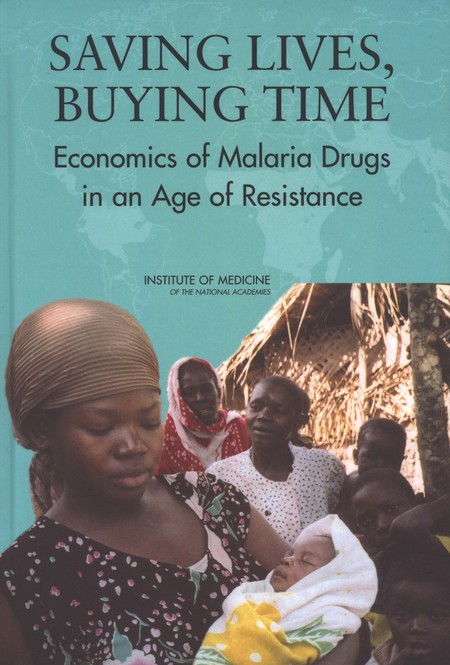
Cover of  Saving Lives, Buying Time: Economics of Malaria Drugs in an Age of Resistance (2004), from the National Academies Press

Cover of Saving Lives, Buying Time: Economics of Malaria Drugs in an Age of Resistance (2004), from the National Academies Press

Below the fold, I offer two quotes from Saving Lives, Buying Time: Economics of Malaria Drugs in an Age of Resistance (2004) Board on Global Health (BGH) (available from the National Academy of Sciences). You can see that DDT is not the golden-egg-laying goose, and that consequently Rachel Carson is not the mindless ogre she is made out to be in recent invectives.

Check out these sites:

Read the rest of this entry »


Voting for cancer, against prevention

May 31, 2007

Yeah, it was a bit tacky of Merck to create a campaign to get government officials to require inoculations against human papilloma viruses that cause cancer — but, people!, we’re talking about preventing cancer here.

The Texas legislature voted for cancer, overturning Gov. Rick Perry’s ill-considered good idea to require vaccinations for school kids in Texas. In a state with top-notch anti-cancer research at M. D. Anderson Cancer Center in Houston and UT’s Southwest Medical Center in Dallas, it was an odd, odd thing to witness.

The debates are skewed by a general distrust and dislike of big pharmaceutical companies, and by the religious right’s view that it’s better that a young mother die of cancer than she should get even the faintest idea that might in only the most perverse mind promote pre-marital sex. Still, we shouldn’t fall victim to voodoo science claims against vaccines.

Are my views, tempered by years of work promoting public health and fighting disease, clear enough for you?

Owlhaven wins popularity contests among mothers who read blogs, and it often is tender and touching — hey, I read it from time to time. But recently Mary, Owlhaven’s author, fell victim to a propaganda campaign from Judicial Watch, a far-right-wing bunch that campaigns against the U.S. justice system and generally makes a conservative-gratuitous-poke-in-the-butt out of itself. Judicial Watch claims to have some secrets from having filed a Freedom of Information Act Request with FDA to get Merck’s reports to FDA of adverse events known about Gardasil, Merck’s proprietary anti-cancer vaccine.

I responded, of course — but my response didn’t show on Owlhaven’s comments. Blackballed? Spam filtered due to the number or length of links? I can’t tell. Mary said she emptied the spam filter without checking. So, I repost my response, below the fold, for your benefit. Read the rest of this entry »