If science facts won’t improve reasoning, don’t study science, creationists say

February 8, 2009

If you saw the notice on the original study, you knew this one was coming.

A team of researchers checked two things in college freshman:  First, how much science they knew, sort of a trivia catalog; and second, how well they could use their reasoning powers.

The study showed Chinese students way ahead of U.S. students on simple knowledge of science facts.  But the study showed little difference in powers of reasoning of the two groups.

Wait, don’t jump to conclusions.  That’s what the creationists did.  Check out Ed Yong’s post and analysis of the study, at Not Exactly Rocket Science (with ensuing good discussion).

If knowing a lot of science doesn’t improve logic, why bother to learn science? the creationists asked.  Especially, why not teach creationism in biology, since teaching evolution seems to them rather authoritarian.

Could you make this stuff up?

Here’s the EurekAlert summary, and here’s a clip from the description:

The research appears in the January 30, 2009 issue of the journal Science.

Lei Bao, associate professor of physics at Ohio State University and lead author of the study, said that the finding defies conventional wisdom, which holds that teaching science facts will improve students’ reasoning ability.

“Our study shows that, contrary to what many people would expect, even when students are rigorously taught the facts, they don’t necessarily develop the reasoning skills they need to succeed,” Bao said. “Because students need both knowledge and reasoning, we need to explore teaching methods that target both.”

Bao directs Ohio State’s Physics Education Research Group, which is developing new strategies for teaching science, technology, engineering and mathematics (STEM) disciplines. For this study, he and his colleagues across the United States and in China decided to compare students from both countries, because the educational systems are so different.

In the United States, only one-third of students take a year-long physics course before they graduate from high school. The rest only study physics within general science courses. Curricula vary widely from school to school, and students can choose among elective courses.

In China, however, every student in every school follows exactly the same curriculum, which includes five years of continuous physics classes from grades 8 through 12. All students must perform well on a national exam if they hope to enter college, and the exam contains advanced physics problems.

“Each system has its strengths and weaknesses,” Bao said. “In China, schools emphasize a very extensive learning of STEM content knowledge, while in the United States, science courses are more flexible, with simpler content but with a high emphasis on scientific methods. We need to think of a new strategy, perhaps one that blends the best of both worlds.”

The students who participated in the study were all incoming freshmen who had just enrolled in a calculus-based introductory physics course. They took three multiple-choice tests: two which tested knowledge of physics concepts, and one which tested scientific reasoning.

Did you see anything there that suggested that NOT learning science facts is a good idea?

Tom Gilson at Thinking Christian used the study as a springboard to rail at evolution in biology curricula, and at the National Center for Science Education, calling the study (somewhat tongue in cheek, I think) “terribly dangerous.”  No, that doesn’t make sense, but it gets stranger as he explains in comments that he’s not advocating creationism or intelligent design, either.

But nothing in the study suggests any serious problem with the teaching of evolution theory.  Where did Tom get that idea?

Bao explained that STEM students need to excel at scientific reasoning in order to handle open-ended real-world tasks in their future careers in science and engineering.

Ohio State graduate student and study co-author Jing Han echoed that sentiment. “To do my own research, I need to be able to plan what I’m going to investigate and how to do it. I can’t just ask my professor or look up the answer in a book,” she said.

“These skills are especially important today, when we are determined to build a society with a sustainable edge in science and technology in a fast-evolving global environment,” Bao said.

He quickly added that reasoning is a good skill for everyone to possess — not just scientists and engineers.

“The general public also needs good reasoning skills in order to correctly interpret scientific findings and think rationally,” he said.

Telic Thoughts seized on it , too.

It’s a springboard to a new creationist meme, and here’s how it will come out of the mouths of creationists, speaking to school boards and writing letters to editorial pages: “Learning a lot of science doesn’t improve critical thinking skills, so let’s teach something other than evolution.”

That’s not what the study says.

First, the study says Chinese students know more science than U.S. students. This is worrisome for the U.S.  While the study shows that entering freshmen are no better at critical thinking than U.S. students, the fact remains that more Chinese students graduate with science degrees.  Then a lot of them come to the U.S. to get advanced degrees.  Even the radical right wing National Center for Policy Analysis worries about the number of Chinese engineers and scientists U.S. colleges and universities graduate.  We’re behind in this race for brains and skills.

Second, researchers showed that freshman science students need to improve their reasoning skills, in both China and the U.S. Look hard at any creationist claim — they won’t argue for more education to improve reasoning.  We need to note what this finding is not:  It’s not an indictment of science education.  It’s not a call to stop or slow down science education.  It defies “conventional wisdom,” but it’s not an endorsement of knocking down science education as a result.

Third, the study only identifies what might be a problem. High school graduates in their first year of studying science in Chinese and American universities are not very sophisticated in their science reasoning.  Is this a problem?  Is this a skill that should be learned in high school?  Or, is it a skill that is better taught after the freshman year, at college?  This study was a snapshot, not a longitudinal study.  It did not purport to show when or how to best instruct on the reasoning processes necessary for a successful career in science.

In particular, this is not an indictment of biology education in the U.S., nor especially an indictment of education in evolution theory.  It’s possible to suggest that Chinese students know more evolution than U.S. students.  That’s a far sight from saying education in evolution theory doesn’t work.

Resources:

Updates:


Scientists of a feather (& Big Bang resources)

January 15, 2009

Gamow and Myers.

From a report on Simon Singh’s presentation on Big Bang to the New York Academy of Sciences, reported by William Tucker:

There is much, much more to Singh’s chronicle. Did you know, for example, that helium was discovered in the sun before it was found on earth? Most terrestrial helium had long since drifted into space—hence the name, derived from “helios,” Greek for the sun. Then there is story of George Gamow’s first scientific experiment, when he took home the communion wafer in his cheek and put it under the microscope. He found no evidence of the Transubstantiation. “I think this was the experiment that made me a scientist,” he later wrote.

The report on Singh’s presentation is itself a good, concise history of Big Bang theory development, accompanied by this long list of top-notch, on-line resources about Big Bang.

Resources

Books:

The Structure of Scientific Revolutions, by Thomas S. Kuhn. 1996. University of Chicago Press.
Amazon | Barnes & Noble

Big Bang: The Origin of the Universe, by Simon Singh. 2005. Harper Collins, New York.
Amazon | Barnes & Noble

The Code Book, by Simon Singh. 2000. Anchor, New York.
Amazon | Barnes & Noble

Fermat’s Enigma, by Simon Singh. 1998. Anchor, New York.
Amazon | Barnes & Noble

Web Sites:

The Astronomy Cafe
Subtitled “The website for the astronomically disadvantaged,” Sten Odenwald’s site includes answers to many frequently asked questions about the universe and its origins and describes a number of books and articles he has written on the subject.

“Big Bang” on Wikipedia
An encyclopedic overview of the subject, including the history of the theory, problems it has faced, and questions remaining to be investigated. The essay includes extensive hyperlinks to other related topics.

Creation of a Cosmology: Big Bang Theory
A concise scientific explanation of the Big Bang theory.

Curious About Astronomy? Ask an Astronomer
This Web site for laypeople provides an archive of questions and answers about the Big Bang, and allows visitors to pose their own questions on the subject.

“A Day Without Yesterday”: Georges Lemaître & the Big Bang
Extensive biography of Georges Lemaître (1894-1966).

The First Three Minutes
Review of Steven Weinberg’s The First Three Minutes, a book about the very early development of the universe.

Sir Fred Hoyle
Extensive biography of astronomer, mathematician, and novelist Sir Fred Hoyle (1915-2001).

Great Debates in Astronomy
A series of debates held at the Smithsonian’s Museum of Natural History among leaders in the astronomical community. Features background information, educational material, and published proceedings for each debate.

The History Guide: Giordano Bruno
Links to resources about the life of philosopher and astronomer Giordano Bruno (1548-1600).

Hubble
Brief biography of Edwin Hubble.

Physics: Cosmology and Astronomy
A collection of links to popular information on the subject, from About.com.

Science & the Arts
A program organized by the City University of New York New Media Lab that bridges the two worlds. Expert speakers and performers—including recent participants like Laurie Anderson, Wallace Shawn, Michel Gondry, Brian Eno, and Todd Haynes, as well as Mighton and Greene—present examples of the interplay of science and the arts in dance, art, and theater. A calendar of upcoming events is available, as well as information about past offerings.

The Ten Big Questions: Big Bang Theory
This page ponders philosophical questions related to the Big Bang theory.

Theories Section—Big Bang
Concise article on the subject, written for educated non-astronomers, from Astronomy Today.

From the Academy:

What Caused the “Bang” of the Big Bang?, featuring Alan H. Guth, Massachusetts Institute of Technology. 2001. New York Academy of Sciences eBriefing.

A 50-50 Chance of Making It to the 22nd Century? Martin Rees Asks Scientists to Help Improve the Odds. 2003. New York Academy of Sciences eBriefing.

String Theory: A Conversation with Brian Greene. 2003. New York Academy of Sciences eBriefing, co-sponsored by NOVA.

Mirror, Mirror: Robin Kerrod and the Romance of Astronomy. Reported by William Tucker. Author: Robin Kerrod. 2004. New York Academy of Sciences Readers & Writers article.

Cosmic Questions
Annals of the New York Academy of Sciences
Volume 950, published Dec 2001
Edited by James B. Miller
description | full text

Faber, S. M. The Big Bang as Scientific Fact. 2001. Annals Online 950: 39-53 abstract | full text

Guth, A. H. Eternal Inflation. 2001. Annals Online 950: 66-82 abstract | full text

Russell, R. J. Did God Create Our Universe? Theological Reflections on the Big Bang, Inflation, and Quantum Cosmologies. 2001. Annals Online 950: 108-127 abstract | full text

George Gamow
Encyclopedia entry on the life of physicist George Gamow (1904-1968).

AstronomyLINKS
A small collection of annotated links on the big bang theory.

Also, see Simon Singh’s website.


Found, another missing link: Primitive feathers

January 13, 2009

Creationists must be brave indeed — or foolish, or non-comprehending — to steam on in the face of almost daily science discoveries.

Some discoveries are bigger than others.  Ed Yong at Not Exactly Rocket Science has a good, lay explanation of a recent paper documenting the discovery of a fossil with ancient, simple feathers –– a step in the evolution of feathers that was predicted but had not before been confirmed by fossils.

Until now, their existence was merely hypothetical – this is the first time that any have actually been found in a fossil. Other, more advanced stages in feather evolution have been described, so Beipaiosaurus provides the final piece in a series of structures that takes us from simple filaments to the more advanced feathers of other dinosaurs to the complex quills that keep modern birds aloft.

Beipaiosaurusfossil.jpg

The simple feathers were discovered by Xu Xing, the famous Chinese palaeontologist who discovered such species as Microraptor and Dilong, among many others. The filaments are longer and broader than those possessed by other dinosaurs and Xu calls them “elongated, broad, filamentous feathers” or EBFFs.

Each is about 10-15cm long and 2mm wide – not exactly thick, but still 10-20 times broader than the simple feathers of Sinosauropteryx. They are also unusually stiff, for despite the rigours of death and fossilisation, very few of them are curved or bent.

In other species of extinct dinosaur, simple feathers probably helped to insulate their bodies. But Beipaiosaurus’s feathers were too patchily distributed to have provided much in the way of insulation and they certainly weren’t complex enough for flight.

Instead, Xu thinks that the animal used them for display – their length and stiffness are well-suited for such a purpose, and they’re only found on parts of the body that bear display feathers in modern birds. They provide strong evidence that feathers were used for display long before they were co-opted for flight.

So, what’s that?  243,694 “missing links,” now found?  243,694 for science, 0 for creationism.  Isn’t there a five-inning rule in science?

It will be interesting to watch the next round of hearings at the Texas State Board of Education, to see what sort of excuse creationists will invent for why this chunk of science isn’t exactly what it seems to be.


Robert Zajonc, and what he revealed to teachers, politicians, and propagandists

December 23, 2008

The Situationist brings the sad news:  Psychologist Robert Zajonc died on December 3. (It’s a repost of a story by Adam Gorlick from Stanford News Service.)

Zajonc wasn’t a household name (I didn’t even know it rhymes with “science”), but his research was.

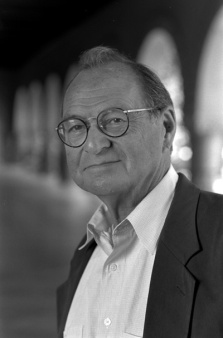
Psychologist Robert Zajonc, pioneer of social psychology

Psychologist Robert Zajonc, pioneer of social psychology

Plus, he led a stunning, dramatic and sometimes wonderful life, surviving horrors in the Holocaust and contributing great things to science.

Gorlick’ s memorial may be best read there, and I encourage you to click over there to read it.

Several of  Zajonc’s articles are listed as “Classics” at Science Magazine, including his 1981 defense of research spending, in the first year of the Reagan administration.

I also urge you to consider what teachers might do with some of Zajonc’s findings, things that propagandists and dastardly politicians (and a few nice politicians) have already used:

  • People like images they see over and over, the “mere exposure” effect  (It’s important what pictures you post in your classroom, yes?)
  • Parental contact with older children can raise their IQs — well, parental contact does raise the IQs of older children, but having less time for younger children tends to keep the younger kids’ IQs from developing as much.  (Did you read to your youngest kid last night?)
  • Challenging kids to tell why things work the way they claim makes them smarter. (This was the same research:  The younger kids’ challenging the older kids made the older kids smarter.  Heck, their challenging of the parents probably make the parents smarter, too.  Do we make students defend their views to other students?)
  • Facial expression affects emotions (“Emotions and Facial Expression,” Zajonc, Science 8 November 1985: 608-687; DOI: 10.1126/science.230.4726.608-b)
  • People who perform tasks well, perform them even better in front of an audience.
  • People who perform an unknown task before an audience tend to make more mistakes than they would if they practiced it in private.

Some of Professor Zajonc’s most influential work concerned “social facilitation” — the effect of the presence of others on a person’s performance of a specific task. Previous research on the subject appeared contradictory, suggesting that spectators helped performers in some cases but not in others. But in which cases?

What Professor Zajonc found was that when performers have mastered a skill at a high level, they are helped by the presence of an audience. (Think of professional musicians or athletes.) But he also found that when a performer has mastered a skill only imperfectly, the existence of onlookers is a hindrance. (Think of Sunday duffers in any arena.)

Elsewhere in his work, Professor Zajonc explored the nexus between psychology and physiology. In one widely reported study, he found that smiling or frowning can alter blood flow to the brain as facial muscles relax or contract. This in turn affects the parts of the brain that regulate feelings, helping induce happy or sad emotional states.

And do you ever wonder about why old couples tend to resemble each other so much?  Zajonc worked that out, too.

Why didn’t he get a Presidential Medal of Freedom?

Resources:


54th 4 Stone Hearth, and anthropology

December 5, 2008

Cognition and Culture hosts the 54th edition of 4 Stone Hearth, the blog carnival on issues archaeological.  Interesting venue — solidly academic, and a valuable resource for teachers all by itself.

It’s a great carnival, really — marriage, poetry, and even a video of a new toy from Bandai.

And on a related note, here’s a post that ought to make the 55th edition of 4 Stone Hearth:  Remote Central found a list of the top 100 anthropology blogs.  Useful searching.   There be great resources for the classroom, I’ll wager.


The value of science

November 24, 2008

Sometimes people go into science and do great work for deeply personal reasons.  Listen to Tim Subashi, a Senior Scientist at Pfizer.
Vodpod videos no longer available.

Much more stuff over at Big Think.

Gotta explore the history links there . . . anything you can use in a classroom?

And a gripe about the value of video, fumbled:  A resource like this should be a prime candidate for numerous short videos explaining evolution, to make up for the education you didn’t get in high school.  On a scary note, if you scan for “evolution,” you get intelligent design advocate Deepak Chopra.

Get with it, Big Think.  That’s embarrassing.

Go film P. Z. Myers for a couple of days.  Spend some time with Kenneth Miller.  Go interview Carl Zimmer about writing the books.  Get Andy Ellington’s explanation for the ins and outs of chirality.  With dozens of experts available, you don’t have even one?

Tip of the old scrub brush to Pamela Bumsted, Life Hacker, and The Boston Globe.


Immigrants learning English: Not so fast

October 22, 2008

Economics fans, pay attention:  Immigrants tend not to learn English when they move to America.  Moreover, they do well without it.

Greg Laden’s got a nice write up of a study on immigrants learning English.  I especially liked this story:

I once met … at a centenary celebration of some kind … the grandchild of a man who moved as a teenager from the old country to southern Wisconsin, ahead of his family, to learn the local customs, farming techniques, and language. After a few years in a small town in Wisconsin, his family arrived to start farming. The young man had indeed learned the local practices, the local farming techniques, and the local language. German. His family, arab speakers from Palestine, were well served by this young man because German was all they needed to get along in the US.

Not what the “English only” crowd wants to hear.

Here’s the citation on the study Greg Laden wrote about:

M. E. Wilkerson, J. Salmons (2008). “GOOD OLD IMMIGRANTS OF YESTERYEAR,” WHO DIDN’T LEARN ENGLISH: GERMANS IN WISCONSIN American Speech, 83 (3), 259-283 DOI: 10.1215/00031283-2008-020 [you’ll need a paid subscription for the full text]


Does mood affect how well you do homework?

September 22, 2008

Interesting discussion around how a student’s mood affects retention of material covered in homework, from the students at Extreme Biology.

What is your experience?


Rapping physics in the Bathtub

September 3, 2008

Now it’s gone big time, with NPR’s Morning Edition and Pharyngula on the bandwagon, remember you saw the Large Hadron Collider Rap second here at Millard Fillmore’s Bathtub.

You saw it first at Tommaso Dorigo’s A Quantum Diaries Survivor.

Geography teachers, have you figured out how to use this in your classrooms yet?

Related NPR stories:


Highest powered LASER in the world – in Texas, naturally

August 15, 2008

Longhorns must be proud. This is really cool science.

The University of Texas is hosting an open house for the Petawatt Laser. The Petawatt Laser is the most powerful laser in the world, creating “power output of more than 2,000 times the output of all power plants in the United States. (A petawatt is one quadrillion watts.)” The open house is August 28. (No, I didn’t get an invitation; Meg Gardiner’s husband got one.)

The laser is brighter than sunlight on the surface of the sun, but it only lasts for an instant, a 10th of a trillionth of a second (0.0000000000001 second).

Not me teach - I didnt shine that laser on your whiteboard.  (Seriously - Dr. Todd Whitmire, University of Texas, operator of the Petawatt Laser)

'Not me teach - I didn't shine that laser on your whiteboard.' (Seriously - Dr. Todd Ditmire, University of Texas, operator of the Petawatt Laser)

The laser reached greater than one petawatt of output in a test run March 31, 2008, at the University of Texas’s Texas Center for High Intensity Laser Science. The instrument will be used to create and study in extreme conditions, “including gases at temperatures greater than those in the sun and solids at pressures of many billions of atmospheres.”

This will allow them to explore many astronomical phenomena in miniature. They will create mini-supernovas, tabletop stars and very high-density plasmas that mimic exotic stellar objects known as brown dwarfs.

“We can learn about these large astronomical objects from tiny reactions in the lab because of the similarity of the mathematical equations that describe the events,” said Ditmire, director of the center.

Such a powerful laser will also allow them to study advanced ideas for creating energy by controlled fusion.

The Texas Petawatt was built with funding provided by the National Nuclear Security Administration, an agency within the U. S. Department of Energy.

Millard Fillmore’s Bathtub could use a petawatt laser, to keep the water in the tub warm, don’t you think?

Tip of the old scrub brush to Lying for a Living.

Resources (just for the sake of listing “ultrafast science”):

Bonus: Flag etiquette violation, below the fold.

Read the rest of this entry »


What is life, anyway?

August 7, 2008

No, this is not some philsophical treatise.  Nature recently published a paper by a French team that discovered a virus that infects another virus.  (You probably don’t have access to Nature either, but keep reading, there is hope.)

Wait a minute:  Are viruses alive? They can’t reproduce on their own, so, some scientists argue, they are not really alive.  Viruses infect living things.  Well, then doesn’t a virus infecting a virus imply the host virus is alive?

What is life?  Do we have to redefine it, once again, again?

It’s turtles, all the way down, for some of us — but you, Dear Reader, should probably read a good description of the paper, over at Living the Scientific Life.

Oh — the name of the new thing?  It’s a satellite virus, sorta, and it looks right, so the team that discovered it calls it “Sputnik.”


Particle physics rap: Making the Large Hadron Collider sing

July 30, 2008

In the tradition of Richard Feynman’s ode to orange juice, but spiced with actual information: Tommaso Dorigo at A Quantum Diaries Survivor found a video on YouTube showing a rap about the Large Hadron Collider (LHC).

Katie McAlpine, on temporary assignment to CERN, put the rap and video together in her spare time. (CERN is the European Organization for Nuclear Research)

The video fills an educational need. It explains some of the work in high-energy particle physics going on there on the border between France and Switzerland.

Will it quiet the internet worries about whether the creation of tiny, disappearing black holes might accidentally lead to the end of the planet? Don’t bet on it.

This video could make a key part of a geography warm-up, noting research in the European Union. CERN’s premier position in nuclear particle research is due to the cancellation in 1993 of the Superconducting Super Collider, which was then under construction near Waxahatchie, Texas. A little bit of digging could produce a lesson plan on government funding of research, especially in nuclear physics, or on geography of such massive cyclotrons, or on the history of particle physics, black holes, or uses for atom splitting.

Other resources:


Even babies chunk data

July 21, 2008

How do you apply this information in your lesson plans?

Even babies chunk data for memorization. That is, even babies find it easier to remember things if the new items include chunks of already familiar information.

Not Exactly Rocket Science discusses new research that shows infants as young as 14 months use this memorization trick.

Which of these strings of letters is easier to remember: QKJITJGPI or BBCITVCNN?

Chances are, you chose the latter string, where the nine letters are the combined names of three television networks. This neatly illustrates a fundamental property of human memory – that we remember long strings of information more easily if we can break them down into bite-sized chunks. In this case, a nine-letter string can be divided into three lots of three letters. You probably use similar strategies for remembering telephone numbers, credit card details, or post codes.

Now, Lisa Feigenson and Justin Halberda from Johns Hopkins University have found that infants just 14 months old can use the same technique, delightfully known as “chunking” to increase the limited scope of their memories. Their work suggests that this technique isn’t something we learn through education or experience – it’s more likely to be a basic part of the way our minds process information.

Much more, here.


Harrison Ford as Indiana Jones, for real

July 19, 2008

Don’t know how I missed this story earlier: Actor Harrison Ford won election to the Board of Directors of the Archaeological Institute of America (AIA).

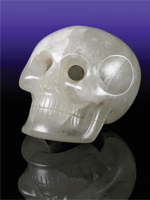
In 1992, this hollow rock-crystal skull was sent to the Smithsonian anonymously. A letter accompanying the 30-pound, 10-inch-high artifact suggested it was of Aztec origin. (James Di Loreto & Donald Hurlburt/Courtesy Smithsonian Institution)

Caption from AIA's Archaeology: "In 1992, this hollow rock-crystal skull was sent to the Smithsonian anonymously. A letter accompanying the 30-pound, 10-inch-high artifact suggested it was of Aztec origin. (James Di Loreto & Donald Hurlburt/Courtesy Smithsonian Institution)"

He doesn’t just play one on the silver screen — he is one. Or at least, he’s part of the professional association. The press report from AIA stressed Ford’s support for archaeology and knowledge.

The Archaeological Institute of America is North America’s oldest and largest non-profit organization devoted to archaeology. With more nearly a quarter of a million members and subscribers and 105 local chapters, it promotes archaeological excavation, research, education, and preservation on a global basis. At the core of its mission is the belief that an understanding of the past enhances our shared sense of humanity and enriches our existence. As archaeological finds are a non-renewable resource, the AIA’s work benefits not only the current generation, but also those yet to come in the future.

“Harrison Ford has played a significant role in stimulating the public’s interest in archaeological exploration,” said Brian Rose, President of the AIA. “We are all delighted that he has agreed to join the AIA’s Governing Board.”

AIA was chartered by Congress in 1906 — a full decade before the Boy Scouts of America, for comparison — with a charge to help enforce the Antiquities Act (16 U.S.C. § 431).

More interesting, and more useful in the classroom, are the story and sidebar in the online magazine of the Institute, which notes that the crystal skull stories involve faked artifacts — and even that the idol in the opening scene of the very first Indy movie involves a faked artifact.

“Legend of the Crystal Skulls: The truth behind Indianapolis Jones’s latest quest” tells a great story by Jane MacLaren Walsh, a true story, the best kind for history buffs.

Sixteen years ago, a heavy package addressed to the nonexistent “Smithsonian Inst. Curator, MezoAmerican Museum, Washington, D.C.” was delivered to the National Museum of American History. It was accompanied by an unsigned letter stating: “This Aztec crystal skull, purported to be part of the Porfirio Díaz collection, was purchased in Mexico in 1960…. I am offering it to the Smithsonian without consideration.” Richard Ahlborn, then curator of the Hispanic-American collections, knew of my expertise in Mexican archaeology and called me to ask whether I knew anything about the object–an eerie, milky-white crystal skull considerably larger than a human head.

I told him I knew of a life-sized crystal skull on display at the British Museum, and had seen a smaller version the Smithsonian had once exhibited as a fake. After we spent a few minutes puzzling over the meaning and significance of this unusual artifact, he asked whether the department of anthropology would be interested in accepting it for the national collections. I said yes without hesitation. If the skull turned out to be a genuine pre-Columbian Mesoamerican artifact, such a rare object should definitely become part of the national collections.

I couldn’t have imagined then that this unsolicited donation would open an entirely new avenue of research for me.

Great story. In the classroom, it shows the methods of archaeologists and historians. Walsh reveals how archaeologists work, and along the way she details a lot of the history that prompts adventure stories like the Indiana Jones series.

Archaeology, the real stuff, never nukes the fridge.

File these links and this article away. The new movie in the “Mummy” series with Brendan Fraser in the starring role, is due out August 1, “The Mummy: Tomb of the Dragon Emperor.” The new movie is set on a dig in China, presenting more opportunities to use popular entertainment as an entré to real history, and real science (and probably all sorts of historical errors to correct).

But while the latest Indiana Jones epic reunites Jones with Marian Ravenwood played by Karen Allen, Rachel Weisz doesn’t appear in the pending Mummy installment. Weisz was replaced by another actress playing Evelyn O’Connell.


Mosquitoes eat DDT, and here’s how

June 18, 2008

University of Illinois researchers found the protein that allows mosquitoes to metabolize DDT.

It’s good news in mosquito research, and may someday provide some insight into how to kill mosquitoes that seem to be resistant to DDT.

But, for all those DDT advocates out there, isn’t this rather embarrassing? Here these researchers have discovered the molecular level mechanisms for a process that the DDT apologists claim doesn’t happen. Oops. Rachel Carson proven right, once again.

There they are, caught red- and bumpy-handed.

Press release text from the University of Illinois below the fold.

Read the rest of this entry »