Notes from the Sub Terrain: Drafting class

May 18, 2007

[Another in an occasional series of stories from a substitute teacher.]

In the days prior to the Civil Rights Act of 1964 (and for many years after, really), in our district every 7th grade male took wood shop, and every female took home economics.  The wood shop course included a half year of drafting.   Shop courses continued annually after that for anyone so inclined, and a lot of people were. 

In our not-yet-suburban community, the skills of using high power tools were highly prized.  Every male was expected to know how to bend metal, use a torch or electric welder.  Farm kids were expected to know how to castrate sheep, turn a calf that started down the birth canal the wrong way, put crude shoe on a horse in an emergency when the farrier was too far away. 

Houses came with as few as two bedrooms.  Every man was expected to be able to plan out the additions as the babies came, and build the things – laying out the plans, getting the permits, calculating the lumber required, laying the foundation, wiring and plumbing as necessary, putting up the lath and plaster, or later, dry wall, making the trim, laying carpet or tile, painting and finishing.

Kids in Texas can take a shop course or two in high school, but especially under the scheme of the No Child Left Behind Act, the skills of drawing up plans for a room or a chest of drawers, and executing the plans, are skills of little regard. 

Drafting was always fun, though.  The architect’s rule, protractor and S-curve were exotic tools, and we took great pride in mastering their use.  Shop instructors usually had  story or two about George Washington as a surveyor, and Thomas Jefferson as inventor. 

Drafting is still fun, but it’s a different course completely.  The course is all electronic.  The drafting room is cool to keep the computers cool, and the software is fantastic.  Drawings are printed out on 3-foot-wide sheets of paper by large ink-jet printers that make a graphic display-oriented teacher salivate.  When I lamented the lack of the tools we had used, the kids said that they had spent several weeks using them at the start of the year – and then they switched to computers.  They said it was the difference between horse and buggy and jet airplanes. 

About half-way through the first block, a student came in with a note from another class.  His teacher said he’d finished his work there, and he was free to do drafting.  He booted up a machine, spent about 20 minutes in furious action completing a blueprint for a building.  With about 15 minutes left in the class, he hollered to another student across the room that the student had pulled a dirty move.  Immediately five or six others commented on it – and it became clear they were deep into a group role play game.  Hard work, then hard play.

As with the basketball class, discipline was no problem.  The students, with savvy that  made it look easy, took care of the class details.  Their own discipline got them through work they claimed to be fun, and then they moved on to what would be distracting frivolity, had they not completed everything else first. 

A lesson in motivation is buried there, somewhere.


Carnival still in town? We didn’t miss it?

May 13, 2007

History Carnival 52 was up on May 1 at Clioweb. What sort of a fog have I been in? Check out especially this post at Food History, demonstrating several uses of critical thinking tools as they might analyze the bizarre idea that most meat in Middle Ages Europe was rancid, thereby leading to a rise in the use of spices. Spices don’t make up for stomach cramps, for example. There must be some sort of critical thinking exercise in there for a world history class.

Carnival of the Liberals 38 came online earlier this week, at This Is So Queer. With fires raging in the hills around Burbank — documented with eerily beautiful photography — a fire of war in Iraq, and a fire around the Second Amendment, posts collected at the carnival offer fuel for intellectual fires on big issues.

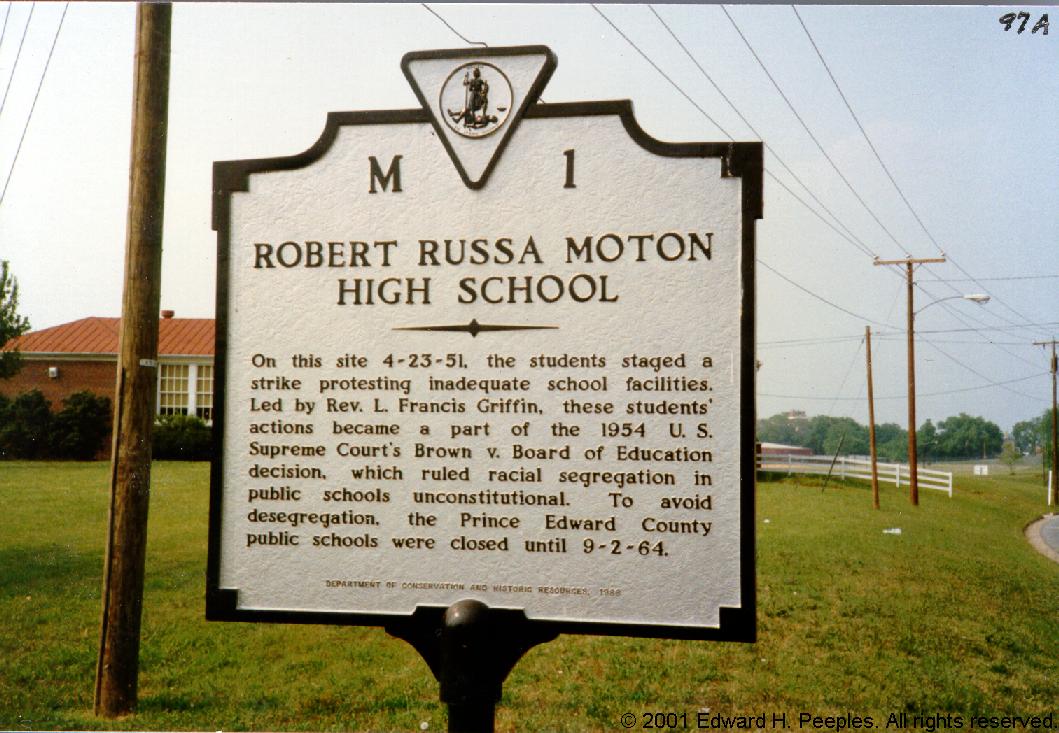
Moton HS historical markerAnd, the venerable Carnival of Education, issue 118, was up earlier at NYC Educator, with good posts on laptops in school, parenting, administering, enduring, and everything else related to education. (Click on the photo for a larger image — it’s the historical marker at the former Robert R. Moton High School, in Prince Edward County, Virginia — where one of the most poignant of the cases against school segregation began, Davis vs. Prince Edwards County Schools — part of the Brown vs. Topeka Board of Education case decided in 1954. Photo from Virginia Commonwealth University.)

Carnival of Homeschooling 71 lolls, at On The Company Porch.

And, of course, if you wish to nominate a post for the next Fiesta de Tejas!, scheduled for June 2, just use this button:


Blog Carnival submission form - fiesta de tejas!

Have a good Mother’s Day — call all the mothers you know. Why be picky?


Where is your podcast?

May 11, 2007

Kids in schools have things in their ears. Between classes it’s earphones for iPods, MP3 players, CD players, cell phones that play music an video — and of course they try to stretch it into class, too. “If I can listen to my music in class, I won’t make trouble,” they say.

To which I respond, “I don’t deal with terrorists.”

The students are telling teachers something, and most of us are missing the message: We need to get education into their iPods and MP3 players.

For example, Nora’s itec 845 blog wonders about converting podcasts to print, for hearing-impaired students. Do you even have podcasts for classroom use or augmentation? (I wager this blog is a classroom assignment — students are working in areas their teachers don’t know anything about?)

Check out the Education Podcast Network. If your students told you they were getting information from this site, would you know whether it was quality information? Would you even know how to check?

Teachers should be using podcasts to deliver lectures, deliver supplementary material, to discuss homework, and to inform parents about homework and other activities.  Are you using podcasts for any of that?

If you don’t think you’re missing the podcast boat, go here and see what some of the possibilities you’re missing really are:  Around the Corner.   Or, go there just to get ideas.

Hey, what are you waiting for?


Radio history, historic radio

May 7, 2007

Internet connections can really boost history with sound and film presentations. History is really still in infancy stages, but some sites flash through with brilliant views of what can be done.

Old Time Radio posts a wealth of sound clips from throughout radio history, coupled with essays detailing much of the history that isn’t in the soundclips. The site seems to have almost all the episodes from Captain Midnight, for example. You can also hear Terry and the Pirates, or Fred Allen or Jack Benny.

The real gems, to me, are the newscasts and the stories of the newscasters. The 1937 broadcast of the Hindenberg Disaster is available, but so are some of the later and more important, and more rare, broadcasts of World War II: the Austrian Crisis, Neville Chamberlain with Britain’s declaration of war, news bulletins of the Pearl Harbor attack, on-the-scene accounts of the D-Day invasion of Normandy (with more accounts here), the battle for Iwo Jima now famous from two Clint Eastwood films, and V-J Day (“Victory-Japan”).

Later clips make this a standout site, and tantalize us with possibilities.  Ernest Hemingway’s suicide report, the 6-Day War between Israel and Egypt and Syria in 1967, and a report on the funeral of Robert F. Kennedy in 1968 flesh out events that the high school history texts tend to stroll quickly over, and offer possibilities of classroom enrichment beyond the texts.

Surely more radio broadcasts exist that could be used in history classrooms.  Radio and broadcast history sites like The Broadcast Archive have the history of broadcast, but few actual broadcasts.   Other sites carry a few important broadcasts, but like this one, come weighted with polemics (the politics and religion on this site make it questionable for school use, though students may not think to look at the home site from the broadcast links — where did this guy get these broadcasts, and does he have the rights correctly listed?).

Some research suggests that students learn history partially through repetition, as with any other topic.  The old “repeat it four times” rule gets boring in class, but can be kept alive by repetition in other media.  Teachers who use the actual broadcasts of news of what are now historic events can make history speak to students.  Can.

More radio broadcast history:

BBC News historic broadcast archives  (This site has broadcasts through current times, including, for example, broadcasts of Nelson Mandela’s rise to the presidency of South Africa, a much-ignored era in too many classrooms.)

Earthstation 1 CDs and DVDs for purchase

Timeline of radio, from the California Historical Radio Society

Radio broadcasts 1939-1943 from the University of San Diego’s history server

Ken Burns’ “Empire of the Air” companion site

First commercial broadcast in the U.S., KDKA-AM, Pittsburgh, Pennsylvania, with results of the Cox-Harding presidential election, November 2, 1920


Moment in history: May 6, 1937, the Hindenberg crash

May 6, 2007

May 6, 2007, is the 70th anniversary of the Hindenberg tragedy. Docking at its station in New Jersey, after crossing the Atlantic, a spark ignited the aluminum-based paint on the airship, and the entire craft exploded into flame.

35 people died on the airship, and one on the ground — did you know a few survived? The Associated Press interviewed a man who was 8-years old that day, and a passenger on the airship.

Werner Doehner, an 8-year-old passenger aboard the Hindenburg, saw chairs fall across the dining room door his father had walked through moments before the disaster. He would never see his father alive again.

“Just instantly, the whole place was on fire,” said Doehner, of Parachute, Colo., who is the last surviving passenger. “My mother threw me out the window. She threw my brother out. Then she threw me, but I hit something and bounced back. She caught me and threw me the second time out. My sister was just too heavy for her. My mother jumped out and fractured her pelvis. Regardless of that, she managed to walk.”

Hindenberg on fire

Hindenberg on fire, May 6, 1937.

The disaster erroneously condemned hydrogen in the public’s mind. Despite widespread use of hydrogen gas for cooking and some transportation during World War II (including in the U.S.), use of hydrogen as a fuel beyond that has always faced the hurdle of the “Hindenberg Syndrome,” the fear that the gas would explode. Fact is that gasoline is much more volatile, more explosive, and generally more dangerous, than hydrogen.


Typewriter of the moment: Ernie Pyle

May 1, 2007

This typewriter, a Corona (before the merger made Smith-Corona), belonged to Ernie Pyle, the columnist famous for traveling with the the foot soldiers of all services in World War II. Pyle won a Pulitzer Prize in 1944 for his columns in 1943, published collectively in the books Here is Your War and Brave Men. Pyle was killed covering the end of World War II in the Pacific, on an island named Ie Shima, on April 18, 1945.

The typewriter rests in the Albuquerque Museum. It comes with a story.

Ernie Pyle's typewriter, rescued from a foxhole in Italy in 1944; Albuquerque Museum From the Albuquerque Museum’s exhibit, “America’s Most Loved Reporter”:

[Quote] Ernie Pyle interviewed Sergeant Don Bell, a rodeo rider, in June or July 1944 outside of St. Lo, France. Bell recalled that the foxhole they shared caved in during German shelling. Pyle said, “I have my notes, but my little portable typewriter is buried in that hole.” They hurriedly abandoned the foxhole, leaving the typewriter behind.

Sgt. Bell later salvaged it, kept it through the war, and donated it to the Museum in 1990. A photograph of Pyle in Normandy, typing on an Underwood, may have been taken after this event.

Bell recalled the interview as comforting. He wrote, “…Ernie had taken my ma’s wisdom and turned it into a soldier’s lesson: to find strength in battle you take hold of strength you’ve known at home…and of the faith that underlies it.” [End quote]


Typewriter of the moment: Ernest Hemingway’s Royal

April 29, 2007

Hemingway's typewriter in Sun Valley, Idaho


Ernest Hemingway’s typewriter, at the window to his house in Sun Valley, Idaho. Photo image by U.S. Plan B, Inc., a provider of “B-roll” film and video.


John Reed at his typewriter

April 28, 2007

John Reed at his typewriter, Oregon Historical SocietyUndated photograph of John Reed (1880-1927) at this typewriter, from the Oregon Historical Society, “Oregon Biographies.”


Tangled web

April 26, 2007

In the middle of the Ray Donovan mess* I was dispatched one afternoon to the Labor Department to see Donovan’s press conference on some complaint the Senate Labor Committee had misrepresented the misrepresentations about testimony offered to the committee. Donovan was mad, but I didn’t realize just how mad until I was stopped at the door — my I.D. was flagged as persona non grata, apparently. Either that or they thought Sen. Orrin Hatch would try to sneak a subpoena in with his press guy.

A friendly reporter standing behind me in line added me to his crew, and I got the handouts.

That was retail, face-to-face scandal. Nothing like this:

Anything like “OllieNorthinthebasement.net?”

* It’s amazing how little of this history is available on line.


Interactive disaster maps for geography

April 15, 2007

Would tracking disasters add more than a little interest to your geography units?

Cliotech, a blog by a Pennsylvania social studies teacher, gives pointers to Alertmap, a group based in Budapest (hey, that’s a geography lesson right there!). Alertmap charts disasters — fires, floods, earthquakes, etc. — and what student is not interested in disaster?

Be careful not to unnecessarily scare students — but do point out that the world is full of danger, and natural and man-made disasters continue to plague mankind the world over.


Technology and time: A riddle for a lesson-plan hook

April 7, 2007

William Shakespeare and Miguel de Cervantes both died on April 23, 1616.  If that is so, how could it be also true that Cervantes’ funeral and burial were days earlier, even before Shakespeare died?

Is such a little mystery the sort of hook a teacher could use for a lesson plan on the influence of technology on the keeping of time and calendars?  More below the fold.

Read the rest of this entry »


Geography learning, on-line

March 22, 2007

Do your students have access to computers?

Test Your Geography Knowledge may seem a little elementary; alas — or maybe “hooray!” — it goes over exactly the sort of simple stuff I find too many high school students don’t have:  Basic political geography.   It beats Microsoft’s solitaire for in-class timewasting.  (This is a show-off site for a programmer and company, Lizard Point; look at other stuff at the site, and think of what you can do with it.)

That site has a link to Quiz School.  On-line quizzes, that you invent, that you can put into your classroom weblog — wonderful idea.  What can you do with this tool?  (It wouldn’t hurt you at all to post links to your quizzes here, would it?)

Back to geography:  You’ll also want to check out Sheppard Software, and the collection of geography games there.  The variety of games is quite outstanding — I even found one related to forestry.

Tip of the old scrub brush to SSBG’s blogroll.


Time capsule shaped like a ’57 Plymouth

March 18, 2007

1957’s heat and dust must have affected the movers and shakers of Tulsa, Oklahoma. How else to explain their burying a perfectly good 1957 Plymouth Belvedere?

They buried it, though, as a time capsule, to be dug up by those very advanced people of the 21st century, in 2007, for the centennial of Oklahoma’s statehood in 1907. (Quick quiz: How many states joined the union in the 20th century? What is the longest period the U.S. has ever gone without adding new states?)

Good heavens! This is 2007!

1957 Plymouth - buried car.com photo

1957 Plymouth - buried car.com photo

So, as promised, Tulsa will dig up a 1957 Plymouth Belvedere, in a ceremony on June 15, 2007. Get your tickets and can plan your trip to watch already.

Why a 1957 Plymouth?

The car was seen as a method of acquainting twenty-first century citizens with a suitable representation of 1957 civilization. According to event chairman Lewis Roberts Jr., the Plymouth was chosen because it was “an advanced product of American industrial ingenuity with the kind of lasting appeal that will still be in style 50 years from now.”

The contents of a women’s purse, including bobby pins, a bottle of tranquilizers, cigarettes and an unpaid parking ticket, were added to the glove compartment of the car shortly before burial.

Other items included in the time capsule were: Read the rest of this entry »


Banned in China: Millard Fillmore’s Bathtub?

March 16, 2007

greatfirewall-of-china-logo.JPG
Is it just technical, or is it something I said? Does the Chinese government have no use for Millard Fillmore, who sent an expedition to Japan to open up trade there, or is it the thought of bathtubs that puts them off?

Any way it is sliced, according to GreatFirewallofChina.org, this blog is not viewable in China.

Test your own, or someone else’s: Test.

Odd consideration: Fox News is also blocked from China. Who could object to that, except on principle? On the one hand, one appreciates the good taste shown in blocking the site. On the other hand, even garbage journalism has rights in the U.S.

Okay, we’ll stick with principle: Not even Fox News should be blocked.

And, just to be sure, if a site you test produces a result that suggests it is available in China, will you let me know? I found very few available.


Quarter past a generation gap

March 8, 2007

I left the building by a side door. 30 minutes after the final bell, the rules are that students are to be off campus. Two students were sitting on the retaining wall at the end of the walk, near the parking lot. “Hey, mister – you got a cell phone?” Was this the classic ‘may-I-borrow-your-cell-phone scam?

“Tell me why you want to know.”

“Oh, I just wondered what time it is,” he said, quite as if it was the normal way of the world.

“I have a watch; it’s 4:15.”

“A watch! Cool!”

Another generation gap: Many kids don’t wear watches. They carry cell phones that have the time accurate to within a few seconds – most of them. A few waiting for rides didn’t have a phone, and so they had no way to know the time.

How much longer will Rolex be able to hold on?

(Where were their parents or other rides?)