Don’t misquote Jefferson . . . a moving target

January 27, 2011

Monticello, from the former header of A Summary View

Monticello, from the former header of A Summary View

That wonderful blog, “A Summary View,” which so often worked on misquotes from Jefferson? Moribund at the old WordPress site.

But arisen anew, in a grander cover, and keeping up the spirit of learning about Thomas Jefferson, here: A Summary View, at Monticello’s site.

Great history, like:

Anna Berkes continues to enlighten and brighten the study of history.


Quote of the moment: Jefferson, public education as the protector of freedom

November 23, 2010

South Elevation of the Rotunda, University of Virginia -- Thomas Jefferson design for the university he founded and shepherded - UVA image

Thomas Jefferson. South Elevation of the Rotunda, begun 1818, completed March 29, 1819. Ink and pencil drawing. Courtesy of the Thomas Jefferson Architectural Drawings, University Archives, Special Collections Department, University of Virginia Library

By far the most important bill in our whole code is that for the diffusion of knowledge among the people.  No other sure foundation can be devised for the preservation of freedom, and happiness.

Jefferson in a letter to his mentor George Wythe, from Paris, August 13, 1786; referring to his Bill for the More General Diffusion of Knowledge, proposed in 1779

Excerpted from The Quotable Jefferson, collected and edited by John Kaminski, Princeton University Press, 2006


Quote of the moment: Thomas Jefferson, on government support of truth

November 21, 2010

Bas relief portrait of Thomas Jefferson, as one of the great lawgivers whose heritage of laws we draw from, portrayed in the chamber of the U.S. House of Representatives. Image from Architect of the Capitol, Wikimedia

It is error alone which needs the support of government.  Truth can stand by itself.

Thomas Jefferson, Notes on the State of Virginia, 1782

Excerpted here from The Quotable Jefferson, edited by John P. Kaminski, Princeton University Press, 2006, p. 226.

No, he didn’t specify, but I think he was talking about creationists who seek legislation to sneak creationism into science classes.


Religion-free zone in New York?

August 28, 2010

Thomas Jefferson’s copy of the Qur’an, published in 1764. (courtesy of the Library of Congress). Image via 15-Minute History at the University of Texas at Austin.

Thomas Jefferson’s copy of the Qur’an, published in 1764. (courtesy of the Library of Congress). Image via 15-Minute History at the University of Texas at Austin.

The Center for Inquiry (CFI) joined in the calls to end plans for any worship center for Islam near the site of the destroyed World Trade Center.  But they added a twist.

CFI called for the entire area to be free from religious institutions, since, they say, it was religiously-inspired violence that caused the trouble.  Greg Laden has pithy comments at his blog, as does DuWayne Brayton from the opposite tack (Laden agrees with CFI, sorta, while Brayton thinks they’ve jumped somebody’s shark).

How about it, Joe, how about it Morgan?  Doesn’t this plan meet yours and Sarah Palin’s objections to Cordoba House?

And Glenn Beck in ignorance leads us farther and further from the intentions of the “founders”:

Also at Millard Fillmore’s Bathtub:

Save


Something to think about as you get your flag ready to fly for July 4

July 2, 2010

This is mostly an encore post, from last year.

July 4th is the 234th anniversary of the announcement of the Declaration of Independence.  I hope you’re thinking about how you’ll fly the flag this weekend in honor of the Declaration of Independence.

The resolution proposed by Richard Henry Lee calling for independence of the 13 colonies passed the Continental Congress on July 2, 1776.  The Declaration would be Thomas Jefferson’s crowning achievement, outshining even his presidency and the Louisiana Purchase.   John Adams wrote to his wife, Abigail, that July 2 would forever be marked by patriotic displays.

But the Declaration itself, which gave teeth to the resolution, was adopted two days later on July 4 — and that has come to be the day we celebrate.

Detail, John Trumbull's Signing of the Declaration of Independence - Theodor Horydczak photo, Library of Congress

Detail, John Trumbull's Signing of the Declaration of Independence - The committee of five presents the Declaration of Independence to John Hancock, the President of the Second Continental Congress; from left, the committee is John Adams, Robert Livingston, Roger Sherman, Thomas Jefferson, and Ben Franklin. Theodor Horydczak photo, Library of Congress

Adams didn’t miss a beat.  Who quibbles about a couple of days when the celebrating is so good?

Adams and Jefferson were two of the five-member committee the Congress had tasked to write a declaration.  Adams and Ben Franklin quickly determined to leave it up to Jefferson, who had a grand flair with words, and who had just written a couple of stirring documents for Virginia.  Roger Sherman and Robert Livingston, the other two members, went along.  And so it was that the Declaration of  Independence is almost completely the work of Thomas Jefferson.

Adams and Jefferson became friends only later, when they both served the nation at war as ambassadors to France, and then for Adams, to England.  A widower, Jefferson was taken in by Abigail Adams who worried about him.  After the war, Jefferson was in England when Adams was to meet King George III in a grand ceremony in which the king would accept the credentials of all the ambassadors of foreign nations to England.  As the king strode down the line, each ambassador or delegation would bow, the king would acknowledge them, the papers would be passed, and the king would move on.  Adams and Jefferson bowed.  King George moved on, ignoring them completely.

In such a case of such a snub, the snubbed foreigners usually made a quick exit.  Adams and Jefferson did not.  They stood at attention as if the king had treated them like all the rest, reversing the snub.  From the beginning, Americans and the United States pushed for more practical, reasonable, and compassionate government and relations.

Back in America in peacetime, and both members of the administration of George Washington, Adams and Jefferson fell out.  Secretary of State Jefferson favored a more limited federal government; Vice President Adams favored a more powerful one.  By the end of Washington’s second term, party politics had been well developed.  Adams defeated Jefferson in the election of 1796.  As was the law then, Jefferson was vice president as the runner-up vote getter in the electoral college; but Adams kept Jefferson out of all government affairs.  Perhaps because he didn’t have Jefferson to help, Adams’s presidency did not go well.  In the rematch election in 1800, one of  the bitterest fights ever, Jefferson’s party defeated Adams.  The gleeful Democratic-Republican electors all voted one ballot for Jefferson, the presidential candidate, and one ballot for Aaron Burr, the party’s vice presidential candidate.

Alas, that produced a tie vote in the electoral college.  Adams’s party, the Federalists, still held the House of Representatives before the new Congress came in.  A tie vote goes to the House for decision.  They could not bring themselves to vote for Jefferson, and the deadlock continued for 37 ballots.  Finally Jefferson’s former friend but now arch enemy Alexander Hamilton intervened, explaining that Burr was clearly the greater scoundrel, and the House elected Jefferson.  Adams slunk out of town, avoiding the inauguration.

It wasn’t until after 1809 when Benjamin Rush hoodwinked Jefferson into writing to Adams, and Adams to Jefferson, that the two became friendly again.  For the next 17 years Jefferson and Adams carried on perhaps the greatest series of correspondence in history between two great minds.  Letters went out almost daily, from Monticello, Virginia,  to Braintree, Massachusetts, and from Braintree to Monticello.  They discussed the weather, their families, old times, farming — but especially the republic they had been most instrumental in creating, and how it might be preserved, and prosper.  Eventually the letters became harder to read, both because their eyesight was failing, and because their penmanship deteriorated, too.

The ideas, however, flowed like a great river of freedom.

Letter from Thomas Jefferson to John Adams, August 15th, 1820 - Library of Congress image

Letter from Thomas Jefferson to John Adams, August 15th, 1820. From The Thomas Jefferson Papers at the Library of Congress, Thomas Jefferson Papers Series 1. General Correspondence. 1651-1827. Library of Congress image

Both men took ill early in 1826.  This was a landmark year, 50 years since the Declaration of Independence.  In Massachusetts, a grand display of fireworks was to cap off a day of feasting and celebration.  Adams hoped he might attend.  In Virginia, a week before, it became clear Jefferson was too ill to venture even as close as Charlottesville for the celebration.  Jefferson slept through most of July 3, but awoke about 9:00 p.m., and asked, “This is the fourth?”  It was not.  These are the last significant, recorded words of Jefferson.  He awoke at about 4:00 a.m. on the Fourth of July, 1826, but could not make a rally.  He died at 12:50 in the afternoon.

Adams, too, was too ill to attend the celebrations.  In the late afternoon or early evening of the Fourth, he awoke, and heard the celebration in the town.  Almost as if he had worked just to live to see that particular day, he checked the date.  Realizing he was near the end, happy that he’d seen 50 years after the Declaration, and unaware of the events earlier that day in Virginia, Adams said, “Thomas Jefferson still survives.”  Adams, too, died on July 4, 1826.

Fly your flag July 4th. Remember John Adams and Thomas Jefferson.  Remember their great work in creating the nation that protects our freedoms today.  Remember their great friendship.  Write a letter to a good friend you’ve not written to lately.

It is Independence Day this Sunday.  Their spirit survives in us, as we celebrate, and if we remember why we celebrate.


Utah report: More false “founders’ quotes” plague American discourse

April 25, 2010

Utah has a movement out to slander education and the Constitution, with a pointless claim that the Constitution cannot be called a “democracy,” damn Lincoln, Hamilton, Madison, Washington, both Roosevelts, and Reagan.

Sadly, it started in my old school district, the one where I got the last nine years of public school education, Alpine District, in the north end of Utah County.

They even have a website, Utah’s Republic. (No, Utah was never an independent republic before it was a state — it’s not like the Texas Republic wackoes, except in their wacko interpretations of law and history, where they are indistinguishable.)

At the blog from that site, there is a silly discussion on how a republic is a much superior form of government to a democracy.  Never mind that sheer numbers in our nation have always made democracy impossible (can’t get 150 million voters in one hall), or that distance makes it impossible to work (vote tomorrow in Washington, D.C.?  Everybody call the airlines, see if you can make it.)

So, I pointed out how a republic can also suggest tyranny.  And the response?  A flurry of “quotes from the founders.”

Can you vouch for any of these “quotes?”  Is any one of them accurate?

The Jefferson “mob rule” quote isn’t in any Jefferson data base that I can find. I find it also attributed to George Washington — but almost always without any citation, so you can’t check.

That maneuver is one of the key indicators of Bogus Quotes, the lack of any citation to make it difficult to track down.  All of these quotes come without citation:

As for a moral people, Washington said there could be no morality without religion and called it the “indispensable support,” not education. Obviously Jefferson and the Founders wanted education of the constitution to take place but we are very far removed from it in our education system.

Democracy… while it lasts is more bloody than either aristocracy or monarchy. Remember, democracy never lasts long. It soon wastes, exhausts, and murders itself. There is never a democracy that did not commit suicide. – John Adams

A democracy is nothing more than mob rule, where fifty-one percent of the people may take away the rights of the other forty-nine. – Thomas Jefferson

The democracy will cease to exist when you take away from those who are willing to work and give to those who would not. – Thomas Jefferson

Democracy is two wolves and a lamb voting on what to have for lunch. Liberty is a well-armed lamb contesting the vote. – Benjamin Franklin

Democracy is the most vile form of government… democracies have ever been spectacles of turbulence and contention: have ever been found incompatible with personal security or the rights of property: and have in general been as short in their lives as they have been violent in their deaths. – James Madison

As I would not be a slave, so I would not be a master. This expresses my idea of democracy. – Abraham Lincoln

The last one is probably accurate, but irrelevant to this discussion (nice red herring, there, Oak).  Can you offer links to verify any of them?

Is this what I suspect?  The “Utah Republic” drive is not only a tempest in a teapot (though perhaps caused by other more serious maladies), but also a tempest based on false readings of history?

The website for “Utah Republic” is maintained by a guy named Oak Norton, who is obviously in thrall to the voodoo histories of David Barton and Cleon Skousen (I think Barton stole a lot of his voodoo history from Skousen, but that’s another topic for another day).

Funny:  Nowhere do these guys discuss one of the greatest drivers of the republic, over more egalitarian and more democratic forms of government.  Remember, Hamilton preferred to have an aristocracy, an elite-by-birth group, who would rule over the peasants.  He didn’t trust the peasants, the people who he saw as largely uneducated, to make critical decisions like, who should be president.  Norton doesn’t trust the peasants to get it right, and so he wants to dictate to them what they are supposed to know, in Nortonland.

Just because Oak Norton slept through high school history and government is no reason to shut down Utah’s Alpine School District or any other school; he’s not offered much evidence that everyone else missed that day in class, nor evidence that it has any significant effect.

Jefferson's advice on quotes found on the internet

Jefferson’s advice on quotes found on the internet, backdropped by his books now held by the Library of Congress.


Happy birthday, Mr. Jefferson

April 13, 2010

April 13 should be a holiday, don’t you think?  Religious Freedom Day, or Public Education Day, or Self-evident Truths Day — something to honor Thomas Jefferson.

Catherine Sherman wonderfully explains why we should celebrate Jefferson’s birthday.  Go see.


Education board shames Texas, part E: Nick Anderson again

April 10, 2010

Nick Anderson in Houston Chronicle, Texas education group kicks Jefferson out of curriculum

Nick Anderson in Houston Chronicle, April 2, 2010


The debt the U.S. owes to Haiti: The Louisiana Purchase

January 24, 2010

Every Texas school kid learns that the Louisiana Purchase in 1803 created one of the great turning points in American history.  Parts or all of 15 different states came out of the land acquired from Napoleon in that deal.  Lewis and Clark’s Corps of Discovery spent more than two years mapping the newly-acquired territory, and didn’t really scratch the surface of the riches to be found.

Why was Napoleon so willing to deal Louisiana, so cheaply?

What else happened in 1803?  Haiti’s slaves rose up and cast off French rule. Haiti had been the jewel of France’s overseas colonies.   Napoleon became convinced that holding and ruling North American territories could be more pain and trouble than it was worth

So, along came John Jay to secure navigation rights in the territory . . .

CBS Sunday Morning featured a good story on the event, and on Haiti, on January 17.  You can read the transcript here.


Frederick Douglass Book Award nominees (read ’em!)

August 16, 2009

What to read this year for U.S. history?

Kevin Levin at Civil War Memories notes three worthy candidates for outside reading, for student projects, and other good use (I’ve stolen his whole post — you’d do well to go visit his site and see what else he has):


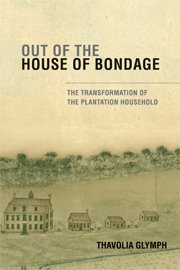
Out+of+the+House+of+BondageI‘m a little late in posting this, but wanted to point your attention to the three finalists for this year’s Frederick Douglass Book Award that is sponsored by Yale’s Gilder-Lehrman Center for the Study of Slavery, Resistance and Abolition.

The finalists are Thavolia Glymph for Out of the House of Bondage: The Transformation of the Plantation Household (Cambridge University Press); Annette Gordon-Reed, The Hemingses of Monticello: An American Family (W.W. Norton and Company); and Jacqueline Jones, “Saving Savannah: The City and the Civil War (Alfred A. Knopf Publishers).  The prize comes with a generous check of $25,000.  I’ve read both Annette Gordon-Reed’s book (a National Book Award winner) and Glymph’s study.  Although the publisher sent me a copy of Saving Savannah, I have not had a chance to look through it.   My money is on Glymph’s Out of the House of Bondage.


Associated Press claims to own Thomas Jefferson’s words

August 3, 2009

Update:  See comment from Mr. Higginbotham; AP claims machine error and not arrogance.

Potential collisions are delicious:  Associated Press versus the Library of Congress’s “Thomas” legislation tracker;  Associated Press versus the Supreme Court for quoting the Declaration of Independence.

Associated Press versus the Southern Baptist Convention and Holy See for quoting the Bible, in phrases Jefferson used in his mashup of the New Testament.

Sotomayor either doesn’t know what she’s in for, or she saw this coming and is going to relish the ride.

James Grimmelman at The Laboratorium has been tracking AP’s attempts to wring pennies out of penniless bloggers and scholars for using AP product.  On the one hand, AP certainly deserves credit and payment for the great work it does reporting the news.

On the other hand, AP policies don’t seem much concerned with reporting news or creating new product that can make money for the organization, but instead seem bent on punishing people who read Associated Press stories.  (Full disclosure:  I make it a point to avoid AP stories and images on topics of my interest just to avoid the conflict — oddly, I’ve found that this actually does shift my news sources on major stories.)

Grimmelman caught AP red-handed in what must be a much embarrassing gaffe:  He asked permission from AP to quote from a letter written by Thomas Jefferson which AP had not published.

Sure enough, AP told him he owed them $12 to quote the letter, and AP offered to restrict the uses of the letter.

Grimmelman said:

The Associated Press has become so deranged, so disconnected from reality, that it will sell you a “license” to quote words it didn’t write and doesn’t own. Here, check it out:

Screen capture of Associated Presss charging for a Thomas Jefferson letter in the public domain - The LaboratoriumScreen capture of Associated Presss charging for a Thomas Jefferson letter in the public domain – The Laboratorium

These things threaten to put hoax makers out of business. Who could think of something so absurd? Grimmelman said:

I paid $12 for this “license.” Those words don’t even come from the article they charged me 46 cents a word to quote from (and that’s with the educational discount). No, they’re from Thomas Jefferson’s letter to Isaac McPherson, in which Jefferson argues that copyright has no basis in natural law.

(A commenter notes that Jefferson was actually writing about patents, but close is good enough in hand grenades and freedom of the press and freedom of thought.)

Grimmelman has more thoughts (and links to his earlier work on the issue)Boing-Boing did a cover of Grimmelman’s piece.

James Grimmelman pwns AP instead.

Tip of the old scrub brush to Dr. Pamela Bumsted.


Fly your flag today, July 4, 2009

July 4, 2009

Soldiers raise the U.S. flag at a base in Afghanistan, 2003

Soldiers raise the U.S. flag at a base in Afghanistan, 2003

It’s the 233rd anniversary of the announcement of the Declaration of Independence.  The resolution calling for independence of the 13 colonies passed the Continental Congress on July 2, 1776.  The Declaration would be Thomas Jefferson’s crowning achievement, outshining even his presidency and the Louisiana Purchase.   John Adams wrote to his wife, Abigail, that July 2 would forever be marked by patriotic displays.

But the Declaration, which gave teeth to the resolution, was adopted on July 4.  Adams didn’t miss a beat.  Who quibbles about a couple of days when the celebrating is so good?

Adams and Jefferson were two of the five-member committee the Congress had tasked to write a declaration.  Adams and Ben Franklin quickly determined to leave it up to Jefferson, who had a grand flair with words, and who had just written a couple of stirring documents for Virginia.  Roger Sherman and Robert Livingston, the other two members, went along.

Adams and Jefferson became friends only later, when they both served the nation at war as ambassadors to France, and then for Adams, to England.  A widower, Jefferson was taken in by Abigail Adams who worried about him.  After the war, Jefferson was in England when Adams was to meet King George III in a grand ceremony in which the king would accept the credentials of all the ambassadors of foreign nations to England.  As the king strode down the line, each ambassador or delegation would bow, the king would acknowledge them, the papers would be passed, and the king would move on.  Adams and Jefferson bowed.  King George moved on, ignoring them completely.

In such a case of such a snub, the snubbed foreigners usually made a quick exit.  Adams and Jefferson did not.  They stood at attention as if the king had treated them like all the rest, reversing the snub.

Back in America in peacetime, Adams and Jefferson fell out.  Jefferson favored a more limited federal government; Adams favored a more powerful one.  By the end of Washington’s second term, party politics had been well developed.  Adams defeated Jefferson in the election of 1796.  As was the law then, Jefferson was vice president; but Adams kept Jefferson out of all government affairs.  Perhaps because he didn’t have Jefferson to help, Adams’s presidency did not go well.  In the rematch election in 1800, one of  the bitterest fights ever, Jefferson’s party defeated Adams.  The gleeful Democratic-Republican electors all voted one ballot for Jefferson, the presidential candidate, and one ballot for Aaron Burr, the party’s vice presidential candidate.

Alas, that produced a tie vote in the electoral college.  Adams’s party, the Federalists, still held the House of Representatives before the new Congress came in.  A tie vote goes to the House for decision.  They could not bring themselves to vote for Jefferson, and the deadlock continued for 37 ballots.  Finally Jefferson’s arch enemy Alexander Hamilton intervened, explaining that Burr was clearly the greater scoundrel, and the House elected Jefferson.  Adams slunk out of town, avoiding the inauguration.

It wasn’t until after 1809 when Benjamin Rush hoodwinked Jefferson into writing to Adams, and Adams to Jefferson, that the two became friendly again.  For the next 17 years Jefferson and Adams carried on perhaps the greatest series of correspondence in history between two great minds.  Letters went out almost daily.  They discussed the weather, their families, old times, farming — but especially the republic they had been most instrumental in creating, and how it might be preserved, and prosper.  Eventually the letters became harder to read, both because their eyesight was failing, and because their penmanship deteriorated, too.

The ideas, however, flowed like a river.

Both men took ill early in 1826.  This was a landmark year, 50 years since the Declaration of Independence.  In Massachusetts, a grand display of fireworks was to cap off a day of feasting and celebration.  Adams hoped he might attend.  In Virginia, a week before, it became clear Jefferson was too ill to venture even as close as Charlottesville for the celebration.  Jefferson slept through most of July 3, but awoke about 9:00 p.m., and asked, “This is the fourth?”  It was not.  These are the last significant, recorded words of Jefferson.  He awoke at about 4:00 a.m. on the Fourth of July, 1826, but could not make a rally.  He died at 12:50 in the afternoon.

Adams, too, was too ill to attend the celebrations.  In the late afternoon or early evening of the Fourth, he awoke, and heard the celebration in the town.  Almost as if he had worked just to live to see that particular day, he checked the date.  Realizing he was near the end, happy that he’d seen 50 years after the Declaration, and unaware of the events earlier that day in Virginia, Adams said, “Thomas Jefferson still survives.”

Fly your flag today. Remember John Adams and Thomas Jefferson.  Remember their great work in creating the nation that protects our freedoms today.  Remember their great friendship.  Write a letter to a good friend you’ve not written to lately.

It’s the Fourth of July.  Their spirit survives in us, as we celebrate, and as we remember why we celebrate.


No, the U.S. is not a “Christian nation”

April 9, 2009

Why is this an issue again?

Here’s the encore post of the original 2006 post quoting Jefferson on the topic of religious freedom, and what it means.

Can we lay off Obama now?  It’s no slam on America that he knows U.S. history better than most of us.  It’s encouraging.


Misquoting Jefferson?

February 1, 2009

Statue of Thomas Jefferson in the Jefferson Memorial - Mr. Lant's HIstory page

Statue of Thomas Jefferson in the Jefferson Memorial, Rudulph Evans, sculptor – Library of Congress photo by Carol Highsmith, who graciously puts her photos in the public domain

A commentary from Cal Thomas caught my eye — little more than a few quotes from Thomas Jefferson strung together.  Jefferson seems oddly prescient in these quotes, and, also oddly, rather endorsing the views of the right wing.

From the way the text is laid out, and the brevity of the piece, I’m guessing it’s a radio commentary.

I read Jefferson often.  I’ve read Jefferson a lot.  I don’t recognize any of the quotes.

So I plugged them into the Jefferson collection at Liberty Fund’s Online Library of Liberty, which has a lot of Jefferson ready for full-text searching.

Oops.  None of the quotes scored a hit.

Couldn’t find them in the Library of Congress’s on-line list of quotes, either.

It looks as though Jefferson didn’t say these things that are being attributed to him.

Cal, is that you?

Cal, can you give us citations on these quotes?

How about you, Dear Reader?  Can you save Cal Thomas’s bacon by providing a citation for any of the quotes below, alleged to be from Thomas Jefferson?

AS WE LISTEN TO TALK OF BAILOUTS AND ENDLESS DEBT, THINK ON THESE THOUGHTS FROM THOMAS JEFFERSON:

“THE DEMOCRACY WILL CEASE TO EXIST WHEN YOU TAKE AWAY FROM THOSE WHO ARE WILLING TO WORK AND GIVE TO THOSE WHO WOULD NOT.”

HERE’S ANOTHER: “IT IS INCUMBENT ON EVERY GENERATION TO PAY ITS OWN DEBTS AS IT GOES. A PRINCIPLE WHICH IF ACTED ON WOULD SAVE ONE-HALF THE WARS OF THE WORLD.”

AND ANOTHER: “I PREDICT FUTURE HAPPINESS FOR AMERICANS IF THEY CAN PREVENT THE GOVERNMENT FROM WASTING THE LABORS OF THE PEOPLE UNDER THE PRETENSE OF TAKING CARE OF THEM.”

AND ONE MORE:  “MY READING OF HISTORY CONVINCES ME THAT MOST BAD GOVERNMENT RESULTS FROM TOO MUCH GOVERNMENT.”

There you have ’em, Dear Readers.  Did somebody hoodwink Cal Thomas into thinking these are Jefferson’s bon mots, when they are not?

Shake of the wet scrub brush to Truthseeker.

Below the fold, the complete Cal Thomas commentary.
Read the rest of this entry »

‘We don’t got no stinkin’ education. We don’t need no stinkin’ education!’

October 12, 2008

My family’s heritages are migrant and education. By that I mean that moving someplace else for a better life, and getting the kids into better schools, has been a tradition running back at least 6 generations. My paternal grandfather was a seaman in the British merchant marine. He married a woman in Guyana, then moved the family for a job in the stockyards in Kansas City, a better place to raise kids. His children became nurses, politicians, law enforcement officers, successful trucking magnates; his grandchildren are doctors, lawyers, nurses, business executives, and teachers — one Rhodes Scholar. I am second-generation American on my father’s side.

My maternal grandfather was a farmer of great skill. He moved from Provo, Utah, to the frontier town of Manila, Utah, then to Delta, then to Salt Lake City, in a quest for riches from farming. Deciding that wouldn’t work, he took a job with Utah Oil Co., a company that was eventually merged into Standard of Indiana and now, British Petroleum. His children all graduated from high school, except for the daughter lost in infancy. Several went on to college. They became construction company owners, contractors and engineers, railroad engineers, small company entrepreneurs and retailers. His grandchildren are physicians, lawyers, business executives, successful salesman, investors — and a couple of good old boys who scrape by (every family has some). My grandfather was second-generation from pioneers, people who moved their families west in wagons, or if necessary, on foot and pushcart. They were people who fought Indians sometimes, and died in those fights and in the migrations. They left legacies in the towns named after them, and in their records as educators — both my maternal grandparents were schoolteachers early on, many of their cousins were college professors, one a college president.

Education in our family was always viewed as a ladder to personal success, to a good life, if not always a key to economic well-being. Especially in the case of my maternal grandparents, there was great assistance from the Latter-day Saint emphasis on education.

If I had to typify their version of the American dream, certainly a huge part of that dream involved the kids getting educated well beyond their parents, and getting a better life as a result.

Education was a part of the American dream from pre-Revolution days. Foreign visitors often commented that in America the crudest of men read the newspapers and discussed politics with vigor and earnestness absent in other nations. Education was the cornerstone of freedom, in the view of Thomas Jefferson and James Madison, and as demonstrated by Benjamin Franklin, Alexander Hamilton, and George Washington.

Sometime in the 1980s, I think, the tide changed. Certainly the Reagan Revolution had something to do with it. Cuts in Pell Grants, the grants that got thousands of kids into college, were a signal that education was no longer valued as it once was. One by one the federal government stripped away some of the most important building blocks of our modern society, things like the GI Bill, which had provided America with a highly-trained, highly-skilled corps of engineers in the 1950s. Those engineers invented the infrastructure to our nation that now crumbles, and they invented the industrial processes, and sometimes the industries, that we now use daily. Transistors, which make computers possible on the scale we have today, were invented and developed into powerful “cogs” for machines that do what had not even been dreamed of 40 years earlier.

I can’t tell you exactly when the tide turned, but I can tell you when I first realized it had. After staffing the Senate Labor Committee for most of a decade, I escaped to the President’s Commission on Americans Outdoors, a good place for a budding environmental lawyer to work, I thought at the time. The chairman of the commission was Tennessee Gov. Lamar Alexander (now senator from Tennessee). Lamar had two big projects in Tennessee that he pinned his hopes for the state upon. Both were influenced in no small part by his work trying to recruit auto manufacturers to build production facilities in Tennessee.

Nissan and Toyota had levelled with him: Tennessee looked good, but for two things. First, there were few good ways to get products like automobiles out of the state to markets they needed to be sold in. Second, Tennessee’s education system wasn’t providing the highly-educated workers the car makers needed to run highly-sophisticated machinery in a fast-moving, just-in-time inventory system that produced high quality products at lowest cost.

Alexander responded with one initiative to build good roads out of Tennessee to major markets. He called that initiative “Good Roads.” He responded to the education needs with a program designed to plug money and support into Tennessee schools to improve education, bolstered by the report of the Excellence in Education Committee in 1983. He called that initiative “Good Schools.” In retrospect, those were good places to focus development efforts. Tennessee got at least one Japanese company to locate a plant there, and snagged the much-desired Saturn production plant of General Motors.

The Commission had some hearings in Tennessee. I was along on one of those hearings, and I was with Alexander when he was met by a Tennessee constituent who just wanted to talk to the governor. Alexander, being from Tennessee, hoping to keep his election chances good, and being a good governor, agreed to give the man and his wife a few minutes — I watched. The constituent complained about all the changes coming to Tennessee. He complained about the costs of the roads, and the costs of improving the schools. He worried about taxes, because, he said, he didn’t make a lot of money. Alexander assured him that his taxes would not rise much if any at all, and that especially the education part of the program would benefit all Tennesseans. “Do you have children?” Alexander asked the man.

He responded that he had two kids, both in their early teens. And then he said something that just stunned me: “You know, I’ve gotten by pretty good with my 8th grade education all these years, and I don’t see why my kids need to have any more than that. I’m not sure we need Good Schools.”

To Lamar Alexander’s everlasting credit — or shame, if you’re very cynical — he didn’t strike the man down. Alexander spent a few more minutes explaining the benefits the man’s children would have from better education, and he closed off telling about his meetings with car company executives who made it clear that they wanted to hire only good students who had graduated from good high schools, and maybe who had enough college that they could do the complex mathematics to run big machines. Alexander asked the man for his name and address, said his opinion was very important to him, and promised to get back in touch.

I suspect Alexander did contact the man later. His office tended to work very well on such matters as constituent contacts.

But I’ll wager he didn’t change the man’s opinion about education.

Sometime in the mid-1980s many Americans began to look on education as unnecessary, as expensive, and as “elitist” in a new, derogatory sense. Instead of education being something blue-collar workers hoped their children would earn, it became something blue collar workers felt oppressed by, somehow.

From that commission, I moved to the U.S. Department of Education, in Bill Bennett’s regime. Over the next few months I observed the same anti-education phenomenon playing out in debates about school reform in dozens of states. Then I got out of government and into private business, where education was demanded, and I only occasionally worried about the drama I had seen.

The past few weeks, especially since the nomination of Sarah Palin, have heightened my fears about the loss of the shared dream of better education for our children. It was part of the American psyche, woven into the fabric of our government from the “Old Deluder Satan” law in Massachusetts, which required towns of any size to set up some kind of school, through the Northwest Ordinances, which set aside sections of every township to be used for the benefit of public education, through the settlement of the west where nearly every town with a kid in it built a school — schools were built in Utah before many pioneers had houses to get them through the winter — through the dramatic rise of public education that helped knock out child labor, and that provided us with truly American armies and navies to get us out on top of two world wars.

Now comes conservative columnist David Brooks to explain how this process has been aided and abetted, if not intended, by the Republican Party, “The Class War Before Palin.”

In 1976, in a close election, Gerald Ford won the entire West Coast along with northeastern states like New Jersey, Connecticut, Vermont and Maine. In 1984, Reagan won every state but Minnesota.

But over the past few decades, the Republican Party has driven away people who live in cities, in highly educated regions and on the coasts. This expulsion has had many causes. But the big one is this: Republican political tacticians decided to mobilize their coalition with a form of social class warfare. Democrats kept nominating coastal pointy-heads like Michael Dukakis so Republicans attacked coastal pointy-heads.

Over the past 15 years, the same argument has been heard from a thousand politicians and a hundred television and talk-radio jocks. The nation is divided between the wholesome Joe Sixpacks in the heartland and the oversophisticated, overeducated, oversecularized denizens of the coasts.

What had been a disdain for liberal intellectuals slipped into a disdain for the educated class as a whole. The liberals had coastal condescension, so the conservatives developed their own anti-elitism, with mirror-image categories and mirror-image resentments, but with the same corrosive effect.

It’s a sobering piece. Please read it.

We remain a nation of migrants, a nation that migrates. We remain a nation that desires economic success and is willing to move to get it. Have we lost the good sense to remember that education improves our chances at success? Does Brooks explain the entire motivation for the War on Education?

What do you think?