The U.S. economy appears to be coming apart at the seams. Unemployment remains at nearly ten percent, the highest level in almost 30 years; foreclosures have forced millions of Americans out of their homes; and real incomes have fallen faster and further than at any time since the Great Depression. Many of those laid off fear that the jobs they have lost — the secure, often unionized, industrial jobs that provided wealth, security and opportunity — will never return. They are probably right.
Cover of Winner-Take-All Politics, by Jacob Hacker and Paul Pierson
And yet a curious thing has happened in the midst of all this misery. The wealthiest Americans, among them presumably the very titans of global finance whose misadventures brought about the financial meltdown, got richer. And not just a little bit richer; a lot richer. In 2009, the average income of the top five percent of earners went up, while on average everyone else’s income went down. This was not an anomaly but rather a continuation of a 40-year trend of ballooning incomes at the very top and stagnant incomes in the middle and at the bottom. The share of total income going to the top one percent has increased from roughly eight percent in the 1960s to more than 20 percent today.
This what the political scientists Jacob Hacker and Paul Pierson call the “winner-take-all economy.” It is not a picture of a healthy society. Such a level of economic inequality, not seen in the United States since the eve of the Great Depression, bespeaks a political economy in which the financial rewards are increasingly concentrated among a tiny elite and whose risks are borne by an increasingly exposed and unprotected middle class. Income inequality in the United States is higher than in any other advanced democracy and by conventional measures comparable to that in countries such as Ghana, Nicaragua, and Turkmenistan.
In recent decades, the bulk of income growth in America has gone to the top 10% of families, but that was not always the case. Throughout most of the 20th Century, the bottom 90% claimed a much larger share of income growth than they have in recent years. The Chart, from EPI’s new interactive State of Working AmericaWeb site, compares the distribution of income growth over two periods. Between 1948 and 1979, a period of strong overall economic growth and productivity in the United States, the richest 10% of families accounted for 33% of average income growth, while the bottom 90% accounted for 67%. The overall distribution of income was stable for these three decades. In an extreme contrast, during the most recent economic expansion between 2000 and 2007, the period that led up to the Great Recession, the richest 10% accounted for a full 100% of average income growth.
In other words, while average annual incomes over the seven-year period between 2000 and 2007 grew by $1,460, that growth was extremely lopsided. Average incomes for the bottom 90% of households actually declined. The interactive feature When income grows, who gains?, on the new State of Working America Web site, lets users look at income growth and distribution patterns for any time frame between 1917 and 2008.
This new feature lets users choose any two years between 1917 and 2008 to see how much the top 10%, versus the bottom 90%, contributed to growth in average incomes. Because income growth can change a lot during periods of recession, researchers tracking trends in inequality often chart movements between the peaks of different business cycles in order to avoid comparing a high point in one business cycle to a low point in another. The interactive feature on income distribution also shows how an increasing amount of income growth has been flowing not just to the top 10%, but to the richest 1% of families.
Tip of the old scrub brush to reader Nic Kelsier, and to Luiz Carlos Abreu, who appends this note:
I wish the bottom 90% would let go of the myth that we can all be in the 10% richest. In fact, being rich does not mean having a happy not even non-stressful life, not if polls on the subject tell anything.
Never mind Christianity, Judaism, Islam — the real religion of most Americans seems to be Capitalism; there are even some fundamentalist capitalists. Its main beliefs seem to be:
The world has unlimited resources so long as we have faith in Money to whom nothing is impossible.
Only Money is God, those who have Money are His Prophets.
The Holy Sainthood and Divine Right of the Rich.
Money is happiness, and to be one with Money is the Supreme Happiness.
We can do all things through Money that enriches us.
An amount of Money is a measure of Holiness or Godliness, therefore separating Money is a sin and accumulating Money is a holy act.
Artist's conception, Ronald Reagan on Mt. Rushmore - Fred J. Eckert, Eckert/Ambassador Images. Gutzon Borglum, the designer and sculptor for Mt. Rushmore, determined the rock on either side of the current four busts is unsuitable for carving -- Jefferson was moved from Washington's right where it was originally planned because the rock crumbled when carved.
Perhaps we could name it in his honor: The Ronald W. Reagan Memorial National Debt. Just imagine how that would change the tone and direction of discussions on spending and taxes in Washington and the state capitals.
What Republican could possibly vote against the “Ronald W. Reagan Memorial National Debt Ceiling Raising Act?”
At Davos, Switzerland, Bill Clinton answered a question from former White House advisor David Gergen, I gather. American is exceptional, Clinton said — but those who insist on making “American Exceptionalism” a political mantra seriously risk making America unexceptional, and putting us into decline, he argues.
Texas Gov. Rick Perry’s ears are stinging on the issue of unbalanced state budgets.
William Jefferson “Bill” Clinton was the 42nd President of the United States, serving from 1993 to 2001. At 46 he was the third-youngest president. He became president at the end of the Cold War, and was the first baby boomer president. His wife, Hillary Rodham Clinton, is currently the United States Secretary of State. Each received a Juris Doctor (J.D.) from Yale Law School.
The self-proclaimed august American Enterprise Institute issued a “backgrounder” today on foreign trade. Backgrounder #2509, written by James Roberts.
The first paragraph is complete fiction:
Decades ago, the use of DDT (dichlorodiphenyltrichloroethane) was banned worldwide for what were generally seen as noble and unassailable environmental and public health reasons. Today, ample evidence shows that the ban on DDT spraying has been a tragic mistake. In developing countries, it is linked to millions of preventable deaths from malaria. Worse, some protectionist European business sectors and activist groups continue to exploit the fears of DDT in ways that increase the suffering of the poor around the world.
Here are the errors of fact:
DDT has never been banned worldwide, so there could never be a decades-old worldwide ban.A nearly-world-wide ban was agreed upon by treaty in late 2001, less than one decade ago. However, any nation may ignore the ban, legally, by simply writing a letter to the World Health Organization (WHO) saying the nation will be using DDT. DDT manufacturing continues in a few nations today, including North Korea and India. India is far and away the largest user of DDT now, using more than all other nations combined. No worldwide ban on DDT ever existed, and DDT use has been continuous since 1946.
Earlier bans on DDT were assailed in court as unreasonable infringements on commerce. The U.S. banned DDT use on agricultural crops in 1972, but only after two federal district courts had ruled the substance essentially uncontrollable in the wild, and after a lengthy administrative law hearing at the Environmental Protection Agency (EPA) covering most of 1971 and more than 9,000 pages of testimony. EPA’s rule left DDT available in the U.S. for emergency use, or for health use. EPA’s rule left manufacturing alone so the U.S. could export DDT to any other nation who wanted to use it. Still, DDT manufacturers fought hard in court to overturn the ruling. Manufacturers argued that the science was thin to back the ban, and that the ban was too much regulation for small gain. Appeals courts ruled that the science backing the ban was ample.
39 years after the U.S. ban on crop spraying with DDT, benefits are enormous — history and science show the recovery of dozens of beneficial species, ranging from mosquito-eating Mexican free-tail bats in Texas, through fish in Oklahoma, to osprey, peregrine falcons, brown pelicans and bald eagles in the rest of the U.S. Unknown at the time EPA acted, DDT has been shown to be an endocrine disruptor of the sort that scrambles the sex organs of fish and amphibians in the Potomac and Susquehanna Rivers in the U.S. Also unknown in 1972, EPA now is listed by the American Cancer Society as a “probable human carcinogen,” though it is thought to be a weak carcinogen to adults directly exposed.
Malaria deaths have been cut by 75% since DDT was indicted as a harmful substance. Perhaps more surprising, without DDT, health workers around the world have sharply reduced malaria incidence and especially malaria deaths. Nearly four million people died from malaria, worldwide, at the height of DDT use in 1959 through 1961. Today that death toll has been cut to under 900,000, through wise use of curative pharmaceuticals, careful use of prophylactic nets and home improvements, and the development of new, better-targeted pesticides. Malaria fighters especially are redoubling efforts to make the disease at least rare, now encouraged by the dramatic strides made without relying on DDT. Ironically, India has a growing malaria problem, despite its being the greatest user of DDT today. (Even more ironic: Roberts claims about half the death rate WHO does — a 90% reduction in malaria deaths.)
No preventable death to malaria has been tied to a lack of DDT. No nation has ever had difficulty getting DDT if it wanted it. The fight against malaria was hampered when the malaria parasites developed resistance to traditional pharmaceuticals used to treat the disease in humans, but the promulgation of artemisinin-based combination therapies made up the gap. Nations have difficulty developing a health care system that can quickly and accurately diagnose malaria, and which form of malaria, and then deliver the necessary therapeutic regimen of pharmaceuticals to cure humans. DDT cannot make up for that difficulty, partly because DDT use itself now requires rather extensive testing to make sure it works. As Jonathan Weiner noted in his Pulitzer Prize-winning The Beak of the Finch, nearly every mosquito on Earth today carries at least one of two alleles which make them resistant or wholly immune to DDT. DDT cannot be used without first testing to be sure the mosquitoes are killed by it.
No otherwise noble European or “western” business groups nor environmental groups work against the minor use of DDT for indoor residual spraying (IRS). For example, the Environmental Defense Fund was one of the groups that lobbied the Bush administration to allow USAID money to buy DDT for IRS in Africa, a use the Bush administration inexplicably had not allowed. Opposition to this minor DDT use in Uganda was organized by Uganda businessmen who sued to stop it, not by European groups — generally. BAT, British-American Tobacco, did organize opposition to use of DDT, on specious grounds — highly ironic since the people who run the pro-DDT publicity machine are, several of them, former tobacco propagandists whose organizations go seed money from tobacco companies. Generally, DDT use for IRS in Africa is supported by everyone involved, including environmentalists and the U.S. government.
Four sentences and six grievous errors of fact from the American Enterprise Institute. And this is just the first paragraph of their “background” paper.
James Roberts may have tried to pluck an example from a history he does not understand. There may be a problems with trade and pharmaceuticals and pesticides — but none of the problems he cites for DDT is accurate and true. He may have fallen for the hoaxes perpetrated by others.
Watch: A hundred others will cite the hoax conclusions Roberts lists, claiming American Enterprise Institute as the source. Likely they will assume AEI had its facts straight, and wasn’t the victim of a hoax.
And that’s how hoaxes get started, big time. This is how no-think tanks wage the War on Science.
Will AEI issue a correction?
Does anyone take such publications as authoritative? May God forbid.
With such a sloppy start, can the rest of the paper be any better?
(Oy, now I scan down the document, and I see Roberts cited Rachel Carson’s Silent Spring as saying DDT use would lead to extinction of birds, “offering no proof.” Since Carson made no such direct claim, and since the book was loaded with citations to the studies that proved her points, that is it was loaded with “proof,” we must conclude that Roberts did not bother to actually open the book, let alone read it. That doesn’t speak well for the chances of getting a correction.)
Spread the word; friends don't allow friends to repeat history.
I get e-mail, some of it that offers hope. This one came from Boyd Richie, chair of the Texas Democratic Party:
Dear fellow Democrat,
Earlier this week, the State House version of the budget proposal was set out in black and white. The cost of ten years of Republican rule: a $27 billion budget deficit.
Governor Rick Perry wants Texans to believe the massive budget shortfall is simply the result of the recession – but this is not true. The tax package the Republican-controlled legislature passed in 2006 created a permanent structural deficit that led to the budget crisis facing our state, and now they refuse to take responsibility.
Texas Democrats stand up for the interests of our working families. We demand a quality education for our children because we know this is the key to their ability to compete for the good jobs of tomorrow. However, these budget cuts place public education and other issues critical to Texas’ future economic security under attack. They are short-sighted, hostile to our state’s children and elderly and bound to weaken employment and economic growth:
9,600 state jobs eliminated that could cause the loss of 14,400 more jobs. Economist Ray Perryman explained that every lost public sector job creates a “multiplier effect”, resulting in an additional 1.5 jobs lost.
$1.15 BILLION reduction in Closing the Gap programs, designed to attract students to study in fields that help Texas’ economy. These cuts will negate over one million new jobs and $122 billion in personal income that economist Perryman calculated these programs would create by 2030.
Children:
$9.8 BILLION in cuts from our public schools
Elimination of Pre-K Early Start and Early Childhood School Ready program funding, meaning that nearly 200,000 kids will be kicked off these important school-readiness programs.
Elderly:
$1.57 BILLION cut in nursing home payments
As Democrats, our numbers are down but we are not out – and we will fight these cuts every day on behalf of our working families.
Boyd L. Richie
Chairman
Texas Democratic Party
P.S. Don’t forget to join the Party Insider email list to receive the latest talking points on issues like the budget and other important priorities. Sign-up is quick and easy on the TDP website: http://www.txdemocrats.org/party-insider-sign-up/
Spread the word; friends don't allow friends to repeat history.
100,000 people gather in Times Square, New York City, tonight, and millions more around the world, in festivities for the new year made possible by the work of Thomas Alva Edison.
Here it is, the invention that stole sleep from our grasp, made clubbing possible, and launched 50,000 cartoons about ideas:
The light bulb Thomas Edison demonstrated on December 31, 1879, at Menlo Park, New Jersey - Wikimedia image (GFDL)
The light bulb. It’s an incandescent bulb.
It wasn’t the first bulb. Edison a few months earlier devised a bulb that worked with a platinum filament. Platinum was too expensive for mass production, though — and Edison wanted mass production. So, with the cadre of great assistants at his Menlo Park laboratories, he struggled to find a good, inexpensive filament that would provide adequate life for the bulb. By late December 1879 they had settled on carbon filament.
Edison invited investors and the public to see the bulb demonstrated, on December 31, 1879.
Thomas Edison in 1878, the year before he demonstrated a workable electric light bulb. CREDIT: Thomas Edison, head-and-shoulders portrait, facing left, 1880. Prints and Photographs Division, Library of Congress. Reproduction number LC-USZ62-98067
Edison’s successful bulb indicated changes in science, technology, invention, intellectual property and finance well beyond its use of electricity. For example:
Edison’s Menlo Park, New Jersey, offices and laboratory were financed with earlier successful inventions. It was a hive of inventive activity aimed to make practical inventions from advances in science. Edison was all about selling inventions and rights to manufacture devices. He always had an eye on the profit potential. His improvements on the telegraph would found his laboratory he thought, and he expected to sell the device to Western Union for $5,000 to $7,000. Instead of offering it to them at a price, however, he asked Western Union to bid on it. They bid $10,000, which Edison gratefully accepted, along with the lesson that he might do better letting the marketplace establish the price for his inventions. Other inventive labs followed Edison’s example, such as the famous Bell Labs, but few equalled his success, or had as much fun doing it. (Economics teachers: Need an example of the marketplace in action?)
Edison didn’t invent the light bulb — but his improvements on it made it commercial. “In addressing the question ‘Who invented the incandescent lamp?’ historians Robert Friedel and Paul Israel list 22 inventors of incandescent lamps prior to Joseph Wilson Swan and Thomas Edison. They conclude that Edison’s version was able to outstrip the others because of a combination of three factors: an effective incandescent material, a higher vacuum than others were able to achieve (by use of the Sprengel pump) and a high resistance lamp that made power distribution from a centralized source economically viable.”
Look around yourself this evening, and you can find a score of ways that Edison’s invention and its descendants affect your life. One of the more musing effects is in cartooning, however. Today a glowing lightbulb is universally accepted as a nonverbal symbol for ideas and inventions. (See Mark Parisi’s series of lightbulb cartoons, “Off the Mark.”)
Even with modern, electricity-saving bulbs, the cartoon shorthand hangs on, as in this Mitra Farmand cartoon.
Brilliant cartoon from Mitra Farmand, Fuffernutter
Or see this wonderful animation, a video advertisement for United Airlines, by Joanna Quinn for Fallon — almost every frame has the symbolic lightbulb in it.
Thomas Edison's electric lamp patent drawing and claim for the incandescent light bulb CREDIT: “New Jersey--The Wizard of Electricity--Thomas A. Edison's System of Electric Illumination,” 1880. Prints and Photographs Division, Library of Congress. Reproduction Number LC-USZ62-97960.
I had to turn the graphic on its side to fit it in here big enough that you can read it. Where does your state, or nation, rank in percentage of students achieving an advanced level of math proficiency? For U.S. citizens, this is not a pretty chart.
Or is this one more case of using environmentalists as scapegoats by the hard right, and other know-nothings and know-not-enoughs?
Jackson’s piece makes mild defense of a great idea in government, I think. To me, the critics appear hysterical in comparison.
In tracking this down, I discovered that Matt Ridley had been given some really bum information about Rachel Carson, DDT and malaria, which appears in his new book, The Rational Optimist. To his credit, Ridley made a quick correction of the grossest distortions. He defends the premises, still, however, which I find troubling. There may be subject for a later comment.
Disinformation is insidious. Claims against the accuracy and reputation of Rachel Carson follow the stories of Millard Fillmore’s bathtub, but with darker, malignant intent.
Seriously: What does Lisa Jackson overstate here?
The EPA Turns 40
‘Job-killing’ environmental standards help employ more than 1.5 million people.
Forty years ago today, the U.S. Environmental Protection Agency opened its doors, beginning a history of improvements to our health and environment. We reach this milestone exactly one month after the midterm elections strengthened the influence of groups and individuals who threaten to roll back the EPA’s efforts.
Last month’s elections were not a vote for dirtier air or more pollution in our water. No one was sent to Congress with a mandate to increase health threats to our children or return us to the era before the EPA’s existence when, for example, nearly every meal in America contained elements of pesticides linked to nerve damage, cancer and sometimes death. In Los Angeles, smog-thick air was a daily fact of life, while in New York 21,000 tons of toxic waste awaited discovery beneath the small community of Love Canal. Six months before the EPA’s creation, flames erupted from pollution coating the surface of Cleveland’s Cuyahoga River, nearly reaching high enough to destroy two rail bridges.
These are issues that are above politics. The last 40 years have seen hard-won advances supported by both sides of the aisle, and today the EPA plays an essential role in our everyday lives. When you turn on the shower or make a cup of coffee, the water you use is protected from industrial pollution and untreated sewage. In fact, drinking water in Cleveland was recently shown to be cleaner than a premium brand of bottled water. You can drive your car or catch a bus without breathing dangerous lead pollution. At lunch, would you prefer your food with more, or less, protection from pesticides?
The most common arguments against these protections are economic, especially as we continue to recover from the worst downturn since the Great Depression. Fortunately, the last 40 years show no evidence that environmental protection hinders economic growth. Neither the recent crisis nor any other period of economic turmoil was caused by environmental protection. In fact, a clean environment strengthens our economy.
Special interests have spent millions of dollars making the case that we must choose the economy or the environment, attacking everything from removing lead in gasoline to cleaning up acid rain. They have consistently exaggerated the cost and scope of EPA actions, and in 40 years their predictions have not come true.
We have seen GDP grow by 207% since 1970, and America remains the proud home of storied companies that continue to create opportunities. Instead of cutting productivity, we’ve cut pollution while the number of American cars, buildings and power plants has increased. Alleged “job-killing” regulations have, according to the Commerce Department, sparked a homegrown environmental protection industry that employs more than 1.5 million Americans.
Even in these challenging times, the EPA has been part of the solution, using Recovery Act investments in water infrastructure, clean-diesel innovation and other projects to create jobs and prepare communities for more growth in the years ahead.
The EPA’s efforts thrive on American ingenuity and entrepreneurship. Holding polluters accountable sparks innovations like the Engelhard Corporation’s catalytic converter, which pioneered the reduction of toxic emissions from internal combustion engines, and DuPont’s replacements for chlorofluorocarbons (CFCs), which protected the ozone layer while turning a profit for the company. One executive told me that the EPA’s recent standards for greenhouse gas emissions from cars will help create hundreds of jobs in a state where his company operates—a state whose U.S. senators have both opposed the EPA’s authority to regulate greenhouse gases.
These attacks are aimed at the EPA, but their impacts are felt by all Americans. Pollutants like mercury, smog and soot are neurotoxins and killers that cause developmental problems and asthma in kids, and heart attacks in adults. We will not strengthen our economy by exposing our communities and our workers to more pollution.
In these politically charged times, we urge Congress and the American people to focus on results from common-sense policies, not inaccurate doomsday speculations. That is how we can confront our nation’s economic and environmental challenges and lay a foundation for the next 40 years and beyond.
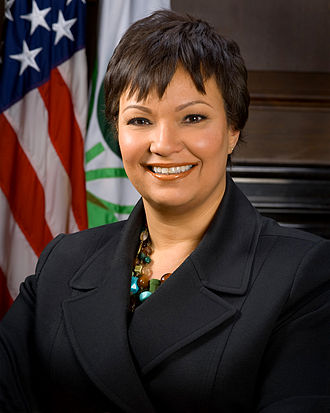
Ms. Jackson is administrator of the Environmental Protection Agency.
* [Oops. Same birthday as Donna. Happy birthday, Donna! Happy EPA’s 40th (yours, too? can’t be much more, can it?)]
Spread the word; friends don't allow friends to repeat history.
I’m back and back is beautiful, to tweak a phrase. Where have I been? Taking care of business with the helping hand of a special-special life-long friend.
For now, I’ll simply say: Life is an adventure, a gift and a grand adventure, and more than just a mite irksome at times.
These many weeks, in what little spare time I’ve had, I’ve also been writing lyrics. Everyone needs a hobby. Mine is writing lyrics.
Thus, the following song regarding our times:
WEDDING RING IN THE PAWNSHOP WINDOW By Daniel Valentine (c) 2010
The wedding ring
In the pawnshop window.
The price tag on a string,
Tied to the wedding ring,
Says it all, says ev’rything.
Life seldom ever goes as planned.
The wedding ring
In the pawnshop window.
To think the joy it must
Have brought once. Now it’s just
Sitting there collecting dust,
Pawned for a fast few bucks in hand.
That said, a future groom and bride,
Their savings on the meager side,
Stop to sneak a peak, beguiled and starry-eyed.
And what they see are tons and tons
Of rare old coins, guitars and guns,
One music box, two cuckoo clocks,
Plus a fly or three dead on the sill.
Then they see the ring and all is still.
The wedding ring
In the pawnshop window.
It glimmers and it gleams.
It’s ev’rything that dreams
Are made of, or so it seems,
And all for less than half a grand.
And so, like tens of times before,
The tiny bell above the door
Jingles as the lovers step inside the store.
And, oh, the sparkle in her eyes
When first she tries it on for size.
It fits just right and in the light,
When she holds her left hand out to show,
Like her heart, the diamond’s all aglow.
The wedding ring
In the pawnshop window.
The register ka-chings.
An angel gets its wings.
And a tweetie birdie sings.
All while a credit card is scanned.
The wedding ring
In the panwshop window.
A mom with bills to pay
In need without delay
Pawned the ring to save the day,
Such are the times in our fair land.
Spread the word; friends don't allow friends to repeat history.
Economics and environmental science teachers will want to view this and use it — it may be useful for world geography and world history, too:
Annie Leonard’s group tackles a huge, nasty problem, in an entertaining and informative style. At her website, The Story of Stuff, there is a lot more information, a more detailed presentation (you could stream it if you have a decent internet connection in your classroom), and ideas for classes.
For AP courses, be sure to look for point-of-view issues; for history, look to the drawbacks of technology; for economics and world history, note the heavy emphasis on global markets and world trade.
It’s almost a rant — but dead right, I think. We’re all culpable. Spread the word, will you?
Press release on the film:
FILM RELEASE:
New Story of Stuff Project movie demands a ‘Green Moore’s Law’ in the Electronics Industry
The Story of Electronics: Why “Designed for the Dump” is Toxic for People and the Planet
SAN FRANCISCO, CA – At midnight Pacific on November 9th The Story of Stuff Project will release The Story of Electronics, an 8-minute animated movie, at http://www.storyofelectronics.org. Hosted by Annie Leonard, the creator of the hit viral video The Story of Stuff, the film takes on the electronics industry’s “design for the dump” mentality and champions product takeback to spur companies to make less toxic, more easily recyclable and longer lasting products.
Co-produced with the Electronics TakeBack Coalition (ETBC)—a national coalition of over 30 environmental and public health organizations—and Free Range Studios, The Story of Electronics employs the trademark Story of Stuff-style to explain ‘planned obsolescence’—products designed to be replaced as quickly as possible—and its often hidden consequences for tech workers, the environment and us.
“Anyone who’s had a cell phone fritz out after six months already knows all about planned obsolescence,” said Ted Smith, Chair of ETBC. “Most of our electronics are laden with problematic substances like lead, mercury, PVC, and brominated flame retardants so when they break it‘s not just a bummer, it’s a global toxic issue. Instead of shipping our toxic trash across the world, product takeback ensures that electronics companies—not individual consumers, our governments, or worse, some poor guy in China—take responsibility for the stuff they put on the shelves.”
The film is being released in advance of the holiday season to get consumers thinking about the costs associated with that latest gadget and to show electronics companies that consumers want products that don’t trash people and the planet. The film concludes with an opportunity for viewers to send a message to electronics companies demanding that they “make ‘em safe, make ‘em last, and take ‘em back.”
“If we can figure out how to make an iPhone remember where you parked your car,” said Annie Leonard, the Director of The Story of Stuff Project, “then we can figure out how to make electronics that aren’t filled with toxic chemicals and en route to the trash can just months after we buy them. Let’s apply some of that creativity and innovation to making products that are safe and long lasting!”
The Story of Electronics companion website, http://www.storyofelectronics.org, will serve as an interactive launch pad for information and action steps for viewers. The site provides opportunities to learn more about the issue, find safer products and responsible recyclers, and get involved with the Electronics TakeBack Coalition. The site also houses downloadable resources and information about the film, including an annotated script.
The Story of Electronics is the fourth in a series of new movies that The Story of Stuff Project is releasing this year with Free Range Studios (www.freerangestudios.com) and more than a dozen of the world’s leading sustainability organizations. Our previous short films—The Story of Cap & Trade (December 2009), The Story of Bottled Water (March 2010) and The Story of Cosmetics (July 2010)—have collectively been viewed more than 2.2 million times since their releases.
To schedule an interview with the following experts, contact:
Allison Cook, Story of Stuff Project, at (213) 507-4713 or allison@storyofstuff.org
Contrary to the cherished beliefs of most Americans, the United States has less social mobility than any other developed country. As Ron Haskins and Isabel Sawhill of the Brookings Institution have shown, 42 percent of American men with fathers in the bottom fifth of the income distribution remain there as compared to: Denmark, 25 percent; Sweden, 26 percent; Finland, 28 percent; Norway, 28 percent; and Britain, 30 percent. The American Dream is fast becoming a myth.
Tea Partiers, most of them, believe they have a vested interest in keeping things that way, to preserve their own modest economic achievement. And those at the top? They delight in a little bit of “Let’s You and Him Fight.”
In fact the GOP’s deficit-detonating tax-cut proposals make the Democrats with their spending look like pikers. The stimulus bill, remember, cost $787 billion. The tax-cut bill that Senate GOP Leader Mitch McConnell unveiled last week—a combination of making permanent the Bush tax cuts and throwing in a host of other tax credits—has a price tag of around $3.9 trillion. For those keeping score at home, the self-styled party of fiscal responsibility wants to blow a hole in the budget nearly five times larger than the alleged profligacy they have spent the last year or more condemning.
Who is listening to the facts anymore?
Spread the word; friends don't allow friends to repeat history.
Or, until that account is unsuspended by the forces supporting Donald Trump: Follow @FillmoreWhite, the account of the Millard Fillmore White House Library
We've been soaking in the Bathtub for several months, long enough that some of the links we've used have gone to the Great Internet in the Sky.
If you find a dead link, please leave a comment to that post, and tell us what link has expired.
Thanks!
Retired teacher of law, economics, history, AP government, psychology and science. Former speechwriter, press guy and legislative aide in U.S. Senate. Former Department of Education. Former airline real estate, telecom towers, Big 6 (that old!) consultant. Lab and field research in air pollution control.
My blog, Millard Fillmore's Bathtub, is a continuing experiment to test how to use blogs to improve and speed up learning processes for students, perhaps by making some of the courses actually interesting. It is a blog for teachers, to see if we can use blogs. It is for people interested in social studies and social studies education, to see if we can learn to get it right. It's a blog for science fans, to promote good science and good science policy. It's a blog for people interested in good government and how to achieve it.
BS in Mass Communication, University of Utah
Graduate study in Rhetoric and Speech Communication, University of Arizona
JD from the National Law Center, George Washington University


 Posted by Ed Darrell








 Millard Fillmore's Bathtub