True, but did Einstein say it?

May 6, 2009

Poster by Ricardo Levins Morales. Updated March 2015 - click image to purchase a copy of the poster from Mr. Morales.

Poster by Ricardo Levins Morales. Updated March 2015 – click image to purchase a copy of the poster from Mr. Morales.

Nice poster, great thought — you can’t measure everything about a student with a test, nor with a battery of tests.  Texas testing in core areas finished up last week, Advanced Placement and International Baccalaureate testing runs this week.

Not everything that can be counted, counts, and not everything that counts can be counted.
– Albert Einstein

I especially thought of this quote one day last week while reading the questions to a kid with Downs syndrome who, as best I could measure from just watching reactions working problems, has a great flair for mathematics, and again when I discovered a geographic genius in the special education group.  (My classes say universally the tests were easy — and for some reason I find that terrifying.)

Did Einstein say it? I found the poster at Learning is More Than a Score; it can be purchased from the Northland Poster Collective.  Neither suggests where we might verify that Albert actually said it, though Bob Murphy at More Than a Score said he understands it may have been on the wall in Einstein’s office.  The artist is Ricardo Levins Morales (see more at Ricardo Levins Morales Galleries).

Readers, can you help?  Did Einstein say that?  When and where?

Update March 2015:  Quote Investigator urges that we attribute the quote to William Bruce Cameron, in a 1963 book.


Quote of the moment: Einstein on nature’s secrecy

April 1, 2009

Einstein

Einstein

Nature conceals her secrets because she is sublime, not because she is a trickster.


Quote of the moment: Millard Fillmore on Peruvian guano

February 16, 2009

You couldn’t make this stuff up if you were Monty Python.

English: Millard Fillmore White House portrait

Millard Fillmore’s White House portrait, via Wikipedia

President Millard Fillmore, in the State of the Union Address, December 2, 1850

Peruvian guano has become so desirable an article to the agricultural interest of the United States that it is the duty of the Government to employ all the means properly in its power for the purpose of causing that article to be imported into the country at a reasonable price. Nothing will be omitted on my part toward accomplishing this desirable end. I am persuaded that in removing any restraints on this traffic the Peruvian Government will promote its own best interests, while it will afford a proof of a friendly disposition toward this country, which will be duly appreciated.

Update, May 22, 2013:  Phosphorus becomes even more critical, according to Mother Jones (phosphorus is a key component of bat and bird guano).


Quote mining Harry Truman, on confusing people

February 3, 2009

I think it was Mark Twain who said a lie can get around the world twice before the truth has got its boots on (feel free to correct me on that if you have a good source).

Whoever said it, it was right.

Now, we see that a mined quote can do the same thing as a whole lie.

Harry Truman is the victim this time.

Google turns up more than 27,000 sites with this quote, attributed to Harry Truman:

If you can’t convince them, confuse them.

Now I ask you, Dear Reader, does that sound like old Give-’em-hell Harry, the original straight talker?  Did Harry Truman really urge the use of confusion, when persuasion fails?

If you’re careful and persistent, you can turn up four Google hits for the accurate version, from his dramatic and historic campaign for election in 1948:

I don’t think you are going to be the victims this time of the old Republican doctrine:  “If you can’t convince them, confuse them.”

There you have it.  Harry Truman was not urging the use of confusion.  He was campaigning against it.

Last page of a comic book biography of Harry Truman for the 1948 campaign - Truman Library

Last page of a comic book biography of Harry Truman for the 1948 campaign - Truman Library


Text of Obama’s prepared remarks

January 20, 2009

. . . from the Washington Post site.  Not sure yet if there were any departures from the text.


Quote of the moment: Stephen Jay Gould, evolution a question that thinking people ponder

January 4, 2009

Stephen Jay Gould, Massachusetts Academy of Sciences portrait

Stephen Jay Gould, photo from New York Times obituary

Q. Why is your work so popular?

A. It’s the subject more than anything else. I often say there are about half a dozen scientific subjects that are immensely intriguing to people because they deal with fundamental issues that disturb us and cause us to wonder. Evolution is one of those subjects. It attempts, insofar as science can, to answer the questions of what our life means, and why we are here, and where we come from, and who we are related to, and what has happened through time, and what has been the history of this planet. These are questions that all thinking people have to ponder.

Stephen Jay Gould, interviewed by Daniel S. Levy, for Time Magazine, published Monday, May 14, 1990


Why we liked Obama then

October 31, 2008

On July 27, 2004, candidate for the U.S. Senate from Illinois, Barack Obama, delivered the keynote address to the National Democratic Convention.

It was a turning point speech.  Obama went on to win the Illinois senate race.  His candidate for president, John Kerry, lost.  But the power of his speech and its ready reception earned Obama consideration as a candidate for the presidency in 2008.

As the 2008 campaign winds down to election day next Tuesday, it’s interesting to revisit Obama’s debut on a national stage.  What was it that made his speech so well received?  What was it about the biographical portions that made Obama look like a potential president?

PBS’s Online Newshour described the speech:

Illinois Senate candidate Barack Obama introduced himself to Democrats and a national television audience Tuesday, giving the keynote address at the Democratic National Convention. Obama told the story of his working class family and urged the nation to elect Democratic presidential candidate John Kerry, saying he would ensure more educational and economic opportunities for all.

Here is the full text (borrowed from PBS), so you can see for yourself.

A YouTube capture of the CSPAN broadcast:

BARACK OBAMA: On behalf of the great state of Illinois, crossroads of a nation, land of Lincoln, let me express my deep gratitude for the privilege of addressing this convention. Tonight is a particular honor for me because, let’s face it, my presence on this stage is pretty unlikely. My father was a foreign student, born and raised in a small village in Kenya. He grew up herding goats, went to school in a tin-roof shack. His father, my grandfather, was a cook, a domestic servant.

But my grandfather had larger dreams for his son. Through hard work and perseverance my father got a scholarship to study in a magical place; America which stood as a beacon of freedom and opportunity to so many who had come before. While studying here, my father met my mother. She was born in a town on the other side of the world, in Kansas. Her father worked on oil rigs and farms through most of the Depression. The day after Pearl Harbor he signed up for duty, joined Patton’s army and marched across Europe. Back home, my grandmother raised their baby and went to work on a bomber assembly line. After the war, they studied on the G.I. Bill, bought a house through FHA, and moved west in search of opportunity.

And they, too, had big dreams for their daughter, a common dream, born of two continents. My parents shared not only an improbable love; they shared an abiding faith in the possibilities of this nation. They would give me an African name, Barack, or “blessed,” believing that in a tolerant America your name is no barrier to success. They imagined me going to the best schools in the land, even though they weren’t rich, because in a generous America you don’t have to be rich to achieve your potential. They are both passed away now. Yet, I know that, on this night, they look down on me with pride.

I stand here today, grateful for the diversity of my heritage, aware that my parents’ dreams live on in my precious daughters. I stand here knowing that my story is part of the larger American story, that I owe a debt to all of those who came before me, and that, in no other country on earth, is my story even possible. Tonight, we gather to affirm the greatness of our nation, not because of the height of our skyscrapers, or the power of our military, or the size of our economy. Our pride is based on a very simple premise, summed up in a declaration made over two hundred years ago, “We hold these truths to be self-evident, that all men are created equal. That they are endowed by their Creator with certain inalienable rights. That among these are life, liberty and the pursuit of happiness.”

That is the true genius of America, a faith in the simple dreams of its people, the insistence on small miracles. That we can tuck in our children at night and know they are fed and clothed and safe from harm. That we can say what we think, write what we think, without hearing a sudden knock on the door. That we can have an idea and start our own business without paying a bribe or hiring somebody’s son. That we can participate in the political process without fear of retribution, and that our votes will be counted — or at least, most of the time.

This year, in this election, we are called to reaffirm our values and commitments, to hold them against a hard reality and see how we are measuring up, to the legacy of our forbearers, and the promise of future generations. And fellow Americans — Democrats, Republicans, Independents — I say to you tonight: we have more work to do. More to do for the workers I met in Galesburg, Illinois, who are losing their union jobs at the Maytag plant that’s moving to Mexico, and now are having to compete with their own children for jobs that pay seven bucks an hour. More to do for the father I met who was losing his job and choking back tears, wondering how he would pay $4,500 a month for the drugs his son needs without the health benefits he counted on. More to do for the young woman in East St. Louis, and thousands more like her, who has the grades, has the drive, has the will, but doesn’t have the money to go to college.

Don’t get me wrong. The people I meet in small towns and big cities, in diners and office parks, they don’t expect government to solve all their problems. They know they have to work hard to get ahead and they want to. Go into the collar counties around Chicago, and people will tell you they don’t want their tax money wasted by a welfare agency or the Pentagon. Go into any inner city neighborhood, and folks will tell you that government alone can’t teach kids to learn. They know that parents have to parent, that children can’t achieve unless we raise their expectations and turn off the television sets and eradicate the slander that says a black youth with a book is acting white. No, people don’t expect government to solve all their problems. But they sense, deep in their bones, that with just a change in priorities, we can make sure that every child in America has a decent shot at life, and that the doors of opportunity remain open to all. They know we can do better. And they want that choice.

In this election, we offer that choice. Our party has chosen a man to lead us who embodies the best this country has to offer. That man is John Kerry. John Kerry understands the ideals of community, faith, and sacrifice, because they’ve defined his life. From his heroic service in Vietnam to his years as prosecutor and lieutenant governor, through two decades in the United States Senate, he has devoted himself to this country. Again and again, we’ve seen him make tough choices when easier ones were available. His values and his record affirm what is best in us.

John Kerry believes in an America where hard work is rewarded. So instead of offering tax breaks to companies shipping jobs overseas, he’ll offer them to companies creating jobs here at home. John Kerry believes in an America where all Americans can afford the same health coverage our politicians in Washington have for themselves. John Kerry believes in energy independence, so we aren’t held hostage to the profits of oil companies or the sabotage of foreign oil fields. John Kerry believes in the constitutional freedoms that have made our country the envy of the world, and he will never sacrifice our basic liberties nor use faith as a wedge to divide us. And John Kerry believes that in a dangerous world, war must be an option, but it should never be the first option.

A while back, I met a young man named Shamus at the VFW Hall in East Moline, Illinois. He was a good-looking kid, 6’2” or 6’3”, clear eyed, with an easy smile. He told me he’d joined the Marines and was heading to Iraq the following week. As I listened to him explain why he’d enlisted, his absolute faith in our country and its leaders, his devotion to duty and service, I thought this young man was all any of us might hope for in a child. But then I asked myself: Are we serving Shamus as well as he was serving us? I thought of more than 900 service men and women, sons and daughters, husbands and wives, friends and neighbors, who will not be returning to their hometowns. I thought of families I had met who were struggling to get by without a loved one’s full income, or whose loved ones had returned with a limb missing or with nerves shattered, but who still lacked long-term health benefits because they were reservists. When we send our young men and women into harm’s way, we have a solemn obligation not to fudge the numbers or shade the truth about why they’re going, to care for their families while they’re gone, to tend to the soldiers upon their return, and to never ever go to war without enough troops to win the war, secure the peace, and earn the respect of the world.

Now let me be clear. We have real enemies in the world. These enemies must be found. They must be pursued and they must be defeated. John Kerry knows this. And just as Lieutenant Kerry did not hesitate to risk his life to protect the men who served with him in Vietnam, President Kerry will not hesitate one moment to use our military might to keep America safe and secure. John Kerry believes in America. And he knows it’s not enough for just some of us to prosper. For alongside our famous individualism, there’s another ingredient in the American saga.

A belief that we are connected as one people. If there’s a child on the south side of Chicago who can’t read, that matters to me, even if it’s not my child. If there’s a senior citizen somewhere who can’t pay for her prescription and has to choose between medicine and the rent, that makes my life poorer, even if it’s not my grandmother. If there’s an Arab American family being rounded up without benefit of an attorney or due process, that threatens my civil liberties. It’s that fundamental belief — I am my brother’s keeper, I am my sisters’ keeper — that makes this country work. It’s what allows us to pursue our individual dreams, yet still come together as a single American family. “E pluribus unum.” Out of many, one.

Yet even as we speak, there are those who are preparing to divide us, the spin masters and negative ad peddlers who embrace the politics of anything goes. Well, I say to them tonight, there’s not a liberal America and a conservative America — there’s the United States of America. There’s not a black America and white America and Latino America and Asian America; there’s the United States of America. The pundits like to slice-and-dice our country into Red States and Blue States; Red States for Republicans, Blue States for Democrats. But I’ve got news for them, too. We worship an awesome God in the Blue States, and we don’t like federal agents poking around our libraries in the Red States. We coach Little League in the Blue States and have gay friends in the Red States. There are patriots who opposed the war in Iraq and patriots who supported it. We are one people, all of us pledging allegiance to the stars and stripes, all of us defending the United States of America.

In the end, that’s what this election is about. Do we participate in a politics of cynicism or a politics of hope? John Kerry calls on us to hope. John Edwards calls on us to hope. I’m not talking about blind optimism here — the almost willful ignorance that thinks unemployment will go away if we just don’t talk about it, or the health care crisis will solve itself if we just ignore it. No, I’m talking about something more substantial. It’s the hope of slaves sitting around a fire singing freedom songs; the hope of immigrants setting out for distant shores; the hope of a young naval lieutenant bravely patrolling the Mekong Delta; the hope of a mill worker’s son who dares to defy the odds; the hope of a skinny kid with a funny name who believes that America has a place for him, too. The audacity of hope!

In the end, that is God’s greatest gift to us, the bedrock of this nation; the belief in things not seen; the belief that there are better days ahead. I believe we can give our middle class relief and provide working families with a road to opportunity. I believe we can provide jobs to the jobless, homes to the homeless, and reclaim young people in cities across America from violence and despair. I believe that as we stand on the crossroads of history, we can make the right choices, and meet the challenges that face us. America!

Tonight, if you feel the same energy I do, the same urgency I do, the same passion I do, the same hopefulness I do — if we do what we must do, then I have no doubt that all across the country, from Florida to Oregon, from Washington to Maine, the people will rise up in November, and John Kerry will be sworn in as president, and John Edwards will be sworn in as vice president, and this country will reclaim its promise, and out of this long political darkness a brighter day will come. Thank you and God bless you.


Quote of the moment: Oliver Wendell Holmes, Jr., on taxes

October 9, 2008

The frequently quotable Oliver Wendell Holmes, Jr., circa 1930. Edited photograph from the Library of Congress Prints and Photographs Division. Original photo by Harris & Ewing. LC-USZ62-47817.  Copyright expired.

The frequently quotable Oliver Wendell Holmes, Jr., circa 1930. Edited photograph from the Library of Congress Prints and Photographs Division. Original photo by Harris & Ewing. LC-USZ62-47817. Copyright expired.

I like paying taxes. With them I buy civilization.

Justice Oliver Wendell Holmes, Jr., attributed.  (see Felix Frankfurter, Mr. Justice Holmes and the Supreme Court, Harvard University Press, 1961, page 71.)

Did Holmes say that?

The quote is all over the internet Wednesday, after New York Times op-ed writer Tom Friedman noted it in his column criticizing Alaska Gov. Sarah Palin for her assertion that paying taxes is not patriotic.

I found reference to the quote in a book about eminent economists, through Google Scholar:

Eminent Economists: Their Life Philosophies
By Michael Szenberg
Published by Cambridge University Press, 1993
320 pages

On page 201, Szenberg refers Holmes’s view of “taxation as the price of liberty.”  In a footnote, he points to Justice Frankfurter’s book.  The quote is dolled up a little.  According to Szenberg’s footnote:

More precisely, he rebuked a secretary’s query of “Don’t you hate to pay taxes?” with “No, young fellow, I like paying taxes, with them I buy civilization.”

Frankfurter is a reliable source.  It’s likely Holmes said something very close to the words Friedman used.

Urge others to buy a chunk of civilization:

Add to FacebookAdd to NewsvineAdd to DiggAdd to Del.icio.usAdd to StumbleuponAdd to RedditAdd to BlinklistAdd to TwitterAdd to TechnoratiAdd to Furl


Quote of the moment: Mark Twain, on speculating in stocks

October 6, 2008

Mark Twain in 1907 - A.F. Bradley, New York, copyright, Mark Twain, three-quarter length portrait, seated, facing slightly right, with cigar in hand 1907. Prints and Photographs Division, Library of Congress

Mark Twain in 1907 - A.F. Bradley, New York, copyright, Mark Twain, three-quarter length portrait, seated, facing slightly right, with cigar in hand 1907. Prints and Photographs Division, Library of Congress

October.  This is one of the peculiarly dangerous months to speculate in stocks in.  The others are July, January, September, April, November, May, March, June, December, August, and February.


Will Rogers and Wiley Post crash in Alaska, 1935

August 15, 2008

Will Rogers, images from Will Rogers Museums, Oklahoma

Will Rogers, images from Will Rogers Museums, Oklahoma

After Mark Twain died, America found another great humorist, raconteur, story-teller, who tickled the nation’s funny-bone and pricked the collective social conscience at the same time. Will Rogers is most famous today for his sentiment that he never met a man he didn’t like. In 1935, he was at the height of his popularity, still performing as a lariat-twirling, Vaudeville comedian who communed with presidents, and kept his common sense. He wrote a daily newspaper column that was carried in 500 newspapers across America.  Rogers was so popular that Texas and Oklahoma have dueled over who gets the bragging rights in claiming him as a native son.

Will Rogers ready to perform.  Photo taken prior to 1900 - Wikimedia

Will Rogers ready to perform. Photo taken prior to 1900 - Wikimedia

Wiley Post was known as one of the best pilots in America. He gained fame by being the first pilot to fly solo around the world. Post was famous for his work developing new ways to fly at high altitudes. Post was born in Texas and moved to Oklahoma. He lost an eye in an oil-field accident in 1924, then used the settlement money to buy his first airplane. He befriended Will Rogers when flying Rogers to an appearance at a Rodeo, and the two kept up their friendship literally to death.

Post asked Rogers to come along on a tour of the great unknown land of Alaska, where Post was trying to map routes for mail planes to Russia. Ever adventurous, Rogers agreed — he could file his newspaper columns from Alaska by radio and telephone. On August 15, 1935, their airplane crashed near Point Barrow, Alaska, killing them both.

Wiley Post, first to fly solo around the world, in an early pressure suit for high-altitude flying - Wikimedia photo

Wiley Post, first to fly solo around the world, in an early pressure suit for high-altitude flying - Wikimedia photo

On August 15, 2008, a ceremony in Claremore, Oklahoma, will honor the two men on the 73rd anniversary of their deaths. About 50 pilots from Oklahoma, Missouri, Kansas and Arkansas will fly in to the Claremore Airport for the Will Rogers-Wiley Post Fly-In Weekend. Oklahoma Lt. Gov. Jari Askins will offer a tribute.

Rogers was 56, leaving behind his wife, Betty, and four children. Post, 36, left a widow.

Rogers’ life is really quite legendary. Historian Joseph H. Carter summed it up:

Will Rogers was first an Indian, a cowboy then a national figure. He now is a legend.
Born in 1879 on a large ranch in the Cherokee Nation near what later would become Oologah, Oklahoma, Will Rogers was taught by a freed slave how to use a lasso as a tool to work Texas Longhorn cattle on the family ranch.
As he grew older, Will Rogers’ roping skills developed so special that he was listed in the Guinness Book of Records for throwing three lassos at once: One rope caught the running horse’s neck, the other would hoop around the rider and the third swooped up under the horse to loop all four legs.
Will Rogers’ unsurpassed lariat feats were recorded in the classic movie, “The Ropin’ Fool.”
His hard-earned skills won him jobs trick roping in wild west shows and on the vaudeville stages where, soon, he started telling small jokes.
Quickly, his wise cracks and folksy observations became more prized by audiences than his expert roping. He became recognized as being a very informed and smart philosopher–telling the truth in very simple words so that everyone could understand.
After the 10th grade, Will Rogers dropped out of school to become a cowboy in a cattle drive. He always regretted that he didn’t finish school, but he made sure that he never stopped learning–reading, thinking and talking to smart people. His hard work paid off.
Will Rogers was the star of Broadway and 71 movies of the 1920s and 1930s; a popular broadcaster; besides writing more than 4,000 syndicated newspaper columns and befriending Presidents, Senators and Kings.
During his lifetime, he traveled around the globe three times– meeting people, covering wars, talking about peace and learning everything possible.
He wrote six books. In fact he published more than two million words. He was the first big time radio commentator, was a guest at the White House and his opinions were sought by the leaders of the world.
Inside himself, Will Rogers remained a simple Oklahoma cowboy. “I never met a man I didn’t like,” was his credo of genuine love and respect for humanity and all people everywhere. He gave his own money to disaster victims and raised thousands for the Red Cross and Salvation Army.

Post’s legacy is significant, too. His employer, Oklahoma oil man F. C. Hall, encouraged Post to push for aviation records using Hall’s Lockheed Vega, and Post was happy to comply. Before his history-making trip around the world, he had won races and navigation contests. NASA traces the development of the space-walking suits worn by astronauts to Post’s early attempts for flight records:

For Wiley Post to achieve the altitude records he sought, he needed protection. (Pressurized aircraft cabins had not yet been developed.) Post’s solution was a suit that could be pressurized by his airplane engine’s supercharger.

First attempts at building a pressure suit failed since the suit became rigid and immobile when pressurized. Post discovered he couldn’t move inside the inflated suit, much less work airplane controls. A later version succeeded with the suit constructed already in a sitting position. This allowed Post to place his hands on the airplane controls and his feet on the rudder bars. Moving his arms and legs was difficult, but not impossible. To provide visibility, a viewing port was part of the rigid helmet placed over Post’s head. The port was small, but a larger one was unnecessary because Post had only one good eye!

Last photo of Will Rogers (in the hat) and Wiley Post, in Alaska in 1935 (from Century of Flight)

Last photo of Will Rogers (in the hat) and Wiley Post, in Alaska in 1935 (from Century of Flight)

Tip of the old scrub brush to Alaska bush advocate Pamela Bumsted.

Resources:


Quote of the moment: William Pitt, on the crime of being young

July 22, 2008

One of the philosophers of Rising Sun (CRS – LA Jonas Foundation) observed that it is impossible to be both young and brave, and old and wise. Age of our leaders often equates to experience. Age becomes an issue in election campaigns — Ronald Reagan, the previous record holder of the oldest person ever to run for a first term as president of the United States before John McCain, headed off arguments that he was “too old” with a zinger in a debate with Walter Mondale in Reagan’s campaign for reelection in 1984.

It was the second debate in 1984, from Kansas City’s Municipal Auditorium (To confuse our foreign readers, we should note that this is in Kansas City, Missouri; Kansas City, Kansas, is on the western side of the river, and is a city of less consequence than Kansas City, Missouri, in population, and in most discussions. We confuse our foreign readers in revenge for English politics, which pertains to the Quote of the Moment, but cannot be explained by or to a person who is not intoxicated). The debate focused on foreign policy and the future of the world. Among the panel of journalists doing the questioning in this deformed type of debate, was the late Henry Trewhitt, then diplomatic correspondent for The Baltimore Sun, one of America’s historically great newspapers, and still great.

About 20 minutes into the debate, Trewhitt asked this question:

REPORTER: Mr. President, I want to raise an issue that I think has been lurking out there for two or three weeks, and cast it specifically in national security terms. You already are the oldest President in history, and some of your staff say you were tired after your most recent encounter with Mr. Mondale. I recall, yes, that President Kennedy, who had to go for days on end with very little sleep during the Cuba missile crisis. Is there any doubt in your mind that you would be able to function in such circumstances?

Reagan sealed his reputation for wit, and probably sealed the election, with this previously-scripted (we know now) zinger:

REAGAN: Not at all, Mr. Trewhitt and I want you to know that also I will not make age an issue of this campaign. I am not going to exploit for political purposes my opponent’s youth and inexperience. If I still have time, I might add, Mr. Trewhitt, I might add that it was Seneca or it was Cicero, I don’t know which, that said if it was not for the elders correcting the mistakes of the young, there would be no state.

Former Vice President Walter Mondale, a great statesman in his own right, and no youth at the time, had a solid response, but not an election-winning response: It won no laughter. (It’s interesting, in 2008, to remember that Mondale was criticizing Reagan for his failure to act to prevent a terrorist attack on U.S. forces in Lebanon, that killed more than 200 Marines.):

REPORTER [Henry Trewhitt]: Mr. Mondale, I’m going to hang in there. Should the President’s age and stamina be an issue in the political campaign?

MONDALE: No. And I have not made it an issue nor should it be. What’s at issue here is the President’s application of his authority to understand what a President must know to lead this nation, secure our defense and make the decisions and judgments that are necessary. A minute ago, the President quoted Cicero, I believe. I want to quote somebody a little closer home, Harry Truman. He said the buck stops here. We just heard the President’s answer for the problems at the barracks in Lebanon where 241 Marines were killed. What happened? First, the Joint Chiefs of Staff, with the President, said don’t put those troops there. They did it. And then five days before the troops were killed, they went back to the President, through the Secretary of Defense, and said please, Mr. President, take those troops out of there because we can’t defend them. They didn’t do it. And we know what’s – what happened. After that, once again our embassy was exploded. This is the fourth time this has happened – an identical attack in the same region, despite warnings even public warnings from the terrorists. Who’s in charge? Who’s handling this matter. That’s my main point.

Which brings us to William Pitt’s remarks.

William Pitt, later Earl of Chatham, was 32 years old, and already a powerful member of the Whig opposition to England’s de facto first, and longest-serving Prime Minister, Robert Walpole, (who also was a Whig — see what I mean about English politics?). Though leading the opposition to Walpole, Pitt and a few of his colleagues were known as the Patriot Boys (Kansas City residing mostly in Missouri pales in comparison to these complexities of British politics).

Walpole, 32 years older than Pitt, leader of the House of Commons, complained at some point about Pitt’s youth. Walpole played dirty against Pitt, getting Pitt’s commission in the military cancelled. The two would dispute for a few years yet — finally, Pitt’s side prevailed, and Walpole lost a vote of confidence.

But on March 6, 1741, Pitt rose in the House of Commons and responded to Walpole’s charges:

“The atrocious crime of being a young man, which the honorable gentleman [Walpole] has with such spirit and decency charged upon me, I shall neither attempt to palliate nor deny; but content myself with wishing that I may be one of those whose follies may cease with their youth, and not of that number who are ignorant in spite of experience.”*

Walpole, Massachusetts, founded in 1724, is named after Robert Walpole. Pittsburgh, Pennsylvania, is named after William Pitt (the elder), as are Pittsfield County, Virginia, Chatham County, North Carolina (remember, Pitt was later Earl of Chatham), Pittsburg, New Hampshire, Chatham, New Jersey, and Chatham University, in Pittsburgh, Pennsylvania.

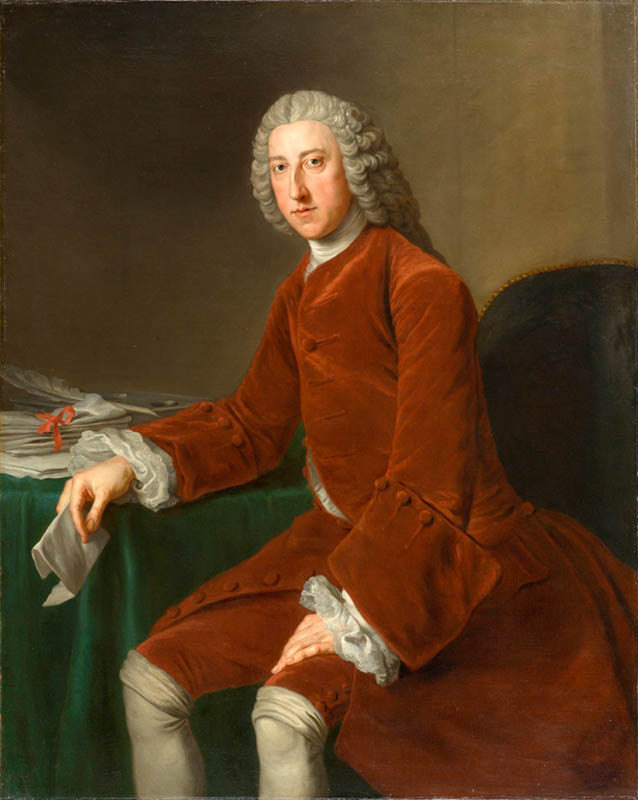
William Pitt, later Earl of Chatham

William Pitt, later Earl of Chatham

* Did Pitt ever actually utter these words? There was no official reporting service for debates in the House of Commons in 1741. Some speeches were written out before hand, some were carefully noted. This speech, alas, comes to us reported by the essayist and literature critic Samuel Johnson, who was famous for writing great speeches for members of the House of Commons, after the fact. Of this particular speech, Bartlett’s Familiar Quotations, 17th ed. carries this footnote: “This was the composition of Johnson, founded on some note or statement of the actual speech. Johnson said, ‘That speech I wrote in a garret, in Exeter Street'” – Boswell, Life of Johnson [1791]. If only Walter Mondale had Samuel Johnson whispering in his ear. Barack Obama may need the whisperings of Johnson in the current campaign.


Quote of the moment: Sallust, on “mental excellence”

July 21, 2008

Thus spake Gaius Sallustius Crispus, the Roman historian known as Sallust (86-34 B.C.):

The renown which riches or beauty confer is fleeting and frail; mental excellence is a splendid and lasting possession.

From The War with Catiline, 1

Statue of Sallust near the Austrian Parliament, by Haslinger Willibald

Statue of Sallust near the Austrian Parliament, photo by Haslinger Willibald

Photo rights: Creative Commons License
Creative Commons Attribution iconCreative Commons Share Alike icon

This file is licensed under the Creative Commons Attribution ShareAlike 2.5 License. In short: you are free to share and make derivative works of the file under the conditions that you appropriately attribute it, and that you distribute it only under a license identical to this one. Official license


Quote of the Moment: John Kennedy, June 26, 1963 (Encore Post)

June 26, 2008

Rare color photograph of President John Kennedy addressing a crowd in the then-divided city of Berlin, June 26, 1963

Rare color photograph of President John Kennedy addressing a crowd in the then-divided city of Berlin, June 26, 1963

From the Smithsonian Magazine site:

June 26, 1963: “Ich bin ein Berliner”

In West Berlin, President John F. Kennedy delivers the famous speech in which he declares, “Ich bin ein Berliner.” Meaning literally “I am a citizen of Berlin,” the statement shows U.S. solidarity with democratic West Berlin, surrounded by communist territory.

View a video of President Kennedy’s speech at American Rhetoric, Top 100 Speeches.

Photo of President Kennedy addressing Berlin’s citizens, photographer unidentified; from American Rhetoric site.

[end of encore post]

Kennedy’s entire speech was good. It was well drafted and well delivered, taking advantage of the dramatic setting and the dramatic moment. John Kennedy well understood how to give a speech, too.

Below is most of the speech, nearly five minutes’ worth, from a YouTube file — another indication that schools need to open up their filters to allow at least some of the best YouTube material through:

You may also want to note these posts:


28 poems on living life to the fullest, today

June 25, 2008

So, you just graduated from [pick one: high school, college, business school, law school, medical school, flight school, cooking school, firefighters academy, police academy] and you’re looking for a job. But here you are cruising the web instead of knocking on the doors of employers.  Carpe diem poems for making the most of time

You have come to the right place. To keep you in the flow where you need to be to get that job, let me suggest this article from the Academy of American Poets, “Carpe Diem: Poems for making the most of time.” And most especially, let me suggest the 28 poems they list there on plucking the day. The chief list of 28 you will find below the fold.

The Latin phrase and a lot of the history of the idea in poetry gets a lithe explanation in the essay there:

The Latin phrase carpe diem originated in the “Odes,” a long series of poems composed by the Roman poet Horace in 65 B.C.E., in which he writes:

Scale back your long hopes

to a short period. While we
speak, time is envious and

is running away from us.
Seize the day, trusting
little in the future.

Various permutations of the phrase appear in other ancient works of verse, including the expression “Eat, drink, and be merry, for tomorrow we die,” which is derived from the Biblical book of Isaiah. At the close of “De rosis nascentibus,” a poem attributed to both Ausonius and Virgil, the phrase “collige, virgo, rosas” appears, meaning “gather, girl, the roses.” The expression urges the young woman to enjoy life and the freedom of youth before it passes.

Since Horace, poets have regularly adapted the sentiment of carpe diem as a means to several ends, most notably for procuring the affections of a beloved by pointing out the fleeting nature of life . . .

The careful reader will find another three poems on the topic hidden in the list at the end of the article.

Graduates, you’d be happy with just a little per diem at the moment. I can’t give you that. You might find that these poets give you much more. Seize the opportunity, and see for yourself.

Read the rest of this entry »


Quote of the moment: Sir Francis Bacon, creation as testament

May 30, 2008

Sir Francis Bacon (source unidentified)

Sir Francis Bacon (January 22, 1561 – April 9, 1626)

For certain it is that God worketh nothing in nature but by second causes: and if they would have it otherwise believed, it is mere imposture, as it were in favour towards God; and nothing else but to offer the Author of Truth the unclean sacrifice of a lie. But farther, it is an assured truth, and a conclusion of experience, that a little or superficial knowledge of Philosophy may incline the mind of man towards Atheism, but a farther proceeding therein doth bring the mind back again to Religion: for in the entrance of philosophy, when the second causes, which are next the senses, do offer themselves unto the mind of man, if it swell and stay there it may induce some oblivion of the highest cause; but when a man passeth on further, and seeth the dependence of causes, and the works of Providence, then, according to the allegory of the poets, he will easily believe that the highest link of Nature’s chain must needs be tied at the foot of Jupiter’s chair. To conclude therefore, let no man upon a weak conceit of sobriety or an ill-applied moderation think or maintain, that a man can search too far, or be too well studied in the Book of God’s Word, or in the Book of God’s Works—Divinity or Philosophy. But rather, let men endeavour an endless progress or proficience in both; only let men beware that they apply both to charity, and not to swelling [pride]; to use and not to ostentation; and again that they do not unwisely mingle or confound those learnings together.

Francis Bacon, Advancement of Learning (1605), Bk I. [for example, here]

Tip of the old scrub brush to John Stockwell commenting at Constructive Curmudgeon