
You did remember that New Years Day is the first day to fly U.S. flags in 2026, under the U.S. Flag Code and other laws and regulations, right?
Happy New Year.
You did remember that New Years Day is the first day to fly U.S. flags in 2026, under the U.S. Flag Code and other laws and regulations, right?
Happy New Year.
 Leave a Comment » |
  Fly your flag today, Patriotism, U.S. Flag | Tagged: Fly your flag today, Patriotism, U.S. Flag, U.S. Flag Code |
  Permalink
 Posted by Ed Darrell
President Grover Cleveland signed the proclamation making Utah the 45th state on January 4, 1896. Utah residents should fly the U.S. flag today in commemoration.
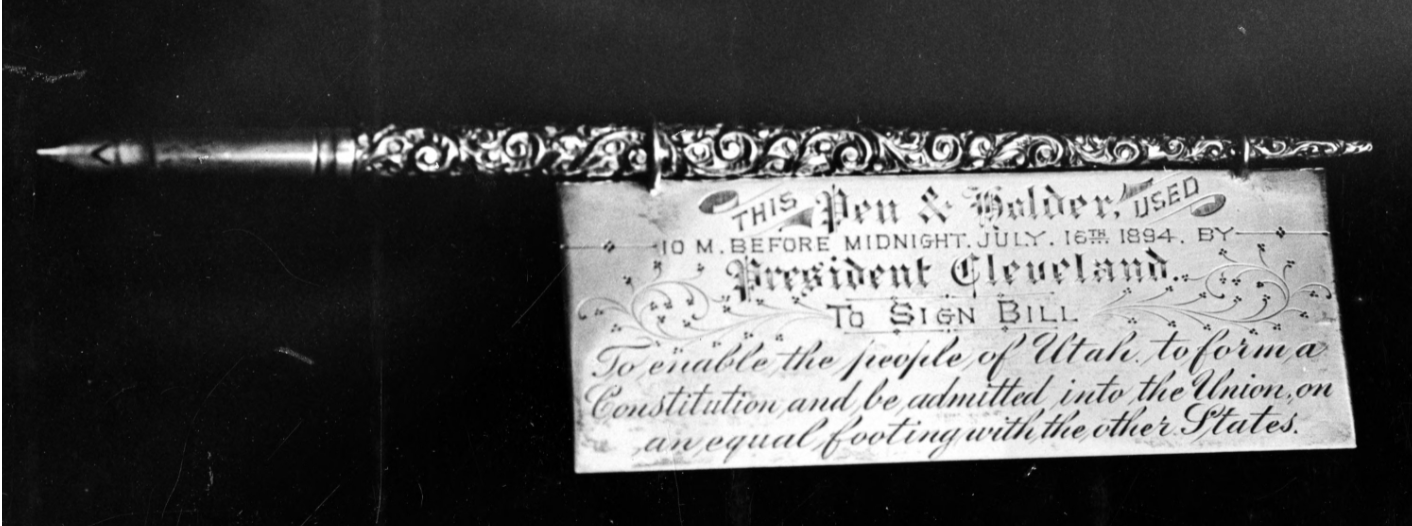
Flying the U.S. flag is a big deal in Utah. Most families have at least one flag to fly on holidays. But in my decades in the state, I don’t think I saw anyone fly the flag for Utah Statehood day.
Utah’s public officials take their oaths of office on January 4, traditionally. In the past couple of decades, a ball for statehood, a Statehood Dance, is scheduled on a Saturday close to January 4, in the museum in Fillmore, Utah, which once was the territorial capitol building before the capital was moved to Salt Lake City.
Got a U.S. flag, Utahns? Fly ’em if you got ’em.
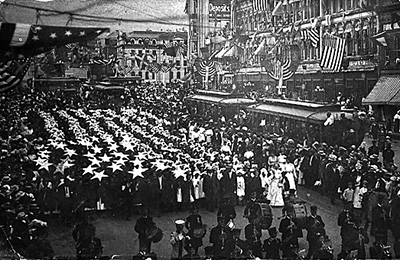
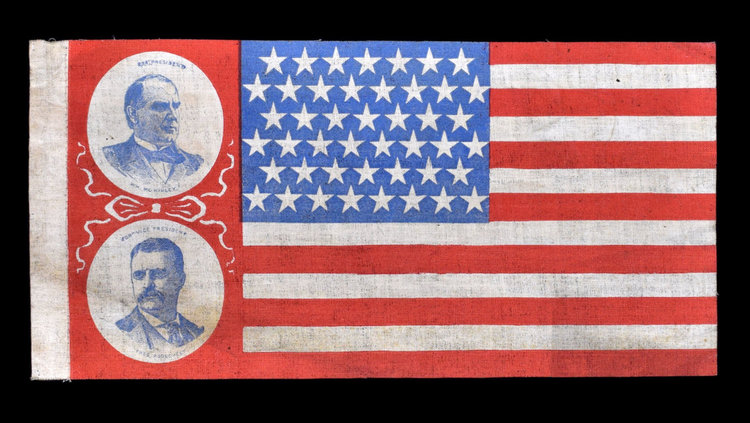
More:
Leave a Comment » | Fly your flag today, Statehood, Utah | Tagged: american-flag, Fly your flag today, general, History, Statehood, Travel, Utah | Permalink
Posted by Ed Darrell

Flying the Alaska state flag. Image from Captured Contrast, where there is a bit of humor behind trying to get a photo of the Alaska flag, waving in the wind.
Late for me to remind you, if you didn’t, but January 3 is Alaska’s Statehood Day. Alaskans should have flown their U.S. flags today in commemoration.
Of course, some people would like to fly their state flags, too — makes more sense, some say. I don’t argue, but I note that very rarely do I come across some household that has a state flag. Most homes have a U.S. flag.
Alaska’s flag is a work of art, though, and many Alaskans have one. Did you fly it today, if you have one?
More:

U.S. flag flying at the Eielson Visitor Center, Denali National Park, Alaska. National Park Service image, photo by Jacob W. Frank.

Yes, this is an encore post. Defeating ignorance takes patience and perseverance.
Leave a Comment » | Alaska, Fly your flag today, History, Statehood, U.S. Flag | Tagged: Alaska, anchorage, Denali, Fly your flag today, History, Statehood, Travel | Permalink
Posted by Ed Darrell
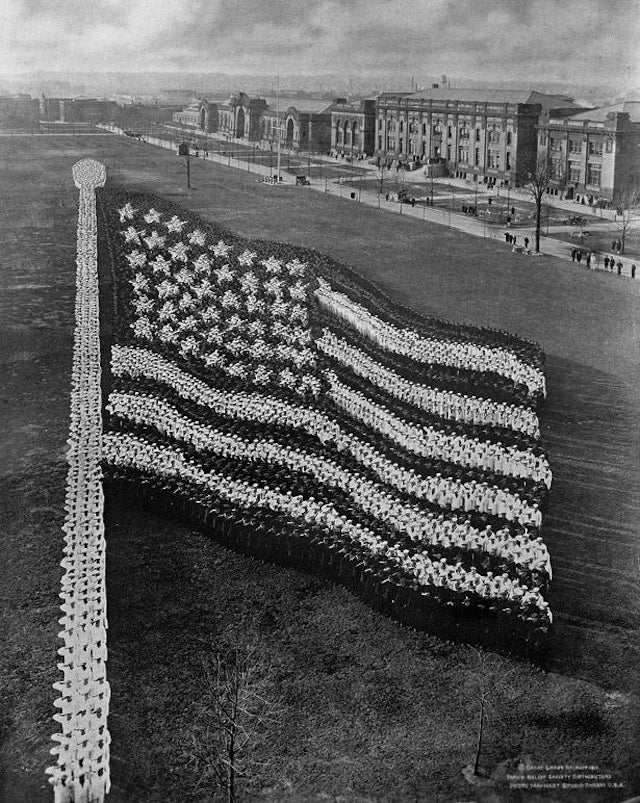
A “living flag” composed of 10,000 sailors, or “Blue Jackets at Salute,” by the Mayhart Studios, December 1917; image probably at the Great Lakes training facility of the Navy. Gawker media image
November offers several flag flying days, especially in years when there is an election.
But December may be the month with the most flag-flying dates, when we include statehood days.
December 7 is Pearl Harbor Remembrance Day. It’s not in the Flag Code, but public law (P.L. 103-308) urges that the president should issue a proclamation asking Americans to fly flags.
December 25 is Christmas Day, a federal holiday, and one of the score of dates designated in the Flag Code. If you watch your neighborhood closely, you’ll note even some of the most ardent flag wavers miss posting the colors on this day, as they do on Thanksgiving and New Years and Easter.
Other dates?
Nine states attained statehood in December! People in those states should fly their flags (and you may join them). Included in this group is Delaware, traditionally the “First State,” called that because it was the first former England colony to ratify the U.S. Constitution:
December 15 is Bill of Rights Day, marking the day in 1791 when the Bill of Rights was declared ratified; but though this event generally gets a presidential proclamation, there is no law or executive action that requires flags to fly on that date, for that occasion.
Eleven flag-flying dates in December. Does any other month have as many flag flying opportunities?
Have I missed any December flag-flying dates? 11 events on 10 different days between December 3 and December 29 (Delaware’s statehood falls on the anniversary of the Pearl Harbor attack).
Here’s a list of the 10 days to fly the flag in December 2023, under national law, in chronological order:
Fly your flag with respect, for the flag, for the republic it represents, and for all those who sacrificed that it may wave on your residence.

Appropriate to a snowy December. “The Barn on Grayson-New Hope Road [Lawrenceville, Georgia]. This barn with its old truck and ever-present American flag, is often the subject of photographs and paintings by the locals.” Photo and copyright by Melinda Anderson

1 Comment | Flag etiquette, Fly your flag today, History, Patriotism, U.S. Flag | Tagged: December, Flag Code, Flag etiquette, Fly your flag today, History, Patriotism, U.S. Flag | Permalink
Posted by Ed Darrell
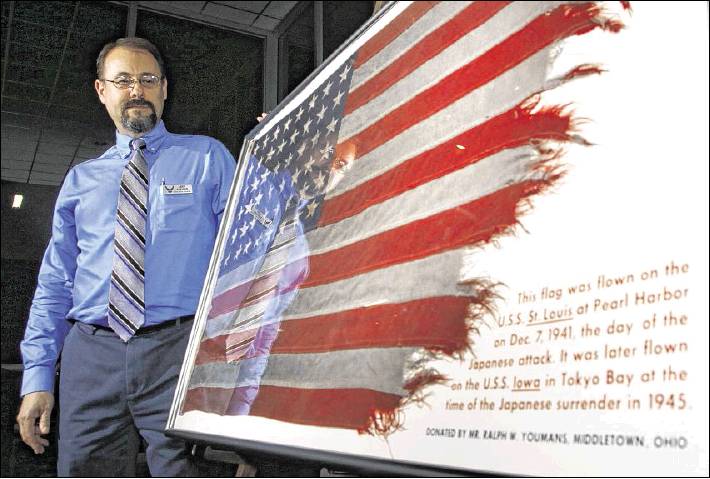
From Dayton Daily News: Jeff Duford, curator for the National Museum of the U.S. Air Force, with a flag that flew on the U.S.S. St. Louis in Hawaii during the attack on Pearl Harbor on Dec. 7, 1941. The same flag flew aboard the U.S.S. Iowa in Tokyo Bay on September 16, 1944, as Japan signed instruments of surrender aboard the U.S.S. Missouri. Photo by Ty Greenlees, Dayton Daily News [This flag was displayed for one day at the museum, on Pearl Harbor Remembrance Day 2016.]
By public law, December 7 is Pearl Harbor Remembrance Day, and Americans fly the U.S. flag in memory of those who lost their lives at Pearl Harbor on December 7, 1941. U.S. flags should be flown at half-staff.
As for Delaware, under the U.S. Flag Code, residents of the relevant state should fly their U.S. flag on the date the state joined the union.
In 1787 Delaware quickly and promptly elected delegates to the former colony’s convention to ratify the Constitution proposed at the Philadelphia convention just over three months earlier. The ratification of the Constitution won opposition from strong factions in almost every state. Pols anticipated tough fights in New York, Virginia, and other states with large populations. They also expected other states would wait to see what the bigger states did.
Delaware didn’t wait. On December 7 Delaware became the first of the former British colonies to ratify the Constitution. Perhaps by doing so, it guaranteed other states would act more favorably on ratification.
Because Delaware was first, it is traditionally granted first position in certain ceremonies, such as the parades honoring newly-inaugurated presidents. Delaware’s nickname is “The First State.”
In Delaware and the rest of the nation, fly your flags on December 7, 2023. If you can, fly your flag at half-staff to honor the dead at Pearl Harbor; if you have a flag on a pole that cannot be adjusted, just fly the flag normally.
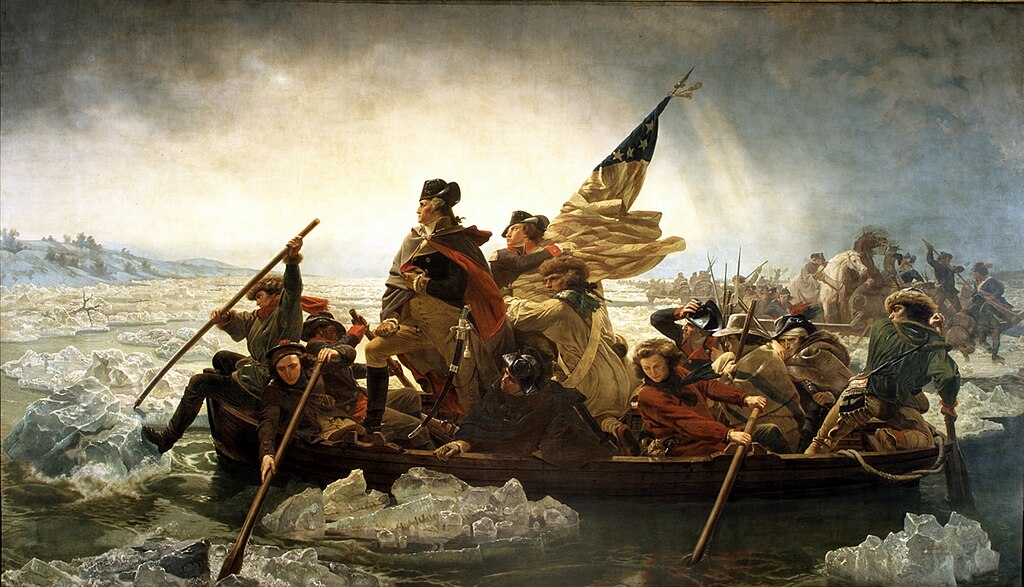
The most famous portrayal of a U.S. flag flying in Delaware is in the painting by Emanuel Leutze (American, 1816–1868). “Washington Crossing the Delaware,” 1851. The Metropolitan Museum of Art, New York, Gift of John Stewart Kennedy, 1897 (97.34) Among other problems with this portrayal: The flag depicted had not been designated on the date of the crossing, Christmas 1776.

Yes, this is mostly an encore post. Fighting ignorance requires patience.
Leave a Comment » | Flag etiquette, Fly your flag today, History, Pearl Harbor, Statehood | Tagged: Delaware, Flag etiquette, Fly your flag today, History, Pearl Harbor | Permalink
Posted by Ed Darrell
U.S. Flag Code urges citizens of states to fly the U.S. flag on the anniversary of statehood.
We let part of the day slip away without reminding you: President Theodore Roosevelt signed the Oklahoma statehood proclamation on November 16, 1907. Oklahoma became the 46th state, with New Mexico and Arizona to come later to fill out the contiguous 48 states.

Mike Wimmer’s 2003 painting of President Theodore Roosevelt’s signing of the proclamation that made Oklahoma a member of the union. Oklahoma Arts Council image.
Oklahoma’s pre-history is long, complex and fascinating; the road to statehood is similarly complex and winding, lined with broken promises to Native Americans, tragedy and other drama. Does the state require Oklahoma history be taught in public schools?
And so we hope, you flew your flags today, Sooners!
Did anyone actually fly their flag? Does anyone other than Oklahoma newspapers even care any more?
More:

46-star flag used after Oklahoma became the 46th state in 1907. This flag remained in use for four years. RareFlags.com image.
Yes, this is an encore post. Defeating ignorance takes patience and perseverance.
Leave a Comment » | Flag etiquette, Fly your flag today, History, Statehood | Tagged: Fly your flag today, History, Oklahoma Statehood | Permalink
Posted by Ed Darrell
Nine events spread over seven different days come with urgings to fly the U.S. flag in November: six states celebrate statehood, Veterans Day falls always on November 11, and Thanksgiving Day on November 23.

Cub Scouts carry the U.S. flag in the Houston, Texas, Thanksgiving parade. Unknown year; image from Greater Houston Moms
Did I say eight? 2023 is an election year in many states, like Texas; we fly flags at polling places on election day, so that makes nine events. You may fly your flag at home on election day, too.
Two states, North Dakota and South Dakota, celebrate their statehood on the same date. Washington’s statehood day falls on Veterans Day, November 11 — so there are only seven days covering nine events.
In calendar order for 2023, these are the seven days (yes, I’m running late on this — about half the dates are past):
Most Americans will concern themselves only with Veterans Day and Thanksgiving Day. Is flying the U.S. flag for statehood day a dying tradition?
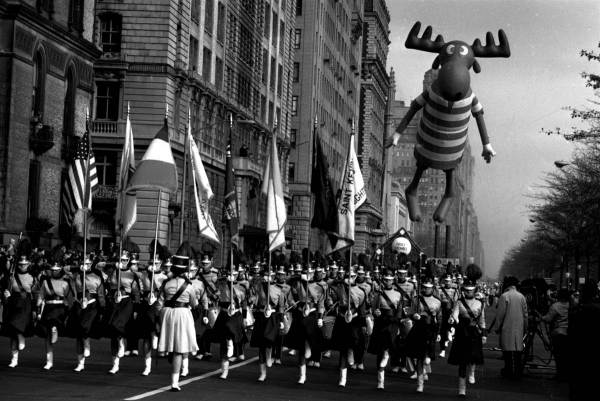
Color guard carries U.S. flag, closely followed Bullwinkle the Moose, in Macy’s Thanksgiving Day Parade, unknown year. HistoryDaily.org image
More:
Yes, this is an encore post. Fighting ignorance takes longer than we hoped.
Leave a Comment » | Flag etiquette, Fly your flag today, History, U.S. Flag | Tagged: Flag etiquette, Fly your flag today, History, U.S. Flag | Permalink
Posted by Ed Darrell
In the video, the U.S. flag flying at Circle 10 Council’s Camp Wisdom, in Dallas County, Texas.
Perhaps when you were a child, you watched your father as he posted Old Glory near your front door, on holidays and other special occasions. Your father set an example that you follow today.
Remember to honor your father by posting the flag today, Fathers Day. Fathers Day is one of those dates set in the U.S. Flag Code for citizens to fly the U.S. flag.

“Litchfield, Minnesota veterans Roger Tipka, Don Nordlie and Stan Mortenson, pictured from left, raise the U.S. flag prior to the start of the third annual Tournament of Duty in 2015. The three men all served in the Battle of Iwo Jima during World War II.” Litchfield Independent Observer photograph.
2 Comments | Fly your flag today | Tagged: Fathers Day, Fly your flag today | Permalink
Posted by Ed Darrell
Of course you know to fly your flag on June 14 for Flag Day — but did you know that the week containing Flag Day is Flag Week, and we are encouraged to fly the flag every day?

Clifford Berryman’s 1901 Flag Day cartoon, found at the National Archives: “In this June 14, 1904, cartoon, Uncle Sam gives a lesson to schoolchildren on the meaning of Flag Day. Holding the American flag in one hand, Uncle Sam explains that the flag has great importance, unlike the Vice Presidency, which he ridicules in a kindly manner. (National Archives Identifier 6010464)”
The 105th Congress in 1998 passed a law designating the week in which Flag Day falls as Flag Week, encouraging Americans to fly the flag the entire week. In 2023 that runs from Sunday, June 11, through Saturday, June 17.
Our National Archives has a blogged history of Flag Day pointing out it was a teacher who started Flag Day celebrations.
On June 14, 1885, Bernard J. Cigrand placed a 10-inch, 38-star flag in a bottle on his desk at the Stony Hill School in Ozaukee County, Wisconsin. The 19-year-old teacher then asked his students to write essays on the flag and its significance to them. This small observance marked the beginning of a long and devoted campaign by Cigrand to bring about national recognition for Flag Day.
And so we do, today, still.
Yes, this is an encore post. Defeating ignorance takes patience and perseverance.
1 Comment | Cartoons, Flag etiquette, Fly your flag today, History, Patriotism, Political cartoons, U.S. Flag, Uncle Sam | Tagged: Cartoons, Clifford Berryman, Flag Day, Fly your flag today, Political cartoons, U.S. Flag | Permalink
Posted by Ed Darrell

“Flag Day, Pittsburgh, Pennsylvania.” 1942 photo by John Vachon (1914-1975) for the U.S. Farm Security Administration/Office of War Information. Image from the National Archives and Records Administration (NARA)
June holds only two days designated for flying the U.S. flag out of the specific days mentioned in the U.S. Flag Code, and six statehood days, when residents of those states should fly their flags. Plus, there is National Flag Week. And now there is Juneteenth.
Two Flag Code-designated days:
Several states celebrate statehood. New Hampshire, Virginia, Arkansas, Kentucky, Tennessee and West Virginia celebrate statehood; Kentucky and Tennessee share the same date.
Additionally, Congress passed a resolution designating the week in which June 14th falls as National Flag Week, and urging that citizens fly the flag each day of that week. In 2023 that will be the week of June 11, which falls on Sunday, through June 17.
The resolution naming Juneteenth National Independence Day a holiday was signed into law last year by President Joe Biden. Juneteenth is June 19 — day after Fathers Day in 2023.
Flag-flying days for June, listed chronologically:
As you know, any resident may fly the flag any day of the year, under the etiquette provided in the Flag Code.
Tip of the old scrub brush to Mike’s Blog Rounds at Crooks and Liars — thanks for the plug!

National Archives caption: This illustration entitled, “Flag Day – 1900”, by cartoonist Clifford Berryman, which appeared in the Washington Post on June 14, 1900, depicts the growth of American influence in the world as the European powers watch in the background as new century is ushered in.

Flag Day, 1918, at Fort Sam Houston, Texas. Photo by Miles F. Weaver (1879-1932), from the collection of the National Archives (NARA).
Leave a Comment » | Flag etiquette, Fly your flag today, History | Tagged: Flag Day, Flag etiquette, Fly your flag today, History, United Nations Week | Permalink
Posted by Ed Darrell

Schooner on Chesapeake Bay flies the 15-stripe/15-star flag that flew over Fort McHenry. Image from the Maryland Secretary of State’s Office
It’s cruel to people who want to fly U.S. flags often, but only on designated flag-flying dates. (April is also National Poetry Month, so it’s a good time to look up poetry references we should have committed to heart).
For 2023, these are the three dates for flying the U.S. flag; Easter is a national date, the other two are dates suggested for residents of the states involved.
One date, nationally, to fly the flag. That beats March, which has none (in a year with Easter in April and not March). But March has five statehood days, to April’s two.
Take heart! You may fly your U.S. flag any day you choose, or everyday as many people do in Texas (though, too many do not retire their flags every evening . . .).
Three dates to fly Old Glory in April, by the Flag Code and other laws on memorials and commemorations.

April usually sees the opening of Major League Baseball’s season — some teams jumped into March in 2018. In this photo, U.S. Navy sailors assigned to the USS Bonhomme Richard practice for the San Diego Padres’ opening day flag ceremony in San Diego on April 5, 2011. The ship sent nearly 300 volunteers to unfurl an 800-pound U.S. flag that covered the entire field. The Bonhomme Richard was in dry-dock for maintenance and upgrades. Defense Department photo via Wikimedia.
More:
Yes, this is an encore post. Defeating ignorance takes patience and perseverance.
Leave a Comment » | Flag etiquette, Fly your flag today, History, U.S. Flag | Tagged: April, Fly your flag today, History, U.S. Flag | Permalink
Posted by Ed Darrell
From Dayton Daily News: Jeff Duford, curator for the National Museum of the U.S. Air Force, with a flag that flew on the U.S.S. St. Louis in Hawaii during the attack on Pearl Harbor on Dec. 7, 1941. The same flag flew aboard the U.S.S. Iowa in Tokyo Bay on September 16, 1944, as Japan signed instruments of surrender aboard the U.S.S. Missouri. Photo by Ty Greenlees, Dayton Daily News [This flag was displayed for one day at the museum, on Pearl Harbor Remembrance Day 2016.]
December 7 is a two-fer flag-flying day.
By public law, December 7 is Pearl Harbor Remembrance Day, and Americans fly the U.S. flag in memory of those who lost their lives at Pearl Harbor on December 7, 1941. U.S. flags should be flown at half-staff.
As for Delaware, under the U.S. Flag Code, residents of the relevant state should fly their U.S. flag on the date the state joined the union.
In 1787 Delaware quickly and promptly elected delegates to the former colony’s convention to ratify the Constitution proposed at the Philadelphia convention just over three months earlier. The ratification of the Constitution won opposition from strong factions in almost every state. Pols anticipated tough fights in New York, Virginia, and other states with large populations. They also expected other states would wait to see what the bigger states did.
Delaware didn’t wait. On December 7 Delaware became the first of the former British colonies to ratify the Constitution. Perhaps by doing so, it guaranteed other states would act more favorably on ratification.
Because Delaware was first, it is traditionally granted first position in certain ceremonies, such as the parades honoring newly-inaugurated presidents. Delaware’s nickname is “The First State.”
In Delaware and the rest of the nation, fly your flags on December 7, 2022. If you can, fly your flag at half-staff to honor the dead at Pearl Harbor; if you have a flag on a pole that cannot be adjusted, just fly the flag normally.
The most famous portrayal of a U.S. flag flying in Delaware is in the painting by Emanuel Leutze (American, 1816–1868). “Washington Crossing the Delaware,” 1851. The Metropolitan Museum of Art, New York, Gift of John Stewart Kennedy, 1897 (97.34) Among other problems with this portrayal: The flag depicted had not been designated on the date of the crossing, Christmas 1776.
Yes, this is mostly an encore post. Fighting ignorance requires patience.
Leave a Comment » | Flag etiquette, Fly your flag today, History, Pearl Harbor, Statehood | Tagged: Delaware, Flag etiquette, Fly your flag today, History, Pearl Harbor | Permalink
Posted by Ed Darrell
We have much to be grateful for on Thanksgiving 2022. Democracy survived a big scare, and while it’s not yet out of the woods, we know where it is and it’s blazing its own trail.
But back to reality. You’re planning for the big day, the big turkey (or vegan equivalent), you’re wondering how to time everything . . .
Just a reminder to patriots and sunshine patriots that Thanksgiving is one of those days designated in the U.S. Flag Code as a day for citizens to fly Old Glory. Plan to put your flag out early, you won’t have to worry about it all day.

There was a time when people actually sent Thanksgiving cards; few keep up that tradition. Image from Pacific Paratrooper.
It’s a great time to recall that the purposes of Thanksgiving usually start with expressing gratitude to and with all of our neighbors, as a means of binding us together as a community, a people, and a nation. And sometimes, an entire world, as cartoonist Joseph Keppler imagined. Recognizing that fellowship is not the rule now, as it wasn’t the rule when Keppler called out our hypocrisy then.
To better times to come.

From the Library of Congress collection: Joseph Keppler’s “A Thanksgiving Toast,” Puck magazine, November 30, 1898. “Caption: Puck Gentlemen, your health! I am glad to see from your bea[…]ing faces that you share the high aspirations of our friend, the Czar, for Universal Peace. Here’s to you all! Illus. from Puck, v. 44, no. 1134, (1898 November 30), centerfold.”
(More explanation from the Library of Congress: Print shows Puck standing on a chair at the head of a large dinner table, offering a Thanksgiving toast to those seated around the table, including “England, France, Germany, [Japan?], Russia, Austria, Italy, Turkey, Uncle Sam, Puerto Rico, Hawaii, Brazil, [and] Mexico”. Most of the European countries, as well as Mexico and Brazil, are glaring at their neighbors, with the exception of Russia where Nicholas II attempts to look pious. Turkey appears to be trying to stifle laughter. Uncle Sam seems to be the only one enjoying the toast. Puerto Rico, holding an American flag, and Hawaii are expressionless.)
More:
3 Comments | Flag etiquette, Fly your flag today, Holidays, Thanksgiving | Tagged: Fly your flag today, Patriotism, Thanksgiving | Permalink
Posted by Ed Darrell

Fireworks highlight U.S. flags flying in Addison, Texas, during Kaboom Town celebration of the Fourth of July. Photo courtesy the Town of Addison
[Yes, we’re running late with this post for July. Apologies. You can always check the list of all dates, or last year’s post.]
July 4. Surely everyone knows to fly the flag on Independence Day, the anniversary of the Declaration of Independence.*
In the month of the grand patriotic celebration, what other dates do we fly the U.S. flag? July 4 is the only date designated in the Flag Code for all Americans to fly the flag. Three states joined the union in July, days on which citizens of those states should show the colors, New York, Idaho and Wyoming.
Plus, there is one date many veterans think we should still fly the flag, Korean War Veterans Armistice Day on July 27. Oddly, the law designating that date urges flying the flag only until 2003, the 50th anniversary of the still-standing truce in that war. But the law still exists. What’s a patriot to do?
Patriots may watch to see whether the president issues a proclamation for the date.
Generally we don’t note state holidays or state-designated flag-flying events, such as Utah’s Pioneer Day, July 24, which marks the day in 1847 that the Mormon pioneers in the party of Brigham Young exited what is now Emigration Canyon into the Salt Lake Valley. But it’s a big day in Utah, where I spent a number of years and still have family. And I still have memories, not all pleasant, of that five-mile march for the Days of ’47 Parade, in that wool, long-sleeved uniform and hat, carrying the Sousaphone. Pardon my partisan exception. Utahns will fly their flags on July 24.
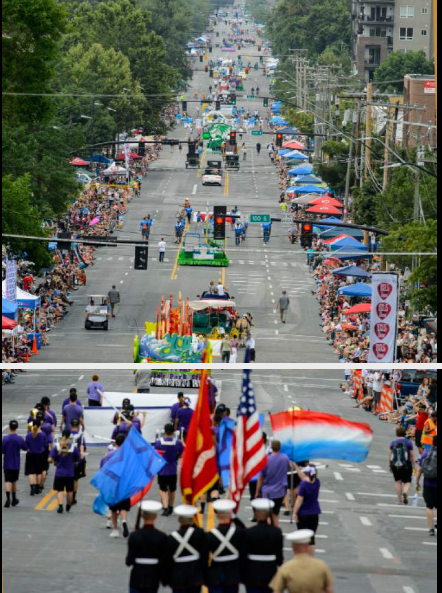
View of part of the route of the Days of ’47 Parade route, along Main Street in Salt Lake City. Photo by Steve Griffin of the Salt Lake Tribute, 2017
July’s flag flying dates, chronologically:
More:
_____________
* July 4? But didn’t John Adams say it should be July 2? And, yes, the staff at Millard Fillmore’s Bathtub sadly noted that, at most July 4 parades, it appears no one salutes the U.S. flag as it passes, as the Flag Code recommends — though there were several people properly saluting the leading flags at the Duncanville Independence Day parade in 2021. MFB’s been fighting flag etiquette ignorance since 2006. It’s taking much, much longer than we wished.
Yes, this is an encore post. Defeating ignorance takes patience and perseverance.
Leave a Comment » | Flag etiquette, Fly your flag today, History, korean war, Utah | Tagged: Days of '47, Flag etiquette, Fly your flag today, History, Korean War, Utah | Permalink
Posted by Ed Darrell
“Flag Day, Pittsburgh, Pennsylvania.” 1942 photo by John Vachon (1914-1975) for the U.S. Farm Security Administration/Office of War Information. Image from the National Archives and Records Administration (NARA)
June holds only two days designated for flying the U.S. flag out of the specific days mentioned in the U.S. Flag Code, and six statehood days, when residents of those states should fly their flags. Plus, there is National Flag Week. And now there is Juneteenth.
Two Flag Code-designated days:
Several states celebrate statehood. New Hampshire, Virginia, Arkansas, Kentucky, Tennessee and West Virginia celebrate statehood; Kentucky and Tennessee share the same date.
Additionally, Congress passed a resolution designating the week in which June 14th falls as National Flag Week, and urging that citizens fly the flag each day of that week. In 2022 that would be the week of June 12, which falls on Sunday, through June 18.
The resolution naming Juneteenth National Independence Day a holiday was signed into law last year by President Joe Biden. Juneteenth is June 19 — same as Fathers Day in 2022.
Flag-flying days for June, listed chronologically:
As you know, any resident may fly the flag any day of the year, under the etiquette provided in the Flag Code.
Tip of the old scrub brush to Mike’s Blog Rounds at Crooks and Liars — thanks for the plug!
National Archives caption: This illustration entitled, “Flag Day – 1900”, by cartoonist Clifford Berryman, which appeared in the Washington Post on June 14, 1900, depicts the growth of American influence in the world as the European powers watch in the background as new century is ushered in.
Flag Day, 1918, at Fort Sam Houston, Texas. Photo by Miles F. Weaver (1879-1932), from the collection of the National Archives (NARA).
Leave a Comment » | Flag etiquette, Fly your flag today, History | Tagged: Flag Day, Flag etiquette, Fly your flag today, History, United Nations Week | Permalink
Posted by Ed Darrell


Ed Darrell on Texas's Colorado River


Come on in, the water's fine. Come often: Cleanliness is next to godliness.


 Millard Fillmore's Bathtub